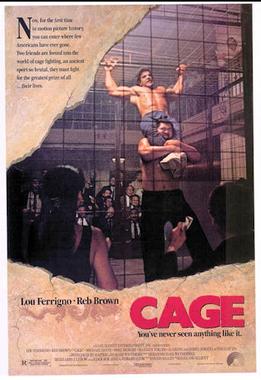
Cage (1989, directed by Lang Elliott)


As with so many stories, it all starts with Vietnam.

In 1969, soldier Billy Thomas (Lou Ferrigno) heroically saves the life of his captain, Scott Monroe (Reb Brown).  Unfortunately, while their helicopter is taking off, Billy takes a bullet to the head.  While he survives the wound, he is left with the mind of a child.  Scott dedicates his life to taking care of Billy and, after the war, they open a bar together.  However, mobster Tony Baccola (Michael Dante) feels that Billy would be the perfect contestant for a series of fight-to-death cage matches that have been set up by Chinese gangster Tin Lum Yin (James Shigeta).  In desperate need of money, Tony kidnaps Billy and forces him to fight, telling him that it’s what Scott needs him to do.  Billy doesn’t want to fight and, when he first enters the cage, he says, “Hi, how are you?” and tries to shake his opponent’s hand.  But when his opponents try to hit Billy, he has no choice but to defend himself.  It’s up to Scott to rescue his friend.

The plot of this movie is pretty dumb but I’m not embarrassed to say that the film itself won me over.  The fights were decent but the main reason why the movie works is because of Lou Ferrigno and Reb Brown, who made their friendship and their bond feel very real.  Ferrigno was especially good in this film.  How can you not root for a guy who just wants to be everyone’s friend and who, even after his twelfth cage match, still gets upset over having to hit people?

A pure B-movie all the way, Cage also features familiar faces like Branscombe Richmond, Al Leong, and Danny Trejo.  Most of the critics may not have liked it but Ferrigno has described Cage as being his his favorite film performance and I agree.
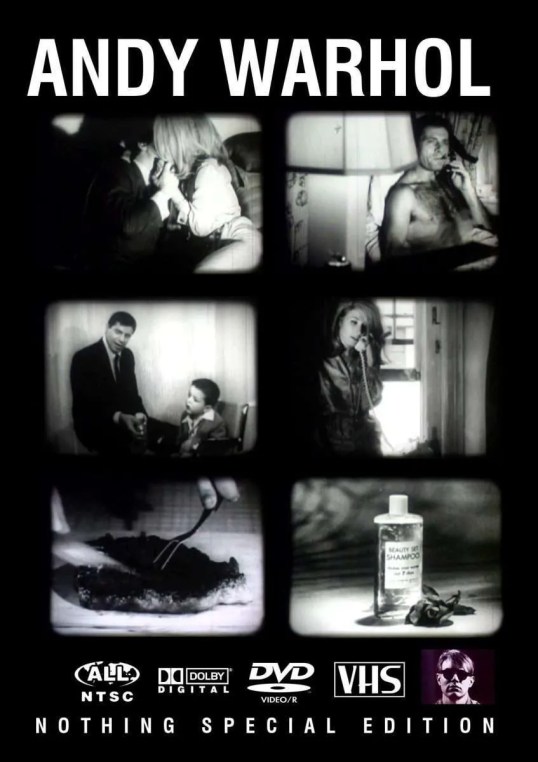
Film Review: Soap Opera (dir by Andy Warhol)


Directed by Andy Warhol, 1964’s Soap Opera features a plot that largely plays out in silence.

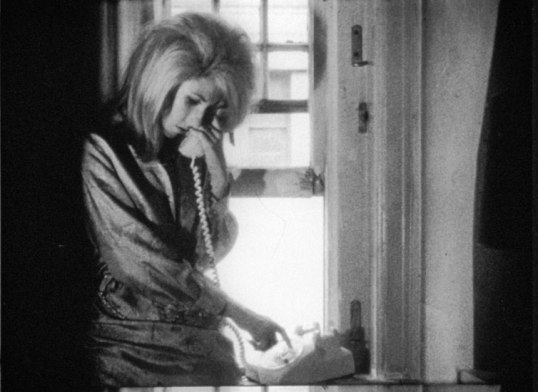
The silent, grainy black-and-white footage depicts what appears to be a love triangle between Warhol associate Rufus Collins, Sam Green, Ivy Nicholson, Gerard Malanga, and “Baby Jane” Holzer.  There’s a lot of kissing.  There’s a lot of slapping.  There’s a lot of scenes of our nameless characters giving each other suspicious and meaningful looks.  At one point, Jane Holzer makes what appears to be a very important phone call.  We don’t know who these people are or how they’re related but they certainly do seem to be intensely obsessed with each other.  The situations grow progressively more and more sexual and one gets the feeling that, if we could only hear the dialogue, we would have a chance to vicariously take part in a great melodrama.  Of course, the footage itself is so grainy that it’s sometimes hard to tell who is who.  Indeed, the characters often seem to be interchangeable.  That’s certainly true of real soap operas as well.  With new actors regularly stepping into old roles and one story’s hero becoming the next story’s villain, soap operas were all about accepting whatever was presented on the screen.  In real life, drama has real consequences.  In Warhol’s film and on television, melodrama is just something that happens without any real repercussions.

Janes Holzer in Soap Opera

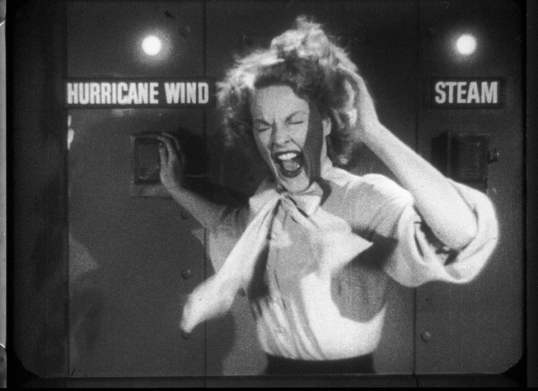
Fortunately, the film provides a few breaks from the repetitive cycle of nonstop, grainy drama.  Sprinkled throughout the film are commercials breaks, featuring actual commercials that were supplied to Warhol by Lester Persky, an advertising executive who later found greater fame as a Broadway producer.  (He produced Hair, amongst other productions.)  In between scenes of Ivy Nicholson kissing Sam Green and Rufus Collins looking shocked, we get a serious of very happy and very loud commercials.  Indeed, after watching the silent and grainy soap opera footage, it’s a bit jarring to have an expertly staged commercial suddenly blare forth in crisp black-and-white.  An obnoxious salesman tries to sell us things to make our home better and our meals tastier.  Jerry Lewis shows up with a child and tells us to be sure to contribute money to his telethon.  Model Rosemary Kelly is introduced by an announcer who tells us that Rosemary is going to tell us about the greatest adventure of her life.  That adventure?  Not conditioning her hair for five days.  Amazingly, her hair is still full and lustrous!  Even after swimming and sleeping on it!  Not even a broken steam valve can make her hair look bad!  This commercial is so effective that it’s actually featured twice and why not?  Even I want to know Rosemary’s secrets and my hair always looks good!

Rosemary Kelly in Soap Opera

Warhol subtitled this film The Lester Persky Story, both to thank Persky for supplying the commercials but also to point out that the commercials were really the whole point of the show.  The plot of any show, whether it’s a real one or the one in Warhol’s film, really only exists to keep you watching long enough to see the commercials.  And it must be said that the commercials are the most interesting part of this film.  After watching the Soap Opera actors for ten minutes, it’s a relief when Rosemary Kelly appears and, with a big smile on her face, starts enthusiastically talking about her hair.  We all complain about commercials but we still accept them as a fact of life and, in the end, it’s usually the commercials that people remember and try to pattern their lives after.  I mean, there’s a reason why I’m still singing that “Nothing is everything” song from the Skyrizi commercials.

And now, let’s check out how Rosemary Kelly’s hair is doing in hurricane winds!

Rosemary Kelly in Soap Opera


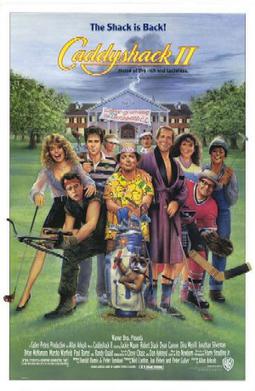
Caddyshack II (1988, directed by Allan Arkush)


Welcome back to Bushwood Country Club!  The Gopher is still stealing balls and burrowing through the course.  Ty Webb (Chevy Chase) is still the majority shareholder of the club, even though he now only plays golf inside of his mansion.  And that’s it!

Only the Gopher and Chevy Chase returned for Caddyshack II.  Ted Knight died before the movie went into production.  Bill Murray didn’t want to recreate his role from the first movie.  Rodney Dangerfield was involved in developing the movie but then dropped out after two million had already been spent in pre-production.  Chevy Chase was paid seven figures to return and he later called it one of the biggest mistakes of his career.  Only the Gopher didn’t complain.

With hardly anyone from the first film willing to come back for a second round, Caddyshack II features comedian Jackie Mason as Jack Hartounian, a real estate developer whose daughter, Kate (Jessica Lundy), wants to be a part of the WASPy Bushwood social set.  When Chandler Young (Robert Stack) keeps the plain-spoken Jack from being given a membership, Jack teams up with his old friend Ty and buys Bushwood.  He turns Bushwood into an amusement park called Jackie’s Wacky Golf.  Kate tells Jack that he’s ruined everything and turned Bushwood into Coney Island.  Chandler hires survivalist Tom Everett (Dan Aykroyd) to kill Jack and then agrees to play Jack in a round of golf.  The winner wins Bushwood.

A bust with both audiences and critics, Caddyshack II is one of the worst sequels ever made.  Why would you do a sequel to Caddyshack that features almost nothing that made the first film so entertaining?  Jackie Mason was a great comedian and writer but he wasn’t much of an actor and he makes a poor replacement for Rodney Dangerfield.  The film really loses me when Chandler Young literally pays money to have Jackie murdered.  It’s just a step too far.  Not even Ted Knight tried to kill Rodney Dangerfield and Dangerfield was a lot more obnoxious than Jackie Mason ever was.  Not even the dancing Gopher can generate much laughs and Kate’s right.  Jackie’s Wacky Golf really is a terrible place.

There are some interesting actors and actresses in the supporting cast.  The lovely Dyan Cannon plays Jack’s love interest and is one of the few good things about the movie, despite having no chemistry with Mason.  Randy Quaid gives a manic performance as Jack’s lawyer, a role that was originally meant for Sam Kinison.  Jonathan Silverman is the good caddy who falls for Jack’s daughter while Chynna Phillips is Chandler’s snobby daughter who befriends Kate and tells her she should change her last name to Hart.  Dan Aykroyd delivers all of his lines in a high-pitched voice that isn’t funny but which becomes very annoying.

The slobs win again.  The snobs are defeated and the Gopher dances with noticeably less enthusiasm.  There has never been a Caddyshack 3.

THE SEA WOLF (1993) – Charles Bronson vs. Superman!


Back in the early 90’s, I was finishing up my high school years and starting up my college years, but I was still paying attention to every move my movie hero Charles Bronson was making. Bronson was at a very difficult place personally during those years as he was continuing to mourn the passing of his wife, Jill Ireland, and it really shows in his choice of roles. His first two films of the 90’s, THE INDIAN RUNNER and YES VIRGINIA, THERE IS A SANTA CLAUS, featured the aging star in the roles of a man dealing with great suffering and loss. Bronson’s third role, as Captain Wolf Larsen in the made for cable TV film, THE SEA WOLF (1993), featured him as the “thinking man’s megalomaniac” from Jack London’s work of classical literature. I couldn’t wait to see the film, but I had just one small problem. We didn’t have cable-TV in Toad Suck, Arkansas, so I would not be able to watch it on the night of its April 18th, 1993 premiere on the TNT channel. It was tough waiting a few months for that VHS release, but it was worth it! 

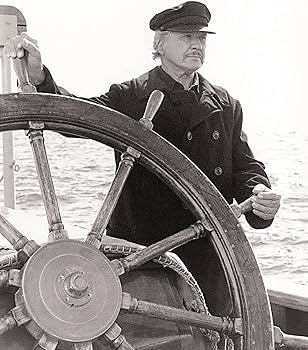
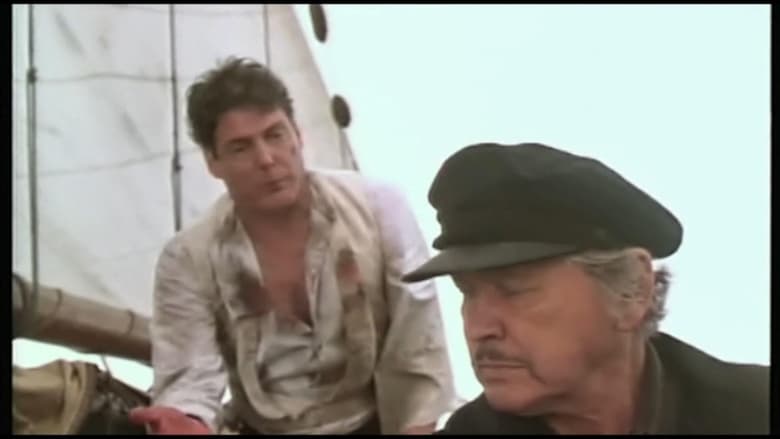
In a nutshell, Charles Bronson plays Wolf Larsen, the captain of the ship The Ghost, who saves shipwrecked aristocrat Humphrey Van Weyden (Christopher Reeve) and con woman Flaxen Brewster (Mary Catherine Stewart). He saves them, but once they’re on board his boat, they find out that Larsen rules over the crew with an iron fist. They also find out that he’s on a life or death mission to find his brother, Death Larsen, and exact revenge for past conflicts. Will they be able to survive this voyage?

Charles Bronson had mostly steered clear of roles that could be described as “villainous” later in his career, but it must have felt great to take on one of Jack London’s most famous characters. I remember the advertising would show him maniacally spouting lines like, “It’s better to reign in hell than serve in heaven!” Wolf Larsen is a man of contradictions. He’s ruthless and mad with power when it comes to the men and his boat, but he also appreciates great works of literature and philosophy. Even at 71 years of age, the icon is able to project arrogant menace and brute strength. Charles Bronson and Wolf Larsen almost seem made for each other, and he’s fantastic in the role. It’s his strongest performance of the 1990’s. 

There’s another great performance in the film, and it comes from Christopher Reeve as Humphrey Van Weyden. Most famous as Superman, Reeve was not having a lot of success at this point in his film career and was wanting meatier roles when he accepted this part. I was blown away with his performance as the intelligent and bullied aristocrat-turned-cabin boy who is forced to resort to some level of savage and barbaric behavior in order to survive Larsen’s boat! Christopher Reeve had really become a good actor at this point in his career, and he handles the role expertly. You believe his transformation throughout the course of the film as he adapts to the brutal conditions aboard the ship yet still retains his humanity. Reeve himself has been quoted as saying that THE SEA WOLF was a project “I really believed in and still think of as some of my best work.” I couldn’t agree more, Mr. Reeve. 

THE SEA WOLF was directed by veteran filmmaker Michael Anderson who had been working since the 1940’s with credits like AROUND THE WORLD IN 80 DAYS (1956) and LOGAN’S RUN (1976) to his name. He and Bronson were roughly the same age, and they’re both in fine form. In order for these types of films to work, you need a good director who can deliver a solid finished project and Anderson brings his A-game to this production. 

I’ve included the trailer for THE SEA WOLF below:

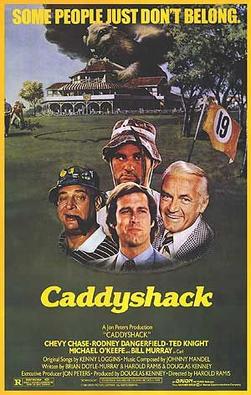
Caddyshack (1980, directed by Harold Ramis)


Whenever I think about Caddyshack, which is one of the funniest moves ever made, I think first of the Gopher, burrowing across the course and dancing to the music.

I then think about Bill Murray, playing the demented groundskeeper and growing his own special grass that you can both play golf on and smoke afterwards.

I remember Rodney Dangerfield dancing on the green while Ted Knight throws a fit.  This was the first film that I ever saw Rodney Dangerfield in.  “It looks good on you, though,” was one of those simple lines that Rodney could turn into a classic.

I remember Ted Knight, appearing in one of his few film roles, and saying, “Well, we’re waiting!” and drawing out every single word.

I remember the scene in the pool.  You know which one I’m talking about.

I remember Chevy Chase, back when he was still funny.

Then I remember how Rodney Dangerfield’s classic last line, “We’re all going to get laid,” was changed to “We’re all going to take a shower!” for television.  Why the censors thought that sounded less dirty than the original, I’ll never know.

I remember the Bishop getting struck by lightning while playing the best game of his life.

And, of course, I remember Cindy Morgan as Lacy Underall.

I remember so many classic moments and funny lines that I’m always surprised when I rewatch the movie and discover that it’s not really about the Gopher, Bill Murray, Rodney Dangerfield, Chevy Chase, or even Lacy Underall.  Instead, the main character in the movie is Danny Noonan (Michael O’Keefe), a teenage caddy at Bushwood Country Club who wants to win a scholarship so he can go to college and avoid having to work in the lumber yard with his father (Albert Salmi).  Danny has a friendly rivalry with caddy Tony D’Annuzio (Scott Colomby) and is dating Maggie (Sarah Holcomb).  Danny has to decide whether to ally himself with the snobs (led by Ted Knight) or the slobs (led by Rodney Dangerfield).

Caddyshack was originally envisioned as being Danny’s story but, once filming started, Harold Ramis (making his directorial debut) realized that the comedic characters were actually more interesting.  The movie went from being a straight-forward coming-of-age story to an almost plotless collection of gags and jokes, with both Bill Murray and Rodney Dangerfield improvising the majority of their dialogue and the Gopher emerging as the film’s true star.  That was bad news for the younger actors playing the caddies, who all found their roles greatly reduced in the film’s final cut but that was good news for audiences.  Caddyshack may not have much of a narrative structure but it does have some of the funniest people who ever lived at the peak of their powers.

Despite a legendarily troubled production, Caddyshack was a huge success with audiences and eventually, the critics came around as well.  Harold Ramis always said that he had a hard time watching it because all he could see were the mistakes that he made.  All audiences could see, though, was a hilariously funny movie that continues to bring people joy to this day.

Life Stinks (1991, directed by Mel Brooks)


Goddard Bolt (Mel Brooks), the massively wealthy CEO of Bolt Enterprises, wants to buy up a huge area of Los Angeles’s slums and tear them down, transforming the area into a chic neighborhood and moving all of the poor residents and street people out.  Rival businessman Vaughn Craswell (Jeffrey Tambor), who grew up in the slum and dreams of destroying it himself, has the same plan.  He and Bolt make a bet.  If Bolt can survive for 30 days on the streets, Craswell will allow Bolt to have the property.  Bolt agrees and soon, he is penniless and sleeping in alleys.  While Bolt befriends Sailor (Howard Morris) and Fumes (Theodore Wilson) and falls in love with a former dancer named Molly (Lesley Ann Warren), Craswell schemes to take over Bolt’s company and keep Bolt on the streets permanently.

Life Stinks was one of Mel Brooks’s attempts to make a straight comedy that wasn’t a parody and which had a serious message underneath the laughs.  The mix of comedy and drama doesn’t really gel,  because the drama is too dark and the comedy is too cartoonish.  Life Stinks is often guilty of romanticizing living on the streets.  With the exception of two muggers, everyone whom Bolt meets is a saint.  It is still interesting to see Brooks creatively at his most heartfelt and humanistic.

Life Stinks does feature some of Mel Brooks’s best work as an actor and it’s also features an excellent turn from Lesley Anne Warren.  At first, I thought Warren would be miscast as a woman who spent her days in a soup kitchen and her nights sleeping in an alley.  But she actually gives a very sweet and believable performance.

No matter what else, Mel Brooks is a true mensch.


Ghosts of Sundance Past: Minari (dir by Lee Isaac Chung)


The Sundance Film Festival is currently underway in Utah.  For the next few days, I’ll be taking a look at some of the films that have previously won awards at Sundance.

First released in 2000, Minari is a classic story of the pursuit of the American dream.

Taking place in the early 80s, the movie follows Jacob Yi (Steven Yeun), a South Korean immigrant who relocates his family from California to Arkansas.  Jacob has purchased a farm and he plans to make a fortune selling Korean produce to restaurants in Dallas.  (Dallas, I should mention, does have a very large Korean population so Jacob’s plan is not a bad one.)  Jacob is enthusiastic and confident that his plan will succeed.  His wife Monica (Han Ye-ri) is a bit less confident.  She doesn’t want to live in a mobile home and she worries about the health of her young son David (Alan Kim), who has a heart murmur.  Monica feels that her husband has dragged them out to the middle of nowhere and that he has no idea what he’s doing.  Jacob is determined to become a success and he even hires his first employee, Paul (Will Patton), a local eccentric who often walks up and down the highway with a cross on his back.

I have to admit that I was initially a bit cautious about watching Minari.  I have family from Arkansas.  When I was growing up, my family sometimes lived in Arkansas.  (When I was growing up, we moved around so much that I used to just think of Arkansas, Oklahoma, New Mexico, Louisiana, Colorado, and Texas as just being one big state that I called home.)  Arkansas is one of those states that is usually not treated particularly kindly in the movies.  For that reason, I was pleasantly surprised by Minari.  Jacob may be an outsider, as both an immigrant and a former Californian, but, for the most part, the people that he meets are kind and willing to help.  Paul is especially an interesting character.  Many movies would have treated Paul as a redneck joke but, in Minari, he’s given a certain dignity.  The cinematography is wonderful, capturing the humid beauty of not just Arkansas but the midwest in general.  Jacob and his family are 20th century pioneers, exploring what for them is a new and untouched land.

Eventually, Monica’s mother, Soon-ja (Youn Yuh-jung), comes to stay with the family.  She shares a room with David and it takes a while for David to get used to his grandmother.  (David complains that she doesn’t act like a grandmother.)  It also takes Soon-ja a while to get used to life in Arkansas.  Youn Yuh-jung won a deserved Oscar for her performance here, playing a stranger in a strange land who ultimately inspires David to find his own inner strength.  The scenes between Youn and Alan Kim are some of the strongest in the film.  Towards the end of the film, Youn has a scene that truly left me in tears.

Minari is about the pursuit of the American dream but it’s also about the strength of family.  Jacob is not always a sympathetic character but he proves himself in the end.  The film ends on an ambiguous note but I choose to believe that Jacob eventually found his fortune.

Minari won the Dramatic Grand Jury Prize and, like many so many Sundance hits in the past, it went on to be nominated for Best Picture.  It lost to Nomadland, despite Minari being a far superior film.  That’s the Academy for you.

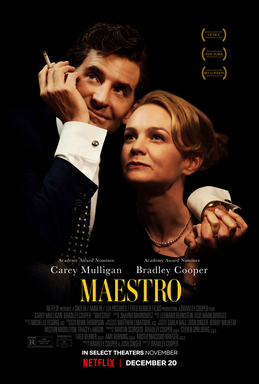
Lisa Marie Reviews An Oscar Nominee: Maestro (dir by Bradley Cooper)


I hope that Bradley Cooper  will win an Oscar soon.

It’s obvious that Cooper wants that Oscar and really, who can blame him?  After spending years being dismissed as a lightweight comedy actor, Cooper has really come into his own over the past thirteen years.  2012 was the year that he starred in Silver Linings Playbook and received his first Best Actor nomination.  In the years that followed, he was nominated for American Sniper, American Hustle, A Star Is Born and Maestro.  He deserved to be nominated for both Nightmare Alley and Licorice Pizza.  Cooper has shown himself to be both a talented actor and director.  He may not have been nominated for his direction of A Star Is Born but everyone knows that he should have been.  He’s come a long way from being the star of The Hangover films and it makes sense that he would want an Oscar to make it official.

(The Oscar itself may not carry the cultural cachet that it once did but seriously, an award is an award.)

That desire for an Oscar is probably the best way to explain 2023’s Maestro, a film that really might as well have just been called Oscar Bait.  Not only did Cooper direct and co-write Maestro but he also donned a prosthetic nose (and was briefly the center of some online controversy) to play the role of composer Leonard Bernstein.  Filmed in both black-and-white and color, the film follows Leonard Bernstein from his young debut as a conductor through his marriage to Felecia (Carey Mulligan).  Throughout the film, Felecia remains Leonard’s strongest supporter and his muse, even when she’s embarrassed by the rumors of his own impulsive behavior and his habit of cheating on her with men.  The film is a portrait of the struggle to be a genius, the struggle to support a genius, and the love that can hold two people together even during the most difficult of times.  And it’s all very Oscar bait-y, giving both Bradley Cooper and Carey Mulligan several scenes that, while well-executed, still feel as if they were designed specifically to appeal to the voters.

I had mixed feelings about Maestro when I watched it.  On the one hand, I definitely admired the craft and the skill that went into the production.  I admired the performances of both Bradley Cooper and Carey Mulligan.  The movie’s soundtrack is full of the best of Bernstein’s compositions, all performed by the London Symphony Orchestra.  The movie looked wonderful and it sounded wonderful but it also felt strangely hollow.  Watching it, I realized that the movie really didn’t know what it wanted to say about Bernstein and Felecia.  The movie was so consumed with technical perfection that the emotions of the story sometimes felt rather remote.  It was a film about Leonard Bernstein that, despite Cooper’s strong performance, failed to really give us a reason to care about Bernstein.  Maestro is a film that you admire while you watch it but it doesn’t really stick with you afterwards.  It’s the epitome of Oscar bait.

Maestro did not win Cooper any Oscars, though it did bring some nominations.  The film was also nominated for Best Picture but it lost to Oppenheimer.  That said, I’m looking forward to the year when Bradley Cooper does finally win his Oscar and hopefully, he’ll win it for a film that’s more like the emotion-filled A Star Is Born than the rather detached Maestro.  He’s one of my favorite actors and he’s due.

Going Berserk (1983, directed by David Steinberg)


John Bourgignon (John Candy) is a man of many talents.  He’s a limo driver.  He’s a drummer.  He is an occasional actor, having starred in Kung Fu U. for his friend, director Sal DiPasquale (Eugene Levy).  John is also improbably engaged to Nancy Reece (Alley Mills), the daughter of Congressman and presidential candidate Ed Reese (Pat Hingle).  As the wedding approaches, John deals with a number of things.  He chauffeurs around a group of Spanish Beatles impersonators.  He finds himself handcuffed to a fugitive (Ernie Hudson) who dies at an inopportune time.  A cult leader (Richard Libertini) attempts to brainwash John into assassinating Ed, though the process might just turn John into a “schmuck.”

Going Berserk was John Candy’s first lead feature role and it was obviously designed to play to Candy’s popularity as one of the stars of SCTVGoing Berserk doesn’t gave a plot as much as it’s a collection of skits, some of which work better than others but all of which are held together by Candy’s comedic timing and amiable presence.  Going Berserk is disjointed and wildly uneven but it’s also frequently funny and that is a testament to Candy’s talent.  Even an overlong parody of The Blue Lagoon raises a smile because John Candy is just so committed to playing out the joke.

Going Berserk also features several familiar faces, like Richard Libertini, Pat Hingle, Ernie Hudson, Dixie Carter, Kurtwood Smith, Paul Dooley, and two of Candy’s SCTV co-stars, Eugene Levy and Joe Flaherty.  I especially liked Levy’s performance as the sleazy director who blackmails his way into filming the wedding.  Going Berserk was frequently stupid but, more often than not, it made me laugh.

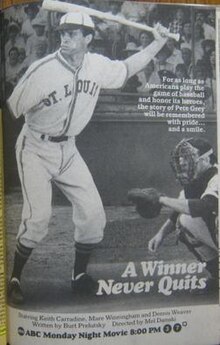
I Watched A Winner Never Quits (1986, dir. by Mel Damski)


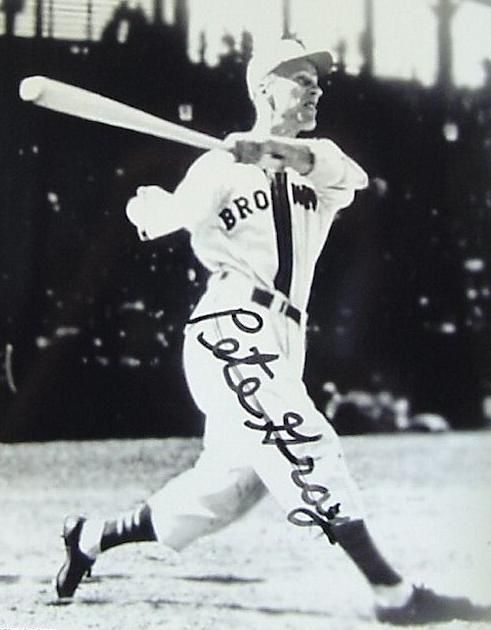
In 1945, Peter Gray made history when he became the first one-armed major league baseball player.  Gray grew up in poverty in Pennsylvania.  His father was a miner and Peter was one of five children.  He was only seven years old when he lost his right arm in a wagon accident but he loved baseball and he wasn’t going to let his disability keep him from playing.  He learned how to bat and catch and throw with his left hand.  He quit school when he was thirteen and worked for a while as waterboy while playing baseball in the local leagues.  Eventually, he made his way up to the minor leagues and, in 1945, he was called up to the majors.  He played one season for the St. Louis Browns.

The media loved the story of the one-armed baseball player but Peter always said that he resented feeling like he was being put on display whenever he took the field.  He was a competitive outfielder who could catch a ball, remove his glove, and then throw the ball to the infield just as quickly as anyone with two hands.  As a hitter, he struggled because pitchers figured out early on that he couldn’t hit the breaking ball.  After the 1945 season, Peter was sent to back to the minors, where he spent the rest of his career.  Though Peter was known for being an angry player who resented anyone pointing out his disability, he still made time to visit amputees in military hospitals to show them that they could still find success and to encourage them to chase after their dreams.

Peter’s story was the basis of A Winner Never Quits, which I watched on YouTube this weekend.  It was a good baseball movie, starring Keith Carradine as Peter.  What I liked is that the movie didn’t make him into a saint.  Carradine played Peter as being angry and with a definite chip on his shoulder.  Peter had every right to be angry and I’m glad the movie acknowledged that.  In both the movie and in real life, Peter was worried that he was just being treated as a sideshow.  In the movie, his attitude improves when he meets a young boy who recently lost his arm and who looks up to Peter.  Peter remained a friend to the boy and his family for the rest of his life.  A Winner Never Quits is about pursuing what you love and never giving up.  That’s what baseball is all about.  A Winner Never Quits is a good and inspiring baseball movie that’s not just for the fans.