Agent of Time Variance Authority (TVA): when Exiles met What-If


Idea:
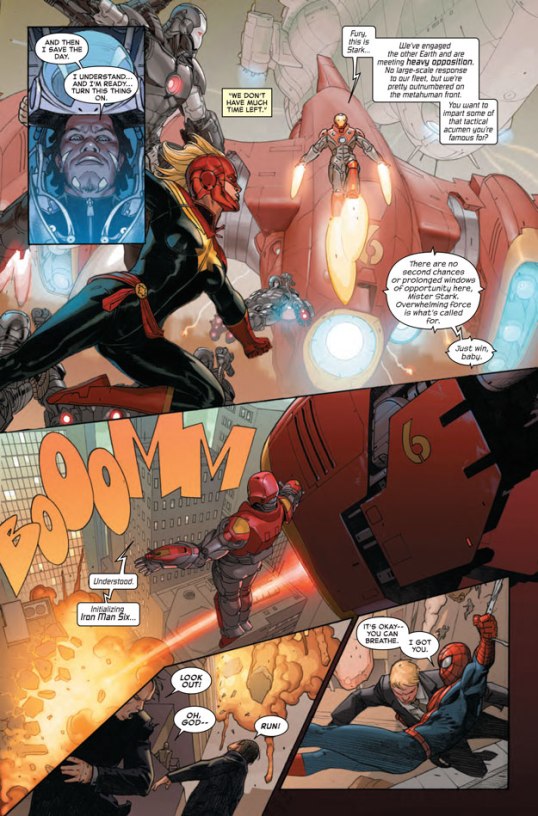
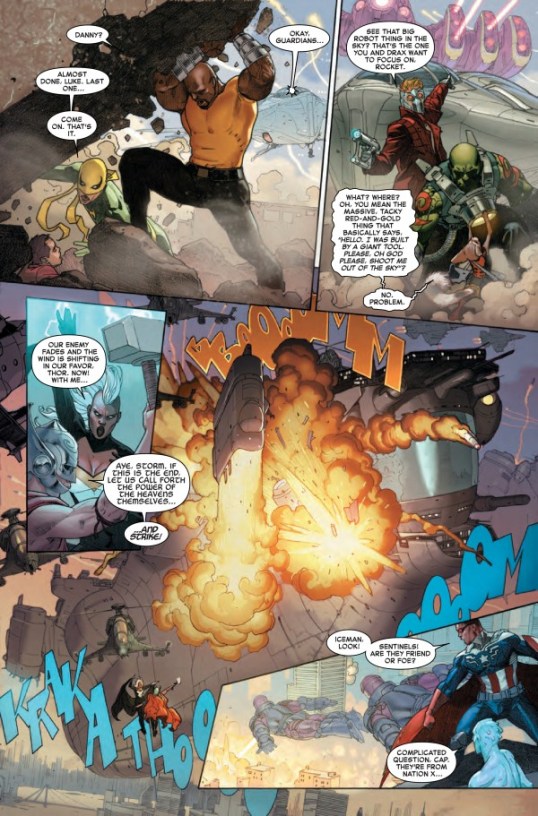
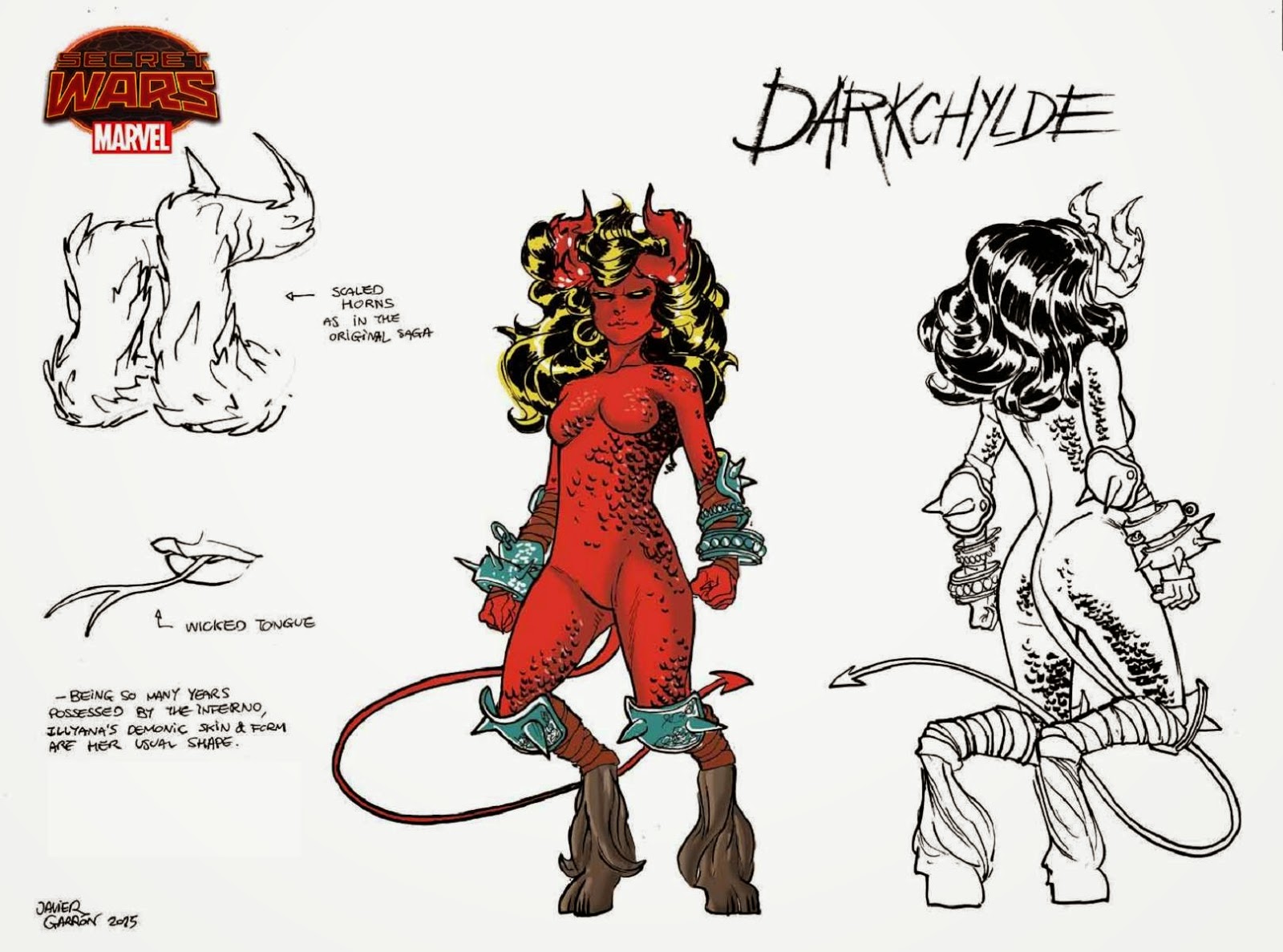
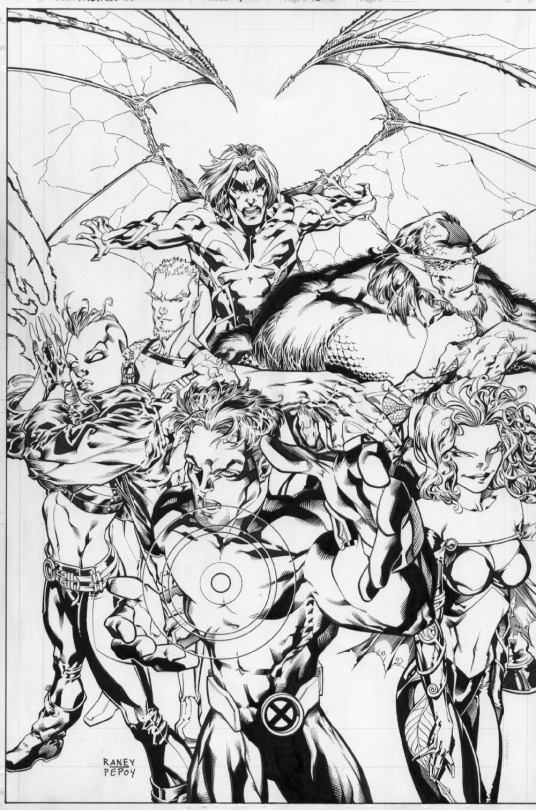
It sprang from my desire to see more of the Marvel Multiverse and make the Time Variance Authority an organization worthy of respect.  The hero will travel across various realities to eliminate threats and preserve the space-time continuum and multiverse.

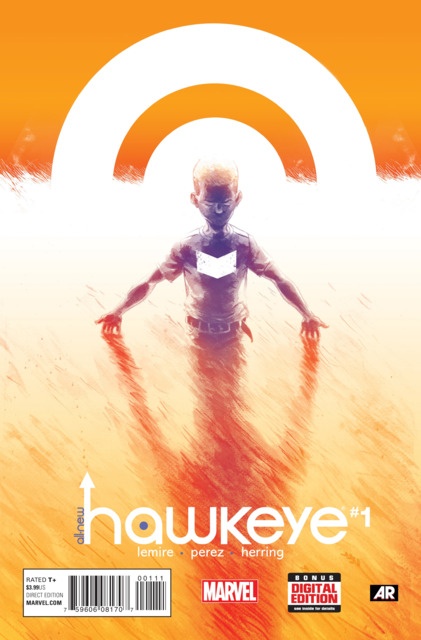
K’aang is a variant of Iron Lad (the teenage Kang the Conqueror) who is a greater fanboy than Iron Lad. He was able to become a distinct being from his future self, much like Kang separated himself from Immortus in Avengers Forever. He became a specialist employed by the Time Variance Authority and renowned for ending Cosmic Man’s inter-dimensional piracy.  He utilizes the spoils from his mission instead of his armors.

youngavengers5

Kang vs Iron Land (by Jim Cheung)

Paraphernalia:
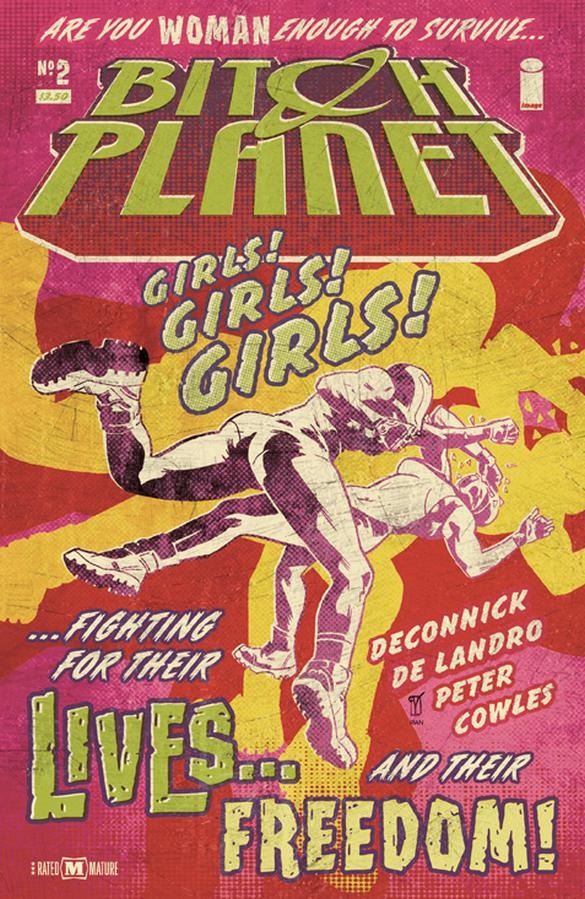
Air Mariners are technologically advanced track cleats that grants flight through replication of Prince Namor’s flight mechanism.

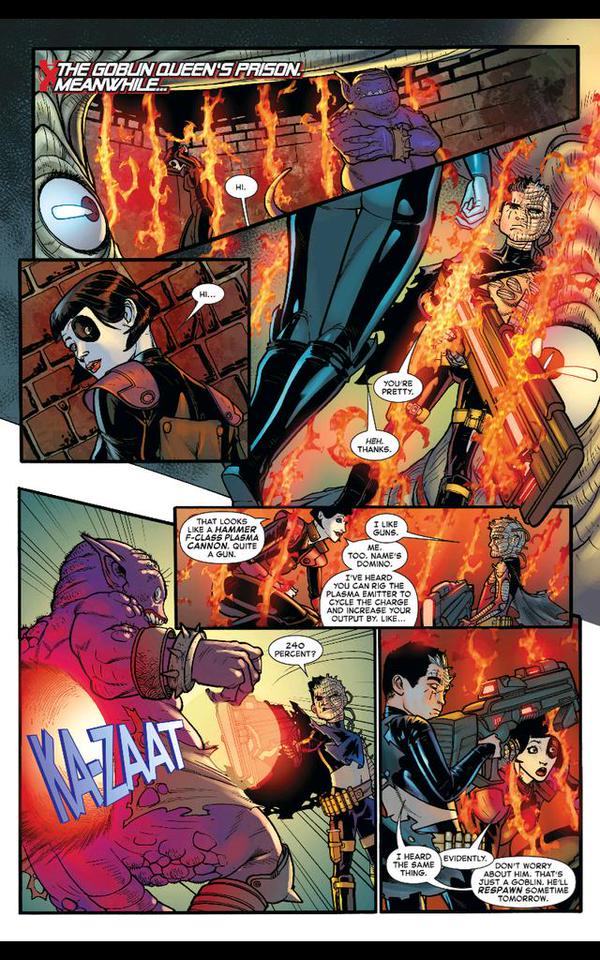
An Auric Blaster is a variable directed-energy firearm based on a Fantastic Foundation gun controller. It is equipped a Kurtzberg battery and a Skrull Flux Matrix.  (It resembles the golden blaster depicted by R. Grampa on the Killjoys cover).
Special Attribute:
It is fueled by the user’s belief and emotions.
Genetic and gravity locks prevent others from using the weapon.
Variable Emissions:
An Absolute Nullifier is a repulsor emission that neutralizes the posthuman targets.
A Dean Cutter is a potent laser with the same frequency as a Majesdanian photonic discharge.
A Hammond Flare is an incendiary plasma created by a modified Pyronano aerosol.
An Oberon Spray is an ionized stream of “pixie dust” (a hallucinogenic agent created from Wakandan toad venom).
Psyche Pulse is a psionic energy burst that causes great damage to organic and inorganic objects.
A Pym Pellet is a smart bullet derived Unstable Molecules saturated with Pym Particles. Its target lock feature possesses Z-axis manipulation to phase through any obstacle (civilian or barrier) to reach the target or increase its density to diamond hardness to penetrate armor.

11436746215_7d2c202bab_o

The Caliburn is a dagger fashioned from Zabu’s tooth and coated in Anti-Metal. It disintegrates metallic molecular bonds on contact.

A Doop Inventory is an ionic storage device that contains items within a simulated Doop Land (pocket dimension used by Doop to store things).

A Horizon Slugger is a refined Reverbium baseball bat with an embedded Schultz Vibro unit. It absorbs kinetic impact and oscillates at a frequency that generates concentrated blasts of air.

An Oubliette Sigil is a ring-like data transmitter that implants custom traits into the wearer.
Skills:
Psychometric mastery of any weapons he touches
Adept in multiple human and alien martial arts.
Fluent in numerous Earth and alien dialects.

The Thunderer is Zabu’s tooth fashioned into a dagger and molecularly bonded with Uru. It generates and tactilely discharges tetrawatt voltage.

Wall Crawlers are a custom pair of sneakers with Vibranium soles that enable the user to scale any flat surface.

Zabu Cloak is thethe chemically treated pelt of Ka-Zar’s animal companion. It is bulletproof.

prv338_pg5

(Zabu the sabertooth by Greg Land)

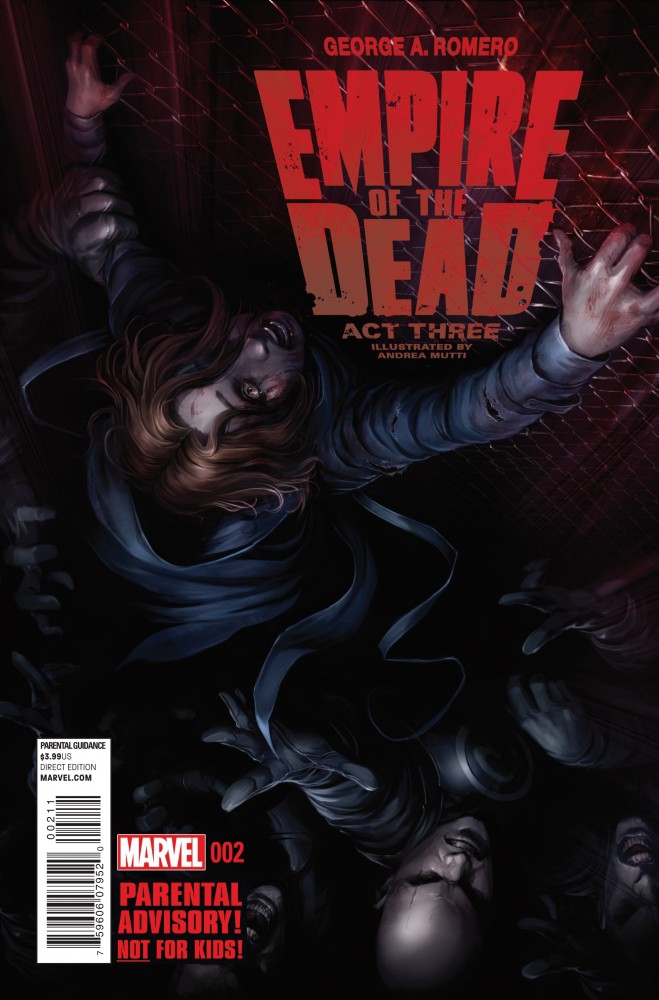
“Empire Of The Dead” #5 : George Romero’s Grand Chessboard Finally Comes Into Focus


3898437-05

If it seems like it’s been awhile since we looked at a new issue of Empire Of The Dead around these parts, that’s because it has — the fifth and final segment of the first arc in George Romero’s printed-page zombie epic (officially titled in the copyright indicia as George Romero’s Empire Of The Dead Act One #5) is a good few weeks late in maintaining its purportedly monthly schedule, but now that it’s finally here, let’s not waste any more time, shall we?

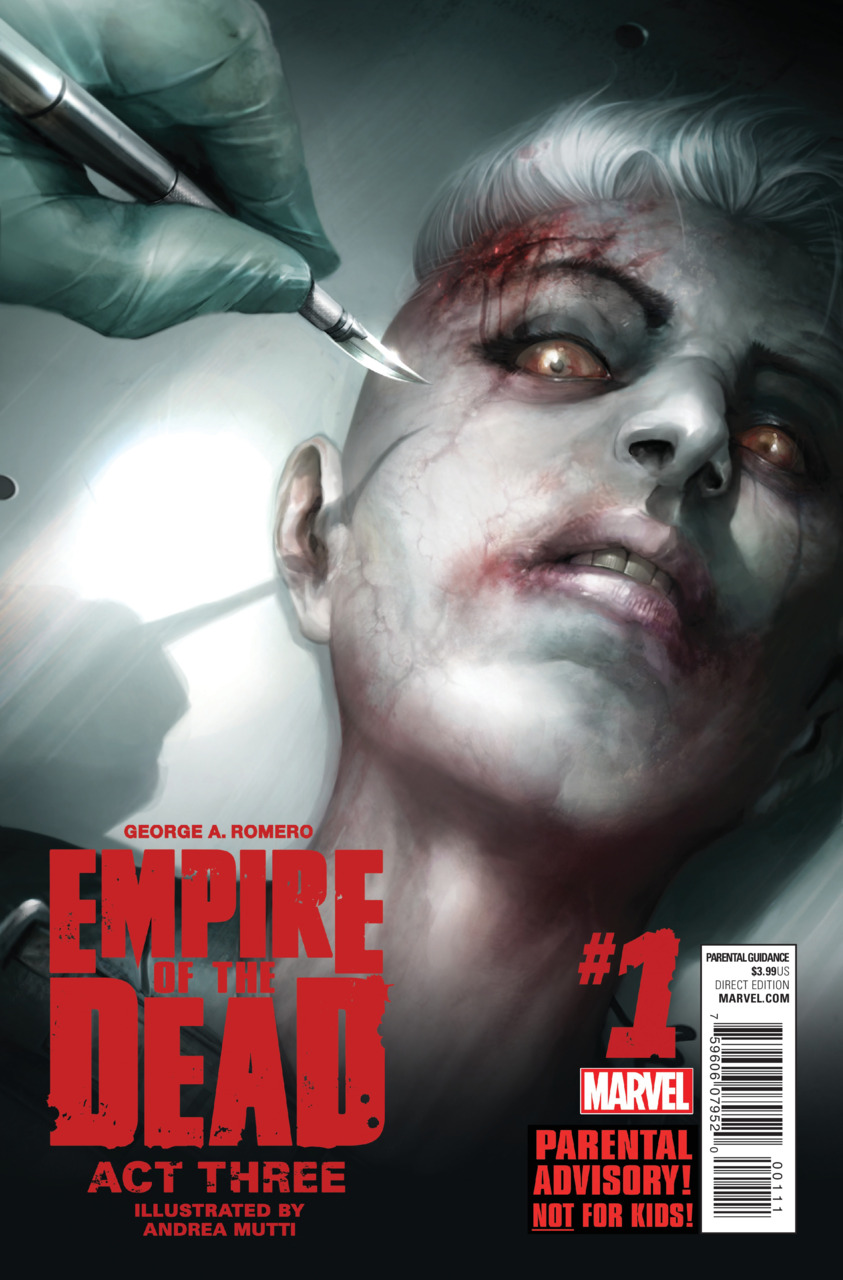
I’ve remarked previously about how this first arc seems more and more like pure set-up the longer it goes on, and I’ve wondered aloud about just how the father of the modern zombie genre was going to bring all the disparate subplots he was working on together in time for at least something resembling a decent climax by the time this issue was over, but I also stated that I still had an innate trust in our guy George’s storytelling ability and reiterated each time I felt like things were headed at least slightly off the rails that I was still reasonably certain that he’d find some sensible way connect all his metaphorical dots before the sand ran out in his equally metaphorical hourglass. As it happens, it seems my faith was not misplaced, because Empire #5 does exactly what you want all good “season-ending” stories to do : brings the overall picture into much clearer view while simultaneously whetting your appetite for the next new episode — and the TV “season” analogy probably isn’t a bad one here given that Romero and artist Alex Maleev (how ’bout that awesome cover he’s cooked up for this one, huh? Arthur Suydam’s “NYC variant,” as they’re known,  is reproduced a couple of paragraphs below) will be returning for their second five-issue “act” in September, right around the same time most television series begin their new episodic runs.

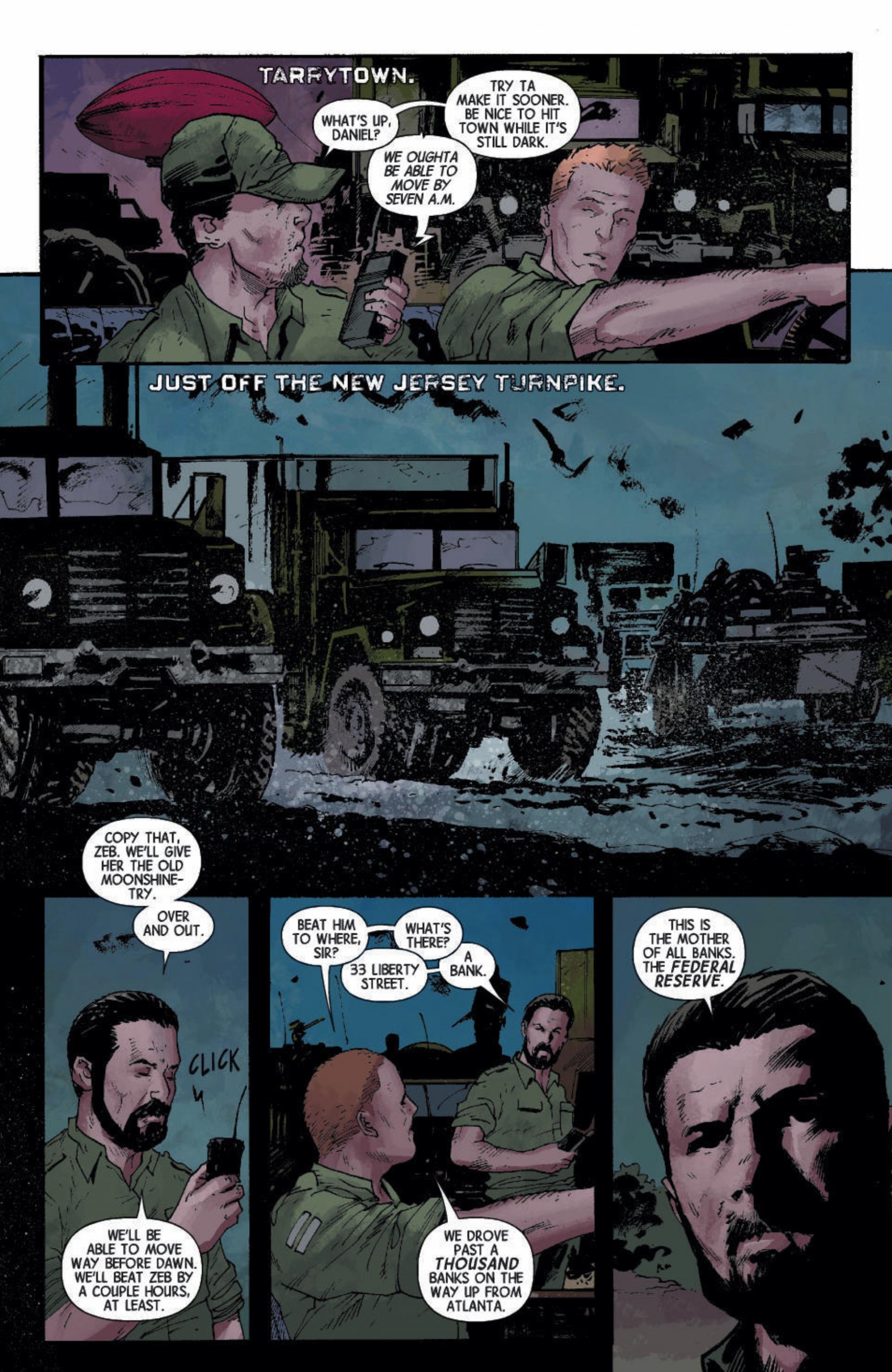
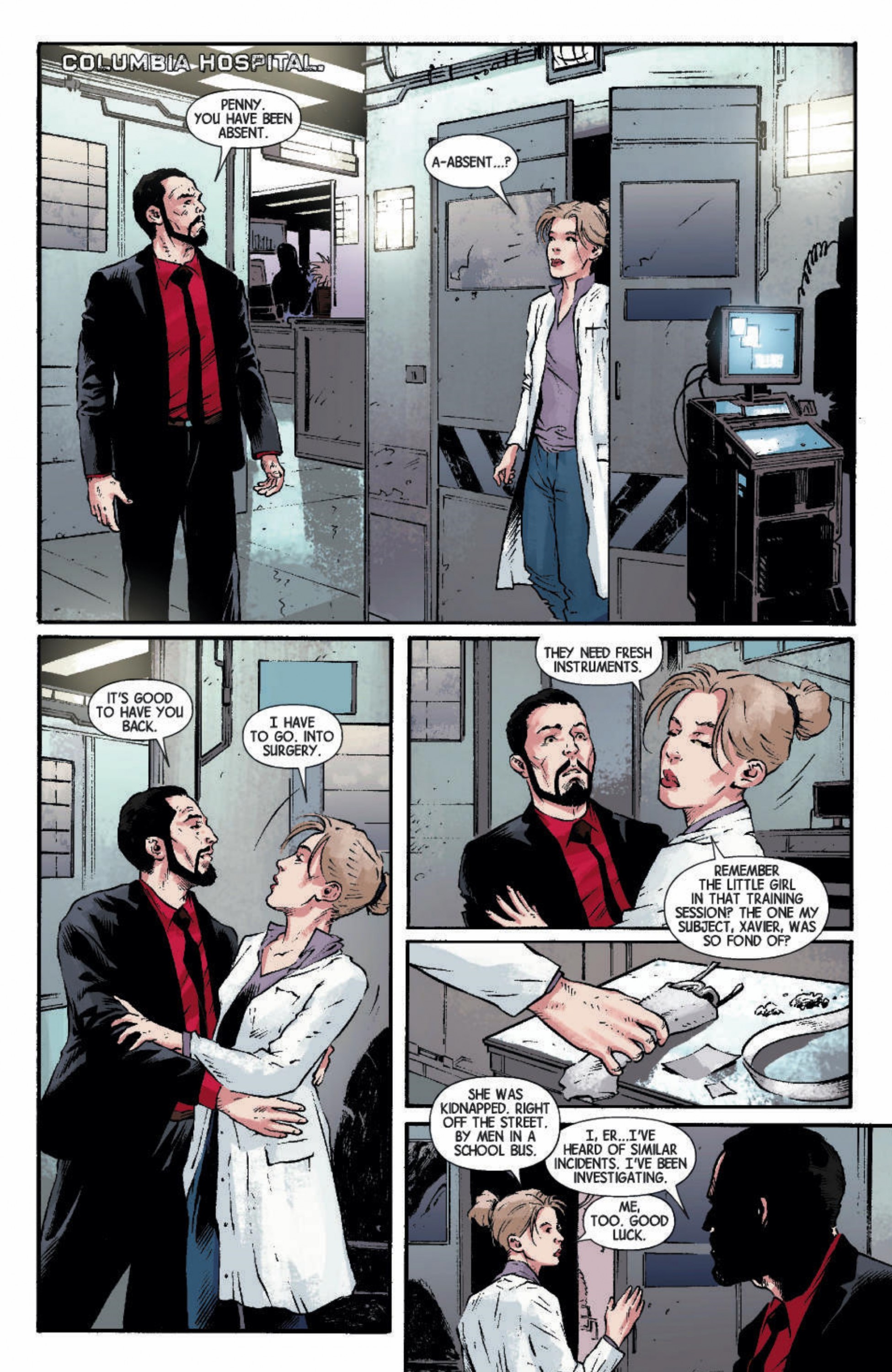
But damn — I don’t really wanna wait that long, ya know? Romero opens the action here in issue number five by delivering Xavier and her makeshift army of “smart” zombies right into the hands of Dr. Penny Jones and “trainer” Paul Barnum, and leaves us with one of his trademark ethical quandaries : will the marginally-more-intelligent undead horde be better off as lab rats, or fodder for coliseum death matches? Either outcome seems grim, and Romero seems to be taking the editorial stance we’ve grown accustomed to from him over the years : the real “monsters” here are the humans, and the zombies can’t win either way unless and until we butt out and leave them the fuck alone.

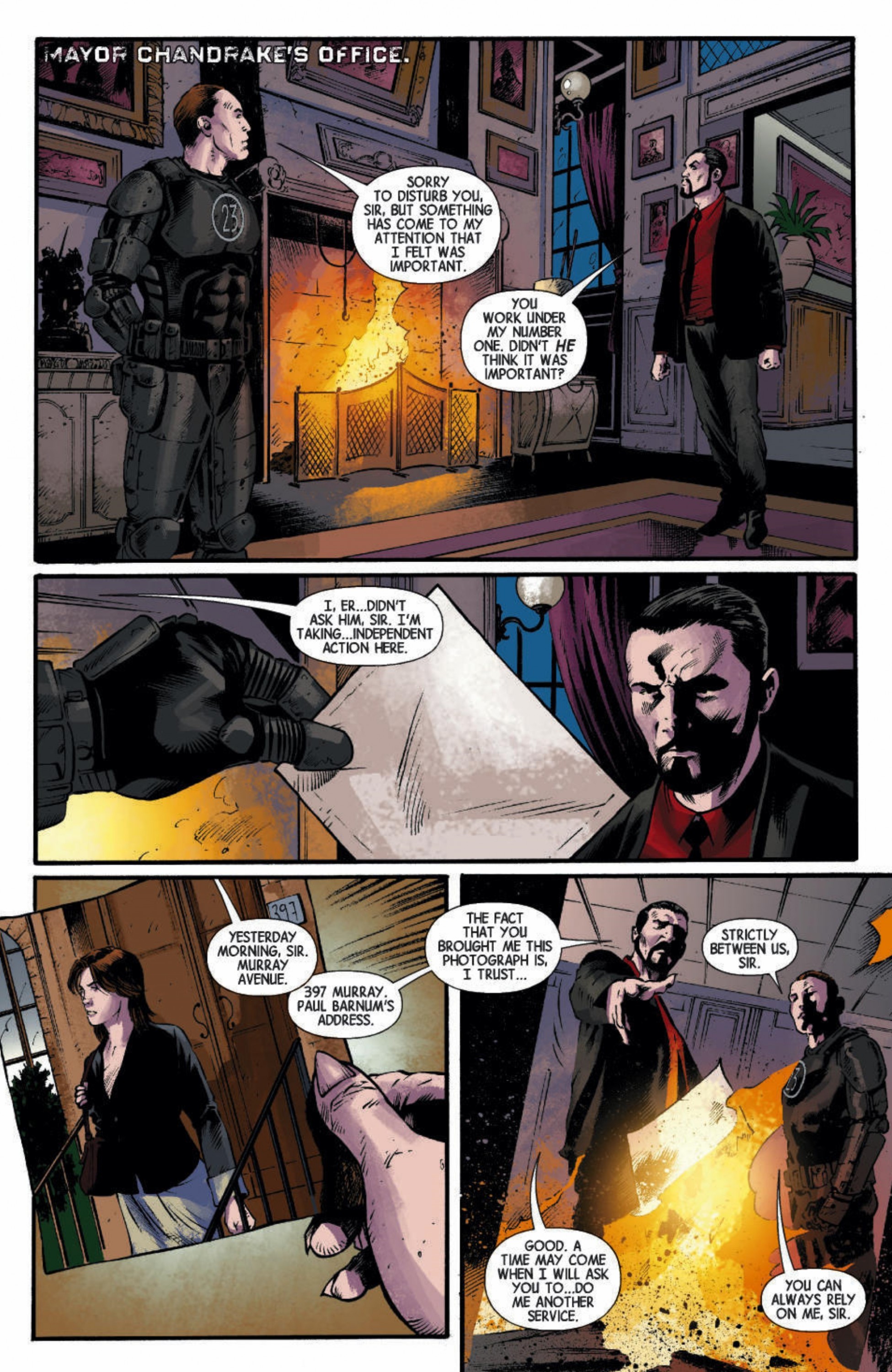
Palace intrigue is the other major order of the day here, and without giving too much away I’ll just say that the vampiric Mayor Chandrake’s sloppy-ass nephew, Billy, finally screws the pooch here and sees his recklessness get him cut off from the “family business.” Not to worry, though : unbeknownst to all, including Billy himself, this blood-drinking version of Fredo Corelone has friends in high places, who are distinctly unhappy with how his uncle is running the show and think it might be time for some new leadership in New York.

And speaking of friends in high places, it turns out that Southern hell-raiser Dixie Peach and her motley crew of social deviants and hell-raisers might just have some, as well — and they’ve got guns. Lots and lots of guns. And tanks. And bazookas. And grenades. And everything else an ambitious young sociopath might require for a fun night on the town. They’ve also got one thing Dixie herself doesn’t seem to possess — an agenda, and how she fits into that (as well as for how long) remains something of an open question as their siege gets underway on this issue’s climactic final page.

3898756-05-variant

If it seems like I’m pretty stoked at this point for act two, you’re absolutely right. My only real “beefs”  with this issue — and they’re comparatively small ones — are that Maleev’s art does, in fact, look a little bit rushed in some spots, and Romero’s dialogue veers into ever-clunkier territory as things progress. Don’t get me wrong : on the whole the visuals are still quite striking and perfectly suited to the story, but especially for a book that a good 3 or 4 weeks late, I’d expect more consistently-good-looking panels, and Maleev looks like he was cranking it out in order to meet his deadline (not that he made it) in several places here. The dialogue thing is both more excusable and less : obviously Romero had to get a lot done in a short amount of time here, so overly-expository “info-dumps” are to be expected, but if he’d paced himself a bit better earlier on (remember what a complete waste of time, story-wise, the second issue, in particular, was?) he might not find himself as hard up against the wall as he does here.

Overall, though, I can’t claim that these two factors, important as they are, detracted too much from my overall enjoyment of this issue. Nine out of ten of Maleev’s images still look amazing, and events in the story aren’t just moving at this point, they’re flat-out steamrolling. I would expect that Marvel will be issuing a trade paperback collection of this initial run sometime fairly soon in the weeks ahead, and this will probably prove to be an even stronger and more cohesive read in that format, so if you haven’t been following this series in its monthly (-ish) installments, that will give you a good opportunity to get caught up before the next series gets rolling.

Bring on September already!


Chaykin’s Back! Need I Say More? “The Shadow : Midnight In Moscow” #1


3833259-01

Believe it or not, friends,  for a guy who has something of a reputation for being a curmudgeon, sometimes I’m so goddamn happy that I don’t have a care in the world. Seriously. Life can be just perfect, regardless of whatever else is going on. Let me tell you why today was just such an occasion.

I went to the comic shop — it’s new comic Wednesday, so nothing unusual about that — and there it was : the first issue of Howard Chaykin’s The Shadow : Midnight In Moscow from Dynamite Entertainment, the long-promised six-part series that sees one of the masters of the medium return to the character that he single-handedly re-defined nearly 30 years ago in the pages of the instantly-legendary The Shadow : Blood & Judgment, And ya know what? It feels like he never left.

Probably because, in a very real sense, he never did. And I’m not just referring here to the numerous variant covers that he’s provided for other Shadow books since Dynamite acquired the character’s license, I mean that Chaykin has cast a long — errmmm — shadow over the classic pulp icon ever since his one and only outing as his writer/artist, and even though there have been some terrific Shadow stories told by other creators since — Andy Helfer and Kyle Baker’s 1908s series for DC remains a wickedly subversive read and really stands out as an under-appreciated gem to this day, and Garth Ennis had a nice run writing the erstwhile Mr. Lamont Cranston’s exploits in recent years for Dynamite — the fact remains that the the only reason the property endures to this day at all is because of Chaykin’s four senses-shattering issues all those years ago. The rest, including the Russell Mulcahy film? All aftershocks from the main event, dear reader.

Chaykin himself’s done plenty of first-rate work since, mind you — his recently-concluded and criminally-overlooked Buck Rogers mini-series for Hermes Press is a great “jumping-on point” for those of you who may not be too terribly familiar with his work — and he even enjoyed a fairly successful TV writing career for several years (most notably on the original The Flash series for CBS) before returning to comics, but I always hoped, no matter how far afield he traveled (figuratively speaking, of course) that one day he’d come back. And now he has. And like I said, life’s pretty much goddamned perfect.

28642Moscow01_page1-xlg

Not that the book is, mind you, but so what? It’s plenty awesome as first issues go, and even though Chaykin’s pencil and ink work isn’t as tight as it once was, and his writing is somewhat wordy by today’s increasingly-devalued standards, it’s still the best thing on the racks this week by far, and would be just about any week. Like any opening salvo, the main thing Chaykin’s gotta do here is set up mood and atmosphere, and he does that with just as deft a hand as ever, despite this series’ shift back into the past.

I suppose a few brief historical notes are in order here, though, before I leave anyone in the dust : Blood & Judgment, you see,  brought The Shadow into the (then-) present day for the first time in decades, and while that made long-time fans nervous, there was no need to worry — Chaykin, fresh off a highly-touted run on his groundbreaking, creator-owned independent work American Flagg! was more than ripe for the challenge of updating a character that had, essentially, never been updated, and he captured the dark charm, mystique, and righteous vengeance at Lamont Crantson’s core immediately. His series was laced with violence, a smattering of sex, and plenty of sardonic “gallows humor,” and by the time it was over, everybody was happy. I’ve honestly never met anyone who’s read that book that doesn’t love it.

So when it was announced that Midnight In Moscow would be taking us back in time — and not to the 1920s/30s, the era where most Shadow stories are set, but to 1950 (to be specific, the story actually begins on New Year’s Eve 1949) —  a lot of people were, once again, perplexed. Not your humble reviewer, though : I figured Chaykin was doing what he’s always done best — exploring uncharted territory. We’ve never seen a Shadow adventure set in this time period (at least not in comics), so here, I figured, would be a chance to find out what he was up during some of those “missing” years. So far, Chaykin’s typically daring move seems to be paying off, as the future that we know is coming hangs over the proceedings here like, in the words of the late, great Stuart Adamson, “a blanket on a cage.” The “Big War” is over. The Cold War is looming. And in Chaykin’s view, that might be an even scarier proposition. So why is The Shadow choosing now as the time to —- oh, never mind, I won’t spoil it. Just wait for the last page.

28640Moscow01_page4-xlg

I’ll tell you what, though, friends —  before you get to that last page, it’s gotta be said that every page of this book oozes foreboding. While the main details of the plot are still sketchy — in brief they seem to revolve around a scheme to “atomically shrink” gold to make it easier to rip off and transport — you can bet we’re only just scratching the surface of what’s sure to be a complex plot here. Don’t ask me what the soon-to-be-blackmailed scientist in London has to do with anything. Or why The Shadow himself appears to generally be laying low these days. Or what the hell Moscow even has to do with anything. But I trust that we’re not just in good hands here — we’re in the best hands.

And that extends beyond Chaykin himself. His colorist of choice in recent years is Jesus Aburto, who did an absolutely sensational job on Buck Rogers and appears ready and eager to top himself here, and his regular stalwart letterer, Ken Bruzenak, is back on the case, as well, which means that all those awesomely-stylized “HAHAHAHAHAHA”s haven’t lost any of their visual “oomph.” To those who ask what the hell difference a letterer makes, just take a look at the pages reproduced above and below.  As a matter of fact, they also serve as pretty solid evidence that the entire creative team here is firing on all cylinders.

28641Moscow01_page5-xlg


So yeah — the gang’s all here, from the Shadow and his best gal, Margo Lane (along with their team of crack undercover sleuths) on the page, to the stellar array of talent assembled to make those pages, and you probably couldn’t ask for a better take on the character from even his creator, the legendary Walter Gibson. This is a fucking event, people, courtey of a guy who belongs on the “Mount Rushmore of ’80s Comics Creators” right alongside Moore and Miller, and for folks who are most familiar with Chaykin for his recent (and superb) work as artist on Image’s Matt Fraction-penned Satellite Sam, it provides a chance to see why all of us old-timers have been raving about his writing, as well as his drawing, for so long now. For those pretty much unfamiliar with comics in general — probably the reason I posted this review up here rather than on one of the more comic-centric sites I write for — it’s a terrific excuse to to pop into your LCS and pick up a contemporary book from one of the most respected creators around, who’s back to doing what he does best. Seriously, right after Watchmen  and The Dark Knight Returns, Chaykin’s Shadow is it as far as revered mainstream comics from that decade we’re all still talking about  goes, and he immediately steps back into the character and his world with breathless ease here. Get in on the ground floor of this one while you can — there were only three copies left when I hit the shop just a couple of hours after it opened today, so you’ve been warmed — it promises to be one terrific ride.

“Empire Of The Dead” #4 : George Romero Continues Playing The Long Game


3775351-04

There’s no doubt about it at this point — the entirety of the first five-issue arc in George Romero’s Empire Of The Dead is pure set-up. Consider : with one more installment  to go in the opening “act” (the official numbering here being George A. Romero’s Empire Of The Dead Act One #4) we’re finally getting our first sustained glimpse at a character called Dixie Peach, somebody who, from all I’ve read about this series, is slated to play a pivotal role in the proceedings. Who exactly she is and what her motivations are remain a mystery — she and her crew have just come up to New York from Georgia and seem to be intent on causing mayhem as, I guess, a sort of “payback” for the Civil War, and get off to a pretty good start by killing a border crossing guard and shooting out a security camera — but nevertheless, four chapters into his story Romero finally seems to have all his chess pieces in place.

Not that we see all of them this time around, mind you. Mayor Chandrake’s nephew, Billy, is notable for his absence  (in fact the Mayor himself only makes the briefest of appearances here, when he attempts his “vampire seduction” act on Dr. Penny Jones before being cock-blocked — or maybe that should be neck– blocked — by Paul Barnum, who’s finally given something semi-meaningful to do in this issue), as is Zombie super-fighter Zanzibar, but there’s only so much you can cram into 20 pages, I guess.

Former SWAT cop-turned-zombie Xavier has the biggest part to play here in number four, as she befriends a homeless young girl and seems to adapt quickly to her new role as the child’s protector, further continuing Romero’s theme of “humanizing” the undead. That could prove to be an interesting relationship down the road. And the vampire power structure is laid out in more detail as we learn just how thoroughly their “curse” has penetrated every level of the city’s administration and political infrastructure. Plus, we get to learn what happens to vampires when they — get this — die (and yes, they do die under the rules Romero is establishing/expanding upon).

3775531-04-variant

With the second-to-last issue of the opening series being this heavy on the (sometimes clumsily-scripted, it has to be said) exposition, then, it’s fair to say that act one of Empire has laid its cards on the table : don’t expect a self-contained narrative here that can be read on its own apart from its forthcoming sequels. Romero’s following the “long game” strategy so fashionable at Marvel of late, probably best exemplified by Dan Slott’s Superior Spider-Man, which has essentially turned out to be a 31-issue mini-series setting the stage for Peter Parker’s return next week in the (yawn) new Amazing Spider-Man #1.

Not that I expect our guy George to take it quite that far, mind you — by the time we get through all five planned “acts” of Empire Of The Dead, I do believe —or at least hope — that we’ll have a fully-functional, start-to-finish, epic zombie story. But he’s building things very slowly, methodically, and carefully. If this were the work of somebody knew to the genre, I’d probably be a little more cautious about how little narrative progress had been made by this point, but you know how it goes with Romero : sooner or later every one of his plot threads ties together and we end up with a story that says more about “us” (humans) than it does about “them” (zombies).

Alex Maleev’s art is enough to keep me coming back for more, as well (his main cover, and Arthur Suydam’s variant, being reproduced above, respectively,  for your edification). He’s just plain hitting it out of the park here, and seems to be gaining more confidence, and a better handle on the grim world he’s depicting, with each issue. I dare say he may even be surpassing the lofty standard he set for himself on  his legendary Daredevil run here. 21 more issues of images as flat-out awesome as those he’s giving us isn’t something I’m going to complain about in the least, and I’m sincerely hoping that the breaks between acts one and two will be a very short one indeed.

“Empire Of The Dead” #3 Shambles Back In The Right Direction


3718046-03

If you’ll recall — and, hell, it remains true even if you don’t — the second issue of Marvel’s “event” mini-series Empire Of The Dead left me feeling decidedly unenthusiastic about this book”s future, given that all it really managed to do was tread water for 20 pages and then stop. But hey — maybe I’ve been a little too quick to judge. It’s been known to happen before.

I’m not here to tell you that Empire Of The Dead #3 (or, to be true to the copyright indicia, George A. Romero’s Empire Of The Dead Act One, #3) regains all the momentum we lost after a really solid first issue, but it does go some way toward explaining a few head-scratching things left over from last time around, like what all those rat slaughterhouses all over town are about (rat blood is provided as nourishment for the vampires who can’t afford the real, human stuff) and why certain factions of the city council are, shall we say, less than taken with Mayor Chandrake’s leadership (turns out they’re all fucking vamps and feel he might be hoarding all the choicest — supplies, shall we say — for himself and his family), and actually does manage, in the midst of all this palace intrigue (some of which, in fairness, is dialogued in incredibly clumsy fashion) to propel the main narrative forward in some interseting new directions, which is a heck of a lot more than the second installment was able to do.

As predicted by anyone and everyone who knows anything about Romero, the relationship between Dr. Penny Jones and former-SWAT-officer-turned-zombie Frances Xavier has quickly become the central focus of this series, since questions of “how different are they from us, anyway?” have been foremost on the father of the modern zombie mythos’ mind at least since he introduced the world to Bub in Day Of The Dead, if not earlier (recall the “this place must have been important to them” line as the undead make their leisurely way through the mall in Dawn for perhaps the first verbalization of this obsession), and it turns out that Xavier is probably even more advanced than we already thought, given that she actually gets bored with some of her less-challenging training exercises/tests and decides she’d rather play some basketball instead (hence that awesome cover art shown at the top of this post).

Things get a little out of hand, though, when — well, that would be telling. Suffice to say this issue ends on a nice cliffhanger that sufficiently whets the appetite for next month’s installment and definitely leaves the reader with a pleasant-enough “hey, maybe things are back on the right track here after all” feeling.

3718333-03-variant

As far as the art goes, I’ve got no cause for complaint whatsoever. Alex Maleev’s “rough sketch” style continues to grow on me, and it’s nice to see a world this un-stylized depicted in such an honest, non-flashy, “warts and all” fashion. Everybody looks as worn down by life (or unlife, as the case may be) as they ought to, and every panel of every page oozes a kind of post-apocalyptic “we’re doing the best we can, but shit, it’s getting tiresome” feel. I dig it a lot — and I dig the heck out of Arthur Suydam’s variant cover (shown directly above) as well — as, I assume, anyone with working eyeballs will.

So yeah — my optimism about this series has returned, and with two issues to go in the opening five-part “act,” it’s safe to say I’ll be on board for both to see how things play out. Some of the major characters — specifically Paul Barnum — still seem under-utilized, but hopefully they’ll get some more to do soon, as well. All in all I have to confess that I should have known better than to doubt The Master — I have renewed  faith  that, wherever he’s taking us, the trip will be worth it.

See How An “Evil Empire” Is Built


Evil_Empire_001_coverA

You won’t find a much more loaded term in the entire lexicon of political rhetoric than “evil empire.” The phrase was made (in)famous when Reagan used it to describe the Soviet Union back when he had a hard-on for the apocalypse, and while some folks thought he was just being melodramatic, the “joke” he made a couple years later when he thought his mic was off about how he’d “just signed legislation outlawing Russia forever — we begin bombing in five minutes,” went some way towards throwing into stark relief why hard-line anti-communists were every bit as much a threat, if not moreso, than the dreaded “pinkos” themselves.

Fast forward a few years from that and America is thumping its collective chest and patting itself undeservedly on the back for having supposedly “won” the Cold War — uhhhhhmm, sorry, but last I checked the Soviet empire collapsed from within under its own weight — and we find out that our purported “enemy” was a starving nation that couldn’t even put bread on its own collective table, much less invade the US and destroy our much-vaunted “way of life.” In short, folks, we got hustled — the US government spent hundreds of billions on weapons (particularly nuclear weapons) we didn’t need in order to “fight” a “foe” that couldn’t even keep its own house in order. much less come and forcibly annex our own.

The lesson to be learned here? All wars — even “cold” ones — are a racket, in the immortal words of Smedley Butler, and the only “winners” are the defense contractors who profit from them.

JAN140984-02

Still, Cold War anxiety gave rise to some remarkably salient takes on the whole “dystopian future” scenario, the most famous of them in the comics world being Alan Moore and David Lloyd’s seminal V For Vendetta, which eventually became a big-budget Hollywood blockbuster once it had been stripped of all its smartest elements (and anarchist politics),  and  the Guy Fawkes “V” mask has ended up being appropriated not only by groups that probably do, if you’ll pardon the term,”deserve” to wear it given that they understand the story’s socio-political implications — such as the Anonymous hacker collective and various factions of the loosely-defined “Occupy” movement — but also, sadly and ironically, by far-right extremist supporters of arch-conservative/homophobe/racist American politician Ron Paul, and his even less principled, and decidedly more eel-like, son, Rand, who’s not even much of a Libertarian given his opposition to same-sex marriage and civil unions, his oft-stated desire to outlaw all abortion, even in cases of rape and incest, and his flat-out insane idea to “modify” the 1964 Civil Rights Act so that businesses can go back to discriminating against black customers if they want.

This guy’s a “champion of freedom”? Don’t make me laugh. Still, given his propensity for taking credit for work done by others, it’ll probably only be a few years before the junior senator from Kentucky claims authorship of V For Vendetta himself.

All of which brings us, in an admittedly roundabout way, to the fact that it’s about time for a “dystopian future” comic for a new generation now that the last really good one has been hijacked, at least at the margins, by the very right-wing authoritarian forces it was (bravely, for its time, I might add) braying against. And while I don’t know if writer Max Bemis and artist Ransom Getty’s Evil Empire, the first issue of which has just seen the light of day via Boom! Studios, will prove to be that book, it’s certainly off to an intriguing, if wildly uneven, start.

Evil_Empire_001_PRESS-6

I freely admit to not being at all familiar with either of this title’s principal creators — the only name associated with the series so far that I recognize  being FBP (a book you absolutely need to be reading) artist Robbi Rodriguez, who provides one of the variant covers to this debut installment (the main one, reproduced at the top of this review, being the handiwork of Jay Shaw) — but that’s actually a good thing in my book, since there’s a shitload of up-and-coming talent in comics that deserves much wider exposure than it’s gotten so far. Hell, truth be told I’m not all that schooled on Boom! as a publisher, apart from the fact that they have the RoboCop comics license and  they put out Mike Carey and Elena Casagrande’s Suicide Risk, which is easily one of the three or four best series being published by anyone right now. A quick glance at Evil Empire‘s copyright indicia shows that it’s a company-owned, rather than creator-owned, work, and that’s not cool in my book, but oh well. Marvel and DC certainly have been been getting away with the work-for-hire hustle for decades now — it’s just depressing to see smaller publishing houses following suit, I guess.

In any case, this is at the very least a creator-driven project —it would just be nice it if were a creator-owned one, as well.

Anyway, to the story — the action starts off 25 years in the future, where things have gone to hell in the proverbial bucket. “Security” cameras monitor every citizen’s every move, armed George Zimmerman-types are given badges and prowl the streets looking for (oh, who are we kidding, creating) trouble, some unnamed corrupt dictatorial overlord runs the whole show, and various technological “bread and circuses” serve to disrupt the cowed and tired populace from the troublesome nature of reality itself.

All in all, then, not too big a reach.

A few pages in, though, is when things start to get interesting, as Bemis and Getty begin the task of charting how we get from here to there. First up we meet politically-aware hip-hop artist Reese Greenwood, and while Bemis saddles her with some truly mind-bogglingly stupid lyrics, to his credit he also manages to establish her as a thoughtful, deeply aware character in fairly short order. She’s got no time for “the system,” as you’d expect, but she ‘s hardly the type of cardboard caricature so many “urban” African-American women in comics are these days. She seems like the sort of person you’d actually enjoy sitting down and having a conversation with, rather than a confrontational, “Invader From Mars” type.

Democratic presidential nominee Sam Duggins certainly seems to have taken a shine to her, as well. He pulls a few strings to meet her backstage after one of her shows, crashes an interview she does with MTV, surreptitiously passes his phone number to her — anything to get the young lady’s attention. Sam seems a decent-enough sort — more progressive than anybody the party would have the guts to nominate for national office in real life, to be sure (not to mention the fact that a single guy without kids wouldn’t stand a chance in a presidential election), but Reese isn’t buying his line entirely. She certainly seems to hope  he’s the real deal (hey, a lot of us hoped for the same from Obama once upon a time, before his “Bush-lite” tendencies fully came to the surface), but she’s  apparently seen one too many phony “leftists” turn out to be  nothing but “kinder, gentler” versions of the same old corporate stooges over the course of her life to fully get on board with either of the “Big Two” political parties, even the less overtly noxious one. I can certainly relate to that.

Evil_Empire_001_PRESS-7

Still, as  patently dishonest as Duggins may (or may not, who knows?) be, he’s a saint compared to pious, grandstanding, loathsome Republican nominee Kenneth Laramy, your typical “family values” right-wing blowhard. Unlike Reese and Sam, Laramy is, in fact, presented as nothing but a two-dimensional collection of tired stereotypes, which is kind of a shame, but with only 22 pages of story and art to work with something’s gotta give, and hey, it’s only the first issue — and there’s plenty of reason to suspect that there’s a  lot more going on with him than meets the eye.

Case in point — midway through through out opening installment, Laramy’s daughter finds her mother bleeding to death in their home with a knife in her back. This scene is handled incredibly clumsily, with hints at first being given that something’s happened to the daughter rather than the mother, and mom croaking (sorry) some incredibly wooden dialogue about something bad she did years ago as she expires (Getty also employs an admittedly unique, but frankly kinda stupid, artistic contrivance when he segues into this scenario via an attached panel-sized asterisk), but the point to take away here, plot-wise,  is that there is no assailant present, so the identity of Mrs. Laramy’s murderer remains a mystery.

At her wake, though, the shit really hits the fan. Duggins shows up with Reese as his date, and while you’d expect a media circus to ensue, that’s avoided when Laramy himself finally takes to the stage — or page, as the case may be — and leaves us with one of the better cliffhanger splash-pages that I can recall in quite some time. Sure, it’s not exactly realistic for a grieving widower to be interrupted in the middle of his eulogy by a reporter asking him a fucking question — even if said widower is running for president (actually, he announces that he’s withdrawing from the race during the speech, but that’s neither here nor there) — but while the set-up may be awkward, to put it kindly (as are little touches of dialogue throughout the book, like Reese referring to Laramy’s running mate as his “runner-up” and Duggins saying that Laramy is opposing him on the “ticket” rather than the ballot, “tickets” being, colloquially speaking, something that a presidential and vice-presidential candidate are, ya know, sharing  — but again, whatever) the payoff is big. Or might be. In any case, our “bad guy” candidate ends the first issue by dropping one heck of a bomb, and Bemis succeeds in leaving his readers damn hungry for answers.
Yeah, alright. Evil Empire has a long way to go before it can even be mentioned in the same breath as V For Vendetta. And Bemis’ story is more concerned with how a fascist government comes to be rather than how it’s toppled. But his set-up shows a lot of promise, and with a little bit of dialogue tightening and some deft editorial tinkering along the edges, this could really turn out to be a fun and thought-provoking ride. Sure, the story definitely has a left-leaning point of view, but at least it’s realistic in its portrayal of Democrats as “less-bad” guys rather than actual good guys, and its forward-thinking presentation of urban youth culture in general, and hip-hop culture specifically, is to be commended. Too often in comics these days people of color under the age of 30 are still portrayed as villains, and that’s certainly not the case here.

On the art side, Getty does a nice job making his characters look reasonably believable physically, and he’s pretty skilled at using facial expressions and other non-verbal cues to communicate thought and feeling. There’s no typical super-hero action — and very little action in general — for him to sink his teeth into and really show off his chops, but his panels mostly flow together pretty nicely and he keeps the reader engaged with his images throughout, which isn’t always easy in a “talky” book such as this one.

So, hey, what the heck — $3.99 is admittedly a lot to shell out for a 24-page package, especially when 2 of those 24 pages are taken up by “house ads” at the back of the book — but Evil Empire managed to hook me, warts and all, and given that its takes place in a self-contained world of its own making rather than a corporate “universe” with decades of backstory to catch up on, readers new to comics in general might find this a decent-enough introduction to the medium, particularly if they’re fans of  sci-fi, thriller, or other genre entertainment with a political twist. I can’t recommend it unreservedly, given that it still has much to prove, but I’m happy enough right now to keep shoveling four bucks a month over to Boom! to see where this ride Bemis and Getty are taking us on ends up going.

Trailer: Sin City: A Dame to Kill For (Official Teaser)


Sin City A Dame to Kill For

Hard to imagine it’s been 9 years since the original Sin City hit the big screen. It was a comic book adaptation that many thought wouldn’t work, especially how Rodriguez envisioned it to be slavishly loyal to not just Miller’s dialogue but also his unique art style.

The original film’s success quickly ramped up rumors that a sequel was already being planned using the second graphic novel in the Sin City series. Rodriguez himself stated he wanted Angelina Jolie for the role of Ava Lord, the titular “Dame to Kill For”, but after years and years of delay the role finally landed on Eva Green‘s lap (not a bad choice and one I fully support).

So, we’re now going back to Basin City for more tales of booze, broads and bullets in this hyper-noir film that should be loved or hated in equal measures by those who have followed Frank Miller’s career. Once again the directing duties have been split between Rodriguez and Miller. Here’s to hoping that Miller has learned how to be a much better directer after his last film, The Spirit, tanked.

Sin City: A Dame to Kill For is set for an August 22, 2014 release date.

Treading Water And Sucking Blood : “Empire Of The Dead” #2


3664134-02a


Looking at things in strictly structural terms, second issues are often a tricky wicket in the comic book racket. In today’s marketplace, especially, it’s a pretty safe bet that you’re going to lose nearly half your readership (at the very least) between the first and second installments of any given book simply because cover prices are so fucking high (the going rate for the series under discussion here today, Empire Of The Dead, or as it’s known to Marvel Comics’ legal department, George Romero’s Empire Of The Dead Act One, is $3.99 per 28-page issue, with only 20 of those pages devoted to actual story and art) that a title has to be seriously flawless right out of the gate in order for everybody to shell out their hard-earned cash for a second serving.  So you’d better give the diminished-yet-loyal cadre who have showed up for the second round good reason to keep coming back for more — a nifty plot twist or two never hurts — and you’ve also gotta put in some serious work on fleshing out the world you showed in only the broadest strokes in the series’ debut installment.

With those two admittedly impromptu standards in mind, it’s safe to say that Empire whiffs on the first — badly, in fact — but connects rather nicely on the second, and therefore the end result is a decidedly mixed bag indeed.

3664441-02b


Nothing much happens here in terms of plot progression, with Romero choosing instead to paint a more complete picture of his zombie-and-vampire-infested future New York City. We learn that the devious Mayor Chandrake, his even more devious nephew Bill, and their ghoulish entourage live, appropriately enough, at the infamous Dakota apartment building, and that Bill is a bit reckless in terms of his procurement methods for new flesh (and blood). We learn that SWAT-officer-turned-zombie Francis Xavier is displaying even greater signs of intelligence (or at least more successfully mimicking learned behaviors, as she proves when she arrests a criminal) than previously thought. We learn that uber-zombie Zanzibar is an even bigger bad-ass in the coliseum than we figured by way of a particularly gruesome fight sequence. And we learn that Dr. Penny Jones can be somewhat ruthless in pursuit of her research goals, even going so far as to enlist her feminine wiles to aid her cause.

But that’s about as far as things go here. There is some impressively Bacchanalian excess going on in the Chandrake suites, with carnal blood-letting taking up most of the issue, and there’s some political “court intrigue” introduced in the New York city council, but there’s no real story advancement taking place in the traditional sense, with Romero apparently being content to take this opportunity to merely expound upon his characters and their various situations a bit more fully (except for poor Paul Barnum, who’s scarcely given anything to do). That might work reasonably well for one issue, I suppose,  but we’re going to need more the next time around — a lot more, in fact, especially given that part three will mark the more-than-halfway-point of this initial five-issue arc. I’m not ready to say this second issue was a failure so much as a missed opportunity, but it all hinges on what happens (or doesn’t) next.

3664439-02c

At least the art doesn’t let the side down, though. Alex Maleev’s rough. sketchy illustrations are rich with atmosphere and convey a genuine sense of both brutality and foreboding, while the variant covers (by Maleev, Arthur Suydam, and Greg Horn,  respectively, as shown) are all pretty goddamn cool in their own way. Now it’s just up to “Mr. Zombie” himself, George A. Romero, to give his artist some more interesting things to draw. I’m down for another issue, but the go-nowhere nature of this one has tempered my initial enthusiasm for this series quite a bit.

The ball’s in your court, George. You haven’t let me down yet (as mentioned in my review of issue one I was even a fan of Diary Of The Dead), but this is a  new format for you with new demands — and new possibilities.  I’ve still got exactly $3.99 worth of faith that you won’t disappoint me now, either.


“Empire Of The Dead” : George Romero Brings His Newest Zombie Epic To The Printed Page


3588356-01a

Normally I’m not one for hype, but Marvel’s advertising tagline describing their new series from the father of the modern zombie genre, George A. Romero, as a “comics event” actually strikes me as being a fairly accurate one. I mean, when the guy who gave us Night Of The Living DeadDawn Of The Dead, and Day Of The Dead eschews the silver screen to tell his newest “living dead” story in the comic book format, that’s big news, right?

And from the word “go,” issue #1 of Empire Of The Dead (okay, fair enough, its complete title, according to the copyright indicia,  is George Romero’s Empire Of The Dead Act One, Number 1) has a suitably “big” feel to it, and even though artist Alex Maleev approaches his work in a sketchy, rough, “stripped-down” style — which is flat-out gorgeous, by the way — the overall tone here is much more, if you’ll forgive the term, “epic,” than certainly Romero’s last two (very much under-appreciated) film efforts, Diary Of The Dead and Survival Of The Dead, were.

The setting is New York City, five years after the dead began to walk, and things are, as you’d expect, a mess. Corrupt Mayor Chandrake and his creepy nephew hold the city in their thrall by providing Roman Gladiator-style “Zombie Fights” in Yankee stadium that serve to distract a weary populace from the fact that all the resources — well, all the resources that remain, at any rate — are flowing right to the top. A moneyed elite lives in luxury while the populace starves. Sound familiar?

Our two main points of audience identification in the midst of this neo-feudalistic dystopia are Columbia University research scientist Dr. Penny Jones, who’s looking for a zombie with the potential to be, if not educated, at least domesticated, and her guide through the undead part of town, a privateer of sorts who captures zombies for use in the arena named Paul Barnum, whose main claim to fame is having “discovered” current champion fighter Zanzibar.

Empire-of-the-Dead-1-Remembered

Obviously, even at this early stage (Act One is slated to run five issues, with further mini-series to follow) parallels to previous Romero works abound. Penny shares the same research obsessions as Richard Liberty’s Dr. Logan character from Day Of The Dead, while Barnum is essentially a stand-in for Simon Baker’s Riley Denbo from Land Of The Dead. There’s a flashback sequence that intimates strongly that this story takes place in the same fictional “universe” as Night Of The Living Dead, and the economic set-up is, again, essentially the same 1%-vs.-99% scenario that the more-seemingly-prescient-by-the-day Land offered up, with Mayor Chandrake filling the role of Dennis Hopper’s Kaufman. Meanwhile  Zanzibar, for his part, seems to be being groomed for a role not too dissimilar from that of Bub in Day.
Don’t think it’s all re-hash, though — for one thing, moving things from Pittsburgh and its immediate environs to the Big Apple ups the scale quite a bit, the text blocks Romero employs to flesh out how the zombies “think” provide intriguing new insight into the workings of their rudimentary “consciousness,” the martial-law-type scenario that pervades on the streets adds a new , thematically-relevant wrinkle, and the surprising climax to issue one shows — and I sincerely hope that I’m not giving too much away here — that zombies aren’t the only ghouls in town.
empire_of_the_dead_001_preview_2

So, yeah — there’s enough “newness” here to imbue the proceedings with a reasonably fresh take on things, but for those of us who are old-school Romero die-hards, the story is chock-full of enough familiar themes and tropes to keep us both smiling and anxious for more. The set-up is inherently and immediately topical and politically charged (Occupy The Living Dead, anyone?), and, like all of the maestro’s best work, Empire promises to use its zombies as a stand-in for ourselves, and to utilize its post- apocalyptic sworld to shine some welcome light on uncomfortable, but essential, truths about our own current socio-economic predicament.
Empire-of-the-Dead-1-Zanzibar


For my part, I’m all in on this one, despite having numerous ethical qualms about spending so much as a single dollar (not to mention a hefty $3.99 per issue) on any Marvel product. I think we’re looking at another Romero classic-in-the-making here, and I can’t wait to see where it goes.


Getting In Touch with my Inner Destro (Marvel Style)


Yesterday’s nerdery inspired me to expand upon the seed planted yesterday.

My idea takes place in a reality where the military–industrial complex reigns supreme and controls over every innovation made by super scientists like Reed Richards, Hank Pym, Tony Stark etc.

A Doop Ring is a portable storage device that contains items within a simulated Doop Land (pocket dimension used by Doop to store things).

Doop (Art by Mike Allred, belongs to Marvel Comics)

A Gamma Blaster is a M79 grenade launcher re-purposed to discharge concentrated Gamma bursts.

grenade launcher

An Inferno Revolver is an improvised flamethrower created from a Colt Army Model 1860 integrated with Pyronanos (a hive race of giant burning nanomachine-based robots derived from the android Human Torch’s cells).  The flames are hotter than the flames created by Jim Hammond.

colt

A Kirby Battery is a portable derivative of the engine of the Marvel, an extradimensional Kree vessel. It converts the user’s belief into energy.  All of the firearms are equipped with a battery.

A Pym Particle Pistol is a custom Heckler & Koch USP with a built-in molecular assembler. It manufactures and fires smart bullets derived from Unstable Molecules saturated with Pym Particles.

The bullets possess the following traits:

  • A target lock feature with Z-axis manipulation to phase through any obstacle (civilian or barrier) to reach the target or increase its density to diamond hardness to penetrate armor.
  • Y-axis manipulation will propel the projectile towards the target.
  • X-axis manipulation will cause the bullet to expand to the size of a rocket and gain an ionic payload similar to Simon William’s energy discharge.

pistol

 A Repulsor Carbine is a firearm developed from an application of Stark’s Repulsor Ray technology.  It discharges concussive energy bolts. 

carbine

(This image is the property of LucasArts)

An ultimative Aufhebung is a prototype Ultimate Nullifier created from a WWII Mauser C96.  It completely eliminates any target the wielder chooses.

Mauser 

Reverbium Grenade is an oscillation-based explosive device derived from Horizon Lab’s artificial Vibranium experiments.  Reverbium doesn’t absorb vibrations, it does the opposite and blows everything away.

SGH (Strontian Growth Hormones) is a variant of Mutant Growth Hormones created from cellular samples retrieved from Kubark.  It temporarily grants the user genetic traits of a Strontian: superhuman strength, superhuman speed, superhuman stamina, invulnerability, superhuman agility, superhuman reflexes, flight, heat beams, super breath, microscopic vision, and psi resistance.

The Howlett Strain is a fleet of nano-Sentinels that simulate the function of James Howlett’s healing factor