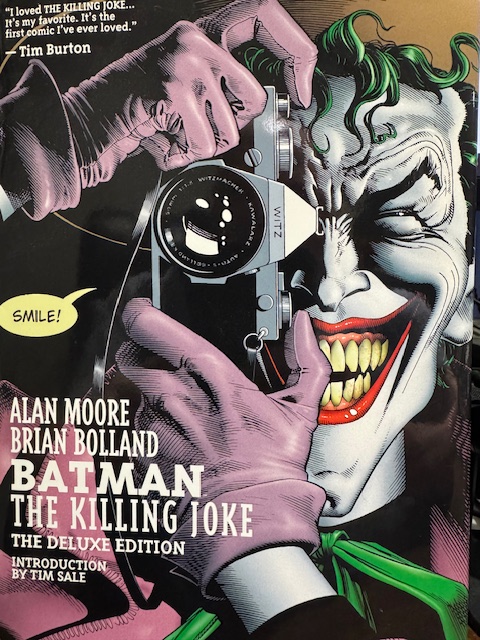
The Killing Joke, Book Review by Case Wright


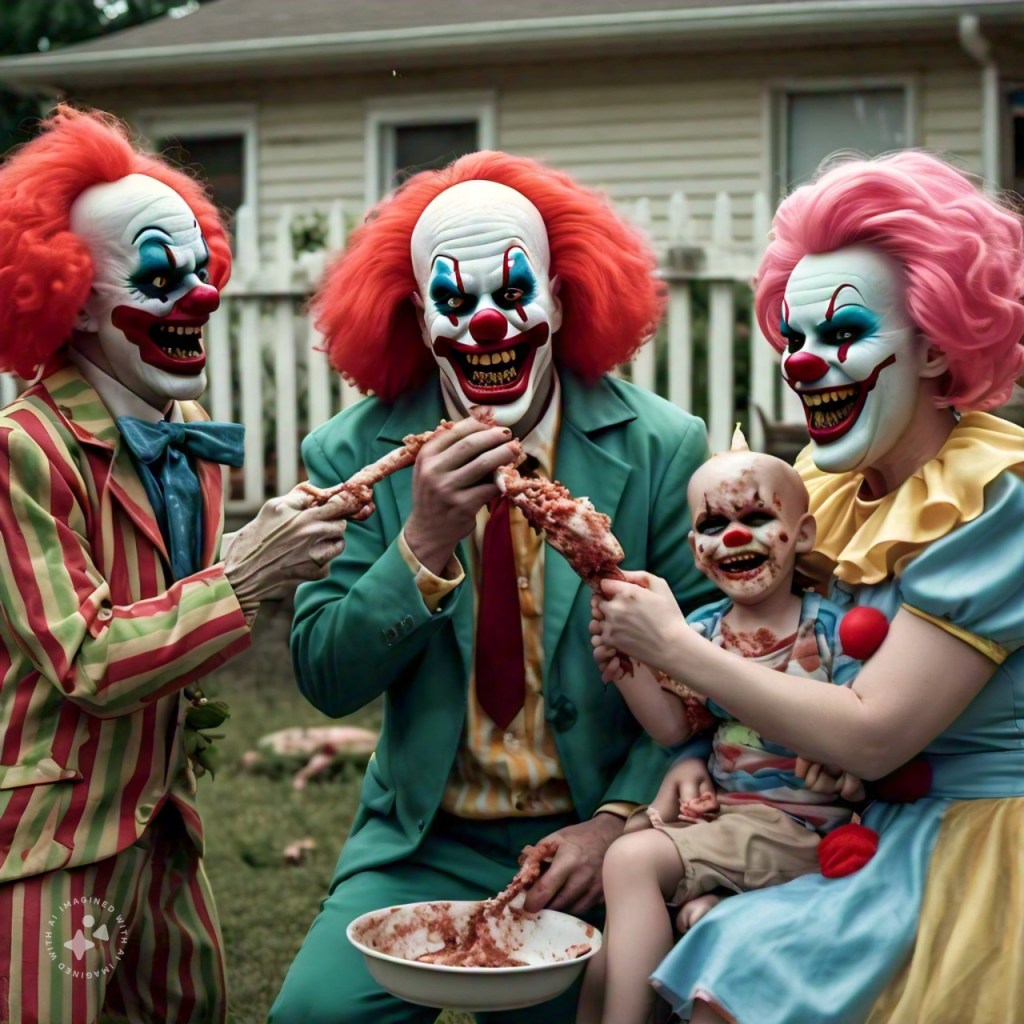
This was a hard book to review. I had avoided reading it for years because there’s an SA, but also- A CLOWN! Look, clowns are out to murder you! I mean for real they are clowns – see below

Why would you think these creatures would not want to murder your face?! Yes, they have balloon animals, but that that’s just to lure you into for their feeding!
“The Killing Joke” is a Joker origin story and how he was born out of one bad day. We begin with Joker as a struggling comedian with a child on the way. He is desperate for cash and decides to participate in a heist to get out of poverty. The crooks that he teamed up with to do the heist target the Joker’s former job at a chemical plant had always planned on making him the fall guy for the heist. His wife dies by a product malfunction, sending Joker spiraling. Technically, Joker is not born until after he falls into the chemicals, but we see his name pre-Joker; so, maybe he was always Joker? I’m not sure.

The origin story is interwoven with the Joker shooting and SAing Commissioner Gordan’s daughter and generally driving him insane. There is also A LOT of nudity that I wasn’t prepared for with a fair amount of leather. Joker kidnaps Gordan, strips him nude, puts some leather on him, and then makes him look at horrify images of the SA. Honestly, why not just kill Joker? Of course, we would. We’d shoot him on sight as a terrorist. Instead of doing the normal choice and having Joker killed, Gordan wants him taken alive. WHY? Really, why? What more does he have to do? They make a point that Joker wants to show that anyone could be driven insane by one bad day, but the real insanity is not shooting all of these super villains on sight!

The book ends with a joke with the symbolism that life itself and all of the evil he committed was also a joke. It was purposefully ambiguous, but it did scare me- BECAUSE CLOWNS!


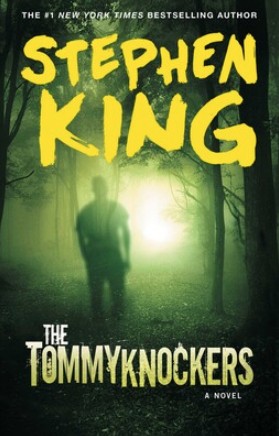
Tommyknockers, Book Review, by Case Wright


Stephen King has had addiction issues his entire adult life. He’s very open about it. In fact, there are at least three books he’s said that he doesn’t remember writing because he was using more blow than Julie on The Love Boat- the books are The Shining, Misery, and The Tommyknockers.

The plot is that a spaceship crashed long ago in Maine and it takes over the brains of the lifeforms who interact with it. The main characters are Roberta AKA Bobbi who literally stumbles on part of the ship, starting the plot because it starts infecting the town. Gard, a four alarm alcoholic/poet and Bobbi’s former lover, comes to help her and is immune to the ship’s affect because of a steel plate in his head.

As the story progresses, the ship changes the town folk both mentally and physically. The townies make all kinds of wacky and interesting inventions without knowing how they work, lose most of their teeth, and they develop pig-like faces. I told you that he did a lot of cocaine when he wrote this book.

The townies use Gard to help them dig out the ship and there are MANY chapters on the digging logistics. It’s fair to say that Gard spent most of his time in this book as an alcoholic day laborer (maybe he even did some work on my upstairs bathroom because that was done really shitty). I think that you could actually say they were entire chapters just devoted to his digging and things like that; man, Stephen really needs an editor with a spine.

A classic Stephen King plot device is that there are people who power up a haunted house and Tommyknockers uses that to an extreme! Even before I became an engineer, I wonder if Stephen understood how batteries worked? Can you imagine what he did to his kid’s Christmas toys?!

While his stories have recurring plot devices, the heroic journey for his characters changed with his personal change in fortune. The stories in Night Shift and the others from the early part of his career were all about failure: failing your loved ones and failing to maintain control over your life. In those years, the heroes could only succeed by sacrificing their life. The way to stop from harming everyone around them was through suicide because “blood calls to blood” i.e. the family curse. I think that it is clear that the Blood is alcoholism and drug abuse- it’s inherited. When he was failing in life, suicide was described as the only option because the hero was the doorway to misery and I can tell you from my childhood an alcoholic father is definitely the doorway to misery.

After 1979, his career took off and his bank account to pay for copious amounts of cocaine. However, the happy endings became the standard. Money can cure a lot problems, but blood calls to blood and the demons will always remain, but that is what made this book stand out because like his novels in the early part of his career- the hero dies. He can’t save Bobbi and this book was at a high point of addiction. It seems clear to me that it crossed his mind that he couldn’t live with his addiction and that death was the only exit.

Tommyknockers is a messy beach read that is mostly entertaining. If you’re like on a vacation with some real downtime and the Wi-Fi is broken or you’re really into aliens, give it a read.


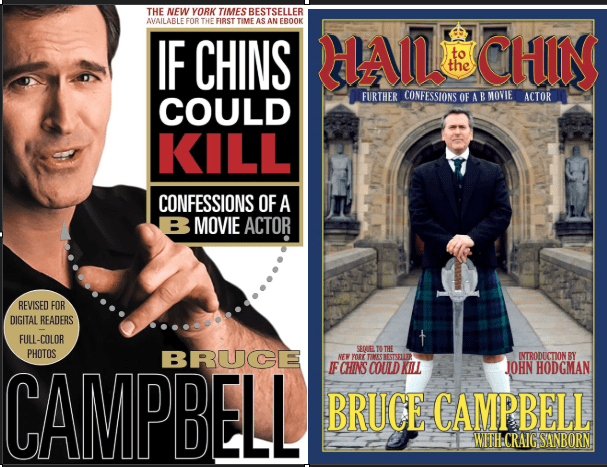
“If Chins Could Kill” and “Hail to the Chin” Quasi-book reviews by Case Wright


Bruce Campbell is the of Elvis of horror and independent film; in fact, he did play Elvis in “Bubba Ho-Tep”. If you’re into independent filmmaking, genre films, and artistic struggles both of these books “If chins could kill” and “Hail to the chin” are must reads and they are also fantastic audiobooks read by the man himself. Sidenote: I never thought his chin was weird- just manly. I enjoyed these books so much that I read them and then I listened to the audiobooks as well, which allowed me to re-experience the books like a favorite Uncle sharing his adventures with me. His entire life is laid bare in his own words: his successes, struggles, and failures. The second book picks up right after the end of the first one. NB: neither book is ghostwritten- a rarity. Sidenote 2: the audiobook really reveals Bruce’s skill at impersonations- he could do a career just doing that.

Bruce sat down and wrote both of these memoirs and if you’re an “Evil Dead” fan he discusses every single aspect of how the “Evil Dead” films were made. He goes into the same detail with every single show and film he has ever done. It’s not just how the sausage was made, it is the equivalent of discussing the history of the pig breed, how the pigs were raised, the tools they used for slaughtering, when they were made into sausage, the spices used, and the marketing to sell the sausage (Both books are available on Audible). The purpose of this article isn’t to grade these books because it’s just weird to grade a Man’s memories as long as the writing is half-way decent; instead of that very weird thing, I will discuss chronologically the moments that I’ve thought about for years in this uniquely American story.

His early years would be the central casting description of a midwestern “Theater Geek”. I never particularly liked that term, but it’s fairly apt because he lived for the dramatic arts, but NEVER complained or thought any job was beneath him- Refreshing. His entire focus in high school was theater and if he had graduated from college, he would’ve been a drama teacher. Luckily for us, Bruce became a college dropout after 6 months and began working on Evil Dead.

Evil Dead

Evil Dead was created by everyone that any connection to Bruce and his comrades, but there were also guilt feelings. Family members helped, parents helped, law firms helped, and probably even the Easter Bunny contributed to making “Evil Dead”. In the filming, everyone on the film was everywhere all the time and lived like they were quasi-homeless in the abandoned house that any horror fan would recognize. It was amazing to me how they had power to run their equipment. The way he describes it has all the intensity of a man remembering in perfect detail that he knew in his soul that this moment would be life-defining. He was right.

One thing that stood out to me was the guilt that Bruce had for asking his father, who was going through a divorce, for funds for the film. As a dad, I can tell that we want our children to be happy and that doesn’t end because you’re getting divorced, sickness, or even death- we always want our children to succeed. Can parental support get out of hand and make us annoyed? Yes, but this was well within the normal limits for a dad. If Bruce reads this article, I hope that he knows that his dad cherishes every dollar he contributed to his son’s dream. Unless of course, you had a dad like mine- in which case, how is it in the fire/police department, EMT, or Armed Forces these days?

Evil Dead 2 and 3

When he described Evil Dead 2 and 3, it was different because he had become a man. He was married and soon to be divorced. He described the work and the filmmaking the way a master carpenter describes his experience and steps making a $10,000 walnut table from a single piece of wood. Neither Bruce’s nor Sam Raimi’s careers had taken off yet and like many of us facing defeat – they went home. Home was of course with the old crew to make Evil Dead 2. Evil Dead over the years on a budget of $375,000 made $30 million….WHOA, but it was clear that Hollywood didn’t understand what they had- this was decades before Blair Witch and Paranormal Activity. It seems that Army of Darkness solidified Bruce as a name. One moment I remember about his memories of Army of Darkness was how he tried to mentor the extras about the importance of never complaining and hustling on the set. They didn’t listen. In fact, two of the extras defiled the set by having coitus in their costumes between takes…..ew. Maybe they were the first furries…. double ew. Or maybe the extras misunderstood the term “Hustling”?

The 90s

The 90s was Bruce Campbell’s decade. Hollywood finally realized with the success of the X-Files and Pulp Fiction that the audience for off kilter actors and stories was not just large- it had money to spend. Bruce found three things: steady work with Hercules and Xena, his soulmate- his second wife Ida Gearon, and his best friend – Lucy Lawless (Xena). He describes his friendship with Lucy like a brother describes the love and pride he has in a sister who made valedictorian. The Bruce/Lucy friendship spans decades and I hope they become neighbors one day. He describes it with such fondness and admiration; it proves that men and women can have platonic and beautiful friendships that last a lifetime. I’m not crying, you’re crying….leave me alone.

2000s through Burn Notice
Bruce had come into his own and was getting cast in A LOT of genre films. He had become a bona fide working actor. I will note that he gets into thorough detail about every single film that he made during this time period. However, I think that many Gen-Z and Millennials discovered him through Burn Notice and if you’re thinking he spills the tea about any on set drama- HE DOES NOT. He talks about how he enjoys dive bars and the different bartender pours. He describes in detail his experience with the show. I enjoyed the second book a lot, but it got personal for me because he convinced his Co-Star Jeffrey Donavan to visit the troops in Iraq. I give them both a lot of credit for that out of all of the great moments in the second book that’s what I think about the most often.

I am a fan of Bruce Campbell’s obviously, but what stood out to me in this uniquely American story is that you really can be anything here if you work at it.

Happy Birthday, Bruce!

A Book For The Weekend (6/20/25)


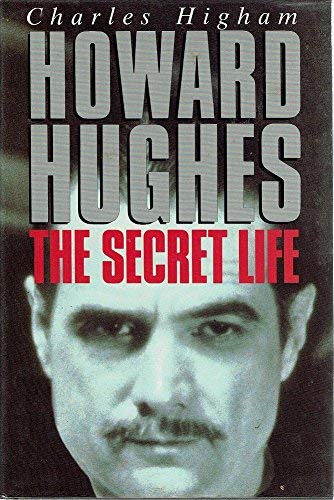
Wow, I thought as I read Howard Hughes: The Secret Life, was there anyone Howard Hughes didn’t have sex with?

Actually, I  imagine there was.  Charles Higham’s 1993 biography, which I found in a used bookstore in Pensacola, is full of all sorts of “scandalous” details about Howard Hughes’s life and the decadent Golden Age of Hollywood but it’s not always convincing.  Hughes, who was the subject of Martin Scorsese’s The Aviator, was undoubtedly an eccentric and I have no doubt that he treated a lot people badly but the book itself tends put a lot of faith in gossip and rumors.  As such, we get the established stories of Hughes bringing his control freak tendencies to Hollywood and having affairs with Katharine Hepburn and Ava Gardner mixed with stories about Hughes’s being involved with the Watergate break-in and also carrying on clandestine affairs with everyone from Errol Flynn to Tyrone Power, Jr.  The book goes as far as to suggest Hughes died of AIDs, using an evidence the word of a doctor who didn’t examine Hughes but who did apparently read a list of symptoms that Hughes was rumored to have during his final days.  That’s really the way that Higham approaches the majority of Hughes’s life.  The established facts are mixed with rumor and speculation on the part of the author.  It’s not always convincing but then again, since when does gossip have to be believable?

In short, the book is trashy but readable.  It’s one of those books that one should probably read with a healthy sense of skepticism but, at the same time, one can appreciate the sheer number of personalities that Higham manages to weave into his narrative.  Hughes goes from aviation to Hollywood to politics and he meets everyone who was anyone.  It’s a history nerd’s dream.

Two Books To Read This Weekend (5/23/25)


This weekend, I will be reading Jake Tapper and Alex Thomas’s Original Sin, their look at the Biden presidency and how Joe Biden’s (or really, Joe Biden’s aides and family’s) insistence that he run for a second term led to Donald Trump returning to the White House.  Actually, I will be continuing to read it as I started it last night.  So far, it’s an interesting read, even though I think that those who claim that Tapper is a bit too quick to let himself off the hook have got a point.  It’s definitely got me thinking about how many of our elected officials are “all there” and how many of them are just repeating whatever their staff tells them to say and do.

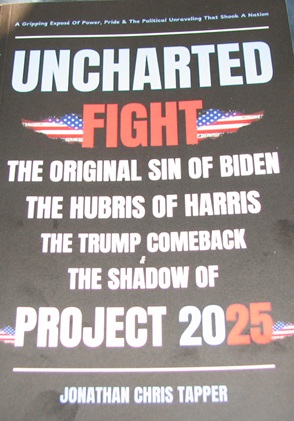
Now, if you feel that you don’t have time to read Tapper and Thompson’s 300-page book, you can always check out the Mockbuster version, Uncharted Fight: The Original Sin Of Biden, The Hubris of Harris, The Trump Comeback, & The Shadow of Project 2025 by — *ahem* — Jonathan Chris Tapper.  This 198 page book, which actually came out a month before Original Sin, basically just takes everything that was leaked about Original Sin and that was included in previous books by Chris Whipple and Jonathan Allen & Amie Parnes and repeats it.  The book was obviously put together quickly to capitalize on the interest around the books that hace been coming out about Biden’s withdrawal and the 2024 election.  There’s no original reporting, beyond the fact that somebody flipped through all of the other books and jotted down their main points.  If I had to guess, I’d say there is no “Jonathan Chris Tapper.”  It’s a grift, one that feels like a uniquely 2025 sort of thing.  The main reason any of these books are being published is to make money so why shouldn’t “Jonathan Chris Tapper” give it a shot?  And, to be honest, Uncharted Fight a quick read that gives you the basics so if you don’t want to spend money on four books about the election, it’s there for you, I guess.  Of course, you could probably just ask one of the many online AI programs to give you a quick summary and get the same information for far less money.  (In fact, I wouldn’t be surprised if “Jonathan Chris Tapper” is an AI system.)

(Personally, I went ahead and spent money on Original Sin, Uncharted History, Chris Whipple’s Unchartered, Alex Eistenstadt’s Revenge, and Jonathan Allen’s and Amie Parness’s Fight because I’m a history nerd and I think you can never have enough sources!)

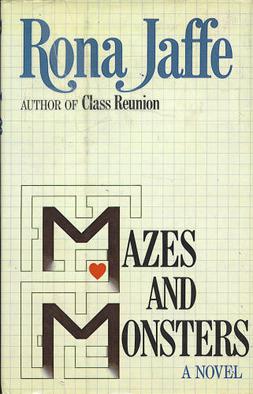
Novel Review: Mazes and Monsters by Rona Jaffe


The 1981 novel, Mazes and Monsters, tells the story of four wealthy college students who deal with the ennui of being rich and privileged by obsessively playing a role-playing game called Mazes and Monsters.

That’s right!  The game is Mazes and Monsters and most definitely not Dungeons and Dragons, even though both games are basically about people wandering around in dungeons and fighting monsters and searching for treasure.  (For the record, I’ve never played Dungeons and Dragons or any other role playing game and I’ve never really had any desire too.  That said, I did enjoy those episodes of Freaks and Geeks and Community.)  One of the four players is Robbie Wheeling, who has never recovered from the death of his brother.  When the players decide to move their game into the tunnels underneath their college, Robbie has a total break from reality and thinking that he actually is his M&M character, he flees to New York and lives on the streets.  Desperate for money and food, he turns to prostitution but ends up stabbing the first man who picks him up.  Agck!  He never should have played that game!

Mazes and Monsters is usually described as being one of the key works of the 80s Satanic Panic and there’s certainly an element of that to be found in the plot.  But the game is actually a fairly small part of the book.  The majority of the book just deals with teenagers struggling with the transition of adulthood and figuring out where they belong in the world.  The book isn’t quite as hysterical as its been described.  If anything, the book almost makes the case that the game is helpful to the players in that it gives them an escape from all the ennui.  Robbie was mentally unstable long before he played the game and it’s hard not to feel that something would have eventually set him off.

This is a rare case where the movie version is better than the book, if just because the movie features Tom Hanks as Robbie.  Robbie mistaking a man for a demon and stabbing him?  That’s really sad.  Tom Hanks doing it?  That’s cinematic magic!

Book Review: Undercover by Danielle Steel


Marshall Everett was an undercover DEA agent who spent years infiltrating the drug cartels of South America.  When he got too close to the people that he was supposed to be investigating, he was yanked from the assignment and sent to work for the Secret Service.  After he took a bullet protecting the President’s wife, he retired to Paris, a city that is known for being welcoming to former members of American law enforcement.

Ariana Gregory was the daughter of the U.S. Ambassador to Argentina.  When she was kidnapped by communist revolutionaries, she tried to resist the charms of their charismatic leader.  But, before you could say Patty Hearst, she was pregnant and brainwashed.  Fortunately, she was eventually rescued by the American forces.  Unfortunately, her lover died, her father died, and she eventually had a miscarriage.  A year has passed and she’s still dealing with the trauma.  And where better to deal with trauma than in Paris?

When Marshall and Ariana meet …. THEY SOLVE CRIMES!

Well, actually, they bond over the fact that neither one of them feels as if they belong in their home country anymore.  Both of them lost their identities in South America and now, in Europe, they can build brand new identities.  They can also fall in love!  Yay!  Unfortunately, they’re also going to have watch their step because the brother of Ariana’s revolutionary lover is looking to kill both of them.

This a typical Danielle Steel novel, one that I found in my aunt’s collection of paperbacks and which I read two weeks ago.  Though I do enjoy a good romance, I’ve never been a huge fan of Danielle Steel’s.  Her prose rarely sings.  The dialogue rarely crackles.  The characters never really feel all that developed.  That said, it’s kind of hard not to appreciate the shamelessness of Steel’s plotting.  Any romance writer could come up with a story of two lost souls meeting in Paris and finding personal and spiritual redemption through their love.  However, it takes a Danielle Steel to make them two lost souls who are recovering from being brainwashed in South America.  It takes a Danielle Steel to ask, “What if Donnie Brasco and Patty Hearst met and fell in love?”  It takes a Danielle Steel to write about  the inner workings of both an international drug cartel and a left-wing revolutionary cell, despite apparently not knowing much about either.  There’s an almost random, “just toss it in” feeling to the plot of Undercover that is definitely entertaining.

I guess my point is that, while I was reading Undercover, there were a lot of moments where I dramatically rolled my eyes.  (Anyone who has ever watched me read a book can tell you about how much I enjoy rolling my eyes.)  But the story held my interest and I certainly didn’t put the book down until I finished it.  Whatever else you may want to say about the book and Steel’s style of writing, it definitely got the job done and, it should be noted, I didn’t get brainwashed while reading it.  That’s the important thing.

Novel Review: Scarface by Armitage Trail


First published in 1930, Scarface tells the story of Tony Guarino.  Tony was an 18 year-old hoodlum, working his way through the Chicago rackets.  Unfortunately, for Tony, he started to draw too much attention from the cops and his gangster boss told Tony to stop hanging around so much.  Miffed, Tony decided to join the Army.

Tony served with a valor in World War I.  He was natural leader and had no hesitation when it came to killing people.  He was “a good soldier,” as the novel puts it.  When he’s wounded in battle, he’s left with a facial scar that changes his appearance to the extent that even his own family doesn’t recognize him when he returns to Chicago.  Of course, due to a clerical mistake, they also think that Tony’s dead.  After killing his former mistress and her new lover, Tony somewhat randomly decides to change his name to Tony Camonte and take over the Chicago underworld.

He gets a job working for Johnny Love.  Scarface Tony, as he is called now, works his way up.  Soon, Tony is in charge of the Lovo mob and he even has a girlfriend, a former “gun girl” named Jane.  Unfortunately, Tony also has a lot of enemies.  Captain Flanagan may take Tony’s money but he still wants to put Tony behind bars.  The DA may take Tony’s money but he still wants to put Tony behind bars.  The cops way take Tony’s money but …. well, okay, you get the idea.  Tony can’t trust anyone.  Complicating things is that his older brother is moving his way up in the police force and his younger sister has been hanging out with Tony’s main gunman.  And there’s a new gang boss in town.  His nickname is Schemer.  You know he has to be bad with a nickname like that!

I read Scarface yesterday.  It’s only 181 pages long and it’s a quick read.  It’s also not a particularly well-written book.  The prose is often clunky.  The dialogue is awkward.  Tony really doesn’t have any motivation beyond the fact that he’s a jerk.  We’re continually told that Tony has become one of the most powerful gangsters in the country but we don’t really see any evidence of it.  One of the basic rules is that it’s better to show than to tell and this novel is all about telling instead of showing.  What there is of a plot feels like it was made up on the spot.  For instance, with the exception of an off-hand mention of her in the first chapter, the character of Tony’s sister doesn’t even figure into the story until it is nearly done and, yet, the story’s conclusion pretty much hinges on her existence.  Though not as well-written, Scarface is still a bit like The Epic of Gilgamesh.  Writer Armitage Trail just kept coming up with complications until he finally ran out of tablets and had no choice but to abruptly end things.

That said, the book is notable in that it served as the inspiration for Howard Hawks’s 1932 film, Scarface.  The Hawks film, which only loosely follows the plot of Trail’s book and which wisely abandons some of the less credible plot points, would later be remade by Brian De Palma, with Al Pacino stepping into the role of Tony.

And the rest, as they say, is history.

Book Review: The Godfather by Mario Puzo


“The book,” it is often said, “is always better than the film.” But is that always true?

No, it’s not and, if you need proof, just read Mario Puzo’s The Godfather and then re-watch the movie. Or re-watch the movie and then read the book. Either way, you’ll be left with the conclusion that, while the novel did lay the foundation for what became the greatest movie ever made, the novel itself is still a bit …. off.

The Godfather was originally published in 1969 and, before I write anything else, it should be noted that Mario Puzo himself never claimed that the book was meant to be a great work of literature. Puzo had previously written three novels and one children’s book. One of those novels was a pulp paperback that he wrote under a pseudonym for a quick payday. The other two novels were both meant to be works of “serious literature” that examined the human condition. Puzo considered his second novel, The Fortunate Pilgrim, to be his best and most poetic work. The only problem is that, while the reviewers were respectful, hardly anyone read Puzo’s “serious” fiction. As such, The Godfather was Puzo’s attempt to write the most commercial book possible, a page-turner that would climb the best seller list and help Puzo pay off his gambling debts. The Godfather certainly did that, spending 67 weeks on the New York Times’s Best Seller List and selling over 9 million copies in two years. Producer Robert Evans was so sure that the novel would be a hit that he even paid for the film rights while the book was still in the galleys.

Reading the book, especially after watching the movie, can be an odd experience.  The film itself is largely faithful to the book. Just about everything that happens in the movie can be found in the book.  Michael, Sonny, Tom, Fredo, Vito, Kay, Barzini, Sollozzo …. they’re all here.  Usually, characters are more complex in the original book than they are in the subsequent film adaptation.  In this case, the opposite is true and reading Puzo’s somewhat leaden prose really does make you appreciate the depth and nuance that actors like Al Pacino, Marlon Brando, James Caan, Robert Duvall, and John Cazale brought to the characters.  (Perhaps the most extreme example is Kay Adams, who was written as a dull nonentity with none of the nervous likability than Diane Keaton brought to the role.)  To be honest, perhaps the only character who comes across more vividly in the book than in the film is Luca Brasi.  The book goes into the details of what Brasi did for the Don in the past and, as a result, it’s much easier to understand why everyone was so terrified of him.

But, as I said, all of the events that can be found in the movie can also be found in the book.  However, there’s also a lot of things in the book that we’re left out of the film and it’s easy to see why.  In the film, for instance, Johnny Fontane shows up in only two scenes.  Tom Hagen goes to Hollywood.  Jack Woltz ends up with a horse’s head in his bed.  And that’s it for the film industry.  (In the book, the horse’s head is just placed in Woltz’s room as opposed to his bed.  Francis Ford Coppola later admitted that he misread the passage where Woltz finds the head.)  In the book, however, the Hollywood scenes go on forever.  Large sections of the narrative are handed over to Johnny Fontane and his best friend as they party in Hollywood.  It gets frustrating.  You want to read about the Corleones but instead, you’re reading predictable Frank Sinatra fanfic.

When the book’s not getting bogged down on Fontane, it’s getting caught up with Lucy Mancini and her quest to find a man who is as well-endowed as the late Sonny Corleone.  Lucy was Sonny’s lover.  He was the only man who was large enough to satisfy her.  After Sonny’s death, Lucy is given a casino in Las Vegas.  It’s while in Vegas that Lucy meets Dr. Jules Segal, an abortionist who explains to Lucy that she can’t achieve sexual satisfaction because her vagina is too big.  Fortunately, he can help.  Or, as he puts it, “Baby, I’m going to build you a whole new thing down there, and then I’ll try it out personally.” Awwwwwww!

Anyway, for whatever reason, Francis Ford Coppola decided not to include any of this when he made his film version.  And it’s for the best.  When it comes to The Godfather as a book …. well, the movie’s great.  And the sequel’s even better!  The book really makes you appreciate what Coppola and his amazing cast and crew were able to accomplish.

Book Review: Saturday Night Fever by H.B. Gilmour


About two years ago, I came across a paperback sitting on the shelf of a Goodwill in Dallas. It was the novelization of the 1978 film, Saturday Night Fever. Naturally, as soon as I saw it, I knew that I had to buy it.

Novelizations of popular films are always an interesting read. Since they’re usually based on the early drafts of a film’s screenplay, the novelization will often include extra scenes or details that may have not been apparent in the film itself. Often, things that may have been left unclear in the completed film will be cleared up in the novelization. At the same time, as a writer, I always find it interesting to see whether or not the author of a novelization can succeed at putting their own spin on familiar material.

Take the Saturday Night Fever novelization. There are two things that everyone automatically thinks about whenever they think about Saturday Night Fever as a film. They think about the Bee Gees soundtrack and they think about the scenes of John Travolta dancing. Obviously, with the novelization, there is no soundtrack. The Bee Gees aren’t even mentioned in the book. As for Travolta’s dancing, the book doesn’t go into a great deal of detail beyond acknowledging that Tony Manero is a good dancer and that everyone wants to join him out on the dance floor. But Gilmour wisely doesn’t try to describe any of Tony’s dance moves. Instead, he focuses on how Tony feels when he’s the center of attention.

Indeed, the entire novelization focuses on Tony as a character. We spend a lot of time inside of Tony’s head and it’s not always a pleasant place to explore. At the same time, we also discover that Tony isn’t quite as clueless as he sometimes comes across as being in the movie. From the start, he knows that he’s going nowhere and he knows that his friends are losers. Without Travolta’s charismatic performance or Staying Alive playing as he struts across New York, Tony often comes across as being an even bigger jerk in the novel than he does in the movie. And yet, we still sympathize with him because the novel makes clear that Tony understands, more than his family and his friends, that he’s trapped in a life that doesn’t provide much hope. Saturday Night Fever is a dark film, even with the music. In novel form, it becomes downright existential in its portrait of Brooklyn as being a Hellish prison, both a location and state-of-mind from which there is little chance of escape.

Tony’s family is a bit more abusive in the novel, which makes the film’s famous “watch the hair” dinner scene a bit more difficult to laugh at. The novelization spends a lot of time on Tony’s brother and his decision to leave the priesthood. In the movie, Frank, Jr. just kind of vanishes. In the book, it’s explained that he went to a sort of halfway house for former priests. I assume this was all stuff that was in the screenplay but cut from the actual film. One can see why it was cut but, at the same time, it was still interesting to learn a bit more about Tony and his family.

In the end, it’s not a bad novelization. At 182 pages, it’s a quick read and it not only does a good job of showing what exactly Tony is escaping from when he gets out on the dance floor but it also provides some new insight into the story. (Of course, the majority of that insight deals with Tony being a misogynistic homophobe but, then again, that’s pretty much who he was in the film too. The book just makes it even clearer, as well as showing that Tony’s prejudices are largely due to where he’s from and how he’s been raised.) It’s a good companion piece to the film and a good collector’s item. The copy that I found still had a pull-out poster of John Travolta in the middle of it!