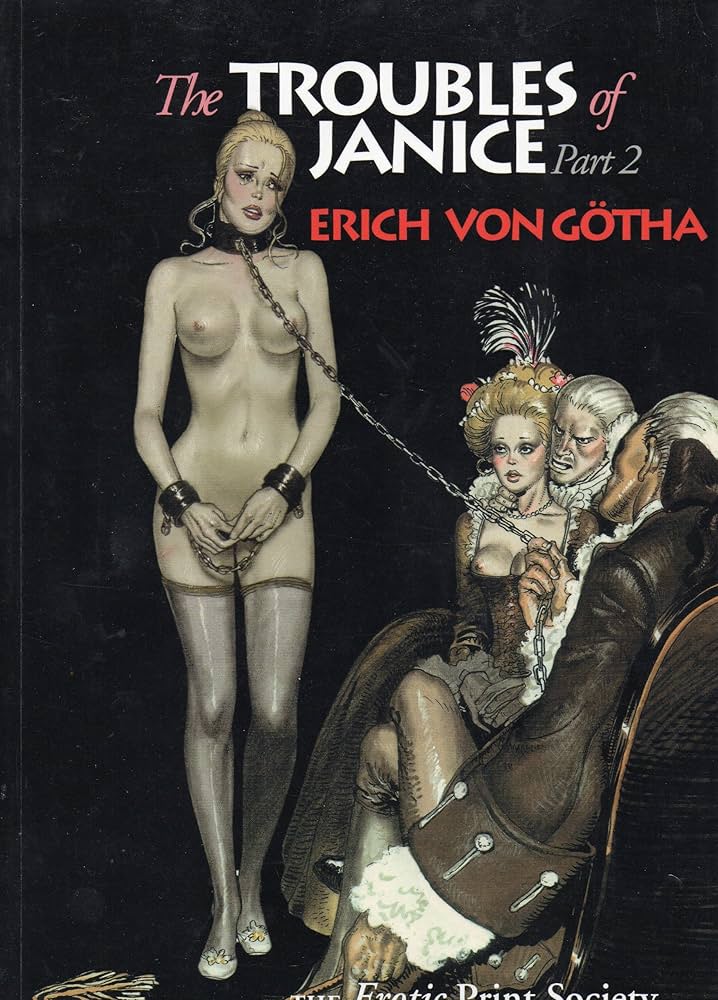
The Troubles of Janice by Erich von Götha remains one of the most infamous works in erotic comics, a multi-volume series spanning 1987 to 1996 that draws readers into a vivid world of sadomasochistic intrigue amid the lavish decay of 18th-century England. Janice McCormick, a curvaceous young woman released from Newgate Prison, soon finds herself ensnared by the sadistic Duke Viscount Vauxhall of Nether Wallop, whose experiments in female discipline propel her through a cascade of blackmail, assassinations, and sensual escapades—from the clandestine Hellfire Club to the shimmering waterways of Venice. Serialized initially in French magazines and later compiled into albums such as Parts 1 through 4, the narrative echoes the spirit of the Marquis de Sade’s Philosophy in the Bedroom, pitting innocence against unbridled authority in panels brimming with exaggerated forms and explicit encounters that straddle the edge of terror and desire.
This series thrives squarely in guilty pleasure territory, offering a procession of BDSM scenarios tailored for indulgent, after-hours reading—Janice bound and enduring floggings, group violations, and ceremonial degradations at the hands of depraved aristocrats, clergy, and a imposing black servant named Horace, whose prominence marks the early chapters. The artwork begins with a raw, straightforward style, its stark lines accentuating phallic prominence and voluptuous contours, but evolves across the run into more refined techniques, incorporating nuanced shading, occasional full-color pages, and fluid compositions that convey genuine motion. Under the pseudonym of British artist Robin Ray, von Götha refined his craft from earlier projects like the sporadic Torrid comic of the 1980s, achieving here a theatrical intensity that elevates rote erotica into something akin to a decadent opera. Janice’s subjugation under Vauxhall builds to extravagant bacchanals, her figure a stage for boundless transgression, sustained by slender plotlines: a doomed union with Lord Mitchcombe, clerical extortion of her fortune, and a desperate flight to Venice. It delivers unvarnished pornographic fantasy, where non-consent heightens the illicit allure, interwoven with dated racism, sexism, and brutality that clash with contemporary standards.
Nevertheless, amid its sensationalism, The Troubles of Janice carries a sly undercurrent that resonates as guilty pleasure, while dedicated admirers in specialized erotica and Sadean circles regard it as elevated art for its bold dissection of dominance and moral corruption. Enthusiasts praise von Götha’s fidelity to historical particulars—powdered periwigs, flickering chambers, and rigid social strata—which grounds the excess in authenticity, recasting Janice’s sufferings as a pictorial meditation on control and yielding. The work’s longevity, evidenced by deluxe reprints into 2008 via publishers like Dynamite and Priaprism/Last Gasp, underscores this devoted following, as initial stark visuals mature into polished depictions of perspiration, anguish, and rapture rendered with technical finesse. Partnership with writer Bernard Joubert lends philosophical weight reminiscent of Sade’s justifications for indulgence, complemented by von Götha’s advertising and design heritage, which infuses each frame with compelling, voyeuristic magnetism.
The episodic structure fosters escalating drama without pause: Janice’s journey from captive to bereaved inheritor to elusive temptress parallels gothic archetypes, her physique weathering not only corporal trials but subtle emotional fissures that suggest deeper psyche amid the torment. Venetian interludes in subsequent volumes add worldly elegance, with Janice alluring period luminaries amid carnivalesque revels and canal rendezvous, a momentary reprieve prior to recapture. Visually, the shift from monochrome austerity to vivid palettes enlivens flesh tones and intensifies ominous depths. Fair assessment reveals shortcomings, however: proportions veer toward the grotesque, recurring motifs dull the initial impact, and pervasive misogyny, though fitting the fantastical milieu, borders on excess even for 1980s sensibilities. Stereotypes such as Horace’s portrayal jar in modern light, affirming its roots in London’s pre-PC erotic underbelly.
Within insular communities, such elements paradoxically enhance its stature—collectors and forums acclaim von Götha as a virtuoso of restraint, his standalone prints and mythic illustrations perpetuating the legacy, bolstered by exhibitions in Bologna and Paris that confer artistic validity. To the broader audience, it embodies quintessential guilty pleasure—discreetly concealed material that fulfills taboo yearnings sans apology. The Troubles of Janice persists by unflinchingly engaging the subconscious, compelling confrontation with shadowed impulses through line and shade. Whether approached for its carnality or its Sadean resonances, The Troubles of Janice endures as a divisive masterpiece, ideally encountered with caution.
“In order to know virtue, we must acquaint ourselves with vice. Only then can we know the true measure of a man.” — Marquis de Sade
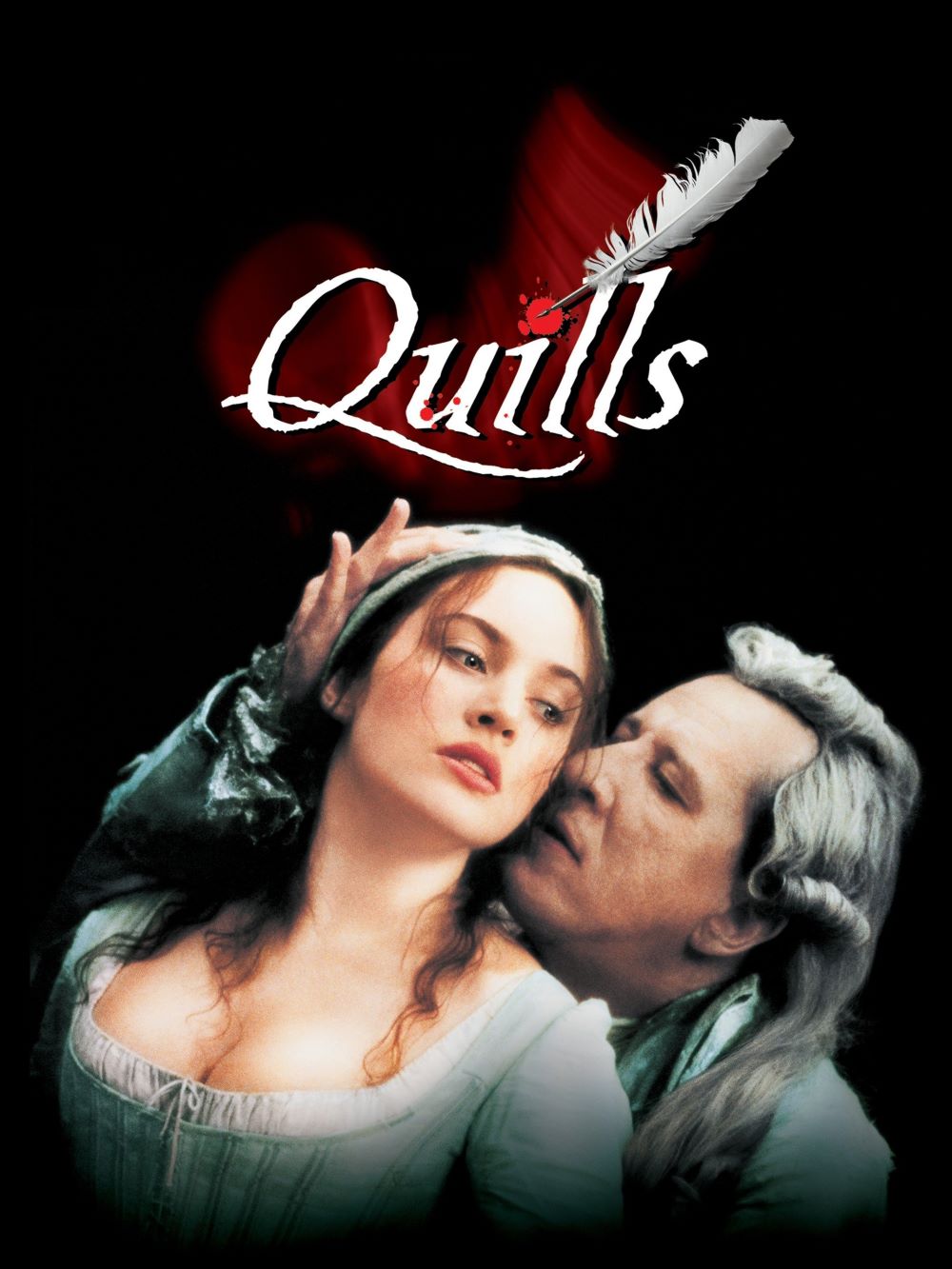
Quills, Philip Kaufman’s 2000 take on the infamous Marquis de Sade, dives headfirst into the messy clash between artistic freedom and societal repression. It’s a film that doesn’t shy away from the dark, provocative world of its subject, blending historical drama with a touch of theatrical flair. While it takes liberties with the facts, it captures the spirit of de Sade’s defiance in a way that’s both entertaining and thought-provoking.
Right from the start, Quills sets up its world inside the Charenton Asylum for the Insane, where the aging Marquis de Sade, played with gleeful abandon by Geoffrey Rush, is holed up under the watch of the kindly Abbé de Coulmier (Joaquin Phoenix). De Sade’s been churning out his scandalous writings—think Justine and other works that shocked 18th-century France—and smuggling them out via laundry baskets to a young laundress named Madeleine LeClerc (Kate Winslet). Napoleon’s regime isn’t thrilled, so they dispatch the stern Dr. Royer-Collard (Michael Caine) to tighten the screws and silence the madman once and for all. The stage is set for a battle of wills, with de Sade’s pen as his weapon against the forces of censorship.
Geoffrey Rush owns the screen as de Sade, turning what could have been a one-note villain into a complex, charismatic force of nature. He’s sly, unrepentant, and hilariously vulgar, spitting barbs that cut deep into hypocrisy and piety. Rush balances the man’s depravity with a genuine passion for expression, making you root for him even as his ideas repulse. It’s a performance that’s equal parts showman and philosopher, and it anchors the film’s energy. Joaquin Phoenix brings a quiet intensity to the Abbé, a man torn between his faith, his compassion, and the stirrings of forbidden desire—especially toward Madeleine. Phoenix nails the internal conflict, his wide eyes conveying a soul on the brink.
Kate Winslet shines as Madeleine, the innocent conduit for de Sade’s words, whose curiosity pulls her into his orbit. She’s got that Winslet spark—earnest yet fiery—and her scenes smuggling manuscripts or reading aloud add a layer of warmth to the asylum’s chill. Michael Caine, meanwhile, chews scenery as the pompous doctor, a hypocritical sadist in his own right, obsessed with his young bride Simone (Amelia Warner). Caine’s Royer-Collard is deliciously smarmy, a foil to de Sade who mirrors his cruelty under the guise of order. The ensemble clicks, with supporting turns like Tony Berthaud as the asylum’s rougemont adding comic relief amid the tension.
Kaufman’s direction keeps things visually striking without overwhelming the story. The asylum feels alive—claustrophobic cells contrast with grand halls where inmates stage de Sade’s plays under the Abbé’s misguided therapy. Cinematographer Rogier Stoffers bathes everything in earthy tones, with candlelit shadows that amp up the gothic vibe. The score by Angelo Badalamenti weaves eerie strings and harpsichord flourishes, underscoring the film’s blend of horror and humor. It’s not afraid to get graphic: scenes of self-mutilation and bodily fluids as writing tools push boundaries, but they’re more about desperation than shock value.
Thematically, Quills grapples with freedom of speech in a way that’s timeless. De Sade isn’t portrayed as a hero—his writings celebrate excess and cruelty—but as an indomitable spirit who won’t be silenced. Even stripped of paper, ink, clothes, and eventually his voice, he finds ways to provoke, dictating stories through inmates or scratching words into his skin. It’s a middle finger to censorship, questioning who the real monsters are: the libertine or the repressors enforcing “morality.” The Abbé represents liberal tolerance stretched to breaking, Royer-Collard conservative control gone tyrannical. Madeleine embodies the allure of forbidden ideas, her tragic arc highlighting how words can liberate or destroy.
That said, the film isn’t perfect—it’s a fictionalized riff on history, not a biopic. The real de Sade spent years at Charenton, but the timeline compresses events, amps up the drama, and softens his edges for modern tastes. He wasn’t quite the defiant artist Kaufman paints; his later years were more pathetic than poetic. Critics have noted it sanitizes Justine‘s true extremity—no orgies or murders here, just innuendo. Some see it as romanticizing a monster, turning him into a free-speech martyr rather than the predator he was. Fair point; the movie sympathizes more with his pen than his philosophy. Still, as entertainment, it works because it doesn’t pretend to be a documentary.
Humor peppers the darkness, keeping Quills from wallowing in gloom. De Sade’s quips land like punches—”There’s no sin in writing!”—and absurd moments, like inmates reenacting his tales or the doctor’s failed inventions, add levity. One standout sequence has de Sade dictating a racy novel through a chain of whispering patients, turning the asylum into a underground press. It’s One Flew Over the Cuckoo’s Nest meets Dangerous Liaisons, with inmates running wild in a riot of liberation gone wrong. The film’s pace builds masterfully to its brutal climax, where de Sade’s final “victory” leaves you unsettled, pondering if ideas can truly be killed.
Performances aside, the script by Doug Wright (adapted from his play) crackles with wit and insight. Dialogue zings without feeling stagey, and it probes hypocrisy head-on: the pious Abbé lusting after Madeleine, Royer-Collard bedding his teen bride while torturing others. Christianity takes hits—de Sade devours a crucifix, mocks scripture—but it’s broad satire, not preachy atheism. The ending, with its ironic twist on legacy, sticks with you, echoing how de Sade’s name endures despite efforts to erase him.
For fans of period dramas with bite, Quills delivers. It’s provocative without being pornographic, smart without being stuffy. At 124 minutes, it never drags, balancing spectacle and substance. Sure, it glamorizes a controversial figure, and history buffs might nitpick inaccuracies—like the Abbé’s real-life tolerance or Charenton’s theater program. But Kaufman’s track record (The Right Stuff, The Unbearable Lightness of Being) shows he knows how to humanize extremes. Rated R for good reason—nudity, violence, profanity—it’s adult fare that rewards attention.
Visually, the costumes pop: de Sade’s velvet robes give way to rags, symbolizing his fall, while Madeleine’s simple smocks highlight her purity amid corruption. Production design nails early 19th-century France, from ornate asylum architecture to the doctor’s sterile gadgets. Badalamenti’s music swells during key confrontations, heightening emotional stakes without overpowering.
In the end, Quills asks tough questions about art’s power and limits. Does provocation justify excess? Can society silence dangerous minds without becoming monstrous itself? It doesn’t provide easy answers, which is its strength. Rush’s tour-de-force makes de Sade magnetic, flaws and all, while the supporting cast elevates the ensemble. Not for the faint-hearted, but if you appreciate bold cinema that stirs debate, it’s a gem. Rewatch value is high—themes resonate in our cancel-culture age. Philip Kaufman crafted a film that’s as unruly as its protagonist: unapologetic, alive, and impossible to ignore.
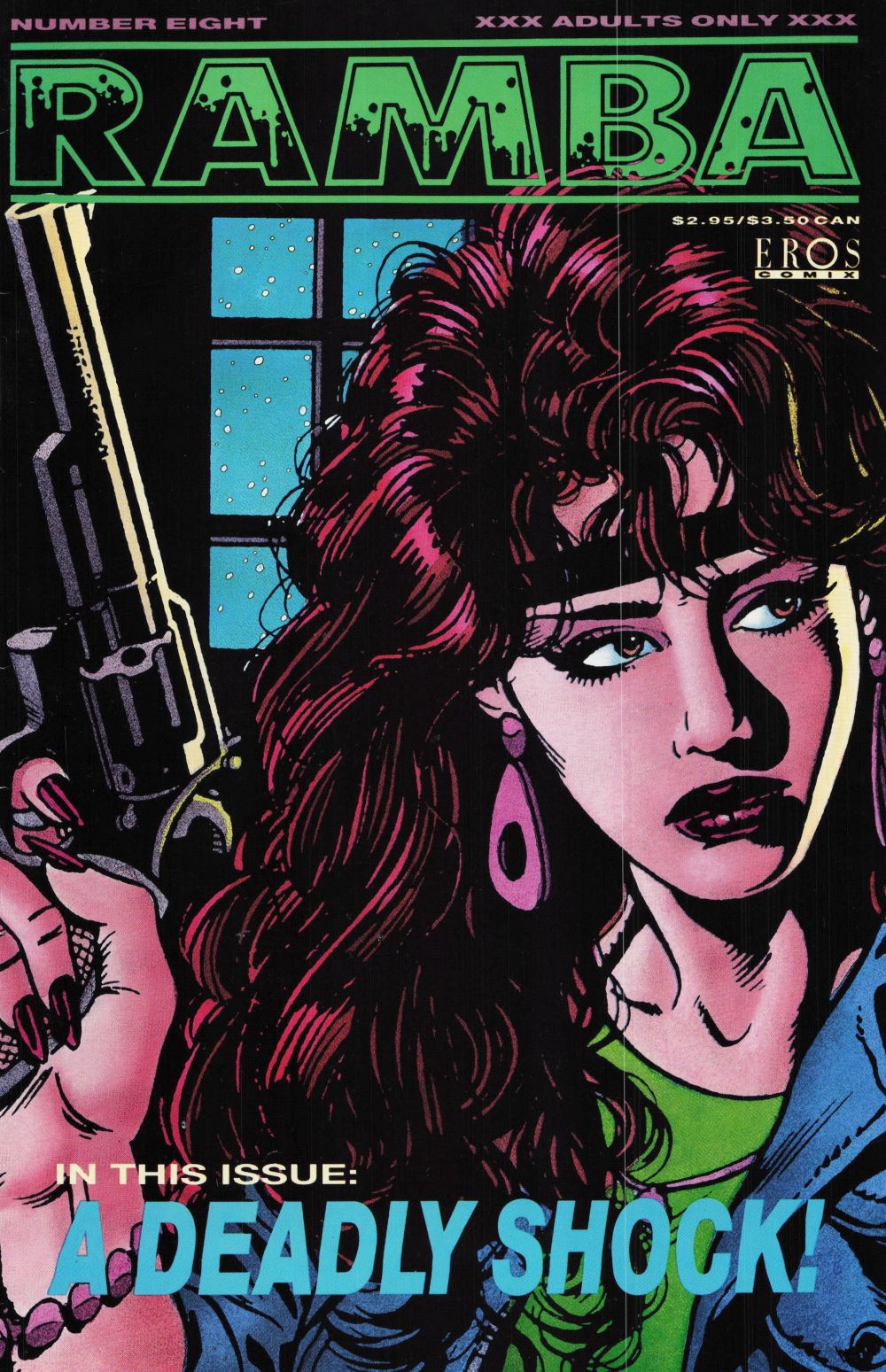
Ramba is one of those books you probably don’t proudly display on the coffee table, but you also don’t quite forget once you’ve read it. On the surface it’s an Italian erotic comic about a hyper-sexualized hitwoman, yet under all the sweat, sleaze, and gun smoke there’s a surprisingly solid crime engine humming along, which is what makes it feel like such an unapologetic guilty pleasure.
Created by Rossano Rossi and collaborators and published in English by Eros Comix in the 1990s, Ramba follows its titular assassin—loosely inspired by Italian porn star Ramba/Ileana Carisio—as she takes on murder-for-hire jobs that inevitably twist into elaborate scenarios of sex and violence. Every assignment is essentially built on a three-part rhythm: seduction, escalation, execution. Ramba beds clients, enemies, bystanders, women, men, and sometimes even corpses, and that’s not an exaggeration; necrophilia, watersports, and a running thread of sadomasochistic games are part of the fabric here. That whirl of anything-goes content is where the series earns its notoriety, but it’s also where a lot of readers will tap out, because Ramba never pretends to be tasteful or restrained.
What keeps the book from collapsing into pure shock-for-shock’s-sake is that it does, in fact, function as a crime comic in the European erotica tradition. Rossi structures most chapters as compact revenge or hit-job dramas, the kind of tight little potboilers you might see in a hardboiled anthology if you stripped out the explicit content—or, in this case, added a lot more of it. There is an internal logic to the way jobs are set up, double-crosses emerge, and Ramba problem-solves her way out of bad situations, even as she pauses mid-escape for a quick tryst in a stairwell. That constant cross-cutting between sex and violence, between carnal excess and professional precision, gives the series a strangely propulsive energy; you may not approve of what it’s doing, but it’s rarely dull.
Still, you can’t talk about Ramba without acknowledging just how aggressively transgressive it is. The book happily checks off an entire “so wrong it’s right” playbook: everybody seems perpetually horny, gender is more a preference slider than a barrier, and taboos are treated as toys to be scattered across the floor. Ramba herself will “try anything that moves,” to borrow the fandom shorthand, and the comic keeps pushing her into situations that blur consent, pain, humiliation, and pleasure to a degree that many readers will reasonably find grotesque. Some sequences—like the infamous scene where she urinates into a dying man’s mouth and then exploits his post-mortem arousal—are deliberately pitched to provoke, and they succeed perhaps a little too well.
That blend of sex and brutality is the core ethical sticking point. The series clearly wants to critique brutality against women—Ramba cannot stand seeing other women victimized and often redirects violence back at abusers—but at the same time it eroticizes that very violence, staging assaults and torture in a way that’s unavoidably titillating for its target audience. The result is an uneasy tension: on one page, Ramba is a feminist avenger cutting down misogynists, and on the next she’s participating in a scenario that looks uncomfortably like torture porn. Whether you see this as frank, messy exploration of dark fantasies or just sleaze wrapped in a wafer-thin moral fig leaf will depend entirely on your own threshold and politics.
Visually, Ramba lands much closer to craftsmanship than throwaway smut. Artists Marco Delizia and Fabio Valdambrini give the series a sharply observed, high-contrast look that elevates it beyond bargain-bin erotica. Delizia’s pages are dense with black ink, detailed anatomy, and an almost fetishistic focus on physical textures—leather, sweat, shadowed skin—which reinforces the grittier, urban crime vibe. Valdambrini, by contrast, leans into an older adventure-strip style with looser figures and more traditional shading, evoking 1940s newspaper serials updated with NC-17 sensibilities. That stylistic tug-of-war, between pulp sophistication and outright porn, mirrors the writing: the art insists on giving this material a veneer of legitimacy even when the content is at its most extreme.
Narratively, the book occasionally steps outside its grounded crime lane into fully pulp territory, dabbling in supernatural elements such as a black magic coven and demons in stories like “Vendetta From Hell.” These arcs introduce “hunting humans as sport” riffs and occult enemies that feel, frankly, like a different series wandered in from the next shelf over. On one hand, they add variety and show Ramba operating in wildly different contexts; on the other, they dilute the gritty hitwoman angle that is easily the comic’s strongest hook. When Ramba stays focused on mob bosses, crooked cops, and revenge killings, it feels like a filthy cousin to Euro-crime cinema; when it veers into demon-summoning cults, it plays more like an anything-goes anthology that happened to keep the same lead character.
For all the shock value, there is a certain honesty to how Ramba approaches sexual fantasy. It doesn’t posture as an art-house deconstruction or wrap its extremes in academic language; it stands there, naked and grinning, saying: this is what some people fantasize about when no one is looking. That directness can be disarming. You get the sense the creators understand that erotic fantasy often lives in a space that’s not meant to be aspirational or “healthy,” and they lean into that forbidden-zone appeal. If you’ve ever rolled your eyes at glossy, sanitized “sexy” comics that pretend to be above the id, Ramba feels like the brazen counterargument, all id with just enough structure to hold it together.
Of course, that’s also what makes it so specifically a guilty pleasure, even for readers who might be predisposed to like transgressive material. It is possible to admire the storytelling economy, the craftsmanship of the art, and the boldness of its content while simultaneously feeling that some sequences cross into outright mean-spirited nastiness. The books have been praised in some circles as a kind of high watermark of explicit sex comics in English—highly competent, unabashedly filthy, and influential in their niche—but that gold comes smudged with plenty of grime. If you’re not prepared to wade through the muck, you’re better off steering clear.
Ultimately, Ramba is best approached with clear eyes and a strong stomach. If you’re curious about the boundaries of 1990s European-style erotic comics, the series offers a vivid snapshot of what could be done when an imprint like Eros Comix let creators run wild, combining solid noir plotting with maximalist sexual excess. It’s exploitative, sometimes disturbingly so, but it’s also more thoughtfully constructed and visually ambitious than its lurid premise suggests. For some, it will be a hard pass; for others, it will sit firmly in that private, slightly embarrassing corner of the collection where guilty pleasures live, dusted off once in a while with a mix of discomfort and undeniable fascination.
“I don’t understand you humans at all. But then, maybe that’s what makes you so fascinating!” — Deedlit
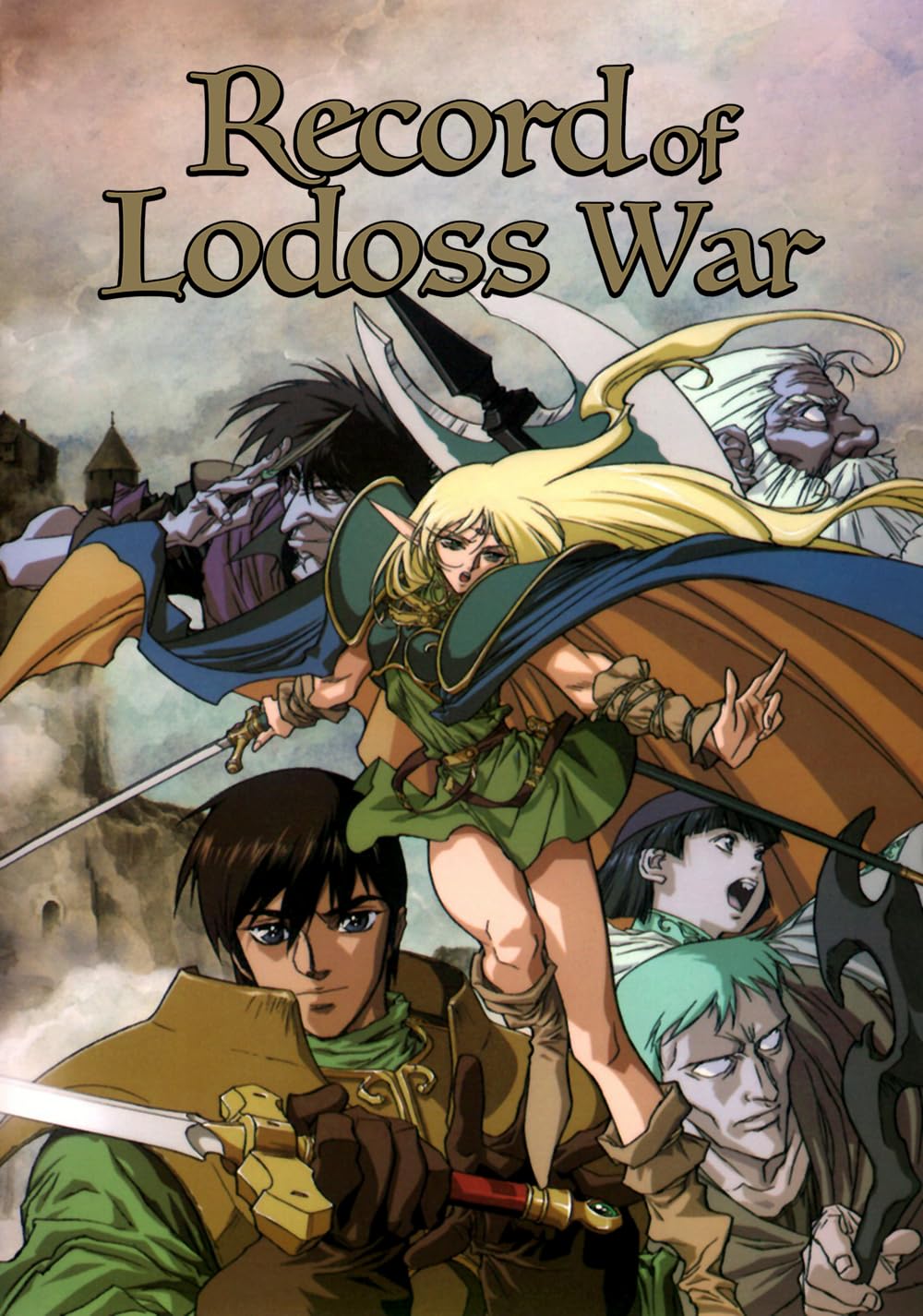
Record of Lodoss War is one of those series that feels less like a single anime and more like a crystallized moment in the evolution of fantasy storytelling in Japan: ambitious, clunky, oddly moving, and unmistakably rooted in tabletop role-playing DNA. It is also a work that shows its age in both craft and politics, which makes revisiting it today a fascinating mix of admiration and frustration.
Set on the war-torn island of Lodoss, the story follows Parn, the disgraced knight’s son who sets out to restore his family’s honor, gathering around him the quintessential fantasy party: Etoh the priest, Slayn the mage, Ghim the dwarf, Deedlit the high elf, and Woodchuck the thief. On paper, this is pure campaign log: goblin attacks, dragon encounters, cursed relics, warring kingdoms, and an encroaching darkness embodied by Marmo and its champions, all framed as a grand war for the fate of the land. What makes Record of Lodoss War interesting is how openly it wears that structure; it rarely tries to hide its tabletop origins, and that transparency becomes both a charm and a structural limitation.
The narrative in the original OVA moves briskly to the point of feeling compressed, jumping between key battles, political shifts, and character revelations with very little connective tissue. Characters appear, declare their motivations, and are folded into the party or into the enemy ranks as though someone summarized last week’s game session before tonight’s adventure. That can be engaging—there’s a constant sense that something important is happening—but it also means emotional beats often rely on the audience’s familiarity with genre shorthand rather than carefully built arcs. The later TV series, Record of Lodoss War: Chronicles of the Heroic Knight, attempts to extend and reframe this story, moving the timeline forward and giving more room to Ashram and the continuing conflicts around the scepter of domination, but it still largely lives in that same campaign-style rhythm.
If you come to Record of Lodoss War for worldbuilding, it mostly delivers. Lodoss feels like a fully mapped fantasy setting, complete with divine factions, ancient wars, feuding human kingdoms, and a clear sense of geopolitical stakes. The franchise’s origins in novels and game material mean that offhanded references to past conflicts or legendary heroes feel like the tip of a much larger iceberg rather than improvisations thrown in on the spot. That sense of a lived-in world is one of the show’s enduring strengths, and it’s not hard to see why it earned “anime Lord of the Rings” comparisons for some viewers. At the same time, the story’s focus is surprisingly narrow in practice; we spend most of our time tracking a small cluster of heroes and villains, which can make the world feel oddly claustrophobic despite its epic framing.
Parn is a divisive protagonist, and your tolerance for him may shape how much you enjoy the series. He’s deliberately written as inexperienced and impulsive, a young man who rushes headlong into danger and has to be humbled, trained, and repeatedly corrected by those around him. That arc tracks the classic “wannabe hero becomes real knight” trajectory, and there is a certain sincerity to his straightforward commitment to honor that feels very of its era. On the other hand, his lack of nuance and his tendency to charge spellcasters as if basic tactics don’t exist can make him feel more like an archetype than a fully realized character, especially to modern viewers used to more subversive leads. The series wants you to root for Parn because he is earnest and good-hearted, and if you can accept that at face value, his journey has an old-school charm; if you can’t, he may come off as frustratingly bland.
The supporting cast generally fares better and often carries the emotional weight of the story. Ghim’s quest to free Leylia from the control of the enigmatic Grey Witch Karla has a tragic nobility that gives him more emotional complexity than his gruff dwarf stereotype suggests. Deedlit, meanwhile, is both a clear audience favorite and a bundle of contradictions: proud high elf, jealous love interest, powerful magic user, and emotional anchor for Parn’s growth. There are interesting dynamics scattered throughout—Karla’s manipulative neutrality, Ashram’s stern loyalty, and King Kashue’s charismatic leadership—but the limited runtime and brisk pacing mean that many of these threads feel more sketched than deeply explored. Still, the show does succeed in one key area: it communicates that no one is entirely safe, and deaths and sacrifices land with more impact because the narrative doesn’t treat the core party as invincible.
From a visual standpoint, Record of Lodoss War is a time capsule of late-80s and early-90s OVA aesthetics, complete with lush fantasy backgrounds, detailed armor designs, and occasional bursts of impressive sakuga. Dragons, enchanted forests, and battlefield panoramas often look fantastic, and when the animation budget aligns with central set-pieces, the result can still be striking. That said, the budget limitations are impossible to ignore: reused shots, still frames, and noticeably uneven animation quality crop up often enough to break immersion, especially during less critical scenes. The contrast between its best sequences and its weaker cuts is stark, and modern viewers accustomed to consistently polished fantasy action may find the inconsistency distracting.
Tonally, the series is earnest to the point of feeling almost old-fashioned now. Its focus on honor, duty, and chivalric ideals is straightforward and rarely interrogated, creating a cast of characters who largely operate within established moral frameworks rather than questioning them. That gives the story a kind of mythic simplicity—good kings, cursed knights, devoted priests—that can be comforting in the way classic fantasy often is. But it also means that viewers looking for moral ambiguity, systemic critique, or characters who challenge the underlying social order of their world may find Record of Lodoss War thematically limited. Some of its perspectives, especially regarding gender roles and heroic archetypes, feel antiquated when held up against contemporary fantasy anime that deliberately complicate or deconstruct those tropes.
One of the highlights of the anime series is its orchestral soundtrack composed by Mitsuo Hagita. Symphonic tracks underscore the grander battles with sweeping majesty, while softer themes highlight moments of connection between Parn and Deedlit or the quieter interludes between campaigns. The overall effect is to push the story closer to high fantasy melodrama, which suits the material perfectly; when the writing and visuals are in sync with Hagita’s score, you can see exactly why this anime lodged itself so firmly in fans’ memories. Voice performances, in both Japanese and English dubs, tend to lean into archetype—stoic knights, booming kings, mysterious witches—but that broadness pairs naturally with the show’s narrative style.
A fair assessment of Record of Lodoss War has to acknowledge its historical importance alongside its genuine flaws. It stands as a significant waypoint for fantasy anime, showing that a series could aim for a sweeping, quasi-novelistic epic with detailed lore and long-running political conflict. Many later works, from more grounded fantasy to meta-takes on RPG structures, benefit indirectly from the groundwork Lodoss and its peers laid in translating tabletop sensibilities to the screen. At the same time, its uneven pacing, underdeveloped character arcs, inconsistent animation, and sometimes simplistic moral framing keep it from feeling timeless in the way its influences clearly aspired to be.
Whether Record of Lodoss War is worth watching now depends heavily on what you’re looking for. If you have a soft spot for classic fantasy, tabletop RPG roots, or the particular look and feel of 90s OVAs, the series offers a rewarding, if imperfect, journey through a world that still feels distinct and carefully built. If you prioritize tight plotting, modern character complexity, or consistent visual polish, Lodoss may feel more like an important relic than a compelling contemporary experience. Taken on its own terms—as an earnest, sometimes clumsy, but heartfelt attempt to stage a sprawling heroic saga—it remains a notable, if not unassailable, part of anime history.
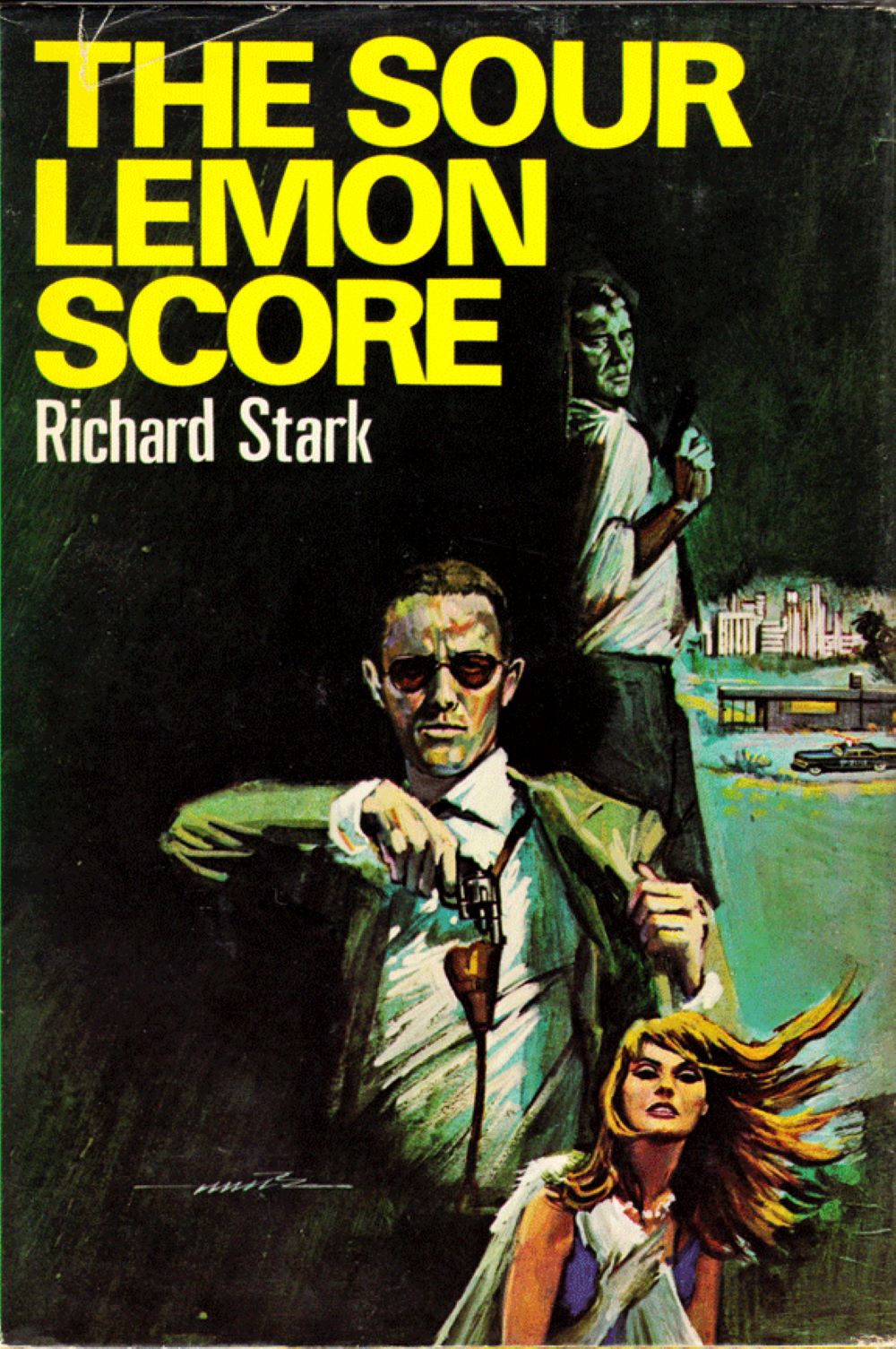
Richard Stark’s Parker novels are the kind of crime fiction that feel like they’re bad for you in all the right ways: lean, mean, amoral heist stories that work as both clinical studies of professional thieves and utterly shameless page‑turners. Taken across the 24-book run, from The Hunter in 1962 through Dirty Money in 2008, the series is remarkably consistent, yet also strange and jagged enough that you never quite relax into it. Reading Parker is like chain‑smoking noir paperbacks—self‑aware guilty pleasure with just enough bite and bleakness that you can pretend it’s good for you.
The basic premise barely changes, and that’s part of the appeal. Parker is a professional robber who prefers big, high‑yield scores: armored cars, payrolls, entire towns temporarily cut off from the world. He’s not an antihero in the modern prestige‑TV sense so much as a working stiff whose job happens to be violent crime, a man who approaches robbery with the same cold professionalism most people reserve for accounting. In The Hunter, the novel that kicks everything off, he’s double‑crossed by his wife and partner, shot, and left for dead, and the story is essentially one long act of payback as he claws his way back to New York and into the orbit of the Outfit, the crime syndicate that ultimately ends up with his money. That mix of stripped‑down revenge and procedural detail sets the tone for almost everything that follows, even when the later books drift away from personal vendetta into cleaner, job‑of‑the‑week capers.
What makes the series work—what makes it weirdly addictive—is how mercilessly Donald Westlake (under the Stark pseudonym) commits to Parker as an almost inhuman constant in a chaotic world. He’s often described by fans as a kind of force of nature, and that tracks with how he moves through these books: stoic, unadorned, perpetually assessing angles, crew members, and exit routes. Traditional redeeming qualities—sentimentality, guilt, even much curiosity about other people—just aren’t there; what you get instead is a kind of brutal efficiency that, perversely, becomes its own charisma. The guilty‑pleasure element kicks in because the novels quietly invite you to enjoy watching a ruthless pro outthink and outmuscle everyone in his path, even though the moral framework is closer to nihilism than romantic outlaw fantasy. There’s pleasure in the competence and in the clean lines of the plotting, even as you’re aware you’re rooting for someone who treats human beings like moving parts in a job.
Formally, the books have a recognizable skeleton that Stark keeps returning to and subtly bending. Most of the novels are divided into four sections: first, Parker’s point of view as he’s planning or executing a job; second, a continuation that usually ends with a betrayal or reversal; third, a shift into the perspective of whoever is double‑crossing or hunting him; and finally, a return to Parker as he fixes what’s gone wrong and settles accounts. This architecture does a couple things. It gives the series a strong procedural rhythm that fans can relax into—you know there will be a job, a screw‑up, and a payback—but it also keeps the tension high by delaying gratification until that fourth‑quarter rampage. You get both the chess match and the inevitable explosion. It’s formulaic in the same way a great blues progression is formulaic: you come for the structure, you stay for the particular variations each time.
The prose is another major part of the series’ guilty‑pleasure charge. Westlake pares the language down to something close to bare steel; the description is sparse, the sentences short, the dialogue practical and unfussy. Reviewers frequently point to how there’s “not a wasted word,” and that seems right: you feel like every line is there to move money, people, or bullets into position. In an age where a lot of thriller writing leans on verbosity and constant internal monologue, Parker’s tight focus can feel almost cleansing. At the same time, that same spareness means the violence can land with an extra jolt—there’s no cushioning around it, no moral throat‑clearing, just the fact of what Parker decides to do when someone gets in his way.
Across the series, the quality is not perfectly even, and that’s where a fair, balanced take has to admit some dips. The early stretch—The Hunter, The Man with the Getaway Face, The Outfit, The Score, and The Jugger—has a raw momentum and a sense of discovery as Westlake works out how far he can push a protagonist this cold. Later titles, especially in the first run up to Butcher’s Moon, often expand the canvas, giving more time to side characters and to elaborate, multi‑phase heists. Some readers and critics consider The Score, with its audacious robbery of an entire mining town, a high‑water mark; others see it as simply a particularly well‑executed entry in a series where the baseline is already high. Then, after the long break between the 1970s and the 1990s revival with Comeback and Backflash, you can feel Westlake adjusting the formula to a slightly different era, with Parker still fundamentally the same but the world around him updated. Those later books are often solid and occasionally excellent, but the sheer shock of the early ones is hard to recapture.
From a modern perspective, one of the more interesting tensions in reading Parker is the question of identification. The books are not satire, and they aren’t quite celebrations; they’re closer to case files written with a strong sense of style. The theme that emerges most strongly is the amoral logic of criminal enterprise: loyalty is provisional, greed is constant, and institutions—whether the Outfit or banks or small‑town cops—are just different power systems to be exploited. There’s no sentimental criminal code here, only practical rules about not talking, not freelancing, and not getting sloppy. That worldview can be bracing and, frankly, kind of fun to inhabit for a few hundred pages at a time, particularly because Westlake doesn’t ask you to endorse it; he just drops you in and lets you watch how it operates.
At the same time, that detachment and hardboiled minimalism can turn some readers off. If you need emotional growth, redemptive arcs, or a sense that the universe punishes the wicked, Parker is going to feel either empty or actively hostile to your expectations. The closest the series comes to sentiment is in Parker’s occasional, grudging respect for other professionals who do their job well—safecrackers, drivers, heist planners—and even that is strictly bounded by the demands of survival and profit. Women, in particular, can feel underwritten or instrumental in some entries, especially the earlier books, reflecting both the genre conventions of the time and the series’ focus on Parker’s narrow, self‑interested worldview. It’s possible to argue that this is part of the point—these are Parker’s stories, and he does not care about anybody’s inner life—but it does mean the books can feel airless if you’re reading a bunch in a row.
Still, that’s the strange magic of Parker: for all the limitations and repetitions, you finish one and almost immediately think about the next job, the next crew, the next betrayal. The series taps into a very specific pleasure center: watching a ruthlessly competent person navigate systems stacked with corruption and stupidity, using only planning, discipline, and a willingness to hit back harder than anyone expects. It’s not aspirational, and it’s not comforting, but it is undeniably gripping. If you can accept an unapologetically amoral center and you have a taste for stripped‑down crime fiction with a strong procedural spine, Parker is easy to devour and just as easy to feel a little guilty about enjoying as much as you do.
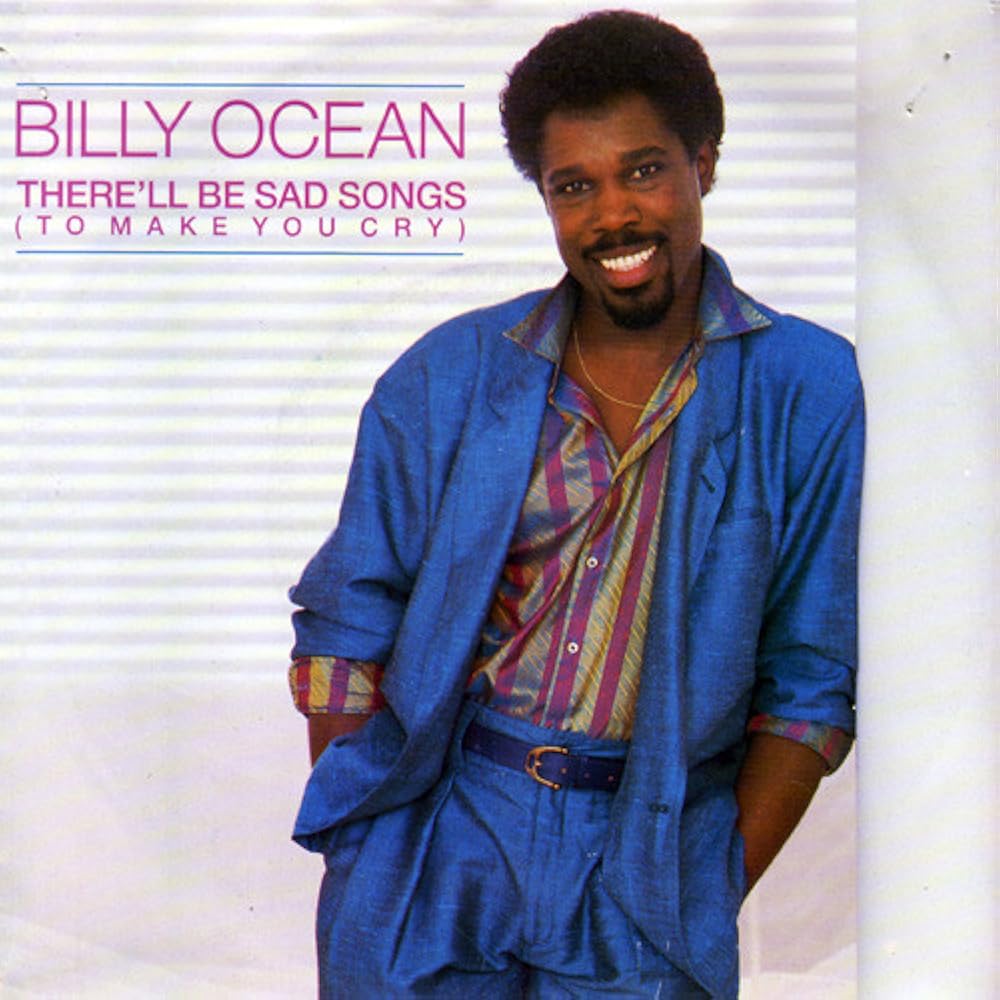
Billy Ocean had a way of turning simple emotions into something cinematic, and “There’ll Be Sad Songs (To Make You Cry)” is a perfect example of that magic. The moment those warm synths and soft percussion kick in, you’re instantly transported to the neon glow of the mid-’80s — where emotions were big, melodies were lush, and love songs weren’t afraid to be earnest. Ocean’s smooth voice carries this mix of heartbreak and hope, like someone trying to stay strong while still holding on to pieces of a beautiful memory.
What makes the song so timeless is that it understands how music shapes emotion — how a single tune can unravel memories you thought were long tucked away. Ocean taps into that universal experience: hearing “your” song after a breakup and suddenly feeling the rush of everything you tried to forget. The arrangement, gently swaying between comfort and sadness, mirrors that emotional tug-of-war perfectly. There’s a sincerity here that modern ballads often miss, a belief that it’s okay to be vulnerable — even poetic — about love and loss.
Looking back, the track feels like a voice from a gentler time in pop music, when sincerity wasn’t filtered through irony. You can almost picture the record spinning on an old stereo, the room dimly lit, as Ocean’s voice fills the space with warmth. It’s not just a love song — it’s a time capsule, one that reminds you how the best music doesn’t just play in the background; it stays with you, quietly marking the chapters of your life like an old friend.
There’ll Be Sad Songs (To Make You Cry)
Sometimes I wonder by the look in your eyes When I’m standing beside you There’s a fever burning deep inside
Is there another in your memory? Do you think of that someone When you hear that special melody?
I always stop and think of you especially When the words of a love song Touch the very heart of me
There’ll be sad songs to make you cry Love songs often do They can touch the heart of someone new Saying, “I love you” (I love you)
I often wonder how it could be you loving me Two hearts in perfect harmony I’ll count the hours until that day (until that day) A rhapsody plays a melody for you and me
Until the moment that you give your love to me You’re the one I care for The one that I would wait for
There’ll be sad songs to make you cry Love songs often do They can touch the heart of someone new Saying, “I love you” (I love you)
There’ll be sad songs to make you cry Love songs often do They can touch the heart of someone new Saying, “I love you”
You’re my desire You take me higher My love is like a river running so deep I always stop and think of you especially When the words of a love song Touch the very heart of me
There’ll be sad songs to make you cry Love songs often do They can touch the heart of someone new Saying, “I love you”
There’ll be sad songs to make you cry Love songs often do They can touch the heart of someone new Saying, “I love you” (I love you)
Doo, doo, doo, doo, doo, doo, doo, doo Doo, doo, doo, doo, doo Oooh, saying, “I love you” I love you
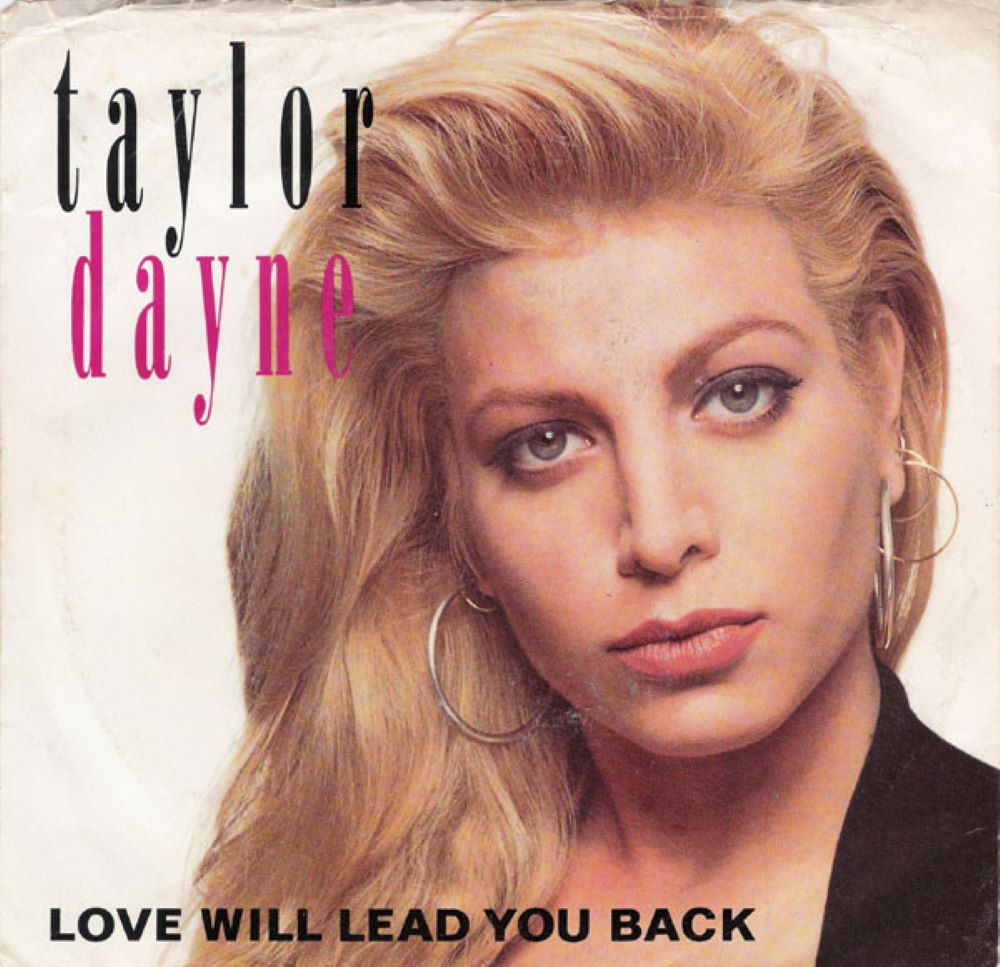
There’s something timeless about Taylor Dayne’s “Love Will Lead You Back.” It’s one of those late‑’80s power ballads that seems to wrap you in equal parts heartbreak and hope. The production has that cinematic touch — sweeping keys, smooth percussion, and Dayne’s powerhouse vocals soaring right at the emotional peak. You can practically imagine it playing in the background of a classic movie breakup scene, the kind where one person turns away but everyone watching knows they’ll find their way back to each other.
What really hits about this song is how honest it feels about love’s cycles — that idea that no matter how far two people drift, fate has a way of reconnecting them when the time is right. Dayne’s delivery balances vulnerability and strength; she’s not begging, she’s believing. The lyrics have that emotional confidence that was so characteristic of ballads from that era, blending idealism and maturity in a way that feels comforting even decades later.
Listening to it now, the song carries a kind of nostalgic magic. It brings you back to a time when love songs weren’t afraid to be grand and achingly sincere. Maybe it’s the warm analog production or the fearless emotion in Dayne’s voice, but it reminds you how music used to make you stop for a moment — just to feel. It’s a track that doesn’t just tell you love will lead you back; it makes you believe it.
Love Will Lead You Back
Saying goodbye is never an easy thing But you never said that you’d stay forever So if you must go, well darlin’, I’ll set you free But I know in time that we’ll be together
Oh, I won’t try to stop you now from leaving ‘Cause in my heart I know
Love will lead you back Someday I just know that Love will lead you back to my arms Where you belong I’m sure, sure as stars are shining One day you will find me again It won’t be long One of these days our love will lead you back
One of these nights Well, I’ll hear your voice again You’re gonna say Oh, how much you miss me You’ll walk out this door But someday you’ll walk back in Oh, darling I know Oh, I know this will be
Sometimes it takes Some time out on your own now To find your way back home
Love will lead you back Someday I just know that Love will lead you back to my arms Where you belong I’m sure, sure as the stars are shining One day you will find me again It won’t be long One of these days our love will lead you back
But I won’t try to stop you now from leaving ‘Cause in my heart I know, oh yeah
Love will lead you back Someday I just know that Love will lead you back to my arms Where you belong I’m sure, sure as stars are shining One day you will find me again It won’t be long One of these days our love will lead you back, oh yeah
Love will lead you back Someday I just know that Love will lead you back to my arms It won’t be long One of these days our love will lead you back
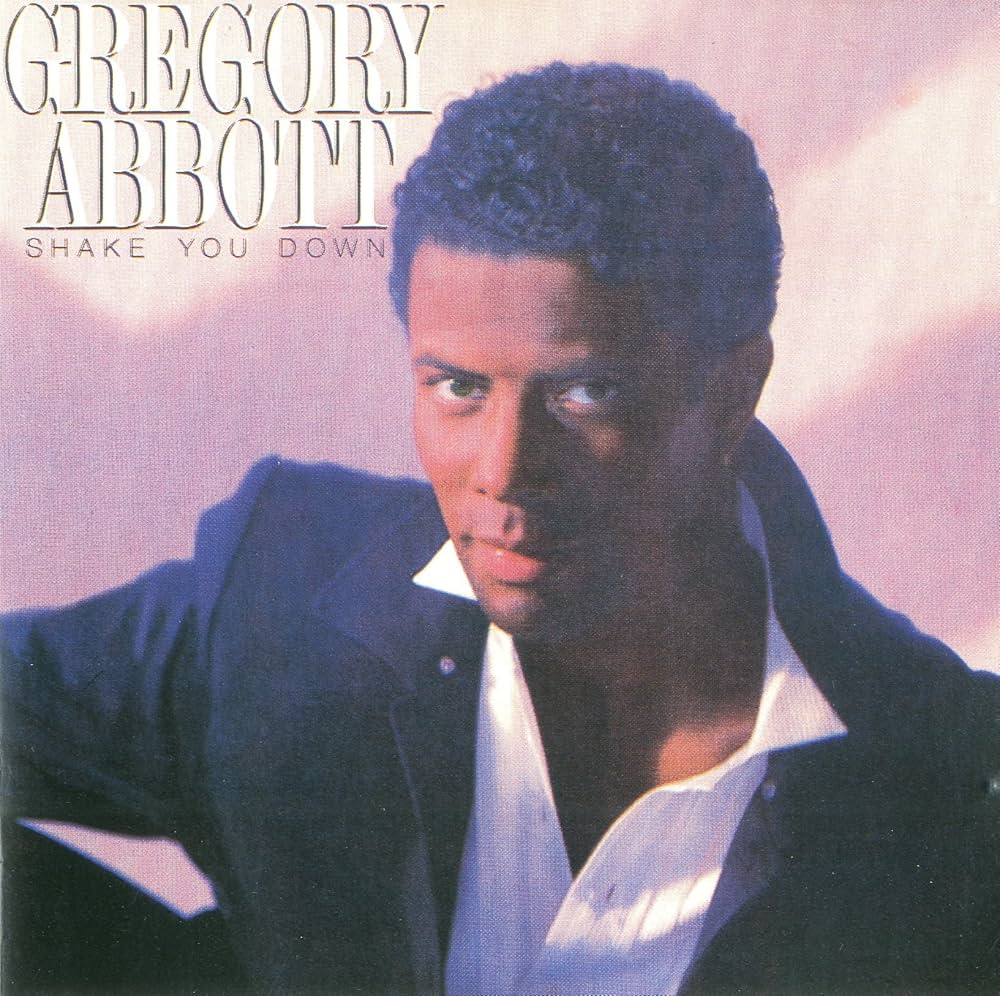
There’s something instantly recognizable about Gregory Abbott’s “Shake You Down.” From that opening synth line to the smooth, almost whispered vocals, it feels like pure ’80s romance bottled into four silky minutes. This wasn’t a loud song — it didn’t need to be. Abbott’s voice doesn’t demand attention; it draws you in with that gentle charm that made it the perfect track for dimly lit gym floors, disco balls spinning, and teenagers swaying in slow circles, trying not to step on each other’s shoes.
What made “Shake You Down” stand out wasn’t just the melody but how effortlessly seductive it was without ever being explicit. The song oozes quiet confidence — cool, easy, and slightly shy — the way the best R&B hits of the era did. It’s the kind of tune that made every listener feel like they were starring in their own movie moment: that hesitant glance, that first slow dance, that unspoken “this might be something” energy. Even now, it triggers a rush of nostalgia for a more innocent kind of intimacy.
Decades later, it’s no wonder “Shake You Down” still sneaks its way into prom playlists and retro nights. It doesn’t chase trends or rely on flashy production — it’s just a solid, soulful groove that makes you want to close your eyes and sway. For anyone who grew up in the ’80s or ’90s, hearing those first notes is like being transported back to a simpler time when a slow song at the end of the night could mean everything.
Shake You Down
Girl, I’ve been watching you From so far across the floor, now, baby That’s nothing new, I’ve watched you So many times before, now, baby I see that look in your eyes (look in your eyes) And what it’s telling me And you know, ooh girl, that I’m not shy I’m glad you picked up on my telepathy, now, baby
You read my mind (you know you did) Girl, I wanna shake you down (oh well, oh well) I can give you all the lovin’ you need (I’m gonna love you) Come on, let me take you down (oh, baby) We’ll go all the way to Heaven Ooh, I been missing you And the way you make me feel inside What can I do? I can tell you’ve got your pride now, baby Come to me (oh well, oh well) Let me ease your mind (oh babe) I’ve got the remedy, yes I do Now give me just a little time
I wanna rock you down (I can give you all the lovin’ you need) I’m gonna love you (Come on, let me take you down) Oh well, oh well (We’ll go all the way to Heaven)
Girl, I’ve been missing you And you know, it’s funny Every time I get to feelin’ this way I wish I had you near me I wanna reach out and touch you
I can’t stop thinking of the things we do The way you call me “baby” when I’m holding you I shake and I shiver when I know you’re near Then you whisper in my ear (oh baby, well, well)
Oh baby (I can give you all the lovin’ you need) I’m gonna love you (Come on, let me take you down) Oh well, oh well (We’ll go all the way to Heaven)
Eeny-meeny-miny-mo (you read my mind) Come on, girl, let’s shock the show (girl, I wanna shake you down) (I can give you all the lovin’ you need) Roses are red and violets are blue I’m gonna rock this world for you Hey baby (We’ll go all the way to Heaven) (You read my mind) Girl, I wanna shake you down I can give you all the lovin’ you need Come on, let me take you down We’ll go all the way to Heaven
“Well, I hate to break it to you, darlin’, but the way you was raised wasn’t real.” — The Ghoul to Lucy
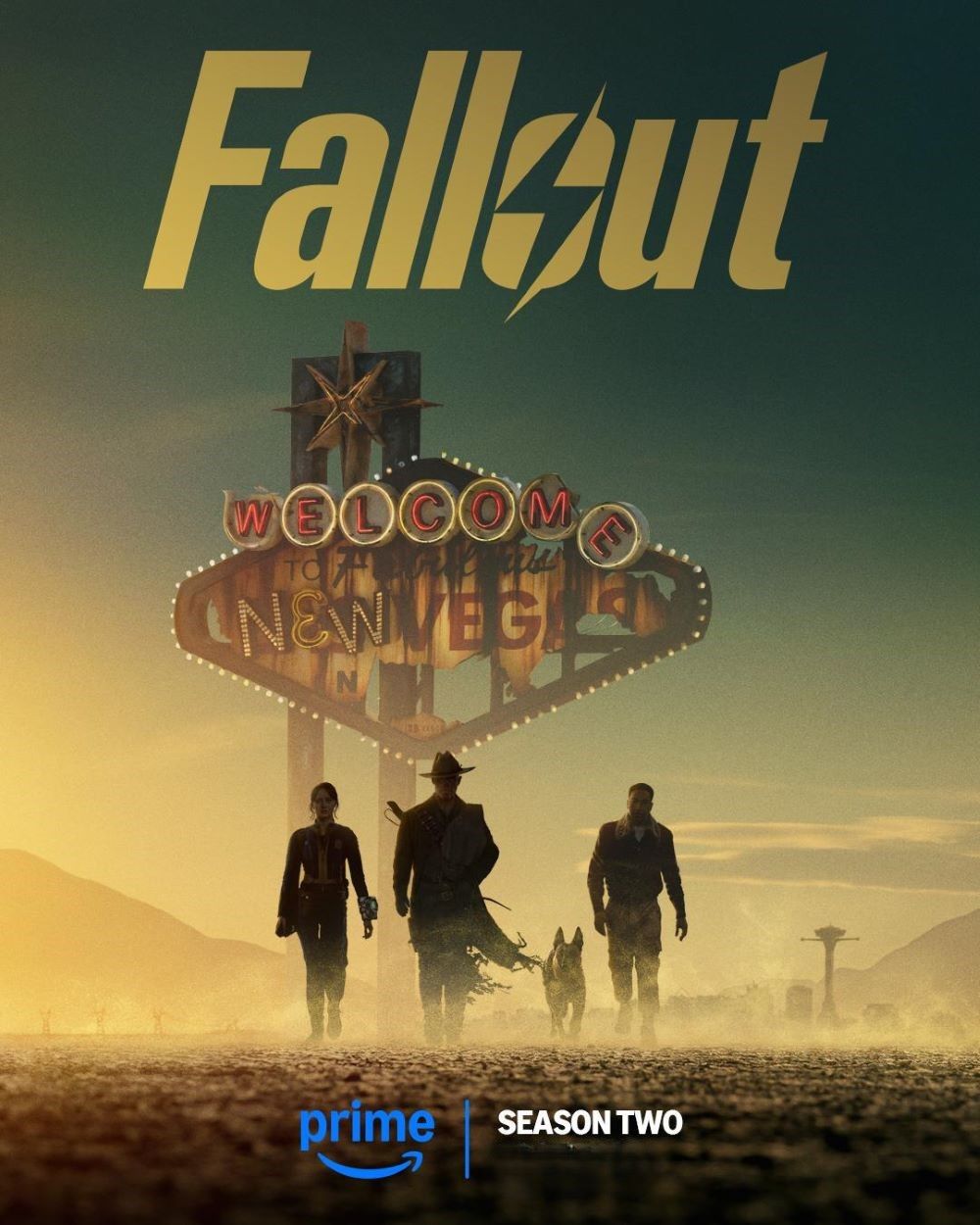
Fallout season 2 already felt like the show leveling up into a bigger, stranger, and more emotionally loaded story; stretching that out to look at specific standout hours just underlines how confidently it plays with tone, lore, and character this year. The season still has its pacing and bloat issues, but episodes like 4, 6, and the finale remind you why this world is worth spending time in: they mix monster‑movie mayhem with sharp character turns and some surprisingly pointed world‑building.
From the outset, season 2 signals that it’s done playing small. Where season 1 often kept things contained to a handful of locations and a relatively tight triangle of conflicts, this run treats the wasteland like a map that’s finally fully unlocked. New Vegas, the Mojave, multiple Vaults, NCR outposts, Enclave facilities, and Legion‑touched territories all start jostling for attention. That expansion comes with an “everything louder” philosophy: more factions, more lore, more experiments gone wrong, and more moral gray areas. The show leans into the idea that the real horror of this world isn’t just the radiation or the monsters; it’s the legacy of people who convinced themselves they were saving humanity while quietly deciding which parts of humanity didn’t deserve to make it.
The overarching cold fusion storyline is the clearest expression of that. Season 1 treated it as a sort of mysterious MacGuffin hovering in the background, but season 2 drags it fully into the spotlight and ties it directly to the choices that triggered the Great War. By steadily revealing how Vault‑Tec, the Enclave, and figures like Hank and House circled the same piece of technology, the show paints a picture of an apocalypse that was less an accident and more an inevitable collision of greed, fear, and hubris. The tragedy is that many of these people genuinely believed they were securing a better future — they just defined “future” in terms that erased anyone outside their bubble. That added nuance gives the season a heavier emotional punch, because the fallout (pun intended) is no longer just a backdrop; it’s the direct consequence of personal betrayals we’ve watched unfold in flashback.
Cooper Howard, now fully embraced as the Ghoul, remains the emotional spine of that history lesson. Season 2 deepens his arc by closing the gap between the smiling pre‑war cowboy and the bitter, sand‑blasted killer stalking the Strip. His encounters with Robert House, especially in the finale, turn into confrontations not just with a technocrat who survived the bombs, but with the version of himself that let things get this far. The realization that he didn’t just lose his family to the apocalypse, but that his own patriotic image and complicity helped build the machine that destroyed them, hits like a slow‑motion punch. Walton Goggins plays those beats with a mix of brittle humor and raw self‑loathing that keeps the character from slipping into pure nihilism; you can see the man he was flicker through the monster he’s become, which makes every choice he makes in the present feel loaded.
Lucy, in contrast, is the series’ ongoing experiment in whether idealism can survive honest contact with the truth. Season 2 pushes her far beyond the naive Vault dweller who stepped into the sun in season 1. Over these episodes, she’s forced to confront not just her father’s lies, but the systemic rot embedded in every power structure she encounters. Vault‑Tec’s “protection,” Brotherhood righteousness, NCR order, Enclave science — every banner comes with its own flavor of atrocity. The brilliance of her arc is that the show doesn’t simply break her and call it growth. Instead, it lets her anger simmer quietly until it finally erupts during the operating‑room showdown with Hank in the finale, where she makes a calm, devastating choice that redefines their relationship forever. That moment isn’t just shock value; it’s the natural endpoint of a season spent watching her tally up cost after cost.
Maximus, meanwhile, evolves from wobbling wannabe knight into one of the show’s most grounded points of view, and episodes 4 and 6 mark very different turning points around him. Episode 4 is where the Brotherhood’s internal fractures stop being subtext and explode into open conflict. It’s the beginning of the Brotherhood civil war, and the first time Maximus is forced to confront the idea that his “family” might be rotten at the core. Watching knights and scribes turn on each other, watching command structures splinter, he starts to see that the Brotherhood’s rhetoric about honor and protection doesn’t hold when power and ideology clash. The moment he realizes the people he idolized are willing to kill their own to maintain control is the moment the halo really slips; he begins to understand that the Brotherhood may not be the good guys after all. It’s not a neat, one‑scene epiphany, but that episode is where denial stops being an option and he starts making choices that reflect his own moral compass rather than the codex.
Episode 6, by contrast, steps away from Maximus’ internal war and digs deeper into the past that shaped the wasteland he’s fighting in. This is much more a Barbara‑and‑Ghoul hour, fleshing out their backstory and giving emotional context to the cold fusion plot and the eventual apocalypse. The episode spends time with Cooper and Barbara before the bombs, letting us see their relationship in more detail: the compromises, the arguments, and the quiet ways Barbara pushes back against Vault‑Tec’s glossy promises. It also charts Cooper’s slide from working actor and family man into patriotic mascot and unknowing cog, showing how easy it was for him to rationalize each step as “doing the right thing.” By anchoring those flashbacks in Barbara’s perspective as much as Cooper’s, the episode makes her more than just a tragic absence — she becomes the person who saw the danger, tried to steer them away from it, and got overruled.
Those mid‑season episodes also shine when it comes to pure lore and creature work. Episode 4’s introduction of the Deathclaws as a real force in the story is one of the season’s best sequences. Rather than just dropping them in for a cameo, the show frames them as the culmination of whispered rumors, suspicious carnage, and mounting dread. When a Deathclaw finally tears into the frame, the direction emphasizes scale and unpredictability: these aren’t just big lizards, they’re apex predators that shrug off conventional tactics. The way they rip through defenses and send even seasoned fighters scrambling instantly re‑calibrates the power dynamics of the wasteland. Later, when they become central to the Strip’s Earth‑shaking siege, you already understand that their presence means no one is safe, no matter how shiny their armor or how fortified their stronghold.
On the lore side, episodes like 4 and 6 weave the Deathclaws and other horrors into a broader tapestry of FEV experimentation and Enclave meddling, making them feel like part of the same long chain of sins that gave us super mutants and other abominations. That connection reinforces the season’s larger point: the worst monsters in Fallout aren’t random mutations, they’re the descendants of carefully planned projects whose creators never fully accepted the consequences. It’s a neat bit of storytelling economy, turning what could have been a simple monster‑of‑the‑week into another thread in the show’s ongoing conversation about responsibility.
Season 2 also benefits from spending more quality time with its side characters instead of just treating them as quest givers or comic relief. Barbara is the most poignant of these. Where she once existed mostly as a memory in Cooper’s flashbacks, she now feels like a fully realized person with her own fears, instincts, and lines she isn’t willing to cross. We see her wrestle with Vault‑Tec’s promises and start to question the cost of all that gleaming corporate optimism. Those glimpses of her pushing back, or trying to pull Cooper back from the brink of total complicity, retroactively deepen every ounce of his guilt. He didn’t just lose a wife and child; he ignored the one person who saw the moral cliff edge coming and still jumped.
Thaddeus, while still often played for uneasy laughs, gets just enough shading to keep him from tipping into cartoon territory. Season 2 makes it clear that his brand of cowardly self‑preservation is less a personality quirk and more a survival strategy in a world that punishes idealism. When he’s swept up in vault‑side chaos and the grotesque side effects of FEV and forced evolution, his panic and bad decisions feel depressingly understandable. He’s the guy with no faction backing, no armor, no immortal body — the perfect lens for showing how regular people get crushed when the big players start moving pieces around. The fate he stumbles into is darkly ironic, but there’s a sting to it because the show has taken the time to make him more than just the butt of the joke.
Stephanie emerges as the wild card of the season, but not for the usual “chaotic Vault teen” reasons. What really drives her is that she’s a product of a very specific trauma: she’s Canadian in a universe where Canada was annexed, occupied, and turned into a horrifying internment state. That history isn’t just backstory flavor — it’s the furnace that forged her worldview. She grew up knowing that her country wasn’t just defeated; it was erased, abused, and folded into an American narrative that pretends it all happened for the greater good. So when she pushes against authority or digs into restricted information, it’s not just adolescent rebellion or a desire to impress anyone in the Vault hierarchy. It’s the instinct of someone who has seen, or inherited, the consequences of letting American power go unquestioned.
That’s why Stephanie’s personal agenda feels so out of step with the usual factional chess game. NCR, Brotherhood, Enclave, House — none of them really matter to her in ideological terms. To her, they’re all just different masks on the same face: American power structures rearranging themselves after the bombs, pretending the past is settled and the ledger is closed. Her curiosity about hidden tech, sealed records, and buried atrocities is less about “how can I leverage this for my people right now?” and more about “how can I expose what America did, and is still doing, to people like me?” Her animosity is directed at the idea of America itself — its myths, its revisionism, its insistence on calling conquest “security” and occupation “peacekeeping.” That’s why she doesn’t fit neatly into anyone’s strategy; she’s playing a longer, more personal game, one where the win condition isn’t territory or tech, but forcing the truth about what happened to Canada and to her people into the light.
What makes Stephanie compelling is that the show lets that animus sit in a morally messy place. She’s not some pure avenger with a perfect plan. Her choices are often reckless, sometimes cruel, and frequently blind to the collateral damage she’s creating in the here and now. But they make sense when you remember her context: she comes from a lineage that was caged, brutalized, and then largely written out of the post‑war power conversation. Of course she doesn’t care about which American faction ends up on top; from her perspective, the game is rigged no matter who’s holding the pieces. That’s why she feels less like a quirky side character and more like a slow, ideological time bomb buried in the story. Everyone else is fighting over the wasteland’s future, but Stephanie is here to settle a very old score with the idea of America itself — and that makes her one of the most unpredictable, and potentially explosive, figures in Fallout’s second season.
All of this character and lore work feeds into the finale, “The Strip,” which plays like the entire season compressed into one frantic, blood‑spattered hour. The Deathclaw assault, NCR push, Legion maneuvering, Enclave gambits, and House’s machinations collide on a single battlefield, turning the Strip into both a literal and symbolic crossroads for the wasteland’s future. Maximus’ rejection of blind Brotherhood obedience, Lucy’s definitive break with Hank, and Cooper’s reckoning with House and his own past all converge in a series of confrontations that feel earned precisely because the season has spent so much time setting the pieces on the board. It’s explosive and overwhelming, and it leaves plenty of threads dangling, but it also makes one thing crystal clear: there’s no going back to the relatively simple story this show started as.
Taken as a whole, Fallout season 2 is still a fair trade‑off, even with its occasional narrative overload. You give up some of the clean, streamlined storytelling of season 1 and accept that a few side plots and characters will drift in and out of focus, but in return you get a richer, more dangerous wasteland where Deathclaws stalk neon streets, the Brotherhood’s halo has visibly slipped, and characters like Barbara, Thaddeus, and especially Stephanie complicate the moral landscape in satisfying ways. It’s a season that believes in escalation — of spectacle, of lore, of emotional stakes — and while that sometimes leads to messiness, it also makes the highs genuinely memorable. If the show can channel that energy into a slightly tighter, more focused third season, this run will stand as the wild, necessary expansion pack that blew the world wide open and dared its characters to survive the consequences.
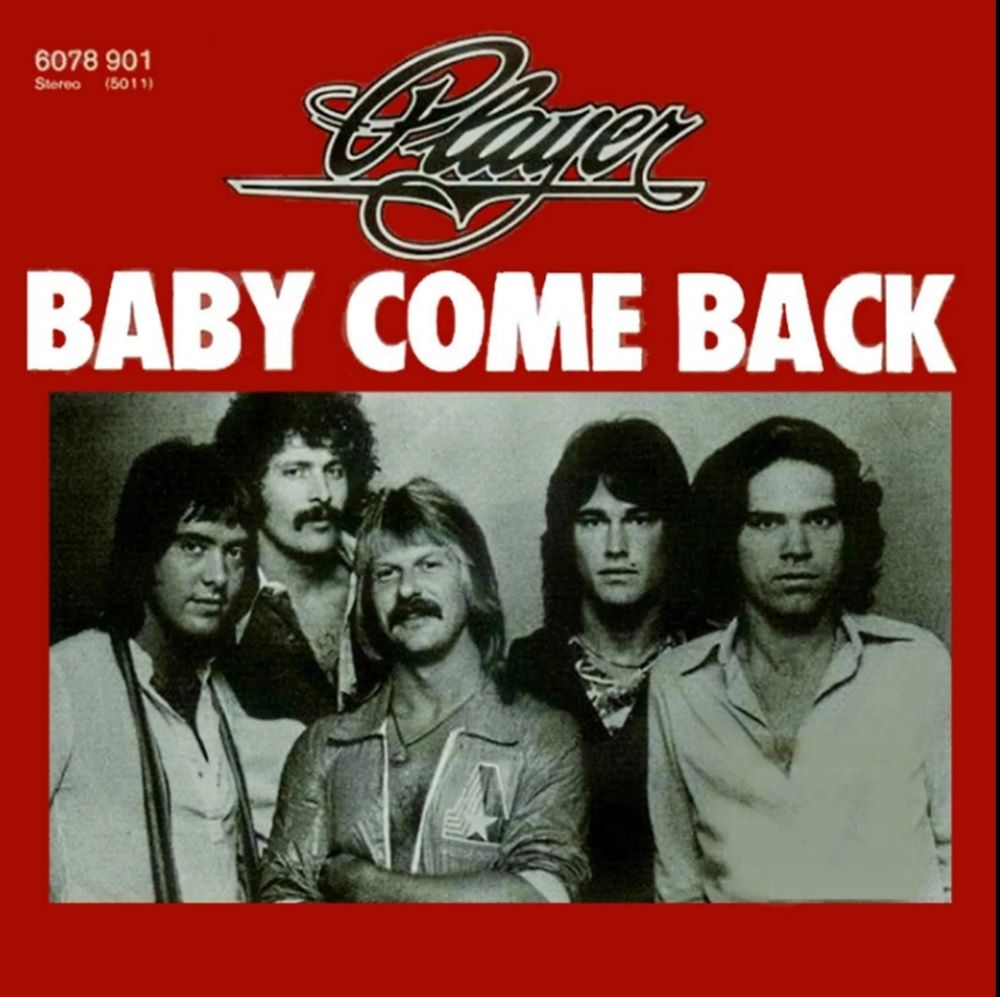
There’s something timeless about Player’s “Baby Come Back.” The moment that smooth, shimmering guitar riff kicks in, you’re instantly transported to an era of feathered hair, smoky bars, and love songs that meant exactly what they said. Released in 1977, it’s the sound of a guy trying to keep it together after heartbreak — and not quite succeeding. Honestly, any song that uses the phrase “mask of false bravado” earns its “timeless” badge automatically. That’s pure emotional poetry hiding inside a silky yacht‑rock groove.
What makes it work is how effortlessly cool it sounds while being totally sincere. The production is sun‑drenched, the harmonies glide, and the rhythm section keeps everything smooth without ever getting sleepy. You can hear the singer trying to play it off, pretending he’s fine — but those gentle falsettos betray him at every turn. It’s heartbreak with charm, regret you can actually dance to. The song doesn’t wallow; it sways.
Nearly five decades later, “Baby Come Back” still hits that sweet spot between sad and suave. It’s for those quiet, reflective nights when you’re too proud to text first — but not too proud to sing along. There’s a warm nostalgia baked into every note, and that lyrical honesty feels a little rarer each passing year. Turns out, love and vulnerability age beautifully when wrapped in a melody this smooth.
Baby Come Back
Spending all my nights, all my money going out on the town Doing anything just to get you off of my mind But when the morning comes, I’m right back where I started again And tryin’ to forget you is just a waste of time
Baby come back, any kind of fool could see There was something in everything about you Baby come back, you can blame it all on me I was wrong and I just can’t live without you
All day long, I’m wearing a mask of false bravado Trying to keep up a smile that hides a tear But as the sun goes down, I get that empty feeling again How I wish to God that you were here
Baby come back, oh baby, any kind of fool could see There was something in everything about you Baby come back, you can blame it all on me I was wrong and I just can’t live without you, oh
Now that I put it all together, oh, oh Give me the chance to make you see Have you used up all the love in your heart? Nothing left for me? Ain’t there nothing left for me?
Baby come back, oh darling, any kind of fool could see There was something in everything about you Baby come back, listen baby, you can blame it all on me I was wrong and I just can’t live without you I was wrong and I just can’t live
 Through the Shattered Lens