Highschool of the Dead: Episode 5 – First Impressions


We’re now hitting the series’ stride with Episode 5 of Highschool of the Dead. I think any sort of introductory exposition and sequences will now be limited to recurring side characters. One of whom was introduced in this episode. I’m talking about the character of Rika Minami. She’s the friend of our intrepid little band of high school survivors, the ditzy and oppai-centric school nurse. School nurse Shizuka Marikawa looks to be settling in as the comedic release for the series’ tension-filled episodes. From the way she’s animated, her seiyuu‘s way of voicing her character to how she reacts to the going-ons around her. Even the sound-effects used to focus on her character is used for comedic-effect.

Her friend Rina happens to be one of Japan’s top police sniper and we see her in action right from the start as she eliminates all the zombies which have stumbled onto the runways of Kansai International Airport which also happens to be an airport built on an artificial island. Before anyone thinks this is a creation of the animators this particular airport actually exists. Rina continues the manga and anime’s style of drawing and animating all it’s female characters in as fanservice a way as possible. I think any viewer of this series who still objects to how the women are drawn should’ve gotten the hint after the first two episodes. If they’re still watching then they shouldn’t be complaining.

The episode was actually free of any sort of censoring from the broadcaster which is surprising since the previous four had them in some level. It seems that certain fanservice scenes can get through without censoring being used and from what I could tell the line between what will be censored during the Anime Network silmulcast and what won’t be is a very fine line.

I can’t finish this recap without pointing out that this episode definitely belonged to the series otaku, Kohta Hirano. We get to see him in action in this episode and why his very otaku nature may just keep him alive through the duration of the series. We get to see him switch from his nebbish and geeky nature to one that’s able to kill in a heartbeat. Saeko Busujima may be the more kick-ass character in this series but Kohta Hirano can definitely keep up as long as he has access to guns.

One other observation I like to make is how the anime writers continue to make Shido-san, the self-appointed leader of the other group of students, the definite human villain in this series. From the way they’ve adapted his manga character to how they’ve animated him he is one Grade-A heel who even has classic jazz porn music playing in the background when he makes of his speeches to his followers. It’s going to be real interesting how the writers and animators of the series will deal with the scene on the bus as his followers pass the time and boredom.

Episode 6 is just hours away and I’m excited to see how this series continues as it enters even heavier fanservice territory.
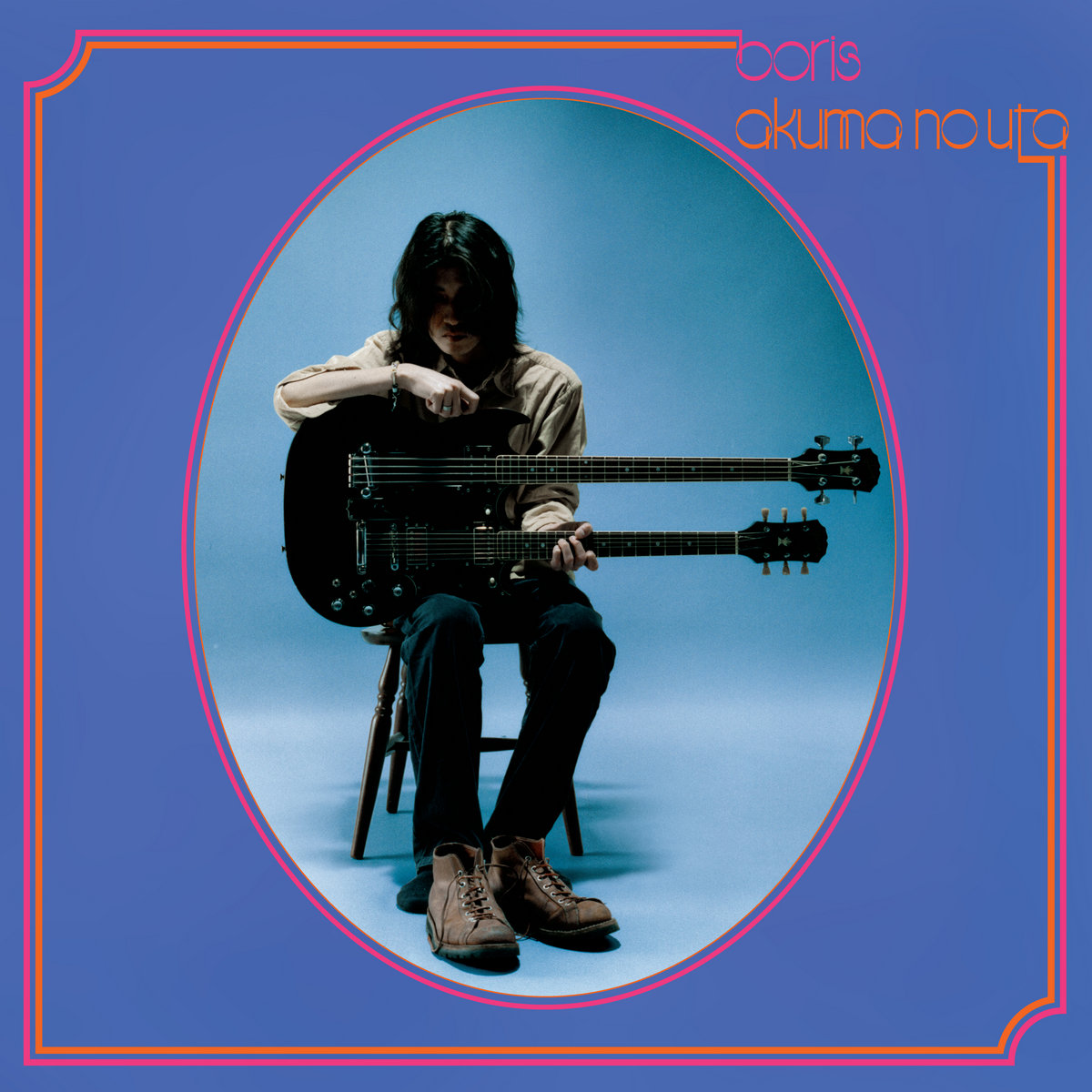
Song of the Day: Naki Kyoku (by Boris)


TSL writer necromoonyeti randomly recommended “Naki Kyoku” by Boris to me out of the blue one day and just said, “you’re gonna love this.” No buildup, no explanation—just that confidence. And honestly, it didn’t take long to see why. The track doesn’t hit you all at once; it kind of eases in, like it knows it’s going to win you over eventually.

What really hooked me is how the song balances this heavy, almost suffocating atmosphere with something strangely delicate underneath. The guitars feel thick and immersive, but they’re not trying to overwhelm you—they just kind of surround you. There’s this hazy, dreamlike quality to it, like you’re drifting through something emotional you can’t quite put into words, but you definitely feel it.

If you’re expecting Boris to go full-on loud or abrasive, this track flips that expectation. It’s way more restrained, but somehow just as intense. Instead of chaos, it leans into mood and slow-building weight. It feels introspective, almost like the song is asking you to sit with it rather than react to it, and that makes it stick in a different way than their heavier stuff.

Honestly, it’s one of those songs you don’t fully get on a casual listen—you kind of have to give it space. Throw it on late at night with headphones and just let it play out. It’s subtle, but once it clicks, it really lingers. That recommendation ended up being dead-on.

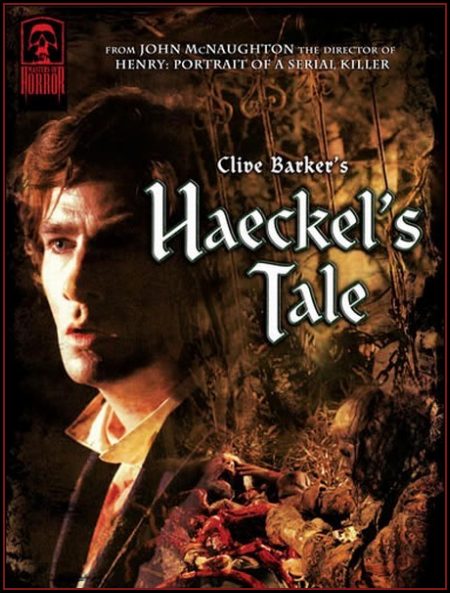
Review: Masters of Horror – Haeckel’s Tale (dir. by John McNaughton)


Masters of Horror has been good but very uneven in its execution during it’s two season run on Showtime. Haeckel’s Tale is the last episode for Season One (Takashi Miike’s episode never got an official airing) and it sure ends the season on a disturbingly kinky compilation of twisted grotesqueries. The story is from a Clive Barker short story that’s been adapted by Mick Garris (fellow Masters of Horror director and also its brainchild) and produced by George A. Romero to be directed by John McNaughton.

One wonders why Romero would be producing instead of directing the piece. Scheduling conflicts prohibited Romero from taking the director’s chair and he instead recommended John McNaughton (his one film which earned him Master of Horror status is one of the best horror films of the last quarter century: Henry – Portrait of a Serial Killer). The fact that Romero was originally chosen to direct Barker’s Garris adapted short story means there’s got to be zombies or some form of undead within. I, for one, was glad that Romero decided that he wouldn’t be able to direct and chose another in his stead. Barker’s short story does indeed include zombies but it also has a heavy sense of the old classic technicolor Hammer Films vibe to it. Haeckel’s Tale under the capable hands of McNaughton takes those Hammer Films conventions and ramps it up into overdrive.

Even though John McNaughton really has only one true horror film under his belt (he also directed a little-known cult scifi-horror called The Borrowers which had fledgling effects shop KNB EFX still doing things guerilla-style), but his work in Henry: Portrait of a Serial Killer more than earned him his horror creds. In Haeckel’s Tale, John McNaughton clearly has a bit of fun making the only true period piece in the whole Masters of Horror series. McNaughton goes for the classic Hammer Films look for this episode and it shows in the gothic, fog-shrouded atmosphere in the outdoor scenes. The look of the costumes and even the dialogue harkens back to those Christopher Lee and Peter Cushing Hammer Films.

The story is a mixture of the Frankenstein tale with a some Cemetary Man (aka Dellamorte Dellamore) mixed in. Haeckel’s Tale begins somewhere around the 1800’s and I’m assuming close to the end of it from the costume worn by Steve Bacic who played Mr. Ralston who arrives to seek the help of Miz Carnation who is purported to be a necromancer who can grant him his wish to have his dead wife brought back to life for him. Miz Carnation rebuffs Ralston, but after some begging she makes a deal with him to hear Haeckel’s Tale. If he still wants his wife brought back to life after hearing it then she would do so.

Ernst Haeckel (played by Derek Cecil)is a young medical professor whose obsession to conquer death mirrors that of a certain eccentric European scientist he so admires. Unlike his idol, Haeckel’s attempt to use electricity to put the spark of life back into a corpse fails dramatically. He’s soon investigating the rumor of a certain traveling necromancer who goes by the name of Montesquino (played by Joe Polito) who he thinks to be a fraud, but he soon finds out that Montesquino is all he says he is when Haeckel stumbles upon Wolfram (played by Stargate SG-1‘s own Maybourne, Tom McBeath) and his stunning young wife Elise (the drop-dead gorgeous Leela Savasta).

Haeckel quickly lusts after the young Elise, but as Wolfram will later tell him as the story nears it’s climax (in more ways than one), Elise cannot be satisfied by him or Haeckel. Her obsession with a dead husband she loves and cannot let go brings Haeckel to a scene that he cannot comprehend nor accept as something she truly wants. I must say that Leela Savasta’s performance as the dead-obsessed Elise is only surpassed by Anna Falchi’s own work as “She” in Dellamorte Dellamore. Leela’s pretty much spending most of her screentime fully naked and writhing around in an orgy not typical of most horror movies. It’s also in this orgy scene where we get the biggest Clive Barker feel to the story. Anyone how has read Barker earlier work knows the man can mix horror and sex like no other.

The ending of the episode brings to it a slight twist with Miz Carnation being more than she says she is. This Masters of Horror episode is not the best of the lot, but it is one of the better looking ones in terms of cinematography and it’s leads. It also doesn’t have much in terms of genuine scares. The story gradually builds up the dreads and disturbing images but never anything that will put a genuine heart-stopping scare on the viewer. Like McNaughton’s own foray into horror with Henry, Haeckel’s Tale lets the story’s own disturbing themes on obsession and the darker side of love put the horror in the story. It does have a nice gore-laden sequence courtesy of Howard Berger and Greg Nicotero and their KNB FX team.

In the end, Haeckel’s Tale is a very good episode which has its flaws like the rest of the Masters of Horror episodes. What sets it apart from the rest of the series entries is its unique Hammer Films look and the return of McNaughton back in the director’s chair as a horror filmmaker. It’s no Henry: Portrait of a Serial Killer, but Haeckel’s Tale will have enough disturbing images to burn itself to its audiences’ minds.

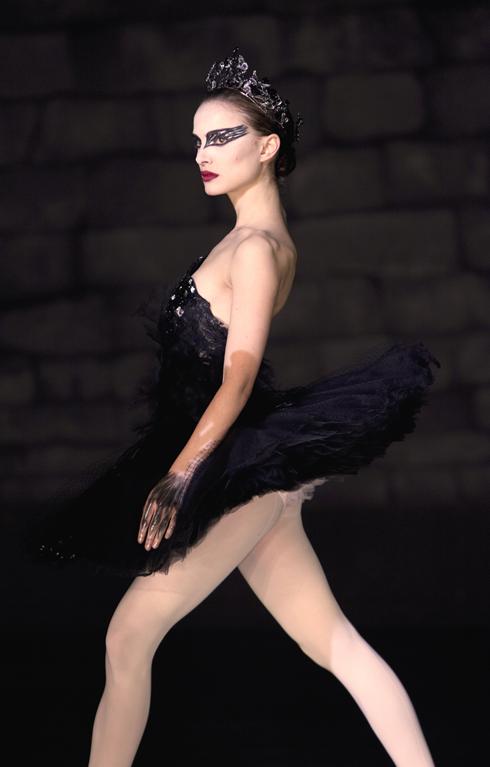
Black Swan: Aronofsky, Portman and Kunis this December


On July 22, 2010 USA Today score the first exclusive pictures from the set of Darren Aronofsky’s follow-up to his critically-acclaimed 208 film, The Wrestler. This time around Aronofsky takes on Tchaikovsky’s Swan Lake and weaves a psychological thriller around the classic ballet.

Black Swan will have in the titular lead one Ms. Natalie Portman. She’s taking on a role which continues her attempts to expand her repoertoire of character beyond the helpless child-like young women she’s been portraying since she first burst onto the scene. Playing opposite Ms. Portman is Mila Kunis. There’s already been talk going as far back as late 2009 that the two co-sta’ characters will be getting real close.

Synopsis:  The dark tale with psychological twists stars Natalie Portman as Nina, a technically brilliant ballerina whose life takes some strange turns after being picked as the lead in a New York City production of Swan Lake. Pressures mount as her overbearing mother (Barbara Hershey) pushes her to succeed and her manipulative dance master (Vincent Cassel) commands her to be more seductive and loose in her performance.

Complicating matters is the arrival of Lily (Mila Kunis), a sultry dancer who exhibits all the innate ease and sexuality that Nina lacks. Nina begins to fixate on the newcomer as the two forge an unusual relationship.

The film will premiere at the Venice Film Festival this September and also appear in the 35th Toronto Internation Film Festival. Black Swan will be shown in limited release this coming December 1, 2010 to qualify it for the awards season and from the buzz surrounding this film don’t be surprised if it does well with awards and critics prizes. Pictures from the set can be seen in the USA Today link below.

Source: USA Today

Song of the Day: Nocturne, Op. 27 (Composer: Frédéric Chopin, Pianist: Arthur Rubinstein)


Yes, for my latest pick for song of the day I shall dial things back from all the J-pop, metal, hard rock and film scores. My pick for song of the day is Frédéric Chopin’s Nocturne, Op. 27 (No. 1 in C-sharp minor and No. 2in D-flat major).

A nocturne is a musical composition which takes it’s inspiration from the night itself or, at the very least, evocative of the night and darkness. It’s an easy enough description for a type of music which were typically arranged for piano solos. The nocturne was first originated by 18th-century classical composer, John Field but it would find it’s popularity at the hands of Polish composer Frédéric Chopin. Chopin wrote 21 nocturnes and it is Op. 27 (two solos) that I’ve chosen. This particular piece is widely considered by many as one of the greatest pieces of music Chopin ever wrote and I, for one, agree wholeheartedly.

This particular version is played by one of the greatest pianist of the 20th-century and one whose playing style goes hand-in-hand with Chopin’s free-flowing style. When one hears the name Arthur Rubinstein (he himself a fellow Polish musician just like Chopin) one automatically thinks of Chopin and, specifically, his 21 Nocturnes.

I am not one to adequately break down, deconstruct and examine just what makes Nocturne, Op. 27 such a great piece of music, but personally I’ve found it to be evocative of not just night, but one which brings with the night breeze a sense of mystery, the magical feel of the night and the accompanying darkness. For one such as myself whose personality and character make-up has been steeped in the darker nature of things this piece of music (calling it a song is so inadequate a term) definitely speaks to my inner self.

Grindhouse Fans to Haute Campe, Stat!


HAUTE CAMPE

While I and Lisa Marie do review and focus on mainstream films and other forms of entertainment, we do enjoy writing about and discussing all things grindhouse and exploitation in this humble little blog. We could talk for hours about the subject if left to our own devices. Hell, I think I may have started up conversations about the subject with myself (yeah, a tad kooky but hey when bored).

One thing that fascinates me about the grindhouse and exploitation era of cinema wasn’t just the films being made in the hundreds, but the cinema posters created to help sell the films to the public. These posters were works of art themselves. Most were painted in garish primary colors with an abundance of skin exposed and/or violence being performed to better attract the passer-by to the many “grindhouse” cinemas, theaters and drive-ins which dotted the American landscape from seedy downtown corridors of the major cities to the rural town thoroughfares and fairgrounds. It was difficult to avoid seeing these pieces of artwork.

The interesting thing about these grindhouse and exploitation film posters was how successful they were in bringing in butts into the cigarette-smoke saturated theaters and the even more sticky floors (don’t even ask what made them sticky for it could drive one mad). The posters were so in your face that even the most puritan teenager and young adult had to succumb at least once (only took one time to get people hooked to wanting more) and purchase a ticket or two (if a date was present) and a bucket of three-day old popcorn and watered-down sodas.

For those looking to re-live those glory days of enjoying these posters would be paying quite a pretty penny to find original one-sheets. They’ve become collector items and would be priced according to their rarity. If one doesn’t have thousands to spend searching for their favorite vintage grindhouse posters then look no further than an on-line site which caters to the aficionados of such artwork.

Haute Campe has a nice collection of these rare and vintage grindhouse and exploitation poster one-sheets. One thing about these posters is that they are original and authentic. No reprints, fakes or reproductions of original pieces. The lovely Sioux Sinner is the curator of Haute Campe and she’s just not a purveyor of these pieces of film history artwork, but a fan of grindhouse and exploitation cinema herself. So, when one inquires about one of the pieces on the site they will get truthful answers born out of extreme knowledge of the subject matter and also a love of it.

The site also will take the show on the road as evidence of Haute Campe’s presence in the many comic book conventions throughout the country from Wonder-Con in San Francisco to Comic-Con International in San Diego.

So, for those who consider themselves connoisseurs of the grindhouse and exploitation cinema experience I highly recommend they check out Haute Campe.

Official Site: Haute Campe

Highschool of the Dead: Episode 4 – First Impressions


We’re now an third into the first season of Madhouse’s anime adaptation of the Highschool of the Dead manga. The first three episodes have been used mostly as a set-up to lay out the basic premise of the anime series in addition to introducing the main players. The third episode also sets-up conflict between two groups of survivors as our students (plus one ditzy school nurse) must contend with another teacher (Shido-san) who seems to have some ulterior motives in trying to proclaim himself the appointed leader of the surviving students and faculty in the school bus which just escaped from zombie-infested school.

So far, the series has followed closely the storyline from the manga. There’s been some minute changes to character backstory and certain scenes have been extended or given more time to develop unlike their original manga. Still the writers for the anime look comfortable enough in following the manga with some fidelity instead of venturing on a different path or switching the order of story-arcs around like how some anime adaptation of manga series in the past.

If there’s one thing to take away from this fourth episode it is that the Anime Network’s simulcast of the series definitely has censored the more ecchi scenes to make them more acceptable to North American audiences. I like to point out specifically the sequence at the gas station between Takashi, Rei and the crazed human who holds Rei hostage. In the manga this scene definitely remains uncensored (though it remains to be seen whether Yen Press will keep it that way when they bring the manga over to the North American market), but in the simulcast the scene has some of the details blurred out, but not enough that the audience cannot figure out what is going on.

I definitely think that the more blatant use of fan-service deeper into the series will get the same treatment. This definitely will mean the dvd set when its released better have these scenes uncensored or there will be much declarations of shenanigans sent Sentai’s way. But now that censoring of these scenes have been established further use of it in upcoming episodes shouldn’t come as surprise so I shall keep my complaints to this recap and leave it at that. Other than that the episode was good just like the previous three and I don’t see the series doing nothing but continue to be very good as it moves forward.

The Daily Grindhouse: The Sword and The Sorcerer (dir. by Albert Pyun)


It’s been awhile since I picked a film for the Grindhouse of the Day feature. For this go-round I will go into the little-known grindhouse fantasy subgenre.

Grindhouse flicks seem to always deal with horror, blaxploitation, Italian murder mysteries and scifi, but the fantasy subgenre has always been kept from the conversation. This is a shame since there’s been some very good (in grindhouse terms) flicks in the fantasy genre that could qualify as grindhouse. I would especially point out the ones made after the release of the very popular Conan the Barbarian. The one I chose is from that grindhouse master of the 1980’s: Albert Pyun. I speak of his 1982 sword and fantasy flick, The Sword and the Sorcerer.

The film definitely riffs-off of the Schwarzenegger-Milius fantasy epic. We have a kingdom conquered and destroyed by an evil tyrant who uses black-armored soldiers in addition to getting the help of an undead sorcerer. This time around the Conan-archetype is played by 80’s TV star Lee Horsley who does a valaint effort to affect a Shakespearean speech pattern (for some reason when people think fantasy they instantly try to speak like they were in a Shakespearean production). Baddie icon Richard Lynch plays the evil tyrant and he definitely looked like he was having the time of his life in the film despite the corny dialogue. There’s an abundance of graphic violence, nudity and magic spells (done in early 80’s heavy metal effects).

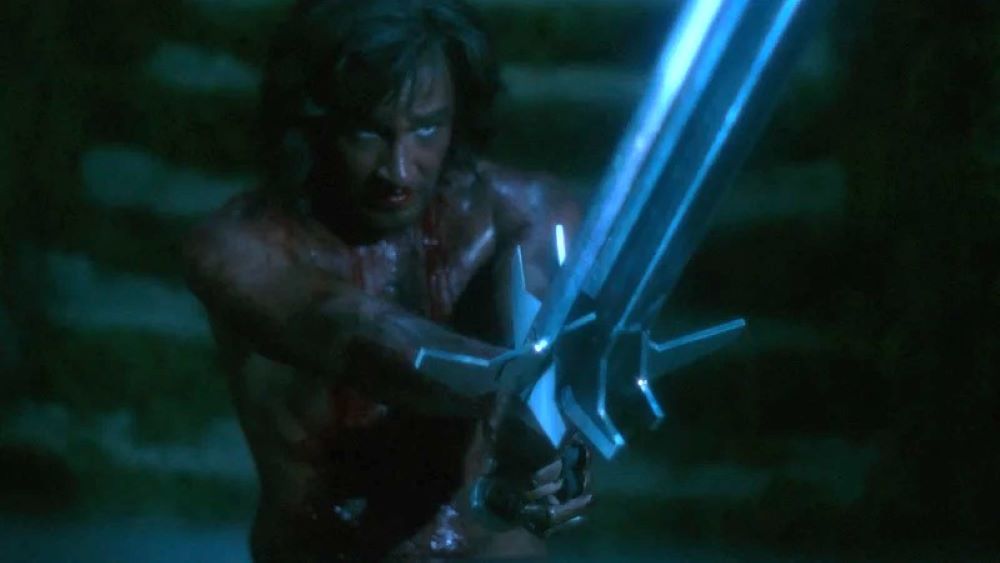
One thing this flick does have which made it a cult classic for fans of the fantasy genre is the sword in the title. The main character of Talon wielded a three-bladed sword. Let me repeat that: A THREE-BLADED SWORD. The sword wasn’t just sporting three blade but the wielder has the ability to shoot two of the blades at someone. Definitely puts to shame those sissy Spetnaz ballistic knives. Arnold may have had an Atlantean-forged blade in Conan the Barbarian, but Lee Horsley definitely outsworded him in his flick.

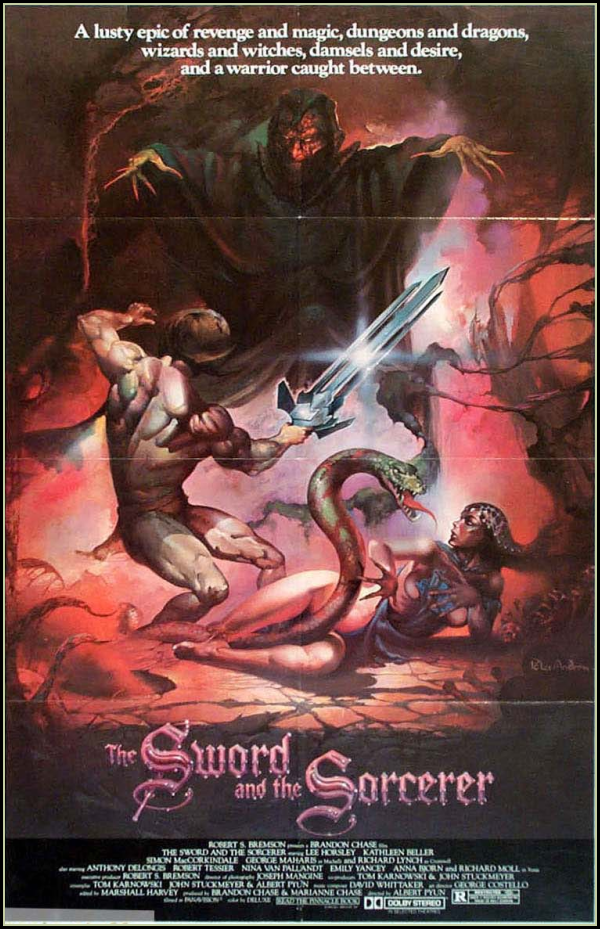
Another thing about this flick which makes it a favorite of mine is the poster art created for it. The producers of the film did one other thing right outside of populating the film with a kick-ass sword, much nudity and violence. I talk of the Frank Frazetta painted posters done up for the flick. More than one version were done depending on the region. The one above which was the original was the best and the film definitely lives up to what Frazetta painted.

The Walking Dead – Motion Comic (AMC)


With Comic-Con over the hype surrounding the tv adaptation of Robert Kirkman’s zombie apocalypse comic book series has reached stratosphere status. The 6-episode first season was already one of the most anticipated new shows of the upcoming fall season from just the fans and geek community talking about it nonstop in the internet, but with it’s unveiling at this year’s San Diego Comic-Con the mainstream press has latched itself onto the series. The common reaction to the series at the panel in Hall H seemed to be a unanimous positive one.

Character photos, Drew Struzan posters and new trailers have added to the hype. The comic book series has hit it’s milestone 75th issue. Sales of the comic and it’s collected softcover and hardback graphic novels have seen a spike in sales. AMC has added to the series’ website a taste of the the comics for people to get an idea of what to expect from the series. This motion comic of the first issue of The Walking Dead really captures the horror and hopelessness of the world Kirkman has created and Daabont plans to show up on the TV screen.

Source: The Walking Dead on AMC

Let Me In Red Band Trailer and SDCC Exclusive Posters


In 2008 a Swedish film called Let the Right One In stormed through the film festival circuit and became one of the most critically-acclaimed film of that year. The film was an adaptation the a novel by the same name by Swedish author John Ajvide Lindqvist. It took the vampire genre which has started to gain a sort of resurgence in the past 5 years due to the teen-pop vampire-romance franchise Twilight.

Tomas Alfredson’s film was definitely the anti-Twilight of this resurgence. It was a beautifully-shot and framed film with a dark, poignant story to match the visuals. While arthouse film fans and horror fans with discerning taste praised the film the rest of the general public either ignored it or never even heard about it. This is always the case when it comes to foreign films which tries to make a bridgehead onto the U.S. film market.

The film has since been discovered by the general public through home video sales and through Netflix, but not before an American film studio has bought the rights to produce an American remake for the American market. It fell onto the shoulders of Cloverfield director Matt Reeves to film this remake and try to dampen any advance outrage by the original film’s fans. While there will remain a very vocal group denouncing this “Americanized” remake of Let the Right One In (renamed Let Me In for the remake) I think casting decisions and certain stylistic choices by Reeves has me hoping that this remake will not fail but actually stand on it’s own while still letting the original keep it’s status as one of the best horror films of the past decade.

Above is the newly released Red Band Trailer for the film and below are two posters for the remake which were unveiled over at San Diego Comic-Con 2010. Both posters definitely take on a very stylized look. The second one looks too similar to Park Chan-wook’s poster for Thirst. The first one I like better as it combines the film’s innocence with the darker underlying story really well.