Trash Film Guru Vs. The Summer Blockbusters : “Dawn Of The Planet Of The Apes”


download

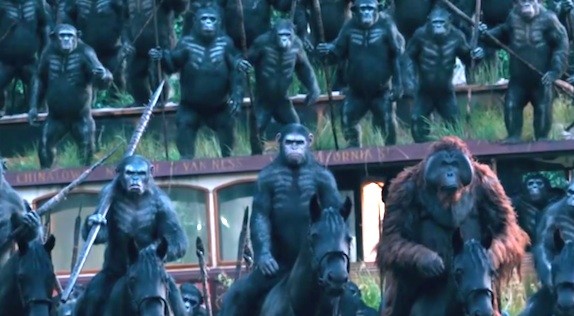
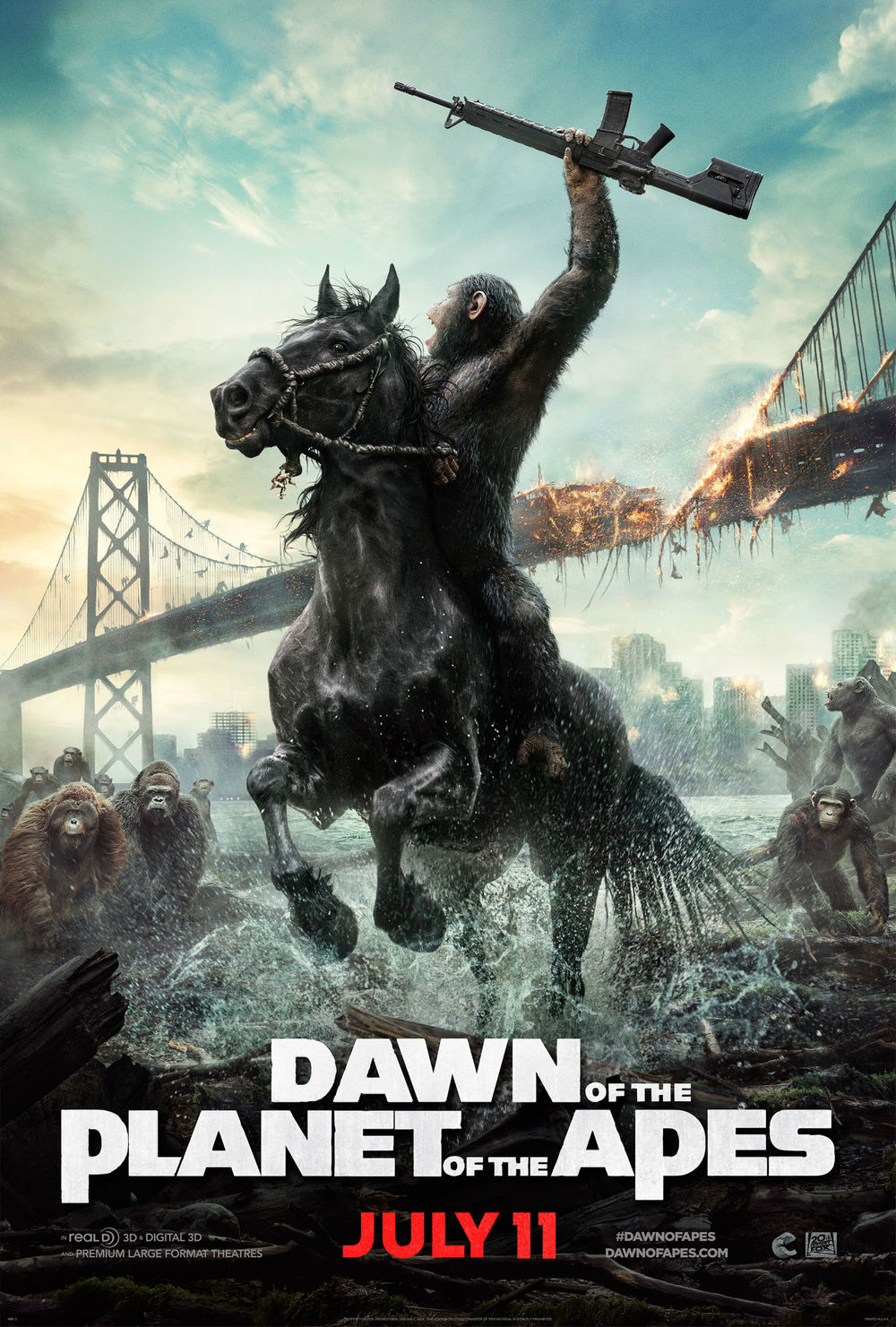
This is gonna be one easy review to write because it all boils down to this : you really can believe all the hype, Dawn Of The Planet Of The Apes is flat-out fucking awesome, and you need to go out and see this flick immediately.

My job is done, I’m finished, goodnight.

But I guess I do have at least a little bit more to say —

Screen-Shot-2014-05-08-at-8.56.21-AM-620x400

I wasn’t a big fan of Cloverfield by any means, but I’m turning into a big fan of Matt Reeves. I know it’s heresy to some, but I thought that Let Me In was every bit as good as its Swedish progenitor, and with this latest — and, frankly, best — installment in the venerable Apes franchise,  Reeves has shown himself to be a director who is fully hitting his stride. The bigger and bolder the project, the more he seems to rise to the occasion. I frankly don’t even know how you go about eliciting good performances from actors who are only there for the purpose of having a bunch of hair overlaid onto their faces via computer, but he did it here. Andy Serkis, as ape leader Caesar, and Toby Kebbell, as his primary (and creepily duplicitous) rival, Koba, both turn in Oscar-caliber work on the basis of their facial expressions alone. They’re gonna wow you, folks, no lie.

As for the human actors playing — well, human parts, Jason Clarke is solid as stand-up guy Malcolm, apparent real-life asshole in the extreme Gary Oldman does typically competent (if, to be perfectly fair, unspectacular) work as survivalist head honcho Dreyfus, and Kodi Smit-McPhee is extremely convincing as Malcolm’s teenage son, Alexander (plus, he can be seen reading Charles Burns’ Black Hole, so bonus points for that). About the only weak link comes by way of nominal love interest Keri Russell, whose “concerned as shit” look at all times begins to grate pretty early on. But when you consider the fact that all these people spent pretty much the entire time in front of a blue (or maybe it was green) screen, getting only one subpar performance from the bunch is pretty good. And who knows? Maybe Russell simply can’t help coming off as worried 24/7.

PoA_THUMB

My only other minor quibble here is with the title — when a film called Rise Of The Planet Of The Apes is followed by one called Dawn Of The Planet Of The Apes, you gotta wonder when the buildup is going to stop and we’re finally gonna get down to the shit. Or maybe we’re looking at a 20-part story here and we’ve still got plenty of stage-setting to go, in which case we’ll be treated to Prelude To The Planet Of The Apes and We’re Still Getting To The Planet Of The Apes next.

Hey, I did say it was a minor quibble, did I not?

Dawn-Of-The-Planet-Of-The-Apes3-e1396236946120

Apart from that, this has everything you’d want in a big-budget summer blockbuster, and quite a bit more than you’d honestly expect : there’s pathos, melodrama, palace (if your palace is a tree) intrigue, cheap scares, high-octane thrills, elaborately-staged battle sequences, and a genuine sense of urgency to the proceedings. Events — and tension — gradually build to the point of inevitability, and the film’s third act actually delivers in terms of its promised payoff.  And for those of you who are tired of James Franco’s ever-evolving shtick — whatever it is — rest assured that he doesn’t even pop up in a flashback sequence.

Ya know what? Let’s not even do Dawn Of The Planet Of The Apes the disservice of comparing it to other summer popcorn flicks — this leaves typical blockbuster fare like The Avengers or Star Trek so far back in the dust it’s not even funny. What Reeves has made here is one of the very best films you’ll see all year, even if big-budget sci-fi grandiosity is not your thing. This is eloquent, spectacular, undeniably powerful drama of the highest order. It’s everything and the kitchen sink plus one of those nifty fancy programmable faucets all attached to a fancy-ass 300-pound granite countertop.

Okay, I’m finished with the italics, promise. If you don’t like this, you don’t like movies. My job here really is done.

Trash Film Guru Vs. The Summer Blockbusters : “Transformers : Age Of Extinction”


transformers-age-of-extinction-poster

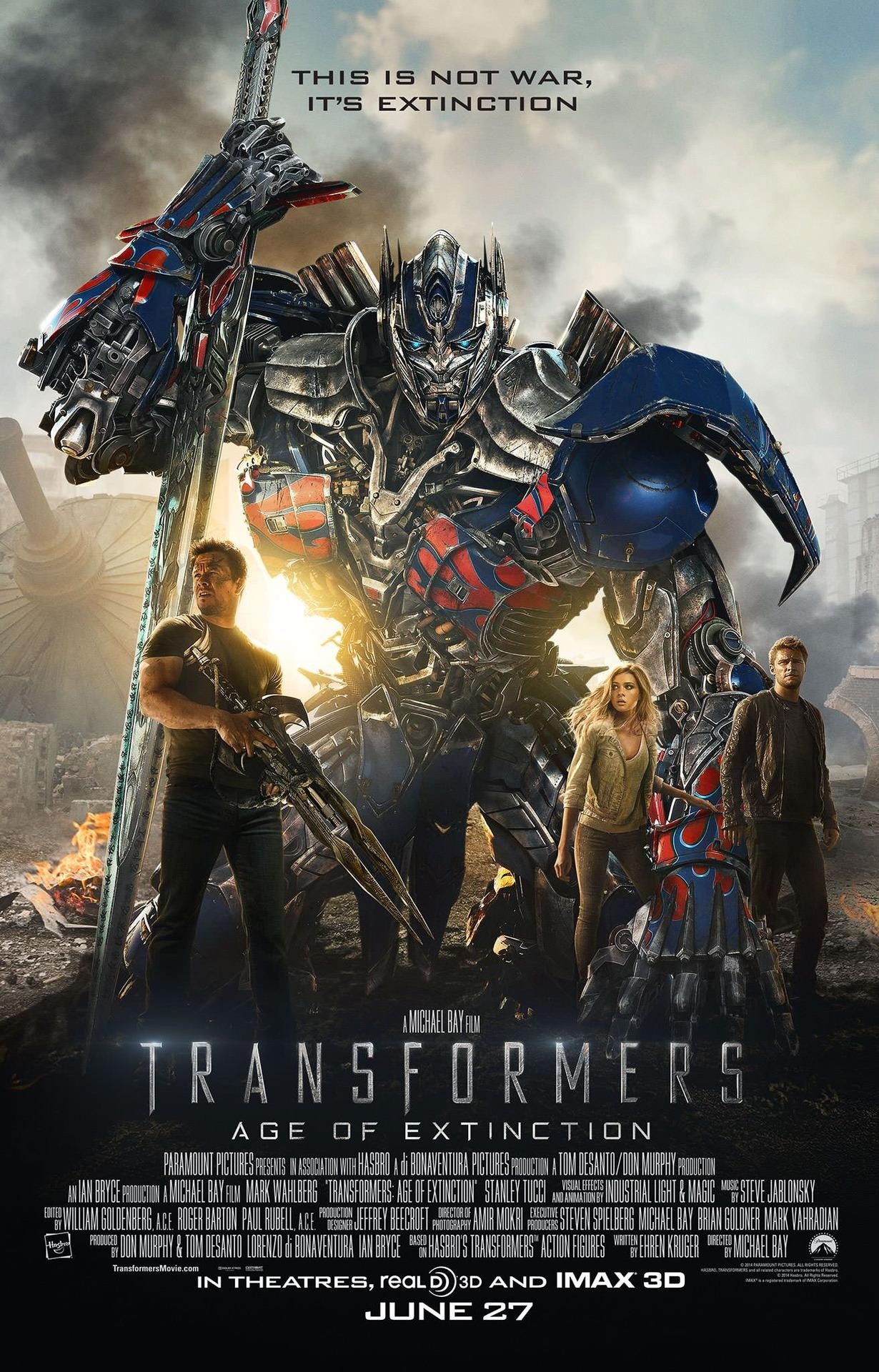
You can accuse Michael Bay of many things — overblown spectacle, formulaic hackery, using CGI as a massive crutch, general lack of anything resembling original vision — but false advertising ins’t among them : when you go see a Bay-directed flick, particularly a Bay-directed Transfomers flick, you know exactly  what you’re in for.

Oh, sure, his latest — Transformers : Age Of Extinction — alters the basic cosmetic trappings somewhat, most notably by banishing Shia LaBeouf to whatever hell for dead careers Megan Fox was earlier castigated to in favor of proven “action hero” star Mark Wahlberg, and yeah, Stanley Tucci is about the only major holdover (as far as human beings go) from previous entries in this series (look for more newcomers in the form of Kelsey Grammer and Nicola Peltz as Wahlberg’s daughter), but this is no reboot, by any stretch.

For one thing, the story continues directly on from the previous efforts, with the Transformers having been “driven underground,” so to speak, thanks to a government witch-hunt until no less than Optimus Prime himself is discovered and “resurrected” by Wahlberg’s Cade Yeager (there’s a focus-group-tested name if I’ve ever heard one) character, who —

Oh, fuck it. Does this even matter? Does even the most hard-core fan of this franchise — and that’s precisely what it is, a franchise — care what the plots of these films are about? If so, you have to feel a sort of pity for them, because Bay and screenwriter Ehren Kruger (who was supposed to be the “next big thing” once upon a time for a few minutes there) clearly don’t. Every single “slow” or “quiet” scene is obviously just set-up to carry us into the next big CGI set piece, so we won’t waste our time here with a terribly detailed breakdown of the story. Sound fair?

Transformers-4-Age-of-Extinction-Mark-Wahlberg-Jack-Reynor-and-Nicola-Pelt

All in all, Transformers : Age Of Extinction is all about getting the job done, slapping the finished product up on the screen, and opening up those cash register drawers. In that respect — and that one only — you’ve gotta say “mission accomplished” here. This movie is making money hand over fist and evidently the public’s appetite for more and more robo-carnage is proving to be flat-out insatiable. We apparently love this shit.

The question I have is — who’s “we”? Like the ever-ephemeral “they” of “well, they say you should — ” and “they say it’s not good for you to —” fame, the target audience for these films eludes me. I don’t like ’em. Nobody I know likes ’em. Nobody whose reviews I read online likes ’em. Nobody anywhere seems to like ’em.

And yet there it is — an 87% CinemaScore rating and another sequel already germinating somewhere in the pipeline. How, exactly, does this happen?

transformers-age-of-extinction-trailer

The short answer is — I don’t know. There’s obviously an appreciative audience for these things out there somewhere, but I can’t figure out where it is, beyond perhaps in junior high schoolyards. That’s not enough to explain the phenomenon, though. I know it’s purely anecdotal, but when I went to see this film, the theater had maybe 30 or 40 people in it, and the crowd remained silent throughout. No clapping and cheering. No gasping in awe. No chuckles at the limp one-liners. And yet it wasn’t a rapturous, devotional silence these folks were in the midst of — it was just a kind of “blah” sense of resignation. We were here. This was happening. Everything, apparently, was as it should be. Until the end credits rolled, and we all left to do whatever it is we were  supposed to do next.

And maybe that’s the genius and/or malevolence of what Bay and company have come up with here in a nutshell : Tranfromers movies, for all their empty-hearted and empty-headed spectacle, aren’t huge pop culture events anymore. But a lot of us — myself included — keep going to them because they’re supposed to be. And we’re supposed to be there for them. It’s almost like a kind of Orwellian mass conditioning going on : we’re told this is a big deal and, lemmings that we are, we don’t want to miss out on that. Final score : Michael Bay and Paramount Pictures 1, hope for humanity 0.

transformers_aoe_domtlr1_texted_stereo_h264_hd-1

Pessimistic? Sure. But is there any reason not to be? A family of four left the theater at exactly the same time I did and their car was parked right next to mine. We followed the same route for a few blocks (I wasn’t purposely tailing them, I promise!) — until they pulled into a McDonald’s. And that pretty much says it all right there.

“Empire Of The Dead” #5 : George Romero’s Grand Chessboard Finally Comes Into Focus


3898437-05

If it seems like it’s been awhile since we looked at a new issue of Empire Of The Dead around these parts, that’s because it has — the fifth and final segment of the first arc in George Romero’s printed-page zombie epic (officially titled in the copyright indicia as George Romero’s Empire Of The Dead Act One #5) is a good few weeks late in maintaining its purportedly monthly schedule, but now that it’s finally here, let’s not waste any more time, shall we?

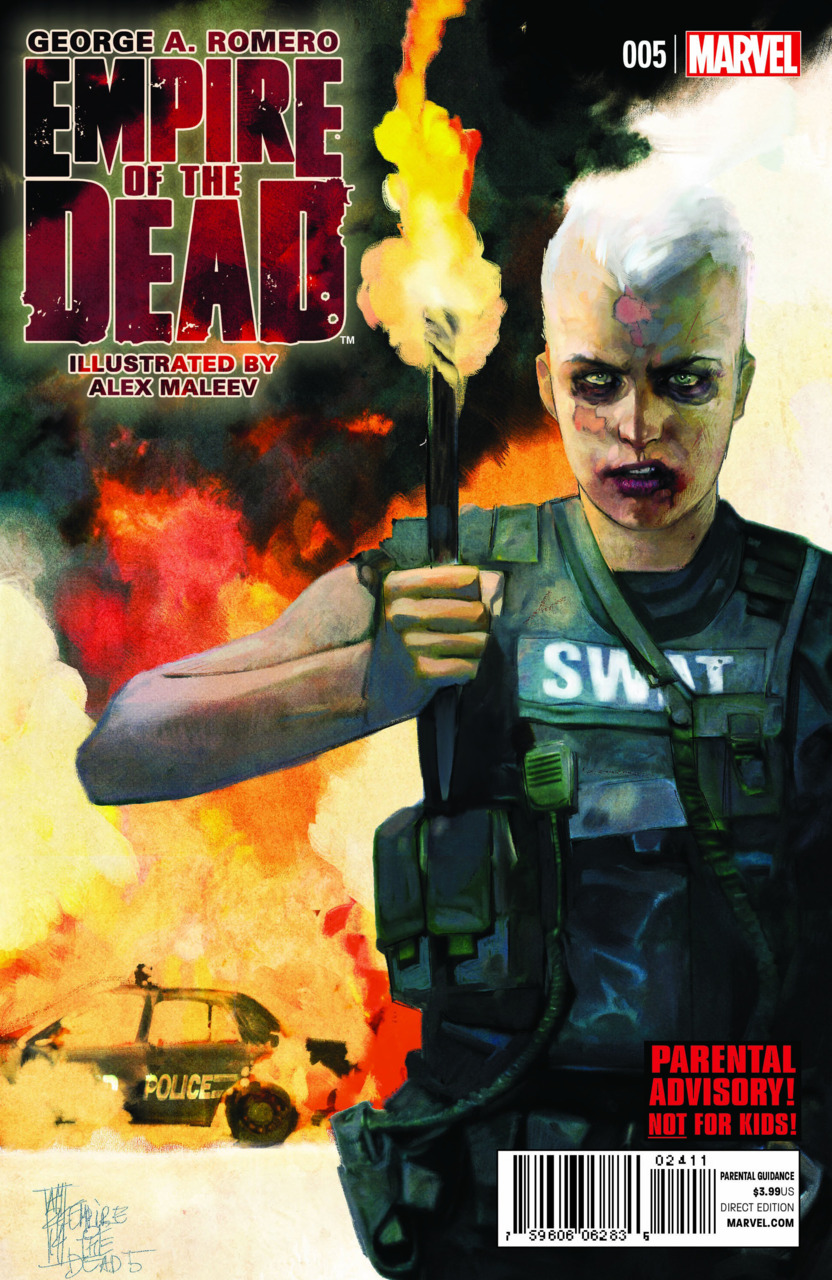
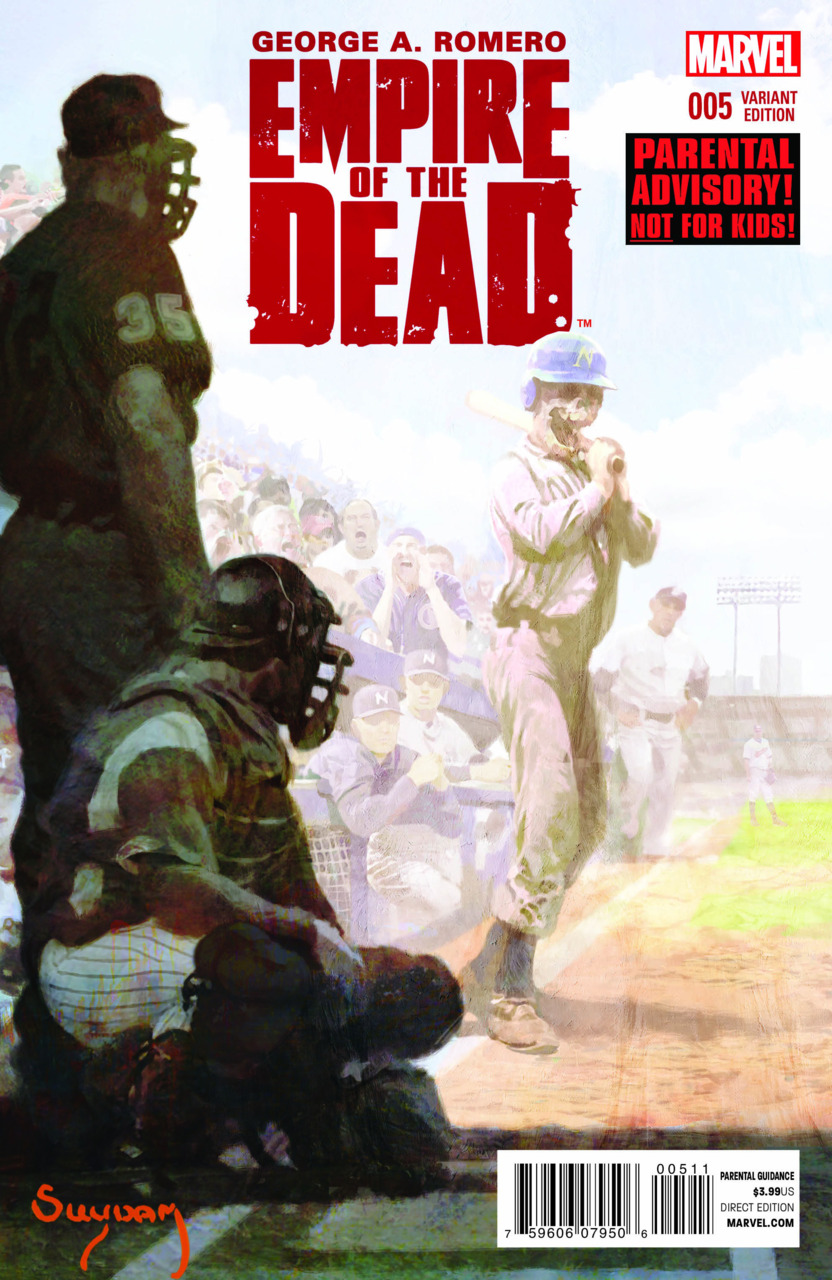
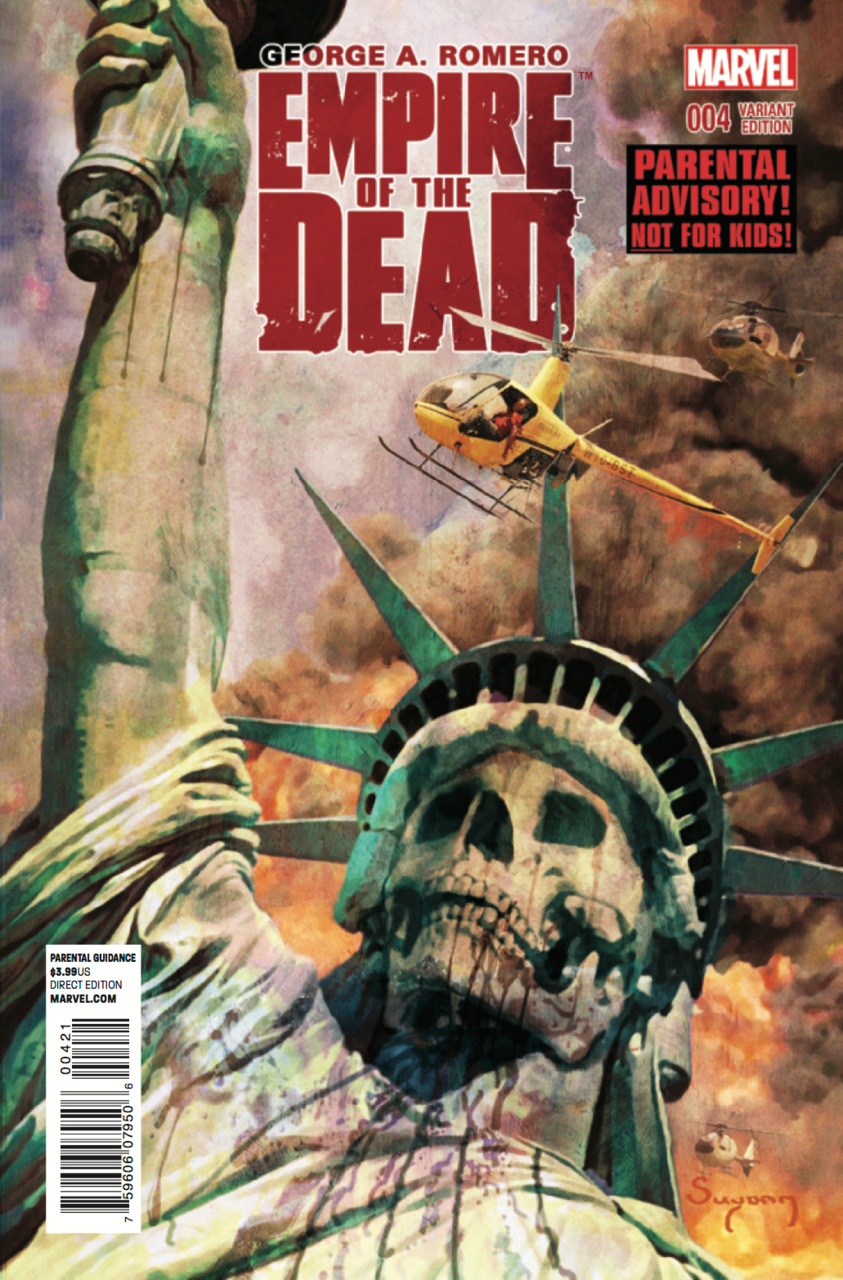
I’ve remarked previously about how this first arc seems more and more like pure set-up the longer it goes on, and I’ve wondered aloud about just how the father of the modern zombie genre was going to bring all the disparate subplots he was working on together in time for at least something resembling a decent climax by the time this issue was over, but I also stated that I still had an innate trust in our guy George’s storytelling ability and reiterated each time I felt like things were headed at least slightly off the rails that I was still reasonably certain that he’d find some sensible way connect all his metaphorical dots before the sand ran out in his equally metaphorical hourglass. As it happens, it seems my faith was not misplaced, because Empire #5 does exactly what you want all good “season-ending” stories to do : brings the overall picture into much clearer view while simultaneously whetting your appetite for the next new episode — and the TV “season” analogy probably isn’t a bad one here given that Romero and artist Alex Maleev (how ’bout that awesome cover he’s cooked up for this one, huh? Arthur Suydam’s “NYC variant,” as they’re known,  is reproduced a couple of paragraphs below) will be returning for their second five-issue “act” in September, right around the same time most television series begin their new episodic runs.

But damn — I don’t really wanna wait that long, ya know? Romero opens the action here in issue number five by delivering Xavier and her makeshift army of “smart” zombies right into the hands of Dr. Penny Jones and “trainer” Paul Barnum, and leaves us with one of his trademark ethical quandaries : will the marginally-more-intelligent undead horde be better off as lab rats, or fodder for coliseum death matches? Either outcome seems grim, and Romero seems to be taking the editorial stance we’ve grown accustomed to from him over the years : the real “monsters” here are the humans, and the zombies can’t win either way unless and until we butt out and leave them the fuck alone.

Palace intrigue is the other major order of the day here, and without giving too much away I’ll just say that the vampiric Mayor Chandrake’s sloppy-ass nephew, Billy, finally screws the pooch here and sees his recklessness get him cut off from the “family business.” Not to worry, though : unbeknownst to all, including Billy himself, this blood-drinking version of Fredo Corelone has friends in high places, who are distinctly unhappy with how his uncle is running the show and think it might be time for some new leadership in New York.

And speaking of friends in high places, it turns out that Southern hell-raiser Dixie Peach and her motley crew of social deviants and hell-raisers might just have some, as well — and they’ve got guns. Lots and lots of guns. And tanks. And bazookas. And grenades. And everything else an ambitious young sociopath might require for a fun night on the town. They’ve also got one thing Dixie herself doesn’t seem to possess — an agenda, and how she fits into that (as well as for how long) remains something of an open question as their siege gets underway on this issue’s climactic final page.

3898756-05-variant

If it seems like I’m pretty stoked at this point for act two, you’re absolutely right. My only real “beefs”  with this issue — and they’re comparatively small ones — are that Maleev’s art does, in fact, look a little bit rushed in some spots, and Romero’s dialogue veers into ever-clunkier territory as things progress. Don’t get me wrong : on the whole the visuals are still quite striking and perfectly suited to the story, but especially for a book that a good 3 or 4 weeks late, I’d expect more consistently-good-looking panels, and Maleev looks like he was cranking it out in order to meet his deadline (not that he made it) in several places here. The dialogue thing is both more excusable and less : obviously Romero had to get a lot done in a short amount of time here, so overly-expository “info-dumps” are to be expected, but if he’d paced himself a bit better earlier on (remember what a complete waste of time, story-wise, the second issue, in particular, was?) he might not find himself as hard up against the wall as he does here.

Overall, though, I can’t claim that these two factors, important as they are, detracted too much from my overall enjoyment of this issue. Nine out of ten of Maleev’s images still look amazing, and events in the story aren’t just moving at this point, they’re flat-out steamrolling. I would expect that Marvel will be issuing a trade paperback collection of this initial run sometime fairly soon in the weeks ahead, and this will probably prove to be an even stronger and more cohesive read in that format, so if you haven’t been following this series in its monthly (-ish) installments, that will give you a good opportunity to get caught up before the next series gets rolling.

Bring on September already!


Trash Film Guru Vs. The Summer Blockbusters : “Maleficent”


13274638923_ddb57309c8_k

Is it just me, or is this year’s summer blockbuster season incredibly front-loaded?  Not only did it get off to a ridiculously early start in April with the release of Captain America : The Winter Soldier, but it seems that, with the notable exception of Dawn Of The Planet Of The Apes, which is slated for a July release, everything that I was interested in seeing came out prior to the Memorial Day weekend — which was, in years past, the time when Hollywood’s blockbuster onslaught usually began.

Oh well. I guess there’s still some stuff I have some sort of low-level semi-interest in hitting theaters, with Disney’s Maleficent being a prime example of what I’m talking about. I wasn’t “hyped” for it, per se, but on a rainy Saturday afternoon with nothing else going on, what the hell — it’ll do in a pinch. Anybody with a functioning neural cortex pretty much knows what they’re getting into with something like this — a purportedly “modern re-telling” of a classic fairy tale (in this case Sleeping Beauty) that’s also, perhaps paradoxically, billed as being “truer to the roots” of the story than the universally-known animated version. Maybe everything that’s old really is new again.

In any case, the pattern these kinds of thing inevitably follow was set fairly firmly by Snow White And The Huntsman a couple summers back, and with a live (well, okay, live plus lots of CGI) action version of Cinderella already in the pipeline, it looks like “modernized fairy tales” (that are, again, supposedly “closer” to the “source material”) is a full-blown trend in Tinseltown. At least until one flops spectacularly.

Maleficent is too precise, clinical, and by-the-numbers to be that first big flop, of course, as this is thoroughly audience-tested material from start to finish, and while that same uber-conservative approach definitely sucks any sort of life or individuality from the proceedings, it does ensure that Disney will almost certainly turn a healthy profit off this thing, even with a budget estimated in the neighborhood of $200 million. It is, for all intents and purposes,  a can’t-miss investment, and that’s what it plays out as.

608258_026

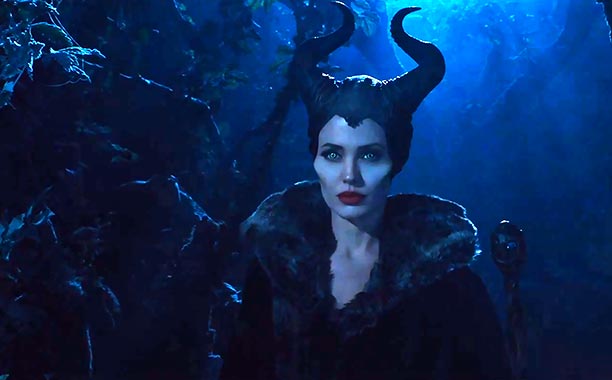
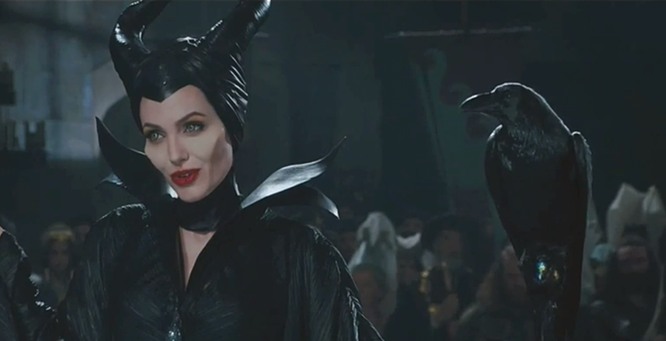
Which isn’t the same thing as me saying that Maleficent is actively bad — it’s just that it’s not particularly good, either. Oh, sure, Angelina Jolie is perfect in the title role (there’s already Oscar talk) and it really does feel like it’s a part she was born to play, and the CGI work is spectacular and breathtaking and jaw-dropping and all that, and yeah, Elle Fanning as Aurora ( that’s what we call her now, folks, not “Sleeping Beauty”) leads a very talented supporting case that also includes the likes of Imelda Staunton, Sharlto Copley, Juno Temple, and Brenton Thwaites, all of whom do good work, but it’s all in service to the most pedestrian, production-line cinematic engineering possible. First-time director Robert Stromberg, who hails from a CG effects background, most likely knows what he’s doing here, but he’s given so little room to maneuver that failure just simply isn’t an option. This is a film that literally could have been directed by nearly anyone with at least some sort of cinematic background and turned out okay.

And maybe that’s what bugged me about it the most : just that sort of hyper-aggressive okay-ness. Given the opportunity to completely re-set the table, the Disney execs who originated and then green-lit this idea were more than happy to just tinker around the edges and “update” things without actually changing them. We all know the story, and while we’re admittedly getting a heavily-padded version of it told from the perspective of the “bad guy,” the fact remains that at the end of the day, all we’re left with is a more expensive, glitzier take on what we’ve already seen.

Angelina-Jolie-as-Maleficent

Maybe I missed a bit by just seeing this in 2-D, but let’s face it : any flick that leans upon the crutches of 3-D,Imax, and all that crap to “get the most from it” is one that’s entirely reliant upon bells and whistles — and while those bells and whistles are, no two ways about it, most impressive in this case, there’s just no substitute for a genuinely involving script, and Maleficent doesn’t have one. Mind you, it doesn’t have a bad script, either, it just — has a script. And the job of that script is to provide some sort of plausible set-up for one admittedly magnificent effects sequence after another. It’s cool and all for about a half hour, but after two full hours of Stromberg and company having to top themselves every five to ten minutes, you just end up feeling sort of worn down by events rather than invested in them.

maleficent-trailer

Still, I suspect that Maleficent is going to prove to be pretty well “review-proof” and enjoy a healthy run in theaters before going on to do equal, if not even greater, business on home video. This is a film that’s precisely engineered to do exactly what it’s supposed to and nothing less (or more). Kinda like a robot. And it’s that robotic, auto-pilot, cruise control sensation that prevents this movie from being at all memorable — for good or ill.

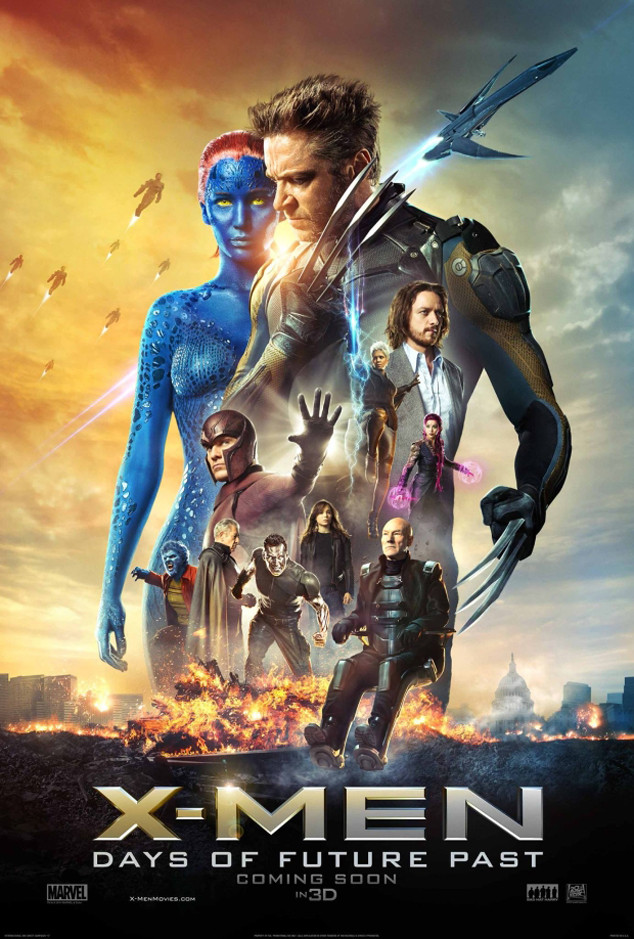
Trash Film Guru Vs. The Summer Blockbusters : “X-Men : Days Of Future Past”


rs_634x939-140324091106-634.jennifer-lawrence-x-men.ls.32414

At this point, I freely admit to being a little bit confused : X-Men : Days Of Future Past opens to a somewhat lower box office take than The Amazing Spider-Man 2 did, which was only slightly behind the opening-frame receipts generated for Captain America : The Winter Soldier, and yet Cap and the X-Men are both considered “successes,” while Spidey’s considered a “disappointment” — even though, last I checked, its’ total gross ticket sales were only about $50 million behind Cap’s despite the fact that it opened a full month later?    Chances are probably good  that it will even end up closing the gap here at some point, but no matter — the die appears to have  already been cast. The stench of that rat I mentioned smelling in my Spider-Man review a couple weeks back? It’s getting a lot stronger now.

Needless to say, I’ve got a theory as to what’s going on here, and it builds upon my theory already expounded upon in that just-mentioned prior review : Disney/Marvel actively wants the Spider-Man franchise back, but the X-Men? Not so much. At least not yet.

How else to explain this clearly-orchestrated PR campaign? Look, internet movie critics are an easy bunch to buy off : for a free ticket, or even the promise of some kind of other free swag in the future, you can get thousands of people to say whatever you want them to. And from there, you can get thousands of others to mimic the already-established meme of whether a given flick is “successful” or not, because gosh, who would dare contradict the well-established critics and box-office analysts who have already passed judgment on the merits of a particular work? For the price of probably less than $10,000 in either payments or promises, DisMar has the movie-going public right where they want us, echoing their nonsensical party line and unsupported-by-the-facts pronouncements.

Needless to say, I don’t feel like playing along — for the most part. But there’s one area where I do agree with the general consensus, even if the fix is in : X-Men : Days Of Future Past is a really good superhero flick. And that might just throw a wrench in Marvel’s “this one’s dying on the vine, let’s just wait it out and see what happens” game plan.

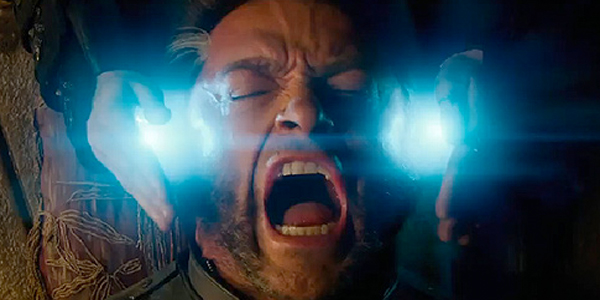
hugh-jackman-stars-in-final-trailer-for-x-men-days-of-future-past-watch-now-161013-a-1397628564


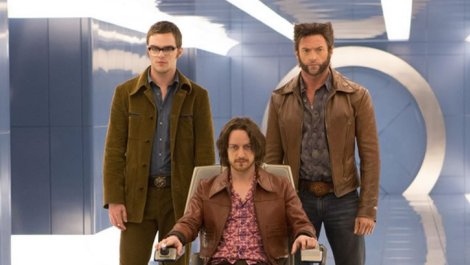
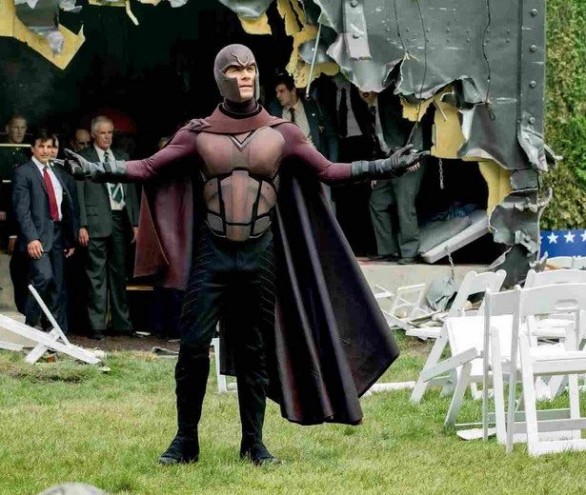
Seriously, friends, this one has everything and the kitchen sink going on, but somehow returning director Bryan Singer (more on him in a minute) juggles every ball thrown in the air and makes it work : the “divergent timelines” conceit that forms the core of the plot never gets confusing even though it easily could; the action sequences are brisk and spectacular; the characters are uniformly believable and compelling; and the performances, from perhaps the most star-studded cast ever assembled for a comic-book film, are all first rate. When you’ve got Hugh Jackman, James McAvoy, Patrick Stewart, Ian McKellen, Ellen Page, Jennifer Lawrence, Michael Fassbender, Nicholas Hoult, Peter Dinklage, Shawn Ashmore, Halle Berry, Michael Lerner, Booboo Stewart, Omar Sy, Kelsey Grammer, Anna Paquin, James Marsden and Famke Janssen all punching the same time clock, it goes without saying that  some are going to have more to do than others, but nobody seems intent on stealing the show for themselves, which is no mean feat considering the sheer number of sizable egos that must be involved here. Sure, the script puts most of the onus of Wolverine, the young Professor Xavier, the young Magneto, the young Beast, the young Mystique,  and the villainous Dr. Bolivar Trask, but that doesn’t mean everybody else doesn’t give their admittedly smaller parts at least a reasonable effort. Shit, I’m not sure how you even get stars of the stature of Page, Berry and Paquin to even accept what are essentially tertiary-at-best roles (does Paquin even have a line of dialogue?), but somehow they keep showing up for X-Men flicks, and in this case the place doesn’t even seem that crowded. Shit, Singer even manages to sneak in quick cameo for Wolverine co-creator Len Wein.

X-Men-Days-Of-Future-Past-Magneto3-586x495

In many ways what makes  Days Of Future Past so successful is that fact that it’s actually more a direct sequel to First Class (which I also thoroughly enjoyed) than it is the initial X-trilogy, and some of the continuity changes that the end results of this film apparently seal into place even seem to undo how those first three films “wound up,” but whatever — the end result here is a franchise that feels like it’s been given a new lease on life after treading water for a good half-decade or so. I mentioned just a moment ago that I really dug First Class, but you can’t get by on prequels forever. At some point a movie needed to come along that propelled the X-Men franchise forward, and this does so with plenty of style and flair.

Plus, the whole thing’s a lot of fun — sure, some of the dialogue is overly- verbose and clunky and painfully expository, but those instances are rare, and actually stand out in contrast to the general ease and flow of the rest of the film. And while the premise itself requires a heavy dose of suspension of disbelief, let’s be honest here — what super-hero movie doesn’t? At least this one rewards your willingness to go with the flow in ways that even highly-touted fare like Joss Whedon’s The Avengers (a favorite target of my ire, I admit, but only because it really does suck, no matter what anyone else thinks) could never hope to manage. Plus, audiences get a chance so see Dinklage prove that he can” bring it”  in each and every role he takes on, not just on Game Of Thrones — something those of us who have been fans of his work ever since The Station Agent have long maintained.

x-men-days-of-future-past-trailer

In case it weren’t painfully obvious already, I thoroughly enjoyed X-Men : Days Of Future Past, and after appearing to flounder in the wake of the risible Valkyrie, my faith in Bryan Singer as a director has probably never been higher — unfortunately (here’s where that “more on him in a minute” comes in), I can’t say the same in regards to my faith in Bryan Singer as a human being. I won’t kid you — the sexual abuse allegations that have been leveled against him really bother the shit out of me. And no, it has nothing to do with Singer’s sexual orientation : I don’t care if a person is straight, gay, or somewhere in between, any and all relationships — whether serious, casual, or less than casual — between consenting adults are fine by me. Everybody likes to get laid, have at it. But age of consent laws are there for a reason, and kids and teens are, and should be, off limits to grown adults. The fact that  the “fan” community seems so eager to point out that Singer’s accuser has filed civil rather than criminal charges and that he’s apparently done so in the past is both irrelevant to the reality of what may or may not have occurred,  and represents a clear case of reprehensible victim-shaming of the highest order. Sure, everyone’s innocent until proven guilty, but assuming, or even implying, that somebody who’s been brave enough to come forward with claims this serious just has to be a liar because they’re choosing to address this issue in ways that others either don’t understand or approve of is beneath contempt. Maybe we’ll never know the whole truth of this matter, but if Singer did what’s he’s been accused of, then he’s got some serious issues and needs some serious help and sure,  I feel some amount if sympathy for whatever turmoil is boiling away inside his mind — but not half as much as I do for the teen boy (s) that he’s victimized (if he has). I don’t want to see him condemned in the court of public opinion if he’s completely innocent, but I don’t want to see his accuser condemned, either, and that’s what’s been happening. Sex between adults and those not legally deemed to be adults (in most states that’s 18, in some 16) is against the law, period, and if Singer did, in fact, engage in the sort of behavior that’s been alleged,   then I’m done with him from here on out. End of rant.

Regardless of what’s he’s done in his off-hours, though, the perhaps-tragic fact (depending on how legal proceedings play out) remains that what he’s done while on company time just can’t be denied in this case. I wish I could love X-Men : Days Of Future Past with a totally clean conscience, sure, but I can’t deny that I loved it just because it may have been directed by a guy whose personal behavior is both sleazy and illegal. It’s a complex set of circumstances to weigh in one’s mind, to be sure, but so goes life. I wish its murky waters were easier to navigate, but they never have been, and they’re never going to be.

As for the future of all things X-Men, I’ll make one easy prediction right now : when this thing hits home viewing “platforms” in a few months’ time, look for a bevy of reviews along the lines of “ya know, maybe this this isn’t quite as good as we thought at first” and “on second viewing, the flaws in this one are obvious” — not because such sentiments will be true, but because Days Of Future Past is so well-done, and opens up so many possible avenues for the franchise going forward, that Marvel’s gonna want to start one of their infamous “whisper campaigns” to try to undermine the public’s confidence in having it in “other hands” and get it back in their own  grubby, greedy paws.

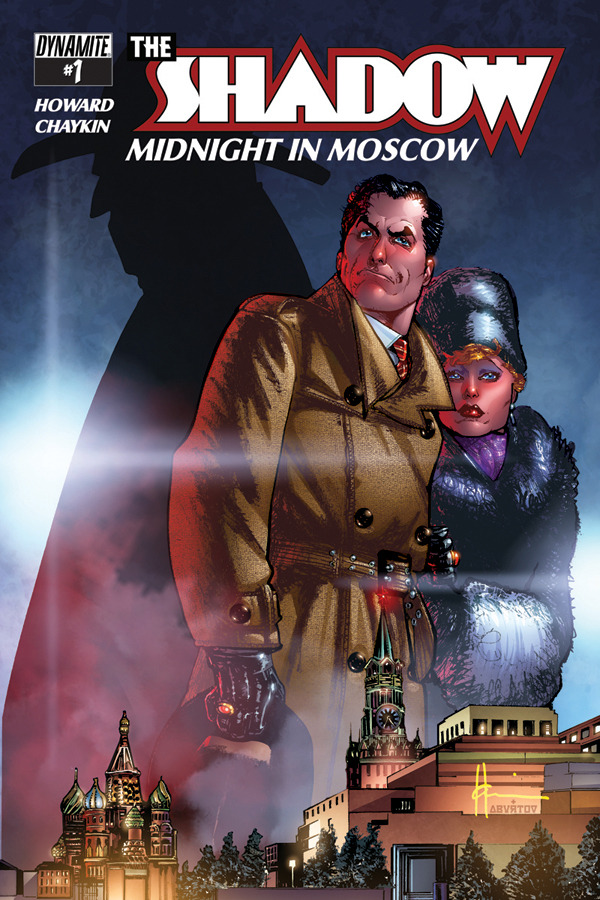
Chaykin’s Back! Need I Say More? “The Shadow : Midnight In Moscow” #1


3833259-01

Believe it or not, friends,  for a guy who has something of a reputation for being a curmudgeon, sometimes I’m so goddamn happy that I don’t have a care in the world. Seriously. Life can be just perfect, regardless of whatever else is going on. Let me tell you why today was just such an occasion.

I went to the comic shop — it’s new comic Wednesday, so nothing unusual about that — and there it was : the first issue of Howard Chaykin’s The Shadow : Midnight In Moscow from Dynamite Entertainment, the long-promised six-part series that sees one of the masters of the medium return to the character that he single-handedly re-defined nearly 30 years ago in the pages of the instantly-legendary The Shadow : Blood & Judgment, And ya know what? It feels like he never left.

Probably because, in a very real sense, he never did. And I’m not just referring here to the numerous variant covers that he’s provided for other Shadow books since Dynamite acquired the character’s license, I mean that Chaykin has cast a long — errmmm — shadow over the classic pulp icon ever since his one and only outing as his writer/artist, and even though there have been some terrific Shadow stories told by other creators since — Andy Helfer and Kyle Baker’s 1908s series for DC remains a wickedly subversive read and really stands out as an under-appreciated gem to this day, and Garth Ennis had a nice run writing the erstwhile Mr. Lamont Cranston’s exploits in recent years for Dynamite — the fact remains that the the only reason the property endures to this day at all is because of Chaykin’s four senses-shattering issues all those years ago. The rest, including the Russell Mulcahy film? All aftershocks from the main event, dear reader.

Chaykin himself’s done plenty of first-rate work since, mind you — his recently-concluded and criminally-overlooked Buck Rogers mini-series for Hermes Press is a great “jumping-on point” for those of you who may not be too terribly familiar with his work — and he even enjoyed a fairly successful TV writing career for several years (most notably on the original The Flash series for CBS) before returning to comics, but I always hoped, no matter how far afield he traveled (figuratively speaking, of course) that one day he’d come back. And now he has. And like I said, life’s pretty much goddamned perfect.

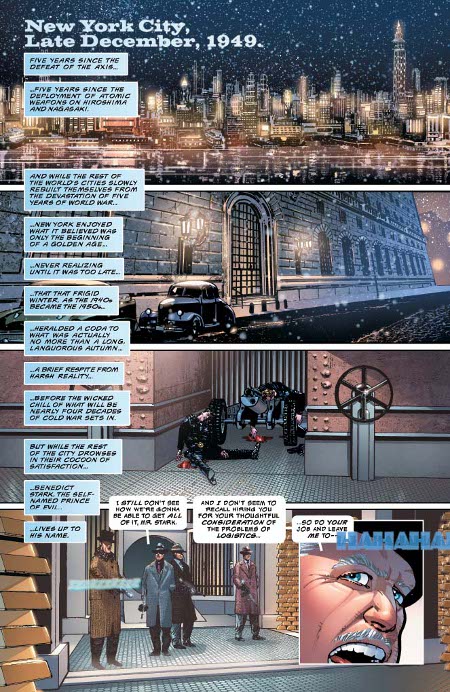
28642Moscow01_page1-xlg

Not that the book is, mind you, but so what? It’s plenty awesome as first issues go, and even though Chaykin’s pencil and ink work isn’t as tight as it once was, and his writing is somewhat wordy by today’s increasingly-devalued standards, it’s still the best thing on the racks this week by far, and would be just about any week. Like any opening salvo, the main thing Chaykin’s gotta do here is set up mood and atmosphere, and he does that with just as deft a hand as ever, despite this series’ shift back into the past.

I suppose a few brief historical notes are in order here, though, before I leave anyone in the dust : Blood & Judgment, you see,  brought The Shadow into the (then-) present day for the first time in decades, and while that made long-time fans nervous, there was no need to worry — Chaykin, fresh off a highly-touted run on his groundbreaking, creator-owned independent work American Flagg! was more than ripe for the challenge of updating a character that had, essentially, never been updated, and he captured the dark charm, mystique, and righteous vengeance at Lamont Crantson’s core immediately. His series was laced with violence, a smattering of sex, and plenty of sardonic “gallows humor,” and by the time it was over, everybody was happy. I’ve honestly never met anyone who’s read that book that doesn’t love it.

So when it was announced that Midnight In Moscow would be taking us back in time — and not to the 1920s/30s, the era where most Shadow stories are set, but to 1950 (to be specific, the story actually begins on New Year’s Eve 1949) —  a lot of people were, once again, perplexed. Not your humble reviewer, though : I figured Chaykin was doing what he’s always done best — exploring uncharted territory. We’ve never seen a Shadow adventure set in this time period (at least not in comics), so here, I figured, would be a chance to find out what he was up during some of those “missing” years. So far, Chaykin’s typically daring move seems to be paying off, as the future that we know is coming hangs over the proceedings here like, in the words of the late, great Stuart Adamson, “a blanket on a cage.” The “Big War” is over. The Cold War is looming. And in Chaykin’s view, that might be an even scarier proposition. So why is The Shadow choosing now as the time to —- oh, never mind, I won’t spoil it. Just wait for the last page.

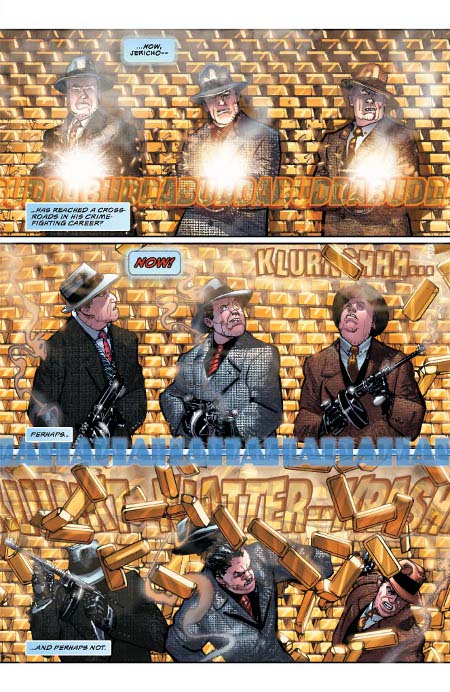
28640Moscow01_page4-xlg

I’ll tell you what, though, friends —  before you get to that last page, it’s gotta be said that every page of this book oozes foreboding. While the main details of the plot are still sketchy — in brief they seem to revolve around a scheme to “atomically shrink” gold to make it easier to rip off and transport — you can bet we’re only just scratching the surface of what’s sure to be a complex plot here. Don’t ask me what the soon-to-be-blackmailed scientist in London has to do with anything. Or why The Shadow himself appears to generally be laying low these days. Or what the hell Moscow even has to do with anything. But I trust that we’re not just in good hands here — we’re in the best hands.

And that extends beyond Chaykin himself. His colorist of choice in recent years is Jesus Aburto, who did an absolutely sensational job on Buck Rogers and appears ready and eager to top himself here, and his regular stalwart letterer, Ken Bruzenak, is back on the case, as well, which means that all those awesomely-stylized “HAHAHAHAHAHA”s haven’t lost any of their visual “oomph.” To those who ask what the hell difference a letterer makes, just take a look at the pages reproduced above and below.  As a matter of fact, they also serve as pretty solid evidence that the entire creative team here is firing on all cylinders.

28641Moscow01_page5-xlg


So yeah — the gang’s all here, from the Shadow and his best gal, Margo Lane (along with their team of crack undercover sleuths) on the page, to the stellar array of talent assembled to make those pages, and you probably couldn’t ask for a better take on the character from even his creator, the legendary Walter Gibson. This is a fucking event, people, courtey of a guy who belongs on the “Mount Rushmore of ’80s Comics Creators” right alongside Moore and Miller, and for folks who are most familiar with Chaykin for his recent (and superb) work as artist on Image’s Matt Fraction-penned Satellite Sam, it provides a chance to see why all of us old-timers have been raving about his writing, as well as his drawing, for so long now. For those pretty much unfamiliar with comics in general — probably the reason I posted this review up here rather than on one of the more comic-centric sites I write for — it’s a terrific excuse to to pop into your LCS and pick up a contemporary book from one of the most respected creators around, who’s back to doing what he does best. Seriously, right after Watchmen  and The Dark Knight Returns, Chaykin’s Shadow is it as far as revered mainstream comics from that decade we’re all still talking about  goes, and he immediately steps back into the character and his world with breathless ease here. Get in on the ground floor of this one while you can — there were only three copies left when I hit the shop just a couple of hours after it opened today, so you’ve been warmed — it promises to be one terrific ride.

Trash Film Guru Vs. The Summer Blockbusters : “Godzilla”


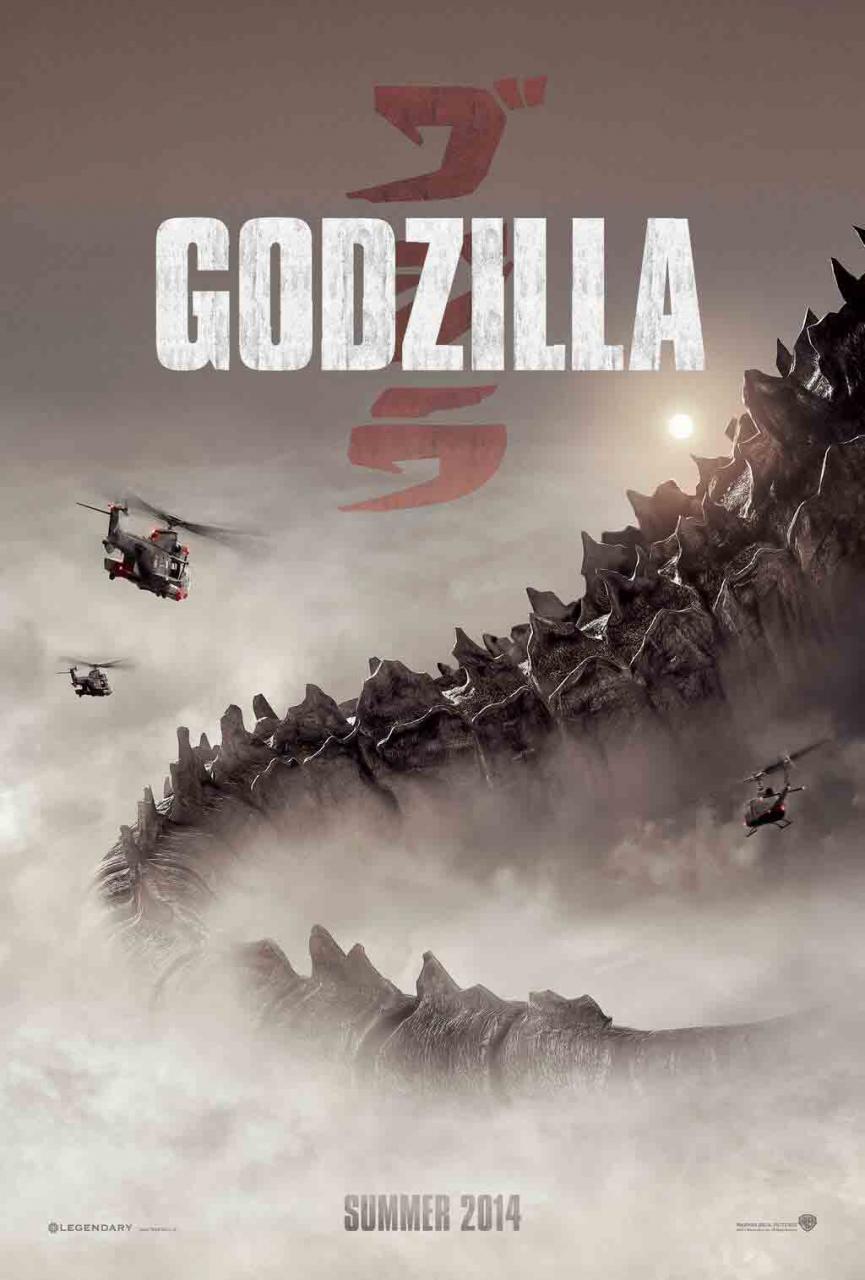
godzilla2014_poster2

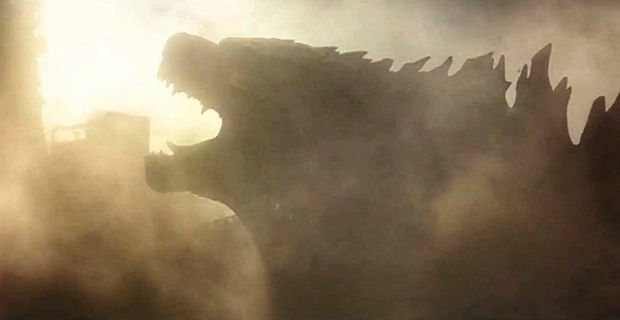
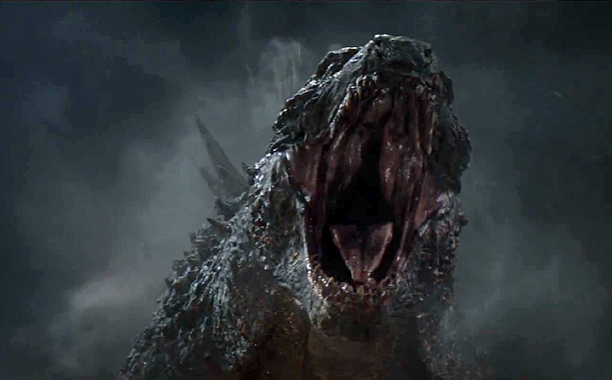
Here’s the thing when it comes to any and all Westernized takes on Japan’s most famous movie monster — Hollywood’s just never going to “get it” because, frankly, it can’t. Oh, sure, Gareth Edwards’ 2014 Godzilla is head and shoulders above Roland Emmerich’s 1998 abomination of a film, but the simple fact is that the Big Green Guy and all of his scaly, serpentine brethren that came to us courtesy of the venerable Toho studios were, at their core, celluloid manifestations of a deep-seated atomic angst that only a country that had been on the receiving end of, as Sting put it, “Oppenheimer’s deadly toy” could ever really give birth to. And while Ken Watanabe’s Dr. Ichiro Serizawa character does, in fact, explicitly mention Hiroshima and Nagasaki in this flick, it’s pure window dressing — Edwards and screenwriters Max Borenstein and Dave Callaham didn’t actually live through a time when they had to actively wonder what sort of nuclear fission-induced mutations were lurking beneath the waves just a few miles offshore, so they just can’t communicate that sort of unease with the same authenticity that the original Godzilla did.

And to those who would argue that a young Japanese filmmaker wouldn’t be able to imbue a project such as this with any more immediacy than Edwards does because they wouldn’t have lived though those horrific final days of WWII either, I’ve got one word for you : Fukushima.

Godzilla-2014-Roar

There’s also something about CGI in these flicks that always has, and always will, suck, no matter how “good” it is : you know, in the back of your mind, that it’s just not there. To be sure, Edwards and his visual effects crew do a bang-up job of realizing their monster once they do, finally, reveal him, but no matter how “unrealistic” watching the original Godzilla smash cardboard miniatures of buildings may be by today’s standards, it still feels more “real” than the essentially flawless computer graphics of 2014 can ever hope to. But maybe that’s just me —-

godzilla-trailer-02

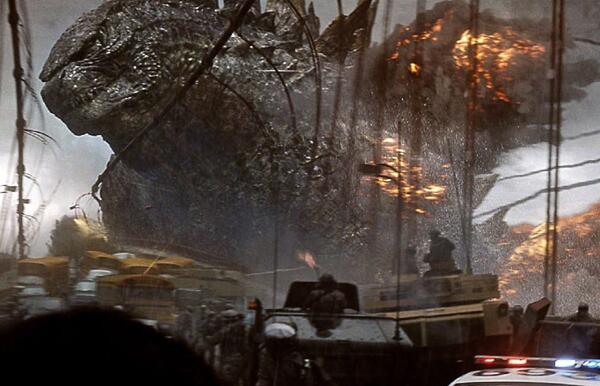
Still, don’t get the wrong idea : I’m not so much “down on” the new Godzilla as I am completely indifferent to it. To be sure, Edwards’ heart seem to be in the right place here, and he’s very likely doing the best job that he can do — it’s just that his best is nowhere near good enough. A slow-burn plot doesn’t help matters much, either, and while I’m all for a prolonged buildup that leads to a big payoff, frankly the “character arcs” of all the principal players are so dull and uninvolving that when Compu-Zilla finally does make the scene, it feels more like a relief from soap opera-style tedium than anything else. Thankfully, there’s some effectively-realized mass destruction to bump up the “wow” factor a bit, and Godzilla doesn’t turn out to a solo act (that’s all I’ll say about that), but it’s still definitely a case of “too little, too late” as far as excitement here goes and a smorgasbord of good performances (Bryan Cranston, Juliette Binoche, David Strathairn, Sally Hawkins, and the aforementioned Ken Watanabe) and bad (Aaron Taylor-Johnson, Elizabeth Olsen) find themselves having equally gone, more or less, to waste when the proverbial train finally leaves the station.

Plot recaps probably make as much sense here as they do for a Hulk comic book — sure, the set-up matters on some level, but it’s all about “Hulk smash!” at the end of the day, isn’t it? Suffice to say that the main reason the various intermingling sub-plots here really don’t work is because the film goes from small-scale to so-big-it’s-off-the-scale at the drop of hat, with no transition period in between for either the characters or the audience. It’s all just a bit jarring — but maybe that’s not such a bad thing when I think about it because, truth be told, I was getting a little sleepy.

The “who are the real monsters?” theme that Edwards toys with is frankly a little bit old, too, and honestly represents something of a cop-out ( and here’s where my “Westerners will never get this right” thesis comes into play, by the way) :  sure, humans are bad news, we’re destroying everything, etc. I know that. But some of us are worse than others, and any side willing to drop a nuclear bomb and murder hundreds of thousands of innocent people in order to “win” a war is due for some special criticism, in my view . The makers of the original Godzilla understood that fact, even if they couldn’t say so explicitly, while in the franchise’s 2014 iteration we just all suck. No one, specifically, is to blame, and hey, it’s too late for recriminations anyway when you’ve got an overgrown reptile tearing up the town. Or something like that.

godzilla-attacks-golden-gate

Still, the film’s third act is enough to make even a hardened cynic like me gasp in awe on numerous occasions, and the “childlike wonder factor,” for lack of a batter term, really does kick into high gear here as events steamroll toward their conclusion. It’s worth the price of admission for the awesome (even if it is computer-generated) spectacle the final 45-or-so-minutes deliver. Sure, I wish we’d gotten nothing but a bad ride on a  bumpy road from start to finish, but I guess I’m still willing to take what I can get. Felling like you’re 12 years old all over again for even a little while is better than never feeling like it at all.

And yet — in addition to being this film’s greatest (perhaps even only) saving grace, perhaps that last act is also its greatest weakness, because it exposes the essential, unavoidable truth at the heart of Edwards’ Godzilla : it’s good enough to make you remember why you love monster movies in the first place, but nowhere near good enough to actually be one of those monster movies  that you love.

Trash Film Guru Vs. The Summer Blockbusters : “The Amazing Spider-Man 2”


the_amazing_spider_man_2__2014____alternate_poster_by_camw1n-d7c1h7t

Seriously, folks, this whole contrarian role I seem to have either stumbled or , if you want to be grandiose about things,  been thrust into? Its actually getting pretty old.  Sure, I can’t do much about how my brain works, but once in awhile, maybe just for a day or so to see what it would be like, I’d love to at least like the same stuff everybody else does, and dislike all the same stuff that the rest of you do, too, just to relieve the tedium of seeing things in a fundamentally different way than everyone else. Mind you, I’n only talking about changing things up as far as my taste in films and other ostensibly “entertaining” media go here, these other perfectly mainstream ideas like “corporations are our friends and we shouldn’t tax them too high,” and “problems like racism, sexism, and other forms of discrimination are all in this past” — you can keep those, I’m happy to still keep tilting at windmills and telling Mr. and Ms. Middle America that they’re hopelessly deluded if they really believe the Hallmark Card pseudo-reality being sold to them while their pockets are being picked clean by the same rich assholes who then have the nerve to tell them that the real “moochers” are poor folks, or people of color, or single mothers, or any other group still that’s still easy to scapegoat and demonize.

At this point you’re probably wondering what any of this has to do with reviewing the just-released (“just,” in this case, meaning last week) The Amazing Spider-Man 2, and I can’t say I blame you, so here’s what I’m getting at : received “wisdom” has it that this is just some bog-standard, average-at-best super-hero flick. And the same received “wisdom” has it that the reason this is no great shakes (and you can bet the exact same argument will be trotted out in a couple of weeks in regards to the new X-Men movie) is because it’s not a Marvel Studios product but is, in fact, a Sony/Columbia release under license from Marvel. And I’m sorry, but I smell a serious rat with that fallacious line of “reasoning.”

Let me tell you why : Marvel, and their bosses at Disney,  desperately want the Spider-Man property back “in house” (same goes for X-Men) and have a vested interest in promoting the myth that only they can do it “right.” To that end, I’ll bet my bottom dollar that they’re the ultimate source of this goofy idea that somehow Sony’s Spider-Man lacks the “magic” that they’d bring to the property (and that’s really what Spidey is at this point — a “property” — as opposed to an actual character) and I’d even go so far as to speculate that they’ve contacted their bought-and-paid for media mouthpieces and had off-the-record conversations with them designed to subtly kick up an orchestrated “whisper campaign” against this film.

Shit, as science has proven, always runs downhill, and soon the folks who make their living telling other people what to think have affected the opinions of the legions of unpaid armchair critics (like myself) who in turn affect the opinions of fans and more casual movie-goers, and before you know it, the meme that The Amazing Spider-Man 2 just ain’t all that great has taken firm hold in the public consciousness. Sure, it all looks spontaneous enough, and most of the people playing along with the scheme have no idea that they’re doing, essentially, pro bono work for one monolithic studio conglomerate in their covert “war” against another monolithic studio conglomerate, but there you have it.

Spider-Man-Jamie-Foxx

What’s especially despicable about this, though, is how rancid and idiotic “homer”-ism in the “fan” community is so easily manipulated to shady ends, yet seldom if ever turned in a genuinely positive direction. The same “fans” who are actively and openly rooting for Marvel to “get back their baby,” for instance, don’t seem to care too much about the situation of Spidey’s actual creator, Steve Ditko, who is 86 years old and has never seen a dime from any of the flicks his legendary creation appears in — hell, when Sam Raimi’s first Spider-Man movie came out, Ditko was living under, to put it politely, reduced circumstances in a rented apartment above a New York City thrift store. If even a tiny fraction of the amount of energy fans put into campaigning for Marvel Studios were put into campaigning for the dozens, if not hundreds, of creators that Marvel has screwed over, who knows? Maybe the cause of creators’ rights would finally be getting somewhere. Let me be as blunt as possible here : if you care more about Marvel getting back the cinematic rights to Spider-Man, the X-Men, and the Fantastic Four than you do about folks like Steve Ditko, Gary Friedrich, Bill Mantlo, or the heirs of Jack Kirby, then you’re either a complete asshole, being played for a sucker, or both. These actual people deserve your support — not the corporate suits who continue to profit off the fruits of others’ imaginations.

To that end, I don’t have any real personal stake in whether or not The Amazing Spider-Man 2 is “not as good as it could/would be with Marvel Studios in charge,” because I could care less about the bottom-line corporate balance sheets of either DisMar or Sony/Columbia. They’re all faceless, greedy bastards in my book. But after watching the film, the rat I smelled grew even more pungent, so I decided to put my little “homer” theory to the test via the modern “miracle” of social networking.

Don’t worry, I didn’t waste too much time on this off-the-cuff experiment, only about 30 minutes or so, but the results were telling. I went onto twitter, looked for the first dozen comments of the “this would be so much better if Marvel did it” variety (they weren’t had to find), and asked the folks making such statements why they thought that. Of the 12 folks I asked, seven never responded, three said variations of the exact same thing (“because it’s theirs and they’d know how to do it right”) and two said they flat-out didn’t know why, “it just would be.”

Not done making a nuisance of myself, I then asked all 12 people again “What’s so ‘wrong’ with this movie in the first place in comparison with Marvel Studios product?” and received only two answers, one of which was “it just is,” and the other being “you can tell just by watching that they don’t get it.”

Excuse me, but — what’s not to get? It’s not like I’m going to try to convince you here that The Amazing Spider-Man 2 is necessarily all that great, but for what it is, frankly, it’s just fine, and in fact it’s a damn sight better than the last two Marvel Studios releases, the thoroughly uninspired Captain America : The Winter Soldier and the downright risible Thor : The Dark World, both of which were essentially big-budget TV movies-of-the-week (and overseen by television directors, no less). I’d even go so far as to say it’s quite a bit more enjoyable than Marvel’s most-ballyhooed cinematic endeavors, the incredibly over-rated The Avengers and the obviously-constructed-by-the-numbers Iron Man films.

It’s far from a terrific super-hero movie, mind you, like Christopher Nolan’s  Batman Begins or Richard Donner’s original Superman, but it definitely fits comfortably into the “above average, at any rate” group populated by flicks like The Dark Knight (which is nowhere near as good as  many seem to think, but is still fairly solid) and Raimi’s Spider-Man 2. So I guess my main argument isn’t even necessarily that this is all that much  better than at least the top-tier Marvel Studios flicks, like the first Thor and Captain America : The First Avenger, but that it’s in no way appreciably worse. Given that, then, and taking into consideration how positively homogenized and formulaic Marvel’s “in-house” product has become in the absence of genuinely talented directors like Kenneth Branagh and Joe Johnston, there’s absolutely no reason to believe they’d “do a better job of things” if the web-slinger’s rights suddenly fell back into their lap.

green-goblin-spider-man-the-amazing-spider-man-2

Frankly, some of the criticism being leveled at this flick is just plain absurd on its face, and amazingly hypocritical. I’ve seen folks who gushed over The Avengers claim, with a straight face, that the problem with The Amazing Spider-Man 2 is that it “relies too heavily on CGI battle scenes.” And Whedon’s movie didn’t? I’ve seen many self-styled “opinion makers”  who gushed over the the “human”  characterization in Nolan’s Bat-films say that this movie “has too much Peter Parker, not enough Spider-Man.” I’ve seen people who applauded the revisionist origin story given Superman in Zack Snyder’s Man Of Steel grouse about how director Marc Webb and his committee of screenwriters are “playing too fast and loose” with Spidey’s backstory here. And,  while I’ll grant you that Jamie Foxx’s Max Dillon/Electro character is flat-out absurd in both its human and super-human iterations, and that getting shocked by a big cable and falling into a vat of electric eels is a pretty lame way for a villain to get his powers, it’s worth noting that many of the people poking fun at this have no problem with the idea of a chemically-enhanced “super soldier” being frozen in a block of ice and waking up, without having aged a day, in the Captain America movies, or of the Norse Gods being a real race of inter-dimensional super-beings in the Thor films, and are even willing to swallow the single-most laughable notion in all comic-book flicks, that of a spoiled billionaire rich kid who inherits his daddy’s company and still actually works for a living, as Tony Stark does in the Iron Man series.

There are plenty of folks out there telling you what Webb and company get wrong in The Amazing Spider-Man 2 — from the aforementioned Electro stuff to Andrew Garfield’s take on Peter Parker being “unlikable” (news flash — he’s been a self-pitying, self-aborbed, flat-out selfish little prick in the comics from day one) to Sally Field’s Aunt May being “too young” (whatever ,  she does a really nice job)  to Paul Giamatti’s wasted and pointless cameo as the villainous Rhino at the end —let me take just a few minutes to tell you what this movie gets right.

exclusive-the-amazing-spider-man-2-pictures-153555-a-1389698871-470-75

Dane DeHann is positively creepy as Harry Osborn/The Green Goblin and his origin/descent into villainy is portrayed in a way that actually makes sense. Likewise, even though his screen time is limited, Chris Cooper knocks it out of the park as his vicious, megalomaniacal father, Norman. There’s real chemistry between Garfield’s Parker and Emma Stone’s Gwen Stacy, and the film does a nice job of updating/translating the legendary penultimate Spidey/Gwen story for the silver screen. The CGI effects work is solid and a represents a big step up from the lackluster graphics of Webb’s first Spider-film. The characters are allowed to age at least semi-normally, as evidenced by the fact that Peter, Gwen, and their classmates are  shown graduating high school at the start of the film (and a good thing too, since both actors are, what? Pushing 30?). Webb directs the action sequences that he’s being maligned for with far more aplomb than his more-praised counterparts like Jon Favreau or Joss Whedon, who just show one building after another being smashed to rubble in between those fucking interminable shots of Robert Downey Jr.’s face inside of his Iron Man helmet. And at least this movie gives us warts-and-all human beings at its core with plausible psychological motivations for doing what they do rather than mythological gods, science-whiz playboys, sexy Russian super-spies with no accents, or one-dimensional do-gooders fresh out of suspended animation.

It’s not enough to make The Amazing Spider-Man 2 a truly great super-hero movie, and a forced and tacked-on ending epilogue-ish ending doesn’t help (even if there’s plenty of reason for fans to “ooh”and “aah” when we get a sneak peek at the character designs for the members of the sure-to-pop-up-in-the-next-flick Sinister Six, and hey, isn’t that the Black Cat we get to meet — briefly and in her civilian identity — earlier on, too? Where’s the fan-gasming for that?), but it makes it a heck of a lot more involving than much-more-highly-praised (even if it’s dull and repetitious) fare that just so happens to carry the Marvel Studios logo above its title. And you know what? That’s all it would take for fans to love this one, and is the single, solitary reason why many of them don’t. You might call that loyalty, but I call it bullshit.
 

“Empire Of The Dead” #4 : George Romero Continues Playing The Long Game


3775351-04

There’s no doubt about it at this point — the entirety of the first five-issue arc in George Romero’s Empire Of The Dead is pure set-up. Consider : with one more installment  to go in the opening “act” (the official numbering here being George A. Romero’s Empire Of The Dead Act One #4) we’re finally getting our first sustained glimpse at a character called Dixie Peach, somebody who, from all I’ve read about this series, is slated to play a pivotal role in the proceedings. Who exactly she is and what her motivations are remain a mystery — she and her crew have just come up to New York from Georgia and seem to be intent on causing mayhem as, I guess, a sort of “payback” for the Civil War, and get off to a pretty good start by killing a border crossing guard and shooting out a security camera — but nevertheless, four chapters into his story Romero finally seems to have all his chess pieces in place.

Not that we see all of them this time around, mind you. Mayor Chandrake’s nephew, Billy, is notable for his absence  (in fact the Mayor himself only makes the briefest of appearances here, when he attempts his “vampire seduction” act on Dr. Penny Jones before being cock-blocked — or maybe that should be neck– blocked — by Paul Barnum, who’s finally given something semi-meaningful to do in this issue), as is Zombie super-fighter Zanzibar, but there’s only so much you can cram into 20 pages, I guess.

Former SWAT cop-turned-zombie Xavier has the biggest part to play here in number four, as she befriends a homeless young girl and seems to adapt quickly to her new role as the child’s protector, further continuing Romero’s theme of “humanizing” the undead. That could prove to be an interesting relationship down the road. And the vampire power structure is laid out in more detail as we learn just how thoroughly their “curse” has penetrated every level of the city’s administration and political infrastructure. Plus, we get to learn what happens to vampires when they — get this — die (and yes, they do die under the rules Romero is establishing/expanding upon).

3775531-04-variant

With the second-to-last issue of the opening series being this heavy on the (sometimes clumsily-scripted, it has to be said) exposition, then, it’s fair to say that act one of Empire has laid its cards on the table : don’t expect a self-contained narrative here that can be read on its own apart from its forthcoming sequels. Romero’s following the “long game” strategy so fashionable at Marvel of late, probably best exemplified by Dan Slott’s Superior Spider-Man, which has essentially turned out to be a 31-issue mini-series setting the stage for Peter Parker’s return next week in the (yawn) new Amazing Spider-Man #1.

Not that I expect our guy George to take it quite that far, mind you — by the time we get through all five planned “acts” of Empire Of The Dead, I do believe —or at least hope — that we’ll have a fully-functional, start-to-finish, epic zombie story. But he’s building things very slowly, methodically, and carefully. If this were the work of somebody knew to the genre, I’d probably be a little more cautious about how little narrative progress had been made by this point, but you know how it goes with Romero : sooner or later every one of his plot threads ties together and we end up with a story that says more about “us” (humans) than it does about “them” (zombies).

Alex Maleev’s art is enough to keep me coming back for more, as well (his main cover, and Arthur Suydam’s variant, being reproduced above, respectively,  for your edification). He’s just plain hitting it out of the park here, and seems to be gaining more confidence, and a better handle on the grim world he’s depicting, with each issue. I dare say he may even be surpassing the lofty standard he set for himself on  his legendary Daredevil run here. 21 more issues of images as flat-out awesome as those he’s giving us isn’t something I’m going to complain about in the least, and I’m sincerely hoping that the breaks between acts one and two will be a very short one indeed.

Trash Film Guru Vs. The Summer (?) Blockbusters : “Captain America : The Winter Soldier”


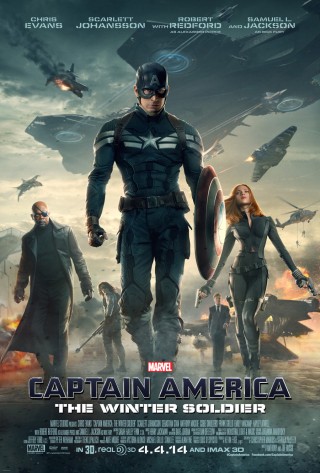
Capt2-Payoff-1-Sht-v8-Lg-c563d

I’m firmly of the belief that nobody my age has any business whatsoever using the phrase “WTF,” but nevertheless — WTF? Captain America : The Winter Soldier has been playing for two weeks now, there are, what, either or ten people who write regularly (or semi-regularly) for this website, pretty much all of ’em are bigger fans of Marvel’s cinematic product than I am — and I’m the first person to review this flick here, even though more or less  the entire country saw the thing before I did yesterday? Well, okay, but somebody had better get busy on writing a rebuttal to this, because what I’ve got to say is going to piss a lot of people off.

It’s not that DisMar’s latest blockbuster is “bad,” per se — it’s just that it’s exactly what you expect it to be, that’s all these things ever are, and sorry, but it’s not “the greatest super-hero flick ever made.” And that statement, in and of itself, is going to be enough to upset the die-hards out there because, to them, every Marvel movie is “the greatest super-hero flick ever made” — until the next one. Which is probably just as well because these things are entirely disposable and don’t hold up particularly well to multiple viewings. Be honest — once the initial “high” wore off, was The Avengers really all that great? Or Iron Man 3? Or Thor : The Dark World?

Of course they weren’t. Which doesn’t mean they weren’t fun, or that they didn’t hit all the right bullet points on whatever unofficial geek check-list you keep. It’s just that they do their job, get it over with, and move on — as you do, dear reader. Think about it : after watching your average Marvel movie (and if there’s one thing all of these films are, it’s aggressively average), you’re not necessarily pumped to see it again so much as you are pumped for the next one. And that’s kinda the point, isn’t it? The Marvel cinematic “universe” is a self-perpetuating organism at this point, whose primary function is to whet your appetite for the supposed “greatness” to come rather than give you time to reflect on the mediocrity of what’s already been/is going on. The hype surrounding the product is woven into the fabric of the product itself — in fact, it’s the largest part of it.

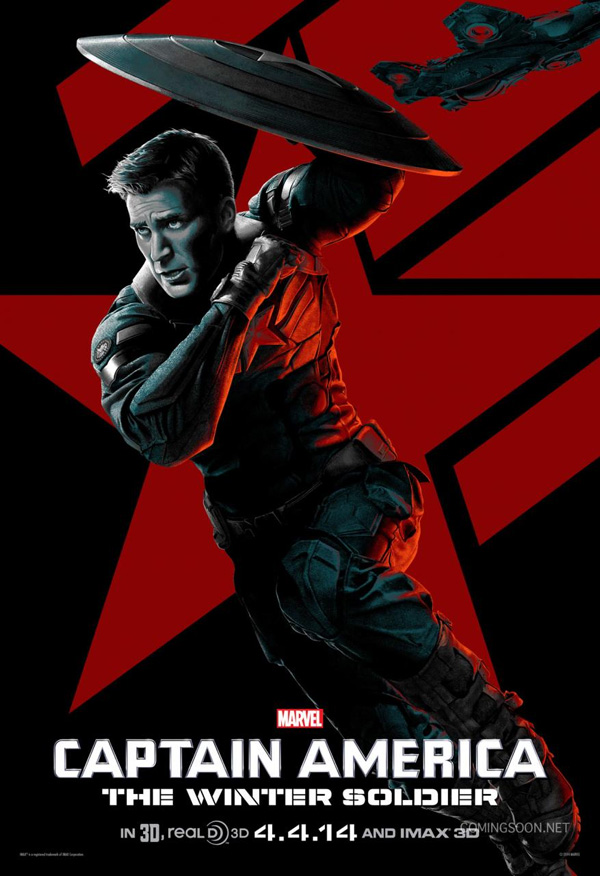
_1395260042

Don’t get me wrong — I had a reasonably fun time kicking back and watching Captain America : The Winter Soldier. Chris Evans does a reasonably good job portraying Cap/Steve Rogers as a guy who’s fundamentally decent, but not so holier than thou that you want to knock his teeth in. Robert Redford’s choice to play the treacherous Alexander Pierce as a believably nonchalant master manipulator is solid, and everything about him oozes “old movie vet” professionalism. Sebastian Stan cuts a strikingly mysterious pose as the (sub-) titular Winter Soldier. Anthony Mackie is likable in the extreme as sidekick Sam Wilson/The Falcon. And it’s cool to see Toby Jones “back” — after a fashion, at any rate — as Arnim Zola, this time in an iteration somewhat closer to how Jack Kirby originally envisioned him. The main thrust of the story is pretty engaging, too, revolving as it does around a massive web of Hydra “fifth columnists” within S.H.I.E.L.D. itself. It’s reasonably — though far from overwhelmingly — interesting, and keeps you guessing just enough.

But there are some pretty glaring flaws here, as well. Samuel L. Jackson seems tired and played-out as Nick Fury, and while it doesn’t help that his entire “character arc” in this film is lifted note-for-note from that of Jim Gordon in The Dark Knight, the fact of the matter is that Sam doesn’t seem to be putting any more effort into this gig than he does in his credit card commercials. Scarlett Johansson remains horribly miscast as Natasha Romanov/The Black Widow, and while that’s not such a huge problem in movies where she’s peripheral (at best) to the action, it stands out like a sore thumb here, where she’s called upon to be much more central to the proceedings. And for a supposed future love interest, Emily VanCamp is entirely forgettable in her brief time on screen.

Still, those are minor quibbles compared to the main problem here, which is how hopelessly generic, and indeed formulaic, this whole thing feels from start to finish. Joe Johnston’s Captain America : The First Avenger remains my personal favorite Marvel Studios film, but as with Kenneth Branagh and the Thor franchise, DisMar has opted here to show a veteran director with his own ideas and authorial stamp the door when it came time for a sequel and bring in “talent” from the world of television (in this case brothers Joe and Anthony Russo) to hammer things into the dry, predictable “house style” best exemplified by Joss Whedon’s Avengers and Jon Favreau’s first two Iron Man flicks. The end result is a multi-million-dollar, CGI-heavy, clinically-paced, personality-free zone.

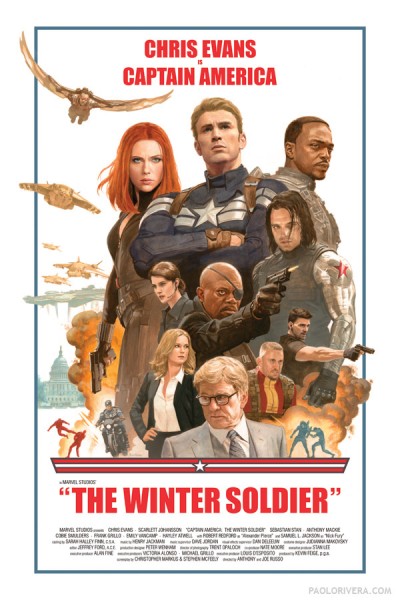
captain-america-winter-soldier-retro-poster-400x600

About a half hour into things here, you start to get the distinct feeling that you’ve seen all this before, and there’s good reason for that — you have. The action sequences are progressively bigger, louder, and more destructive, but not much else. They don’t become progressively more thrilling or suspenseful, and while the stakes are nominally raised every time, their execution remains largely the same. You could probably run ’em all in reverse order with no real difference to the story.  And while there does, in fact, seem to be a kind of major shake-up Marvel’s “universe” at the end of this film, the fact that the Agents Of S.H.I.E.L.D. TV series remains a going concern week in and week out is all you need to know to figure out that any “ramifications” from this story are apparently very short-lived indeed. In other words, Marvel’s doing on celluloid what they’ve always done in print — providing, in the words of Stan Lee (who it pains me to even quote, but in this case I must) “the illusion of change” — but no actual change at all.

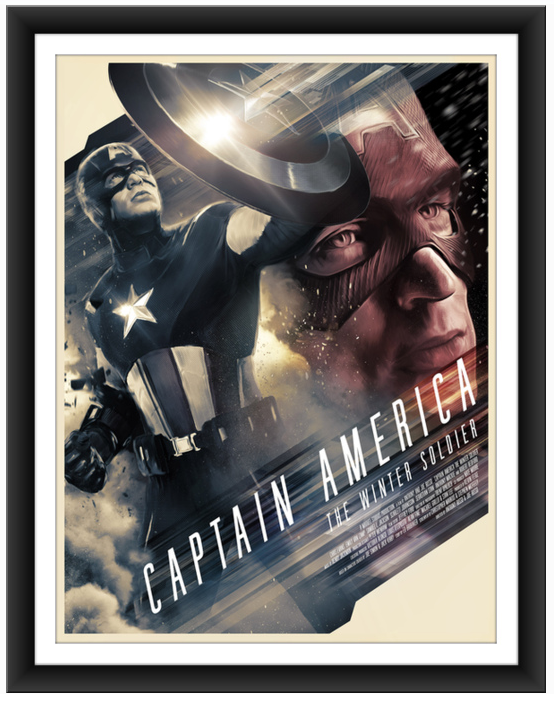
blurppy-poster-posse-captain-america-3

In the end, in the eyes of this armchair critic at any rate, that’s what Marvel’s movies are all about at this point  : the status quo. If you’re happy with that, then you’ll enjoy the heck out of Captain America : The Winter Soldier. But if you’d like to actually see something that takes a few risks, dares to break the mold a bit, and maybe even matters — well, you’ll have to look elsewhere. That’s not the point here. The point here is to get you all hot and bothered for Captain America 3, or The Avengers 2 — or whatever the hell else is in the pipeline — before this one’s even over. Viewed from that angle — the one that shows the goal of every Marvel movie is nothing more than ensuring that there will be a next Marvel movie — then yeah, this one’s gotta be viewed as an unqualified success. So what?