4 Shots From 4 Films is just what it says it is, 4 shots from 4 of our favorite films. As opposed to the reviews and recaps that we usually post, 4 Shots From 4 Films is all about letting the visuals do the talking.
Today, the Shattered Lens wishes a happy birthday to director Mark L. Lester. It’s time for….
4 Shots From 4 Mark L. Lester Films
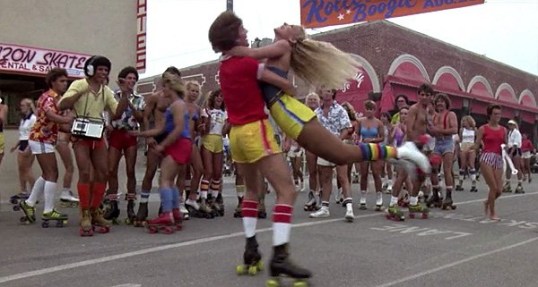
Roller Boogie (1979, dir by Mark L. Lester, DP: Dean Cundey)
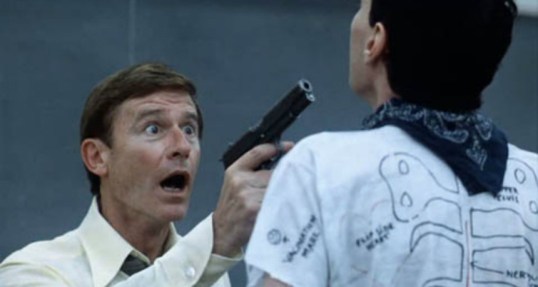
Class of 1984 (1982, dir by Mark L. Lester, DP: Albert Dunk)
Commando (1985, dir by Mark L. Lester, DP: Matthew Leonetti)
Public Enemies (1996, dir by Mark L. Lester, DP: Misha Suslov)
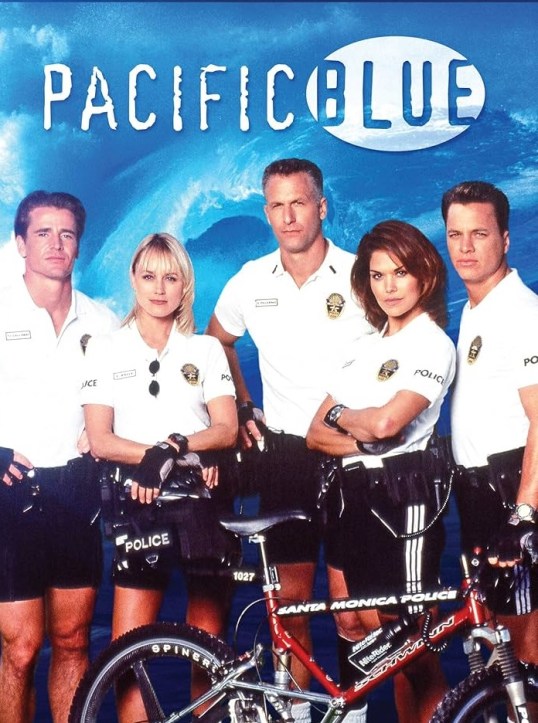
Welcome to Late Night Retro Television Reviews, a feature where we review some of our favorite and least favorite shows of the past! On Tuesdays, I will be reviewing Pacific Blue, a cop show that aired from 1996 to 2000 on the USA Network! It’s currently streaming everywhere, though I’m watching it on Tubi.
It’s a Chris epiosde. *Yawn*
Episode 3.7 “Repeat Offenders”
(Dir by Charles Siebert, originally aired on September 28th, 1997)
When this show first started, Chris Kelly was introduced as being a hotshot Navy pilot who was forced into reserve status due to her eyesight. In this episode, it’s revealed that she actually left active duty because she was involved in an accident that was the fault of her commanding officer. Rather than testify against him and run the risk of being crucified on the stand and then run out of the Navy, she instead took the blame.
Five years later, she discovers that another Navy pilot, Rebecca Santori (Liza Snyder), is facing the same dilemma. Her commanding officer — who was also Chris’s commanding officer — screwed up and Santori is being pressured to take the blame. Chris encourages Santori to fight for her right to fly. Cory suggests that Chris is pressuring Snantori because Chris feels guilty about giving up when she was in the same position. Cory suggests that Chris is putting Santori’s career at risk just to deal with her own anger and resentment. Chris says that’s not true and the show seems to expect us to take her word for it. Fortunately, things do work for Santori. She is cleared in the accident and Chris is vindicated when its determined that their commanding officer has a long history of incompetence.
This storyline had potential but Chris is just such a one-note character that it’s hard to get excited about anything involving her. Every week, it seems like Chris finds something new to get upset about and every week, anyone who suggests that Chris isn’t being totally honest about her motivations has to deal with the Chris Kelly glare of death. In order to remain sympathetic while glaring at people and telling them that they’re idiots, you have to have some shred of charisma. Chris does not and whenever she’s at the center of an episode, even when she’s in the right as with this one, I just find myself thinking about how much I would dread to have to work with her on a daily basis.
As for the other storyline, thieves are targeting foreign tourists on the boardwalk. Palermo and TC put on Hawaiian shirts and pretend to be foreign tourists. The thieves get arrested. Yay. How exciting. Bike patrol does it again.
Welcome to Retro Television Reviews, a feature where we review some of our favorite and least favorite shows of the past! On Tuesdays, I will be reviewing the original Fantasy Island, which ran on ABC from 1977 to 1984. The show is once again on Tubi!
This week, I really missed Tattoo.
Episode 7.19 “”Lost and Found/Dick Turpin’s Last Ride”
(Dir by Bob Sweeney, originally aired on April 7th,1984)
Stung by the discovery that her husband has cheated on her, Sheila McKenna (Carol Lynley) comes to Fantasy Island, looking for revenge. Her husband, Frank (Adam West), follows her and tries to save his marriage. Sheila is tempted to cheat with Frank’s business partner. Fortunately, Mr. Roarke is there to show Frank the error of his ways and, for some reason, Sheila ends up forgiving him and they leave the Island with their marriage stronger than ever.
This storyline is one that I perhaps would have been more invested in if Sheila McKenna had not been played by Carol Lynley. Lynley was the most frequent guest star on Fantasy Island. She was never particularly memorable but, in this episode, she gives a performance that can only be described as bad. Delivering her lines without a hint of emotion (and forget about having any chemistry with West), Lynley comes across as if she under the influence of serious narcotics. I was genuinely worried about her health. I didn’t really care much about her marriage.
As for the other storyline, singer Tom Jones stars as mild-mannered accountant Jack Palmer. Palmer idolizes the legendary Welsh highwayman, Dick Turpin. Roarke sends him into the past so that he can actually be Dick Turpin. Tom Jones as Turpin sings almost all of his dialogue. Jack’s wife (Dianne Kay) is also sent into the past and is kidnapped by Sid Haig.
The Dick Turpin storyline was the sort of thing that Fantasy Island did well in the past. However, despite some surprisingly strong production values, it just kind of fell flat in this episode. A big problem is that this was the type of story that would have been perfect for Tattoo but, unfortunately, the show replaced Herve Villechaize with Christopher Hewett. I have nothing against Christopher Hewett. From what I’ve read, he was apparently a very devout Catholic who was loved by all. But the switch-over from Villechaize to Hewett was definitely the moment that Fantasy Island stopped being a fantasy to watch.
It’s hard to believe that I’m nearly done with this series. I’ve been reviewing it since 2022! It’s brought me a lot of joy but, as I make my way through the final episodes of season 7, I’m ready to finally move on.
4 Shots From 4 Films is just what it says it is, 4 shots from 4 of our favorite films. As opposed to the reviews and recaps that we usually post, 4 Shots From 4 Films is all about letting the visuals do the talking.
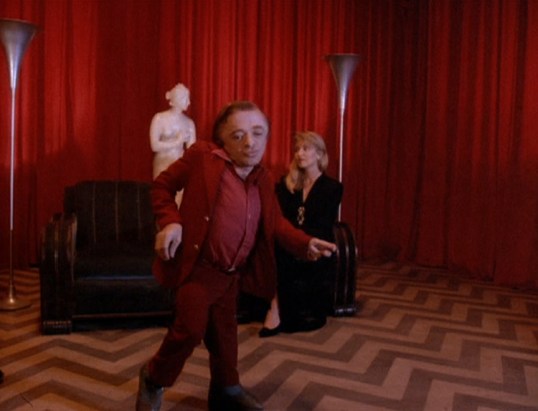
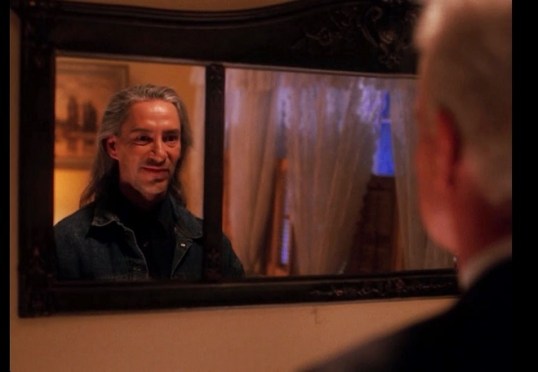
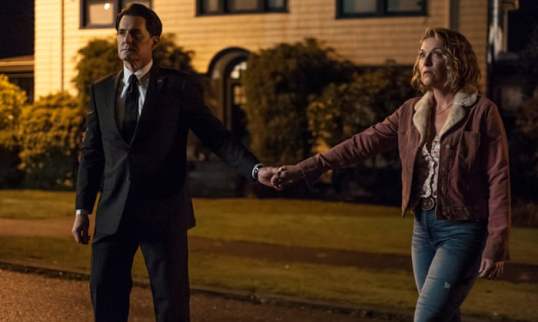
Today, the Shattered Lens wishes a happy birthday to the co-creator of Twin Peaks, Mark Frost! It’s time for….
4 Shots From 4 Episodes Of Twin Peaks
Twin Peaks 1.3 “Zen or the Skill To Catch a Killer” (1990, dir by David Lynch, DP: Frank Byers)
Twin Peaks 2.7 “Lonely Souls” (1990, dir by David Lynch, DP: Frank Byers)
Twin Peaks: The Return Part 5 (2017, dir by David Lynch, DP: Peter Deming)
Twin Peaks: The Return Part 18 (2017, dir by David Lynch, DP: Peter Deming)
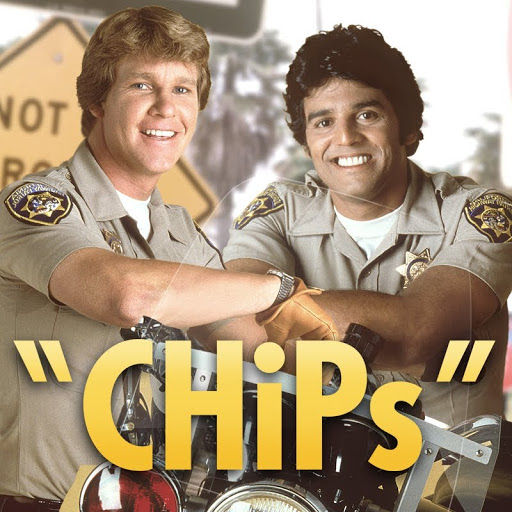
Welcome to Late Night Retro Television Reviews, a feature where we review some of our favorite and least favorite shows of the past! On Mondays, I will be reviewing CHiPs, which ran on NBC from 1977 to 1983. The entire show is currently streaming on Prime!
This week, the fifth season begins.
Episode 5.1 “Suicide Stunt”
(Dir by Michael Caffey, originally aired on October 4th, 1981)
The fifth season opens with the Highway Patrol pursuing a gang of thieves and also keeping an eye on Janos Szabo (Les Lannom), a motorcycle daredevil from Hungary who has come to Los Angeles to take part in charity show for “Highway Patrol Widows and Orphans.”
Since Hungary was controlled by the evil communists (hisssss!) when this episode originally aired, I assumed the episode would be about Janos trying to defect so that he could start a new life in the greatest country on Earth, the USA (yay!). Instead, it turned out that Janos was more concerned with spending time with an ex-girlfriend named Maria (Anita Jodelsohn) who had defected (Good for you, Maria!) and was now working for the Highway Patrol. The entire episode was pretty much scene after scene of Janos sneaking away from his handlers, stealing a vehicle, and then trying to kidnap Maria. Maria found it to be amusing. The members of the Highway Patrol were amused. Even Janos’s handlers seemed to be secretly amused. Still, when Janos set a fire outside of the CHP headquarters to distract everyone so that he could steal another car (this one with Maria in it), Ponch had no choice other than to arrest him.
“I am glad it is you who arrest me,” Janos says to Ponch, smiling like an idiot.
With Janos arrested, it falls on Jon Baker to perfect the stunts while riding Janos’s motorcycle. And Baker is able to do it easily, even the one that involves bursting through a ring of fire. So, I guess they didn’t need Janos to begin with. They should have just had Baker do it and they could have saved a lot of money. Way to waste the taxpayer’s cash, Jerry Brown!
(He was governor at the time. Then, like 30 years later, he was governor again.)
Odd episode, this one. Most season premieres try to go big but this was pretty much just another episode of CHiPs. The California scenery was nice. I always appreciate that this show was largely shot on location and, as a result, even the worst episodes have some value as a time capsule. That said, Janos was an incredibly annoying character. The fact that the show meant for us to laugh at his antics made him even more annoying. There’s only so many times you can watch one jackass try to abduct one woman before you say, “Enough already!”
Welcome to Retro Television Reviews, a feature where we review some of our favorite and least favorite shows of the past! On Mondays, I will be reviewing Miami Vice, which ran on NBC from 1984 to 1989. The entire show can be purchased on Prime!
There’s another serial killer haunting the streets of Miami. We all know what that means. It’s time to put either Trudy or Gina in harm’s way again.
Episode 5.7 “Asian Cut”
(Dir by James Contner, originally aired on January 13th, 1989)
Someone is murdering prostitutes and carving symbols into their skin. The seemingly friendly Prof. Halliwell (David Schramm) confirms that the symbols are Asian in origin. Crockett and Castillo suspect that the murderer might be a knife-obsessed Japanese gangster named Tegoro (Cary-Hiroyui Tagawa) but it turns out that they’re wrong. Gina and Trudy work undercover as escort and Trudy meets Carlos (Alfredo Alvarez Calderon), a man with a kink for being beaten. Carlos wants to introduce Trudy to a friend of his, someone who is something of an expert on torture and who learned the majority of his techniques while he was serving in the CIA during the Vietnam War….
Yep, the murderer is Prof. Halliwell!
This episode was thoroughly unpleasant. That’s not necessarily a bad thing when it comes to episodes about serial killers and David Schramm did a good job of switching from being goofy to deadly. However, in this case, it was hard not to think about the fact that, in five seasons, Gina and Trudy haven’t really gotten to do much other than pretend to be escorts and get threatened by serial killers. For once, Gina was the one providing support while Trudy was the one put in jeopardy but it still otherwise felt very, very familiar. Even the twist that the killer was a former CIA agent who specialized in torturing enemy combatants felt just a bit too predictable. (On Miami Vice, anyone who is former CIA and not named Castillo always turns out to be a murderer.) The torture scenes were so drawn out that they ultimately felt a bit gratuitous.