Lisa Marie’s Way Too Early Oscar Predictions For June


Click here for my April and May predictions!

Best Picture

Avatar: Fire and Ash

Deliver Me From Nowhere

F1

Hamnet

It Was Just An Accident

The Secret Agent

Sentimental Value

Sinners

The Smashing Machine

Wicked For Good

Best Director

Jon M. Chu for Wicked For Good

Ryan Coogler for Sinners

Joseph Kosinski for F1

Jafar Panahi for It Was Just An Accident

Joachim Trier for Sentimental Value

Best Actor

Timothee Chalamet in Marty Supreme

Dwayne Johnson in The Smashing Machine

Michael B. Jordan in Sinners

Wagner Moura in The Secret Agent

Jeremy Allen White in Deliver Me From Nowhere

Best Actress

Cynthia Erivo in Wicked For Good

Lucy Liu in Rosemead

Renate Reinsve in Sentimental Valure

Amanda Seyfried in Ann Lee

June Squibb in Eleanor The Great

Best Supporting Actor

Miles Caton in Sinners

Colman Domingo in Michael

Paul Mescal in Hamnet

Stellan Skarsgard in Sentimental Value

Christoph Waltz in Frankenstein

Best Supporting Actress

Elle Fanning in Sentimental Value

Ariana Grande in Wicked For Good

Gabby Hofman in Deliver Me From Nowhere

Kate Hudson in Song Song Blue

Nia Long in Michael

Retro Television Review: Miami Vice 4.9 “The Rising Sun of Death”


Welcome to Retro Television Reviews, a feature where we review some of our favorite and least favorite shows of the past!  On Mondays, I will be reviewing Miami Vice, which ran on NBC from 1984 to 1989.  The entire show can be purchased on Prime!

This week, the Yakuza invades Miami.

Episode 4.9 “The Rising Sun of Death”

(Dir by Leon Ichaso, originally aired on May 27th, 1988)

Castillo is concerned.  The murder of an American businessman leads him to suspect that the Yakuza has come to Miami and it turns out that he’s right.  Riochi Tanaka (James Hong), a World War II war criminal-turned-mobster, is trying to take over the Miami underworld.  While corrupt Homicide Detective Haskell (R. Lee Ermey) tries to convince everyone that the Yakuza is just a myth, Castillo teams up with Japanese detective Kenji Fujitsu (Cary-Hiroyuki Tagawa) to takes down Tanaka and his right-hand man, Agawa (Danny Kamekoa).  Needless to say, this leads to a fight with samurai swords, a lot of talk of honor, and a seppuku to close the case.

This episode hit every Yakuza cliche and the plot itself felt as if it had been put together at the last minute.  (This is one of those episodes where every plot hole is dismissed as being a cultural difference.)  We’re expected to believe that Tanaka could outsmart the Allies during World War II but he couldn’t outsmart the Miami Vice Squad.  As well, of the major Japanese characters, only one was played by Japanese actor.  Danny Kamekoa is a Hawaiian while James Hong is of Chinese descent.

That said, this episode was shot and filmed with a lot of style and it found an excuse to play Billy Idol’s Flesh For Fantasy during one of the early scenes.  There’s something to be said for that.  Neither Crockett nor Tubbs really did much in this episode but we did get to see Crockett house hunting with Cailtin.  It’s mentioned that everyone thinks that Caitlin’s new husband is named Sonny Burnett instead of Sonny Cockett.  That’s fine …. except for the fact that Sonny Crockett has previously been established as a bit of a minor celebrity, a college football star who would have gone on to the NFL if he hadn’t injured his knee.  Every time this show tries to convince me that Crockett has fooled everyone into thinking he’s Sonny Burnett, it just further convinces me that there’s no way Crockett and Tubbs should still be doing undercover assignments.

This episode was stylish but empty but, considering some of the other episodes that have aired during this season, at least it was entertaining.

Monday Live Tweet Alert: Join Us For Nam Angels!


As some of our regular readers undoubtedly know, I am involved in hosting a few weekly live tweets on twitter and occasionally Mastodon.  I host #FridayNightFlix every Friday, I co-host #ScarySocial on Saturday, and I am one of the five hosts of Mastodon’s #MondayActionMovie!  Every week, we get together.  We watch a movie.  We snark our way through it.

Tonight, for #MondayActionMovie, the film will be 1989’s Nam Angels! I picked it so you know it’ll be good.

It should make for a night of fun viewing and I invite all of you to join in.  If you want to join the live tweets, just hop onto Mastodon, find the movie on YouTube, Tubi, or Prime, hit play at 8 pm et, and use the #MondayActionMovie hashtag!  The live tweet community is a friendly group and welcoming of newcomers so don’t be shy.   

See you soon!

Late Night Retro Television Review: Degrassi High 2.8 “Home, Sweet Home”


Welcome to Late Night Retro Television Reviews, a feature where we review some of our favorite and least favorite shows of the past!  On Sunday, I will be reviewing the Canadian series, Degrassi High, which aired on CBC and PBS from 1989 to 1991!  The series can be streamed on YouTube and Tubi

This week, everyone is sick of Wheels.

Episode 2.8 “Home, Sweet Home”

(Dir by Kit Hood, originally aired on January 7th, 1991)

Oh, Wheels!  Always in trouble, that one.

Ever since getting kicked out of his grandma’s house, Wheels has been staying with Joey but, after several weeks, Joey and his parents are sick of their houseguest.  Wheels easts all the food, never says thank you, and has yet to even to start to look for his own place.  Instead, he steals a bunch of money from Joey’s mom’s purse.  As a result, Wheels not only gets kicked out of the Jeremiah residence but Snake’s parents announce that Wheels can’t stay with them either.  Trapped outside during a thunderstorm, Wheels calls his grandmother and promises to obey her rules if she allows him to come home.

“I don’t believe you,” she replies before hanging up on him.

OUCH!  Though, to be honest, she’s right about Wheels’s sincerity.  Wheels is a pathological liar who takes advantage of anyone who trusts him.  It’s been a while since he was the cool kid that everyone wanted to date.

Wheels eventually crashes on Snake’s back porch.  (“My parents cannot know you’re back here,” Snake says.)  The next day, at school, Wheels promises Joey that he will pay back the money he owes.  Joey turns his back on Wheels and walks off.

And, again, Wheels really has no one to blame for but himself.  And those of us who know our Degrassi history know that things are soon going to get even worse for Derek Wheeler.

Meanwhile, Michelle returns home so she can have a quiet place to study.  She is shocked to find her father is at the house.  (She thought he would be at cooking class.)  Michelle agrees to move back in but on the condition that she pay rent and that her father stop trying to control her life.  Her father reluctantly agrees.  I guess, now that she’s broken up with BLT, it no longer matters that her father was previously portrayed as being a raging racist.

This episode was okay but it felt very familiar.  We’ve done the whole Wheels-is-awful thing already.  Add to that, as terrible as Wheels is, I don’t really agree with Grandma’s decision to refuse to allow him to come home.  Wheels promised to abide by his grandmother’s rules and that was the condition that Grandma set for his return.  Wheels is a handful and undoubtedly was being insincere but I think Grandma is going back on her word here.  If Wheels had come home, she could have at least continued to talk to him and kept trying to get him to go to therapy.  Instead, she left him out in the middle of Toronto in a rainstorm.  Shame on her for that.

Some characters are just doomed no matter what and that’s certainly the case with Wheels.

Retro Television Review: Homicide: Life On The Street 3.15 “End Game”


Welcome to Retro Television Reviews, a feature where we review some of our favorite and least favorite shows of the past!  On Sundays, I will be reviewing Homicide: Life On The Street, which aired from 1993 to 1999, on NBC!  It  can be viewed on Peacock.
This week, the Homicide detective finally arrest the shooter but can they get a confession?

Episode 3.15 “End Game”

(Dir by Lee Bonner, originally aired on February 10th, 1995)

Finally, the Homicide detectives have figured out who actually shot Bolander, Howard, and Felton.  Gordon Pratt (Steve Buscemi), who lived at the apartment that the detectives were accidentally sent to, is a gun-obsessed pseudo-intellectual whose apartment is full of books that he’s probably never read and a picture of himself posing like Lee Harvey Oswald with the rifle he used to kill JFK.  Pratt also has an outstanding warrant for his arrest, explaining why he panicked when the cops accidentally knocked on his door.

Here’s my question.  Why exactly did it not occur to anyone to see who lived in Apartment 201 when the shootings first happened?  I understand that they were focused on a different suspect but it still seems strange that, with all the detectives assigned to the case, no one bothered to check out the guy who lived in Apartment 201.

Anyway, Bayliss and Mitch Drummond drop in on Pratt’s parents, who own a farmhouse and insist that Gordon would never shoot anyone.  Meanwhile, Pratt’s co-workers all talk about how much they hate his guts with one guy mentioning that Pratt went out of his way to antagonize people.  Pratt is finally tracked down at a massage parlor.

The majority of this episode centers around Pembleton and Bayliss interrogating Pratt.  It’s an obvious attempt to recapture the intensity of the first season’s Three Men and Adena and it actually succeeds, thanks to some smart writing and the performances of Andre Braugher, Kyle Secor, and especially Steve Buscemi.  Buscemi plays Pratt as being the ultimate uneducated know-it-all, someone who has picked bits and pieces of philosophy and who has learned that, if you deliver your mundane thoughts with a sneering contempt, some people will assume that you’re smarter than you actually are.  Pembleton and Bayliss have fun picking apart Pratt’s arrogance but — and this is what sets Homicide apart from so many other cop shows — Pembleton ultimately goes too far.  When he takes a look at Pratt’s copy of Plato’s The Republic and realizes that it’s written in Greek, Pembleton can’t help but taunt Pratt and point out that, unlike Pratt, he can actually read ancient Greek because he was educated by “the Jesuits,” while Pratt didn’t even mange to graduate high school.

“I want a lawyer!” Pratt shouts.

At this point, I realized that I had gotten so wrapped up in the interrogation scene that I had totally forgotten about the fact that all of the evidence linking Pratt to the shooting was circumstantial.  Without a gun or a confession, there’s not enough evidence to hold Pratt.  He pleads out to his outstanding assault warrant and he’s free within a few hours.

“You got too cute, Frank,” Munch says, leading to Pembleton physically attacking Munch and then storming out of the station.  Munch goes to the hospital to see Bolander (who has woken up from his coma but who has no memory of who Much actually is) and Bayliss is the only person left to take the call when Gordon Pratt turns up dead in the lobby of his apartment building, shot in the head.

Who murdered Gordon Pratt and was it a cop?  That’s what Bayliss — who sarcastically declares “I love my job!” before heading to the crime scene — will have to figure out.

Great episode!  Not only was it wonderfully performed but, just when you thought to yourself, “There’s no way Pembleton could get away with this in real life,” it turns out that Pembleton couldn’t get away with it on Homicide either.  That’s what makes Frank Pembleton such a fascinating character.  He’s a brilliant detective but, in this episode, he let his desire to embarrass Pratt get in the way of doing his job.  “He who loses control loses,” Pembleton says and, in this episode, he lost control.  Pembleton’s reaction is to storm out of the station in a huff, leaving Bayliss the task of figuring out who killed Gordon Pratt.

My money’s on Munch, just because of how upset he was when Pratt walked and also that it would make sense for Munch to avenge Bolander’s head wound by shooting Pratt in the head.  We’ll see if I’m correct next week!

Song Of The Day: Coming Into Los Angeles by Arlo Guthrie


We’ll be coming into Los Angeles in another 12 hours or so.  And then, it’ll be onto Dallas.  It was a good vacation but I’m definitely ready to jump back into things.  I have to say thank you to my fellow writers here at the Shattered Lens and especially my wonderful sister, the one and only Dazzling Erin Nicole, for keeping the site thriving while I was gone.

Here’s today’s song of the day.  For the record, I will not be bringing in a couple of keys.  I still love Arlo, though!

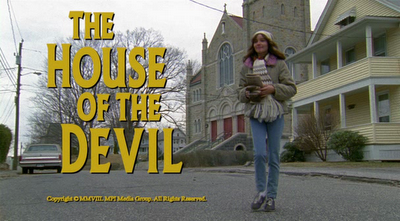
Scenes I Love: House of The Devil


Yesterday, #ScarySocial watched House of the Devil, one of my favorite horror flicks.  Here’s my favorite scene from that film!

I love this scene because I usually do the exact same thing whenever I have the house to myself.

8 Shots From 8 Films: Special Robert Evans Edition


4 Or More Shots From 4 Or More Films is just what it says it is, 4 shots from 4 of our favorite films. As opposed to the reviews and recaps that we usually post, 4 Shots From 4 Films lets the visuals do the talking!

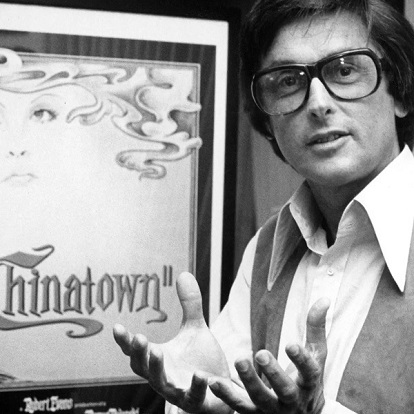
95 years ago today, Robert Evans was born in New York City.  He started out working in his brother’s clothing business but a chance meeting with actress Norma Shearer led to him becoming an actor.  And while Evans, by his own account, was not a particularly good actor, he did prove himself to be very skilled at playing the games of Hollywood.  Evans eventually moved from acting to production, first as an executive at Paramount and then as an independent producer.

He lived a life as glamorous and tumultuous as the stars of his pictures and his memoir, The Kid Stays In The Picture, is considered to be one of the classic show biz autobiographies.  He hung out with cinematic rebels like Jack Nicholson and Robert Towne and counted Secretary of State Henry Kissinger as a friend.  He suggested that Francis Ford Coppola should direct The Godfather and, when Paramount put pressure on Coppola to cut the film down to two hours, it was Evans who famously announced that a two-hour Godfather was nothing more than a trailer.  He lost Ali MacGraw to Steve McQueen and, again by own account, he lost a lot of potentially productive years to cocaine.  (The Cotton Club scandal is one of the wildest in the history of Hollywood, though it should be noted that Evans himself was never charged with any wrongdoing.)  But, for all that he lost, Evans continues to gain admirers as being the epitome of the producer who was willing to take chances.  For all of his flamboyance, Evans had an eye for good material and the willingness to protect his directors.  In many ways, he was as important to the cinematic revolution of the 70s as the directors that he hired.  When Evans passed away in 2019, it was truly the end of an era.

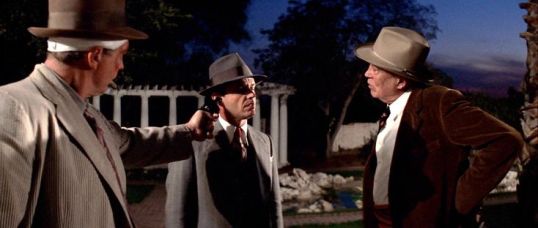
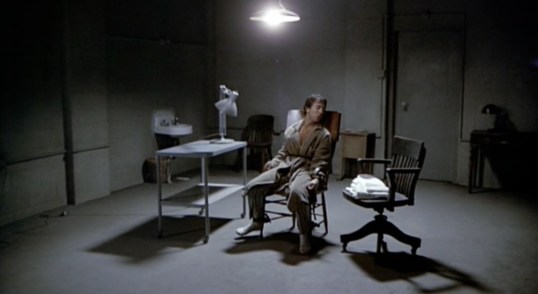
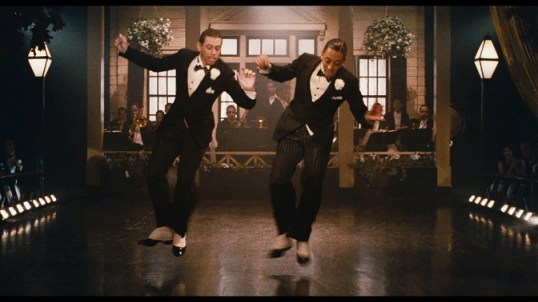
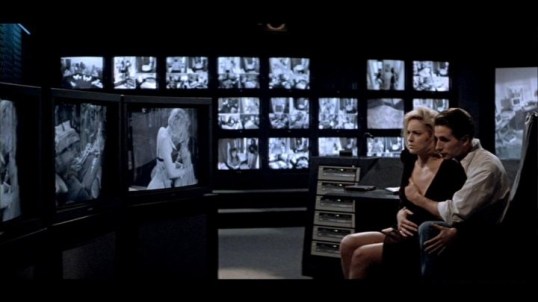
Here, in honor of the birth and legacy of Robert Evans, are 8 Shots from 8 Films that Evans produced, either as studio chief at Paramount or as an independent producer.

8 Shots From 8 Robert Evans Films

Rosemary’s Baby (1968, dir by Romnn Polanski, DP: William A. Fraker)

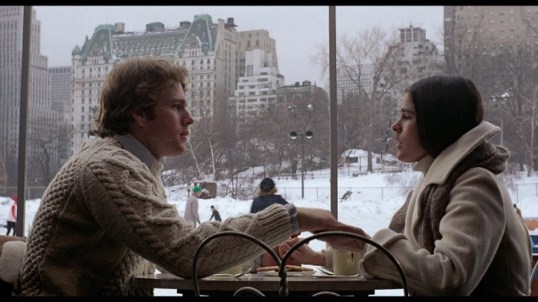
Love Story (1970, dir by Arthur Hiller, DP: Richard Kratina)

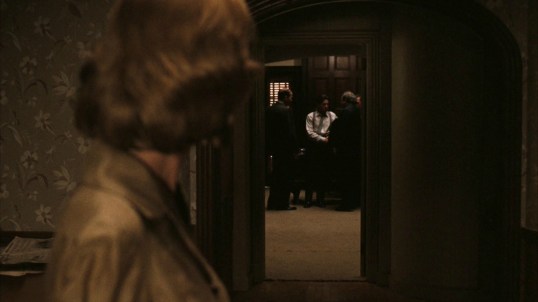
The Godfather (1972, dir by Francis Ford Coppola, Cinematography by Gordon Willis)

Chinatown (1974, dir by Roman Polanski, DP: John A. Alonzo)

Marathon Man (1976, dir by John Schlesinger, DP: Conrad Hall)

The Cotton Club (1984, dir by Francis Ford Coppola, DP: Stephen Goldblatt)

The Two Jakes (1990, dir by Jack Nicholson, DP: Vilmos Zsigmond)

Sliver (1993, dir by Phillip Noyce, DP: Vilmos Zsigmond)

Late Night Retro Television Review: Check It Out! 3.20 “Smotherly Love”


Welcome to Late Night Retro Television Reviews, a feature where we review some of our favorite and least favorite shows of the past!  On Saturdays, I will be reviewing the Canadian sitcom, Check it Out, which ran in syndication from 1985 to 1988.  The entire show is currently streaming on Tubi and Peacock!

This week, Christian’s mother comes to visit.

Episode 3.20 “Smotherly Love”

(Dir by Alan Erlich, originally aired on January 31st, 1988)

Christian’s mother (Marilyn Peppiatt) flies from Florida to Canada so she can visit her favorite son.  It turns out that Christian has been lying to his mother, telling her that he’s the manager of Cobb’s and that Marlene is his fiancée!  Howard and the rest of the staff reluctantly play along with Christian’s lies but when it turns out that his mother is planning on sticking around, Howard tells Christian that he needs to tell her the truth.

(Christian doesn’t tell her the truth but it comes out anyway after she overhears him talking to Howard and Edna about how he doesn’t want to disappoint her.)

Meanwhile, the very pregnant Mrs. Viker (Marcia Bennett) hangs out at the story until her water breaks and it’s time for Viker to rush her to the hospital.  Later, Edna reveals that Viker actually took his wife to the Holiday Inn.

This was a good episode because it focused on two of the most consistently funny characters on the show, Jeff Pustil’s Jack Christian and Gordon Clapp’s Viker.  Pustil is always at his best in those rare scenes where Christian reveals that he has a conscience while Gordon Clapp’s portrayal of Viker’s sincere stupidity has always been one of the best things about the show.  Viker’s joy over being a father mixed with Christian’s relief upon learning that his mom didn’t hate him made this a surprisingly heartfelt and sweet episode.

As for Christian telling his mom that he and Marlene are engaged, Jeff Pustil and Kathleen Laskey actually did get married after the show ended.  Personally, I’ve always found them to be a cute couple whenever they interacted with each other on the show, even if their characters were supposed to be mortal enemies.

Two more episodes to go!

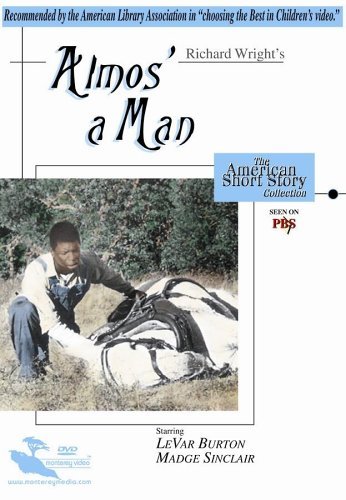
Retro Television Review: The American Short Story #4 “Almos’ A Man”


Welcome to Retro Television Reviews, a feature where we review some of our favorite and least favorite shows of the past!  On Saturdays, I will be reviewing The American Short Story, which ran semi-regularly on PBS in 1974 to 1981.  The entire show can be purchased on Prime and found on YouTube and Tubi.

This week, we have an adaptation of a Richard Wright short story.

Episode #4 “Almos’ A Man”

(Dir by Stan Lathan, originally aired in 1976)

David (LeVar Burton) is a black fifteen year-old living in the Deep South in the 1930s.  He works on his family’s farm and takes care of a mule named Jenny.  He considers himself to be almost a man.  His mother (Madge Sinclair) and his father (Robert DoQui) disagree.

David knows the one thing that he need to make himself a man.  He needs a gun and, this being the 1930s, he finds one that he can order from a Sears & Roebuck catalogue.  His mother says that there’s no way she’s letting him get a gun.  His father is a bit more open to it.  David secretly sends away for the gun and, as you can probably guess, tragedy ensues.

This was a downbeat adaptation of a similarly downbeat Richard Wright short story.  David obsession with being a man makes sense when you consider that he lives in a world where everyone — from his parents to the menacing white people who show up towards end — calls him a “boy.”  The white people even call his father “boy” and it’s a reminder of how that term was used to dehumanize and degrade black men, even someone like David’s father who has raised a family, takes care of his farm, and who is, in every way imaginable, a man.

Nicely done, this one, with good performance from Burton, Sinclair, and Doqui.  As for Richard Wright, he had been dead for 16 years by the time this premiered.  He died in Paris, having left the United States in 1946.  He’s remembered for his novel Native Son and his memoir, Black Boy.  Personally, I would add that he should also be remembered for his essay that appeared in the anti-Communist collection, The God That Failed.  This adaptation of AlmosA Man does a good job paying tribute to Wright’s voice and legacy.