When Dario Argento’s Dracula 3D premiered at last year’s Cannes Film Festival, the reviews were almost universally negative.
But you know what?
I don’t care.
When it comes to a film like this, the critics don’t matter. Does anyone seriously think that any mainstream critic is going to give a film directed by Dario Argento a chance? No way. Film snobs hate Argento but even Argento’s worst films are usually more entertaining than anything Michael Bay has ever come up with.
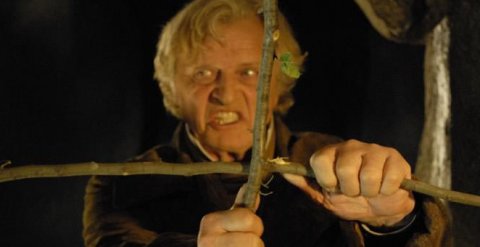
What’s important is that Dracula 3D is a vampire film that’s coming out in October and, judging from the trailer, it appears that it will feature Rutger Hauer going overboard in that wonderful way that only Rutger Hauer can.
Dracula 3D will be in American theaters on October 4th. See you there!
On the Road may get all the attention but Big Sur, in my opinion, is the best book that Jack Kerouac ever wrote. Telling the story of Kerouac’s attempt to deal with both sudden fame and his growing alcoholism, Big Sur is a meditation on existence that somehow manages to make even the contemplation of self-destruction seem life-affirming.
As for the upcoming film version of Big Sur, I can’t say that I’m hopeful. As last year’s film adaptation of On The Road demonstrated, Kerouac’s books have rarely gotten the film treatments that they deserve.
However, judging from the trailer below, the film adaptation of Big Sur does get at least one thing right.
Jean-Marc Barr appears to be perfectly cast as Jack.
This year, we can look forward to two royalty-based films being released just in time to get some Oscar attention.
Unfortunately, neither one of them is about my favorite royal in-law, Pippa “It’s My Sister’s Wedding And I’ll Wear White If I Want To” Middleton.
Instead, Diana will star Naomi Watts as Diana, the late Princess of Wales and has already managed to inspire some amazingly negative reviews in the UK.
Meanwhile, Grace of Monaco, will star Nicole Kidman as the legendary Grace Kelly. Judging from the trailer below, Grace of Monaco looks like it could at least be trashy fun. If nothing else, I’m looking forward to seeing it for the costumes and the decor.
Last night, my BFF Evelyn and I watched yet another old episode of California Dreams.
Why Were We Watching It?
As I’ve explained before, my sister Megan got me hooked on this silly old show called California Dreams last Christmas. For whatever reason, I continue to find myself oddly intrigued by this mediocre 90s sitcom. While I was on my vacation last week, it occurred to me that it had been a while since I last shared and reviewed an episode of California Dreams on this site so I resolved that, as soon as I got back, one of the first things I would do would be to remedy that situation.
As for how Ms. Evelyn ended up watching it with me — well, Evelyn’s a very good friend.
What Was It About?
It’s time for another wacky class assignment! Since the members of the California Dreams all have the exact same class schedule, that means that they all get the same assignment: to research their family trees.
All the Dreams discover that they come from distinguished backgrounds, except for Tony who opens up one book to one random page and, after spending less than a minute reading, announces: “My ancestors were slaves!”
So, Tony claims to be descended from royalty and, because everyone at Pacific Coast High School is an idiot, they’re soon carrying him around on their shoulders and talking about setting up a royal harem.
Things are looking pretty good for Tony but then, as often happens on this show, a ghost visits him during the night and sets him straight.
What Worked?
I’ll be the first to admit that I’m usually pretty lenient when it comes to judging old episodes of California Dreams. After all, it was made back in the 90s and, especially when compared to something like Saved By The Bell: The New Class, the members of the cast did the best that they could with the material they were given.
But seriously, of all the episodes that I’ve viewed on YouTube so far, Family Trees is without a doubt the worst. Good intentions aside, absolutely nothing worked in this episode.
Strangely enough, however, the fact that it is so truly bad makes this episode oddly fascinating. The fact that nothing works is what makes this episode watchable.
What Did Not Work?
Where to begin?
Okay, first off — I understand that this show was probably written with the best of intentions but are we to seriously believe that, before getting this particular class assignment, Tony apparently had no idea about the history of slavery in the United States?
Secondly, who could have guessed that all you had to do to research your family history was check out a book from the library and then open it up to a random page?
Third, Tony getting visited by the ghost of an ancestor reminded me of the fact that, just a few episodes later, Sam would be visited by the ghost of an ancestor! One gets the idea that the show’s writers were perhaps running out of ideas.
Fourth, what is the deal with the lack of classrooms at the high school? I swear, every class that they take seems to be located in that same tiny classroom.
Fifth, the Dreams did not perform during this episode. Couldn’t they have written a special “Be Yourself” song in order to make Tony feel better about himself? It seems selfish not to.
However, this episode’s biggest problem was pointed out by Evelyn when she said, “Why is everyone at that school so easily impressed?” And, seriously, she is so totally right.
Let’s say that one day, Arleigh informed me that he was descended from royalty. Would that cause me to treat him any differently? Well, of course, it would! I mean, who isn’t impressed by royalty? (Myself, I consider Pippa Middleton to be my royal role model.) However, eventually, I would stop calling him “your highness” and begging him to say stuff like, “I declare him to be an outlawwwwwwwwwww!” and things would get back to normal here at the Shattered Lens. However, the students at PCHS are so impressed by Tony’s claim to be descended from a king that they immediately form some sort of odd cult of personality.
And why, if they’re so impressed by Tony’s claim to royal lineage, are they not impressed by the fact that Lorena is legitimately descended from power?
Seriously, that school sucks.
“OMG! Just like me!” Moments
As usual, I related so much to Lorena that I’m tempted to think that my cousin might be Mario Lopez.
(As far as my family tree is concerned, I am of Irish-Italian-Spanish-German ancestry, with a bit of French mixed in there as well. If I was in that class, they’d have to set aside an entire week for me to give my full report.)
Lessons Learned
Surf dudes with attitude are kinda groovy. Especially when they’re feeling mellow…
Escape From Tomorrow, which got a lot of attention at this year’s Sundance Film Festival, was filmed guerilla-style at Walt Disney World. That’s why a lot of people suspected that the film itself would never get a general release. However, apparently, it is scheduled to be released in both theaters and via VOD on October 11th.
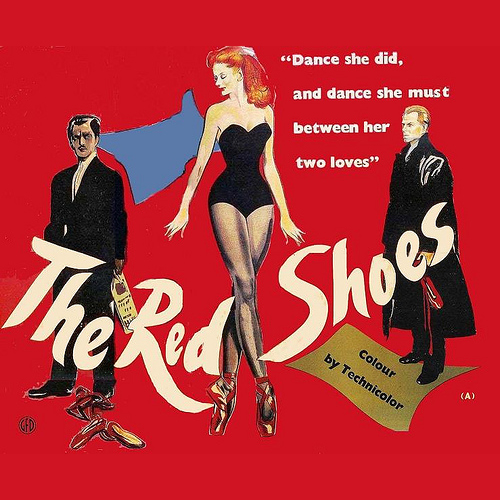
I’ve spent the last two weeks sharing with you some of my favorite cinematic dance scenes. I hope you’ve enjoyed them. While this particular series of scenes that I love is ending with this last entry, I do hope to share some more in the future. For now, what better way to end this series of dance scenes that I love than with the ballet from the classic 1948 film, The Red Shoes?
A House Is Not A Home, a film directed by Christopher Douglas-Olen Ray and produced by and starring one of my favorite actors, the great Gerald Webb, is having its world premiere tonight at the Burbank International Film Festival!
I have to admit that I’m not a huge Western fan. In fact, I can probably count the number of westerns that I’ve actually enjoyed on one hand. However, at the same time, those westerns that I did enjoy also happen to be some of my favorite films of all time. When done poorly, a western can be nearly unwatchable. When done right, however, nothing beats a good western.
Case in point: 1966’s The Shooting.
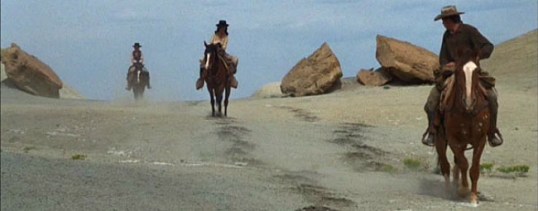
The Shooting tells the story of Willett Gashade (played by Warren Oates), a former bounty hunter who now makes his living a miner. At the start of the film, he returns to his camp after being gone for several days. At the camp, he discovers one man dead, one man missing, and one sole survivor, the good-natured by simple-minded Coley (Will Hutchins). The panicky Coley explains that the camp was attacked by an unseen gunman and says that it was because the missing man had apparently ridden down “a man and a little person” in a nearby town. How any of this relates to the rest of the film is open to interpretation.
For that matter, the entire film is open to interpretation. That’s one reason why I love it.
The next day, an unnamed, black-clad woman (Millie Perkins) appears at the camp. She hires Gashade and Coley to lead her to a town that lies some distance away, on the other side of an inhospitable desert. Gashade is suspicious of the haughty woman but the far more trusting Coley takes a liking to her immediately.
As Gashade and Coley lead the Woman across the desert, there are hints both obvious and subtle that all is not as it seems. The Woman, at one point, demands to be led in the wrong direction. At another point, the woman suddenly shoots and kills her horse. Eventually, the three of them are joined by Billy Spears (played by a young but already sardonic Jack Nicholson), a well-dressed gunman whose sinister smile does little to hide an obvious sadistic streak and who takes a cruel enjoyment out of taunting and bullying Coley. It all leads to a shockingly violent and deliberately enigmatic conclusion that raises more questions than it answers.
As directed by Monte Hellman (one of the best directors of the 60s and 70s), the film is less concerned with conforming to the rigid expectations of the western genre and, instead, uses the genre as a way to explore the American culture of violence. With its cynical dialogue and its stark imagery of a harsh journey through a seemingly endless desert, it’s little surprise that The Shooting is considered to be an existential western.
Fortunately, The Shooting contains a quartet of fine performances that hold the viewer’s interest, even when the story runs the risk of becoming incoherent. Millie Perkins, who made her film debut playing the title role in 1959’s The Diary of Anne Frank, brings an air of genuine menace to the role of the Woman while Will Hutchins provides the movie with a much-needed heart. The main appeal of the film, of course, is to see two iconic actors performing opposite each other and neither Warren Oates nor Jack Nicholson disappoints. Of the two, Nicholson (who co-produced the film with Hellman) has the showier role and he is obviously having a lot of fun playing such an unrepentant villain. Meanwhile, Warren Oates comes across like a hard-boiled film noir hero who has somehow found himself trapped in a western.
Needless to say, with its deliberately obscure storyline and its refusal to provide a traditional conclusion, The Shooting is not a movie for everyone. However, for those willing to take a chance, The Shooting can be a very rewarding film.