Late Night Retro Television Review: Saved By The Bell 1.3 “The Gift”


Welcome to Late Night Retro Television Reviews, a feature where we review some of our favorite and least favorite shows of the past!  On Saturdays, I will be reviewing Saved By The Bell, which ran on NBC from 1989 to 1993.  The entire show is currently streaming on Prime and Tubi!
This week, Zack exploits his best friend.

Episode 1.3 “The Gift”

(Dir by Dennis Erdman, originally aired on September 8th, 1989)

Screech gets stuck by lightning!

Wow, I guess he’s dead now.  Oh wait, this is Saved By The Bell.  People get struck by lightning all the time.  Screech isn’t dead.  Instead, he can now see into the future.  Zack is thrilled that his friend has a power that he can exploit and Screech is thrilled to be exploited.  (That’s actually kind of sad.)  It’s all fun and games when Zack uses Screech’s powers to trick Slater into losing his bomber jacket.  But then, when Zack attempts to use Screech to pass Terrible Testaverde’s history midterm, things fall apart.

Terrible George Testaverde (John Moschitta, Jr.) is supposed to be the most fearsome teacher at Bayside.  Everyone fears his superhard midterms.  From what we see of his class, he actually appears to be a surprisingly easy teacher, albeit one who talks extremely fast.  His midterm questions also don’t seem that tough.  Essentially, Zack and the Bayside crew are freaking out because they’re going to have write an essay on three basic questions about the American Revolution.  What a bunch of wimps.  Seriously, I could pass Testaverde’s midterm with my eyes closed.

Screech loses his powers after Zack accidentally spills a drink on him but still comes up with three questions that Testaverde might ask.  Zack sets up a study date with Kelly, one that is crashed by Jessie, Lisa, and Slater.  Zack assures them that he knows what the three questions will be.  Jessie says, “You would never lie to Kelly, would you, Zack?”

Screech later says that he’s seeing three different questions, which means that it’s time for another wacky plot!  Zack pretends to be Mr. Belding and calls Testaverde and tells him that the school is flooded.  Then, he pretends to be Testaverde and calls Belding and says that he has laryngitis and he needs Belding to administer his midterm.  Neither Belding nor Testaverde apparently notice that the person calling them sounds like he’s 14.

The plan nearly works.  Belding gives the class the three questions that Zack called him with.  But then Testaverde shows up, dress like a plumber.  “My school needs me!” he says.  Testaverde and Belding eventually figure out what happened.  (These aren’t the smarter public educators in the world.)  Testaverde administers the real midterm….

Jessie gets a C and faints.  Slater doesn’t seem to care about his grade, mostly because Slater’s a bad ass.  Zack gets an “F minus, for scamming.”  He also has to be Slater’s slave for a month.  (Slater has Zack order a pizza.  Zack asks for one with the “hottest peppers you can find.”)  Screech passes because he actually studied so Zack makes fun of him and the audiences goes wild….

Watching this episode, I realized that the appeal of Saved By The Bell was how incredibly amoral it was.  There was no right or wrong and there were no consequences.  Zack fails a midterm.  He lies to both a principal and a teacher.  He reacts to Screech getting struck by lightning by taking advantage of him (as opposed to calling an ambulance).  And, other than having to order a pizza for Slater, nothing bad really happens to him.  Most shows would make a big deal about the importance of getting good grades and caring about your friends.  Not Saved By The Bell!  Saved By The Bell takes place in a world where, even when Zack loses, he somehow wins.  I can understand why that would appeal to many viewers.

Next week, Kelly convinces Zack that she’s going to kill him.
Lisa Marie’s Week In Television: 10/26/25 — 11/1/25


This week was all about horror movies but here’s a few thoughts on what little of episodic television that I watched this week.

Abbott Elementary (Wednesday Night, ABC)

Why would they take the kids camping?  This episode made no sense to me.  I’m a little tired of hearing about Gregory’s “goofballs.”

Dragnet (YouTube)

I watched the “Night School” episode and the “Talk Show” episode.  They both made me smile.  I’ve seen them so many times that watching them automatically relaxes me.

Hell’s Kitchen (Thursday Night, F0x)

Will the Blue Team ever get it together?  I assume they will eventually.  The men always seem to start out weak before becoming unbeatable towards the end of the season.  Still, right now, I wouldn’t want any of these people making me anything to eat.

Law & Order (Thursday Night, NBC)

For the second week in a row, Maroun did not appear.  I don’t really have a problem with that, as Maroun was (is?) kind of an annoying character but it’s hard not to notice that now, neither Reid Scott nor Hugh Dancy are working with a partner.  I also noticed this week that Reid Scott, Hugh Dancy, and Tony Goldwyn all look way too similar.  Suddenly, Law & Order is dominated by sickly-looking white guys.

The Dodgers Have Won The World Series!!!!!


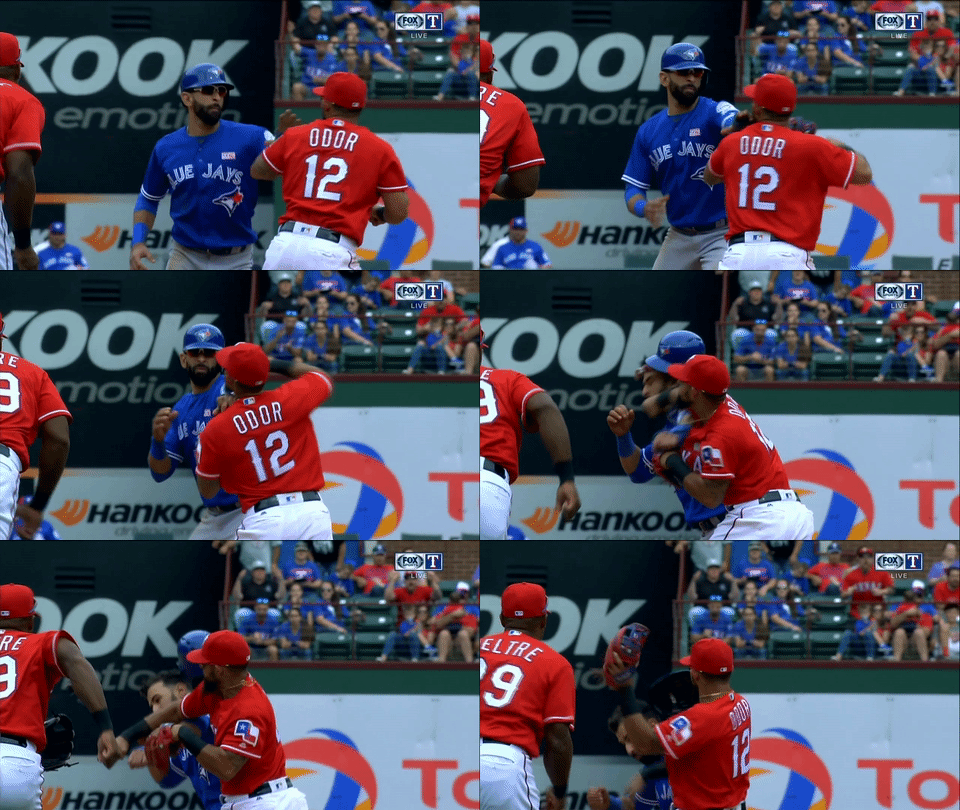
Yes!  It may have taken extra innings!  They may have spent the entire game behind or tied until the 11th inning!  The important thing is that the Dodgers have won the World Series!  Our crops have been saved!  Congratulations to the Dodgers and thank you for defeating the Blue Jays.  That was one of the most exciting World Series that I have ever seen and, in the end, the right team won.

Now, when does Spring Training start?  I’m already looking forward to a new season of cheers, tears, and baseball!

Go Rangers!

Kate Beckinsale Is Very Skilled In The Wildcat Trailer


I was looking for something to post and I saw a still shot of Kate Beckinsale holding a gun and looking like she was about to take down the Russian mafia with a combination of bullets and a sexy accent. That was good enough for me.

Wildcat features Kate Beckinsale as a former spy who returns to her old ways to take down the bad guys. According to the trailer, it comes out in “select theaters” on November 25th. It’ll also be available on digital platforms on the same day, which is always a good sign.

Retro Television Review: Baywatch 1.4 “Message In A Bottle”


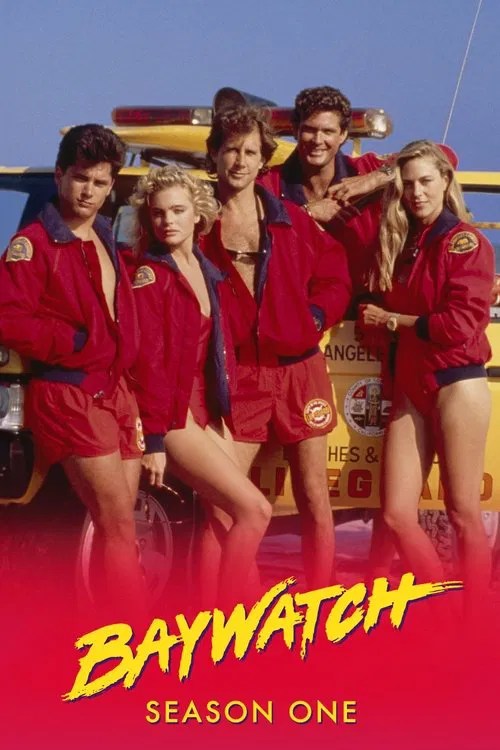
Welcome to Retro Television Reviews, a feature where we review some of our favorite and least favorite shows of the past!  On Saturdays, I will be reviewing Baywatch, which ran on NBC and then in syndication from 1989 to 2001.  The entire show can be viewed on Tubi.

Save me!

Episode 1.4 “Message In A Bottle”

(Dir by Kim Manners, originally aired on October 20th, 1989)

Hobie’s such a dumbass.

For the second time in like four episodes (and that’s not counting the pilot), the entire Baywatch team is mobilized to search for him after he goes missing.  This time, Hobie overhears Mitch and his ex-wife arguing over who should have custody of him so Hobie and two of his stupid little friends head off to an island that’s also being used by a couple of murderous modern-day pirates.

Seriously, Hobie — stuff like this isn’t going to look good when Craig is in court and trying to argue that you should stay in California with your Dad.  So far, Hobie has nearly been killed by a collapsing pier, he’s ended up getting chased by a murderer on a jet ski and, in this episode, he’s menaced by two other murderers.  It’s time to send Hobie to Indiana or some place else where there’s no ocean.

In other news, Shauni accidentally drives over Eddie’s foot so Mitch orders them to work the 24-hour shift together so that they can learn how to work as a team.  Truth be told, Eddie is  a bit of whiny punk and he definitely needs to learn how to work with other people.  That said, I think Mitch is overlo0king the fact that Shauni, a trained lifeguard, drove over someone’s foot.  (Shauni was apparently backing out and didn’t realize Eddie was behind her, which is even worse.)  Mitch finds the whole thing to be amusing and, later, Shauni has a good laugh when she nearly runs over Eddie a second time.  I don’t think any of these people should be anywhere near anyone who needs help.  Sometimes, people really should just stand in the darkness.

This episode was supposed to make me appreciate the efforts of the Baywatch lifeguards to protect the beach and to find missing kids like Hobie.  Instead, it just made everyone look incompetent and irresponsible.  Halfway through this episode, I wanted someone to get attacked by a shark.  It hasn’t happened yet but at least the show has given me something to which to look forward.

Live Tweet Alert: Watch The Howling With #ScarySocial!


As some of our regular readers undoubtedly know, I am involved in a few weekly live tweets on twitter.  I host #FridayNightFlix every Friday, I co-host #ScarySocial on Saturday, and I am one of the five hosts of #MondayActionMovie!  Every week, we get together.  We watch a movie.  We tweet our way through it.

Tonight, for #ScarySocial, I will be hosting a true classic, The Howling!

If you want to join us on Saturday night, just hop onto twitter, start the film at 9 pm et, and use the #ScarySocial hashtag!  The film is available on Prime!  I’ll be there co-hosting and I imagine some other members of the TSL Crew will be there as well.  It’s a friendly group and welcoming of newcomers so don’t be shy!


Anime You Should Be Watching: Akira


“The future is not a straight line. It is filled with many crossroads. There must be a future that we can choose for ourselves.” — Kiyoko

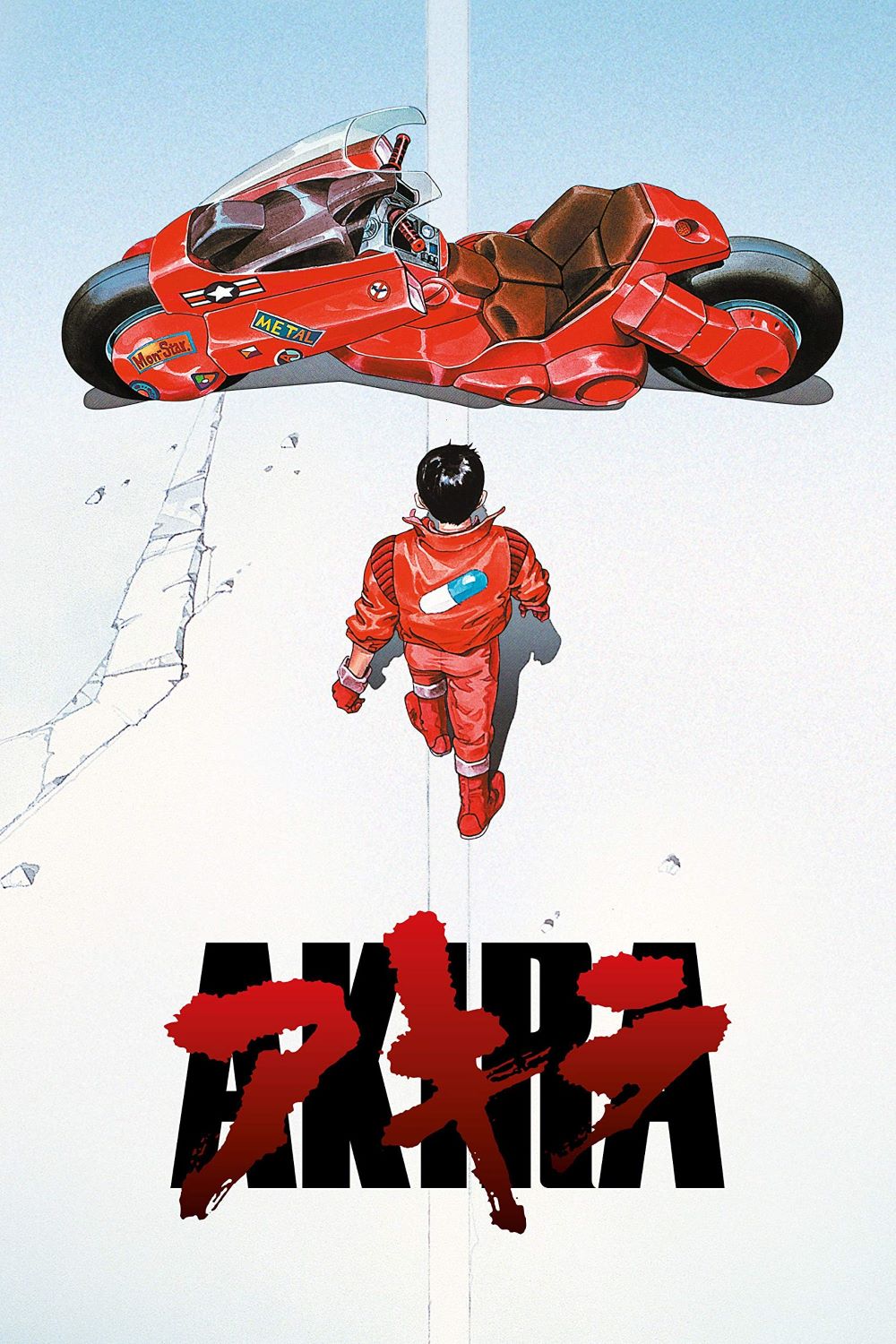
Akira is a landmark anime film that has left an indelible mark on both the medium and popular culture, widely regarded as a masterpiece blending dystopian cyberpunk aesthetics with potent social and political themes. Directed by Katsuhiro Otomo and released in 1988, it is an adaptation of Otomo’s own manga of the same name, adding layers of depth from its source material. The film remains a touchstone for its groundbreaking animation, complex narrative, and deep thematic explorations that resonate decades after its release.

At its surface, Akira tells the story of a post-apocalyptic Neo-Tokyo, a city ravaged by past destruction and on the brink of chaos again due to psychic powers unleashed unexpectedly on its streets. The narrative centers around two childhood friends caught in this upheaval: Kaneda, a rebellious gang leader, and Tetsuo, whose sudden acquisition of devastating psychic abilities leads to uncontrollable transformation and societal breakdown. This conflict draws viewers into a gripping tale of friendship, power, and loss.

Beneath the action-packed plot lies a rich tapestry of themes. One of the most striking is the exploration of loss of humanity through power. Tetsuo’s descent into madness as his psychic abilities spiral beyond his control serves as a visceral metaphor for how absolute power corrupts and alienates. The transformation he undergoes, from a troubled youth into a monstrous entity, dramatizes the fear of losing oneself when faced with forces that cannot be tamed. Meanwhile, the other characters and factions, including the military and resistance groups, depict varying responses to such disruptive power, from authoritarian control to emergent heroism among society’s outcasts and delinquents, emphasizing resilience in adversity.

Akira’s setting is crucial to understanding its impact. Unlike other dystopian sci-fi that glamorizes technology, Neo-Tokyo is raw and unpolished—a place of grime, corruption, and social decay. This lack of fetishization makes the depicted world more relatable and unsettling, reflecting post-World War II anxieties in Japan. The narrative draws clear analogies between the trauma of nuclear devastation and the cyclic nature of destruction and rebirth. The film and manga respectively underline how societies can be dehumanized by catastrophe yet still harbor hope for renewal and change.

The adolescent characters also embody a universal coming-of-age struggle, where uncertainties of identity, power, and responsibility mirror Japan’s own postwar societal shifts. Tetsuo’s monstrous growth and Kaneda’s protective yet rebellious nature capture the complex emotions of fear, resentment, and desire for control, making the story as much about internal battles as external ones. This allegorical layer brings timeless relevance, inviting viewers to reflect on personal and collective growth in times of turmoil.

From a technical and artistic standpoint, Akira set new standards for animation. The film’s fluid motion, attention to detail, and atmospheric world-building were revolutionary for the time and still hold up remarkably well. Otomo’s insistence on lip-syncing dialogue and meticulous frames elevated the cinematic experience far beyond typical anime productions of the 1980s. Its high-budget production values and painstaking artistry make every scene visually immersive, from frenetic gang fights to apocalyptic psychic battles.

One of the film’s most iconic and influential moments is the “Akira slide”—the flawless and stylish maneuver where Kaneda slides his motorcycle to a perfect stop amidst a high-speed chase. This scene has become emblematic not only of Akira’s kinetic energy and visual prowess but also of the potential for animation to convey dynamic motion with a sense of weight, style, and personality. The technique has been endlessly referenced and homaged in both anime and live-action works worldwide, shaping how filmmakers portray fast-paced chase and action scenes. Its balance of fluid animation, camera angles, and character flair set a new benchmark for kinetic storytelling, inspiring generations of animators and directors to capture similar moments of cool, precise motion.

Moreover, Akira’s soundtrack and sound design contribute significantly to its gritty and intense atmosphere, reinforcing the emotional beats and tension throughout the film. The score blends pulsating electronic music with haunting melodies, capturing the film’s blend of futuristic dread and human vulnerability.

Critically, Akira is celebrated not just for its technical achievements but also for its complex storytelling and thematic depth. It does not offer neat resolutions or clear heroes; instead, it portrays a morally ambiguous world where power is both destructive and transformative. The lack of easy answers enhances its emotional and intellectual resonance, making it a powerful narrative of destruction, evolution, and hope.

Akira stands among the most influential works in animation and film, a piece that’s carved its place indelibly in cultural history. Its influence isn’t just in the stunning visuals or the groundbreaking animation techniques; it’s also in how it expanded the horizons of what anime could achieve on a global scale. Otomo’s dystopian vision challenged viewers to confront uncomfortable truths about power, chaos, and societal resilience. Years after its debut, the film continues to inspire and provoke new generations of creators—each eager to capture some fragment of its raw energy and layered storytelling. Akira’s legacy is not just that of a cinematic masterpiece but as a catalyst that reshaped the possibilities for animated storytelling, making it a timeless beacon for artists and audiences alike.

4 Shots From 4 Films: Special 1966 Edition


4 Shots From 4 Films is just what it says it is, 4 shots from 4 of our favorite films. As opposed to the reviews and recaps that we usually post, 4 Shots From 4 Films lets the visuals do the talking!

Today, let us take a look back at a classic cinematic year.  It’s time for….

4 Shots From 4 1966 Films

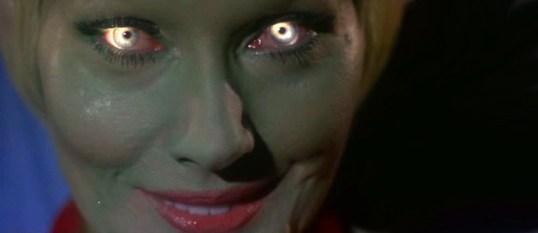
Queen of Blood (1966, dir by Curtis Harrington, DP: Vilis Lapenieks)

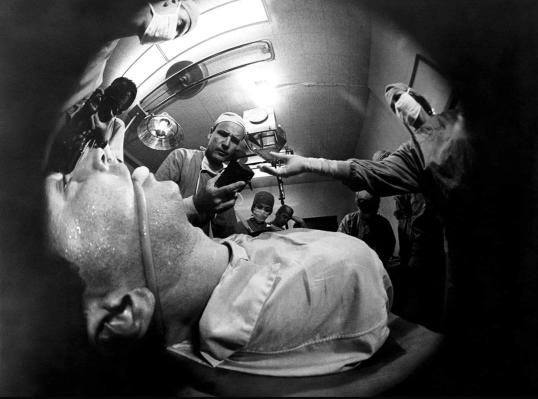
Seconds (1966, dir by John Frankenheimer, DP: James Wong Howe)

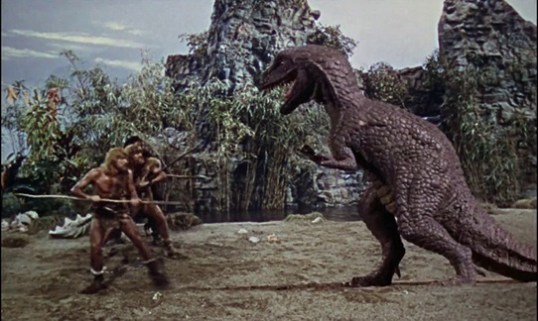
One Million Years B.C. (1966, dir by Don Chaffey, DP: Wilkie Cooper)

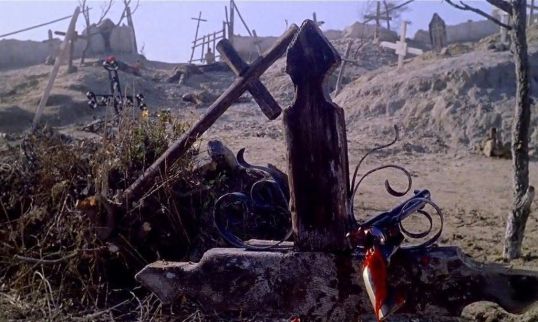
Django (1966, dir by Sergio Corbucci, DP: Enzo Barboni)