As some of our regular readers undoubtedly know, I am involved in a few weekly watch parties. On Twitter, I host #FridayNightFlix every Friday and I co-host #ScarySocial on Saturday. On Mastodon, I am one of the five hosts of #MondayActionMovie! Every week, we get together. We watch a movie. We tweet our way through it.
Tonight, at 10 pm et, I will be hosting #FridayNightFlix! The movie? The Craft!
If you want to join us this Friday, just hop onto twitter, find The Craft on Prime, start the movie at 10 pm et, and use the #FridayNightFlix hashtag! I’ll be there happily tweeting. It’s a friendly group and welcoming of newcomers so don’t be shy.
In 1965’s The Ghost In The Invisible Bikini, the recently deceased Hiram Stokely (Boris Karloff) is informed that he has just 24 hours to perform a good deed and get into Heaven. He also has 24 hours to keep Basil Rathbone from stealing his estate. Hiram teams up with the ghost of his his dead girlfriend (Susan Hart) and together, they help Hiram’s real heir throw a pool party!
I know, I know. That makes no sense. Go with it, it’s the 60s and it’s a party. The film is silly even by the standards of the typical beach party film but it features Boris Karloff and Basil Rathbone somehow managing to maintain their dignity and Nancy Sinatra singing a song. (Dean Martin’s daughter, Claudia, also makes an appearance.) Even more importantly, this is a film that epitomizes an era. Released in 1965, this was the last AIP beach party movie and it’s a product of the innocent, fun-loving early 60s that would soon be replaced by the violent turmoil of the late 60s. Hiram was probably happy that he got out when he could.
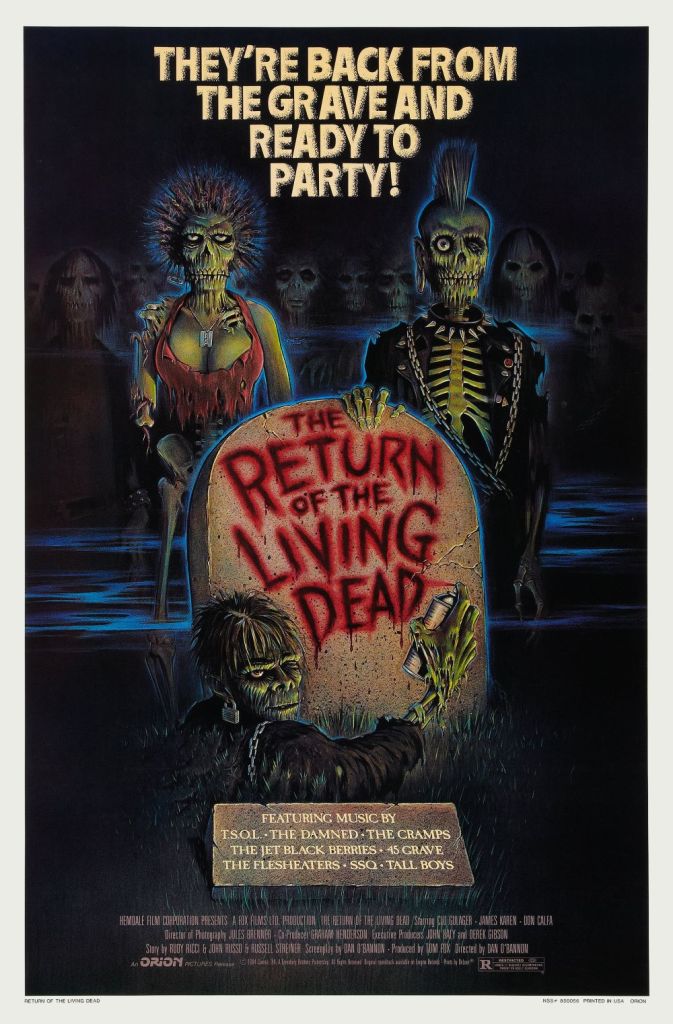
Subverting the Zombie Canon: Satire, Genre-Bending, and Decay in the Return of the Living Dead Series
When talking about cult horror films, the Return of the Living Dead series holds a special place—not only as a spin-off from George A. Romero’s seminal Night of the Living Dead, but as a unique creative force in its own right. Thanks to a legal split between Romero and co-writer John Russo over rights to the “Living Dead” name, Russo and director Dan O’Bannon got to imagine a parallel zombie universe. This franchise quickly carved out its own identity, mixing horror, black comedy, and punk spirit in a way that both paid tribute to and upended zombie tropes.
Reinventing Zombie Lore with a Wink
The original Return of the Living Dead (1985) starts with a clever “what if” twist: what if Romero’s Night wasn’t just a movie, but a dramatized cover-up of a real government disaster? This meta idea instantly frames the film as self-referential and playful, setting a tone unlike anything out at the time.
Central to the film’s identity is the invention of 2-4-5 Trioxin, a fictional military chemical designed to clear marijuana crops which instead raises the dead—zombies with surprising new abilities. Unlike the slow, drooling zombies Romero popularized, these ghouls sprint, talk, and set traps. Their hunger is peculiar as well: they crave brains exclusively, as it eases the pain of being undead. And the old rules of zombie combat? Forget shooting them in the head. These zombies resist it, raising the stakes and scare factor.
This refreshing rewrite of zombie rules allowed the movie to be both frightening and fun. The zombies were smart but still monstrous, turning classic horror expectations on their head in a way that invited both laughter and fear—a tricky balance that few horror comedies manage.
Playing with Comedy, Panic, and Punk Rock
One of the greatest strengths of the original film is how it embraces horror-comedy so naturally. It doesn’t shy away from being funny while still delivering tension. James Karen and Thom Mathews excel as the main pair—Karen’s frantic, over-the-top panicked man paired with Mathews’ straight, slowly succumbing counterpart create a perfect comedic rhythm. Their slow transformation into zombies adds a tragic dimension to what could have been simple slapstick. Meanwhile, Don Calfa’s mortician character and Clu Gulager’s warehouse owner provide a grounded center amidst chaos.
The punk subculture flavor adds another unique texture. Linnea Quigley’s famous graveyard striptease encapsulates the 1980s’ blend of irreverence, sexuality, and horror obsession. The scene is shocking, hilarious, and iconic—one of those moments that encapsulates everything this film is about: having fun with taboos while not losing the darker undercurrents of mortality and decay.
Beyond laughs, there’s biting satire here. The film skewers the government and military’s hubris—scientists create a superweapon they can’t control, leading to chaos and destruction. This reflects 1980s American anxieties about bioweapons, government cover-ups, and nuclear fears. Horror and comedy collide to reflect cultural distrust and paranoia.
The Problem of the Sequel: Part II’s Familiar Ground
When Return of the Living Dead Part II came out in 1988, it felt like the franchise was stuck in a loop. With much of the original cast returning in near-identical roles, and lines and situations seemingly recycled, the film circles back to the same story. This self-copying invites a mix of amusement and disappointment: it seems the filmmakers didn’t believe they could improve on the original and decided to replicate it instead.
While it has its moments—good practical effects and a rollicking tone reminiscent of the first film—it leans harder into comedy, sometimes at the expense of the horror. The suburban setting and clearer military lockdown raise the action stakes, but the humor feels broader and less sharp, which can make the movie seem a bit cartoonish.
In a way, Part II comments on the pitfalls of horror franchises: once you’ve struck gold with an unexpected idea, sequels often struggle to regain that freshness. This installment is entertaining, but signals the beginning of the franchise’s creative plateau.
Much Darker Territory: Part III’s Horror and Romance
With Return of the Living Dead 3 in 1993, things take a major tonal shift. Brian Yuzna’s direction removes much of the comedy and replaces it with body horror, gore, and a genuinely tragic romance. The story centers on Curt and Julie, two teenagers tragically pulled into the military’s secret zombie experiments. After Julie is accidentally killed and resurrected, she becomes a zombie who feeds on brains but manages her hunger through extreme self-inflicted pain.
This grim take pushes the franchise into more serious, intense horror territory, with heavy themes of love, loss, and bodily autonomy threaded throughout. Julie’s tortured transformation is both tragic and unsettling, symbolizing not only the loss of life but also the torment of trying to hold onto humanity while losing it from within.
Yuzna’s effects are grisly in the finest tradition of ‘90s practical SFX. The film revives the franchise’s sense of danger and stakes by mixing romance with horror, delivering something emotionally resonant and viscerally impactful. While it diverges sharply from the earlier comedic tone, Part III proves the series’ flexibility and capacity for reinvention.
Creative Collapse: Parts IV and V’s Direct-to-Cable Downfall
Sadly, the wheels come off with Return of the Living Dead 4: Necropolis and 5: Rave to the Grave, both made in 2005 and directed by Ellory Elkayem. Shot back-to-back and released direct-to-cable, these films are pale shadows of the earlier entries.
They ditch the original’s clever mix of horror and humor entirely. Instead, we get generic corporate conspiracies, confusing Eastern European settings, weak scripts, and inconsistent zombie characterizations. The zombies lose their unique “brains only” horror and instead act like run-of-the-mill undead. Even the acting is amateurish, with only Peter Coyote standing out briefly as a sinister scientist.
Part 5 further muddies continuity by introducing Trioxin as a rave drug, leading to a chaotic rave/zombie apocalypse scenario that is both baffling and poorly paced. The low-budget effects and uneven pacing betray the exhaustion and lack of passion behind these entries.
These final two films underscore a common fate for franchises that outlive their creative spark—once inventive mythology becomes shallow cliché, and attempts to cash in feel uninspired. Instead of honoring their roots, they become muddled and forgettable.
Why the Series Matters
Despite its uneven legacy, Return of the Living Dead remains important for what it dared to do in horror cinema. The first film’s originality influenced countless horror comedies and redefined how zombies could be portrayed. Its self-awareness and invention paved the way for postmodern horror, where genre is as much about commentary as it is fear.
The third film’s daring shift to tragic body horror further demonstrated the potential for zombie films to explore complex emotional and societal themes beyond gore or giggles.
While the later sequels falter, their failure serves as a cautionary tale about the dangers of diluting distinct voices and creative risks in franchise filmmaking.
Ultimately, Return of the Living Dead survives in cultural memory as a zombie series that captured the spirit of its time—punk rebellion, Cold War paranoia, and genre self-mockery—with flashes of brilliance that continue to entertain and inspire.
Welcome to Horrorthon! Here’s 20 films to help get you into that October mood!
The Dreams of Jean Rollin
I have been a fan of the French director Jean Rollin ever since I first watched Night of the Hunted on one rainy night. His dream-like film were often both frightening and, in their way, rather touching. At heart, Rollin was a poet and a romantic, along with being a cinematic rebel. This October is the perfect time to get caught up on Rollin.
The Nude Vampire (1970)opens at night, with a woman wearing an orange nightgown being chased down a street by three men wearing bird-like masks. The woman runs into a man named Pierre. Pierre watches as the woman is shot in the back and then carried into what appears to be a secret club. Pierre follows and soon finds himself in the middle of a surreal world featuring cults, vampires, and one of Rollin’s trademark trips to the beach. This was Rollin’s second film. It’s surreal trip into an undergouns world and it owes more than a little to the serials that Rollin enjoyed as a young man. The Nude Vampire can be viewed on Shudder.
The Shiver of the Vampires (1971)is Rollin’s tribute to the old Universal haunted house films. A newlywed couple visits a castle that was owned by the wife’s cousins. Upon arriving, they are told that the cousins are dead and the house is now occupied by two mysterious young women. Over the course of the night, the couple discovers that the castle is also home to vampire named Isolde. This atmospheric film is best-remembered the scene with Isolde emerges from a grandfather clock. It was an image that Rollin liked so much that he reused it in several later films. Shiver of the Vampires can be viewed on Tubi.
Requiem for a Vampire (1971)tells the story of two young girls who, having committed some sort of crime while wearing clown makeup, wander through the French countryside until they come across a castle that is occupied by a sickly vampire and his servants. Atmospheric, dream-like, and sexually-charged, Requiem for a Vampire is a mix of horror, crime, and melodrama. “Let’s go to the cemetery!” Requiem for a Vampireis available on Shudder.
Lips of Blood (1975) mixes two of Rollin’s favorite themes: vampires and memory. A man sees a picture of a ruined seaside castle and becomes convinced that he’s visited it in the past. His search for castle leads not just to vampires but also a meditation on the act of remembering and how people are always trying to recapture an idealized moment of time. A truly beautiful film, Lips of Blood can be found on Shudder.
The Living Dead Girl (1981) is one of Rollin’s best films. A toxic spill brings a young woman back to life. She has only vague memories of her past life but she also has an insatiable need for blood. When her childhood friend discovers that the woman has come back to life, she tries to keep her fed. It soon becomes clear that, even though the title character would rather be allowed to return to the peace of death, her friend is determined to keep her alive. This film is a bloody, gory, and ultimately very moving examination of love and friendship. How far would you go? The Living Dead Girl can be found on Tubi.
Hacking Away At October
Graduation Day (1981)is one of my favorite of the early 80s slasher, an entertainingly lowbrow film about a killer who is seeking revenge on the high school track and field team. Christopher George is the hard-pushing coach. Michael Pataki is the ineffective principal. Linnea Quigley, who was reportedly cast as the last minute after one of the actresses walked off the set, is the closest thing the film has to a likable character. Vanna White is a high school student. The music is incredible! Felony performs a 10-minute version of Gangsters of Rock. Graduation Day can be viewed on Tubi.
If you enjoyed Christopher George in Graduation Day, you’ll definitely want to follow up with Mortuary (1983), in which he plays the creepy owner of a funeral home. When he’s not embalming, he’s yelling at his socially awkward son (Bill Paxton). Someone is committing murder in the suburbs. Could it have something to do with the weird cult that occasionally meets in the mortuary’s back room? Christopher’s wife, Lynda Day George, plays the widow with a secret. Be sure to yell, “We can see you breathing!” during the later embalming scenes. Mortuary can be viewed on Tubi.
Christopher George and Lynda Day George also appear in Pieces (1982), one of the goriest slasher films ever made. The film’s tag line was “You don’t have to go to Texas for a chainsaw massacre” and this film proves it by setting the action in Boston. This film divides it’s time between genuinely disturbing gore and scenes that are so bizarre and misconceived that you can’t help but wonder if the director was trying to satirize the slasher genre. The random kung fu fight is an obvious example, as is the scene where the killer casually steps into an elevator while carrying his chainsaw. The film’s goriest scene is disturbing up until the moment that Lynda Day George starts screaming, “BASTARD!” at the sky. Pieces can be viewed on Tubi.
Hell Night (1981) may not feature Christopher and Lynda Day George but it does feature Linda Blair, Vincent Van Patten, and the absolutely dreamy Peter Barton as part of a group of fraternity and sorority pledges who spend the night in a supposedly haunted house. Uh-oh — it turns out the house really is haunted! Though the plot features the usual slasher hijinks, Hell Night is a well-acted movie that makes good use of its location and which features a few moments of wit to go along with all the death and horror. It can be viewed on Prime.
Even by the standards of director Jim Wynorski, Sorority House Massacre 2 (1990) is a trashy film. Four sorority girls try to clean up their new house, which basically translates to taking showers, wearing lingerie, and playing with a Ouija board. Their creepy neighbor, Orville, tries to warn them that they’ve moved into the old Hockstader Place but he just keeps getting stabbed for his trouble. The film is pure exploitation but it’s also cheerfully self-aware. It’s so shameless and the story plays out with so much energy that it becomes entertaining in its own very stupid way. Gail Harris and Melissa Moore give surprisingly committed performances. Peter Spellos is the neighbor who wants to help but keeps freaking everyone out. The film’s ending is oddly effective. It can be viewed on YouTube.
Supernatural Creeps
Ulli Lommel’s The Boogeyman (1980)has an intriguing premise. What if a mirror stored the evil that it once reflected? It also has a lot of ominous country atmosphere and a good performance from Lommel’s then partner, Suzanna Love. There’s a disturbing dream sequence that still freaks me out whenever I see it. It’s also an often ludicrous film that doesn’t always make a lot of sense but it’s still the best of Lommel’s American films. John Carradine shows up as a psychiatrist. It can be viewed on Tubi.
Burial Ground: Nights of Terror (1981)is an Italian film about what happens when a bunch of decadent, sex-crazed rich people find themselves trapped in a villa by a bunch of zombie. The zombie effects are surprisingly effective. There’s a lot of gore and also a political subtext of sorts. (The dead peasants rise from the dead and use the tools of their life — like scythes — to attack the rich.) That said, most people remember this film for Peter Bark’s bizarre performance of Michael, who is supposed to be a young teenager and who has a taboo scene with his mother (played by Mariangela Giordano) that seems to come out of nowhere. There’s some debate over whether or not Bark was an actual teenager or an elderly little person. I still have to cover my eyes during the finale. It can be viewed on Tubi.
Zombie 5: Killing Birds (1988) is another Italian zombie film. Ignore the “Five” in the title, this film isn’t an actual sequel to anything. A group of college students head to down to steamy bayous and find themselves besieged by the living dread. Birds may or may not be involved. Robert Vaughn hams it up as a blind man. There’s a genuinely frightening nightmare sequence. It can be viewed on Tubi.
Shock Waves (1977) also features zombies. In this case, they’re living underwater, off the coast of Florida for some reason. Shock Waves is a truly scary film. The zombies are relentless and brutal and the scene where they emerge from the water is a 100 times more frightening than it has any right to be. Brooke Adams plays the tourist who screams a lot. Peter Cushing is a mad scientist. John Carradine is a crusty old boat captain. Shock Waves can be viewed on Tubi.
Count Dracula (1970) stars Christopher Lee in a version of the Dracula story that sticks closer to the original Bram Stoker novel than any of the Hammer films. This version was directed by Jess Franco and features none other than Klaus Kinski as Renfield. Lee’s refined, aristocratic Dracula is quite a contrast to the feral version of the character that he often played for Hammer. Lee always cited this as the only Dracula film that he took pride in. It can be viewed on Tubi.
They’re Coming To Get You
Chopping Mall (1986) features the latest in mall security. Instead of security guards, the mall will now be patrolled by security robots. It’s all good and well until the robots malfunction and start chasing down the hot young employees who foolishly decided to spend the night in their store. Directed by Jim Wynorski and featuring Kelli Maroney, Russell Todd, Gerrit Graham, Barbara Crampton, and Dick Miller, Chopping Mall is a lot of fun. I don’t know if Wynorski has ever topped the exploding head scene. The film can be viewed on Tubi.
Hellmaster (1992) features John Saxon as a crazed and apparently immortal professor-turned-cult-leader who injects his followers with drugs that turn them into mindless zombies. David Emge, who was in Dawn of the Dead, plays the reporter who is haunted by Saxon’s crimes. Saxon is certainly intent on turning people into zombies but the film never really explains why. Still, the film has an intensity to it that I appreciate. John Saxon makes for a strong villain. The film can be viewed on Tubi.
Something Weird (1967) tells the story of Mitch. He gets electrocuted, which leaves him both psychic and disfigured. While his best friend wants to Mitch’s psychic abilities to defeat the communists, Mitch instead accepts a deal with a witch. She takes away his disfigurement and soon, Mitch is a celebrity. However, the witch doesn’t do anything for free. Eventually, Mitch takes LSD to try to strengthen his powers. Director Herschell Gordon Lewis was better-known for his gore films but Something Weird lives up to its title. With its mix of witches, ESP, and LSD, it’s a true horror time capsule. The film can be viewed on Tubi.
Track of the Moon Beast (1976) is a film that is so much a product of the 70s that it deserves to be put in a museum. Come for the story of an innocent man transformed into a monster by a moon rock and stay for the lengthy performance of California Lady. Watch the film on YouTube!
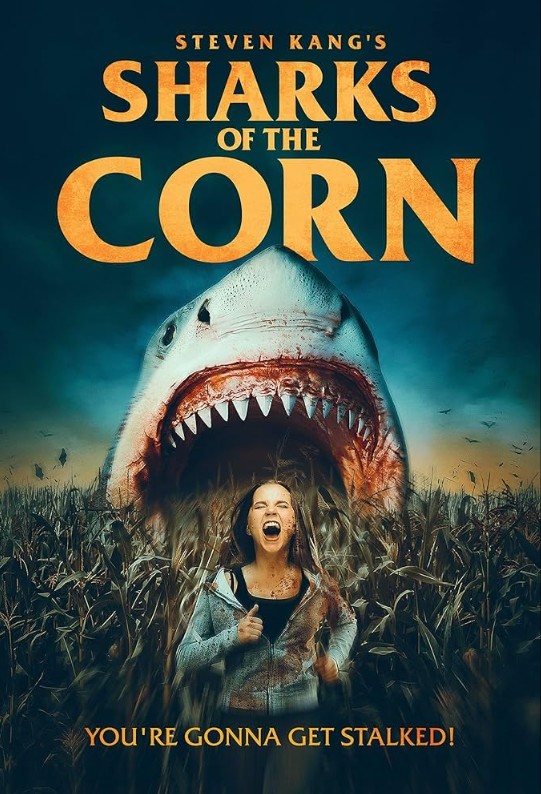
“Steven Kang’s Sharks of the Corn” is a Tim Ritter film. I watched this movie with Lisa and she said it was “Something.” I agree. It is hard to describe SOTC because it’s unclear what it was about because I don’t believe that Tim knew. The movie was NOT about sharks in the corn because most of the film took place in cars, living rooms, backyards, and a helicopter- Yes, a helicopter.
This film also forces us to discuss an uncomfortable topic – Generation X nudity. There is A LOT of Generation X nudity in this film. The amount of Gen X nudity that is acceptable in 2025 is… carry the one…integrate the function… ZERO! It is ZERO! They take their clothes off so much in this film that you’d think the corn had poison ivy on it! The people in this film have grandchildren. You know how awkward Thanksgiving will be now that nephew Tommy knows what Auntie Carol’s boobies look like?!! Enough already! Your days of cavorting naked in cornfields ended when the Counting Crows disappeared from the charts and kids who look like you called you Grandpa.
Aside from the nudity, the movie failed because it could not embrace its title. The movie should have been 80 minutes, but it had 40 subplots – all boring. If the movie stuck to its title, it would have been fine, but this movie had more detours than downtown Houston. “Sharks of the Corn” is the equivalent if “Snakes on a Plane” spent 80% of its runtime at H&R Block. Getting competent tax preparation is important, but it is not appropriate to film tax preparation, if your film is about sharks in a cornfield. At one point in the film, a mafia family was involved, but they were dressed like the costumes were from Party City and a kid was dressed like the Hamburgler. *Sidenote* I’m kinda hungry. I have no idea what that subplot was about and I don’t care.
The plot was more of a gooey subplot mess, but I think there was a shark god in the corn and I cannot do better than that description. There is a serial killer shark god prophet who converts the often nude Gen X cop to worship the shark god??? Sadly, this is typical of Tim Ritter – he can’t edit. His other films have equally long runtimes and I can’t believe that they needed that much time. NO WAY! Tim, I feel like you are the evil mentor for Alex Magana. I think Alex is a better filmmaker than you are and Alex is AWFUL, but not the worst- not anymore! Why do you rank lower than the man who gave the world the “Smiling Woman” series because his films are at least brief and on topic. I think the “hero” won in the end, but I can’t tell.
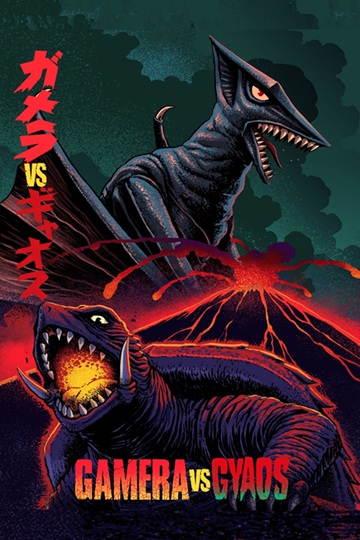
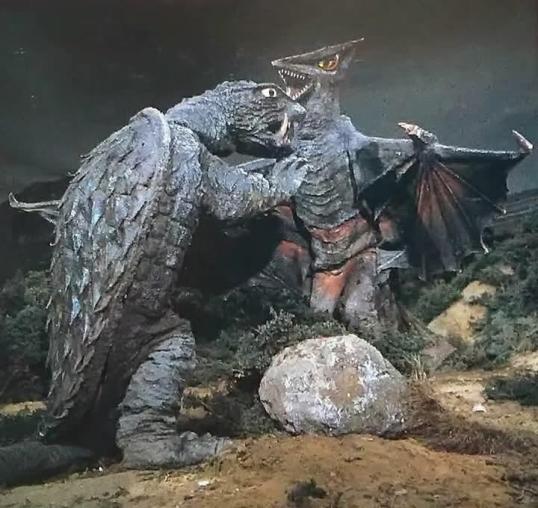
1967’s Gamera vs Gyaos opens with reports of multiple volcanic eruptions in Japan.
One small village, in particular, has been effected. Tensions are already running high in the village because of a road construction project that some of the more traditional villagers oppose. Making things even more dramatic is that the volcano releases Gyaos, a giant bat that can shoot laser beams from its mouth and which has a habit of eating random people.
Fear not, though! Gamera, everyone’s favorite atomic turtle, is also woken up the volcanoes and the earthquakes! As the villagers watch, Gamera battles Gyaos and …. loses big time! Gyaos manages to injure Gamera’s leg so Gamera spins away and lands in the ocean so that he can heal up. Unfortunately, while Gamera is busy healing, Gyaos is still wrecking havoc.
GameravsGyaos is entertaining as long as it focuses on Gamera and Gyaos. One of the more interesting things about the Gamera films is that even Gamera’s opponents were adorable. On the one hand, Gyaos is a totally destructive killer bat who eats numerous people. On the other hand, Gyaos is actually kind of cute.
And really, Gyaos isn’t trying to be mean. He’s just following his natural instincts. He was hibernating when the volcanic eruptions woke him up. Seeing as how he had been asleep for over a thousand years, it’s understandable that he woke up in a somewhat foul mood. One gets the feeling that if all the tanks and airplanes would stop shooting at him, Gyaos would be more than happy to fly off and find somewhere else to get some rest.
And, then there’s Gamera.
Gamera is a flying turtle who is powered by radioactivity and who, for some reason, has become the defender of humanity. Humanity, it should be noted, never seems to really appreciate everything that Gamera does for them. Gamera is also pretty adorable. Watching Gamera fight Gyaos is like watching two housecats pretend to fight each other. Sure, there’s a lot of yelling, hissing, and eye-poking but, deep-down, you get the feeling that the two of them truly love each other.
This was the third Gamera film. The second Gamera film was considered to be a box office disappointment so, for the third film, the studio insisted that it be kid-friendly. As a result, this film devotes a lot of time to Eiichi (Naoyuki Abe), an annoying little brat who keeps yelling for Gamera to come back and protect his village. Even when Gamera is underwater and trying to heal from his latest battle with Gyaos, he has to deal with little Eiichi yelling, “Hurry up and get better, Gamera!” Like, seriously, kid — SHUT UP! Gamera knows when he’ll be ready to fight again. By the end of the film, even the military is taking advice from Eiichi. No wonder Gamera has to fight all of their battles for them.
Anyway, I enjoyed this movie because of the monsters. Not only were their fight scenes entertaining but the monsters themselves were adorable. That said, Eiichi got on my last nerve. Hopefully, he’ll find a new hero and let Gamera have some peace.
The 1978 film, Attack of the Killer Tomatoes, opens with a title card that would make James Nguyen proud. It informs us that people laughed when they first watched a film called The Birds. Then, years later, a flock of birds went mad and started attacking people. No one is laughing now.
As for the rest of the film, it opens with a housewife being menaced by a giant tomato and then it just keeps rolling on from there. Something is causing normal, everyday tomatoes to go on a rampage and no one can figure out what. The government is powerless. (The government’s competence is best exemplified by a scene where a helicopter crashes. Reportedly, the helicopter crash was not scripted but the film’s director decided to keep the scene anyway.) The president puts Mason Dixon (David Miller) in charge of defeating the tomatoes.
The film is one gag and one song after another. Mason has a group of eccentric people working for him, including a superstar gymnast and a man who is always dragging a parachute behind him. The streets are soon running red with tomato juice while clueless teenagers continue to listen to absolutely terrible song called Puberty Love….
In the past, I’ve struggled to define how a pleasure can be guilty but I think Attack of the Killer Tomatoes is actually one of the rare films that truly can live up to the label. It’s a pleasure because it’s just so silly and cheerfully stupid that it’s hard not to smile at it. It’s guilty because, premise aide, the film itself is never really as funny as you want it to be. Comedy — even when its something as silly as this film — is all about timing and Attack of the Killer Tomatoes never nails the timing of its gags. Instead, it plays out like a stoned daydream, amusing to talk about but a bit boring to actually witness.
That said, the film deserves some sort of award for its title and also for going on to inspire not only a few sequels but also a cartoon series. Producer Stephen Peace went on to have a successful career in California politics. Good for him.
“Careful what you wish for” is a frequent horror theme. We all know that, when the monkey paw curls its finger, we might think it’s a positive thing but the opposite usually turned out to be true. Did you wish for someone in a box? Who wished for someone in a box?
This music video was one of the many Bad Omens videos directed by Orie McGinness, who has also done videos for Warbringer, Dayshell, Afterlife, Gideon, American Sin, and a host of others.




 Through the Shattered Lens