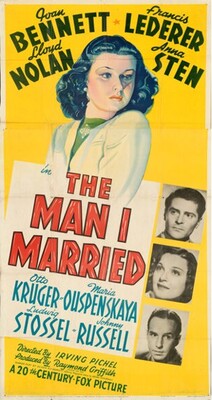
Film Review: The Man I Married (dir by Irving Pichel)


In 1940’s The Man I Married, Joan Bennett stars as Carol Cabbott Hoffman.

Carol is a New York-based art critic.  She is young, sophisticated, wealthy, and politically naive.  Because she has been married to a German for seven years, she has been keeping up with what has been happening in Germany but it’s clear that she doesn’t really understand the full story of what she’s hearing.  As she says, at one point, she has heard bad things about the Nazis but she also tries to keep an open mind and not get drawn in by “propaganda.”

Her husband, Eric Hoffman (Francis Lederer), has not been back to Germany in ten years and he says that he has little interest in ever returning.  But, when he receives a letter from his father (Otto Kruger), Eric announces that he has to return home for a visit.  Before Carol, Eric, and their son, Ricky (Johnny Russell), leave for Germany, they are approached by their friend, Dr. Hugo Gerhardt (Ludwig Stossel).  He explains that his brother has been imprisoned in a concentration camp and he asks Carol and Eric to deliver money to him and to appeal to the American embassy for help.  Carol agrees to do so.  Eric is noticeably reticent.

As soon as they arrive in Germany and Eric learns that his father wants him to take over the family’s factory, Eric starts to change.  He and a former schoolmate named Freida (Anna Sten) are a bit too happy to see each other again.  Eric insists on listening to the nightly radio broadcasts from Dr. Goebbels.  When Freida mentions that it is illegal to joke about Hitler, Eric surprises Carol by defending the law.  With Eric spending all of his time with Freida and dismissing Carol’s understandable suspicions by saying that she’s just being jealous, Carol meets an American correspondent named Keith (Lloyd Nolan) who reveals to her the truth of life in Nazi Germany.  Carol discovers that, rather than being the economically-strong paradise that Eric and Freida claim it to be, Germany is a place where many citizens live in fear of being heard saying the wrong thing and, as a result, they’ve chosen to close their eyes to what is going on around them.

The Man I Married is an interesting film.  It’s an anti-Nazi film that was released at a time when America was still technically a neutral nation.  Indeed, the film almost feels like it was made to prepare Americans for the inevitability of war with Germany.  When Keith mocks Carol for trying to be neutral about the Nazis, it’s clear that he’s meant to be speaking to the audience watching the film.  Eric begins the film as an erudite and seemingly charming man but, as soon as he arrives in Germany and is reunited with Freida, he reveals himself to be a fervent Nazi.  The film warns the audience not to trust those who were trying to excuse or dismiss Germany’s actions.

This is also one of the few films made before World War II that really acknowledged just how central anti-Semitism was to the Nazi ideology, acknowledging the concentration camps at a time when many in the West were refusing to admit they existed, either because they were in denial or because they just didn’t care.  Towards the end of the film, a major character is discovered to have had a Jewish mother and the reaction to the news reveals the hate that was at the heart of the Third Reich.

The Man I Married, with its portrayal of a populace that has convinced itself that their government is never to be questioned and that all dissent must be punished, is a film that feels just as relevant today as it did in 1940.  It’s a film that warns viewers of the risk of disbelieving their own eyes.
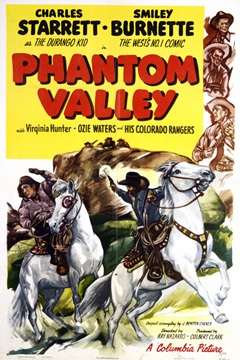
Phantom Valley (1948, directed by Ray Nazarro)


There’s trouble in Phantom Valley.  The ranchers who founded the town are increasingly at odds with the newly arrived homesteaders.  Each side blames the other for the tensions.  Marshal Steve Collins (Charles Starrett) is sent to investigate who is responsible for all of the trouble but, when two people are murdered, it is up Steve’s alter ego, the masked Durango Kid, to investigate and solve the murders.  Helping him out is his ever-loyal sidekick, Smiley Burnette.  Smiley compares himself to Sherlock Holmes, walks around with a magnifying glass, and sings a few songs.

This Durango Kid film opens with a exciting montage of cattle stampedes, shoot-outs, floods, and horse chases.  Even though it’s almost all stock footage that appeared in a countless number of other B-movies, it’s still exciting to watch.  Despite the opening montage, there’s still less stock footage than usual in Phantom Valley.  The emphasis is instead on the Durango Kid as a detective, trying to solve a stone-cold whodunit.  It makes for an interesting change of pace and the Durango Kid gets to show off his intelligence along with his shooting and horse riding skills.  Charles Starrett is convincing as a detective.  Even if he is trying to solve the case a century before finger printing, The Durango Kid knows that hand-writing is just as easy a way to identity a culprit.  Smiley Burnette, as usual, handles the comedic relief and the singing.  I could have done without the songs but Smiley trying to use a magnifying glass and losing his temporary position as the town’s marshal to a child will always be good for a laugh.

Phantom Valley was a welcome change of pace for the Durango Kid.  Western fans will find much to appreciate.

Retro Television Review: Fantasy Island 4.20 “Delphine/The Unkillable”


Welcome to Retro Television Reviews, a feature where we review some of our favorite and least favorite shows of the past!  On Tuesdays, I will be reviewing the original Fantasy Island, which ran on ABC from 1977 to 1984.  Almost the entire show is currently streaming on Daily Motion.

Smiles, everyone, smiles!

Episode 4.20 “Delphine/The Unkillable”

(Dir by Cliff Bole, Originally aired on April 11th, 1981)

For our first fantasy, Dr. Paul Todd (Randolph Mantooth) is a paleontologist who feels that the first life on Earth was silicon-based and that the missing link lives underneath a volcano on Fantasy Island.  He comes to the Island with his girlfriend, Liz (Annette Funicello) and his assistant, Kyle (Alex Cord).  With Roarke’s weary approval, they head off to the volcano to search for proof of Todd’s theory.

And they do find proof!  After Kyle attempts to sexually assault Liz, she falls through a crevice and finds herself in the lair of …. well, it appears to be someone who is waring a rubber suit but Paul and Kyle are convinced that they’ve found their silicon man!  (Kyle attempting to force himself on Liz is seemingly forgotten.)  The Silicon Man appears to be immortal, which proves to be a bit of problem when it decides to carry of Liz.  But then the Silicon Man falls in a pool of lava and dies so I guess he wasn’t immortal.  At the end of the show, Tattoo suggests that the The Silicon Man was made of lava and that’s why he was vulnerable to it but …. what?

Mr. Roarke doesn’t seem to be that worried about the Silicon Man or the fact that one of the island’s volcanoes is spewing lava.  He’s more concerned with his goddaughter, Delphine (Ann Jillian).

According to Roarke, Delphine is the daughter of one of the Island’s oldest families.  She has spent the last few years off the Island, working as an assistant for a magician named The Great Zachariah (Carl Ballantine).  Delphine’s secret is that she actually does have magical powers!  She’s the one who does all of Zachariah’s tricks for him.  However, Delphine now wants to marry Greg (Don Galloway) and she doesn’t want him to know that she can move stuff with her mind and make people materialize out of thin air.  Her fantasy is to lose her powers.

Zachariah, not happy about the prospect of losing his assistant, comes to the Island and teams up with fortune-telling Madame Cluny (Doris Roberts) to trick Delphine into revealing her powers and driving Greg away.  Myself, I’m not really sure I understand why her magic powers would be a deal-breaker.  I mean, Delphine can literally do anything!  And, as we see in this episode, she only uses her powers for good.  Why would Greg have a problem with that?

On the plus side, Ann Jillian (who starred in another show that I reviewed on this site, Jennifer Slept Here) gives a good performance as Delphine and it’s easy to imagine an alternate version of the show where she played Roarke’s sidekick.  On the negative side, the rest of the show and both of the fantasies are just silly and never make any sense.

This was not a memorable trip to the Island.  Seriously …. silicon?

Scenes That I Love: Jean-Paul Belmondo in Breathless


Today would have been the 91st birthday of international screen icon, Jean-Paul Belmondo.

Belmondo spent the majority of his career in France, where he was one of the early faces of the New Wave and also a prominent action star, famed for doing his own very dangerous stunts.  In America, he was best-known for his starring turn in Jean-Luc Godard’s Breathless.  In Breathless, Belmondo was the perfect existential outlaw, living life day-by-day and obviously doomed but still so incredibly magnetic and stylish.

In tribute to Belmondo, here is a scene that I love, the final moments of Breathless, with Belmondo and Jean Seberg.

4 Shots From 4 Films: Special Ward Bond Edition


4 (or more) Shots From 4 (or more) Films is just what it says it is, 4 (or more) shots from 4 (or more) of our favorite films. As opposed to the reviews and recaps that we usually post, 4 (or more) Shots From 4 (or more) Films lets the visuals do the talking.

121 years ago today, the great American character actor Ward Bond was born in Benkleman, Nebraska.  In a career that last nearly forty years, Ward Bond appeared in more than 200 films and he currently holds the record for being the actor to appear in the most films nominated for Best Picture.  (He appeared in 13 nominated films, two of which won.)  He did 22 films with John Wayne and was a favorite of both John Ford and Frank Capra.

It’s time for….

4 Shots From 4 Ward Bond Films

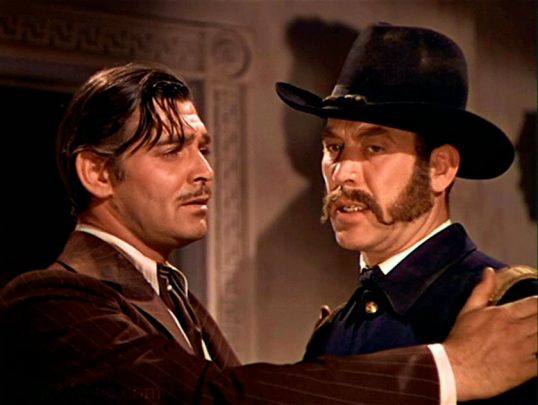
Gone With The Wind (1939, dir by Victor Fleming, DP: Ernest Haller)

It’s A Wonderful Life (1946, dir by Frank Capra, DP: Joseph Walker and Joseph Biroc)

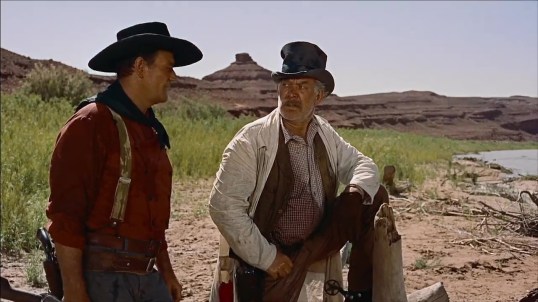
The Searchers (1956, dir by John Ford, DP: Winston C. Hoch)

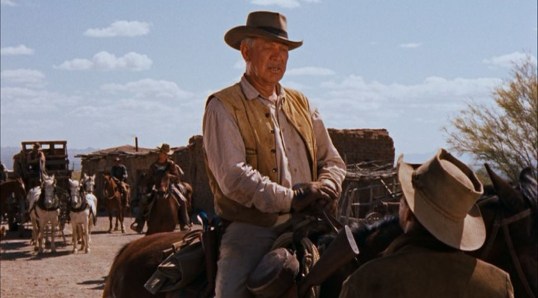
Rio Bravo (1959, dir by Howard Hawks, DP: Russell Harlan)

Music Video of the Day: Here For You by FireHouse (1995, directed by Nigel Dick)


Rest in Peace, C.J. Snare.  The lead singer of FireHouse passed away on April 5th.

FireHouse is interesting in that it was a glam metal band that hit it big right before the start of the Grunge revolution.  While a lot of other glam metal bands, many of which had been around far longer than FireHouse, tried to change their sound to compete with Nirvana and the other Seattle superstars, FireHouse stuck with its glam metal roots.

This video was directed by Nigel Dick, who has done music videos for practically everyone.

Late Night Retro Television Review: CHiPs 1.21 “Crack-Up”


Welcome to Late Night Retro Television Reviews, a feature where we review some of our favorite and least favorite shows of the past!  On Mondays, I will be reviewing CHiPs, which ran on NBC from 1977 to 1983.  The entire show is currently streaming on Freevee!

This week, Ponch rides with Getraer!

Episode 1.21 “Crack-Up”

(Dir by Phil Bondelli, originally aired on March 9th, 1978)

After causing an accident that lands Officer Baker in the hospital, street racer and tow truck drive Niles (Joey Aresco) has a psychotic break and decides that he wants to put as many police officers in the hospital as possible.  He starts driving recklessly in his tow truck, all the better to get the attention of highway patrol officers.  Soon, Officer Grossman has joined Baker in the hospital.

Meanwhile, with his partner laid up, Ponch faces his greatest nightmare.  His temporary partner is none other than Sgt. Getraer!  Getraer tells Ponch that he expects Ponch to do everything by the book.  He expects Ponch to follow orders and observe official procedure.  Ponch, however, is more concerned with saving lives and getting results than following the book.  Ponch is a rebel!

And that’s fine, except for the fact that there’s never been anything about Erik Estrada’s performance that has ever made Ponch seem like he’s actually the rebel who everyone claims he is.  Estrada plays Ponch as someone who is quick to smile and quick to brag on himself and quick to get annoyed if a motorist doesn’t pull over for him.  In short, Estrada has always been convincing when he plays Ponch as being a jackass but far less convincing when it comes to convincing us that Ponch is a cop who deliberately breaks the rules for the greater good.

While Getraer and Ponch get on each other’s nerves, Baker lies in bed and insists that he’s ready to get back on his bike.  Wanda (Phyllis Diller), who is visiting her husband in the hospital, frequently stops by to tell jokes.  When I saw this episode was going to be co-starring Phyllis Diller, I cringed because CHiPs seems like the type of show that would screw something like that up.  But actually, Diller gives a really good performance as Wanda and her scenes were the best in the episode.  She told a lot of jokes but, as she admitted to Baker, she was only joking to distract herself from worrying about her husband.

In the end, things work out.  Baker gets back on his bike.  Getraer and Ponch come to respect each other.  And, eventually, Niles the mad mechanic is captured.  To be honest, it’s kind of weird that it took so long to capture Niles.  After Baker was injured, Niles called the police to say that someone has stolen his car an hour or so before.  He also got another mechanic, Ray (Gary Sandy), to lie and provide him with an alibi.  But then, Niles went driving around in his tow truck and that’s what he was driving when he injured Grossman.  So, really, a smart cop would have said, “Hey, that stolen car belonged to a tow truck driver and now, another office has been injured by someone driving a tow truck!  Maybe we should go talk to that guy again….”

This episode was better than I was expecting, largely due to Phyllis Diller and the comedic interplay between Officers Grossman and Baker.  As always, the California scenery was the real star of the show and the state looked lovely.

Streets of Ghost Town (1950, directed by Ray Nazarro)


Years ago, Bill Donner (George Cheseboro) double-crossed the other members of the Selby Gang and ran off with all of their stolen gold.  Now, Donner is blind and half-crazy.  When he says that he hid the gold in the ghost town of Shadeville, the Durango Kid (Charles Starrett), Smiley Burnette, and Sheriff Dodge (Stanley Andrews) ride off to find it.

Shadeville is long abandoned and, as the three men spend the night in a deserted saloon, Smiley is worried about ghosts.  The Durango Kid tells the story of the first time he met the Selby Gang.  The next morning, they discover that they are not the only ones who have come to Shadeville to look for the gold.

Like many of the later Durango Kid movies, Streets of Ghost Town is mostly made up of stock footage to Starrett’s earlier films.  This was a cost-cutting technique on the part of Columbia Pictures but it actually works because the flashbacks were always to the horse chases and the gunfights that the audience came to see in the first place.  In the days before home video and cable, those scenes were probably still new to many of the people sitting in the theater.

Starrett always made for a good hero and Smiley Burnett’s comic relief never took away from the films’s storylines.  This outing features a great scene where Durango shoots a skull in the dark just to let anyone watching him know that he’s a good shot.  I also enjoyed George Cheseboro’s manic performance as a man who really loves his gold.  Despite all of the stock footage, Streets of Ghost Town is still an above average Durango Kid film, predictable but entertaining if you’re a fan of the genre.

Retro Television Review: Miami Vice 2.9 “Bushido”


Welcome to Retro Television Reviews, a feature where we review some of our favorite and least favorite shows of the past!  On Mondays, I will be reviewing Miami Vice, which ran on NBC from 1984 to 1989.  The entire show can be purchased on Prime!

This week, a man from the past returns to haunt Castillo.

Episode 2.9 “Bushido”

(Dir by Edward James Olmos, originally aired on November 22nd, 1985)

This week’s episode opens with yet another intricately plotted drug bust going awry.  This time, a dealer ends up dead, a DEA Agent ends up knocked out and tied up in a bathroom, and $50,000 goes missing.  Watching the tapes of the bust, Castillo is shocked to spot a familiar face on the scene.  Castillo says that Jack Gretsky (Dean Stockwell) was his partner when he was working for the CIA in Vietnam.  Gretsky has long been thought dead but there he is, on tape and ruining Castillo’s bust.

Realizing that Gretsky was sending him a message, Castillo decides to deal with the situation personally.  After visiting two CIA agents (Jerry Hardin and Tom Bower) who work out of an adult novelty shop, Castillo tracks Gretsky down to a Buddhist temple.  The two of them talk.  Gretsky reveals that he’s married to a Russian woman and that he has a son.  He asks Castillo to watch over them if anything happens to him.  The stoic Castillo agrees and then gives Gretsky a hug.  Castillo says that he has to arrest Gretsky.  Gretsky says he knows and then pulls a machine gun, forcing Castillo to kill him.  The CIA agents are happy to no longer have to deal with Gretsky.

A day later, the coroner’s office calls Vice and says that Gretsky was terminally ill with cancer and probably only had a few days left to live.  When Crockett and Tubbs go to tell Castillo, they find his badge and a note sitting in the office.  Castillo is fulfilling Gretsky’s final wish and protecting his wife (Natasha Schneider) and his son, Marty (Robin Kaputsin).  Castillo sees it as being a part of the samurai code by which he lives his life.  Meanwhile, a rogue CIA agent named Surf (David Rasche, giving a wonderfully unhinged performance) is working with the KGB to track down Gretsky’s family.

Directed by Edward James Olmos, Bushido is a wonderfully odd episode.  With a combination of skewed camera angles and deliberately eccentric performances from Dean Stockwell and David Rasche, this episode plays out with the relentless intensity of a fever dream.  (The opening drug bust even features Zito burying himself in the sand and using a straw to breathe until its time to emerge and knock out one of the bad guys.  It’s weird but it’s great.)  Olmos contrasts Castillo’s trademark stoicism with the more verbose characters played by Stockwell and Rasche and, as a result, Castillo emerges as an honorable man who hides his emotions because he knows that’s the only way to survive in his world.  To fall in love like Jack or to get cocky like Surf can only lead to one’s downfall.

After a few uneven episodes, Bushido is a nice reminder of what Miami Vice was capable of at its best.