Game Review: Rockstar (1989, Wizard Games)


Do you want to be a rockstar despite having no musical talent?

Then get over to the Internet Archive and play Rockstar, which is about as close to being a music superstar as most of us will ever get a chance to be!

In Rockstar, you’re a musician.  You start out as a poor, aspiring star.  You’ve got health, creativity, and happiness but you also don’t have any money.  How can you get money?  You can tour the local pubs.  And once you get the money, maybe you can record a single or even an album.  If that album sells well, you might get a record contract.  With a record contract comes so much money that you never have to worry about it again and that’s a good thing because, if you go bankrupt, you have to get a real job and the game ends.

Unfortunately, once you’ve signed that record deal, you’re pretty much a slave to the record company.  They’re going to want you to tour and record and make videos on a regular basis.  Tour too much and it will have a bad effect on your health.  Record too often and your creativity will dry up.  Work too hard and your happiness will go downhill and there will be a good chance that the game will suddenly tell you that you’ve committed suicide.

Fortunately, there’s a way to recharge your happiness and your creativity!  You can take drugs!  The game gives you the option to decide which drugs you want to take.  You can drink.  You can smoke marijuana.  You can drop acid.  You can do cocaine and heroin.  You can get hooked on speed.  Of course, you can be a rock star without doing drugs but it takes a lot longer and it’s not halfway as fun.  The secret is to find the perfect balance of drugs and to go to rehab whenever you’ve become too addicted.  (Otherwise, there’s a good chance you’ll eventually end up dying of an overdose.)  Unfortunately, going to rehab pretty much zaps away all of your happiness.  Assuming that you survive the rehab experience, you’re only option to cheer yourself up is to start doing drugs again.  Do too many drugs and you’ll overdose.  You might survive the overdose but you’ll have to recover in the hospital, which again sucks away your happiness.  Once you get out of the hospital, you better call your connection and quick.

There’s only two ways that Rockstar can end.  You can either voluntarily retire, which brings your career and your fame to an end.  Or you can eventually die, which brings your life to an end but which also ensures that you’ll be remembered forever.  It probably sounds like a depressing game but it’s not.  Whenever the game told me that my latest single was the number one song in America, Europe, and the UK, it made all of the drug overdoses and mental breakdowns worth it.  You don’t play a game like Rockstar to win.  You play it to see how long you can survive.  The longest I’ve kept one of my rock stars alive was for ten years.  Eventually, he drank himself to death while on holiday but it was still a hell of a ride.

Rockstar can be played at the Internet Archive.

An Offer You Can Take or Leave #13: Hoffa (dir by Danny DeVito)


The 1992 film, Hoffa, opens in 1975, with two men sitting in the backseat of a station wagon.  One of the men is the controversial labor leader, Jimmy Hoffa (Jack Nicholson).  The other is his longtime best friend and second-in-command, Bobby Ciaro (Danny DeVito).  The two men are parked outside of a roadside diner.  They’re waiting for someone who is late.  Jimmy complains about being treated with such disrespect and comments that this would have never happened earlier.  Jimmy asks Bobby if he has his gun.  Bobby reveals that he does.  Jimmy asks him if he’s sure that there’s a loaded gun in the diner, as well.  Bobby goes to check.

Jimmy Hoffa, of course, was a real person.  (Al Pacino just received an Oscar nomination for playing him in The Irishman.)  He was a trucker who became a labor leader and who was eventually elected president of the Teamsters Union.  He was a prominent opponent of the Kennedys and that infamous footage of him being interrogated by Bobby Kennedy at a Senate hearing seems to sneak its way into almost every documentary ever made about organized crime in the 50s.  Hoffa was linked to the Mafia and was eventually sent to prison.  He was freed by the Nixon administration, under the condition that he not have anything to do with Teamster business.  When he disappeared in 1975, he was 62 years old and it was rumored that he was planning on trying to take over his old union.  Everyone from the mob to the CIA has been accused of having had Hoffa killed.

Bobby Ciaro, however, was not a real person.  Apparently, he was a composite character who was created by Hoffa’s screenwriter, David Mamet, as a way for the audience to get to know the enigmatic Jimmy Hoffa.  Bobby is presented as being Hoffa’s best friend and, for the most part, we experience Jimmy Hoffa through his eyes.  We get to know Jimmy as Bobby gets to know him but we still never really feel as if we know the film’s version of Jimmy Hoffa.  He yells a lot and he tells Bobby Kennedy (a snarling Kevin Anderson) to go to Hell and he talks a lot about how everything he’s doing is for the working man but we’re never really sure whether he’s being sincere or if he’s just a demagogue who is mostly interested in increasing his own power.  Bobby Ciaro is certainly loyal to him and since Bobby is played by the film’s director, it’s hard not to feel that the film expects us to share Bobby’s admiration.  But, as a character, Hoffa never really seems to earn anyone’s loyalty.  We’re never sure what’s going on inside of Hoffa’s head.  Jack Nicholson is always entertaining to watch and it’s interesting to see him play a real person as opposed to just another version of his own persona but his performance in Hoffa is almost totally on the surface.  With the exception of a few scenes early in the film, there’s doesn’t seem to be anything going on underneath all of the shouting.

The majority of Hoffa is told via flashback.  Scenes of Hoffa and Bobby in the film’s present are mixed with scenes of Hoffa and Bobby first meeting and taking over the Teamsters.  Sometimes, the structure of the film is a bit cumbersome but there are a few scenes — especially during the film’s first thirty minutes — that achieve a certain visual poetry.  There’s a scene where Hoffa helps to change a man’s flat tire while selling him on the union and the combination of falling snow, the dark city street, and Hoffa talking about the working man makes the scene undeniably effective.  The scenes where Hoffa spars with Bobby Kennedy are also effective, with Nicholson projecting an intriguing blue collar arrogance as he belittles the abrasively ivy league Bobby.  Unfortunately, the rest of the movie doesn’t live up to those scenes.  By the time Hoffa becomes a rich and influential man, you realize that the film isn’t really sure what it wants to say about Jimmy Hoffa.  Does it want to condemn Hoffa for getting seduced by power or does it want to excuse Hoffa’s shady dealings as just being what he had to do to protect the men in his union?  The film truly doesn’t seem to know.

Hoffa is definitely not an offer that you shouldn’t refuse but, at the same time, it’s occasionally effective.  A few of the scenes are visually appealing and the cast is full of character actors like John C. Reilly, J.T. Walsh, Frank Whaley, and Nicholas Pryor.  It’s not a disaster like The Gang Who Couldn’t Shoot Straight.  Hoffa is an offer that you can take or leave.

Previous Offers You Can’t (or Can) Refuse:

  1. The Public Enemy
  2. Scarface
  3. The Purple Gang
  4. The Gang That Could’t Shoot Straight
  5. The Happening
  6. King of the Roaring Twenties: The Story of Arnold Rothstein 
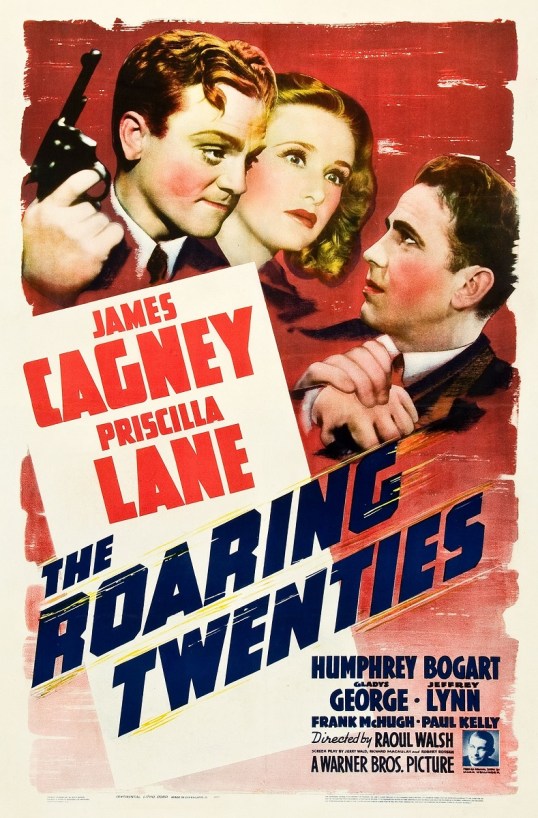
  7. The Roaring Twenties
  8. Force of Evil
  9. Rob the Mob
  10. Gambling House
  11. Race Street
  12. Racket Girls

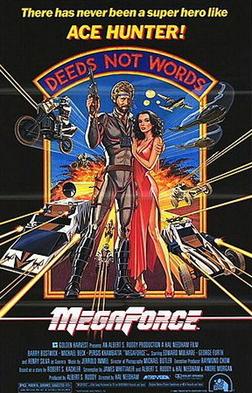
Megaforce (1982, directed by Hal Needham)


Megaforce is the code name for America’s daring, highly-trained, Special Mission force. Its purpose: To defend human freedom against Cobra, a ruthless terrorist organization determined to rule the world.

Oh wait, that’s G.I, Joe!

Megaforce is another daring, highly-trained, Special Mission force.  Led by Ace Hunter (Barry Bostwick), Megaforce is a group of international soldiers who have the latest technology at their disposal, like dune buggies and lasers and all of the cars the were left over from Cannonball Run.  They also have flying motorcycles that can shoot missiles and we can all agree that’s pretty damn cool.  When Megaforce is recruited to protect the Republic of Sardun from being conquered by the nation of Gamibia, it brings Ace and his men into conflict with Duke Gurerra (Henry Silva), who used to be a friend of Ace’s until he became a mercenary who would work for the highest bidder.  Duke’s latest employer?  GAMIBIA!

Megaforce is a strange movie.  Director Hal Needham later said that, when the film went into production, he felt he had his finger on the pulse of the country and apparently he thought America was ready for a movie about a group of men who wear skin-tight uniforms and who communicate almost exclusively by giving each other a thumbs up.  What led to Needham choosing to cast Barry Bostwick in the lead role?  Bostwick is very enthusiastic as Ace but he’s not a believable military leader.  We expect discipline and stoicism from our military leaders but Bostwick always seems to be a little too excited about everything.  “Remember,” he says, “the good guys always win!  Even in the 80s!”  Then he kisses his thumb, which is his way of letting the newest member of Megaforce, Zara (Persis Khambatta), know that she is loved.  I don’t know of many military leaders who were known for kissing their thumbs.  Patton probably could have gotten away with it.  Eisenhower, however, never would have been elected President if he had been half as enthusiastic as Ace Hunter.

There’s not really any plot to Megaforce.  Zara tries out for the group but she’s a woman so she has to prove herself.  Ace and his second-in-command, Dallas (Michael Beck), lead the troops in Gamimbia.  The soldiers shoot lasers and rockets from their glowing cars and their flying motorcycles but Megaforce is one of those strange action movies where no one is actually injured as a result of all the violence.  Megaforce was made for the kids.  It was made for an audience that cares more about flying motorcycles than plot or good acting or the non-existent romantic sparks between Barry Bostwick and Persis Khambatta.  In 1982, there probably wasn’t a parent alive who didn’t dread the prospect of their child demanding to watch Megaforce for the hundredth time.

Megaforce has a reputation for being one of the worst movies ever made but it’s not that bad.  How many other films feature something like this:

It’s impossible not to appreciate the brave efforts of the actors as they feign excitement over something that was definitely not actually happening in front of them.  Michael Beck and Barry Bostwick will make you believe that a green screen can be used to make a motorcycle look like it can fly.  Megaforce’s slogan may be Deed Not Words but who needs either when you’ve got a hundred dollars to spend on your special effect budget?

I will be the first to admit that Megaforce is no Delta Force but it’s dumb and sometimes it features Barry Bostwick on a flying motorcycle and it’s got Henry Silva in it, laughing like a maniac.  And finally, it leaves us all with a valuable lesson.  The good guys always win!  Even in the … 20s.

4 Shots From 4 Films: Special Vilmos Zsigmod Edition


4 Shots From 4 Films is just what it says it is, 4 shots from 4 of our favorite films. As opposed to the reviews and recaps that we usually post, 4 Shots From 4 Films lets the visuals do the talking!

Today, we pay tribute to the legendary cinematographer, Vilmos Zsigmond.  Born 90 years ago today in Hungary, Zsigmond got his start in the 60s with low-budget films like The Sadist but he went on to become one of the most in-demand cinematographers around.  In fact, of all the people who started their career working on a film that starred Arch Hall, Jr.,  it’s hard to think of any who went on to have the type of success that Zsigmond did.

Zsigmond won one Oscar, for his work on Close Encounters of Third Kind.  He was nominated for three more.  He also received a BAFTA award for his work on The Deer Hunter and was nominated for an Emmy for his work on Stalin.  He’s considered to be one of the most influential cinematographers of all time.

In honor of the memory of Vilmos Zsigmond, here are….

4 Shots From 4 Films

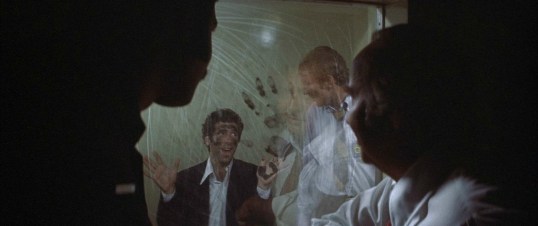
The Long Goodbye (1973, dir by Robert Altman, DP: Vilmos Zsigmond)

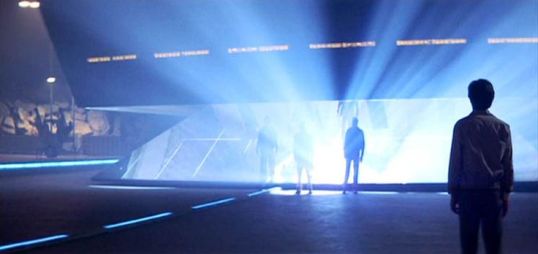
Close Encounters of the Third Kind (1977, dir by Steven Spielberg, DP: Vilmos Zsigmond)

The Deer Hunter (1978, dir by Michael Cimino, DP: Vilmos Zsigmond)

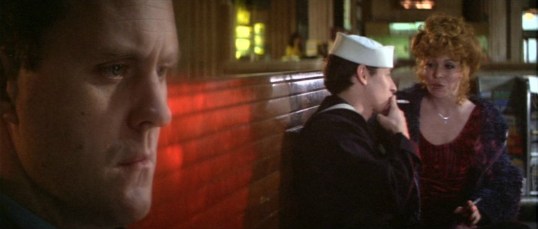
Blow Out (1981, dir by Brian DePalma, DP: Vilmos Zsigmond)

Music Video of the Day: I’m Bored by Iggy Pop (1979, directed by ????)


Listening to the lyrics and watching the video, I think Iggy Pop might have been bored when he came up with this song.

This song is off of Iggy’s third studio album, New Values.  This was the first of Iggy Pop’s solo albums to not have had any involvement from David Bowie.  New Values was well-received by the critics but it wasn’t a commercial success, peaking at #180 on the Billboard Top 200.  Among the album’s notable fans is Charles Thompson IV, who is better known by the names Frank Black and Black Francis.  It’s easy to imagine I’m Bored as a Pixies song, isn’t it?

While Iggy Pop was promoting New Values in Australia, he appeared on the show Countdown, which was Australia’s version of American Bandstand and Top of the Pops.  In an appearance that would subsequently become legendary, Iggy Pop made no attempt to hide the fact that he was lip-syncing I’m Bored and, at one point, he even stuffed his microphone down his pants and attempted to dance with the teenage girls in the audience.  After the “performance,” Iggy was interviewed by the show’s host and spent the entire time jumping up and down on his chair and shouting, “G’Day, mate!” in a mock-Australian accent.  The video for I’m Bored was subsequently filmed in New Zealand.

Enjoy!

If Lucy Fell (1996, directed by Eric Schaeffer)


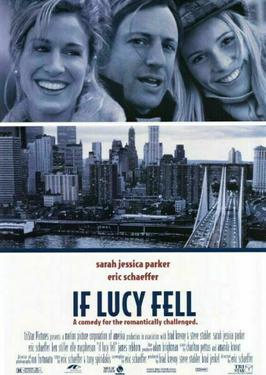
Lucy (Sarah Jessica Parker) and Joe (Eric Schaeffer) are two platonic best friends and roommates.  They have a pact.  If they don’t find true love by the time Lucy turns 30, they’ll hold hands while jumping off of the Brooklyn Bridge.  Now, Lucy’s 30th birthday is rapidly approaching and Lucy still hasn’t found the right man!  Meanwhile, Joe is obsessed with Jane (Elle MacPherson) but he hasn’t had sex in five years!  It looks like Lucy and Joe are going to have to commit suicide.  They made a pact, after all and single New Yorkers don’t break pacts.  Fortunately, things start to look up when Joe finally talks to Jane and Lucy meets a weirdo artist named Bwick (Ben Stiller).  Or could Lucy and Joe are actually meant to be together?

If Lucy Fell was briefly a big deal in 1996 because it featured both supermodel Elle MacPherson and Ben Stiller.  (It’s easy to forget how popular Ben Stiller was in the mid-90s.)  Once the film came out, people discovered that it was actually about the bland characters played by Sarah Jessica Parker and Eric Schaeffer and the film bombed at the box office.  Though it may be forgotten today, If Lucy Fell is still the epitome of the type of independent romantic comedy that a lot of directors made in the 90s.  Take a plot line that probably wouldn’t have made it beyond the table read if it was an episode of Friends (it’s interesting to note that both MacPherson and Stiller later made guest appearances on that sitcom), toss in some “alternative” music, and beg someone with a well-known name to take a supporting role.  The film is also interesting as an example of how a generally unappealing actor can play the lead in a romantic comedy and get to make out with both Elle MacPherson and Sarah Jessica Parker.  Just write and direct the film and then cast yourself in the lead role.  Congratulations to Eric Schaeffer for figuring it all out.

I’ve been feeling nostalgic for the 90s.  I guess everyone eventually feels nostalgic for the decade in which they grew up.  But nostalgia can be a harsh taskmaster and it’s important to remember that not all 90s independent films were Pulp Fiction and Fargo.  Quite a few of them were If Lucy Fell.  Ben Stiller has some funny moments, though they’re so cartoonish that they seem like they belong in a different film.  Elle MacPherson is beautiful, even if her character never makes sense.  Sarah Jessica Parker seems like she deserves better than everything the film offered to her.  Eric Schaeffer is dull but at least he got along with the director.  12 year-old Scarlett Johansson has a small role.  If Lucy Fell was a film that could only have been made in 1996 and it was forgotten by 1997.

Lisa’s Week In Review: 6/8/20 — 6/14/20


And so another week comes to an end!

There’s a lot of things happening in the world right now and I’m not even going to try to explain it all.  I’m far better at writing about movies than I am about writing about what’s happening right outside of my front door.  On the plus side, I can walk again!  I sprained my toe a week and a half ago.  I may be limping but I’m still getting around a lot better than I was a few days ago.  So yay for good news!

Here’s what I watched and read this week.  It seems like it should be more but …. oh well.

Films I Watched:

  1. All Night and A Day (2020)
  2. Da 5 Bloods (2020)
  3. Force of Evil (1948)
  4. Gambling House (1950)
  5. The Poseidon Adventure (1972)
  6. Race Street (1948)
  7. Racket Girls (1951)
  8. The Return of the Living Dead (1985)
  9. The Roaring Twenties (1939)
  10. Rob the Mob (2014)

Television Shows I Watched:

  1. Bar Rescue
  2. The Bold and the Beautiful
  3. Days of Our Lives
  4. Doctor Phil
  5. General Hospital
  6. Ghost Whisperer
  7. Gordon Ramsay’s 24 Hours To Hell and Back
  8. It’s Always Sunny in Philadelphia
  9. Killer Kids
  10. Monty Python’s Flying Circus
  11. The Office
  12. Parking Wars
  13. World of Dance
  14. The Young and the Restless

Books I Read:

  1. Making Hate Pay: The Corruption of the Southern Poverty Law Center (2020) by Tyler O’Neil

Music To Which I Listened:

  1. Adi Ulmansky
  2. Armin van Buuren
  3. Bob Dylan
  4. Chicane
  5. Dam Funk
  6. Dillon Francis
  7. Donovan
  8. Ekkah
  9. Garbage
  10. Jakalope
  11. Jake Epstein
  12. Kygo
  13. Muse
  14. OneRepublic
  15. The Pretenders
  16. Saint Motel
  17. Savage Rose
  18. UPSAHL

Links From Last Week:

  1. As old media squabbles, new media thrives
  2. The American Press Is Destroying Itself
  3. Good Riddance to Cops and Live PD
  4. The 1793 Project Unmasked

News From Last Week:

  1. ‘Lost’ Italian village set to emerge from watery depths for the 1st time in 27 years
  2. ‘Cops,’ on air for 33 seasons, dropped by Paramount Network
  3. Film Academy Board Set to Postpone Oscars Ceremony and Extend Eligibility Window

Links From the Site:

  1. Erin shared the Shocking Covers of Super-Detective and: Dying Room Only, Film Fun, Scarlet Adventures, The Treasure of Pleasant Valley, Kiss Her Goodbye, Manhunt, and American Flags!
  2. Jeff shared music videos from Dishwalla, OMD, Depeche Mode, Earth & Fire, Earth & Fire again, The Clash, and George Harrison!  He also reviewed Threesome, Fatal Instinct, Hail Hero!, The Tie That Binds, The Big Fall, Striking Distance, and Escape to Victory!
  3. I reviewed The Roaring Twenties, Force of Evil, Rob the Mob, Gambling House, Race Street, and Racket Girls!
  4. Ryan reviewed Performance Video, Hometime, Twenty-One Fifty Fiverr, Softer than Sunshine, Galapagos, and Kyoto Pants Down!

More From Us:

  1. Ryan has a patreon.  Consider subscribing.
  2. At her photography site, Erin shared Driving, Three, Clouds in the Water, Dolls, Gray Sky, Bees and Butterflies, and Something To Look Forward To.
  3. On my music site, I shared music from Ekkah, Saint Motel, Chicane, Adi Ulmansky, Donovan, Garbage, and Kygo!

Want to see what I did last week?  Click here!