Love on the Shattered Lens: Long Shot (dir by Jonathan Levine)


2019’s Long Shot is a film that truly took me by surprise.

I have to admit that, when I first saw the trailer for Long Shot, I had my concerns.  First off, it was an American political comedy and it’s been a while since there’s really been a good one of those.  There’s been many attempts, especially after Donald Trump was elected in 2016.  But, for the most part, the American films are always at their weakest when they try to be overly political.  There’s always a disturbing lack of self-awareness that, when mixed with the type of strident tone that can only be maintained by people who have never seriously had their ideas challenged, tends to make for a very boring viewing experience.  And, no, don’t you dare say, “What about Vice?” because Vice was freaking terrible.

Secondly, the trailer emphasized that Charlize Theron was playing the Secretary of State and that she was running to become the first woman elected President.  This led me to suspect that the film might essentially be Hillary Clinton fanfic.  Over the past few years, there’s actually been quite a few films and television show that have featured idealized versions of Hillary Clinton — i.e., all of the accomplishments without the albatross of her husband or the reputation for being casually corrupt.  (For six seasons, there was a TV show called Madam Secretary that basically only existed to present an idealized version of Hillary.)  Hillary fanfic, with its attempt to rehabilitate the image of a candidate so inept that she actually lost to Donald Trump, is always cringey.

Finally, as much as I hate to admit it, I was concerned that the film not only starred but was produced by Seth Rogen.  And don’t get me wrong.  I love Seth Rogen.  Seth Rogen is literally my favorite stoner.  I think that, with the right material, he can be one of the funniest performers around.  The problem is that, in the past, Seth Rogen has always been brilliant as long as he wasn’t talking about politics.  Whenever he started talking politics, he just turned into every other wealthy and rather self-righteous progressive.  While Rogen’s political tweets were never as banal as the thoughts of uberboomer Stephen King, there was still nothing about them that suggested that Rogen would be capable of producing one of the funniest and most good-hearted political comedies to come out in the past few years.

And so, like a lot of people, I skipped Long Shot when it was playing in theaters.  I waited until it was released on video to watch Long Shot and you know what?  It turned out that almost everything that I had assumed about Long Shot was incorrect.

Yes, it’s a very political movie but it’s also far more self-aware than I was expecting it to be.  Seth Rogen apparently knows that he has a reputation for being a very loud, knee-jerk leftie because he actually does a very good job of poking fun at his own image.  Rogen plays Fred Flarsky, a loud and crude journalist who quits his job when he discovers that the underground newspaper that he was working for has been purchased by Parker Wembley (Andy Serkis, playing a not-at-all disguised version of Rupert Murdoch).  Fred is about as far to the Left as one can be and he tends to assume that all of his associates agree with him, even though he never bothers to ask them.  One of the best scenes in the film comes when his best friend, Lance (O’Shea Jackson, Jr.), reveals to a stunned Fred that he’s not only a Republican and a Christian but that he’s been one the entire time that he’s known Fred.  Fred never caught on because he just assumed that Lance, being black, would naturally be a Democrat.  When Lance asks Fred why he thought Lance wore a cross around his neck, a befuddled Fred can only reply that he thought it was “cultural.”  It’s a great scene and one that’s wonderfully played by Rogen and Jackson and it works precisely because it remains true to what we’ve seen of both characters.  Almost everything that Lance says over the course of the movie does reflect a traditionally conservative mindset but, like Fred, we don’initially don’t notice because Lance is being played by Ice Cube’s son.  When Fred discovers that Lance is a Republican, it doesn’t change Fred’s mindset but it does teach him that progressives can be just as guilty as conservatives when it comes to making assumptions about people based on where they’re from or what they look like.  As a stunned and chastened Fred puts it, “I’m a racist, you’re a Republican, I don’t know what the fuck’s going on.”

Secondly, the film’s romance is incredibly charming.  Charlize Theron plays Charlotte Field, the Secretary of State who used to be Fred’s babysitter.  After they run into each other at a reception, Charlotte hires Fred to work as a speech writer for her nascent presidential campaign.  You would not expect Charlize Theron and Seth Rogen to have a ton of romantic chemistry but they do.  Theron is an underrated comedic actress and there’s a lot of fun to be had in just listening to her and Rogen bounce lines off of each other.  In fact, as funny as Rogen is, I’d have to say that Charlize Theron is even funnier.  One of the highlights of the film is when Fred and Charlotte sneak away to a club, where they dance and end up taking ecstacy.  Over course, as soon as the drugs kick in, a major diplomatic crisis breaks out and an extremely high Charlotte has to deal with a hostage crisis.  Theron appears to be having a ball with the role and really, this is the film for which she should have been Oscar nominated.  Theron convinces us that 1) she’s a masterful diplomat, 2) that she could be elected President of the United States, and 3) that she could fall in love with someone as messy as Fred without sacrificing her own ambitions.

Long Shot has its flaws, of course.  Andy Serkis is a bit too over-the-top in his villainy and the film has a 125-minute running time, which is way too long for what is essentially a fairly simple romantic comedy.  Some of the scenes of Fred and Charlotte traveling around the world probably could have been cut without harming the story.  There’s an environmental subplot that feels a bit too obvious and there’s a joke about Fred accidentally ejaculating on his own face that’s never as funny as the film seems to think that it is.

That said, Long Shot is often a surprisingly charming film.  (I know what some of you are saying: “Yes. Lisa Marie, Seth Rogen ejaculating on his beard sounds really charming.”  I know, I know.  But the majority of the film is charming.)  If you missed it when it came out the first time, give it another chance.

The Covers of South Sea Stories


From 1960 to 1964, South Sea Stories brought its readers the latest in sordid, tropical drama.  South Sea Stories was actually a revival of a pulp magazine that had briefly been published in 1939.  It was very much a men’s magazine, with a mix of adventures stories and centerfolds.  The covers left little doubt that the tales of the South Sea Stories weren’t for those seeking a relaxing vacation.  Instead, South Sea Stories was all about smugglers, wild animals, and women in sarongs.

For anyone currently dreaming of taking a tropical vacation right now, here are a few of the covers of South Sea Stories.  All of these covers look, to me, like they were done by Mark Schneider but I can only definitely confirm that the first three were his work.

by Mark Schneider

by Mark Schneider

by Mark Schneider

Unknown Artist

Unknown Artist

Unknown Artist

Unknown Artist’

Unknown Artist

Unknown Artist

I think this final cover is actually from the original 1939 run but I just had to include it because of the dead body floating in the surf.

4 Shots From 4 Films: Special John Llewellyn Moxey Edition


4 Shots From 4 Films is just what it says it is, 4 shots from 4 of our favorite films. As opposed to the reviews and recaps that we usually post, 4 Shots From 4 Films lets the visuals do the talking!

John Llewellyn Moxey was one of the best directors that most people have probably never heard of.  Born in Argentina and raised in the UK, John Llewellyn Moxey made his directorial debut with the classic horror film, City of the Dead.  Though he directed a handful of other feature films, Moxey is best known for being one of the best television directors of the 70s and 80s.  Along with directing episodic television, Moxey was responsible for directing several classic made-for-television films.  Moxey proved himself to be a master of every genre but, because he worked in television, his talent was often taken for granted.

When Moxey died last year at the age of 94, his work was in the process of being rediscoverd and reevaluated.  Today would have been Moxey’s 95th birthday and, in honor of the man and his career, here are 4 shots from 4 of his best.

4 Shots From 4 Flms

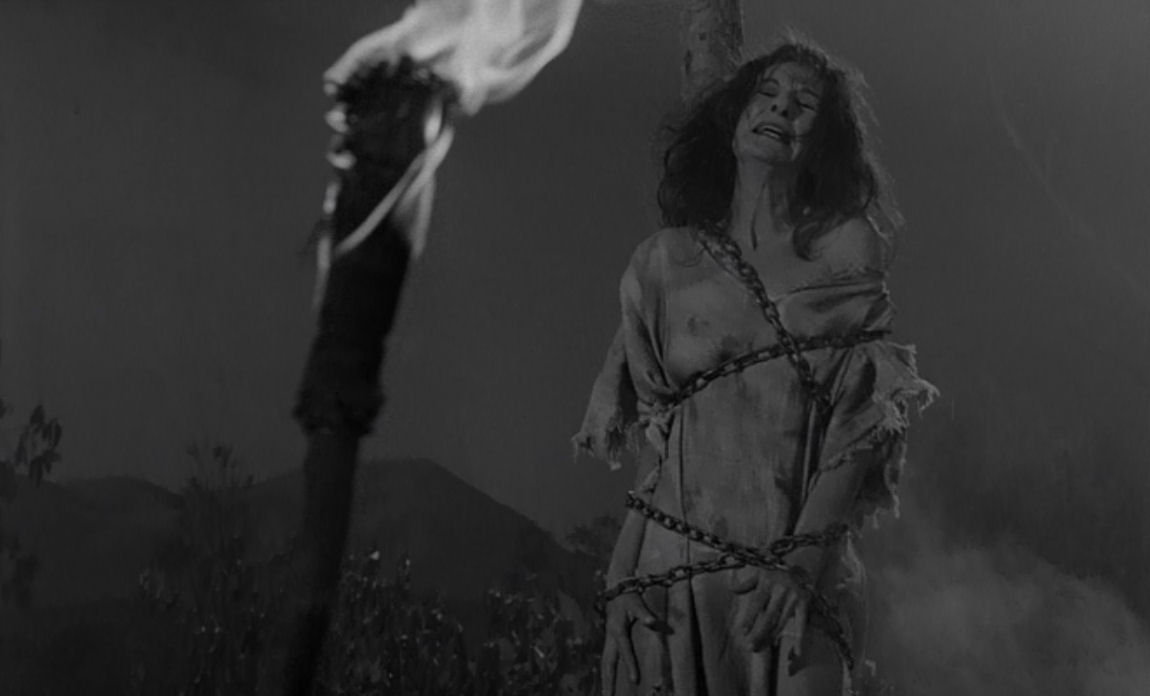
The City of the Dead (1960, directed by John Llewellyn Moxey)

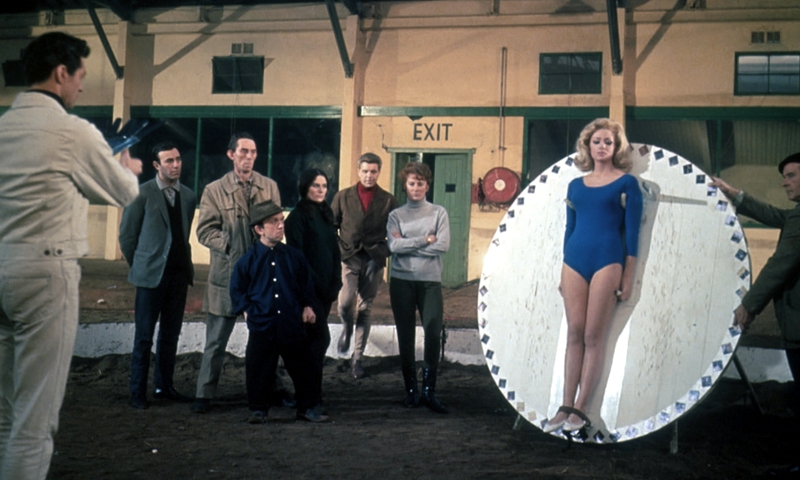
Circus of Fear (1966, directed by John Llewellyn Moxey)

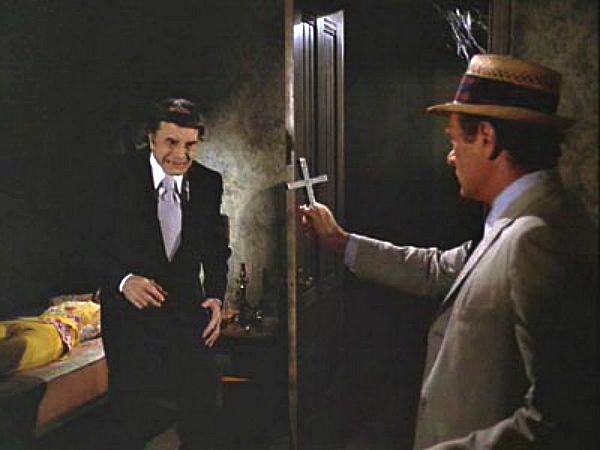
The Night Stalker (1972, directed by John Llewellyn Moxey)

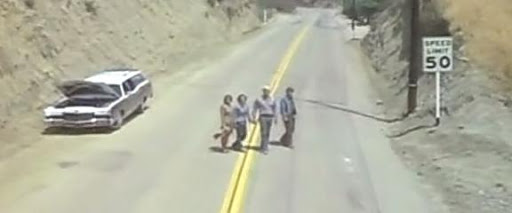
Where Have All The People Gone? (1974, directed by John Llewellyn Moxey)

Music Video of the Day: Ashes to Ashes by David Bowie (2000, dir by ????)


It’s Ash Wednesday!

I remember, when I was like 14, I got up early in the morning and I woke up my sisters by shouting, “It’s Ash Wednesday, bitches!”  My mom was not amused.  That said, Ash Wednesday is one of my favorite days.  I just love the ritual of it all.  Of course, I also usually wash my forehead fairly early in the day.  That’s allowed, by the way.

Now, before anyone leaves any snarky comments, I fully understand that David Bowie’s Ashes to Ashes is not actually about Ash Wednesday nor are the ashes mentioned in the song literal ashes.  I understand that but hey, this is a good song and David Bowie certainly does look happy in this clip.  Around the two minute mark, he takes the time to praise the backup singers, which is a pretty classy move.

This is from a 2000 performance in London.

Enjoy!

Bruce Li The Invincible (1978, directed by Law Kai Shuk)


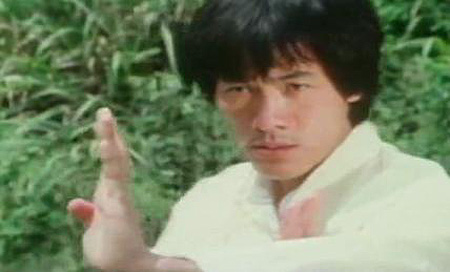
Because he’s immature and unpatriotic, Cheng (Michael Chan Wai Man) is kicked out of the local kung fu school and exiled from China.  Before leaving, he promises his teacher that he will go to Malaysia and change his ways.  Instead, he goes to Malaysia and sets himself as a local crime lord.  Along with extorting businesses, running a gambling den, and kidnapping female tourists, Chen also trains a group of gorillas to serve as his own persona army.  Realizing that Chen needs to be brought back to the school, three men head to Malaysia to take him down.  Bruce Li, the most successful of the Bruce Lee imitators to spring up after Lee’s death, plays Yo Fung, one of them three men.  According to the film’s title, he’s invincible.  Personally, I like the idea of naming a movie after its star.  Would Once Upon A Time In Hollywood have won more Oscars if it had been called Brad Pitt The Indestructible?  I think we all know that it would have.

Even by the standards of 70s Bruceploitation, Bruce Li The Invincible is incoherent.  According to the imdb, Bruce Li The Invincible has a running time of 92 minutes.  The version I saw was badly dubbed into English and only ran for 84 minutes so it seems probable that, like a lot of kung fu films, this one was re-edited for distribution in the U.S.  Maybe the full 92 version explains how Cheng became so powerful so quickly or why Bruce Li and his allies end up having to fight two well-trained gorillas when they arrive in Malaysia.  The film never makes it clear whether the gorillas are supposed to be actual gorillas or if they’re supposed to be goons who chose to put on gorilla costumes before attacking their targets.

Luckily, even if the plot doesn’t make any sense, the fight scenes are pretty good.  That includes the fights with the gorillas.  In fact, the gorilla fights are the main reason to see this movie.  Just when you think that you’ve seen everything that Bruceploitation genre has to offer, Bruce Li is suddenly getting jumped by a man wearing a gorilla costume.  That was more than worth the 84 minutes that I spent watching this movie.  Though this movie may be frequently confusing, the gorillas are pretty damn cool.

Love on the Shattered Lens: Scenes From A Marriage (dir by Ingmar Bergman)


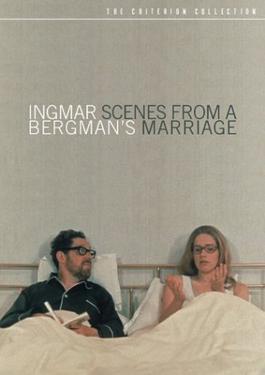
The 1973 film, Scenes From A Marriage, is a real endurance test.

That, in itself, shouldn’t be surprising.  It’s an Ingmar Bergman film, after all.  Bergman was one of the world’s great directors but the majority of his films did not exactly focus on happy themes.  Scenes From A Marriage is a nearly three-hour film in which two people — who start out as married and eventually end up as divorced — talk and talk and talk and talk.  They talk about work.  They talk about their relationship.  They talk about their married friends who are trapped in a loveless marriage.  They talk about their unsatisfactory sex life.  They occasionally mention their never-seen daughter.  The conversations are usually friendly and semi-affectionate but there’s a hint of tension running through every single one of them.  Whenever this couple talks about anything, it’s under a cloud of disatisaction and repressed anger.  Violence always seems like it could break out at any time and, at one point, it does.  (Of course, if 167 minutes seems like a long time to watch a marriage collapse, just consider that the film was an edited version of a four-and-a-half hour miniseries that originally aired on Swedish television.)

Scenes From A Marriage is regularly cited as being one of the best films about marriage ever made and also as one Bergman’s best films.  Personally, I think it’s a bit overrated but still, no one can deny the skill with which the film was made.  Though it may ultimately just be a reflection of the film’s roots as a television series, the film is full of probing close-ups.  When Marianne (Liv Ullmann) and Johan (Erland Josephson) discuss their life, the camera gives them no escape.  There’s no sudden jump cuts or fade outs to bring the conversation to an end and, as talky as the film may be, the awkward silences often tell us even more about what’s going on between these two.  Ullmann and Josephson both give excellent performances.  There’s an honesty to their anger and their disillusionment that will often leave you cringing but unable to look away.  When Marianne and Johan discuss why they’ve never had a satisfactory sex life, it’s a crushingly honest scene and neither Ullmann nor Josephson hold anything back.  When one of their conversations suddenly erupts into a violent fight, it’s scary, heart-breaking, and expected all at the same time.  We’ve spent so much time with these two characters that we feel as if we know them.  We can see what’s coming, even if they can’t.

If I’m not as enthusiastic for Scenes From A Marriage as some, it’s because I didn’t particularly like either Marianne or Johan.  I understood them.  I felt as if I knew them.  By the end of the film’s first scene, I could confidently tell you that Johan would probably vote for Mike Bloomberg while Marianne would send money to both Elizabeth Warren and Amy Klobuchar while joking about how, if it was good enough for The New York Times, it was good enough for her.  But ultimately, both Johan and Marianne come across as being a bit too smug and safely bourgeois, even after they realize that they’re “perfect” marriage isn’t perfect at all.  This is actually something that I’ve noticed about most films about divorce.  It’s rare that you ever seen a film centered around a working class divorce.  Instead, it’s almost always the members of the middle and upper classes, people who are relatively stable financially and who have a support system of liberal and sophisticated friends and family to fall back on.  In films like this, divorce is an issue where the concerns and sufferings are almost exclusively emotional.  I think a lot of this is because most films about divorce are made by directors who have just gone through their own divorce and they basically end up telling their own side of the story under the guise of fiction.  Ingmar Bergman admitted as much when he said that Scenes From A Marriage was based on both his two failed marriages and his own relationship with Ullman.  (Just last year, we had another example of this with Noah Baumbach’s Marriage Story, a film that owes more than a little debt to Bergman’s film.)   For all of the film’s technical skill and good performances, Scenes From A Marriage is still just two and a half hours of watching two less than likable people get a divorce.  By the end of the film, you’re just happy to be away from them.

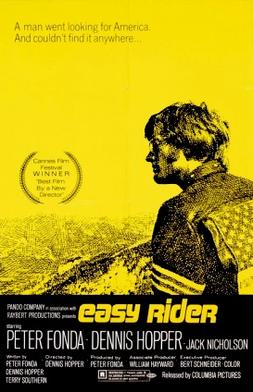
Mardi Gras Film Review: Easy Rider (dir by Dennis Hopper)


If you are among those who wanted to celebrate Mardi Gras today but couldn’t make it down to New Orleans, fear not!  There is a solution to your problem.  You can always just watch 1969 counterculture classic, Easy Rider.

Easy Rider features one of the most famous Mardi Gras scenes of all time and adding to the scene’s authenticity is the fact that it was actually shot in New Orleans during the celebration.  If you watch the Mardi Gras sequence carefully, you’ll notice that several people on the streets of the French Quarter actually stop and stare directly at the camera.  It reminds you that you’re watching a movie but, at the same time, it also reminds you that you’re seeing something authentic.  Those weren’t just professional extras pretending to get drunk and glaring at Dennis Hopper and Peter Fonda.  Those were people who were actually in the French Quarter for Mardi Gras and who just happened to end up getting included in one of the biggest cult films of all time.  If you want to know what Mardi Gras was like in the late 60s, this is the film to watch.

At the same time, after watching Easy Rider, you may be find yourself happy to not be in New Orleans today.  As with almost everything else in Easy Rider, Mardi Gras starts out as something exciting and full of promise but it ends as something dark and full of death.  One minute, Peter Fonda, Dennis Hopper, Karen Black, and Toni Basil are walking down the streets of New Orleans and having what appears to be a good time.  The next thing you know, they’re in a cemetery and Peter Fonda’s sobbing and talking about his mother’s suicide while Toni Basil and Karen Black are freaking out.  Of the four of them, only Dennis Hopper appears to not be having a bad trip but then again, Hopper is so naturally spacey in Easy Rider that it’s kind of hard to tell.

The next morning, Fonda and Hopper leave New Orleans on their motorcycles and promptly get blown away by two shotgun-toting rednecks in a pickup truck.  It seems a fitting conclusion to a film that celebrates the beauty of the American landscape while, at the same time, suggesting that almost everyone who lives there is a complete and total prick.

Of course, the whole Mardi Gras sequence doesn’t occur until the very end of the film.  The majority of the film deals with the journey to New Orleans.  Billy (Dennis Hopper) and Wyatt (Peter Fonda) are two motorcycle-riding drug dealers who have just made a small fortune off of selling cocaine to Phil Spector.  Billy and Wyatt are heading to New Orleans to celebrate and visit a famous brothel.  Wyatt is cool and stoic and always seems to be thinking about something.  Billy is Dennis Hopper.  Easy Rider is often referred to as being a hippie film but neither Billy nor Wyatt is really a hippie.  They’re outsiders and they like to smoke weed but they’re also largely apolitical.  They just want to enjoy the open road.  If anything, they’re beatniks who were born a year or two too late.

As they ride from California to New Mexico, Billy and Wyatt meet plenty of people along the way.  They stop off at a hippie commune and then later, they get harassed by a bunch of rednecks in a diner.  The rednecks are menacing while the hippies are annoying.  The rednecks throw Wyatt and Billy in jail for “parading without a permit.”  The hippies have a mime troupe.  The rednecks drive around with shotguns.  The hippies try to grow crops in the desert.  (I’m enough of a country girl to know that Billy’s right when he scornfully says that nothing that they’re planting is going to actually grow.)  The rednecks are ignorant.  The hippies are smug.  None of them really seem like people that you would want to spend too much time around.

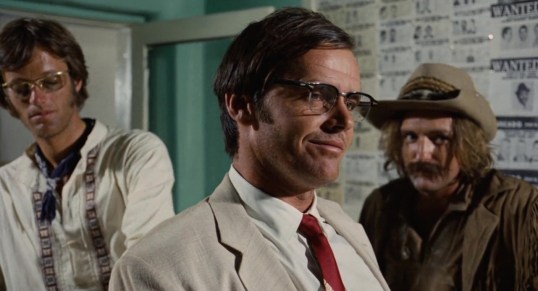
Along the way, Wyatt and Billy temporarily travel with two others.  The hitchhiker is played by Luke Askew.  We never learn his name but he does play a key role in the film when he gives Wyatt the tab of acid that will eventually ruin Mardi Gras.  Meanwhile, George Hanson is an alcoholic lawyer and he’s played by Jack Nicholson.  At the time that the film was shot, Nicholson was on the verge of retiring from acting so he could concentrate on directing and writing.  He took the role and expected, as almost everyone did, that Easy Rider would just be another biker film.  Instead, Easy Rider became a hit and a cultural milestone that not only won Nicholson his first Academy Award nomination but also made him a star.

Interestingly enough, Jack Nicholson is not really that good in Easy Rider.  His attempt at a Texas accent is terrible and you never believe him as someone who has never smoked weed before.  If anything, Luke Askew gives a far better performance than Nicholson and he actually has more screen time as well.  However, I think Nicholson benefited from the fact that George is probably the most likable character in the film.  (Depending on how you feel about Billy and Wyatt, you could argue that he’s the only likable character in the film.)  He’s not a smug hippie nor is he a murderous redneck.  Unlike Wyatt and Billy, he has a job that doesn’t involve selling cocaine to Phil Spector.  Whereas Luke Askew’s Hitchhiker seems like the type of guy who would just love to lecture you about why Vietnam is all your fault, George comes across as being a gentle soul. George is a character that viewers can feel safe identifying with, even if Nicholson is never quite convincing as someone so naive that he fears he’ll freak out after taking one hit off of a joint.

Easy Rider‘s critical reputation tends to go up and down, depending on who you’re reading or talking to.  There’s a tendency, among many critics, to complain that Fonda acted too little while Hopper acted too much.  Personally, I think there’s a lot of hidden wit to be found in Hopper’s performance and I love how annoyed he gets when they’re at the hippie compound.  As for Peter Fonda, he may not have been the most expressive actor but he did capture a certain feeling of ennui.  For most of the film, it’s hard to tell whether there’s anything actually going on in Wyatt’s head.  Then, we follow Wyatt and Billy to that cemetery in New Orleans and we discover that there’s actually quite a bit going on behind Wyatt’s wall of stoicism.  After watching Wyatt curse at a statue while sobbing, we understand why he keeps so much hidden.

When it was released in 1969, Easy Rider was a huge box office success and it inspired every major studio to try to duplicate it’s success with a counter culture film of its own.  (Hopper was given several million dollars and sent down to Peru to make a follow-up to Easy Rider.  The result was The Last Movie, a legendary disaster that temporarily ended Hopper’s career as a director.)  Seen today, Easy Rider is undeniably pretentious but always watchable.  The scenery is beautiful and the Mardi Gras sequence sets the standard by which all other bad trips should be judged.  Most importantly, the film works as a historical document.  Everything about it — from the music to the cultural attitudes to even Hopper’s attempts to imitate Jean-Luc Godard in his direction — makes this film into a time capsule.  Until they invent a time machine that works, Easy Rider is as close as some of us will ever get to experiencing the end of the 60s.

And finally, it’s the ultimate Mardi Gras film, even if it’s main message seems to be that everyone needs to stay the Hell away from Mardi Gras.  Or, at the very least, don’t accept LSD from a scruffy hitchhiker before rolling into New Orleans.  Seriously, the more you know….

4 Shots From 4 Films: Executive Produced by George Harrison


4 Shots From 4 Films is just what it says it is, 4 shots from 4 of our favorite films. As opposed to the reviews and recaps that we usually post, 4 Shots From 4 Films lets the visuals do the talking!

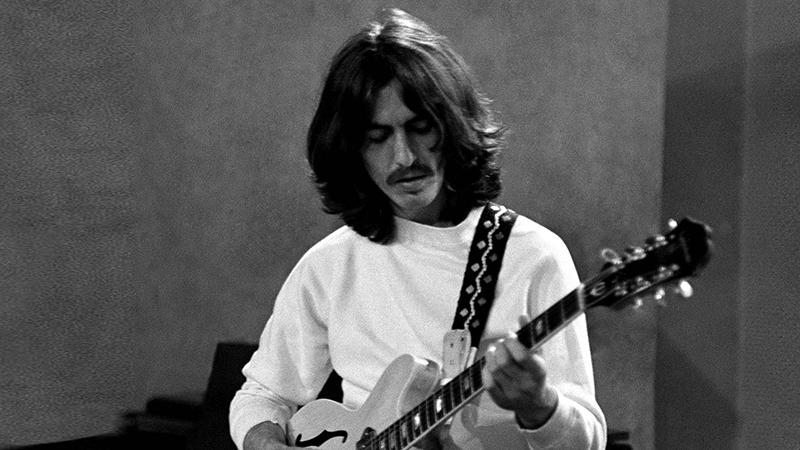
Today would have been the 77th birthday of my favorite members of the Beatles (not to mention The Traveling Wilburys), George Harrison.  Harrison died far too young but he left behind a legacy of music that is celebrated to this day and will still be celebrated long after the rest of us have moved on.

While everyone knows George from his music, what is often forgotten is that Harrison is also often credited with helping to revive the British film industry.  After the break-up of the Beatles, Harrison partnered with Denis O’Brien and formed HandMade Films.  At a time when British cinema was struggling both financially and artistically, Harrison served as executive producer for some of the best films to come out of the British film industry.  Harrison championed many talented British directors and he used his clout to get many otherwise difficult project produced.  It’s fair to say that, if not for his support, the members of Monty Python would never have been able to make the then-controversial Life of Brian, which is now widely regarded as one of the best British comedies ever made.

Today, on his birthday, here are four shots of four films executive produced by George Harrison.

4 Shots From 4 Films

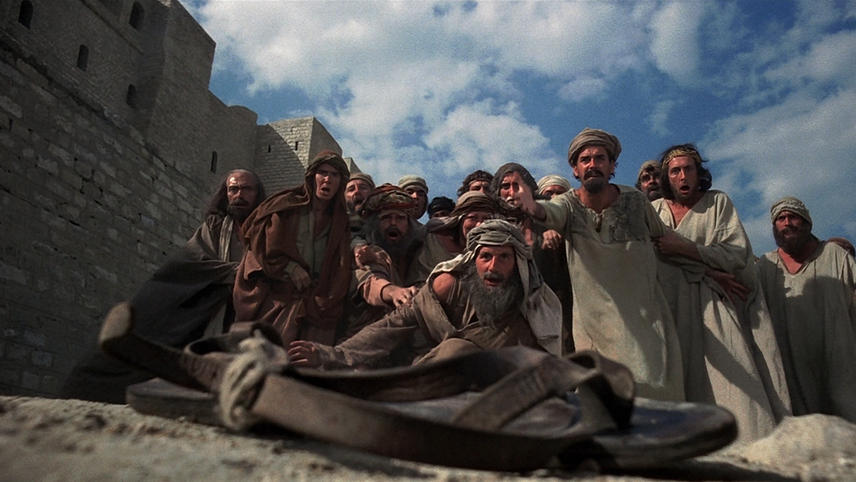
Monty Python’s Life of Brian (1979, directed by Terry Jones)

The Missionary (1982, directed by Richard Loncraine)

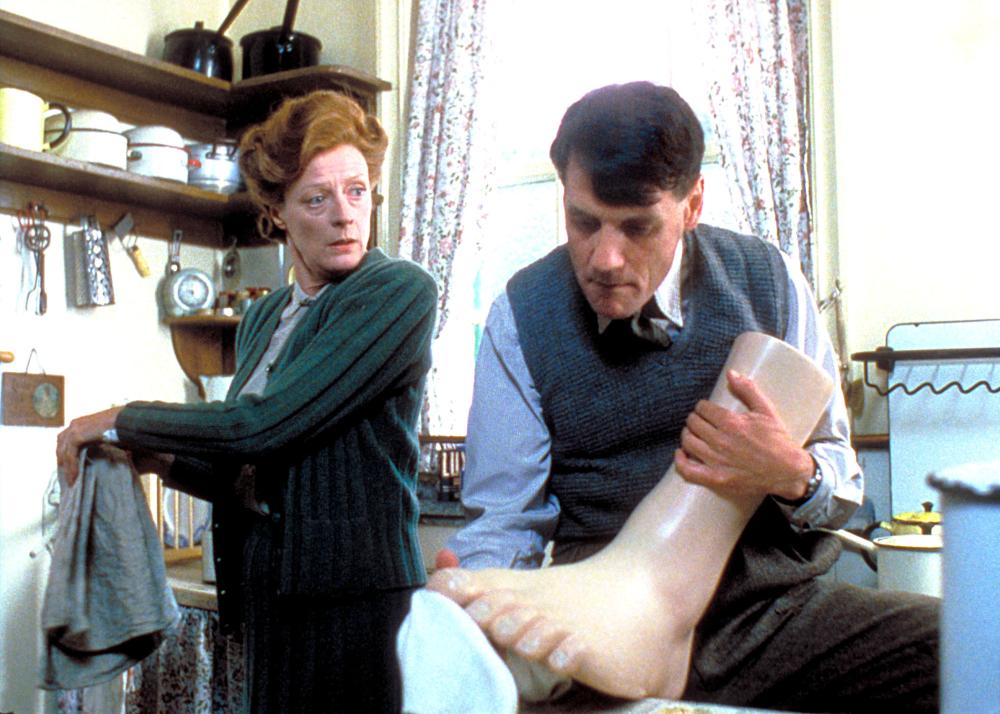
A Private Function (1984, directed by Malcolm Mowbray)

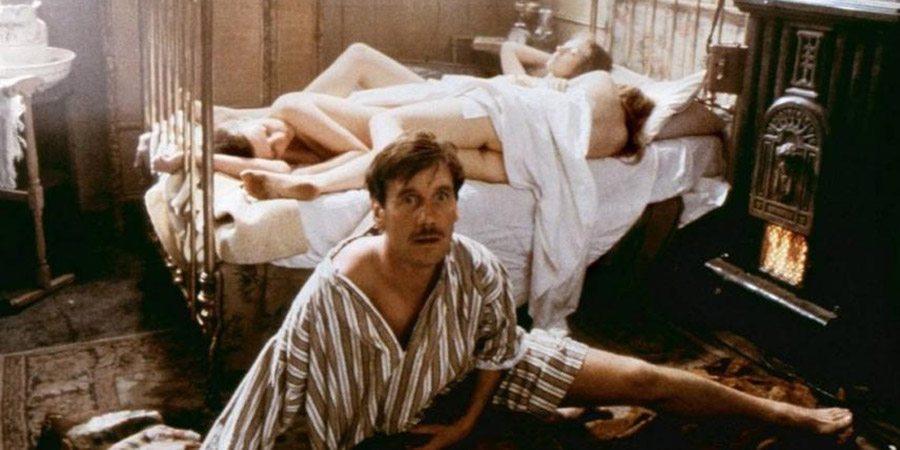
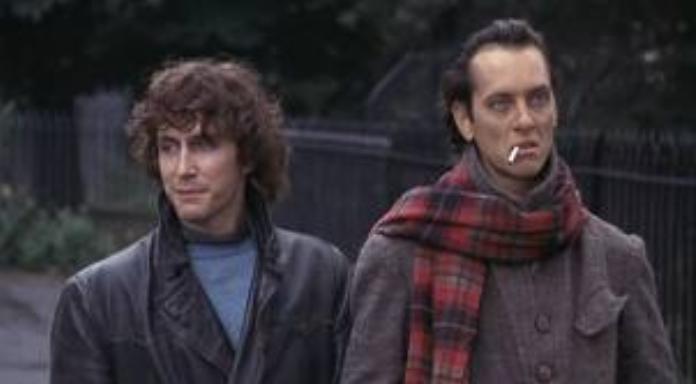
Withnail and I (1987, directed by Bruce Robinson)