“Well, that’s just lazy writing.” Ah, good old Wade Wilson.
Fox just dropped a teaser trailer for the Deadpool Sequel (which doesn’t really have a name at this point other than maybe Deadpool 2). This one focuses on Cable and shows off some of his combat abilities. It looks like everyone’s back on board here, with Deadpool breaking the 4th wall, as usual.
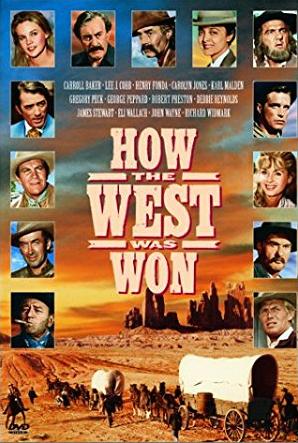
(With the Oscars scheduled to be awarded on March 4th, I have decided to review at least one Oscar-nominated film a day. These films could be nominees or they could be winners. They could be from this year’s Oscars or they could be a previous year’s nominee! We’ll see how things play out. Today, I take a look at the 1963 best picture nominee, How The West Was Won!)
How was the west won?
According to this film, the west was won by the brave men and women who set out in search of a better life. Some of them were mountain men. Some of them worked for the railroads. Some of them rode in wagons. Some of them gambled. Some of them sang songs. Some shot guns. Some died in the Civil War. The thing they all had in common was that they won the west and everyone had a familiar face. How The West Was Won is the history of the west, told through the eyes of a collection of character actors and aging stars from Hollywood’s Golden Age.
In many ways, How The West Was Won was the Avatar of the early 60s. It was a big, long, epic film that was designed to make viewers feel as if they were in the middle of the action. Avatar used 3D while How The West Was Won used Cinerama. Each scene was shot with three synchronized cameras and, when the film was projected onto a curved Cinerama screen, it was meant to create a truly immersive experience. The film is full of tracking shots and, while watching it on TCM last night, I tried to imagine what it must have been like to see it in 1963 and to feel as if I was plunging straight into the world of the old west. The film’s visuals were undoubtedly diminished by being viewed on a flat screen and yet, there were still a few breath-taking shots of the western landscape.
The other thing that How The West Was Won had in common with Avatarwas a predictable storyline and some truly unfortunate dialogue. I can understand why How The West Was Won was awarded two technical Oscars (for editing and sound) but, somehow, it also picked up the award for Best Writing, Screenplay or Story. How The West Was Won is made up of five different parts, each one of which feels like a condensed version of a typical western B-movie. There’s the mountain man helping the settlers get down the river story. There’s the Civil War story. There’s the railroad story and the outlaw story and, of course, the gold rush story. None of it’s particularly original and the film is so poorly paced that some sections of the film feel rushed while others seem to go on forever.
Some of the film’s uneven consistency was undoubtedly due to the fact that it was directed by four different directors. Henry Hathaway handled three sections while John Ford took care of the Civil War, George Marshall deal with the coming of the railroad, and an uncredited Richard Thorpe apparently shot a bunch of minor connecting scenes.
And yet, it’s hard not to like How The West Was Won. Like a lot of the epic Hollywood films of the late 50s and early 60s, it has its own goofy charm. The film is just so eager to please and remind the audience that they’re watching a story that could only be told on the big screen. Every minute of the film feels like a raised middle finger to the threat of television. “You’re not going to see this on your little idiot box!” the film seems to shout at every moment. “Think you’re going to get Cinerama on NBC!? THINK AGAIN!”
Then there’s the huge cast. As opposed to Avatar, the cast of How The West Was Won is actually fun to watch. Admittedly, a lot of them are either miscast or appear to simply be taking advantage of a quick payday but still, it’s interesting to see just how many iconic actors wander through this film.
For instance, the film starts and, within minutes, you’re like, “Hey! That’s Jimmy Stewart playing a mountain man who is only supposed to be in his 20s!”
There’s Debbie Reynolds as a showgirl who inherits a gold claim!
Is that Gregory Peck as a cynical gambler? And there’s Henry Fonda as a world-weary buffalo hunter! And Richard Widmark as a tyrannical railroad employee and Lee J. Cobb as a town marshal and Eli Wallach as an outlaw!
See that stern-faced settler over there? It’s Karl Malden!
What’s that? The Civil War’s broken out? Don’t worry, General John Wayne is here to save the day. And there’s George Peppard fighting for the Union and Russ Tamblyn fighting for the Confederacy! And there’s Agnes Moorehead and Thelma Ritter and Robert Preston and … wait a minute? Is that Spencer Tracy providing narration?
When Eli Wallach’s gang shows up, keep an eye out for a 36 year-old Harry Dean Stanton. And, earlier, when Walter Brennan’s family of river pirates menaces Karl Malden, be sure to look for an evil-looking pirate who, for about twenty seconds, stares straight at the camera. When you see him, be sure to say, “Hey, it’s Lee Van Cleef!”
How The West Was Won is a big, long, thoroughly silly movie but, if you’re a fan of classic film stars, it’s worth watching. It was a huge box office success and picked up 8 Oscar nominations. It lost best picture to Tom Jones.
(By the way, in my ideal fantasy world, From Russia With Love secured a 1963 U.S. release, as opposed to having to wait until 1964, and became the first spy thriller to win the Oscar for Best Picture.)
The song is an anthem but the music video is widely considered to be one of the worst of all time. What happened to Journey when they gathered on a wharf in New Orleans and shot the video for Separate Ways (Worlds Apart)? Let’s break it down:
0:00 — The video starts with a shot of the Louisa Street Wharf in New Orleans. Where’s Journey?
0:03 — There, they are. But where are their instruments?
0:04 — Yes, Jonathan Cain is playing air keyboards.
0:08 — Journey has their instruments now so they look a lot less ridiculous. Still, Jonathan Cain will never live down those air keyboards.
0:21 — A woman in a black leather skirt walks down the wharf. The members of Journey jump out at her. This will prove to be a reoccurring theme throughout the video. The woman was played by a local girl named Margaret Olmstead.
0:35 — Again, Journey has lost their instruments and Jonathan Cain is forced to play air keyboards.
0:41 — If Steve Perry looks more annoyed than usual here, it is probably because he wasn’t happy while shooting this video. This was the first Journey video to have a “storyline,” as opposed to just being edited footage of the band performing. Perry was opposed to the idea. According to Cain, Perry said, “We’re performers, we’re entertainers, but we’re not actors.”
0:51 — Who has stolen Journey’s instruments?
0:54 — At this point, Jonathan Cain’s air keyboards are truly out of control. Is he playing an imaginary synthesizer or is he pretending to be a tiger stalking his prey? Your guess is as good as mine.
0:58 — Not only has Journey lost their instruments but Steve Perry has lost his sleeves.
1:13 — Eagle-eyed viewers will notice that Journey is performing in front of a mattress warehouse. This detail will pay off at the end of the video.
1:27 — At least Jonathan finally found his keyboards.
1:32 — The salesman who sold me my very first used car looked just like Ross Valory.
1:47 — The video was shot on a very cold morning. In between takes, Perry would rush into his camper to try to get warm.
1:57 — The shoot was also tense because of the presence of Perry’s then-girlfriend, Sherri Swafford. Swafford took an intense dislike to Margaret Olmstead and demanded that she be removed from the video.
2:22 — I worked in a warehouse one summer and I can tell you that one thing you never want to do is walk backwards through a maze of palettes.
2:29 — Do you think Steve Smith likes foosball?
2:34 — The members of Journey jumping back and forth and singing while Margaret ignores them is my favorite part of the video.
3:04 — What did they do to Steve’s drums?
3:37 — As if the video hadn’t already flown off the rails, here’s a few minutes of gratuitous slow motion.
4:15 — Say what you will about the video, no one could belt it out like Steve Perry.
4:18 — It was all a dream! That explains so much.
In 1999, MTV named this video as the 13 worst video of all time.
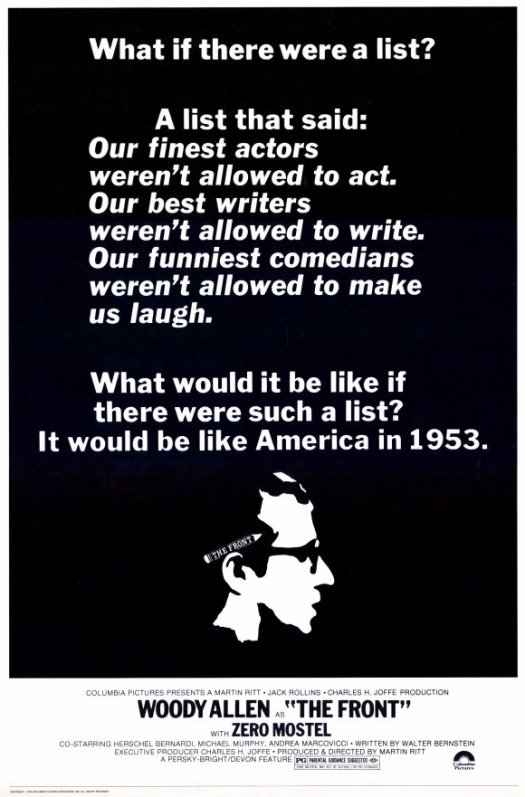
When a film gets labeled as a “comedy-drama”, chances are good you’re in for an uneven film. Such is the case with THE FRONT, Martin Ritt’s 1976 movie about the 1950’s blacklist. There are plenty of things to like about the movie, especially in the performances, but the somewhat heavy-handed script by Walter Bernstein results in an undeniably mixed bag.
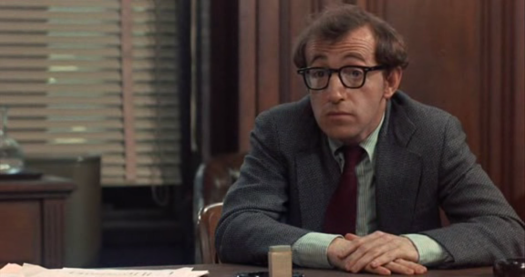
Woody Allen stars as Howard Prince, a lowly cashier perpetually up to his glasses in gambling debts, whose childhood friend Alfred Miller (Michael Murphy) is a blacklisted TV writer. Miller asks Howard to “front” for him, putting his name on Miller’s scripts so the networks will buy them, in return for a 10% commission. Soon the network clamors for more of Howard’s “work”, and he begins fronting for two other blacklisted writers. Although Woody didn’t write or direct THE FRONT, he’s still basically playing his nebbishy ‘Woody’ persona, but with…
4 Shots from 4 Films is just what it says it is, 4 shots from 4 of our favorite films. As opposed to the reviews and recaps that we usually post, 4 Shots from 4 Films lets the visuals do the talking!
In honor of Francois Truffaut’s birthday, here are…
4 Shots From 4 Films
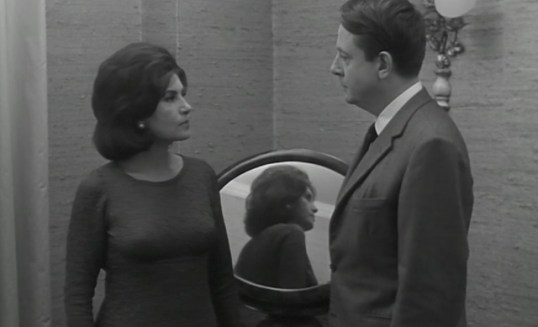
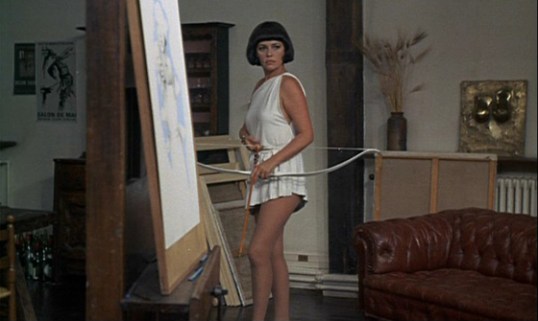
The Soft Skin (1964, dir by Francois Truffaut)
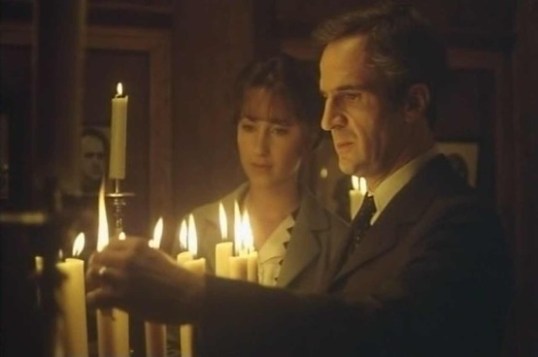
The Bride Wore Black (1968, dir by Francois Truffaut)
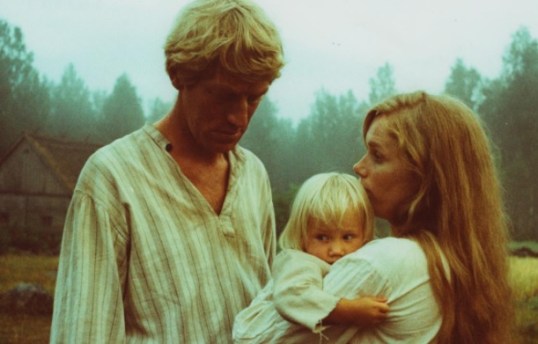
The Story of Adele H. (1975, dir by Francois Truffaut)
(With the Oscars scheduled to be awarded on March 4th, I have decided to review at least one Oscar-nominated film a day. These films could be nominees or they could be winners. They could be from this year’s Oscars or they could be a previous year’s nominee! We’ll see how things play out. Today, I take a look at the 1972 best picture nominee, The Emigrants!)
Since I’m currently dealing with either a really bad cold or the onset of the flu (let’s hope that it’s the former), I decided that Monday would be the perfect night to stay up extremely late and watch a 190-minute Swedish movie.
The Emigrants was released in Sweden in 1971 and it received an Oscar nomination for Best Foreign Language Film. Then, it was released in the United States in 1972 and it managed to receive four more Oscar nominations, including one for Best Picture. The Emigrants was the third foreign language film to be nominated for Best Picture, the first film to be nominated in multiple years, and also the first Swedish film to contend for the Academy’s top prize. (The following year, Ingmar Bergman’s Cries and Whispers would also become the second Swedish film nominated for Best Picture.) At the same time that The Emigrants was nominated for Best Picture, its sequel, The New Land, was nominated for Best Foreign Language Film. 1972 was an interesting year.
The Emigrants opens in 1844, in Sweden. Karl Oskar (Max Von Sydow) has married Kristina (Liv Ullmann). Like his father before him, Karl Oskar is a farmer. It’s an exhausting life. There is never enough food to eat. The weather is perpetually gloomy. The harvest is always disappointing. As poor farmers, Karl Oskar and his family face constant prejudice. In Sweden, the only thing more corrupt than the government is the church. After one of his daughters starves to death, what choice does Karl Oskar and his family have other than to escape to America?
As Karl Oskar’s brother, Robert (Eddie Axberg), explains, the best rice comes from the Carolinas. The best farmland is in America. In America, anyone can become rich. Anyone can walk up to the President and talk to him without running the risk of being imprisoned or executed. (In 1844, ordinary citizens could stop by the White House and make an appointment to see the President. This, of course, would change decades later, after a disgruntled office seeker shot President Garfield.) In America, Robert says excitedly, no one works more than 14 hours a day! Even slaves can own land and make their own money!
The Emigrants deals with their Karl Oskar and his family’s voyage to America. Karl Oskar and Kristina do not travel alone. Kristina’s uncle (Allan Edwall) is with them and hopes that, in America, he will be allowed to freely practice his religious beliefs. A former prostitute, Ulrika (Monica Zetterlund), is also with them, hoping a new land will mean a better life for both herself and her daughter. Even Robert’s best friend, Arvid (Pierre Lindstedt), going with them. It’s not an easy journey. Not everyone survives the voyage to North America but those that do soon find themselves in a young and untouched country where anything seems to be possible.
Swedish cinema has a reputation for being dark and brooding but those are two words that definitely do not apply to The Emigrants, which is about as positive a portrait of America as you could ever hope to see. Regardless of whatever tragedy may occur during the journey, this movie leaves no doubt that the journey was more than worth it. It unfolds at a pace that is perhaps a bit too leisurely but, at the same time, it’s also an achingly pretty movie with shots that bring to mind the best of Terrence Malick. In fact, there are times when the film is almost too pretty. It’s possible to get so caught up in looking at all the beauty around Karl Oskar and Kristina that you lose track of the story. Max Von Sydow and Liv Ullmann are both achingly pretty as well and, even more importantly, they’re believable as a married couple who are often equally in love and equally annoyed with each other.
It was interesting to go from watching The Grapes of Wrath to watching The Emigrants. If The Grapes of Wrath was an American nightmare, The Emigrants is about as pure a celebration of the American Dream as you’re going to find. It lost the Oscar for Best Picture to a far different film about the immigrant experience in America, The Godfather.
00:12 — Newlyweds speeding on a curvy mountain road? What could go wrong?
00:23 — There go the brakes!
00:31 — That sharp turn will look familiar to anyone who has ever seen the Duke boys outrun old Roscoe.
00:36 — It’s true what they say. Right before you die, you hear the opening of a bad 80s song.
00:50 — I’ve gotten worst cuts from bumping my head on a low doorway.
00:57 — Dude, did you just leave your wife behind in the car?
00:59– This is Winger. Kip Winger got his start as a backup musician and was a member of Alice Cooper for two years. Until Nirvana changed the face of music, Winger was responsible for some of the most generic hits of the 1980s.
01:21 — How long until we get a shot of the man sitting alone on that same swing?
01:32 — “Look, I’m spinning around with my guitar! Just like we did in practice!”
01:50 — “I remember how much we loved this wall.”
01:59 — It took 37 seconds to go from swinging together to swinging alone.
02:08 — Nobody came to the wedding but she’s going to go ahead and throw the bouquet anyway.
02:20 — It might be easier for the first responders to do their job if Winger would get out of the way.
02:46 — GUITAR!
03:07 — “My wife’s dead. Time to learn how to play an instrument!”
03:15 — Watch out, he’s driving again.
03:22 — Did he ever figure out why his brakes out went out in the first place? This might be a case for Jim Rockford.
03:36 — They still haven’t put out the fire? Is this what my tax dollars are paying for?
03:38 — I would be pissed off too. Put out the damn fire!
03:58 — That dude cannot drive.
04:12 — How does he keep doing this shit without getting a scratch on him?
04:27 — “How am I going to get home?”
To call Winger a “hair metal” band is probably an insult to hair metal bands but they did have a few hits. They also got on the nerves of Metallica’s Lars Ulrich and Mike Judge, the creator of Beavis and Butthead.
(With the Oscars scheduled to be awarded on March 4th, I have decided to review at least one Oscar-nominated film a day. These films could be nominees or they could be winners. They could be from this year’s Oscars or they could be a previous year’s nominee! We’ll see how things play out. Today, I take a look at the 1940 best picture nominee, The Grapes of Wrath!)
How dark can one mainstream Hollywood film from 1940 possibly be?
Watch The Grapes of Wrath to find out.
Based on the novel by John Steinbeck and directed by John Ford, The Grapes of Wrath tells the story of the Joad family and their efforts to neither get sent to prison nor starve to death during the Great Depression. When they lose their farm in Oklahoma, they head for California. Pa Joad (Russell Simpson) has a flyer that says someone is looking for men and women to work as pickers out west. The 12 members of the Joad Family load all of their possessions into a dilapidated old truck and they hit the road. It quickly becomes apparent that they’re not the only family basing all of their hopes on the vague promises offered up by that flyer. No matter how much Pa may claim different, it’s obvious that California is not going to be the promised land and that not all the members of the family are going to survive the trip.
Tom Joad (Henry Fonda) is the oldest of the Joad sons. He’s just been released from prison and he’s killed in the past. Having been in prison during the start of the Great Depression, Tom doesn’t realize how bad things truly are until he arrives home and sees someone he grew up with using a tractor to knock down a house. (It’s just business, of course. The owners of the house can’t pay their bills so the house gets destroyed.) The film’s story is largely told through Tom’s eyes and Henry Fonda gives a sympathetic performance, one the gets the audience to empathize with and relate to a character who is a total outsider.
As for the rest of the Joad Family, Ma (Jane Darwell) is the glue who holds them together and who refuses to allow them to surrender to despair. (And yet even Ma is forced to make some tough choices when the starving children of one work camp ask her to share her family’s meal with them.) Rosasharan (Dorris Bowdon) is pregnant while Grandpa (Charley Grapewin) is too sickly for the trip but doesn’t have anywhere else to go. And then there’s Casy (John Carradine), the former preacher turned labor organizer. Casy is not blood-related but he soon becomes a member of the family.
The Joads have a healthy distrust of the police and other authority figures and that turns out to be a good thing because there aren’t many good cops to be found between Oklahoma and California. Instead, the police merely serve to protect the rich from the poor. Whenever the workers talk about forming a union and demanding more than 5 cents per box for their hard work, the police are there to break heads and arrest any troublemakers on trumped up charges. Whenever a town decides that they don’t want any “Okies” entering the town and “stealing” jobs, the police are there to block the roads.
The Grapes of Wrath provides a portrait of the rough edges of America, the places and the people who were being ignored in 1940 and who are still too often ignored today. John Ford may not be the first director that comes to mind when you think of “film noir” but that’s exactly what The Grapes of Wrath feels like. During the night scenes, desperate faces emerge from the darkness while menacing figures lurk in the shadows. When the sun does rise, the black-and-white images are so harsh that you almost wish the moon would return. The same western landscape that Ford celebrated in his westerns emerges as a wasteland in The Grapes of Wrath. The American frontier is full of distrust, anger, greed, and ultimately starvation. (Reportedly, the film was often shown in the Soviet Union as a portrait of the failure of America and capitalism. However, it was discovered that Soviet citizens were amazed that, in America, even a family as poor as the Joads could still afford a car. The Grapes of Wrath was promptly banned after that.) John Ford is often thought of as being a sentimental director but there’s little beauty or hope to be found in the images of The Grapes of Wrath. (Just compare the way The Grapes of Wrath treats poverty to the way Ford portrayed it in How Green Was My Valley.) Instead, the film’s only hint of optimism comes from the unbreakable familial bond that holds the Joads together.
As dark as it may be, the film is nowhere near as pessimistic as the original novel. The novel ends with a stillborn baby and a stranger starving to death in a barn. The film doesn’t go quite that far and, in fact, offers up some deus ex machina in the form of a sympathetic government bureaucrat. (Apparently, authority figures weren’t bad as long as they worked for the federal government.) That the book is darker than the movie is not surprising. John Steinbeck was a socialist while John Ford was a Republican with a weakness for FDR. That said, even though the film does end on a more hopeful note than the novel, you still never quite buy that things are ever going to get better for anyone in the movie. You want things to get better but, deep down, you know it’s not going to happen. Tom says that he’s going to fight for a better world and Fonda’s delivers the line with such passion that you want him to succeed even if you know he probably won’t. Ma Joad says the people will never be defeated and, again, you briefly believe her even if there’s not much evidence to back her up.
Even when viewed today, The Grapes of Wrath is still a powerful film and I can only guess what it must have been like to see the film in 1940, when the Great Depression was still going on and people like the Joads were still making the journey to California. Not surprisingly, it was nominated for best picture of 1940, though it lost to Alfred Hitchcock’s Rebecca.





 Through the Shattered Lens