by Gerald Gregg
by Gerald Gregg
Whenever I watch this video, I was tempted to compare it to The Belko Experiment but, actually, the video came out before the movie. So, perhaps The Belko Experiment should be compared to this.
Of course, the suggestion in this video is that the office riot is a scheduled daily event, one that — like The Purge — is designed to keep people in their place.
Big Data is probably best known for Dangerous. Personally, I think Big Data is responsible for some of the most important music of the decade. You’re free to agree or disagree as long as you understand that I’m right.
Enjoy!
What’s an Insomnia File? You know how some times you just can’t get any sleep and, at about three in the morning, you’ll find yourself watching whatever you can find on cable? This feature is all about those insomnia-inspired discoveries!
Last night, if you were in a hotel room in Alabama and you discover that you couldn’t get to sleep despite having a busy day ahead of you, you could have always turned on the TV and watched the 1996 musical extravaganza, Evita.
That’s what I did!
Evita, of course, is based on the award-winning musical by Tim Rice and Andrew Lloyd Webber. Opening in 1952, with Argentina being thrown into mourning and chaos by the death of Eva Peron (Madonna), the film then flashes back to follow Eva as she goes from being a child of poverty to a well-known actress to eventually the wife of Argentina’s president, Juan Peron (Jonathan Pryce). The majority of her story is told to us by Che (Antonio Banderas), a cynical observer who pops up in various disguises and who is always quick to accuse Eva of selling out the poor while, at the same time, professing to be as obsessed with her as everyone else. Much as they did with the story of Jesus in Jesus Christ Superstar, Rice and Lloyd Weber use the story of Eva Peron to explore what it means to be a celebrity in an unstable world.
(If anyone ever decides to produce a musical about the Kardashians, they would be fools not to approach Rice and Lloyd Webber to write it.)
Evita is kind of a strange film. On the one hand, it’s a wonderful spectacle. Director Alan Parker does a wonderful job visually interpreting the music. The sets are huge and ornate. The costumes are to die for. There’s never a moment when you don’t want to look at the screen. Parker keeps the action moving and, regardless of how cynical one may be about politics, it’s hard not to be impressed by the army of extras that march through the film, chanting “Peron.” While both the musical and film undoubtedly took liberties with the actual story (and don’t watch this film expecting to see any acknowledgment of the countless number of Nazi war criminals that Peron welcomed to Argentina after the fall of the Third Reich), it still does a great job of capturing the sweep of change and revolution. You watch the film and you understand why the citizens of an unstable country would put their faith in messianic leaders like the Perons. Jonathan Pryce does a good job playing Peron and Antonio Banderas is absolutely on fire as Che.
(In some stage productions, Che is specifically portrayed as being a young Che Guevara. Guevara, of course, was a racist mass murderer who became an icon because he was photogenic. Fortunately, the film is content to portray Che as simply being a politically active citizen of Argentina.)
And yet, there is an emptiness at the center of this adaptation of Evita and that emptiness is named Madonna. Strangely, for someone who has been a star longer than I’ve been alive, Madonna has absolutely zero screen presence. She looks glamorous enough for the part and she’s got a good enough voice for the songs but, whenever she actually has to act, Madonna’s performance feels awkward and forced. Her performance is too obviously calculated, and, as a result, there’s nothing natural about her or her interpretation of Evita. To put it simply, she tries too hard. She comes across as the type of performer who doesn’t so much smile as she acts the process of smiling. When Madonna performs opposite Pryce and Banderas, they’re both good enough to carry her through their shared scenes. But whenever Madonna has to hold the screen on her own, the film falls strangely flat.
The end result is a strangely uneven film, one that leaves little doubt that Eva Person was loved while, at the same time, never seeming to understand why.

Previous Insomnia Files:

by Bill Edwards
Greetings from Mobile, Alabama!
So, originally, the plan was to share music videos about Alabama today and tomorrow but guess what? It turns out that there really aren’t that many good Alabama-centered music videos. There isn’t a music video for Sweet Home Alabama. All Summer Long is actually about Michigan. It is true that there’s a lot of country songs (and videos) about Alabama but picking one of them would mean sorting through a lot more country music than I’m really comfortable dealing with, especially when I’m just on a 2-day business trip.
(No offense meant, Alabama. You’re a lovely state.)
So, instead, today, I’m going to share this little gem from Elle King. I like the retro feel. It reminds me not so much of a James Bond film as much as one of the James Bond rip-offs that came out of Italy and Germany in the late 60s.
Enjoy!
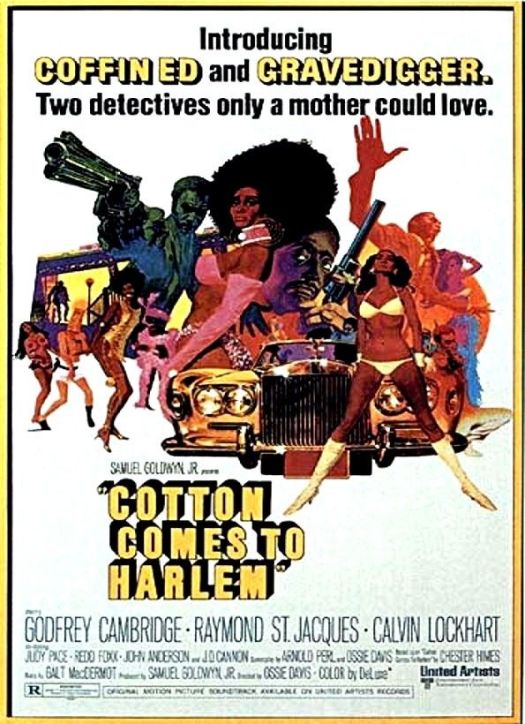
I’m not really sure if COTTON COMES TO HARLEM qualifies as a Blaxploitation film. Most genre experts point to Melvin Van Peebles’ SWEET SWEETBACK’S BADASSSSS SONG and/or Gordon Parks’s SHAFT , both released in 1971, as the films that kicked off the Blaxploitation Era. Yet this movie contains many of the Blaxploitation tropes to follow, and is based on the works of African-American writer Chester Himes.
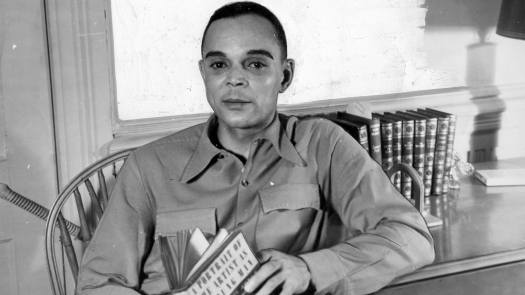 Hardboiled author Chester Himes
Himes (1909-1984) began his writing career while doing a prison stretch for armed robbery. After his short stories started being published in Esquire, he was paroled in 1936, and soon met poet Langston Hughes, who helped him get established in the literary world. Reportedly, Himes worked for a time as a screenwriter for Warner Brothers in the 40’s, but was let go when a racist Jack Warner declared he “don’t want no n*ggers on this lot” (1). His first …
View original post 591 more words

by Frank Cozzarelli
I’m going to be in Alabama for the next three days so, naturally, I decided that today’s music video should be Sweet Home Alabama. Since the song was recorded before music videos were really a big thing, Lynard Skynard never did a video for their original recording. However, I was able to find a video for Keenan West’s soulful cover version.
Sweet Home Alabama was originally recorded in 1973, as a response to a song by Neil Yong that was called Southern Man. In that song, Neil Young looked down on the South from the safety of Canada and basically damned everything he saw. In response, Ronnie Van Zant wrote:
Well, I heard Mister Young sing about her
Well, I heard ol’ Neil put her down
Well, I hope Neil Young will remember
A Southern man don’t need him around anyhow
Not surprisingly, Sweet Home Alabama has been a popular but controversial song in the past. Over the years, several critics — mostly folks from up north who don’t really get nuance — have assumed that Sweet Home Alabama was meant to be some sort of right-wing political track. What they miss is that the song is openly critical of Alabama’s segregationist governor. (There’s a reason why there’s a chorus of “boo! boo! boo!” after the governor is mentioned.) Sweet Home Alabama was less about defending the South and more about calling out the self-righteousness of northern activists who attacked the South while either ignoring or rationalizing the racism in their own back yard.
(And if you want argue with me about that interpretation, I’m going to need you to first read Common Ground by J. Anthony Lukas. Don’t come at me unless you’re willing to discuss what happened in the early 70s when Boston attempted to integrate its schools.)
Anyway, this is a good cover version and nicely heartfelt video.
Enjoy!
 The year is 1973. The American Solider (played by David Carradine, who also directed) has just been discharged from Vietnam and is now hitchhiking across an America that he no longer understands. When he reaches a small town in Kansas, he stumbles across a run-down carousel sitting in an overgrown field. The Soldier decided to spend the night camping in the field and, the next morning, he sets out to rebuild the old merry-go-round.
No one in town can understand why the Soldier is doing what he is doing. The local teenagers harass him while a silent and beautiful girl in a white dress (played by Carradine’s then-partner, Barbara Hershey) brings him a toolbox but runs away whenever the Soldier tries to speak with her. Some of the older townspeople, led by gas station owner Mike (Michael Greene), help the Soldier by giving him odd jobs and deals on equipment and tools. But, when the Soldier refuses to attend a weekly cockfight, both Mike and eventually the entire town turns against him.
Even with the community refusing to help, the Soldier continues his work. Finally, the Soldier needs only one last piece to complete the restoration. Mike agrees to give it to him on the condition that the Soldier first fight a dog.
Based on the 1948 novel, The Perfect Round, Americana was a passion project for both David Carradine and Barbara Hershey. They first learned of the book and its story in 1969. Four years later, using the money that he made starring in Kung Fu, Carradine purchased the rights to the novel and set out to the bring the story to the screen. As producer, director, editor, and star, Carradine had complete artistic control over the project. This was both a blessing and a curse because Carradine spent a total of 8 years editing his film. It then took another two years for Americana to finally be picked up by a distributor, Crown International Pictures. Ten years after filming began, Americana was finally released in 1983. Carradine was shooting new scenes up until two weeks before the film’s release, which explains why the Soldier suddenly and dramatically ages an hour into the completed movie.
Americana may be strange but it’s not bad. In some ways, it reminded me of what First Blood would have been like if, instead of going on a rampage, Rambo had taken the Sheriff’s advice and moved on to the next town. It has its share of pretentious moments but the overall story, about a man who, having seen so much destruction in Vietnam, now just wants to build something good, shines through. Even if her character never makes sense, Barbara Hershey is stunningly beautiful and Carradine is effectively low-key as the Soldier. Even Americana‘s controversial ending works as a statement about sacrifice. Much like the characters played by John Wayne in The Searchers and The Man Who Shot Liberty Valance, The Soldier’s role is to defend and improve a society that has no place for him inside of it.
If Americana had been released in 1973, it probably would have been ahead of its time. Few people wanted to talk about Vietnam, much less go to a movie that was a metaphor for the entire conflict. When Americana was was released in 1983, people were more interested in refighting the war and achieving victory with Sylvester Stallone and Chuck Norris and had little interest in Carradine’s more thoughtful approach. Americana got pushed into obscurity but David Carradine’s vision of post-war America is still worth watching.
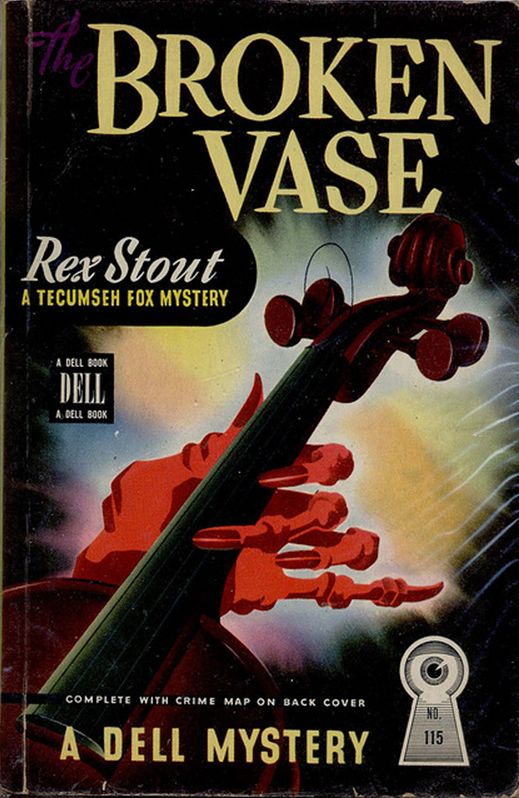
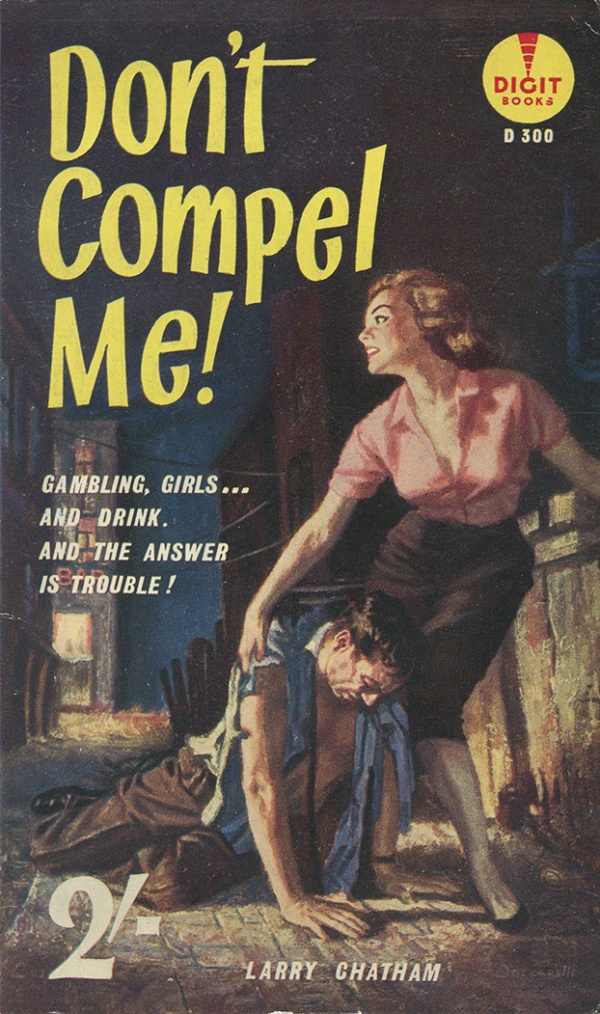
Take a walk on the dangerous side of the street with these pulp covers from artist Frank Cozzarelli. I could not find much biographical information on Cozzarelli but all of the work of his that I was able to find was from the 1950s. As you can tell from the examples below, his covers were lively and detailed and included everything that we associate with the pulp era: tough guys, beautiful women, and danger around every corner!
My favorites are the covers for Murder! and Manhunt.




 Through the Shattered Lens