The last week or so we’ve seen Lisa Marie review two films which shares a close connection with the latest “Song of the Day.”
First there was her review of Saturday Night Fever by John Badham. Then she follows it up with the so very awful, but mesmerizing sequel by Sylvester Stallone, Staying Alive. The original film had as part of it’s disco-based soundtrack the song “Stayin’ Alive” by the group Bee Gees. The sequel literally borrows the song’s title and just runs with it.
The song itself has become not just a classic, but has also become part of pop culture both good and bad. It’s been portrayed as a great example of the disco-scene of the mid-to-late 70’s, but also become a sort of a joke to some.
No matter where one stands on the merits of this song it’s one hell of a catchy one. No matter how much we all fail every guy will try to hit the high notes achieved by Barry Gibbs. We never succeed, but we never fail not to try over and over as we sing along.
Stayin’ Alive
Well, you can tell by the way I use my walk I’m a woman’s man, no time to talk Music loud and women warm, I’ve been kicked around since I was born
And now it’s all right, it’s OK And you may look the other way We can try to understand The New York times effect on man
Whether you’re a brother or whether you’re a mother You’re stayin’ alive, stayin’ alive Feel the city breaking and everybody shaking And were stayin’ alive, stayin’ alive Ah, ha, ha, ha, stayin’ alive, stayin’ alive Ah, ha, ha, ha, stayin’ alive
Well now, I get low and I get high And if I can’t get either, I really try Got the wings of heaven on my shoes I’m a dancing man and I just can’t lose You know it’s all right, it’s ok I’ll live to see another day We can try to understand The New York times effect on man
Whether you’re a brother or whether you’re a mother You’re stayin’ alive, stayin’ alive Feel the city breakin and everybody shakin And were stayin’ alive, stayin’ alive Ah, ha, ha, ha, stayin’ alive, stayin’ alive Ah, ha, ha, ha, stayin’ alive
Life going nowhere, somebody help me Somebody help me, yeah Life going nowhere, somebody help me Somebody help me, yeah. Stayin’ alive
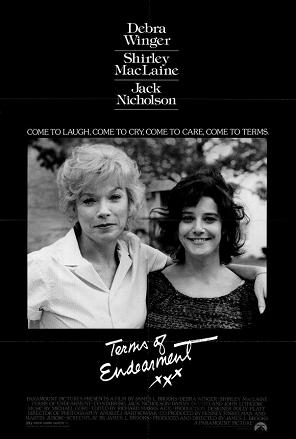
I have to admit that, when I first sat down and watched the 1983 best picture winner Terms of Endearment, I was actually taken by surprise. Before I actually saw it, I was under the impression that Terms of Endearment was considered to be one of the weaker films to win best picture. I had read a few reviews online that were rather dismissive of Terms, describing it as being well-made but overrated.
But then, a few weeks ago, I watched Terms of Endearment on Netflix. The film started with a scene of new mother Aurora Greenwood (Shirley MacClaine) obsessively checking on her daughter, Emma. Stepping into the bedroom, Aurora is, at first, scared that Emma’s dead. Without bothering to take off her high heels, Aurora nearly climbs into the crib to check on her. Fortunately, Emma starts to cry.
And I laughed because I’ve been told about how my mom used to obsessively check in on me when I was a baby. And, while my mom was never the type to wear high heels around the house, I could still imagine her climbing into a crib to check on me and my sisters.
And then, when Emma (now played by Debra Winger) married Flap Horton (a very young Jeff Daniels) over the objections of her mother, I smiled but I didn’t laugh because, in this case, I was relating to Emma. Because the fact of the matter is that every girl has known a boy like Flap Horton, the smart and funny guy who is destined to ultimately hurt her.
And when Flap got a job in Des Moines and Emma moved from Houston to Iowa, I knew — as did Aurora — what was going to happen. I knew that Flap would deal with his insecurity over not being a good provider for his wife and children by cheating on his wife. And when he did, I wanted to cry with Emma.
But then I wanted to cheer when Emma has an affair of her own. In the role of Sam, John Lithgow doesn’t have much screen time in Terms of Endearment but he does get the best line. When a rude cashier claims that she doesn’t feel that she was being rude to Emma, Sam replies, “Then you must be from New York.”
Meanwhile, the widowed Aurora is having an affair of her own. Jack Nicholson plays Garrett Breedlove, a former astronaut who now has both a drinking problem and a house with a pool. Garrett gets Aurora to loosen up. Aurora makes Garrett realize that he actually is capable of being a decent guy. MacClaine and Nicholson both won Oscars for their performances here and they deserved them.
And then, Emma was diagnosed with cancer. And I cried and cried because, at this point, I had come to think of Emma and Aurora as being real people. And when Emma told her friends that she was dying and she spent her final days with her children, I sobbed because it made me think about my mom. And now I’m sobbing as I write this review.
But it’s a great film, even if it did make me cry. Because, in the end, you’re glad that you got to know these characters. And, even through the tears, the film leaves you happy that you got to spend some time with them.
And isn’t that what a great film is supposed to do?
Well, here we are! The year is nearly halfway over and the Oscar picture … well, it’s really not that clear yet. The Cannes Film Festival just opened and maybe that will help clear up the picture a bit. Or maybe not.
Anyway, here are my early Oscar for predictions for May. (In previous months, my Oscar predictions were “way too early.” But now that we’re 5 months into 2015, the “way” can be dropped. They’re just “too early” now.) As is usual for any predictions made at this time of the year, these are mostly guesses, some random and some educated. Be sure to check my predictions for January, February, March, and April as well!
(I know that rumor has it that the Academy is going to go back to only nominating five films this year. However, I’m going to continue to make ten predictions because that’s more fun for an obsessive list maker like me.)
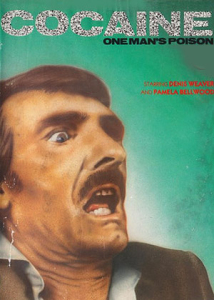
Now, I originally saw the 1983 made-for-TV movie Cocaine: One Man’s Seduction on Netflix so I have absolutely no first hand knowledge of how this film was advertised. However, I have it on very good authority (i.e., I read it on another blog) that the image above is from the film’s VHS packaging.
Just looking at this image, you would be justified in thinking that Cocaine: One Man’s Seduction was an early David Cronenberg film. Seriously, it looks like a deleted scene from Scanners and Dennis Weaver’s head is about to explode.
But no! There are no scanners in Cocaine: One Man’s Seduction. David Cronenberg did not direct this film. As far as I can tell, it wasn’t even filmed in Canada. Instead, Cocaine: One Man’s Seduction is about one man who gets seduced cocaine.
You may have noticed that I enjoy reminding you that this film is called Cocaine: One Man’s Seduction. That’s because that’s a great title. If the film had just been called Cocaine, you might watch the film expecting it to be set on a 1970s film set. And if the film had just been called One Man’s Seduction, viewers may have watched the film expecting a Double Indemnity–style film noir. But Cocaine: One Man’s Seduction leaves no doubt about what we’re about to see.
Add to that, it’s a very melodramatic title and the name of this series of reviews is, after all, Embracing the Melodrama Part 2!
Anyway, Cocaine: One Man’s Seduction is about a real estate agent named Eddie Grant (Dennis Weaver). He’s the type of semi-successful white-collar suburban guy who you just know is going to have a really over-the-top midlife crisis. He has a wife (Karen Grassle) who loves him. He has a son (James Spader — yes, that James Spader!) who wants to put off going to college for a year. Eddie also has a job where he’s viewed as being an over-the-hill relic. People looking to buy a new home simply are not impressed with Eddie’s cheap suits, mild manner, and old-fashioned scotch-after-work style.
What Eddie needs is a new wardrobe and aviator sunglasses. And, as we all know from watching movies set in the 70s and 80s, nothing gets you into aviator sunglasses faster than snorting a line of coke.
Soon, Eddie is driving a fast car, he’s wearing nicer suits, and he’s keeping a lot of secrets. Then, one day, his son — JAMES SPADER! — happens to look inside Eddie’s shave kit and discovers where dad has been hiding his cocaine.
Now, this is where I was expecting Jeff VanVondern to show up and say, ” I see a bunch of people that love you like crazy and they feel like they are losing you. And they wanna fight to get you back.” But apparently, people in the 80s did not need an intervention to get them to go to rehab. Instead, they just needed to have a dramatic nose bleed at work and nearly overdose on someone else’s kitchen floor. They also needed to be called out by James Spader.
Of course, it also helps that Eddie is friends with a recovering cocaine addict who is played by a very thin-but-already-bald Jeffrey Tambor. Jeffrey Tambor is already something of a hyperactive actor (and that’s why we love him!) so when you combine that natural tendency with a character who is supposed to be coked up, it’s something that simply has to be seen.
Anyway, Cocaine: One Man’s Seduction is a fairly good example of the-worst-that-can-happen-will-happen cinema. If nothing else, it has some worth as a time capsule and it’s undeniably interesting to see James Spader play a role that one would normally never associate with James Spader.
Cocaine: One Man’s Seduction is currently seducing viewers on Netflix.
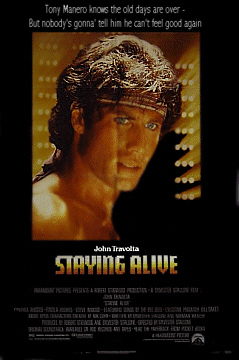
The 1983 film Staying Alive is a sequel to Saturday Night Fever.That’s right, Tony Manero’s back! And, if possible, he’s even dumber than before.
Actually, that’s not fair. The whole point of Saturday Night Fever was that Tony really was not that dumb. He was poorly educated. He was a prisoner of his culture and his economic situation. If he acted stupid, it was because he lived in a world that distrusted intelligence. If he was selfish, it was because that was his way of dealing with his own insecurities. If we got frustrated with him, it’s because we knew he was capable of more than he realized he was. In Saturday Night Fever, John Travolta gave such good performance and Tony was such a carefully drawn character that we forgave him for the many times that he let us down.
But, in Staying Alive, Tony is just an idiot. Somehow, he’s managed to escape Brooklyn. He now works as a waiter and a dance instructor and goes on auditions for Broadway shows. He has no contact with his old friends. (He never even mentions the night that one of them jumped off a bridge.) He lives in one of those scary New York flophouses — apparently the same one that Travis Bickle called home in Taxi Driver — but otherwise, Tony’s doing pretty well for himself. The only problem is that Tony is now a complete and total moron.
That really is the only conclusion that one can draw from John Travolta’s performance here. It’s not just that Travolta gives a bad performance in a role for which he was once nominated for an Oscar. It’s that Travolta gives such a bad performance that he actually transcends the accepted definition of bad. He resurrects all the tics from his Saturday Night Fever performance but he goes so overboard with them that you feel like you’re watching someone do an imitation of John Travolta playing Tony Manero than actually watching John Travolta.
Speaking of self-parody, Staying Alive was directed by Sylvester Stallone. Now, I know that when you think of the ideal director for a dance movie, Sylvester Stallone is probably the first name that comes to mind.
As for the film itself, Tony gets a job working in the chorus of a Broadway show called Satan’s Alley and, wouldn’t you know it, he eventually replaces the male lead. Tony finds himself torn between the bitchy (and, somewhat inevitably, British) star of the show (Finola Hughes) and his long-suffering, on-and-off again girlfriend Jackie (Cynthia Rhodes).
Jackie, incidentally, is also the lead singer in a band. The band’s guitarist, Carl, is in love with her. Guess who plays Carl? Frank Stallone! That’s right, the director’s brother. There is a hilarious scene where Carl plays guitar while shooting a death glare at Tony. Frank really nails that death glare.
But, ultimately, the main appeal of Staying Alive is that we get to see Satan’s Alley, which is probably the most unintentionally hilarious fake Broadway show to ever be immortalized on film. Satan’s Alley is about one man’s journey into Hell and… well, that really sums it up, doesn’t it? If you asked someone who has never danced, never listened to music, and perhaps never actually stepped outside of their bedroom to write a Broadway musical, chances are that they would come up with something like Satan’s Alley.
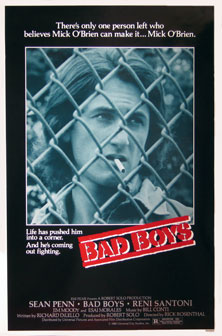
First off, I am not about to review the Michael Bay film where Will Smith and Martin Lawrence shoot people and blow things up. Instead, this Bad Boys is a film from 1983 where Sean Penn doesn’t shoot anyone but that’s mostly because he can’t get his hands on a gun. And, at one point, a radio does blow up. So, perhaps this Bad Boys has more in common with the Michael Bay Bad Boys than I originally realized.
Anyway, Bad Boys is about Mick O’Brien (Sean Penn), who is a 16 year-old criminal from Chicago. One night, when one of his crimes goes wrong, Mick’s best friend (Alan Ruck) is killed and Mick accidentally runs over the brother of rival gang leader, Paco (Esai Morales). Mick is sent to juvenile detention where he and his sociopathic cellmate, Horowitz (Eric Gurry), team up to overthrow the two “leaders” of their block, Viking (Clancy Brown, with scary blonde hair) and Tweety (Robert Lee Rush). Meanwhile, Paco is arrested for raping Mick’s girlfriend, JC (Ally Sheedy), and soon finds himself living on the same cell block as Mick.
And it all leads to … violence!
(In the movies, everything leads to violence.)
Bad Boys is one of those films that seems to show up on cable at the most random of times. I’ve never quite understood why because it’s not like Bad Boys is a particularly great film. It’s hard to see anything about this film that would lead a programmer to say, “Let’s schedule 100 airings of Bad Boys!” If anything, it’s the epitome of a good but not that good film. On the one hand, you have to appreciate a film that attempts to take a serious look at both juvenile crime and the true life consequences of tossing every “lawbreaker” into a cell and locking the door. People fetishize the idea of punishing criminals but they rarely consider whether those punishments actually accomplish anything beyond satisfying society’s obsessive need for revenge. (And it’s interesting to note that the problems of 1983 are not that much different from the problems of 2015.) On the other hand, Bad Boys is way too long, heavy-handed, and repetitive. This was one of Sean Penn’s first roles and, much like the film itself, he’s good without being that good. Watching his performance, you get the feeling that James Dean would say, “Nice try.”
However, the film is saved by two actor. First off, there’s Clancy Brown as the stupid but intimidating Viking. With his bad skin, blonde hair, and a permanent snarl on his face, Brown makes Viking into a character who is both ludicrous and scary. And then there’s Eric Gurry as the small and demonic Horowitz. According to his imdb page, Gurry long ago retired from acting but anybody who sees Bad Boys will never forget him.
It’s amazing the things that you find when you randomly search the DVD section of Half-Price Books. For instance, I found a very cheap DVD of the 1982 made-for-TV film Mazes and Monsters and I simply had to buy it.
Why?
Well, just look at the cover above. Look at the ominous castle. Look at the shadowy dragons flying around it. Look at that Shining-style maze. Look at the ominous tag line: “Danger lurks between fantasy and reality.” And especially be sure to look at Tom Hanks gazing serenely over it all.
“Wow,” I thought, “Tom Hanks fights a dragon? This is something that I’ve got to see!”
Well, there are no dragons in Mazes and Monsters. There are a few monsters but they’re only briefly seen figments of Tom Hanks’s imagination. The film is about a group of college students who obsessively play an RPG called Mazes and Monsters. When one of the students (an annoying genius who wears wacky hats and is played by an actor with the surprisingly poetic name of Chris Makepeace) suggests that they play Mazes and Monsters “for real” in some caverns near the college, it leads to Robbie (Tom Hanks) have a mental breakdown. Soon, Robbie is convinced that he’s actually a monk. He breaks up with his girlfriend because he doesn’t want to violate his vow of celibacy. (Of course, the real fantasy is that a college student obsessed with playing Mazes and Monsters would have a girlfriend in the first place but anyway…) He keeps seeing imaginary minotaurs lurking in the shadows. Finally, he runs off to New York on a quest to find “the great Hall.” It’s up to his friends to find him and hopefully impart an important lesson about the dangerous reality of RPG addiction.
Or something.
Listen, to be honest, if not for Tom Hanks, there would be no reason to watch Mazes and Monsters. It’s poorly acted. It’s written and directed with a heavy hand. There’s some nice shots of downtown New York City but otherwise, it’s visually drab.
But, because Tom Hanks is in it and he’s playing a role that demands that he go totally over-the-top in his performance, Mazes and Monsters is totally worth watching. If you’ve ever wanted to see Tom Hanks wander around New York City while dressed like a monk, this is the film for you. If you’ve ever wanted to see Tom Hanks start to tremble while explaining that, as a monk, he’s not allowed to kill minotaurs, this is the movie for you. Most of all, if you’ve ever wanted to see Tom Hanks shrieking, “THERE’S BLOOD ON MY KNIFE!” while standing in an old school phone booth, this is definitely the movie for you!
Seriously.
Considering that Tom Hanks is currently viewed as being some sort of elder statesman of American film (and, even more importantly, Hanks seems to view himself as being some sort of national treasure), there’s something oddly satisfying about seeing him before he became THE Tom Hanks. It’s good to be reminded that, at one time, he was just another young actor doing his best in a crappy made-for-TV movie.
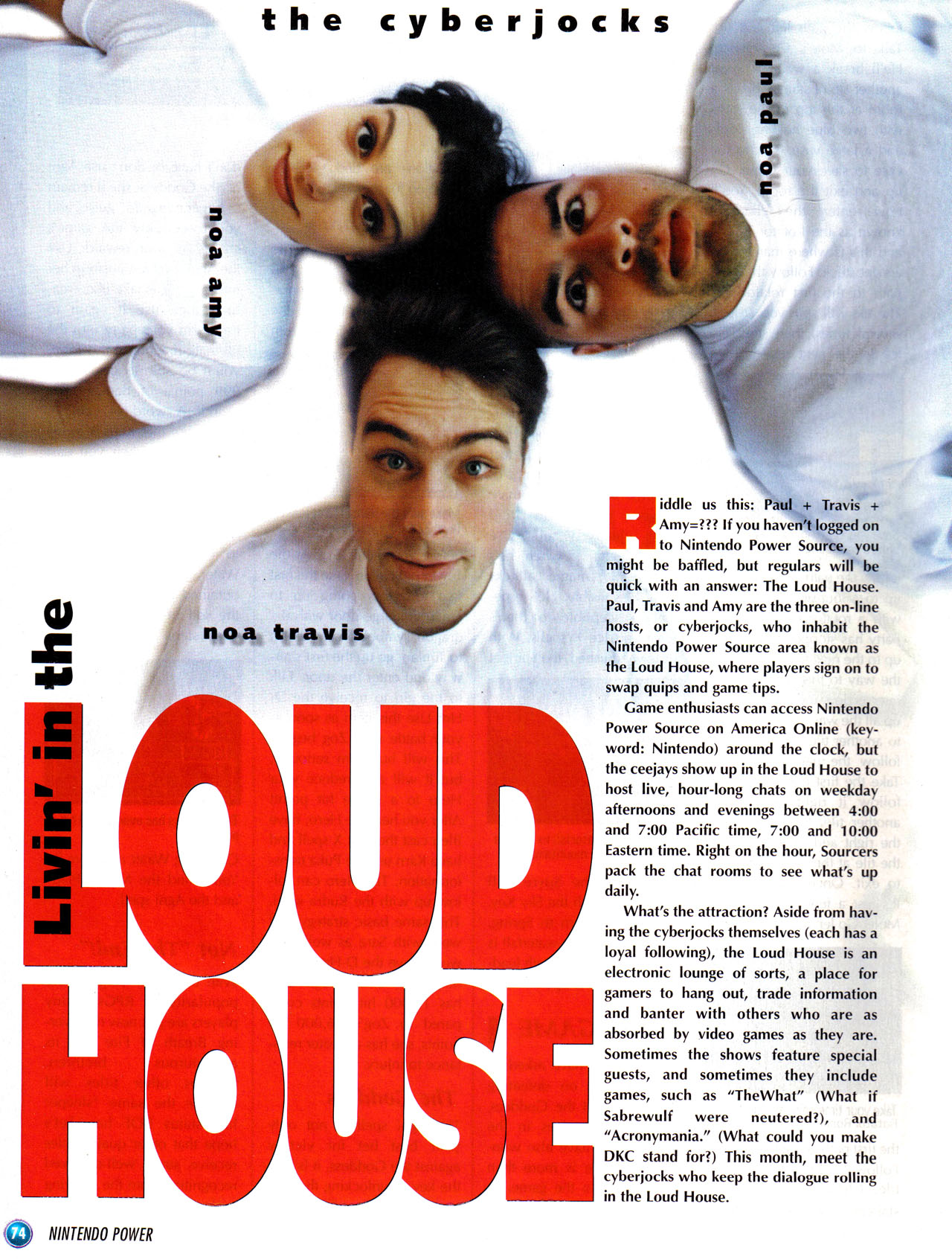
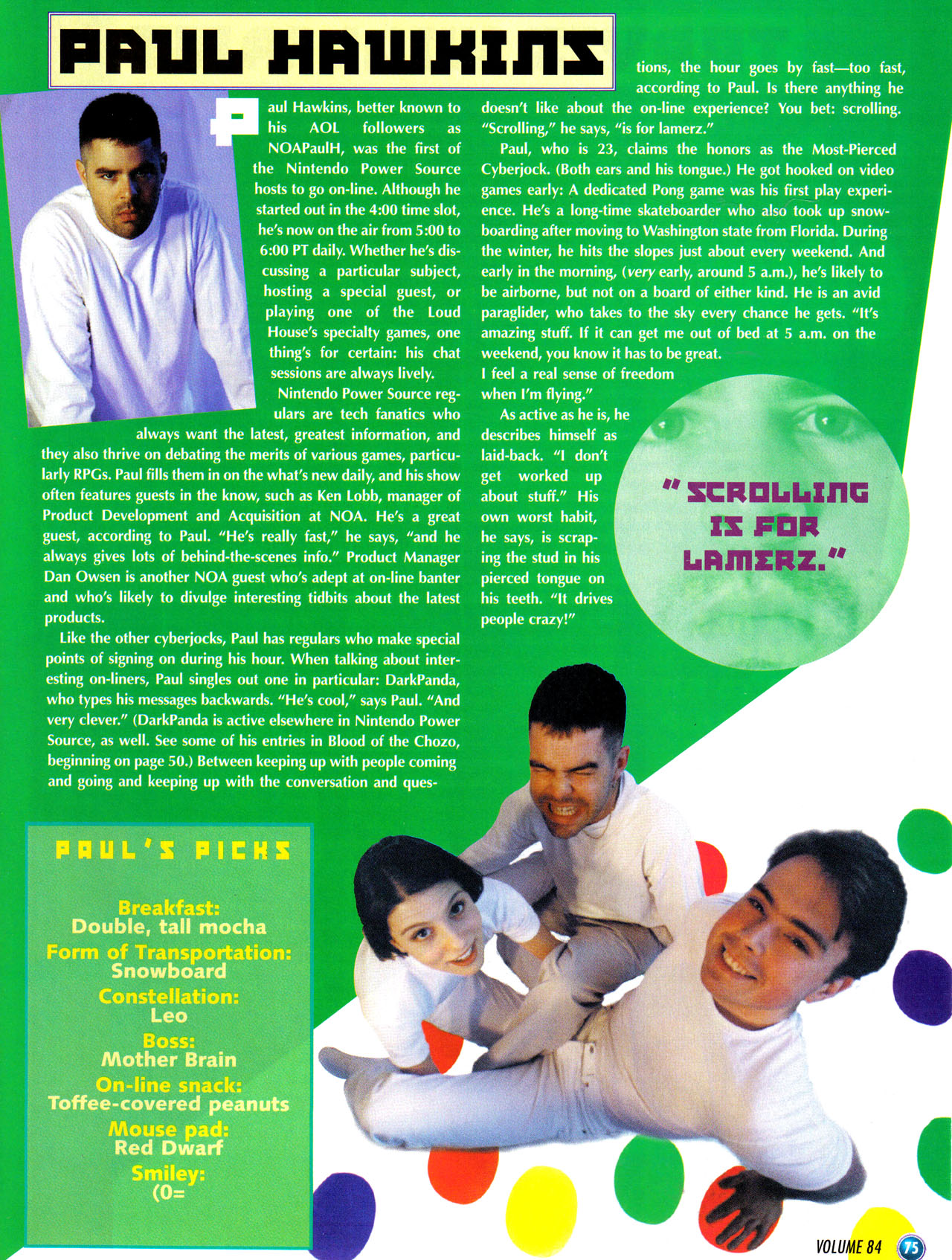
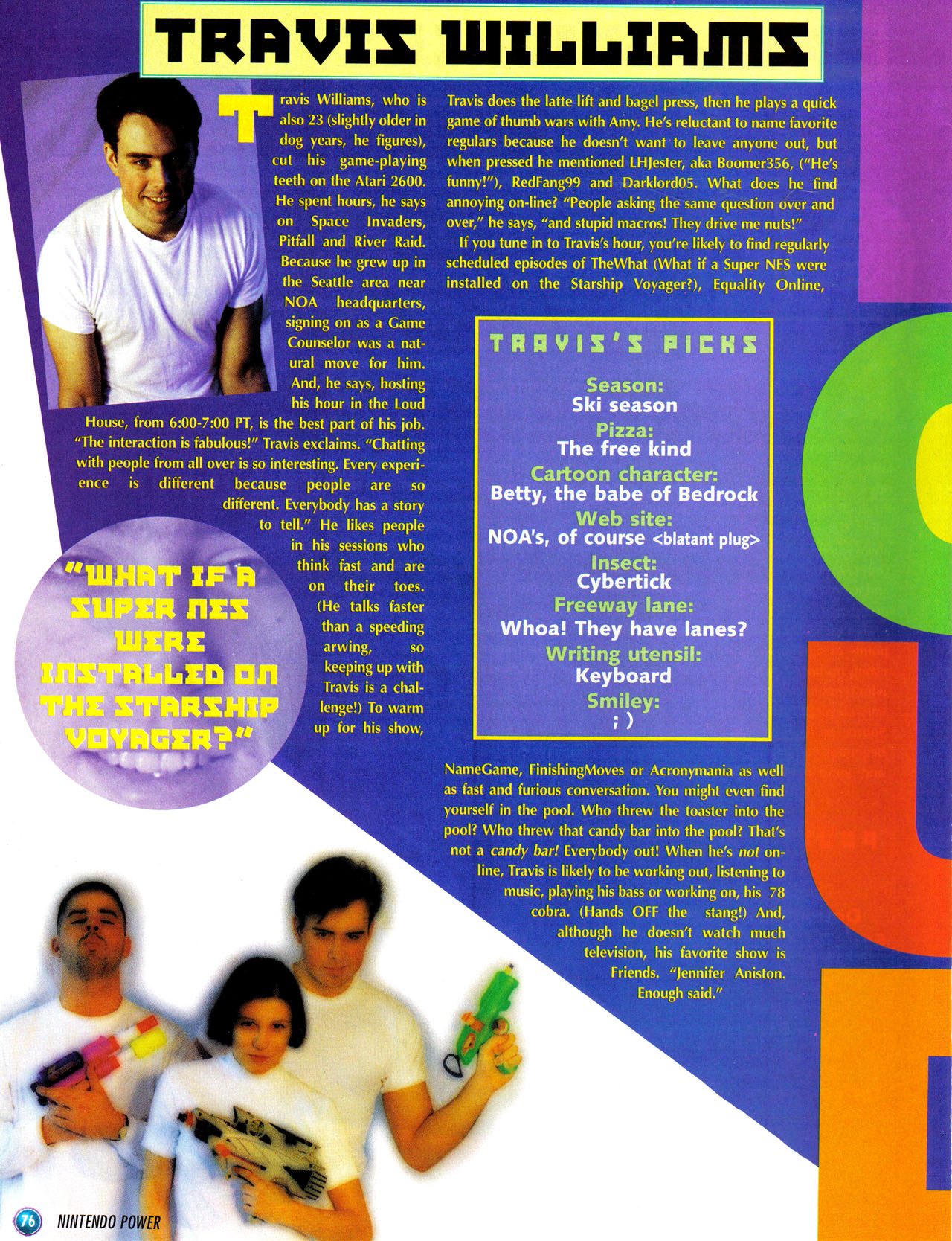
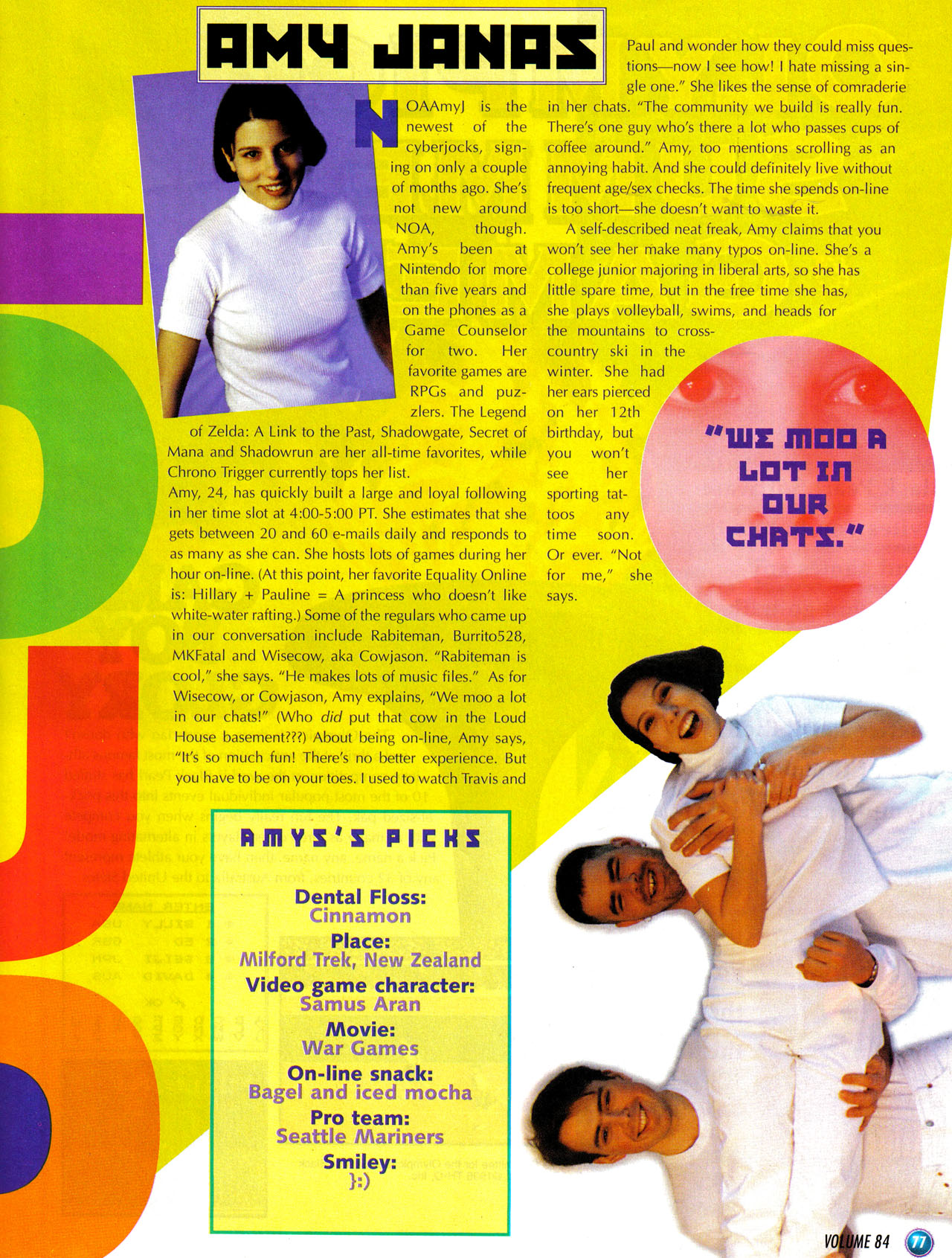
My childhood heroes all had the first name “NOA”. They were the living, breathing avatars of Nintendo of America. And Nintendo was perfection, for all practical purposes. But like demigods, they were simultaneously divine and human. NOAPaul was a tough guy. A real street thug, with a tongue ring and everything. NOATravis, he was your boyband jock. Oh, the envy. And NOAAmy… did you know that she played Secret of Mana and Chrono Trigger? I did. Imagine it: a girl who played RPGs.
One day, I was going to be a Nintendo Power Cyberjock too. It was my highest aspiration. Forget astronauts and fire fighters. If Paul and Travis could become Nintendo of America, so could I. And maybe I would make Amy my wife, though she was a withering old spinster of 24.
At 11 years old, I was dedicated to my future career. To become a professional avatar of Nintendo, you had to really know your facts. I was already on the right track, because I owned all 84 issues of Nintendo Power magazine. The knowledge was at my fingertips, but it was vast… so I decided to cheat.
I booted up my Gateway 2000 386/25–it was mine in practice, since my mother finished college–and I headed straight to WordPerfect. If I could quickly search a game name and know exactly which issue and page to check for information… A month later, I possessed a complete index of the entire Nintendo Power catalog. And you thought you were a lame kid.
But there I was, equipped for battle. Ask me about a game. I dare you. I had it down to a science. I could look up a relevant article and spit out an answer within a minute, and Nintendo of America would never know that I cheated. They would think I was just that good. I sent in my job application right then and there, along with a crayola masterpiece of Samus Aran battling Ridley.
I didn’t get the job, but that was probably for the best, since we did not actually subscribe to dial-up internet for another six months and “Cyberjocks” worked online. A minor technicality. Still, I kept Nintendo Power Issue 84 close at hand.
The fame. The glory. The honor.
*Section removed due to copyright issues. They were compressed scans of an out of print magazine spread welcoming you to the Nintendo Loud House with some amazingly dorky-looking staff members striking a pose.*
My first actual experience on http://www.nintendo.com, some time in 1996, was overwhelming. I had waited so long for this. Line by line, the pixels of that jpeg unfurled in slow motion. “Nintendo Power Source”. “Welcome to http://www.nintendo.com”. I was there. And it was wonderful.
Nintendo.com was a disorganized sea of information that you could spend all day exploring (especially on a 14.4k modem). There was a frame up top filled with totally nondescript or misleading images that would link you to different parts of the site, and each of those sections had its own upper frame of links. They could take you anywhere. The internet had no rules yet, you see. For instance, there was a really buried subsection called the “N-List” that linked all kinds of random fan sites totally unmoderated by Nintendo, mostly hosted on Geocities. As a consequence, through Nintendo.com you discovered such wonders as this flattering photo of the founder of popular present-day gaming website RPGamer:
(Sorry.)
Ultimately though, I went to the Loud House. That was where the NOA gods resided. To get there, I had to travel underground, down an elevator shaft that consisted of scrolling really far in a narrow frame to the left. If I thought the main site enormous, the Loud House was madness. They had a proto-forum–everyone still called them bulletin board systems then, though it was not an authentic BBS–where topics appeared in a single endless list set to a fire-engine red background with the texture of an aluminum tool box. Damn was it beautiful.
I knew there had to be at least a few dozen RPG fans out there besides myself and NOAAmy, but I never predicted this. The realization that I could be a part of a secret society of hundreds of Square(soft) aficionados must have waylaid my dreams of working for Nintendo for a time, because I don’t remember doing anything but theorycrafting Final Fantasy III (sic) for the next few months. I would spend every school bus ride studying my official players guide, looking for minute typographical errors that could be exploded into radical theories to share with my peers. I actually killed 4,000 dinosaurs in that forest near the Veldt in the false hope of resurrecting General Leo.
Eventually the forums changed, and so did I. They became more manageable and subdivided into “boards”. Me, I became 12, and that meant responsibility. I couldn’t just be another anonymous Joe researching Final Fantasy VI anymore, aging in obscurity as fame and fortune passed me by. I needed to get back to my dreams, and that required becoming involved in the social community. So I did what anyone would have done back then to turn the page: I changed my name.
That was a principle of the Old Internet that runs totally counter to modern social media culture and may have culminated with 4chan and the birth of Anonymous–the hactivist organization that never actually existed yet frequented headline news throughout 2008. You were really empowered to dictate how a community perceived you. You could completely ‘reset’ your identity at the click of a button, experimenting with different personas until you found one that jived with the community. Nintendo Power even encouraged this behavior in Issue 72:
So died BobaFett207, and a new entity dove into the RPGs board with a mission to earn the unrivaled respect and adoration of its citizens. (His mom also lifted the half hour limit on web browsing, so he actually had time to read replies and stuff.)
What I found was appalling. My plans were immediately surmounted by a more pressing issue. The release of Final Fantasy VII was rapidly approaching, and people were actually discussing the Playstation.
The Playstation. The Sony Playstation, in what would one day be my Nintendo kingdom. These were the filthy traitors who planned to endorse Squaresoft’s debauchery, and they had to be destroyed. I charged head-first, furious and uncaring of the consequences. “JERK!” “IDIOT!” “HOW COULD U!” I let the hatred flow through me, channeling it into dozens of single-sentence replies, until a thread title appeared that gave me pause. It said “ATTN: SHADOW 4000”. That was me! Registered only one day, and my new identity was already known to the community! The post, no doubt, would praise me for my heroic defense of truth and the Nintendo 64.
It did. This was where, in retrospect, things got weird. I wasn’t banned by a forum moderator, or even told to shut up. No, I was invited to join the NES Knights–a legion of warriors who, like me, vowed to fight against the evils of the Sony Playstation. I was promptly recruited and informed that we were at war with the Freedom Knights, who had organized to defend forum-goers’ rights to enjoy non-Nintendo products.
I earned my first stripes when the PSX Invaders came to town. They were a band of ruffians that would show up every few weeks and ravage the RPGs board by posting hundreds of threads titled “N64 SUX”, “PSX 4 LIFE”, etc. Certain that I could stop the incessant barrage of spam posts, I set a clever trap. “ATTN: PSX INVADERS” the thread title ran, and when they clicked it… BAM! “***FIRE LANCE X***” As I am sure you expected, this worked phenomenally. Two invaders stopped spamming and engaged me with their own barrage of attacks. I parried them as best I could, while fellow forum-goers engaged them similarly in other threads. The battle was long and bloody, but we were victorious.
I had found my true calling. Every evening, after school, I would log on to the Loud House RPGs board and train with my allies or engage rival groups. I even started my own, which amassed over 100 members. This was clearly my best route to becoming an official Nintendo-employed Cyberjock… while that dream lasted. It all came crashing down on Thanksgiving Day 1997. Nintendo deleted the Loud House.
And in its place, they created NSider. NSider was ugly, stupid, and it featured Diddy Kong instead of Fulgore.
>
Worst of all, by far, they renamed my precious board “Other RPGs”. Other! Lesser! Inconsequential! And why? The only reasonable explanation was to emphasize the Zelda board. Practically in tears, I called my RPGs brothers to arms. The Zelda board must pay. That war would last for weeks, because the Zelda board was well organized under the Zelda Alliance. (This same game had been going on there all along, despite there being almost no overlap in users.)
As it turned out, the game was not just an RPGs board thing or a Nintendo.com thing, but a common trend throughout the internet. As we transitioned away from NSider to Geocities and forum hosts like VantageNet and InsideTheWeb, we encountered more of the same everywhere. It was as if thousands of kids were dumped into an empty field and told: “Play. No one is watching.” You will never find a Wayback Machine record of the bizarre, seemingly pandemic consequences, but if you were socially engaged in the 90s internet before high school, you probably belonged to some sort of guild.
I tended to see a change in people when they got to be 13 or 14, and the game for them might transition into an interactive story. These were shared universe worlds in which participants would write a collaborative fiction story through their individual characters’ perspectives. It wasn’t RP, but rather a real (poorly written and highly derivative) novel, and it could go on for years. The one that began on the Loud House RPGs board amassed thousands of pages (which were archived). Alternatively, the game would evolve into cyberbullying. Account security was non-existent and cracking tools were a dime a dozen on Yahoo!. A lot of sites also used forms to password protect their content, and the redirect link was usually embedded right in the HTML code. As a high school freshman, you were too “mature” to pretend you were a wizard anymore, so you pretended you were a 1337 hacker instead. It was not uncommon to see a Geocities site vanish over night, replaced by “Conquered by” so-and-so. My first email address got hijacked. It was actually kind of stressful.
But that was the 90s internet as I remember it. …Am I supposed to inject some sort of closing point or moral here?
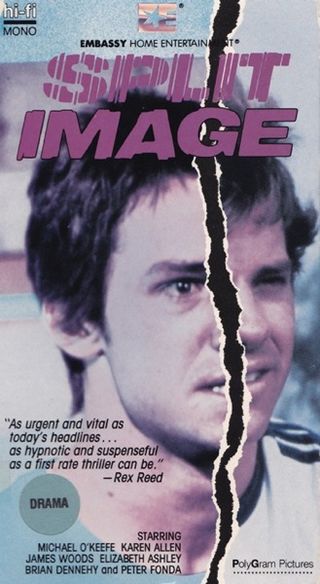
Unlike Desperate Lives, the 1982 melodrama Split Image is available to be viewed on YouTube. In fact, you can watch it below and I suggest that you do so. It’s a pretty good film and, apparently, it’s never been released on DVD or Blu-ray and it’ll probably never be available on Netflix either. So, if you’ve ever wanted to see Peter Fonda play a cult leader, your best bet is to watch the video below.
But before you watch the video, here’s a little information on Split Image, one of the best films that you’ve never heard of.
Essentially, the film follows the same plot as the Canadian film Ticket To Heaven.A college athlete (played by Michael O’Keefe) starts dating a girl (Karen Allen) who is a member of a sinister religious cult. Soon, O’Keefe is a brainwashed member of the cult and only answering to the name of Joshua. (The head of the cult is played, in an appropriately spaced-out manner, by Peter Fonda.) His parents (Brian Dennehy and Elizabeth Ashley) hire a cult deprogrammer (James Woods) to kidnap their son and break Fonda’s hold on him. However, it turns out that Woods’ methods are almost as psychologically destructive as Fonda’s manipulation.
Even if it’s not quite as memorably creepy as Ticket To Heaven, Split Image is still a well-made film, featuring excellent performances from Dennehy, Woods, O’Keefe, and Fonda. However, for me, the most interesting thing about Split Image is that it was largely filmed and set down here in Dallas. Just watch the scene where Woods and his men attempt to kidnap Michael O’Keefe. It was shot on the campus of Richland Community College, which is one of the places where I regularly go to run.
(Interestingly enough, 33 years after the release of Split Image, Richland still looks exactly the same!)
Rickie Fowler’s performance in the fourth round of The 2015 Players Championship today was definitely one for the ages. He shot six under on the final six holes and beat out Sergio Garcia and Kevin Kisner in a playoff, sealing the deal with a beautiful shot off the tee and a short putt on the most iconic hole on the PGA tour: the 17th at TPC Sawgrass. The sports commentators immediately started to speculate whether this might be the performance that finally launched The Players into Major Championship status, and I cringed.
The obvious argument against a fifth major is that it would dilute the significance of the other four. Four is a sort of magic number long accepted in individual sports as the amount of events that are allowed to matter most. Five would mean that no one Major Championship is as important as a Grand Slam tournament in tennis. Five would make career grand slams even more difficult to obtain. Five would forever taint the man who finally breaks Jack’s 18.
But besides that, being golf’s fifth best tournament is part of what makes The Players special. Sports history is important in golf. You get a vision in your head of how you want that history to unfold, and it gives you an emotional connection to how individual players perform. I want to see Tiger get his game back. I want to see Phil and Rory thrive. I want to see Lee Westwood and Henrik Stenson claim that elusive first major before their careers dwindle to a close. I get a sense of satisfaction watching Jim Furyk and knowing that he did pull it off. Everything ties back to those four majors. Once you win, you’re in the club of legends. I mean, no one is ever going to suggest that Shaun Micheel had a better career than Colin Montgomerie, but his feels more complete in a sense.
And that’s where The Players comes in. It’s the tournament that is almost a major. It is almost complete, but something is missing. It needs more, and the right names in the winners’ circle give it more… but never quite enough. If the majors make legends, legends make The Players. It’s one of the only tournaments where the event and the player can both benefit from each other’s prestige.
Saturday night, I had all but lost interest. In terms of seeing the tournament thrive, the top 10 was a ghost town. I felt a distant glimmer of hope that Sergio Garcia could pull something off (he nearly did). Otherwise, uh, go Bill Haas I guess. Then, Rickie Fowler surged up the leaderboard in the ultimate aura of almost. A nearly major champion who should have five or six wins on tour, his biggest career highlight was his streak of not quite winning scores in majors in 2014. He won the almost major championship in style, proving that he’s just as good as we didn’t quite believe he was. And he beat Kevin Kisner, a guy most of us were rooting against because this was the last tournament we wanted a no-name to win.
Everything about the 2015 Players Championship felt really good. A tournament in eternal need of more big name winners got one. A big name in need of career highlights got one. A guy with no highlights to speak of is now on our radar without having ultimately spoiled our fun. And Fowler’s performance was thrilling to watch besides all that. It’s no wonder the announcers were all talking Major Championship status, but it is exactly why The Players needs to stay right where it is. This year serves once again to show how well The Players fulfills its role as a “to be continued” event leading into the U.S. Open. If we made them equals, we might diminish them both.















 Through the Shattered Lens