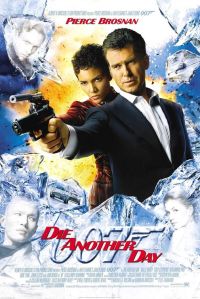
James Bond Review: Die Another Day


Leading up to the North American release of the latest James Bond feature film, Skyfall, The Shattered Lens is reviewing each and every James Bond film in the history of the franchise. Today’s film is the controversial Die Another Day, the twentieth film in the James Bond franchise, and the final such film to feature Pierce Brosnan in the titular role as 00-agent James Bond. Despite launching to mixed reviews – particularly overseas, where it generated significantly negative reaction in North and South Korea – it was at the time the highest grossing Bond film of all time.

Our cold open for this film has us in North Korea. There, 007 is assuming the identity of a diamond smuggler who is assisting a North Korean Colonel, Tan-Sun Moon, in laundering blood diamonds as part of an ongoing search for advanced military hardware. In order to bypass the landmines of the Korean Demilitarized Zone, the good Colonel has constructed an entire army of hover vehicles which can cross the region without triggering the mines, allowing for a land invasion of South Korea. Bond proceeds with the exchange, but is identified by Zao (Rick Yune), Colonel Moon’s right hand man. Bond triggers an explosion which badly disfigures Zao’s face, which becomes embedded with dozens of diamonds. Colonel Moon attempts to escape on a hovercraft, and Bond pursues him, eventually chasing the Colonel off the edge of a waterfall, apparently killing him. Afterward, Bond is captured by General Moon, the Colonel’s father, and is imprisoned.

After over a year of imprisonment and torture, Bond is traded during a prisoner exchange for Zao. Upon returning to MI6, M (Dame Judi Dench) tells Bond that his 00-status has been suspended. Both she and the Americans believe that Bond cracked under torture and revealed classified information, necessitating the prisoner exchange that brought him back. However, the release of Zao leaves both M and Bond extremely bitter. Determined to recapture Zao, Bond evades MI6’s security and disappears. He travels to Hong Kong, seeking a way back into North Korea, but his contact there informs him that Zao has attempted to disappear in Cuba and provides him with the necessaries to travel there instead.

After he arrives in Havana, Cuba, Bond investigates a clinic there which specializes in gene therapy that is virtually unknown in the first world. Bond’s local contact describes it as prolonging the lives of their leading citizens, and the richest folks in the West, but Bond also learns that the gene therapy would allow a person to totally restructure their appearance and assume a whole new identity. During his investigation, he meets a woman who introduces herself as Jinx (Halle Berry) who, initially unknown to Bond, is an NSA agent on a similar investigation, albeit one with presumably very different goals. Bond locates Zao inside the clinic, and a chase ensues. Although Zao ultimately manages to escape by helicopter (and Jinx in dramatic fashion by diving off the sea wall and boarding a waiting boat which drives her off), Bond recovers a pendant left behind by Zao. Upon unscrewing it, Bond discovers a cache of diamonds. Upon inspection, the diamonds are chemically identical to diamonds found in Sierra Leone, but they bear the identifying mark of a diamond mine owned by a British billionaire and thrill seeker, Gustav Graves (Toby Stephens). Bond is determined to investigate.

This forms the basis of the remaining plot. Our set pieces this time aren’t quite so varied, as much of the remaining story plays out in Iceland, where Graves’ diamond mine is situated, and where he has constructed a special ice hotel for the purpose of a technology convention. Eventually, we return to Korea, for a final showdown that seems somehow empty, despite the increasingly high stakes in terms of both explosions and technology.

The truth, ultimately, is that Die Another Day is a bit of a mess. It has a seemingly incessant procession of action sequences, but they raise the stakes primarily through CGI and improbable wizardry, in a way that threatens our suspend disbelief. I know that this is Bond, and that in 80s-early 00s Bond very much fell into the trap (who didn’t?) of ‘bigger and better’. However, this film takes things a bit too far in my estimation. Its villains aren’t quite as fun as the ones in the past two films (well, Mr. Stamper is kind of a drag I suppose), and don’t really fit the Bond mold. The story is pretty straightforward, but probably doesn’t receive quite the treatment that it deserves to get us established in it. The interactions between Bond and M are a bit too stiff, and I say that even keeping in mind tomorrow’s review piece, Casino Royale. There’s something about Die Another Day that made me think everyone involved was just going through the motions, like a sense of fatigue just hung over the proceedings. It was a bit of a bummer.

As for the women of Bond, Die Another Day actually has a lot to recommend. Breaking convention, this section is heavy with spoilers, but I’m going to risk it just this once. Don’t read on if you’re new to this film and planning to watch it!

Die Another Day continues to feature Dame Judi Dench as a pleasantly strong and uncompromising intelligence chief (I probably haven’t made enough of how much I enjoy her in the role of M in my reviews up to this point). In addition, we’re treated to Halle Berry as Jinx, an ass-kicking NSA agent who seems to do a lot of getting outmaneuvered and captured for being so adept. I didn’t care for Berry’s performance in this film, and I’d be lying if I said she stacked up well against Tomorrow Never Dies’ Michelle Yeoh as a Chinese intelligence agent. Still, compared to some of the other Bond girls, Berry is definitely a warrior. The other major female character, however, is Miranda Frost (Rosamund Pike), a frigid and beautiful MI6 agent… actually, a double agent, who betrayed Bond in the cold open. Pike’s character definitely gives off the edge of competence and deadliness that I, for one, am rooting for in female characters in any Bond movie, and she sells it well. Unfortunately, she’s not nearly as fun as Elektra King, as her motivations are completely unexplored and she just feels like an add-on to the existing plot surrounding some dangerous North Koreans.

Overall, this is probably not one of the better Bond films, though I’d argue that it doesn’t deserve the bad rap that some have given it either. It’s not a terrible film, just overwrought in a kind of Michael Bay way that undermines the characters and concepts. This is a common complaint of all four Pierce Brosnan films, especially, as well as some of the Roger Moore and Timothy Dalton efforts. However, this is the one that I most agree with that assessment of. This film really gets out of control with effects and gadgetry.

That’s it for today’s review. I leave you with the theme from Die Another Day, performed by Madonna. Tomorrow’s review will be of 2006’s Casino Royale.

Before I Abandon America For Canada, Here’s 6 Trailers To Remember Me By.


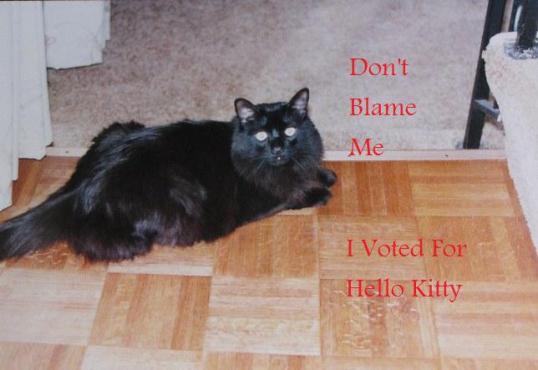
Hi everyone!  Yesterday was election day here in the United States and what can I say other than that I’m taking my cute ass to Canada!  That may sound extreme but earlier this month, I promised that if Hello Kitty and Tuxedo Sam did not win this election, I was heading up north.

And in honor of my future life in the land of Degrassi and Ryan Gosling, here’s another edition of Lisa Marie’s Favorite Grindhouse and Exploitation Film trailers.  And guess what?  This edition is dedicated to Canadian films!

1) Abraxas: Guardian of the Universe (1990)

This is less of a trailer and more of an advertisement designed to entice retailers to keep Abraxas in stock.  But, what’s really important here is that it’s Canadian.

2) Expect No Mercy (1996)

With a title like Expect No Mercy, it has to be good!  Plus, it was made in Canada.

3) Jesus Christ Vampire Hunter (2001)

Who needs Abraham Lincoln?

4) The Playgirl Killer (1966)

“The Playgirl Killer … in color!”  I think the Playgirl Killer looks like he might be distantly related to Steve Buscemi.

5) Starship Invasions (1977)

I think this film might involved starships invading something.  It’s hard to tell from the trailer.

6) Rolling Vengeance (1987)

It’s out for revenge!  And it’s … rolling, apparently.

What do you think, Trailer Kitty?

Don’t Blame Doc! (Photogapher: Erin Nicole. Model: Doc Bowman)

VGM Entry 62: Enix


VGM Entry 62: Enix
(Thanks to Tish at FFShrine for the banner)

Today Square might be remembered as the uncontested kings of Super Nintendo RPGs, but this is not an accurate assumption. As a young kid obsessed with anything approximating the genre, I anticipated every new Enix release with nearly equal glee. What I didn’t realize at the time was that Enix was a publisher. You won’t find games developed by them. While Square’s games emerged in house from the drawing board, Enix released titles developed by a wide variety of companies.

Quintet was the leader of this pack. Quintet is a Japanese video game developer officially founded in April 1989. According to Wikipedia, the first game credited to them is Legacy of the Wizard (Nihon Falcom, 1987), an installment of the Dragon Slayer series. Hence a bit of a to-do is made about their origin, with “June 1987 / April 1989” listed as the ambiguous founding date. The source for their official founding date links to a nearly illegible magazine scan (in English), and I don’t want to give myself a headache trying to decipher it, so I’ll take the Wikipedia editor’s word on that one. (The fact that whoever edited the article noticed an ambiguity in the first place marks them as more attentive than the vast majority of game-related editors.)

But the article and its relevant links lead me to believe the issue isn’t as complex as it seems. Tomoyoshi Miyazaki, director and president of Quintet, was a Nihon Falcom employee (he was involved in developing the first three Ys titles), and it just so happens to be the case that Legacy of the Wizard was released in North America in April 1989. The only real confusion is that Wikipedia suggests that Quintet developed both the Famicom and the NES ports, and that the former was released in 1987. If both were released in 1989, or alternatively if Quintet only developed the NES release (if the division of labor between developer and publisher renders this thought unintelligible, my apologies), then there is no issue. And moreover, if Tomoyoshi Miyazaki was a Nihon Falcom employee, the ambiguity may capture a simple gap in time between Miyazaki beginning to call his development team Quintet and his registering the name as a corporate entity.

Whatever the case may be, Quintet were busy in 1993. Following ActRaiser in 1990 and Soul Blazer in 1992, they managed to pump out two games in a span of two months. This probably wasn’t a great idea in retrospect. Illusion of Gaia, composed by Yasuhiro Kawasaki, was musically pretty shallow (this might account for why I never bought the game after renting it as a kid), and as an installment in the unofficial Soul Blazer Trilogy it was a sad decline from the quality of Yukihide Takekawa’s Soul Blazer. In its subtler moments, 2:49 to 5:35 for instance, it boasts an atmospheric vibe vaguely reminiscent of Jeremy Soule’s Secret of Evermore two years later, but the rest is of poor quality.

ActRaiser 2 on the other hand had an outstanding score, and is a real testament to the diversity offered by Yuzo Koshiro. While I remain unmoved by his more popular Streets of Rage sound, as a classical composer he not only competes outside of the video game spectrum, but makes the Super Nintendo sound like a real symphony with unprecedented professionalism. Nobuo Uematsu is always quick to point out that he had no professional training, and my own musical inclinations lead me to treat such claims with an appreciative nod of respect, but where he did try to emulate an orchestra on the Super Nintendo he never came close to the level of Koshiro. (Indeed, “Dancing Mad”‘s charm is it’s quintessentially SNES sound within the orchestration.)

Koshiro’s work in ActRaiser 2 in contrast might as well have been a live recording. Koshiro is, like Chris Hülsbeck, an artist I’ve I in many ways simply failed to appreciate, but not here. Quintet’s problem in this instance is that Koshiro’s stellar score was ActRaiser 2‘s only redeeming value. I mean, I never played it, but that fact is directly relevant to its commercial failure. In choosing to abandon the simulation side of the gameplay and go for a straight side-scroller they essentially ostracized their entire fanbase and entered a much more competitive field in which the Enix seal of approval meant jack.

Produce was a pretty obscure developer founded in 1990, probably most known for Super Adventure Island (Hudson Soft, 1992) and The 7th Saga. My most vivid memories of The 7th Saga are of the obnoxious pseudo-avoidable encounters that were for all practical purposes random but gave you the sensation of just being bad at avoiding them. Still, as with most Enix titles it was a refreshing change of pace from the Dragon Quest-patterned norm, and perhaps it had a good plot of which I was simply oblivious at the time (I doubt it though.)

What really strikes me though, listening to this video, is that it actually had a really great soundtrack. Norihiko Yamanuki doesn’t even have a vgmdb entry, and he’s surely one of the most obscure SNES composers to have actually accomplished something. There’s nothing really compositionally striking about the music of The 7th Saga, and it doesn’t really surprise me that I overlooked it as a kid. Yamanuki’s accomplishment here is more in the subtle qualities of the arrangement. The bubbly little tapping tones that prevail throughout this collection, most dominantly in the track at 1:00, really give the game a heartwarming sort of appeal; it’s quite pretty.

Ogre Battle was probably the most successful real-time strategy game for the SNES, at least in the United States. It stemmed from a long lineage of similar titles in Japan, but few had found sufficient success for overseas ports. Quest, the developer, had worked on similar projects in the past, though Ogre Battle would be the first in their Ogre series. A game of few settings and themes–the entire plot unfolds within the combat setting, and there are no separate story scenes as in say, Final Fantasy TacticsOgre Battle demanded a whole bunch of tunes well suited for long, drawn-out conflict.

The game did, nevertheless, have a pretty extensive soundtrack. Masaharu Iwata did the bulk of the composition, contributing 24 tracks, while Hitoshi Sakimoto added 12 and Hayato Matsuo added 6 (based on the ost liner notes on vgmdb). If the music sounds a little similar to the score of Final Fantasy Tactics, that’s no coincidence. Masaharu Iwata and Hitoshi Sakimoto composed it too.

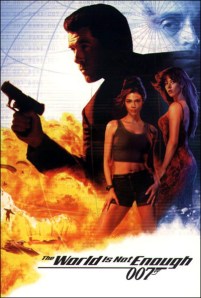
James Bond Review: The World Is Not Enough


But it is such a perfect place to start.

Hello everyone! As a prelude to the North American release of Skyfall, we here at The Shattered Lens have been reviewing each and every single James Bond film in the history of the franchise. Today we examine the nineteenth film in the James Bond franchise, and the third to feature Pierce Brosnan as the titular super spy, Ian Fleming’s James Bond. Its title? The unpretentious The World is Not Enough.

This time our cold open has Bond in negotiations with a Swiss banker for the return of a significant amount of money belonging to British Knight, Sir Robert King, who is a personal friend of M (Dame Judi Dench). Negotiations break down quickly, when Bond reveals that King was buying a report over which an MI6 agent was killed. The banker not only refuses to disclose information, but actually threatens Bond. Bond takes control of the situation in predictable fashion, offing the Banker’s underlings and capturing the man in question. However, before the banker can give up the name of the man who hired him, he is picked off by his own assistant – revealed to be a lovely young assassin (Maria Grazia Cucinotta), who disappears before Bond can do much in the way of response. With the police already on their way, Bond escapes out a window, and heads back to jolly old England.

When Bond returns to MI6 headquarters, Sir King takes possession of his money. However, Bond deduces seconds too late that the money has been trapped with a binary compound explosive that King inadvertently triggers, blowing up the suitcase of money, Robert King, the entire room he is present in, and a huge chunk of the wall of MI6 headquarters. Bond arrives just in time to see the same assassin outside in a speed boat, aiming a mounted gun his direction. Upon seeing Bond, she opens fire, but then quickly turns tail and flees the scene. Bond seizes a speed boat from Q and goes in pursuit. After a truly remarkable chase sequence (by sea, by land, and by air!) Bond catches up with the assassin, who commits suicide by firing into the tanks of her own hot air balloon rather than risk being taken alive. Bond falls and is heavily injured, and the assassin is killed.

Bond convalesces under the care of one Dr. Molly Warmflash (Serena Scott Thomas), but unwilling to actually wait for his wounds to heal, he “persuades” the good doctor into giving him a clean bill of health, the way only James Bond can. Medically cleared, he invites himself into a high level planning session with M where they trace the assassination of Robert King back to its likely perpetrator – a notorious Soviet terrorist, Renaud (Robert Carlyle). Recognizing the danger he represents, M sent 009 to kill Renaud. Although the agent got a shot in, and it struck Renaud in the head, the bullet miraculously failed to kill the terrorist right away. Instead, it slowly burrows through the matter of his brain, dampening and destroying his senses one by one. Dr. Warmflash speculates that while Renaud will eventually die from his wound, in the meantime he feels no pain, and is particularly dangerous as a result. Renaud had previously abducted and held hostage King’s beautiful daughter, Elektra (Sophie Marceau), for ransom. M believes that Renaud is attempting to strike against the King family again. Concerned with Elektra’s safety, she assigns 007 to personally see to her security.

Things ramble on quickly from there. Like Tomorrow Never Dies, there are no shortage of action pieces in The World is Not Enough. The film has a healthy dose of plot twists and is finely paced, never really descending into a lull. It has excellent set pieces, including a kind of cart racing down an oil pipeline, a battle in a caviar factory (which includes a notable cameo from our old friend Valentine, first introduced in Goldeneye [a fun role that is heartily embraced by actor Robbie Coltrane]), and even climactic showdown aboard a Soviet nuclear submarine Unfortunately, The World is Not Enough suffers from a couple of limitations that hold it back from being a truly great Bond film. Yes, that’s right folks, it’s time we talked about one of the more infamous Bond girls… Dr. Christmas Jones (Denise Richards).

Now, I don’t necessarily hate Denise Richards, but she’s not what I’d call a paragon of acting ability. She doesn’t bring a ton of range to a character that is already a bit on the weak side. Dr. Jones, a short-short short-dress short-skirt clad nuclear physicist, is not short on brains. She’s also athletic, and able to keep up with 007’s crazy antics for the most part. She’s also a patently unbelievable character, a stretch even for James Bond, even for latter-day Pierce Brosnan James Bond. She doesn’t ever really fit into this film, and while the movie’s plot ultimately deals with a nuclear threat (as always, I won’t spoil the film’s more important plot details!) and it seems like Dr. Jones’ expertise might be useful… mostly, she just offers some rather obvious exposition, and serves as a sexual object for one important sequence in the film’s final third. So, hooray? Compared to ass-kicking Chinese secret agent Wai Lan, the main thing that Denise Richards’ character brings to the James Bond franchise is cup size. And more easy puns on her name than you can shake a stick at.

This film is also notable for being the tragic final appearance of Desmond Llewelyn in his long time role as “Q”. Although the film … “humourously” … introduces John Cleese as Q’s successor early in the film, there were no official plans to cut Desmond Llewelyn from future Bond films, and he had not announced plans to retire. Unfortunately, Llewelyn was killed in a traffic collision shortly after the film’s premiere. R.I.P.

That having been said, I still very much like this movie. For reasons which are not entirely clear, I think I’ve seen it a dozen times or so (maybe it’s just on BBC a lot?) and nothing about it ever makes me want to turn the film off. In fact, vibrant performances by the film’s villains and an energetic Judi Dench as M (more active in this film than in … probably any other) kind of bring this one to life for me. Of course, this film definitely telegraphed a possible dive off the cliff’s edge… something which we may or may not journey through together in tomorrow’s film, the much-maligned Die Another Day.

In the meantime, let me leave you with my all-time favourite James Bond theme, presented by Garbage:

Scenes That I Love: The Candidate


(SPOILER WARNING)

It’s election day!  Today is the day that American citizens select the person that they’ll be angry with for the next four years.  Have you voted yet?  I did and, after I turned in my ballot, this guy at the polling place told me that I was the prettiest voter that he had seen all day.  Awwwwww!

Today’s scene that I love is particularly appropriate for Election Day.  In The Candidate (1972), Bill McKay (played by Robert Redford) runs for the U.S. Senate.  Directed in a documentary fashion by Michael Ritchie, The Candidate features excellent supporting performances from Melvyn Douglas and Peter Boyle and it’s one of the best films ever made about the American political system.

The scene below takes place at the end of the film, after the votes have been counted.  And, of course, the entire scene is a spoiler so don’t watch it if you haven’t seen The Candidate.

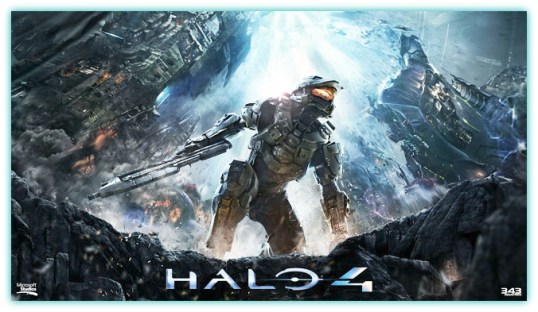
Halo 4: Launch Trailer “Scanned”


As I write this it’s 2 hours and 52 minutes til the release of one of the biggest titles in entertainment for the year of 2012. Yes, I say entertainment and not just video games. The last ten years has seen the ascendancy of the video game as a form of entertainment to rival and, at times, surpass the big kid in the block: film. It was in 2007 that we saw Microsoft and Bungie Studio release the final game in the Halo trilogy. That game marked the first time a video game title beat any film in terms of first-day sales with $170million dollars on its first day of release. This record would be broken many times since and all of them on the video game side of entertainment.

In 2010, Microsoft and Bungie Studios released a prequel to the trilogy with Halo Reach which also marked the final Halo game Bungie Studios would develop and release. It wasn’t a well kept secret that Bungie had begun to tire of being known as just the studio that made Halo for the Xbox/Xbox360. So, once they arranged for the studio to leave as an internal studio for Microsoft Games there were some concern that whoever would takeover development for the series would fall in reaching the high bar Bungie had set for the series.

It’s now 2012 and 343 Industries is just hours away from releasing their first title in the Halo franchise and it continues the events which ended with the original trilogy. We find Master Chief and his A.I. companion, Cortana, stranded in deep space, cut-off from the rest of humanity. The final scene we see from Halo 3 (if one passed the single-player campaign on Legendary mode) was the two seeing an unknown planet come into view. The questions which arose from this final scene was whether this was a Covenant home planet or was it the planet where the Forerunners (builders of the Halo ringworlds) originated from.

We’ll find out when 12:00 midnight hits on November 6, 2012. In years past I would’ve called off work and stood in line at midnight to get my copy and play the rest of the day. I’m a bit older and wiser (likes sleep and making money  from work) now, but it doesn’t mean I won’t pick up my copy after work tomorrow.

Whether one likes or doesn’t like the Halo series no one can deny that it help revolutionize console gaming, especially multiplayer gaming on the console, and entertainment in the first decade of the 21st century. Everyone is all about Call of Duty‘s modern iteration like Modern Warfare and Black Ops, but without Halo those games wouldn’t have had to evolve to keep up (and for some surpass) what Microsoft and Bungie had created and for 343 Industries to continue to do.

Now let’s enjoy the launch trailer for Halo 4 (both live-action and CGI) that was produced by David Fincher (yes, that Fincher) and directed by Tim Miller.

EDIT: I can be found on XBL with gamertag: ArleighTSL

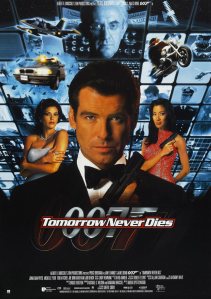
James Bond Review: Tomorrow Never Dies


In anticipation of the North American release of the latest 007 adventure, Skyfall, we here at The Shattered Lens are systematically going through each and every film of the James Bond franchise and reviewing them for you! Today, we’ll take a look at the eighteenth film of the James Bond franchise, and the second one to star Pierce Brosnan as James Bond. It’s one of my personal favourites… Tomorrow Never Dies.

It’s the return of Pierce Brosnan as Agent 007, a cold-war relic modernized for a more discerning audience. While the Bond of old – Connery in particular – could flash his smile, make a pun, and have a girl in bed, the modern Bond is often challenged by the women in his life. As a modern viewer, I’m much more comfortable with this view of the sexes, though it would be quite a stretch to say that Bond has ‘struggles’ trying to find the affections of women. Anyway.

Our cold open takes us to the Russian border, and a so-called Terrorist bazaar. Yes, it’s more or less a marketplace of weapons, illegal technology, and mercenary services. And it’s under surveillance by MI6 and the British armed forces, led by M (Dame Judi Dench) and Admiral Roebuck (Geoffrey Palmer). MI6’s analysis is being led by the strangely memorable Charles Robinson (Colin Salmon), M’s Chief of Staff in this film, and the next two. Although his part is minor, Salmon impressed me enough in this part (the first time I can recollect seeing him; Tomorrow Never Dies was a first day viewing for my father and I when it released) that I instantly associate him any time I see him with his role in this film, not in the newer Resident Evil franchise, or in any of his other work. Robinson is in contact with an unidentified (but I’ll bet you can guess!) agent on the ground who is observing the terrorist bazaar through a telephoto lens. In addition to the formidably terrifying hardware, the as-yet-un-named agent also identifies cyber terrorist Henry Gupta (Ricky Jay) an American wanted for all kinds of technology-related crimes. Although he seems to have obtained an extremely secret, extremely valuable, American GPS code cracking machine, I’m sure he won’t turn up later.

Eager to be rid of “half the world’s terrorists” as he describes it, Admiral Roebuck first attempts to negotiate a Soviet strike using ground assets against the bazaar. When the Soviet liaison reports that casualties would be inconvenient to the electorate so close to party elections, Roebuck instead opts for a British naval strike which will dismantle the bazaar – cruise missiles launched from afar. Overriding M’s objections that the survey of the bazaar is not yet complete, Roebuck provides authorization for missile launch, and in no time, two massive cruise missiles are en route.

It’s about this time that we learn that the mysterious, unnamed, ground agent in Russia is Agent 007 – an unsmiling Pierce Brosnan. Bond has detected a pair of L-39 Albatross fighters, one of which has been outfitted with nuclear-yield weapons of Soviet origin. At best, the cruise missile attack will scatter weapons-grade plutonium over a huge area, and Admiral Roebuck immediately orders the cruise missiles to be aborted remotely. Unfortunately, the missiles are already out of range in the network of (presumably Afghani) canyons they are maneuvering down. If nuclear disaster is to be averted, it’s up to an unsmiling 007 – now revealed as M’s agent in the field.

As anyone could have predicted, Bond chooses a heroically stupid solution. He charges into the bazaar, knocking out several terrorists and seizing an automatic weapon. Clearing enemies from his area, he makes his way to the L-39 with the nuclear payload. After dispatching the pilot, Bond boards the aircraft, and barely manages to get airborne before the cruise missiles detonate behind him, wiping out most of the terrorists involved. Suspiciously, it seems that Henry Gupta survived the naval strike. I continue to remain convinced that he won’t pop up again later in the story, though. After escaping aboard his stolen aircraft, Bond’s reel man inexplicably feels the need to strangle him which will crash and kill them both while Bond is pursued by a second L-39. Eventually, Bond manages to eject his would-be strangler straight up into the other aircraft, neatly eliminating his problems, and he heads home.

In a reveal with our evil super-villain, Elliot Carver (Jonathan Pryce), we learn that he is manipulating headlines for the profit of his super powerful Viacom-esque media conglomerate. I wonder if that Gupta fellow and his stolen GPS controller will show up again?

I probably don’t need to spoil much more about the plot than that. Suffice to say that the concept behind this Bond yarn is actually a touch on the original side. It correctly anticipated the importance of mass media, its complete transformation into a corporate entity (rather than a ‘news’ entity), and some of the possible consequences. Of course, the plot of the film has also aged terribly, because the internet has changed everything about communication in a way that we would never have anticipated in the mid 90s. Still, Tomorrow Never Dies has always struck a chord with me for both the nature of its villain, and his designs upon the world. The rest of the villainous cast is somewhat less impressive, as beyond Carver, we have the eminently forgettable Mr. Stamper (Götz Otto) and the certainly-not-a-plot-point Henry Gupta to satiate our need for nemeses. Oh, and a hired assassin, but I’ll get to him in a moment. Suffice to say that Mr. Stamper is not exactly this generation’s Oddjob, and we can probably leave it there.

Once we pass the initial setup, the action of Tomorrow Never Dies doesn’t really let up. It’s very tech-heavy, the true realization of the gadet-heavy accusations that are often levied against post-Connery bond. Yes, Pierce Brosnan has a huge variety of gadgets at his disposal. Notable in this particular film is Bond’s seemingly indestructible BMW, which leads to a humourous exchange between he, a hired hitman named Dr. Kaufmann (Vincent Schiavelli), and a gaggle of minions attempting to break into the vehicle with hammers and other tools.

As usual, the women around Bond are beautiful. In this incarnation, we get a heavy dose of Paris Carver (Teri Hatcher), Elliot’s trophy wife, and a former flame of James Bond’s (to, I assume, no one’s surprise) as well as Colonel Wai Lin (Michelle Yeoh) an ass-kicking Chinese intelligence agent who is assigned to the same case as Bond. Yeoh’s character enters the film relatively late, but repeatedly proves her chops as Bond’s Chinese counterpart. She is healthily proficient with firearms and has all of the ninja skills that we would expect from any slight Asian female character in a Bond film.

The set pieces of Tomorrow Never Dies are probably also worth noting, as they range from Elliot Carver’s bizarrely fortress-like mass media headquarters (notably, also, a haven for both digital media and the printing of a newspaper), to extensive time spent in China, to Elliot Carver’s special stealth boat. The production values of the film are certainly not lacking, and unlike so many more ‘modern’ action films, Bond is not immersed in a CGI universe, but rather surrounded by practical effects that make it easy for us to fall into the story and its various locales.

Let me leave you with the theme to Tomorrow Never Dies, also oddly amongst my favourites!

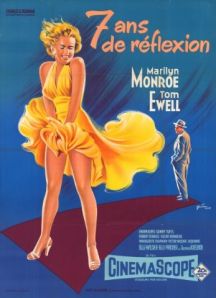
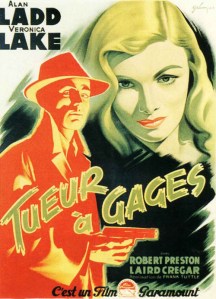
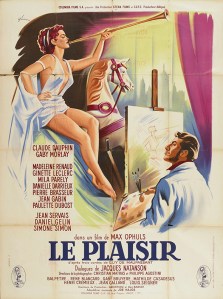
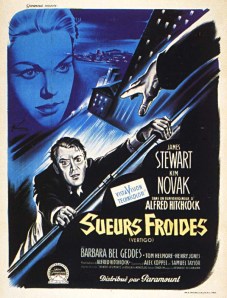
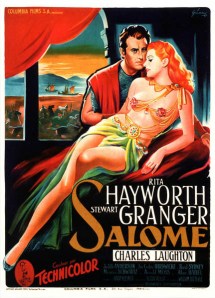
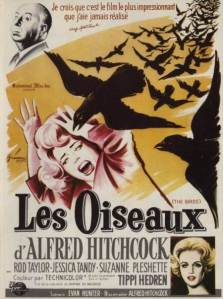
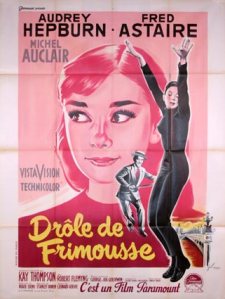
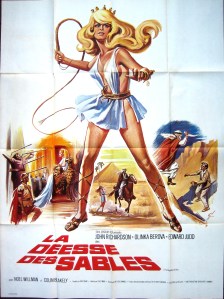
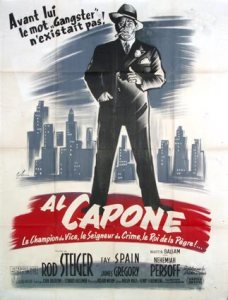
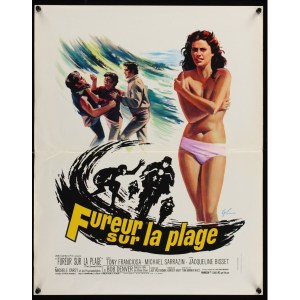
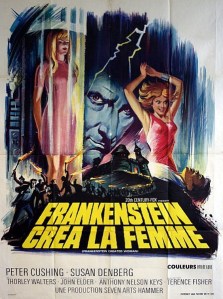
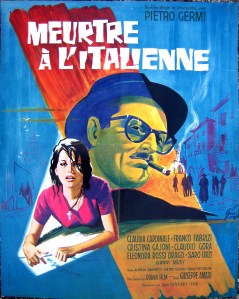
Artist Profile: Boris Grinsson (1907–1999)


Boris Grinsson was born in Pskov, Russia.  His family fled to Estonia after the Bolshevik Revolution and Grinsson studied art in Tartu.  Grinsson began his career designing film posters in Berlin.  After drawing an anti-Nazi political poster, he fled to Paris.  Over the next few decades, Grinsson designed a countless number of French film posters.

A selection of his work can be found below.

James Bond Review: Goldeneye (dir. by Martin Campbell)


After License to Kill, there was darkness.

The Bond Franchise would hit the longest lull in the series history, a break of about 6 years before Goldeneye came into fruition. I remember seeing the poster for Goldeneye in a subway station and the shock of both finding out there was finally a Bond film and that they managed to pick one of my favorite Bond choices at the time in Pierce Brosnan.

Albert “Cubby” Broccoli was upset with the response of License to Kill after its release. In the process, he decided to try something new and perhaps go with a different writer / director pairing. John Glen did a number of the Bond films leading up to this, and like a change in coaching, Broccoli may have felt it wasn’t going where it should. MGM, who was in the process of dying (and let’s face it, MGM was like that for some time), were in a deal that would allow the new owners to publish the Bond movies on TV without any consent or control from EON Productions. It was basically a fight to hold on to the ownership of the entire Bond Library, from what I’m finding. I could be wrong there, but it’s how I read into it.

Additionally, Dalton was supposed to do a third Bond film, but the issues between MGM and EON lasted so long that he eventually decided to bow out. Brosnan was approached to play Bond right after Moore finished A View to A Kill, but was unable to do so due to the success of Remington Steele. It was only after License to Kill (and Dalton’s departure) that the offer came back again and this time he jumped right on it.

One of the challenges for Goldeneye was to come up with a story for Bond. With the Cold War ending around the beginning of the decade, they couldn’t use General Gogol and the other angles that worked well in previous 007 files. The story that was made was seemingly tailored to work around that. Goldeneye deals with a joint mission with James and Alex Trevelyan (Sean Bean), who is also 006. During the mission, 006 is believed killed and Bond is able to both complete the job and escape. Bond later discovers that Trevelyan is alive and is behind a plot to fire an orbital EMP that would let him rob all of the banks in London via an electronic transfer. The film concentrates on how Bond doesn’t exactly fit in, considering that so much has changed around him.

One thing that Goldeneye really failed at was the music. Instead of the traditional Orchestra like tones from John Barry, they went with The Professional’s Eric Serra. The music was a mixture of electronic sounds and beats, a major departure from everything that Bond fans up until that point knew. For a number of Bond fans, the music just didn’t work for the film in any way (or only marginally made sense). This would be later rectified in Tomorrow Never Dies and a composer change. Here’s a bit of trivia: The end song of Goldeneye, “The Experience of Love” is actually a song made for The Professional, and an instrumental version of that song can be heard in that film’s soundtrack. Not the first time that’s happened musically – A James Horner track for James Cameron’s Aliens can be heard in the movie Die Hard – but it is a first for a Bond film, as far as I can tell.

Martin Campbell took over the directing for Goldeneye. While he doesn’t have a perfect track record (see Green Lantern and The Legend of Zorro), he was able to pull an action film together. He did so well with Goldeneye that he was actually brought on to film Casino Royale, possibly because both films were different kinds of reboots.

Another notable difference in Goldeneye is the introduction of Dame Judi Dench as “M”. It marks the first time that M is played by a woman. Her candor towards James is that he is “a relic of the Cold War” and a “misogynist dinosaur”. The chemistry between Brosnan and Dench is a bit rough when compared to her work with Daniel Craig, but the change also lends to an interesting dynamic. For someone who is considered a ladies man, here 007 is having to answer to a woman. Not terrible by any means, but it’s a shake up in the scheme of things. A younger Moneypenny (Samantha Bond) is also introduced, whose attitude is similar to M’s, but not as venomous. Desmond Llewelyn returns as Q, providing Bond with a BMW, outfitted with all of the regular gear. Although an Aston Martin DB5 was used in the beginning of the movie, it’s not the same car that Bond uses for the rest of the film. Where Moore was a Lotus driver and Dalton an Aston Martin one, Brosnan would be found behind BMW’s for the span of his 007 career.

For the Bond girls, two are better than one, and for Goldeneye we were given Izabella Scorupco as Natalia Simonova, a programmer with knowledge of how to stop the Goldeneye and a witness to the attack and theft of the device. The other is Xenia Onatopp, a former Soviet helicopter pilot and assassin, played by X-Men’s Famke Janssen. Jansen’s character is a bit cliche in that she kills with her thighs, but one has to wonder if that was just a carry over from what EON had to work with in previous films.

I thought Sean Bean was a great choice for a Bond Villain. At the time, he was young and dynamic, so  his character was able to hold his own with Bond in the fighting scenes and had a great plan with what he wanted to do with Goldeneye. I wouldn’t mind seeing more Bond guys be of the actual fighting type, rather than ones who let their henchmen do it for them. Speaking of henchmen, Alan Cumming’s hacker was more funny than fearsome to me, providing a comic relief to the film. Robbie Coltrane also adds a bit of humor as a contact of Bond’s that leads him to Trevelyan.

Goldeneye is also the first Bond movie to have it’s very own console based video game, and the impact of that game as a first person console shooter was huge at the time. We leave you with Tina Turner’s theme to the movie, with the assistance of Bono and the Edge. Tomorrow, we take on Tomorrow Never Dies.

Review: The Walking Dead S3E04 “Killer Within”


“No more kids stuff. People are gonna die. I’m gonna die. Mom. There’s no way you can ever be ready for it.” — Rick Grimes

[spoilers within]

This third season of The Walking Dead has been hitting 3 for 3 when it came to quality episodes. The surprising part is that the season is three episodes in. Last week we had an episode where Rick and the prison group never appeared. It was a well-done introduction for the new characters that will have a major impact on the series. With tonight’s episode, aptly named “Killer Within”, we return to Rick and the prison as they start to settle in their new safe haven (as safe as any place can be in a zombie apocalyptic world).

Tonight’s episode begins with a mysterious individual who seems to be up to no good within the confines of the prison fences. We see this person (all we see is that he’s dressed like a prisoner) using the carcass of a deer (or was it a wolf) t lure zombies into the prison and also taking an axe to the chains and lock that kept the gate secured. It’s an ominous beginning to an episode that would see a major reshuffling of the show’s cast of characters. To say that tonight’s episode was shocking would be an understatement. It was full of what fans and critics had been saying last season lacked. It had action pretty much through half the episode’s running time not to mention even the quieter scenes in the beginning of the prison segment and back at Woodbury led to something instead of just filling up airtime.

The mystery of the  “killer within” of the episode’s title was kept a secret until pretty much close to the end of the episode. It was quite surprising to finally find out who it was who had opened up the gates to the prison and turned on the prison alarm which was ringing the dinner bell to zombies within the prison and those still outside the fences. There’s some leaps of logic that someone watching tonight’s episode would need to get past as to how this “killer” was able to survive so long since episode two without being noticed, but the positives of tonight’s episode outweighed any failures in logic that one noticed.

With tonight’s episode we got to see how much Rick and Carl has changed since the end of the second season and this season. What exactly happened to the group during the 7-8 months they had been out in the Georgia wilds trying to survive day-to-day until they happened upon the prison. The writers have been very silent about whether there would be some flashback sequences that showed how the group survived the Fall and Winter. All we’ve seen this season was how those months out in the wilds had turned the group into a well-oiled survival machine that had one leader and everyone with a role they’d accepted and played. The fact that the group suffered no casualties during the time-off between season 2 and the start of season 3 showed that maybe being on the move was the best thing. They’ve just moved into the prison and started cleaning the place up and now two (maybe three) of their group has died.

One of the things which stood out the most with tonight’s episode is how much Carl has come to be just like his father this season. Last season, Carl had become a joke to the audience with is penchant to avoid his adult handlers and go off running into danger. His behavior and actions even led to the group losing one of their own late in season 2. Carl before this season was almost as if the writers had no idea how to write up a child character in a zombie apocalyptic world. One moment Carl was this helpless and naive child then the next he would act and talk tough like Rick or Shane. Both sides of Carl last season didn’t ring true, but we saw hints of changes to the character in the last two episodes. We see the result of the change in the show’s leadership and mission statement for season 3. Chandler Riggs has improved as an actor which goes to show that good writing will bring out the best in even the least experienced performer. While we find out who the killer within was the episode’s title could easily mean the arrival of a harder Carl who could be on the dark path to turning out to be a killer.

As for Rick, we see another instance where he seems to have left his idealism behind and accepted the fact that ruthless pragmatism was the new golden rule of this zombie apocalyptic world. He looks at strangers not with an open-mind or whether these new people would become helpful members of his group. No, Rick has taken an insular view of the world. If you’re not part of his group then you’re a danger waiting to happen whether that suspicion has credence or not. This mindset has kept his group alive since they left the farm after season 2 but it has also made him harder, colder and more ruthless to those in the outside looking in and, more importantly, even to some within his group.

Will tonight’s events finally become the final straw that breks Rick both emotionally and mentally or will it galvanize him even more to protecting his own and damn to everyone else. This Ricktatorship has suffered it’s first casualties and it should open up a whole new world of storylines moving forward. Idealistic Rick became a frustrating character to root for in the second season, but there’s also the danger of a despot Rick this season becoming too much on the other side of the personality spectrum. It will be up to Mazzara and his talented group of writers to balance Rick as a character where he still has some sense of the white hat sheriff’s deputy, but at the same time also knowing that he cannot let that very idealism endanger him and his people.

As an audience we’ve come to expect a season to spread out how much action and tense moments a drama series has the length of a season, but the writers of this series seem to be making up for all the “go nowhere” episodes of season two with a vengeance. I’ve been saying since the beginning of this season that we’re finally seeing the series’ take on the narrative style of it’s newest showrunner in Glen Mazzara who came up writing some of the best episodes of the FX cop drama The Shield over seven seasons. He and his writers seem to understandthat in a world as savage and cruel as the one in The Walking Dead having episodes where nothing happens outside of character debating and philosophizing about the nature of civilization and humanity wouldn’t make for very dramatic tv. the question that comes up now is whether the show will be able to sustain this streak of very good episodes over the length of season three.

NOTES

  • Tonight’s episode was directed by Guy Ferland and written by series newcomer Sang Kyu Kim.
  • Some levity involving Glenn and Maggie didn’t last the episode which looks to be the most nihilistic of the series to date.
  • Michonne may not be as chatty as Andrea this season, but she’s made her words count when she has spoken. Also very observant of not just her surroundings but her situation.
  • We come across a situation regarding strangers and their fate. Last season the group, especially Rick, would’ve debated all episode long and maybe into the next one about how to deal with the strangers. Another sign that this season has become a sort of reset for the series with Rick (with some help from Daryl) deciding not to change the agreement he has with the surviving prisoners.
  • Look between Rick and Lori before all hell broke loose looked like things may be thawing between the two.
  • Good to see the writers not making Hershel go through a bout of self-pity. He even made good use of the crutches when things got real stressful.
  • This now marks the third stressful and action-packed episode inside the prison. Writers have definitely taken to heart about the lack of action and tension that plagued Season 2.
  • Carl has definitely become a mini-badass like his father.
  • It had to happen and the sequence leading up to T-Dog finally getting bit was handled quite well. There was no mysterious zombie suddenly popping out of nowhere to chomp down on his shoulder. When he moved to close the gate one could see just before the scene switched away a zombie come into the frame and move up towards T-Dog who had his back turned.
  • Part of me thinks that disagreeing with Rick’s decisions is like people saying “NO” to Jack Bauer. It’s a sure way to get yourself killed either by Rick or some other way.
  • This season really hasn’t made Andrea a sympathetic character. I’m wondering if the writers have a new role for her in contrasts to how she was in the comics. I can definitely see her turning on the group and joining the Governor.
  • The Governor definitely has a way with him when it comes to getting his way. Andrea seems to be buying what he’s been selling her and even Merle seems off his game around him.
  • It’ll be quite a turn of events if this season we end up getting Merle rejoining the group as a helpful member while Andrea becomes the Judas.
  • We learn that the Governor’s first name is Phillip and that he has a young daughter. We also get to see him channel his inner James Bond villain with a scene of him doing practice golf swings at the zombies beyond Woodbury’s walls.
  • Carl’s reaction when Maggie told Lori to take her pant’s off was classic.
  • T-Dog went out a hero and his final scene was a nice shout out to a similar throat-rip scene from Day of the Dead (the original one).
  • We finally find out the answer to whether Andrew the prisoner who Rick left locked in the prison yard with the zombies died or lived.
  • Sarah Wayne Callies performance as Lori in tonight’s episode was some of her best to date.
  • For all the talk on Twitter about zombie babies I like to remind people that the best zombie baby ever comes courtesy of Peter Jackson.
  • We hear the shot but we never truly saw Lori die by Carl’s hand. Here’s to hoping the writers are not trying to pull a fast one on the audience.
  • Carl definitely turned a corner in tonight’s episode. This season we’ve seen that Carl’s become more useful and mindful that his past behavior had some fatal consequences. It’s not until tonight that we see Carl lose that final vestiges of his childhood behind and become the child-soldier Rick and his group need him to be.
  • For all his cold distancing from Lori we see that Rick still loved Lori in the end. Talk about heart-wrenching scene from Andrew Lincoln.
  • I have to give it up to Sarah Wayne Callies, Chandler Riggs, Lauren Cohan and Andrew Lincoln for bringing their A-game and more for tonight’s episode.
  • The monologue towards the end that really got to this hardened horror fan: “You’re gonna be fine, you’re gonna beat this world. You are smart, and you are strong, and you are so brave. You promise me you’ll always do what’s right. It’s so easy to do the wrong thing in this world. You promise me you’ll always do what’s right. It’s so easy to do the wrong thing in this world. So, if it feels wrong, don’t do it. Alright? If it feels easy, don’t do it, don’t let the world spoil you. You’re so good. My sweet boy. The best thing I ever did. I love you.” — Lori Grimes
  • Zombie Kill Count for tonight’s episode: 32.