Review: The Proposition (dir. by John Hillcoat)


When I first saw John Hillcoat’s film The Proposition I was literally shocked and dumbstruck with what I had just witnessed. As a long-time aficionado of the horror genre I could say that part of me has become desensitized to onscreen violence and nothing really shocks me. Even though I’ve seen films with more violence throughout its running time, The Proposition just had a heavy sense of despair, moral ambiguity, and a Miltonian feel throughout. The film felt like how it would be if one accepted an offer from one of the damned to stroll down to the Nine Circles of Hell. As much as I didn’t want to accept that offer the curiosity of what I might see won out. That’s how I was able to sit through the entirety of Hillcoat’s ultra-violent and nihilistic tale of lawless and amoral individuals in the untamed wilderness of 1880’s Australian Outback.

I must agree with several critics who have said The Proposition seemed to mirror another dark and violent tale. Hillcoat’s film shares so much the same themes and tone as Cormac McCarthy’s brutal novel, Blood Meridian, that one almost wondered if the film was adapted from McCarthy’s great novel. But similarities aside, Hillcoat and Nick Cave’s (director and writer respectively) film can clearly stand on its own two bloody legs.

The film begins with a bloody siege and shootout and we’re soon introduced to two of the three Burns’ brothers. We soon find out that both brothers, Charlie (played by Guy Pearce) and Mikey (played by Richard Wilson), are outlaws wanted for a multitude of heinous crimes with a recent one the senseless rape and murder of the Hopkins family. One Capt. Stanley (Ray Winstone) who acts as law in this particular area of the Outback also happens to be friends of the unfortunate Hopkins clan. When he finally apprehends the two brothers after the siege gives older brother Charlie a proposition. He’ll spare the younger brother’s life from the hangman’s noose if Charlie finds their older brother Arthur (played with Kurtz-like menace by Danny Huston) and kills the outlaw leader. The quest is set as Charlie accepts and sets out to find his elder brother. Whether Charlie will go through with killing his older brother Arthur is one thing the audience won’t find out until the final minutes of the film. Even though there’s no love-lost between Charlie and Arthur, there’s still the traditional bond of family that makes Charlie’s quest a complex one.

We realize early on that Charlie is very protective of his simpler, younger brother Mikey and would do anything to save his life. Guy Pearce does a great performance as the conflicted and brooding Charlie Burns. There’s a quiet intensity in Pearce’s performance. He’s pretty quiet through most of the film, but one could feel the palpable rage just roiling beneath his brooding countenance. Pearce’s Charlie is one who is only a trigger away from exploding into outright violence. Charlie is definitely a child and creation of the lawless Outback the film is set in.

Arthur Burns on the other hand comes in introduced as an almost warrior-poet (though in this story it would be more like a charismatic-sociopath) who would watch the sun set and spout poetry as easily as gun down an innocent or slice a man’s throat without missing beat. Danny Huston does a bravura performance as the charismatic and wholly amoral Arthur. His performance easily matches that of Pearce’s scene for scene. Another performance that I must point out as being very strong in the film is Ray Winstone as Capt. Stanley, the Ahab of the tale with his obsession to bring civilization to the lawless Outback and to bring Arthur Burns to ultimate justice even if it means dealing with the lesser evil that is Charlie Burns.

The Proposition will be talked about alot for its unflinching look at violence onscreen. Though there’s been films that have more violence per hour than Hillcoat’s film, but the extreme brutality of the killings, maimings and rape in The Proposition has such an air of realism to it that one cringes at every gunshot wound and knife slashing. Like Aronofsky’s Requiem for a Dream, this film’s scenes of violence makes one want to rush into the shower and cleanse off the dirt, grime and stink of the film. It’s in this unflinching and realistic portrayal of death and violence that the film shares alot with McCarthy’s Blood Meridian. The images are difficult to watch, but our curiosity makes us look through squinted eyes to see the full breadth of the violence. In time, just through the audiences acceptance of the oncreen violence do we soon become complicit in whats going on the screen.

It is a shame that The Proposition had such a limited release in the US. Even since it’s release on video it’s a film that still seems to be underappreciated. I think this film would’ve done as well as Eastwood’s Unforgiven in giving the audience a different, darker side of the Old West mythology (though its really the Australian Old West). John Hillcoat has crafted himself a brutal and nihilistic film that’s very hard to watch but also difficult to ignore. The Proposition is a film I highly recommend as it is the type of film that helps redefine a whole genre.

Happy Paddy’s Day!


I was going to write at length regarding Irish music for Saint Patrick’s Day, but, well-meaning admirer of Irish culture that I am, I have consumed far too many Guinness today to produce anything coherent. Instead I’m just going to post a few songs for the occasion. Perhaps if you are new to Irish music they’ll peak your curiosity.

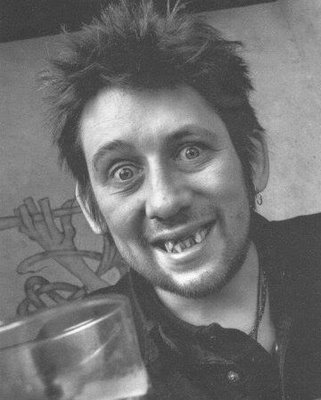
If you don’t like the Pogues songs in this mix more than all the rest, just keep drinking and you will eventually understand. (My hero Shane MacGowan is displayed above.)

Dropkick Murphys – The Spicy McHaggis Jig (original)

Dropkick Murphys – Loyal to No-One (original)

The Dubliners – Spancil Hill (19th century)

Dropkick Murphys – Fairmount Hill (19th century)

The Tossers – Good Morning Da (original)

The Tossers – Johnny I Hardly Knew Ye (19th century)

The Irish Descendents – Come Out Ye Black and Tans (20th century)

Flogging Molly – Salty Dog (original)

The Pogues – The Sickbed of Cuchulainn (original)

The Pogues – Boys from the County Hell (original)

The Pogues – Streams of Whiskey (original)

The Pogues – If I Should Fall from Grace with God (original)

The Chieftains (with Sinead O’Connor) – The Foggy Dew (17th century)

Dropkick Murphys – Kiss Me, I’m Shitfaced (original)

The Pogues – The Parting Glass (16th century)

Happy Paddy’s Day! Maybe next year I’ll actually write something before I’m too far gone. Until then, as Arleigh said to me, ” Good night and stay drunk!”

Song of the Day: When Your Mind’s Made UP (performed by Glen Hansard and Marketa Irglova)


It’s St. Patrick Day!  Now, I can’t speak for everyone but for me, this is the only holiday that matters.  For one thing, it gives me a convenient excuse to show off some of my Irish Folk Dance moves.  For another, it gives me an excuse to say things like, “I’m just a good Irish girl,” in the closest I can come to an Irish accent.  (Admittedly, that’s not very close.  My own accent tends to be kinda twangy and country.) 

Oh!  And there’s another great thing about St. Patrick’s Day.  It gives me an excuse to wear green and I look really good in green.  Today, I’m green from my eyeshadow to my underwear.

Anyway, with all that mind, it was pretty easy to pick today’s song of the day.  One of my favorite films of 2007 was a wonderfully romantic and charmingly low-key Irish film called Once.  The film’s soundtrack, which I’ve been listening to all day today, is one of my all-time favorites. 

One of my favorite songs on that soundtrack — and my pick for song of the day — is When Your Mind’s Made Up, performed by the film’s stars Glen Hansard and Marketa Irglova.  As actors, performers, and as a real-life couple (awwwwwww!)*, Hansard and Irglova have this amazing chemistry and it’s on display in the video posted below.

(By the way, can I be like really, really sappy here without everyone rolling their eyes and getting all “Gaggggggg!” on me?  Sometimes, if I’m feeling really sentimental and silly, I think about how Jeff is like Glen Hansard and I’m like Marketa Irglova.  And then I start singing another song from the movie — the Oscar-winning Falling Slowly.  Or at least I sing a version of it because I have a hard time remembering lyrics.)

Happy St. Patrick’s Day!

——————-

*According to Wikipedia, Hansard and Irglova are apparently no longer a couple. 😦

Song the Day: Trip Like I Do (performed by the Crystal Method)


Today’s song of the day is the original version of the Crystal Method’s Trip Like I Do.  I love driving to this song even though it’s been responsible for me getting pulled over a few times for speeding.  (Luckily, I’m a girl and I know how to make myself cry.)  This is also the song that, over the past few hours, has inspired me to leave a dozen or so “Oh my god, this is the best…” messages on my friend Evelyn’s voicemail. 

An Ode to Mike Allred’s Madman


On the surface, Allred’s Madman is a remix of Mary Shelley’s Frankenstein. Frank Einstein (formerly Zane Townsend) aka Madman has more in common with the mythic heroes of legend and inhabits a world equally fantastic. The audience can see that Allred poured his heart into this series. The cast is eclectic and unique (ranging from a scientist with detachable heads, invisible assistants, villainous beatniks turned heroic mutate band, infernal g-men, a beatnik-alien hybrid, jungle themed heroes, an alien inventor, an adult Astroboy pastiche, unlikely celebrity cameos, and comic book guest stars). Allred took great steps to flesh out each character and grant a unique voice.

The thing that stood out most about Frank Einstein is his purity tempered humanity. He’s not an aloof alien judging us & looking down on us like Kal-El or a pinnacle of piety or perfection. He made mistakes, worked to fix them, and helped those in need around him. Madman didn’t perform heroics for attention, adoration, or reward; he just did what was right. His relationship with Josephine Lombard is so organic and beautiful free of the “will they won’t they” that plagued other iconic couples like Pete & MJ/Lois & Clark.

Madman embodies everything that made the 50′s and 60′s era of comic and science fiction great (down to its stylized artwork). If you are comic fan who misses the Golden Age where the focus was on telling an epic and captivating story (minus graphic violence and sadistic acts that emerged during the gritty 90’s) then this is the series for you!

Celebrity Guests:
Conan O’Brien & Andy Richter

Robert Rodriguez


Images courtesy of Warren Peace’s blog, Mike Allred’s official Site, Mike Allred’s Art Blog, and Comic Art Community

Game Review: Bulletstorm


Unfocused Ramblings

I loved Gears of War. I just want to establish that before I begin a rant that no doubt is going to feel very much like some kind of savage attack at the heart of that game. My problem with Gears of Wars is simple. There’s just too much ultra-real-gritty-brown-and-gray in today’s media. It’s not confined to Gears. It’s everywhere. Films have taken a darker ultra-realism tone, video games seem to be obsessed with avoiding an artistic style in favour of an ultra-realistic one. I’m sure this trend was fueled by a hundred different factors – not the least of which being that people expect HD graphics to look like real life – and it’s not even wholly a bad thing. It’s just everywhere.

So imagine my surprise when Epic’s new first person shooter game isn’t gritty or ultra-realistic at all. Here’s the first and strongest thing I can say about Bulletstorm: It’s almost an anti-Gears of War. The setting is shiny and vibrant. There are colours everywhere. I don’t have trouble making out details of the setting because of the lack of contrast between surfaces. And it’s ridiculous over-the-top action. Now, of course, it’s also a traditional first person shooter rather than an over-the-shoulder affair and it isn’t cover-based, so it’s not in quite the same genre as Gears of War… but I’d say there are certainly some strong parallels in places. It’s just that Bulletstorm feels like a much livelier game.

Which is ironic, because the game is about a dwindling group of people trapped on the surface of a hostile alien world which is completely overrun with toxic mutants, carnivorous plant life, and five hundred foot tall monsters with a foul temper.

Bulletstorm is, at its heart, about over-the-top action. Throughout the game, you will acquire points by slaying enemies. The caveat is that the game doesn’t reward precision or efficiency, but creativity. Although a small point bonus is given for shooting an enemy with a devastating headshot, a much bigger one is given for kicking him off the side of a chasm into a swirling tornado which has become charged with lightning and presumably ending his day in a less-than-desireable way. These point bonuses are universally referred to as Skillshots, and there are a couple hundred of them, encompassing virtually every conceivable creative killing. Oh, at this point it might be worth mentioning that this isn’t a game for your young kids. Trust me. The language is strong, the violence is insane, and the themes of bitterness, revenge, and despair aren’t particularly accessible to the under-20 crowd. Of course anyone can appreciate a good action game… and this is definitely one of those, because you’ll be moving non-stop, even while you try to find creative ways to dispatch your hapless foes and occasionally take cover from the devastating fire being flung back at you.

Like Gears of War, Bulletstorm features a quick-switching weapon trio. We haven’t got any grenades, but we do have a supertech gadget called a Leash. This is the game’s outstanding feature, as it allows you to manipulate your environment in many ways, gripping objects, flinging them from place to place, and so on. Of course, it distinguishes itself from other physics-heavy weapons (like Half-Life 2’s famous gravity gun) in that it also directly manipulates your enemies themselves. You’ll use the Leash to draw enemies out from behind cover so they can be kicked onto some metal wreckage (for good bonus points!) or to maneuver an explosive container for a timely detonation. The Leash definitely offers the most potential for manipulation and fun, but of course there are some enemy types which are (mostly) immune to it except in special circumstances by virtue of being either too large or too fast… but you’ll be relieved to know that even at the end of the game’s single player mode most enemies are ready to be tossed around like rag dolls.

In addition to the Leash, Bulletstorm features a variety of weapons. We have the obligatory assault rifle, a high-caliber pistol, a sniper rifle with remote controlled bullets, a gun that launches drills, among other stand-outs. In addition to their basic firing mode, each weapon has an upgraded ‘charge’ mode which can be purchased (with those ever useful score points) that can be used in special circumstances. The ‘Peacemaker’ assault rifle, for example, can use its charge mode to fire a special hundred-shot clip instantly into a foe. This will literally disintegrate one or more opponents if you land it, with the accompanying visual effects. The Leash itself has an upgraded charge mode called the Thumper which will use a wide-area application of force to launch your enemies into the air and crash them into the ground. It has more applications than it sounds like, and can occasionally be used to dramatically clear an entire field of enemies.

The weapons are re-loaded, re-armed, and equipped at the discretion of the player who will use special containers called DropKits which will accept the currency of the player’s score (achieved, again, through killing enemies through the skillshots) in exchange for the player’s choice of weapons, charge ammo, regular ammo, Thumpers, and so on. This interface also features a handy database of skillshots. You know,  just in case there was a weapon effect that you hadn’t considered.

Game Modes

Bulletstorm features a feature-length single player campaign of what to me felt like ‘appropriate length’. I didn’t time my run through it, but I can say that I was neither left wanting more nor lamenting the time spent on it. It tells the story of Grayson Hunt (voiced by Steve Blum, of anime dub fame), a bitter alcoholic space pirate and his squad. In the opening moments, Grayson makes a poor decision amidst an alcohol-induced haze which lands he and his remaining friends on a hostile alien world. Before all is said and done, Grayson is left with only his emergency-rebuilt pal Ishi, who is now half machine and partially in the grips of a psychotic AI. Recognizing that, despite Hunt’s mistakes, their best chance lies in cooperation, Hunt and Ishi take off across the hostile alien terrain. They discover the overgrown remains of what seems to be a giant tourist-friendly resort which has apparently been taken over by inhuman mutants, hostile plant life, and others.

It also features the Echoes mode, which is essentially a series of time trials that take you quickly through sequences from the single player game only without the story bits and dialogue, and with the bonus of a timer. As a result, these levels are completed quickly, and they heavily emphasize using the point-boosting skillshots in order to achieve a high score (in this case, rewarded by Stars, which are essential to completing a number of Achievements/Trophies).

Multiplayer is another outstanding feature as long as you have some fun folks to play with. The game mode, which is called Anarchy, is similar to a Hordes or Firefight mode from other FPS titles. However, the Bulletstorm twist (as you might expect) is that the game is based around racking up a high score through the use of skillshots. The environments in Anarchy mode provide some extra opportunities to earn some skillshots not seen in the single player mode, which is good, because the team’s aggregate score must pass a certain minimum in order to advance out of the current round. A premium higher than survival or the overall massacre of your enemies is on using the terrain features correctly in order to maximize player score. Although it’s certainly a great deal of fun (at least, initially), you may ultimately find that there’s not a ton of variety to be had in the Anarchy mode. The main variation is in the specific details of the maps, but there’s not a PvP aspect to it, and the AI is the same as it would have been in the single player campaign mode.

The Bottom Line

The single key word to Bulletstorm is: fun. It’s not thought-provoking (although the characters are oddly compelling), and it’s not breaking new ground all over the place, but it is a great deal of fun just to sit down and play. It’s worth re-emphasizing that this isn’t a game for younger kids… the characters swear like sailors.

The Big Question

Is it now required by law (as opposed to just by convention) that every game needs to set itself up for its own sequel?

Game-Play

The game plays pretty tightly. Occasionally you’ll find the hit tracking on the melee attack isn’t so good against enemies who are right up in your grill, but this is only a problem when trying to pull off specific skill shots and not an overall problem when playing the game. Despite having quite a few mechanics going for it, Bulletstorm’s control system is simple and intuitive. If you’ve mastered the controls of any first-person shooter in the past you’ll have no trouble with Bulletstorm. Despite its variety of game modes, Bulletstorm is ultimately a bit limited in terms of the variety of experiences that it provides. However, as long as you ration your exposure, you could very well find the game fun forever.

Graphics

As we expect from Epic, the graphics in Bulletstorm are gorgeous. More importantly, we see some varieties in colour, with lush green foliage all over the place and a clear sky above. Now, of course, there are some areas of the game which are more breathtaking than others, but all of the sets were gorgeous in design, and some of the set pieces were very epic, and very cool. You’ll have such encounters as a hydroelectric dam which is coming to pieces around you (including its massive water-turning wheels), and trying to escape not only from enemies but also from terrain pieces aboard a fast-moving train. The character models are also very pretty, although some of the textures will sometimes break down in close-ups. The best character design in the game definitely has to go to Ishi and his newly-installed machine parts. You’ll also be treated to a number of interesting visuals directly tied to how you finish off your enemies, but those I’ll leave you to discover on your own.

Sound

The score is proficiently done and fits the settings pretty well. For the most part, the tracks are forgettable (although I do very much enjoy the main theme which plays on the menu and at places during the single player campaign). The voice acting is all very well done. I particularly like the voice acting for Ishi, which has been digitally modified to have a mechanical edge to it. His banter with Grayson is a little reminiscent of what you get between Dom and Marcus in Gears of War, but with a more genuinely hostile edge to it. The sound for the game’s effects, weapons and other features is tight and complete. Nothing to complain about in the sound department with this title.

Multiplayer

The Anarchy mode is definitely a lot of fun, but it’s not something that most people are going to want to play every day. Given the style of the game it’s not insane that there isn’t a strong PvP multiplayer component to Bulletstorm, but by its nature PvE multiplayer is going to have some limitations that there are no ways to overcome – human enemies will think creatively, and want to hurt you. AI opponents just do whatever they’re programmed to do.

Black Death: Trailer


There’s a film called Black Death that came out sometime around 2010 that seems to have fallen below the radar of most everyone. It’s a British historical horror film from upcoming genre filmmaker Christopher Smith. The film stars Sean Bean in the role of a knight during the Black Death era of Europe.

From what I’ve seen of the trailer and read about the film it seems to be a horror film that looks at the Black Death era of history with a slightly supernatural bent to it. Even the trailer gives gives the film a certain Wicker Man vibe to it. Holy warriors of the Christian faith coming into a village untouched by the Black Death. A village whose inhabitants might be dabbling with powers from a much older and earthy religion to keep the village safe. It definitely sounds like this film might have been influenced by that classic horror film starring Edward Woodward.

I like the look of the film as seen through the trailer. It almost looks black and white with splashes of vibrant colors here and there. Black Death hasn’t been announced as having a North American theatrical release date so this film looks like it will be a blu-ray release for me to finally see it.

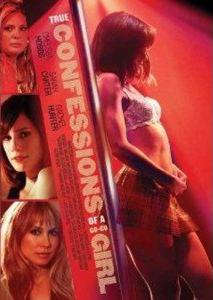
What Lisa Marie Watched Last Night: Confessions of a Go-Go Girl (dir. by Grant Harvey)


So, late, late last night, I was laying in bed, trying to get to sleep when I suddenly remembered that I had earlier recorded a movie called Confessions of a Go-Go Girl off of the Lifetime Movie Network.  So I turned on the TV and I started watching, hoping that the movie would simply calm my racing mind and help me get to sleep.  Instead, I found myself sitting up in bed for the next two hours, totally enraptured with this film. 

After the first few minutes, I started to scream until my sister Erin woke up and rushed into my room.  “What’s going on!?” she asked.  “Erin,” I replied, “you have to watch this movie with me!”  Erin stared at me for a few minutes before replying, “Oh my God, Lisa,” and then walking out of the room.  So, after that, I started to call random friends, telling them about this movie.  Unfortunately, most of them were already asleep since it was like 3 in the morning.

Anyway, long story short — I am really, really tired today!  But enough about me.  Let’s talk about Confessions of a Go-Go Girl.

Why Was I Watching It?

Okay, my friend Evelyn asked me this same question when I called her up last night at 3 in the morning and tried to convince her to come over and watch this with me.  So, as I told her, “Oh.  My.  God.  Are you like kidding me!?  Confessions of a Go-Go Girl?  How can you not watch it!?”

If I’ve learned anything, it’s that if “Confessions” appears in the title of a movie, there’s about a 75% chance that it’s going to be a lot of fun.  And if that “Confessions” movie happens to be a Lifetime movie, than those chances increase to 99%. 

Add to that, these aren’t just the confessions of a go-go dancer.  No, they are the confessions of a go-go girl.  In other words, the whole go-go thing isn’t just a job in this movie.  It’s a lifestyle.

What’s It About?

It’s yet another Canadian film that’s found a home on the Lifetime Movie Network.  In this one, Jane McCoy (played by Chelsea Hobbs) is a sweet and innocent aspiring actress who, in order to make some extra money, secretly takes a job as a “go-go dancer” at a sleazy bar.  Under the influence of an older, cocaine-addicted dancer (played by Sarah Carter), Janet quickly starts a downward spiral of drugs, decadence, and alienation.  As her new identity as a go-go girl starts to dominate her life, Jane soon finds herself growing distant from her wealthy family, her boring boyfriend, and her stridently scary drama teacher.

What Worked?

Oh my God, this is like the ultimate Lifetime movie.  Over-the-top, melodramatic, awkwardly moralistic, and amazingly silly, Confessions of a Go-Go Girl is a camp masterpiece that simply has to be seen to be believed.

Nothing happens in this movie that you couldn’t predict within the first few minutes.  The film’s genius is not that it does anything unexpected.  Instead, it’s that it takes the expected to such an extreme.  Listen, we all know, from the minute that Jane first dances, that she’s going to eventually end up becoming jaded and cynical.  What we could never guess is that it’s pretty much going to happen right after the first dance.  It’s kinda like one of those old anti-drug films where all it took was one puff off of a “marijuana cigarette.”  One puff and you’re a giggling psycho.  One dance and suddenly, your soul fades away.  This is the type of film where we know that Jane has become a bad girl because she starts to part her hair down the middle and grow out her bangs.

Plus, as I’ve mentioned so many times before, I love to dance, I love to watch others dance, and if nothing else, this movie had a lot of dancing.  Watching this movie, I was surprised to discover that sordid, Canadian go-go clubs apparently are capable of providing Broadway-style dance shows.  I mean, I’m not big into strip clubs but, from my experience, most of them just seem to involve a runway, a pole, and a lot of plastic.  I mean, it’s fun to grab onto that pole and spin around and go, “Wheeee!” but it’s not exactly exciting to watch (or, at least, it’s not for me).  But in Canadian go-go clubs, the dance routines have elaborate costumes, ironic themes, and really impressive lighting.  After watching this film, I realized that I really want to move up to Canada and become a go-go dancer.  Seriously.

Eventually, Jane is approached by a rival go-go club promoter who tells her that he’s seen her perform and, “I remember you dancing in white panties.”  This line highlights the fact that this film is obsessed with underwear.  And that’s okay because, honestly, who isn’t?  Watching this film reminded me of an ongoing debate that I have going with Erin concerning whether or not fancy, pretty, colorful lingerie more sexy than boring, blah, cotton, white underwear.  This movie seemed, ultimately, to side with my sister in favor of the boring undies.  Obviously, I disagree but the film still gave me a lot to think about.  I don’t know, maybe I should start a poll or something.  Do any of our male readers have an opinion on the underwear question?  Please, use the comments section to let your voice be heard.

What Did Not Work?

When taken on its own terms, the entire film worked.  If I’m secretly a kitty cat in human disguise than the Lifetime Movie Network is my catnip and that’s largely because of silly, over-the-top movies like this. 

Actually, I do have one or two complaints.  First off, the lead character is named Jane McCoy and oh my God, is that not just one of the most bleh names in history?  Seriously, she should have been named Lisa Marie McCoy or something.  Secondly, Jane’s boyfriend (played by Travis Milne) was soooo boring.  I believe the character was named Eric but they might as have just named him “Plastic Man” because seriously, he had all the personality of one of the mannequins from those Old Navy commercials.  To me, Eric’s character was defined by the moment when, as Jane went down on him, he said, “I don’t think I know you anymore.”  Double bleh on him.

“OMG!  Just like me!” Moments

Oh.  My.  God.  There were so many of these moments that I don’t even know where to begin.  I love dancing and I love having fun while I’m dancing so watching this film was kinda like peering in to my life in an alternative, Lifetime-based universe.

Lessons Learned

Apparently, I’m incapable of not relating everything I see to my own life.  Also, I have absolutely no impulse control because I just ordered the 11 x 17 Confessions of a Go Go Girl movie poster off of Amazon.

Review: Battle: Los Angeles (dir. by Jonathan Liebesman)


The last couple years have seen the return of an old trend from the 50’s and and 60’s. Those decades were what one would call the Golden Age of alien invasion films and stories. We had alien invasion films both serious and comedic. They ranged from classics like The Day the Earth Stood Still and The Thing to the awful like Plan 9 From Outer Space and tons of titles I could barely put down. In 2009 we had an alien-themed film which one could call the return of the genre back to the forefront. District 9 by South African filmmaker Neil Blompkamp was universally hailed as one of the best scifi films of the decade and even got nominated for an Academy Best Picture.

Then there’s the other alien-invasion film from 2010 which covers the low-end of the equation. The Strause Brothers’ own Skyline was universally panned by critics and audiences alike. While some did enjoy the film for it’s “so bad, it’s good” quality (I use that term as loosely as redlight hooker). This film was everything that was opposite of District 9. While I did enjoy that film because it was bad I don’t look back at it too fondly.

The latest film in this alien-invasion resurgence is from another South African filmmaker and one whose body of work is mostly genre films of the low-budget variety. Jonathan Liebesman’s own entry into this scifi genre is Battle: Los Angeles and it lands smack  dab between District 9 and Skyline in regards to overall execution. It’s a workman-like film which takes an epic alien invasion war and brings it down into the pavement. We see the film through the eyes of a rifle squad of Marines and that’s where the film really becomes a really fun experience.

Battle: Los Angeles begins in medias rea with the war between the unknown alien invaders already having made their initial surprise landings and the U.S. military making it’s countermoves. We learn from a hasty news conference held by a military commander that the alien forces have landed at over a dozen or so coastal cities around the world have begun to move inland. I was somewhat discouraged to find out that San Francisco didn’t even last half a day and was lost. With Los Angeles the last major coastal city on the west coast that still had a viable military presence we hear one of the film’s tagline in that they cannot lose Los Angeles.

After this brief intro we go back 24 hours before the battle begins to get the character introductions sorted out. We see the Marines who will make up the squad the audience will follow through the rest of the film get their brief time to get introduced with some basic backstory to give them some personality. The one which stood out from all the war film archetype characters was Aaron Eckhart’s grizzled and retiring Staff Sgt. Nantz. He becomes the anchor that holds all the players into a cohesive unit and who also keeps the film from spiraling out into Skyline territory. Some of the cookie-cutter characters we meet would be the commanding officer straight out of Officer Training School who has never seen combat but is eager to lead his men and sees the combat-experienced SSgt. Nantz as someone who might usurp his authority. We also get the Marine whose previous combat tour has left him psychologically damaged and tries to earn his mind back into fighting state. We even get the young Marine who everyone sees as the little brother and who also happens to be a virgin.

To say that the characters in Battle: Los Angeles looked like they came out of old-school World War 2 war film casting call would be an understatement. The film just gives these characters (outside of Eckhart’s veteran noncom) enough personality that we’re able to distinguish one jarhead from another. Characterization is not one of this film’s strong suit, but once the bullets and alien stuff begin to start flying the need to get more character moments from these individuals really go out the window and the audience just holds on as they follow this Marine rifle squad into combat with an enemy force better equipped.

The film borrows much from battle sequences from Ridley Scott’s Black Hawk Down and Spielberg’s Saving Private Ryan as director Liebesman opts to use a cinema verite style to give the audience a documentary, imbedded reporter look to the whole proceeding. The shaky cam look this filmmaking style uses may turn off some people, but the way the action sequences (which pretty much takes up close to 3/5’s of the film’s running time) were edited actually keeps the shaky cam from becoming too overwhelming. The film actually does a very good job of showing the confusing nature of battle, but also the fog of war for the grunts on the ground.

Before I get to what about this film really worked for me I will have to admit that the film’s screenplay is it’s biggest weakness. It’s a major weakness that for some viewers will sink the whole film no matter whatever bright points it might have. The film’s core story was actually pretty good. A story about an alien invasion told from the point of view of human soldiers on the ground trying to repel the invaders was a concept that hasn’t really been explored in this type of film. While that foundation for the film is strong the dialogue and how the characters were written left much to be desired. I put the onus on the flimsiness of most of the characters on the screenplay more than the characters themselves. Spielberg and Scott were able to use the very same war film character archetypes and make them work in their film, but that was possible due to much stronger screenplays.

In this film the dialogue’s very hokeyness doesn’t inspire as much as it makes for some wince inducing moments. I can’t say that all of the dialogue was bad. They’re no worse than most war films both good and bad. The dialogue just didn’t seem to have any energy to them and sounded as if it was still being read from an earlier and much rougher draft. I do believe that if the screenplay had been given a couple of doctoring by competent, veteran screenwriters the film would’ve benefitted greatly from it. Instead, the film ended up having to have a strong veteran actor in Aaron Eckhart deliver these average lines with enough conviction and gravitas to keep the film from becoming a parody of a war film. The fact that the film still manages to hold together despite the weaknesses in the screenplay is a testament to one actor performing the hell out of that script. I won’t even go into some people’s issues about the science or battle tactics in the film since I believe the film was consciously built to keep those vague. The film is not about the who or what about this invasion and why the aliens are here, but about that rifle squad from the 2/5 Marines.

Now, what really worked for me about this film is the battle itself. For a fan of both alien invasion and war films this one combined the two and succeeding in delivering what the filmmakers promised. Battle: Los Angeles gave a visceral look into the trials and tribulations of a squad of Marines as they do their part on the ground to fight off a much more advanced enemy. There’s a scene when the Marines are flying over Santa Monica on their way to their Forward Operation Base and we see a running battle on the gorund below between human defenders and the aliens who have moved up from the beach. Even the firefights Nantz and his squad were in once they entered the battle behind enemy lines looked to be influenced with the many battle footage of American forces conducting ground war in Iraq and Afghanistan.

The special effects both CGI and practical to make Los Angeles look like a wartorn urban battleground was done very well. The aliens and their machines were given a look that wasn’t sleek and shiny but utilitarian and efficient. Some have said that the design of the aliens and their machines looked lazy, but I actually believe that if the filmmakers had fallen back on traditional advanced futuristic designs that would have been lazy. These aliens looked like they were design with only one thing in mind and that was to wage war on a people.

The score to the film by Brian Tyler was good and serviceable as his own modern riff on the old-school World War 2 film score, but I thought what this film needed was a veteran composer who knows how to bring out the machismo, gung-ho and esprit de corps of the Marines the audience followed throughout the film. It’s a shame that film composer passed away several years ago because he definitely would’ve given Battle: Los Angeles the kind of score which would’ve elevated the film from a thrilling war film into an epic one.

In the end, Jonathan Liebesman’s first foray into a bigger budget production hit more than it miss though one of those misses many of it’s detractors have seen as a fatal flaw in the film. Battle: Los Angeles doesn’t reinvent the alien invasion film, but just takes a new angle on the whole proceedings. It’s a film that shows influences from better war films by better filmmakers, but also gives hints that this young South African filmmaker has shown glimpses of talent that could take him places that his compatriot Neil Blompkamp has reached with his own alien-themed film. Battle: Los Angeles is just an old-school war film dressed up with modern fatigues and arrived onto the screen with all the positives and negatives of those very same traditional war films people love and hate since film as entertainment was created. It’s not on the same level as District 9 but it is definitely heads and shoulders above the very laughable Skyline of 2010.

As an aside, while I was watching the film I was struck by how this film looked like a preview of what Blompkamp’s potential sequel to his District 9 would look if and when Christopher Johnson came back to Earth with an armada of very pissed off Prawns…and speaking of pissed off Prawn: pig cannon.

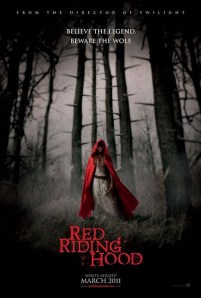
Film Review: Red Riding Hood (dir. by Catherine Hardwicke)


My problems with Red Riding Hood are more of a personal nature than anything else. I’m from a family that clashed old world values of women being blindly subserviant to the Man of the House vs. women being fiercely independent and only having a male in their lives to complement things. These elements were my luggage already brought to the table on seeing the film, but it shouldn’t damper one’s opinion on the film. If this review does this, it’s on me personally and not a reflection of the entire Shattered Lens.

Like Alice in Wonderland before it, Red Riding Hood takes the classic fairy tale and expands on it. While it does so, it doesn’t do it by much. What it has going for it is a nice visual style. Colors are vibrant and director Catherine Hardwicke really has an eye when it comes to forest landscapes (just as she did with Twilight). Mists cover the trees and capes billow in the wind, when it’s not concentrating on the town itself (which does look like a soundstage at times). In the end, however, it suffers from the same quasi teenage issues that Twilight had. I yawned a number of times. Granted, I understand that the movie may be targeted to a younger audience (and for them it may very well work), but even my audience groaned a little and they were target individuals.

Red Riding Hood is the story of Valerie (Amanda Seyfried), who lives in a small village that lives in fear of The Wolf, who has been known to sneak in and attack or kill citizens. To appease the wolf, the townspeople keep animals tied outside. As a child, she forms a bond with a young boy named Peter. Time passes, and we find young Valerie bethrothed to Henry (Max Irons) by way of her mother’s plans (played by Virginia Madsen). Peter (Shiloh Fernandez) still has feelings for Valerie, and this all quickly becomes another Bella / Jacob / Edward triangle. It’s not at the start a story of Valerie choosing her own road, but having to hear from everyone around her that this guy should be the one she marries or that one is the right guy for her. To me, personally, the film in the beginning pushes as much of a pro-“I need a man to survive” stance as Battle:LA does a Pro-Marine one. Is this a terrible thing? Not if that’s where your mindset is, no. Every time I saw them mention anything along the lines of hand and feet worship some guy just because “that’s how it is”, I had to remind myself that it’s just the time period the story takes place in (though I’m sure the audience heard me groan at least once). Again, that’s just me.

In the midst of all this, on being asked to run away with Peter, Valerie is alerted to her sister’s death from the wolf. The townfolk make a point of going after the wolf, and decide to head out the cave where they believe the beast lives. They return with proof of a victory and plan to host a party for the deed. The town priest (Lukas Haas, who somehow seems to less here than he did in Inception) reaches out for help in form of Solomon (Gary Oldman). Solomon, arriving with armed guards warns the townsfolk of the evil of werewolves and that he will hunt it down. The next few nights will be Blood Moon nights, meaning that if the wolf bites anyone during that time, they’ll become werewolves as well. The townsfolk, not buying into this, decide to have a wild party with sexy dancing. This results in a visit from the Wolf, who confronts Valerie and telepathically asks her to come away with it, or the town will be razed. It all kind of escalates from there.

Oldman, for his credit, was fun here and slightly over to the top.  Oldman delivers his lines with flair, being far less subdued here than he was in The Book of Eli. For who better to hunt a wolf than Sirius Black himself, right?

And that’s part of the problem I found with Red Riding Hood. With the exception of Seyfried, the supporting cast is actually stronger than the main group of actors the story focuses on. Julie Christie plays Valerie’s grandmother, in a great turn, and as always Billy Burke (Drive Angry, Twilight) is supportive as Valerie’s father. He’s really one of the highlights of the film. As for Henry and Peter’s characters,  the most I could think of with them were the Winchester brothers in Supernatural. They’re eye candy for the girls, though I should note that none of the girls in my audience were excited as they were when I saw The Twilight Saga: New Moon. There were lots of screaming for that one.

What does work is that the movie is reminiscient of The Beast Must Die. It is a mystery of who the wolf actually is, and both Valerie and the audience are given clues. That I actually enjoyed, and the third act of the film wasn’t too bad. The action is quick and to the point, but again, it all kind of feels like I could have seen this as a series on the CW. There wasn’t as much of a worry about who would fall at the hands of the wolf or what dangers would face Valerie so much as they actually looked cool when it occurred. Easily a Netflix pick.