Review: The Walking Dead Volume 4 (by Robert Kirkman)


[Some Spoilers Within]

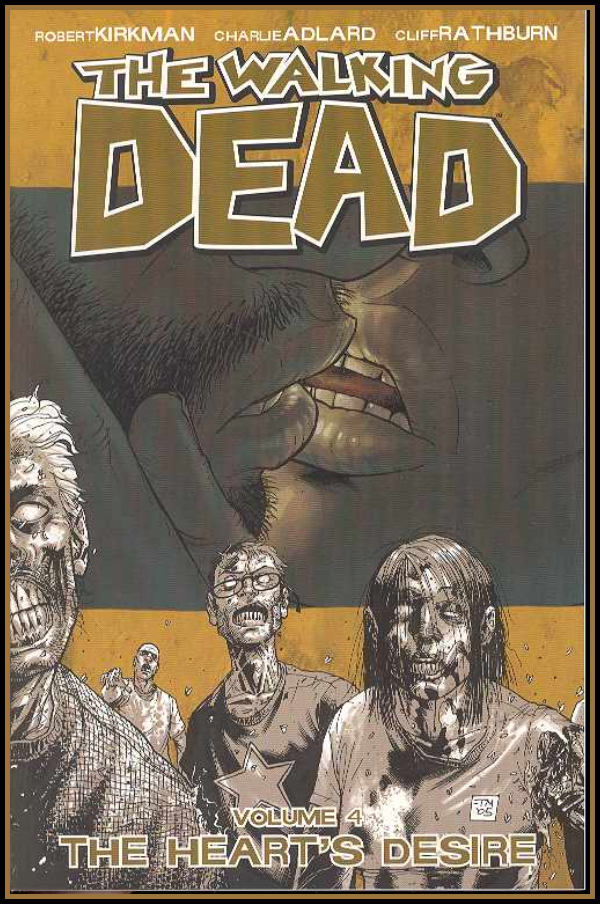
I’ve loved and obsessed over Kirkman’s The Walking Dead series and the previous three collected volumes have not disappointed at any level. This fourth volume collects issues 19 through 24 and is appropriately titled The Heart’s Desire. We pick up from the cliffhanger that ended the third volume (Safety Behind Bars) as Dexter gives Rick and his group a choice that bodes nothing but death either way he chooses: stay and be shot or leave and take their chances with the zombies outside the fences.

The book starts things off with a bang as Rick realizes that Dexter’s success in getting guns of his own has let loose a bigger set of problems as zombies from a locked wing of the prison was accidentally let out. What happens next as Rick’s group and Dexter’s group fight to stay alive shows a new side to Rick that surprised me alot. It puts a new wrinkle on Rick’s rule of “you kill, you die” and will have long-reaching ramifications deeper in the story. It is also in this heart-pounding sequence that a new face is added to the mix in the form of a female survivor whose mode of survival, to say the very least, is interesting.

The rest of the book really deals less with the zombies but the emotional consequences of many of the characters’ actions from the very start of the series all the way to point of this volume. I can fully understand the disappoint many fans have with the direction the series took with all the drama and sopa opera kind of twists nd turns of the heart, but I think people fail to realize that Kirkman is writing about the human condition rather than just about zombies. Sure I got abit impatient with all the emotional crisis and the meltdowns by almost everyone involved, but I can also understand why they’ve been acting the way they have. I think if Kirkman had written abit more of zombies and death in this part of the series people wouldn’t be complaining much.

Kirkman himself has already admitted that zombies wasn’t what the story was all about, but just a part of it. With the group in relatively safety within the secured fences of the prison and some sort of artificial normalcy starting to come back to the group he needed a way to continue the conflicts that make for good drama. What else but let the pent-up emotional baggage everyone has been carrying since issue 1 to finally come to boil. Part of me didn’t fully enjoy this new arc in the series, but not enough to be disappointed with the end result. Hell, even with all the drama Kirkman still came up with one of the best fight scenes in the series a la Carpenter’s They Live and South Park’s “Cripple Fight” episode.

The Heart’s Desire was not as great as the previous three collected volumes in the series, but it still told a good story though with a bit more drama than most fans of the book were willing to take. I myself enjoyed the book enough that it wasn’t a waste and I was a bit surprised and shocked at the observation Rick finally made and shared with everyone at the end of the volume. I know that after all the emotional trials and tribulations everyone in the series went through in The Heart’s Desire and how the arc ended there’s nothing left but up for the series.

Web Comic: The Zombie Hunters


The Zombie Hunters

I think everyone who has been visiting and reading this blog might have figured out that I am a huge fan of the zombie genre. If some haven’t come to that conclusion let me just get it out of the way and say that I do indeed love the zombie genre and everything associated with it. Sometimes the heart wants what the heart wants.

For the past couple months I have had the pleasure of reading one the best web comics still running on the web. I am talking about Jenny Romanchuk’s very own on-line zombie comic book series, The Zombie Hunters. The series began in around mid-November of 2006 and has gained quite the loyal fanbase as word-of-mouth about this particular zombie webcomic spread like the undead infection that is its subject.

I came across the webcomic while I was bored and going through the usual surfing of my favorite zombie-related websites. One site had a poll asking people which zombie webcomic was their favorite and listed all that met criteria. Ms. Romanchuk’s webcomic was one of them and being bored I clicked the link and to say I was impressed and instantly hooked would be quite the understatement. The storytelling is quite good with some scenes quite emotional and others knee-slapping funny. The artwork is very good with clean lines, not much clutter to distract the eyes and very good coloring done. Since The Zombie Hunters is about a zombie apocalypse the comic is also quite violent and gory as it should be.

With Apple’s iPad now being seen as the start of a new era in digital distribution of comics both in print and those just on-line I truly hope that Ms. Romanchuk finds a way to sell her series through that medium if just to expand her fanbase and really make some money off of an excellent comic book series. Sometimes the little guys need to be rewarded for a job well done and one that is still being done well.

Official Site: The Zombie Hunters

Review: Henry – Portrait of a Serial Killer (dir. by John McNaughton)


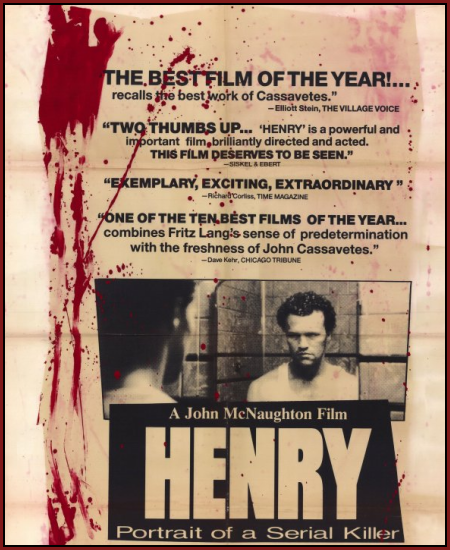
John McNaughton’s directorial debut has been hailed as one of the best by any first-time director. I won’t be one to disagree with those who agree. McNaughton took $125,000 dollars, an idea of fictionalizing a week in the life of one real-life serial killer Henry Lee Lucas, and a dedicated crew of filmmakers to create a raw, unflinching, visceral piece of filmmaking. Originally filmed and finished in 1986, Henry: Portrait of a Serial Killer languished in ratings limbo as the filmmakers struggled with the MPAA over its X-rating. In fact, it’s been reported and written in many publications that it is one of the few films screened by the MPAA where they saw no way an edit here or there can ever lower it to an R-rating. I think its fortunate for film fans and academics everywhere that McNaughton and company decided to release the film in 1990 unrated.

Henry: Portrait of a Serial Killer was loosely-based on the life of one Henry Lee Lucas. One of the most prolific (though Lucas has since discounted ever killing over 600 people) serial killers in American history. From the beginning, Henry plunges the audience into a world seen through the eyes of a sociopath and as, Ebert once wrote in his own review: “an unforgettable portrait of the pathology of a man for whom killing is not a crime but simply a way of passing time and relieving boredom.”

The first scene is haunting in its graphic and realistic portrayal of the randomness of a serial killer’s passing through the myriad roads and highways that criss-cross the American landscape. It was this stark and realistic portrayal of the aftermath of violence and death that has made some people label McNaughton’s directorial debut as a snuff-film masquerading as an arthouse production. It’s difficult to disagree with such people since the violence (though it doesn’t go as far as most horror films of the era and barely a blip on the MPAA’s radar in today’s mega-blockbuster-shoot’em-ups) has no look of articiality and not glossed-over with your typical horror/suspense sensibilities. It doesn’t have that exploitation look that the horror films of the 70’s and early 80’s. What it did have was the look and feel of a documentary. The titular character (chillingly portrayed by Michael Rooker) commits his murders as one who sees nothing wrong in what they’re doing. To Henry what he does he does to pass the time and to break-up the boredom of his existence. This behavior shows the banality of Henry’s view of the world around him. It goes to show that as horrific as Henry must seem to the audience there’s a sense of reality in what he does. We read about it on the news, in true-crime documentaries, and in the sensationalist shows dealing with serial and mass murderers.

Henry is not the only one who wades into the dark underbelly of American life and society. There’s Henry’s former cellmate, Otis (played with relish by Tom Towles) who at first seems like a buffoon, but later shows his own pathology for senseless killings as Henry finally brings him into his own world. In fact, Otis’ reaction to Henry’s revelations about what he does in secret looks similar to the reaction of the violence addicted mass audience who revel in the violence in action films and horror retreads. Otis is at first confused and knows that he should be disgusted with the killings he first witness Henry committing, but he later gives in to his own primal impulses. He soon revels in the act of murder and even sees it as his own form of entertainment. It’s during the home-invasion and subsequent murders of the home’s family captured on videotape by Henry and Otis that this change in Otis hits home.

This is the juncture in the film that posits the damning question the filmmakers want to ask the audience. Do we recoil in horror and disgust at this horrifying, voyeuristic sequence or does the audience continue to watch with the dispassionate eyes of one who has become desensitized to onscreen violence. There’s no clear answer to this question and the filmmakers don’t condescend to the audience and try to sugar-coat the violence. It is also this sequence where we see the difference between Henry and Otis. Henry almost feels remote and disconnected from the acts he’s committing. To him breaking the neck of a teenage boy might be the same as stepping on an ant. But to Otis the killings themselves becomes his addiction and only form of joy. He’s willing to go beyond what his mentor has done to sate his appetites. We see Henry’s reaction to this change in Otis and realize that as much as the audience want to hate Henry, he is the lesser of two evils. He doesn’t take joy from his work and we cling to that barely there shred of decency in the hope that salvation and redemption is at the end of the ride.

To the filmmakers’ credit Henry doesn’t trivialize the gruesome events from scene one right up to the end credits by tacking on a Hollywoodize happy ending. As the final reel comes to a conclusion and we see Henry and Otis’ sister, Becky driving off into the night (a sort of reverse-negative of the typical riding-off into the sunset of Hollywood past), the audience is ready to breath a sigh of relief from the relentless visual and emotional pounding the film has put on the audience. But the rug is pulled out from under the audience’s feet. McNaughton and his writers do not believe in the redemption of Henry. In fact, they know that such things are only seen in Hollywood and fairytales. What they give the audience instead is a scene that continue to show that the film is steeped in the real world. People like Henry do not find forgiveness and salvation from their evil deeds. People like Henry continue to ply the roads and highways of America. Their seeming normalcy hiding the calculating, sociopathic murderous instincts just below the surface.

I credit Henry: Portrait of a Serial Killer as one of the truest work of American filmmaking. A great character study of a sociopathic individual whose banality can truly be called the face of evil. McNaughton’s film is admired and reviled and both sides have credible points in taking their sides. It is a great piece of work that shows that filmmaking can go beyond its basic need to entertain. It is also a brutal piece of film that didn’t have to be made the way it was made, but to do it in any other way would’ve diluted the message and impact of the story.

Indie Short Film – Plague (dir. by Matt Simpson) w/ review


“Plague is a Horror short focusing on an isolated journey into the unknown. We follow Vilhelm, an illegal migrant and gun runner, who is trying to make a new beginning.

When he arrives in London, The dead rise and consume the living. can Vilhelm escape the bloodbath?”

Thus describes the premise for a fine of a short indie film by Australian filmmaker Matt Simpson. Plague has a running time of just over 17 minutes, but in that brief time he has crafted a well-made zombie short film. When I first heard of this film I was hesistant to check it out since I’ve been fooled and burned in the past about so-called great zombie short films done by aspiring filmmakers on a shoestring-to-no budget.

I finally decided to watch it and I am definitely kicking myself for not doing it sooner. Matt Simpson’s Plague is one of the best indepedent horror short film I’ve seen in quite awhile. Done on a very minuscule budget the film definitely looks like it was a labor of love from a filmmaker who knows the zombie subgenre and respects its traditions and trappings. Despite the shoestring budget this filmmaker deftly avoids giving his film that amateur home video appearance that seem to plague (no pun intended) most short films. The way this film was shot and edited tells me that Matt Simpson has a future as a filmmaker if he decides to continue on that path.

The story is pretty simple with dialogue kept at a minimum. Most voice-over use in films usually don’t come off well and seems to be more of a narrative gimmick to hide inadequate performances from  the cast. This time around the use of the voice-over makes sense since there’s only one speaking role and the rest zombies through most of the film. There’s two scenes where some dialogue between characters were required but they were handled well and fit the scenes. Joseph Avery who plays the role of Vilhelm doesn’t do the voice-over but instead left to one Costa Ronin who gives a very good reading with a Slavic accent without making it too heavy.

A zombie short film can’t be a zombie film without showing some zombies and the requisite gore the subgenre requires. The make-up effects on the zombies and the damage done to their victims does not look like amateur-hour. Most zombie short films use white paint, some heavy mascara around and eyes and maybe some whipped up blood to simulate a zombie. Simpson actually took the time to create zombie make-up effect appliances and uses enough of it to make the zombies look believable. While not all the effects work was perfect they were all done well enough to hide the “strings” so to speak.

All in all, Plague is a gem of a find in the dregs of most zombie short films which infests the internet. While the film still shows some growing pains for this aspiring filmmaker he does have a handle on not just the flow of storytelling, but in the editing process which assists in pulling the narrative together. Even the greatest screenplay could end up becoming a bad film when employing a bad editor and/or editing process. I hope that Mr. Simpson continues to hone his craft and finds a way to have his talent discovered by studio heads looking for the next young director to mentor.

PLAGUE – OFFICIAL SCREENER from Matt Simpson on Vimeo.

Review: The Girlfriend Experience (dir. by Steven Soderbergh)


“Sometimes clients think they want the real you, but at the end of the day, they say they don’t. They want what you want to be.” — Chelsea

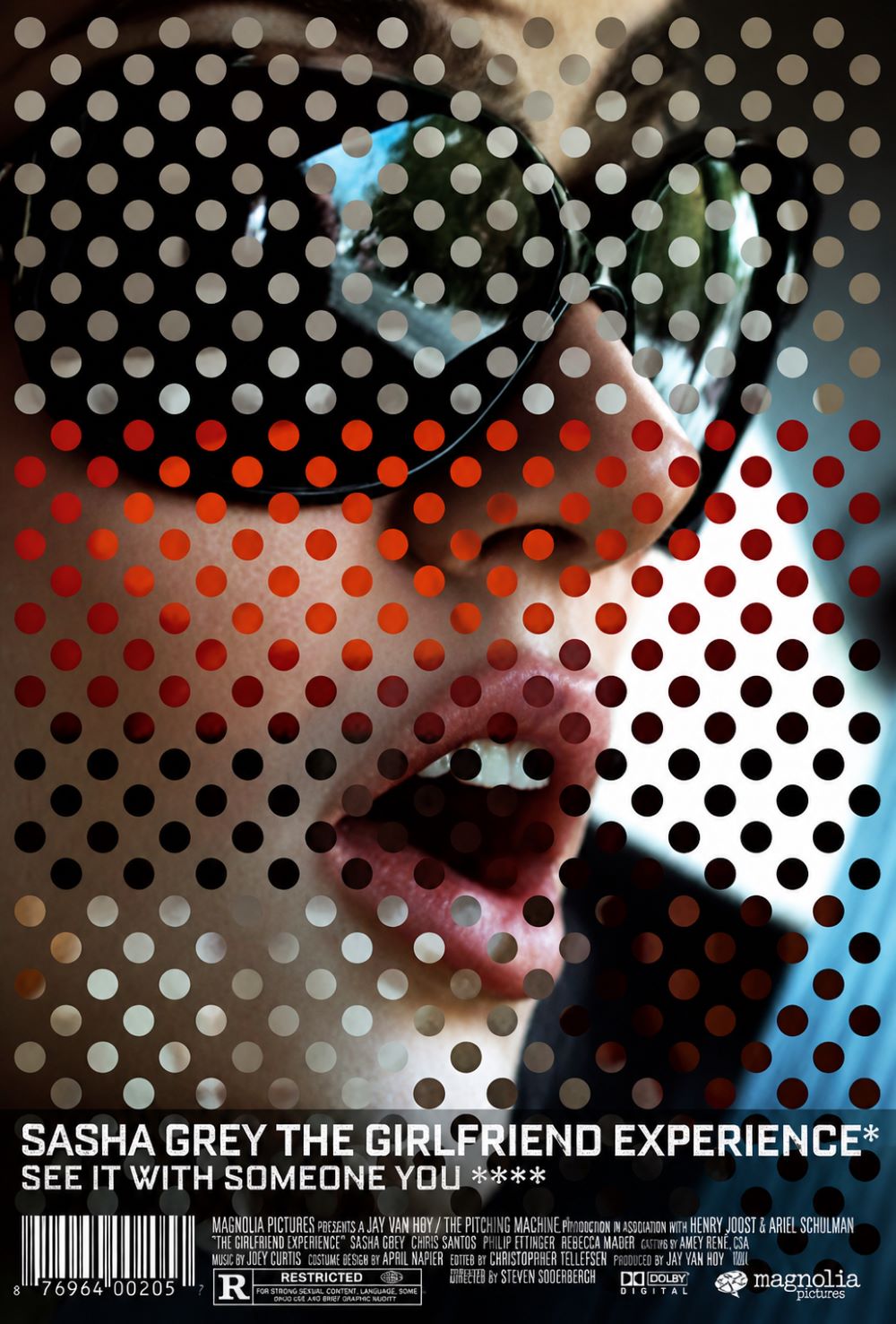
In between his larger projects (the Che biopic) and studio work (Ocean’s 11 through 13), Steven Soderbergh has kept busy with low-budget, experimental films like Bubble and Full Frontal. His latest entry in this HD-shot, minimalist phase is The Girlfriend Experience. When it was first announced in 2008, much of the buzz centered on Soderbergh’s decision to cast real-life porn star Sasha Grey in the lead role. From that point through its festival run, discussion of the film fixated heavily on that choice. Yet The Girlfriend Experience is ultimately a more intriguing work than its casting gimmick suggests, attempting to draw parallels between the high-end sex industry and the power structures of modern capitalism.

First off, Sasha Grey is not the film’s weak link, despite expectations tied to her background. While her performance can be uneven, there are several moments where she displays clear presence and control. What some have interpreted as a flat or vacuous screen persona actually aligns closely with the character. Chelsea is a $10,000-a-night escort whose clientele consists of wealthy, powerful men—people accustomed to buying whatever and whoever they want. What they purchase from Chelsea is the illusion of intimacy: the “girlfriend experience.”

One of the earliest scenes illustrates this perfectly, as Chelsea spends time with a client in what initially appears to be a normal relationship between a successful man and a poised, younger partner. That illusion, however, defines the entire film. Chelsea is not simply selling sex; she is selling the performance of a perfect relationship. On the surface, everything appears polished and authentic, but beneath it lies something transactional and deeply artificial.

Grey captures this duality effectively. Where some may see a performer out of her depth, her detachment instead feels intentional—part of the character’s constructed identity. It becomes difficult to distinguish where Grey ends and Chelsea begins. Whether this translates into a long-term mainstream acting career is uncertain, but with the right material and direction, she shows potential beyond the limitations of typecasting.

Despite its subject matter, The Girlfriend Experience is less about sex than it is about the commodification of fantasy. Even Chelsea’s boyfriend, Chris (played by Chris Santos), participates in this economy of illusion as a personal trainer selling physical transformation and confidence. The film avoids sentimentality, and when it briefly leans in that direction, it feels out of step with its otherwise clinical tone. Its strength lies in exposing how fragile these constructed realities are once stripped away.

Chelsea herself embodies this contradiction. She is savvy and business-minded, clearly aware of how to leverage her work into future opportunities, yet she clings to a lingering naivete. As competition emerges and her client base becomes less secure, her vulnerability surfaces. Despite operating within a world of calculated transactions, she remains susceptible to the same power dynamics that define her clients’ world.

Shot quickly during the financial collapse of 2008–2009, the film subtly mirrors that instability. Soderbergh draws a parallel between Chelsea’s profession and the broader economic system—both built on selling aspirational illusions. Just as consumers were sold the dream of prosperity they couldn’t afford, Chelsea sells emotional intimacy that isn’t real. In both cases, the illusion eventually collapses, revealing a harsher truth underneath.

Soderbergh’s direction may be challenging for some viewers. The film unfolds in a non-linear, fragmented style typical of his more experimental work. Those familiar with his filmography will likely adjust, but audiences expecting something closer to his mainstream efforts may find it disorienting. Still, his continued experimentation with HD cinematography is notable. The image is strikingly crisp—sometimes to the point of artificiality—which reinforces the film’s thematic focus on surface versus reality. Beneath that clean exterior lies something far more complicated and unpolished.

Of Soderbergh’s work in this digital format, The Girlfriend Experience stands as his strongest effort so far. It is far from perfect—at times it feels visually and emotionally restrained for a filmmaker of his caliber—but it carries an unmistakable French New Wave influence, particularly reminiscent of Jean-Luc Godard. The film is unlikely to earn major accolades, and it may ultimately be remembered as a curious crossover moment for Sasha Grey. Still, its very existence speaks to a willingness—on both the director’s and the actor’s part—to take risks outside conventional boundaries.

In an industry often driven by safety and predictability, that alone makes The Girlfriend Experience worth noting. Whether or not it succeeds by traditional standards is almost beside the point; the film exists, invites interpretation, and leaves its audience to decide its value on their own terms.