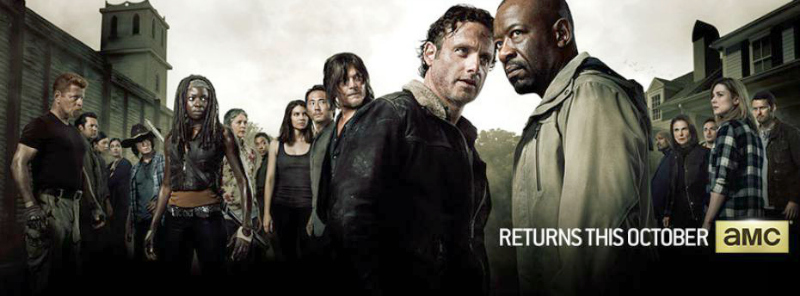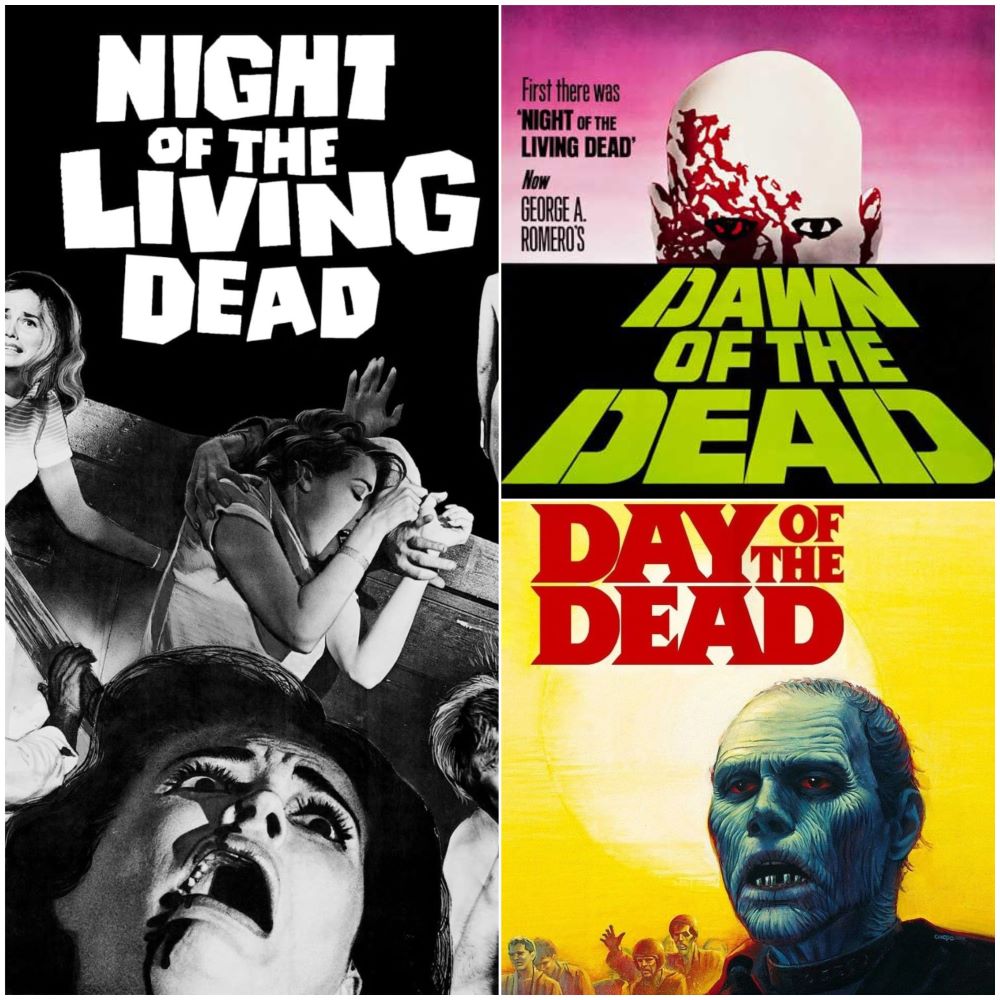
The Dead Among Us: Exploring Society and Self in Romero’s Trilogy


“When there’s no more room in hell, the dead will walk the earth.” — Peter

George A. Romero’s zombie trilogy—Night of the Living Dead (1968), Dawn of the Dead (1978), and Day of the Dead (1985)—stands as a landmark achievement in horror cinema, weaving the evolution of the zombie genre with a profound commentary on human nature and societal collapse. Emerging during periods of significant social and political upheaval, each film reflects the anxieties, tensions, and cultural dynamics of its decade. Romero’s zombies were not merely monsters to instill fear but mirrors reflecting society’s darkest fears, prejudices, and failures. The trilogy explores pressing questions about survival, morality, racial and class structures, and the fragility of human relationships when civilization breaks down, making these films persistently relevant beyond their gore and suspense.

What makes Romero’s trilogy particularly striking is its layered richness—each installment presents a standalone narrative that deepens the conversation about humanity’s response to apocalypse while encapsulating the spirit of its era. Night of the Living Dead confronts issues of race, violence, and distrust within a claustrophobic haven; Dawn of the Dead takes viewers to a sprawling shopping mall, a metaphor for 1970s consumer culture’s hollow comforts and social alienation; and Day of the Dead delves into the psychological and ideological fractures under extreme duress in a military bunker, highlighting themes of authoritarianism, scientific ethics, and the struggle for hope in despair. Together, these films form a powerful, intergenerational critique that resonates with viewers as much for their social insights as for their seminal contributions to the horror genre.

The Real Threat: Humans Versus Zombies

In Romero’s trilogy, the zombies provide relentless external pressure, but it is human flaws that become the dominant threat. Night of the Living Dead introduces the idea that fear, selfishness, and mistrust within small groups erode their chances of survival. The movie’s confined setting in a rural farmhouse encapsulates a microcosm of society teetering on the brink. Ben, played by Duane Jones, stands out not just for his calm leadership but also for the racial and social tensions his presence introduces—especially in conflict with Harry, whose obsession with control echoes real-world social divides. The film’s infamous ending, where Ben is killed by a white posse, resonates as a powerful allegory for racial violence, underscoring that the apocalypse in Romero’s world is as much a societal failure as a supernatural event.

Moving to Dawn of the Dead, the threat shifts toward a metaphorical critique of consumer culture. The survivors’ refuge in a shopping mall represents a modern temple of capitalism, filled with distractions and material goods that provide temporary relief but ultimately expose human weakness. The zombies’ endless wandering in this retail environment ridicule our real-world repetitive consumption, blurring lines between life and death. Human conflicts intensify as greed and recklessness among the survivors hasten their downfall. The bikers’ violent intrusion and consequent chaos symbolize how societal fractures and selfishness can undo fragile pockets of order. Here the zombies are a mirror to humanity’s brainless rituals, and the real menace is people’s inability to rise above base instincts.

In Day of the Dead, the human threat turns authoritarian and fractured. Set in a cramped underground bunker, the story mines the clash between military pragmatism and scientific inquiry. Soldiers and scientists represent ideologies that fail to reconcile, leading to paranoia, cruelty, and betrayal. Dr. Logan’s work with Bub—the zombie who exhibits flickers of memory and humanity—raises ethical questions, while Captain Rhodes’ hardline attitude embodies the brutal will to survive at any cost. The psychological breakdowns and mounting violence illustrate Romero’s grim thesis: when order and communication collapse, humanity itself becomes the deadliest monster. Romero’s zombies evolve here beyond simple horror fodder into symbolic reflections of humanity’s tragic failures.

Reflecting the Decades

Night of the Living Dead uses black-and-white cinematography to invoke a stark, documentary-like immediacy. This choice grounds the horror in a realism that intensifies dread, making the threat palpable and the social commentary more haunting. The film’s sound design—ambient crickets, creaking homes, radio reports—immerses viewers in a palpable tension. The limited setting and raw performances engage the audience emotionally, resembling a tragic stage play with themes of mistrust and panic spiraling out of control.

Dawn of the Dead shifts dramatically in visual and tonal approach. Its vibrant color palette contrasts the black-and-white predecessor, reflecting the mall’s artificial glow and the pop culture that it satirizes. The film balances broad dark humor with shocking gore, crafting an atmosphere that is surreal yet recognizably familiar. Tom Savini’s makeup and effects render the zombies grotesquely vivid, framing the film’s critique of capitalism with visceral impact. The pacing is more expansive, covering diverse spaces and character arcs as the survivors roam the mall’s labyrinthine insides, a metaphor for society’s complex detours and distractions.

Day of the Dead reverts to a darker, claustrophobic visual style in shadowy tunnels and corridors. The lighting is grim, reflecting the emotional suffocation and moral decay of its characters. Savini’s effects reach a gruesome peak here; every bite, wound, and decomposing corpse is rendered with intense anatomical detail. The film’s soundscape—filled with eerie silence punctuated by horrific violence—places viewers deep in the bunker’s oppressive atmosphere. Its pacing allows tension to build relentlessly, mirroring the psychological disintegration on screen. The film’s tone is unyieldingly bleak, underscoring an apocalypse not just of bodies but of hope and humanity.

The Films as Cultural Mirrors

Romero’s films serve as powerful cultural artifacts, each embodying concerns of its time.

Night of the Living Dead arrived in the late 1960s amid civil rights movements and the Vietnam War. The casting of Duane Jones as Ben was revolutionary, providing an implicit challenge to racial norms without overt political messaging. The film’s stark rural setting underscores isolation and vulnerability, while the tense, fractured group dynamics mirror societal conflicts over race, power, and distrust. The film’s haunting finale, with Ben’s death at the hands of a white mob, connects it powerfully to ongoing real-world violence against African Americans and demands reflection on humanity’s darkest impulses.

In contrast, Dawn of the Dead reflects the 1970s’ explosion of consumer and mass culture. Adventure into a shopping mall—a temple of capitalist excess—becomes a metaphor for societal malaise. Romero critiques consumerism’s seductive yet dehumanizing effects, suggesting that even amid an apocalypse, humans cannot escape compulsions to buy, hoard, and consume. The characters’ indulgence in the mall’s resources reveals social and moral exhaustion, and their downfall exposes the fragility beneath the comfortable facade of consumer society. The film’s biting humor and grotesque shocks harbor an underlying sadness about alienation and decay.

Day of the Dead encapsulates 1980s political anxieties around militarism, institutional authority, and distrust. The bunker setting becomes a suffocating arena where ideological conflicts tear apart what little society remains. This film foregrounds questions around science versus brute force, morality versus survival, and communication breakdown as symbolic of a society fracturing under Reagan-era pressures. The mental breakdowns and spiraling violence illustrate a grim view that humanity might be beyond redemption when stripped of trust and compassion. Its darkness reflects the decade’s cultural cynicism and fears of social disintegration.

Microcosms of Society

Romero’s stories unfold through tight-knit groups whose conflicts illuminate broader social themes.

In Night, Ben’s calm and tactical leadership contrasts sharply with Harry Cooper’s selfishness and paranoia. Their tensions reflect generational and racial divides. Ben strives for unity while Harry clings to control, highlighting a central question of cooperation versus individualism in survival. The other characters, including the traumatized Barbara and the fragile family unit, represent varying responses to fear, illustrating fractured human connections intensified by crisis.

Dawn enlarges the survivor group and diversifies personality types: news reporter Francine, biker gang members, military-like figures, and civilians who each represent different social attitudes. Their conflicts—between indulgence and survival, hope and despair—reflect their inability to fully commit to collective welfare. The chaotic intrusion of bikers on the mall roof, desperate to claim resources, accelerates the internal collapse, demonstrating the fragility of constructed order amid human greed.

Day uses a sharply divided group between scientists and soldiers, emphasizing ideological conflict. Dr. Logan embodies scientific curiosity and empathy, while Captain Rhodes champions military control and harsh pragmatism. Their clash catalyzes the group’s disintegration. Supporting characters like Miguel display mental fragility brought on by isolation and stress. Bub, the experimental zombie, emerges as a surprising figure of sympathy and ethical ambiguity, challenging simplistic notions of life and death. The bunker thus becomes a pressure cooker for the darkest human and philosophical dilemmas.

Evolution of the Undead as Symbol

Zombies are initially mindless monsters but become more layered symbols throughout the trilogy.

In Night, zombies are terrifying yet simple threats. Their inexplicable transformation turns death into relentless hunger, symbolizing uncontrollable social forces and fears of decay.

In Dawn, zombies’ repetitive behavior in the mall symbolizes consumerism’s zombification of society—mindless consumption, ritual, and alienation repeated beyond death. They act as dark reflections of the living’s mechanical habits.

Day transforms zombies into tragic figures represented by Bub, whose flickers of memory and social responsiveness invite empathy. This evolution raises moral questions about identity, consciousness, and the possibility of redemption or understanding within terror. The zombies become mirrors not only of societal collapse but of humanity’s potential for both cruelty and compassion.

Legacy and Impact

Romero’s trilogy didn’t merely redefine zombies but transformed horror into a powerful vehicle for social commentary, intertwining visceral storytelling with sharp critiques of society’s deep flaws and fears. Each film uses the undead not only as monsters but as metaphors reflecting the social and political issues of its time, making the horror resonate beyond the screen.

Night of the Living Dead broke ground by embedding racial and societal tensions into the horror narrative during a turbulent period of the 1960s civil rights movement and political unrest. The black lead character’s fate and the film’s stark depiction of fear and mistrust captured fractured American society—highlighting systemic racial violence, distrust, and the breakdown of community bonds. The zombies, once mindless folk creatures, became symbols of societal collapse, indiscriminate and relentless, emphasizing the idea that the real destruction comes from within human systems and relationships.

Dawn of the Dead advanced Romero’s social critique by targeting consumerism and capitalist excess. The setting of the shopping mall as a sanctuary turned trap was a brilliant allegory for how materialism numbs society, creating cycles of empty consumption akin to the zombies’ repetitive wandering. The film studied societal emptiness beneath the comforts of consumer culture, exploring how greed, self-interest, and a loss of empathy undermine collective survival. Notably, Romero touched on economic and racial inequalities, reflecting real struggles faced by minority and marginalized communities, such as urban violence and police brutality, though these themes are more coded than in Night.

Day of the Dead delivers a bleak critique of institutional failure and authoritarianism amid the 1980s political climate. The bunker’s contained setting represents a society strangled by mistrust between military power and scientific inquiry. As paranoia grows, ethical boundaries and communication collapse, showing a dystopia where humanity’s darkest traits rise to the surface. Characters personify ideological conflicts, illustrating the futility of survival without unity or compassion. The ethical complexity introduced through Bub, the almost-human zombie, forces deeper reflection on humanity and monstrosity. The film presciently portrays societal fragmentation, authoritarian impulses, and mental health crises as ongoing threats to civilization, deepening Romero’s grim message that humanity’s greatest dangers lie within itself.

Romero’s films continue to influence horror and popular culture by demonstrating how genre cinema can engage with pressing social issues. They laid the groundwork for zombie stories as allegories for everything from capitalism and consumerism to racial injustice and political dysfunction. Examples of films and shows influenced by Romero’s Dead trilogy are numerous and diverse. The 2004 remake of Dawn of the Dead by Zack Snyder revitalized zombie cinema for a modern audience while keeping the core social commentary, inspiring other fast-paced, action-oriented zombie films. The television series The Walking Dead drew heavily from Romero’s depiction of the undead apocalypse and the struggles of survivors, exploring themes of community, morality, and leadership in a broken world. Films like 28 Days Later introduced a new breed of zombies with ultra-fast infection rates, yet owe a thematic debt to Romero’s human-centric apocalyptic narratives. The video game series Resident Evil incorporates survival themes and social breakdown, reflecting the fractured human relationships Romero explored. Even non-zombie films like The Road invoke similar bleak atmospheres and moral complexities in post-apocalyptic settings. Romero’s influence also extends to comics, literature, and other media, making his trilogy a foundational pillar in modern horror and pop culture.

In sum, Romero’s trilogy remains a vital cultural touchstone. Each film captures the zeitgeist of its era while addressing timeless questions about human nature, survival, and society under crisis. The powerful fusion of gore, suspense, and social commentary in these movies gives them lasting relevance and impact far beyond the horror genre. They compel audiences to confront the monsters outside and the darker forces within themselves and their communities.
Horror Review: All of Us Are Dead


“If you cause someone else to die, living becomes meaningless.” — Ms. Park

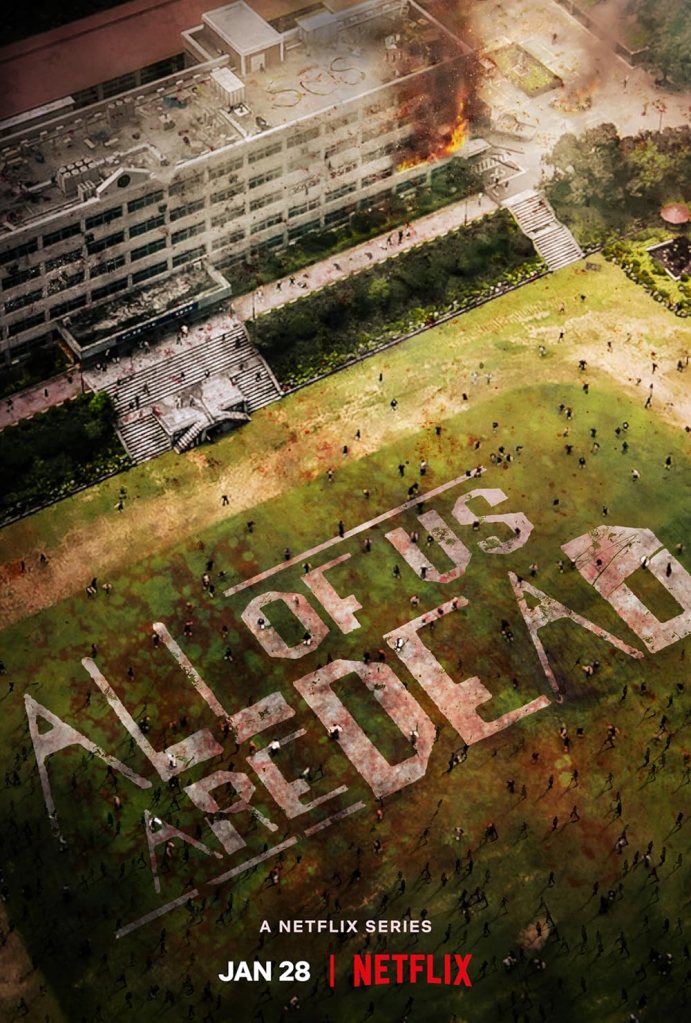
When All of Us Are Dead premiered on Netflix on January 28, 2022, it arrived at a time when both global audiences and Korean media were steeped in a fascination with dystopia, contagion, and social decay. The success of Kingdom had already proven that Korean horror could merge sociopolitical allegory with visceral entertainment on a grand scale. But where Kingdom dissected monarchy and corruption under the opulent, pandemic-stricken Joseon Dynasty, All of Us Are Dead reimagined apocalypse through the raw immediacy of youth—transforming a high school into a microcosm of social hierarchy, moral collapse, and the cyclical violence embedded in modern society.

Adapted from Joo Dong-geun’s webtoon Now at Our School, the series reflects the renaissance of cross-media storytelling in South Korea, where digital comics serve as fertile ground for cinematic reinvention. Directed by Lee Jae-kyoo and Kim Nam-su, the show unfolds in the fictional Hyosan High School, where a science experiment gone horribly wrong ignites a deadly viral outbreak. Within moments, everyday teenage conflicts—bullying, crushes, class pressures—explode into mortal struggles for survival. The series invites viewers to witness how quickly civility crumbles when adolescence, science, and contagion intersect in a closed system, turning a familiar academic setting into an arena of horror and ethical reckoning.

A meta-textual layer enriches the show’s narrative: the characters are well-versed in zombie lore, recognizing their nightmare as their very own Train to Busan. Early in the series, protagonist Cheong-san humorously compares their desperate situation to the iconic Korean zombie film. This is more than a passing joke; it marks how deeply the zombie genre is embedded in their cultural consciousness and survival instincts. The recognition shapes how they confront the outbreak, even as attempts to label the crisis as a “zombie” emergency fall on skeptical ears. This self-awareness grounds the horror in a world where fiction informs reality, and survival requires navigating both.

The virus at the center of All of Us Are Dead is born not from malice but desperation. Created by science teacher Lee Byeong-chan to empower his bullied son, the virus is designed to amplify human strength and aggression as a defense mechanism—an ironic inversion of evolution itself. The mutation, however, spirals beyond control, weaponizing rage and reducing its hosts to flesh-craving undead. This premise gives the show a poignant moral complexity rarely seen in typical zombie narratives. The outbreak stems from parental grief and failed empathy—a symbolic contagion that mirrors the emotional and systemic rot permeating South Korea’s hypercompetitive society. Underlying the visceral terror is a searing critique of institutional neglect. Authority figures—from school staff to government officials—succumb to confusion, bureaucracy, or cruelty rather than compassion. The lack of safe leadership parallels the inept response seen in Train to Busan and Kingdom, continuing Korean horror’s thematic obsession with authority’s inability to protect the vulnerable. Director Lee Jae-kyoo leans into this chaos with both precision and restraint, allowing moments of quiet dread between bursts of violent frenzy. Through repeated imagery of locked doors and shattered glass, he suggests that confinement—psychological, social, and literal—becomes the defining motif of youth under duress.

At its heart, All of Us Are Dead is a survival story—but one filtered through adolescent turmoil. When the infection begins, friendships fracture and loyalties are tested under fire. Students like Cheong-san (Yoon Chan-young), On-jo (Park Ji-hu), Nam-ra (Cho Yi-hyun), and Su-hyeok (Park Solomon) struggle not only to avoid death but to retain a moral compass amid the chaos. Their reactions to trauma—grief, bravery, ruthlessness—expose the spectrum of maturity within youthful fragility. The school, once a symbol of guidance and protection, turns into a decaying labyrinth of fear, with empty corridors echoing the screams of former classmates. This transformation gives director Lee a theatrical staging ground reminiscent of siege narratives. Terrifying, kinetic sequences unfold in chemistry labs, stairwells, and gymnasiums, blending handheld urgency with tight spatial cinematography. The camera’s proximity to characters captures the suffocating intensity of being trapped, while drone shots of burning Hyosan provide a grim reminder of the larger devastation beyond the school gates. The claustrophobic aesthetic evokes Western zombie forebears such as 28 Days Later and Romero’s Day of the Dead, yet the show remains distinctly Korean through its fusion of tragedy, melodrama, and relentless humanity.

One of the most gripping and socially resonant themes All of Us Are Dead explores is the prevalence and devastating impact of school bullying within South Korean youth culture. Bullying is not merely backdrop but a driving narrative force shaping character motivations and the outbreak’s consequences. From the outset, the series exposes the brutal hierarchies ingrained in the school system, where sociopathic bullies like Gwi-nam (Yoo In-soo) wield unchecked power over peers, enforcing cruel dominance through intimidation and violence. The victimization of marginalized students, particularly science teacher Lee Byeong-chan’s son, becomes a poignant catalyst for the viral outbreak, directly linking structural cruelty to catastrophic consequences. This thematic focus reflects real-world concerns in South Korea, where intense academic pressures and social conformity often exacerbate bullying, sometimes with tragic outcomes.

The show’s treatment of bullying extends beyond physical violence to reveal psychological torment—the constant surveillance, social exclusion, and layers of toxic peer dynamics that fracture young lives. Through nuanced portrayals of victims, perpetrators, and bystanders, All of Us Are Dead critiques a culture that often silences or minimizes abuse. The transformation of bullies into zombies metaphorically suggests how unchecked aggression can dehumanize both victim and aggressor, perpetuating cycles of violence even amid apocalypse. Meanwhile, characters like Nam-ra, who initially grapples with victimhood, embody the complex interplay of fear, rage, and resilience spawned by bullying. This emphasis elevates the series beyond typical survival horror into a social allegory about the corrosive effects of cruelty and the desperate fight for dignity under siege.

If Kingdom reinvented the zombie with its nocturnal, plague-era ferocity, All of Us Are Dead introduces a new hybrid—an evolved generation that expands the mythology. Here, the infection mutates unpredictably, producing “hambies” (half-zombies) who retain consciousness and emotion while gaining superhuman resilience. Nam-ra epitomizes this transformation, serving as both tragedy and embodiment of moral duality. Her condition becomes a metaphor for adolescence itself—the tension between savagery and empathy, human and monster, self and society. Through Nam-ra, the series explores ethical boundaries long absent from mainstream zombie fiction. She embodies the question: what happens when survival demands losing one’s humanity? Her struggle resonates deeply in a world where mutation and difference provoke fear and ostracism. The human horror in All of Us Are Dead is not confined to the undead but radiates from the living—bullies, opportunists, and indifferent adults—whose cruelty predates the infection.

Like many Korean horrors, the series is political without proclamation. Its metaphorical core lies in observing a generation abandoned by its guardians. The adults’ failures—scientific, ethical, and parental—manifest as the apocalypse the youth must endure. The students’ isolation becomes both physical and existential; they cannot rely on rescue, and government policies treat their town as expendable containment. These threads coalesce in unforgettable moments of moral reckoning: characters sacrificing themselves to slow infection, tender scenes where guilt replaces hope, and painful realizations that not everyone can be saved. Even amid terror, the direction maintains emotional intimacy, allowing tragedy to feel earned rather than manipulative. The viewer doesn’t merely observe a zombie outbreak but experiences the painful metamorphosis of innocence to experience, of dependency into resilience.

From its opening frames, All of Us Are Dead demonstrates Netflix’s investment in cinematic quality. The production design captures a country on the brink of collapse with chilling realism—street chaos blending with intimate campus horror. Special effects and prosthetics convey the infection’s grotesque physicality, particularly during close-ups that merge human anguish with abject body horror. The use of makeup and fast, jittering movement gives the zombies a distinctive aesthetic, somewhere between Train to Busan’s agile infected and Kingdom’s twisted contortionists. Sound design contributes profoundly to the immersion. Metallic echoes, frenzied breathing, and sudden silence heighten suspense, while the restrained soundtrack underscores existential dread rather than spectacle. At times, silence becomes the loudest sound in the series—especially in scenes where survivors await dawn or confront the moral cost of killing former friends.

Performances further anchor the chaos. Park Ji-hu delivers vulnerability and quiet strength as On-jo, grounding the narrative’s emotional line, while Yoon Chan-young incarnates youthful heroism tainted by despair. Cho Yi-hyun’s Nam-ra stands out as the most nuanced performance, oscillating between stoicism and suppressed rage, embodying both victim and evolution. Supporting roles—including antagonists like the sociopathic bully Gwi-nam (Yoo In-soo)—introduce shades of human corruption that rival any monster the virus creates.

All of Us Are Dead continues Korean horror’s tradition of transforming genre entertainment into mirrors of collective trauma. If Train to Busan externalized grief and social apathy, and Kingdom allegorized class rot under feudal hierarchy, this series dramatizes a generation’s alienation in the digital age. The powerless youth of Hyosan High become metaphors for a society that prizes excellence over empathy and survival over solidarity. The outbreak amplifies what was already toxic: bullying, surveillance culture, and suppressive academic competition—forms of quiet apocalypse preceding the literal one. Even the series’ title invokes universality, suggesting that in a morally diseased world, everyone is already spiritually infected. The zombies may be the physical manifestation of what festers within ordinary relationships—rage, resentment, and humiliation. In this respect, the show transcends its genre constraints, functioning as social realism cloaked in blood.

However, the series is not without its flaws. Its ambitious, 12-episode length sometimes reveals pacing issues. The narrative occasionally stagnates in repetitive cycles of fleeing classroom to classroom, with some fight scenes and survival strategies repeating to the point of fatigue. Unnecessary characters consume screen time without meaningful contribution to the plot, diluting the impact of the central story. Logical inconsistencies also emerge—characters often make poor decisions that strain credibility, such as not isolating infected individuals early, or failing to leverage unique abilities within the group efficiently. These moments can frustrate viewers seeking more plausible survival dynamics and amplify narrative frustration.

Emotionally charged episodes sometimes suffer from heavy-handed exposition and dialogue that replace subtle character development. At times, the series relies on melodramatic reactions that may feel exaggerated or clichéd, especially in high-tension situations where urgent action would be expected. The ending, while open to continuation, drew criticism for being anticlimactic and resolving major conflicts too simplistically, diminishing the epic buildup and emotional payoffs. Additionally, the English dubbing and translation have been noted to undermine the performances’ emotional resonance for international audiences.

Despite these weaknesses, the show capitalizes on what it does best: creating authentic emotional bonds within its youthful cast, delivering intense, well-crafted horror scenes, and reflecting pertinent social anxieties through genre storytelling. Its blend of visceral thrills, tragic humanity, and cultural critique makes All of Us Are Dead a compelling, if imperfect, addition to the Korean zombie canon.

The finale deepens the ambiguity of Nam-ra’s fate. After a final, painful showdown, she isolates herself, grappling with the monstrous hunger within while refusing to surrender her humanity. In a haunting scene, she bites her own arm and feeds only on dead infected to suppress her urges. When reunited with her friends months later, she appears transformed yet unsettling—no longer wholly human, nor fully monster. She speaks cryptically of finding others like herself, neither adult nor child, caught in an uneasy in-between. Declining her friends’ plea to return, she leaps from the rooftop into darkness, leaving open whether she will emerge as ally or threat. This ambiguous exit invites viewers to ponder the fragility of identity under mutation and the precarious balance between survival and self-destruction in a world forever altered by contagion.

In a broader sense, All of Us Are Dead demonstrates that the zombie mythos remains fertile ground for reinvention. By combining the fast-paced terror of modern infection horror with the introspection of Korean melodrama, the series redefines what it means for young people to inherit a broken world.

All of Us Are Dead is more than another entry in the zombie canon—it is a generational elegy wrapped in horror. Built upon the stylistic and thematic foundations laid by Train to Busan and Kingdom, it fuses elemental fear with social autopsy, exposing the fractures of authority, empathy, and adolescence under siege. Though uneven in pacing and burdened by moments of frustration, it succeeds where it matters most: revealing that monsters are not born from contagion but cultivated by neglect. Through its relentless tension, moral ambiguity, and emotional resonance, All of Us Are Dead cements itself as one of the defining horror works of Korea’s streaming era—a mirror for an age where fear spreads faster than any virus, and where survival demands confronting not the end of the world, but the end of innocence.

Horror Review: Day of the Dead (dir. by George A. Romero)


“You want to put some kind of explanation down here before you leave? Here’s one as good as any you’re likely to find. We’re bein’ punished by the Creator…” — John “Flyboy”

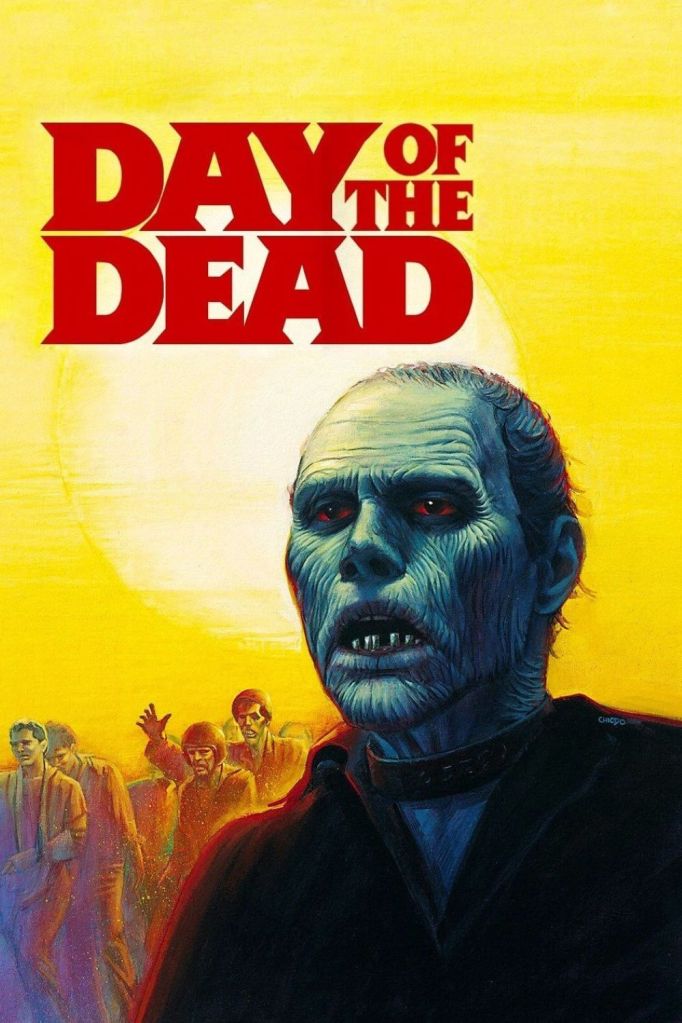
George A. Romero’s 1985 film Day of the Dead stands as an unflinching and deeply cynical meditation on the collapse of society amid a relentless zombie apocalypse, intensifying thematic and narrative complexities first introduced in Night of the Living Dead (1968) and Dawn of the Dead (1978).

Originally, Romero envisioned the film as an epic, describing it as “the Gone with the Wind of zombie films.” His screenplay featured above-ground scenes and a more expansive narrative, but budget cuts halved the original $7 million budget to $3.5 million, forcing a drastic paredown. While much grandiosity was lost, the trimming resulted in a tighter narrative and heightened the nihilistic tone, deepening the film’s focused exploration of humanity’s darkest aspects during apocalypse.

Set after civilization has collapsed, Day of the Dead places viewers in the suffocating confines of a missile silo bunker in Florida, where scientists and soldiers struggle for survival and solutions amid encroaching undead hordes. The claustrophobic atmosphere—born partly from the abandonment of Romero’s broader original sequences—intensifies the tension between the hopeful scientific pursuit of salvation and the harsh pragmatism of military authority. These competing ideologies escalate into authoritarian violence, embodying the fractured microcosm of a dying society.

Within this claustrophobic world, a third group—composed of characters Flyboy and McDermott—emerges as a stand-in for the rest of humanity. They observe the scientists and soldiers—institutions historically symbols of security and innovation—but witness how these deeply entrenched ways of thinking only exacerbate problems instead of solving them. This third faction characterizes humanity caught between rigid orders and doomed pursuits, reflecting Romero’s broader commentary on societal stagnation and fragmentation.

Central to this conflict are Dr. Logan, or “Frankenstein,” a scientist obsessed with controlling the undead through experimentation, and Captain Rhodes, the hardened soldier who believes survival demands ruthless control.

Logan’s controversial research seeks to domesticate and condition zombies, notably through his most celebrated subject, Bub—the undead zombie capable of rudimentary recognition and emotion—challenging assumptions about humanity and monstrosity.

Here the film benefits greatly from the extraordinary practical effects work of Tom Savini, whose contributions on Day of the Dead are widely considered his magnum opus. Savini’s makeup and gore effects remain unsurpassed in zombie cinema, continually influencing horror visuals to this day. Drawing from his experience as a combat photographer in Vietnam, Savini brought visceral realism to every decomposed corpse and violent injury. The close-quarters zombie encounters showcase meticulous practical work—detailed wounds, biting, and dismemberment—rendered with stunning anatomical authenticity that predates CGI dominance.

Bub, also a masterclass in makeup and animatronics, embodies this fusion of horror and humanity with lifelike textures and movements that blur the line between corpse and creature, rendering the undead terrifyingly believable.

The film captures the growing paranoia and cruelty as resources dwindle—food, ammunition, and medical supplies—and the fragile social order begins to shatter. The characters’ mounting desperation illustrates Romero’s thesis that humanity’s real enemy may be its own incapacity for cooperation.

The moral and social decay is vividly portrayed through characters like Miguel, whose mental breakdown sets destructive events in motion, and Rhodes, whose authoritarian survivalism fractures alliances and moral compass alike. Logan’s cold detachment and experiments push ethical boundaries in a world on the brink.

Romero’s direction combines claustrophobic dread with stark psychological terror, further amplified by Savini’s effects. The cinematography’s low lighting and tight framing create an oppressive environment, while graphic violence underscores a world irrevocably broken. The unsettling sound design—moans, silences, sudden outbreaks—immerses viewers in a relentless atmosphere of decay and fear.

Romero described Day of the Dead as a tragedy about how lack of human communication causes chaos and collapse even in this small slice of society. The dysfunction—soldiers and scientists talking past each other, eroding trust, spirals of paranoia—serves as a bleak allegory for 1980s America’s political and cultural fragmentation. Failed teamwork, mental health crises, and fatal miscommunication thrive as the bunker metaphorically becomes a prison of fractured humanity.

Though not as commercially successful as its predecessors, Day of the Dead remains the bleakest and most nihilistic entry in Romero’s Dead series. Its overall grim tone, combined with mostly unlikable characters, establishes it as the most desolate and truly apocalyptic film of the series. The characters often appear fractured, neurotic, and unable to escape their own destructive tendencies, making the story’s world feel even more hopeless and devastating.

Far beyond a simple gore fest, Day of the Dead serves as a profound social critique infused with psychological depth. It explores fear, isolation, authority abuse, and the ethical limits of science, reflecting enduring anxieties about society and survival. The film’s unsettling portrayal of humanity’s failings, embodied in broken relationships and moral decay, presents a harsh reckoning with what it means to be human when humanity itself is the ultimate threat to its own existence. This thematic complexity, combined with Romero’s unyielding vision and Savini’s unparalleled effects, crafts a chilling and unforgettable cinematic experience.

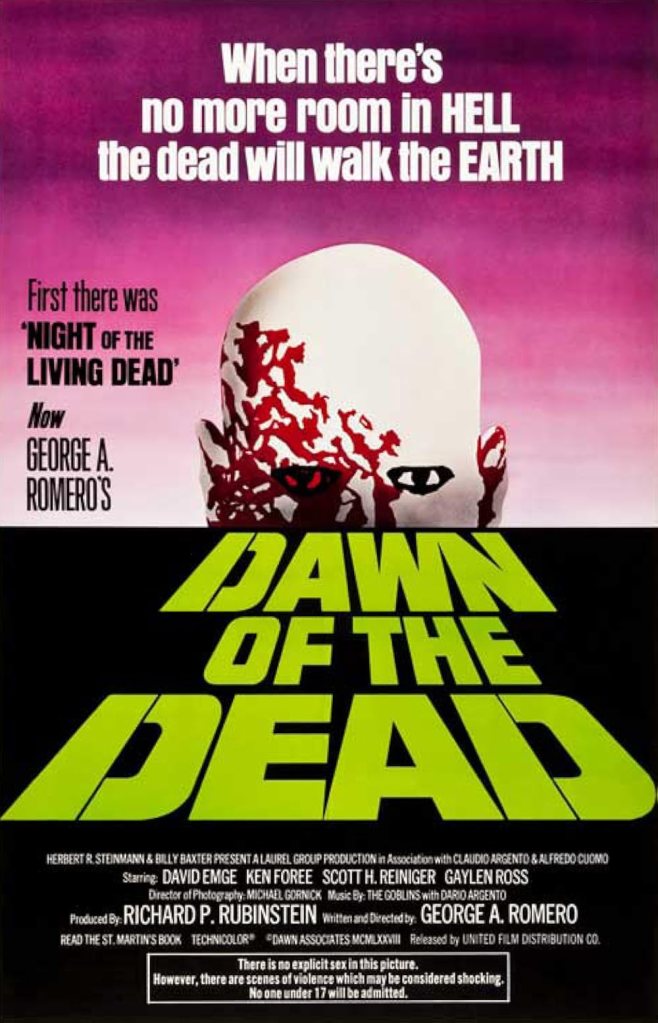
Horror Review: Dawn of the Dead (dir. by George A. Romero)


“When the dead walk, señores, we must stop the killing… or lose the war.”

In 1968, horror cinema was irrevocably changed by the emergence of George A. Romero’s vision, signaling the beginning of a transformative era for the genre. Romero, who had spent much of his early career making industrial and educational films, shifted gears dramatically by crafting Night of the Living Dead, an independent film that did more than just scare audiences—it shattered the conventions of horror. This was a film that rejected the glossy, Gothic monsters of studios like Universal and Hammer, replacing them with raw, unvarnished depictions of human decay and social collapse. The fear Romero invoked was no longer supernatural; it was born from human frailty and social upheaval.

Night of the Living Dead introduced audiences to an entirely new kind of monster: the zombie, not as a mystical or alien infection, but as the reanimated corpse of an ordinary person. This change was more than cosmetic. It shifted the source of horror from “the other” to a reflection of ourselves. Death itself had become weaponized, turning friend into foe in the most visceral way imaginable. The infection was no longer a far-off fantasy but an internal threat. Although the word “zombie” was scarcely spoken in Romero’s first three Dead films, the concept solidified into the cultural lexicon, haunting audiences with the idea that anyone—even the people closest to us—could become the enemy.

Despite the landmark impact of Night of the Living Dead, it would take a decade before Romero was able to produce its sequel. The first film’s shocking violence and disturbing social commentary made Hollywood studios wary of financing a continuation. However, a breakthrough came when Italian horror maestro Dario Argento learned of Romero’s plans and offered to co-finance Dawn of the Dead under the condition that he would receive European distribution rights and be allowed to edit a version for his audience. This international collaboration proved pivotal, allowing Romero to create what many consider not just a sequel but a towering masterpiece of horror cinema.

Released in 1978, Dawn of the Dead solidified Romero’s reputation as a visionary filmmaker willing to confront uncomfortable truths. The Motion Picture Association of America refused the film an R-rating due to its graphic content, and Romero opted to release it unrated to avoid association with the X-rating, which was then primarily linked to pornography. While this restricted the number of theaters willing to show the film, it did not hinder its success. The movie drew large audiences hungry for a horror story that dared to depict society’s unraveling with brutal honesty.

From its opening, Dawn of the Dead confronts viewers with the chaos midst societal collapse rather than building toward it. Traditional authority figures—news anchors, government officials, police—are portrayed as overwhelmed, often ineffective, and sometimes themselves sources of danger. The film’s opening sequence, set inside a frenzied television newsroom, captures this chaos vividly; reporters and producers struggle to maintain composure while the world outside falls apart. This scene encapsulates one of Romero’s central themes: the erosion of trust in institutions during extreme crisis. As media credibility falters, survivors are left in an informational vacuum, further imperiling their ability to cooperate or find sanctuary. This mistrust resonates strongly today, echoing recent real-world crises where institutional failure has worsened public panic and political division.

A critical early sequence—the tenement raid—brilliantly illustrates the film’s social complexity. The conflict here stems not only from the undead but from a clash of cultures: the low-income inhabitants hold tightly to their traditions, especially the respect and mourning of their dead, while the government, scientists, and law enforcement—detached “outsiders”—seek to destroy the infected bodies coldly as threats. This refusal to recognize the residents’ humanity and cultural practices sparks a brutal firefight, symbolizing the broader breakdown of social cohesion. Romero uses this conflict to show that the apocalypse is fueled as much by misunderstandings and institutional coldness as by the undead threat itself.

Within this crumbling world, the film centers on four survivors who become our guides through Romero’s apocalyptic landscape: Roger (Scott Reiniger) and Peter (Ken Foree), two disillusioned Philadelphia SWAT officers who desert after that violent raid; Stephen (David Emge), a helicopter pilot; and Fran (Gaylen Ross), a television producer. These characters represent the fractured remnants of a society that once clung to institutions but is now adrift. Their escape from Philadelphia aboard a stolen news helicopter is less a triumphant flight than a retreat into uncertainty.

Their destination is a suburban shopping mall near Monroeville, Pennsylvania. The mall, abandoned but intact, quickly becomes their fortress. Clearing out the zombies inside and barricading the doors seems like a triumph—an oasis amid apocalypse. The survivors revel in a surreal form of luxury that stands in stark contrast to the danger outside. For a time, they indulge in consumer comforts previously unattainable: fine clothes, gourmet food, and even jewelry. This phase is both a coping mechanism and a critique. Romero uses the mall setting as a dark mirror to American consumer culture. The shoppers turned zombies wander these halls as if drawn by habit, herding toward the very symbols of consumption that once defined the pre-apocalyptic world.

Romero’s critique extends beyond consumerism run amok; he exposes consumerism itself as a new religion for America. In the 1970s, as economic and social uncertainties shook the nation, megamalls emerged as the new temples of worship where consumer habits became ritualistic acts of devotion. The film’s setting drives home this analogy—the mall is not simply a marketplace but a sacred space where the rituals of buying and consuming provide meaning and identity. The zombies’ relentless, automatic wandering through the mall’s stores reflects a zombified devotion to these rituals, implying that consumerism has replaced spiritual and community values, offering hollow salvation in its place.

This portrayal is not accidental but deliberately satirical. The mall is a gilded cage, symbolizing consumerism’s dominance over American identity. Even in the apocalypse, the survivors replicate the rituals of capitalism, clinging to items of superficial value and meaning. The zombies’ mindless shuffling through stores like Woolworth’s and the food court underscores this grotesque cycle. Romero’s message is sharp: consumerism is a kind of death, a trance that distracts from and perhaps accelerates societal decay. The film implies that in America, the line between life and death blurs within the walls of the shopping mall because it is there that life’s priorities have long been warped.

While consumerism forms a visible backdrop, Dawn of the Dead probes deeper, exposing a darker undercurrent: humanity’s inherent violent nature as the real engine of destruction. The undead are monstrous and fearful, but they lack the complexity and self-destructiveness of the living. Throughout the film, Romero presents violence not as a rare failing but as a baseline condition of human behavior. The survivors themselves struggle to suppress impulses of aggression, paranoia, and selfishness that grow more toxic over time.

Roger’s reckless bravado during their clearing of the mall leads to a fatal bite from a zombie, making his death a metaphor for the cost of unchecked aggression. The living kill as readily as the dead, but with purpose and calculation that is often more destructive. The raiding biker gang that ultimately invades the mall appears as a harsh symbol of this self-inflicted violence. Unlike the zombies, whose threat is instinctive, the bikers wield cruelty consciously, plundering and destroying the survivors’ fragile sanctuary. Their incursion shatters any illusion of security and exposes the futility of individualistic survival strategies when cooperation is absent.

The unraveling of the survivors’ cohesion over the course of the film underscores one of Romero’s most bleak insights: humanity’s greatest enemy is itself. Even small groups that depend on trust and unity quickly fragment amid fear and scarcity. Despite the severity of their predicament, the four protagonists are often consumed by petty grievances, distrust, and self-preservation. Romero suggests that unless cooperation becomes a collective imperative, survival is impossible. The dead multiply endlessly, but it is the living who ensure society’s demise by turning against each other first.

Romero’s Dawn of the Dead also marks the cinematic arrival of Tom Savini, whose pioneering make-up effects would forever transform horror filmmaking. Savini and members of his team not only crafted many of the film’s grisly effects but also played some of the biker gang antagonists, blending artistry and performance. While the gore in Dawn can appear somewhat garish or cartoony on film, largely due to lighting effects and the practical limits of makeup technology at the time, Savini’s work set the standard for modern horror effects. His techniques and vision became the bedrock of the gore genre, influencing decades of horror cinema thereafter. His legacy continued as he later directed the 1990 remake of Night of the Living Dead, bringing Romero’s seminal vision to a new generation with his signature effects sensibility.

Ken Foree’s portrayal of Peter anchors the film emotionally; his performance balances toughness with vulnerability, capturing a man grappling with the collapse of law and societal norms while striving to retain his humanity. Scott Reiniger’s Roger provides a volatile contrast—impulsive, reckless, and ultimately tragic—as his aggression leads directly to his downfall. David Emge’s Stephen and Gaylen Ross’ Fran round out the core survivors, expressing pragmatism, grief, and the desperate need for connection as their world crumbles. Their dynamic interactions highlight Romero’s warning: human connection in times of extremity is fragile and fraught, undermined by fear and mistrust.

Romero’s expert use of sound and music further elevates the film. The eerie muzak playing through the mall’s PA system contrasts sharply with the groans of the undead and sudden bursts of violence, creating a haunting dissonance between normalcy and chaos. This effective sound design emphasizes the thematic conflict between consumerist detachment and encroaching apocalypse.

Beyond its horror, Dawn of the Dead serves as a time capsule of late-1970s American socio-political anxieties. America was reeling from the disillusionment of Vietnam, shaken by the Watergate scandal, and grappling with urban decay and economic malaise. The film vividly captures this zeitgeist: a society where institutions are distrusted, violence is normalized, and consumerism both numbs and destroys. Romero’s criticism extends to Cold War paranoia, reflected in his depiction of apocalypse not as a sudden cataclysmic event but a slow, grinding decline fueled by human self-destruction.

Romero’s directing style—unpolished at times but unflinching—adds authenticity to the film’s grim message. His use of long takes, handheld camera work, and naturalistic performances grounds the supernatural in the everyday, making the horror tangible. The bleak humor sprinkled throughout, such as the zombies’ fascination with the mall’s siren and muzak, darkens the tragedy with satirical bite.

Dawn of the Dead does not offer easy hope. Its ending—marked by betrayal, destruction, and resignation—echoes Romero’s worldview: humanity’s baser instincts, left unchecked, will always undermine salvation. Yet, in this stark vision lies an ironic beauty: survival is not only about killing or hiding but the recognition of our shared flaws and the possibility, however slim, of striving beyond them.

In conclusion, Dawn of the Dead remains a masterpiece of horror, combining groundbreaking practical effects, compelling performances, and incisive social commentary to create a film that is as relevant today as it was nearly fifty years ago. Romero’s work challenges viewers to confront the monsters within us all and questions whether human nature’s violent and consumerist impulses might prove more lethal than any undead army. Its enduring legacy lies not just in its scares but in its profound understanding of societal collapse and the fragile bonds that sustain civilization.

Horror Review: Fear the Walking Dead S1E04-05 “Not Fade Away” & “Cobalt”


FearTWDS01E04-05

“Sometimes all we can do is not enough.” — Dr. Bethany Exner

[some spoilers]

Fear the Walking Dead has been a mystery to some audiences and critics. If there was something the original series was criticized on it was that it’s writing throughout it’s current run has been uneven. There would be some great episodes and some good ones, but then some go nowhere episodes that stops any sort of momentum a particular season was having. The Walking Dead deserved some of the criticism leveled at it’s writing and how some of it’s characters appeared one-note for too long. Things began to improve once Scott M. Gimple took over a showrunner beginning with season 4. yet, some of the damage had been done by a very uneven first three season.

One thing The Walking Dead was never lacking was it’s creativity when it came to the zombies and the violence around them. Greg Nicotero and his KNB EFX crew never flinched from whatever hellish idea the writers were able to come up with. It’s probably one of the main reasons why the show has succeeded so much despite flaws in the writing and characterization. People were willing to tolerate the soap opera-style character interactions if it meant the flesh-eating and the headshots came a-plenty.

The first half of Fear the Walking Dead didn’t have much of the zombie action. It was a bold decision by the writers to stay on the path that brought the early days of the zombie apocalypse to life. This was a show that didn’t already have zombies taking over and with civilization having fallen by the wayside. It was still a world where everyone went about their daily routines. Sure the first episode gave some hints that something was amiss, but not until the final minutes did we finally see our first zombie. Even after that initial reveal at the end of the pilot the writers kept the zombies more off-screen. When they did appear it was as one or two.

Episodes four and five, “Not Fade Away” and “Cobalt”, continued this trend of keeping the zombies at arm’s length and off-screen. We saw Travis and Madison’s neighborhood turned into a safe zone by the National Guard who had been deployed to help contain and combat the spreading infection. Some took the military’s arrival with optimism (Travis) while others saw their arrival as a sign that things were just going to get worse and that things might already be too late to save (Daniel).

These two episodes were some of the strongest in this shortened first season of Fear the Walking Dead. We got to learn more about every character, but mostly we learned just how differently each parent of the core group reacted to the growing situation. These were reactions that were as varied and complex as any we’ve seen in any of the characters in The Walking Dead.

Each parent tried to do what they thought was best for their immediate family. On one end of the moral spectrum we had Travis who tried to serve as a sort of de facto mayor of the walled-off neighborhood. Become the person that would be the one who dealt with the military liaison when it came to his family’s and, to an extent, the neighborhood’s well-being. So far, throughout the this short first season, Travis has come across as the sort of enlightened, civilized man who tries to reason and talk things out instead of acting out rashly and on instinct. This sort of personality is what we as a society want to keep the wheels of civilization moving along problem-free. But as we’ve seen this has also become a weakness as things progressively begin to get worst. Travis can’t seem to see that the rule of law and reason seem to be fighting a losing battle with the need to survive.

Yet, despite Travis’ coming off as some sort of pacifist we get a hint of logic to his seeming weak-willed madness. He sees the world crumbling around him and as a father and role model he has tried to be that moral center to his circle of family and friends. Even when what he’s seeing chips away at his belief that those in power will protect and save them, Travis tries to remain that strong, moral center.

The opposite seems to be true for the other father in our group, Daniel Salazar. This character has been quite the revelation in this series. We first meet him in episode 2. He comes across as a leery, but good man like any immigrant in the US looking to make a new life for his family. But with each new episode we learn a bit more of what makes Daniel tick. He’s a father whose past history before coming to the US hints at chaos and bloodshed. He has seen how crisis could spiral out of control in a blink of the eye and he sees that now with the arrival of the military. He doesn’t trust too many outside his wife and daughter and when he does, as the case with Madison, he does so begrudgingly. He’s adaptable to the ever-changing situation the way Travis is not. He’s willing to resort to immediate action to solve a problem or to find a solution. There’s a darkness in him that’s the current situation has awoken once more and it terrifies him, but he allows it to emerge nonetheless in order to keep his family safe.

Throughout these two episodes we see the recurring theme of authority in its many forms (parental, civilian and military) trying to do their best to keep the situation from spiraling out of control, but they despite all their efforts they fail due to that basic flaw that humanity can’t seem to shred and that’s the inability to work together at the most dire situation to solve the problem.

Both Travis and Daniel try to do the best they know how to navigate through and around the encroaching apocalypse. They succeed in some way, but in the end all their efforts still don’t amount to much as everything right from the start of the crisis has been stacked against them. All they could do now is try and save those closest to them.

The question now as we head into the season finale is whose path will ultimately be the best one to navigate in this apocalypse.

Will it be the Way of the Open Palm that we seem be getting from Travis?

A path of sticking to one’s moral center and principles. To try and keep oneself from sliding back into one’s darker impulses as we’ve seen signs of in these two episodes.

Or will it be the Way of the Closed Fist that Daniel seem to be following?

A mentality that requires quick thinking and direct action even if it means allowing one’s darker side to take hold in order to survive. It’s a path that looks to be well-suited for this apocalypse, but one that also brings with it a set of unknown dangers.

So, while the series has so far lacked in major zombie action and the gore quotient has been tame in comparison to The Walking Dead, it has one-upped it’s older sibling by allowing for it’s cast to grow as characters. Whether they all turn out for the better remains to be seen, but in the span of 5 episodes they’ve become full-fledged characters and now the finale will see who will remain steadfast and who will break.

Notes

  • “Not Fade Away” and “Cobalt” were directed by Kari Skogland. Meagan Oppenheimer has writing duties on the former with David Wiener being responsible for the latter.
  • It’s been nine days since the events of episode 3 and it looks like both the National Guardsmen and the neighborhood are fraying at the edges. It doesn’t help that the unit commander is a reservist who also happens to be an LAPD policeman on a power-trip.
  • Still no sign of Tobias. It looks like his own place might be located in the unsafe and unwalled “dead zones” the military have been doing sweeping patrols for the past nine days.
  • Sandrine Holt comes in as Dr. Bethany Exner. Not her first time in a zombie production. She was also in Resident Evil: Apocalypse as Raccoon City news reported Terri Morales.
  • Ruben Blades is turning out to be the MVP of the series, so far. I guess being a government torturer in his native El Salvador during it’s time of troubles is turning to be a good skillset in the coming zombie apocalypse.

Season 1

Review: Fear the Walking Dead S1E03 “The Dog”


FearTWDS1E03

“Good people are the first ones to die.” — Daniel Salazar

[some spoilers]

After a two week break we’re finally back to a new episode of Fear the Walking Dead. The show has so far been very consistent in establishing one simple fact about the most of the cast in this companion series. They are, deep down in their hearts, very good people. Travis is very much your typical enlightened man who shows compassion towards his family and others. Madison loves her family no matter the sort of trouble they find themselves in. The show in it’s third episode seem very intent on pushing against their very good-nature to see who will be the first to break.

“The Dog” finds both Travis and Madison separated during what looks like the first major outbreak of the zombie apocalypse. Travis has just found his estranged son and with his ex-wife have had to seek refuge in the boarded up barbershop of one Daniel Salazar and his own family. Madison waits back home in their East L.A. suburban home with her own two children. With such a truncated season the episode doesn’t wait too long to put the families of both Travis and Daniel in danger. The riots which broke out during the last episode have begun to spun out of control and businesses in the neighborhood have begun to get looted and burned. It’s during their attempt to flee the riot zone that we see the extent of the damaged caused by the continuing riots and more signs that rioters won’t be the only danger around these two men’s families.

Back with Madison we see her attempting to shield her daughter from the truth of what she has seen during the day (it’s been less than two days in series timeline since the events of the pilot episode). Her son Nick seems to understand more of what’s truly going on around them and is more than willing to be the one to voice the ugly truth to his mother. If they’re to survive the storm that’s coming then she needs to tell Alicia what she has seen. As with the events around Travis, Madison and her kids must soon flee their own home when an infected and turned neighbor has decided to follow the barking of a dog Nick had let into their  home.

Both sequences were edited with equal amount of tense-filled moments as Travis and Madison must rely on their protective instincts to try and keep their respective families safe. The scenes with Travis and his group fleeing the barbershop have much more of an action tone to them as rioters, looters and police clash all around their group. With the Clark family it’s a sequence that wouldn’t seem out of place from any horror film. We see how resourceful Madison is starting to become since her time during the visit back at her high school in the previous episode. Some of this resourcefulness seem born out of keeping up with her junkie son Nick who has taken the initiative to do the the best thing to keep the family alive.

The writers have so far written up Nick not just as a troubled, loser drug-addict of a son, but as a survivor. His very addiction and time spent out on the streets feeding his habit has given him a sort of advanced survivor instinct that many around him still haven’t developed. It’s very clear from the first half of the season that his sister Alicia is still quite clueless to the events happening around her. She still believes that she must cut loose from her troubled family and be with her boyfriend to start a new life. Even after seeing the results of those infected, one of which happens to be her boyfriend Matt, Alicia still denies what she has seen and heard. Madison, on the other hand, has had some first-hand experience of what’s going on and has begun to fully believe Nick and gradually adapting to the new reality descending on her family and the world.

Travis, on the other hand, continues to cling to his inner goodness. His compassion for his neighbor Peter Dawson, who he finds in Madison’s home eating the remains of the barking dog that attracted him to the house, almost gets him killed if not for the fast thinking of Daniel Salazar. We see contrasting fathers in Travis and Daniel in this sequence. Travis’ good-nature almost gets him killed while Daniel’s more pragmatic approach to the deteriorating situation around them saves everyone. Even the scene where Daniel tries to teach Travis’ son how to handle the shotgun speaks volume on the differences between the two men.

Travis is the enlightened and educated man who abhors guns and violence. Daniel, we learn through some brief exposition, has survived his home country or El Salvador when many of his family didn’t and has carved out a life for his family in a new country. Travis still thinks that those in power will settle things and get everything back to normal. He even comments in the end of the episode that the cavalry has arrived when the National Guard pulls into the neighborhood to search, isolate and destroy the infected. Daniel sees this and knows that whatever has begun with the riots has spun out of control and too late for everyone still hoping for a peaceful resolution.

Fear the Walking Dead has had a tough task of making itself feel both new and familiar to fans. On the one hand, the series does feel new from the fact that this is a world still inhabited mostly by the living. It’s a world still unaware of the storm bearing down on it. Yes, we’ve seen instances of zombies making an appearance, but never in the large numbers audiences have become used to from it’s parent series The Walking Dead. The familiarity comes from the audience seeing the chaos caused by these first moments of the zombie apocalypse. We as an audience has seen the result once civilization finally broke down. We know the rules of this world even if most of the characters in the show are oblivious or slowly learning about them.

It’s that very familiarity that could make or break the series. So far, the series writers have made each character’s reaction to the events these past couple days range from dangerously naive (Alicia) to hard survivor (Tobias) and everyone in-between. While for some viewers the very naivete that some characters exhibit despite what they’ve seen or heard could become frustrating, it does sow the seeds in filling in the blanks of why civilization fell. Mistrust helps in the populace not believing what those in power has been telling them. Yet, it looks like misguided optimism and compassion also might have had a hand in speeding up the zombie apocalypse.

We’re now halfway through the first season of Fear the Walking Dead and things have begun to move along faster than it’s parent series did with it’s first season. We still have slower scenes with people just talking, but the writers never linger too long before ramping up the tension. This companion series has had the advantage of working with a world still learning the rules which makes for some dread-inducing scenes which the parent series rarely had. With the back-end episodes of series set to start it’ll be interesting to see if the writers will continue to mine the theme and focus of this first season.

Will the good people be the first to die and if they don’t then how will these horrific events change them? Will it be for the better or for the worst?

We will just have to tune in the next three Sundays and see what happens.

Notes

  • Tonight’s episode was written by Jack LoGiudice and directed by Adam Davidson.
  • Nice sequence after fleeing the barbershop as Travis and his group slowly drive past a hospital and see the chaos unfolding as zombies (looking like both patients and healthcare workers) were confronted by responding LA police and SWAT. Earlier in this sequence we even see a brief glimpse of a doctor who looks to be a zombie staggering amongst the fleeing civilians and responding police yet remaining unnoticed by both.
  • The rioting, once we see it in full, doesn’t show whether the chaos is due just to the rioting or to the zombies amongst the rioters and riot police causing their own form of disturbance.
  • Neighbor Pete Dawnson being put down by Daniel Salazar with both barrels from an over-under Turkish shotgun marks the arrival of the series’ first gory moment. Some very nice work by the effects gurus from KNB EFX.
  • The point-blank headshot of Pete via shotgun blast was a nice homage to a similar shotgun blast to the head in the original Dawn of the Dead.
  • Funny how even though people heard the two shotgun blasts and the screams of their neighbors from the night earlier, some of them seem to still have to take the garbage out in the morning. I guess living in the city with it’s constant sounds of gunshots and screams have become routine for these Los Angelinos.
  • I guess the neighbor who had the party for their girl the day before and who was being attacked by neighbor Pete Dawson didn’t survive the night uninfected if the markings left by the National Guard was to be believed.

Season 1

Review: Fear the Walking Dead S1E02 “So Close, Yet So Far”


FearTWDS1E02

“I’m about to step into a world of shit. You know that, right?” — Nick Clark

[some spoilers]

Is watching a zombie apocalypse unfold during it’s early days something that fans of the original series, The Walking Dead, want to actually watch happen? That was probably the least important question asked by AMC producers when they were brainstorming about how to take advantage of the pop-culture phenomena they had in their hands with The Walking Dead. This was a show that consistently beat every show it went up against and even manages to surpass some Sunday Night Football games in viewership.

The show enjoys viewership ratings of every type of metric one can think of that only the biggest network shows today can pull. Yet, the question remained of whether a second series exploring the world that Robert Kirkman created in his Image Comics title of the same name would have a similar reaction from fans. If the numbers brought in by the pilot episode of Fear the Walking Dead would be of any indication then the answer was a resounding yes.

The pilot episode of this new series introduced viewers to a cast of characters that wouldn’t look out of place from any family drama on network tv, cable or even the big-screen. It’s a world focused on the densely-packed Los Angeles area with all it’s different neighborhoods from glitzy and glamorous Hollywood and Beverly Hills to it’s surrounding middle-class areas like East L.A. and Venice Beach. One could substitute any major American city as location and we’ll still be able to relate to the opening narrative beats of an apocalypse descending on an unprepared populace.

Witnessing a zombie apocalypse in it’s early stages has it’s drawbacks and for some fans it’s the lack of the very zombie mayhem which made the original series so “must-see” that has become this companion series’ own weak point. Yet, there’s a logic and reason to the lack of zombies. It is the early days and the lack of zombies doesn’t mean the show lacks in tension and dread-building moments.

As Madison Clark’s drug-addict son succinctly says during the second episode, and could mean for the rest of the cast in the show, they’re all about to step into a world of shit.

“So Close, Yet So Far” jumps into literally right after both Madison Clark and Travis Manawa sees the truth in Nick’s words about what he witnessed in the drug den during the pilot episode. Their disbelief still governs some of their rash decisions (like splitting up to find other family members), but it also gives them a leg up on some of their neighbors and most everyone of the Greater Los Angeles area. Outside of Travis and Madison we’re given glimpses of others like Tobias (Madison’s paranoid but well-informed student), a next door neighbor looking to stock up and flee the city right up to a cop on-duty stocking up on water supplies. The city and the surrounding seem oblivious to the hell about to land on everyone, but that primordial part of everyone’s brain the says something is wrong seem to be working more efficiently for some.

The episode finds both Madison and Travis and their respective families split up when it looks like the zombie apocalypse is finally hitting it’s stride. Police actions turn into riots as civilian bystanders witness cops shooting (many, many times) and killing who look like innocent homeless people. As an audience we know better and it’s that knowing the rules of the game while those in the series are still so uneducated to the changes in this world of theirs which gives Fear the Walking Dead a fresher look at Robert Kirkman’s world.

This advance knowledge of this new world’s rules make for both a exhilarating and frustrating show. We wait for when the rest of the cast catch up in how to deal with the zombie apocalypse, but we also worry that some characters may not get the time spent during this shortened first season to survive. Rick Grimes was the lone babe in the woods in The Walking Dead. His family, best friend and the other survivors he has met with since he awoke from his coma already knew the basics on how to survive in this post-apocalyptic world. Madison, Travis, Nick, Alicia and the rest do not have the luxury of knowing what’s happening. They’ve seen examples of what’s coming, but they’re still dealing with it as if it’s your typical natural disaster. That everything will sort itself out in the end.

Tobias, our on-screen oracle, knows better and in just two episodes have become the audience’s proxy for a series cast full of babes in the woods. His very insular nature of spending way too much time on-line has given him an insight to this current calamity that everyone else around him seem oblivious and/or not extremely worried about. Whether Tobias survives the season has been left up in the air and with 4 episodes left in this inaugural season there’s not much time to dwell on who will live or who will die.

As we saw with Madison stopping Alicia from running out of the house to help a neighbor being attacked by another neighbor (the same one Travis saw earlier that day planning to get out of the city but already sick and infected) zombified, some have begun to worry about just protecting those closest to them and leaving the rest to fend for themselves.

Fear the Walking Dead has navigated a narrative that could get frustratingly old and stale with some great character work from it’s cast. Yes, even the annoying way the teenage children of the two leads have been written. The series has chosen to focus on the lives of your typical American family of the 21st century and that includes the annoyances and warts of parents and children.

Will fans continue to tune in without the zombies showing up more often? That will depend on whether show’s writers slows things down just as the apocalypse is hitting or just press the pedal to the floor and ride the zombie apocalypse wave and hope it lands with a bang instead of a whimper.

Notes

  • Tonight’s episode was written by Marco Ramirez and directed by Adam Davidson.
  • The episode’s cold opening of the high school principal walking the grounds of an empty high school made for an eerie sequence.
  • While it seems like instances of zombie attacks have been concentrated in the more densely populated city area of LA, we still saw some signs of it hitting the outer areas like East LA. Alicia’s boyfriend Matt being one on the way to turning.
  • Interesting way for the writers to incorporate the current climate of distrust the public have with law enforcement into the series with civilians protesting then rioting over cops shooting what they think were innocent people. Audiences know better and we see how this civil disturbance look like it’s adding to the chaos that helps the zombie apocalypse take a foothold in the city.
  • Always nice to see Ruben Blades on-screen.

Season 1

Review: Fear the Walking Dead S1E01 “Pilot”


FearTWDS1E01

“We’re safer in numbers.” — Tobias

There’s a scene early on in the pilot episode of Fear the Walking Dead that really helps set the tone for what could be the running theme for this first season. We have the awkward high school student Tobias getting caught by his school guidance counselor (Madison Clark played by Kim Dickens) with bringing a knife to school. His reasoning after some prodding from Ms. Clark is that he didn’t bring the knife for protection from the school bully. He never outright says what, but his rambling about viruses, microbes, people dying and that it’s a situation that is spreading even sets Ms. Clark aback. Tobias truly believes that there’s a storm coming and that everything he has been preparing for will fall by the wayside. It’s not just his plans, but everyone’s.

Fear the Walking Dead has the difficult task of satisfying not just the legion of fans that make up the prequel series’ parent show, but also set it separate with it’s own identity from The Walking Dead. This show takes us, the viewers, back to the beginning when zombie apocalypse hadn’t landed on the world’s lap. It’s a look into the days gone bye that were only hinted and talked about in the The Walking Dead. Rick Grimes still in a coma, Glenn’s still delivering pizzas in Atlanta and Herschel still has an empty barn.

We find the world still turning and turning with it’s people oblivious of the storm looming over in the horizon. The worry about a prequel series is that as an audience who has seen five seasons of The Walking Dead we’ve learned how this encroaching world operates. We know that anyone who dies becomes a zombie (or walker, biter, etc) who will attack anyone living and propagate the outbreak. The writers of this new series must now try and convince this audience that the actions of the cast are not born out of stupid horror tropes, but on uneducated decisions during situations that they’re not prepared for.

The series focuses on the lives of what would be considered a typical American family. Two families trying to combine into one with children either resentful or apathetic to their parents’ attempts to create a new family from two broken ones. We witness the opening stages of The Walking Dead zombie apocalypse through their eyes as they go about the normal routine of their lives. Whether it’s going to school as a student or as a guidance counselor or a English teacher. This world we recognize as something we see everyday of our own lives.

The question the pilot begins to raise through some tense moments of dialogue is whether the world is prepared for the apocalypse that’s coming. In this world, as in the world of The Walking Dead, the term zombies and the rules governing them don’t exist. There’s no George A. Romero zombie films or Italian zombie knock-offs to help educated the masses through the years. This world has no analogue for the horror descending on them which should explain why some of their behaviors might seem frustrating to those who have watched horror and zombie films.

Yet, it’s through the characters’ very naivete about the crisis happening around them that looks to be a strength for the show. There’s no Rick Grimes, Shane, Daryl or Michonne to come in guns blazing and blade slicing to save the day. These characters must adapt quickly to this encroaching nightmare world or die. It’s as simple as that: adapt or die.

If tonight’s pilot episode stumbles a bit it’s through some of the backstory sequences that episode was trying to dump wholesale to the audience. The one major criticism that the original series continue to get from fans and detractors alike was how so many characters in the original series have been left underdeveloped. Pilot episode writers Robert Kirkman and David Erickson seem too intent on not making that same mistake with this series premiere, but it did lead to some major expositions that, at times, put the breaks on the episode’s forward momentum. It’s understandable to try and flesh out these characters before the zombie mayhem arrive in full-force, but the adage of showing rather than telling still goes a long way even when the intentions are good.

The zombie mayhem that fans of The Walking Dead have become used to appear quite sparse in this pilot episode. We see what we could call as “Patient Zero” for this series in the episode’s tense-filled first three minutes. We see glimpses of them in parks and from amateur video footage on the net. They’re not as spread out and coming at our cast in horde-like numbers. These people have nothing to fear from the walking dead. Yet, we sense throughout the episode that this outbreak has already started randomly all over the country (most likely around the world) and the very institutions meant to protect the population doesn’t have that very population’s trust. Misinformation and mistrust of institutions make for a dangerous recipe that the student Tobias knows full well.

Fear the Walking Dead has the luxury of having a built-up audience courtesy of the massive success of The Walking Dead. The question looming over the series is whether it will be able to use that head start and distinguish itself from it’s older brother series. We have five episodes left in this shortened first season (just like The Walking Dead) and we shall see if these characters will get tossed into the deep end as the crisis grows and grows. One thing Fear the Walking Dead shouldn’t do is to be deliberate. It’s the one mistake that The Walking Dead made during it’s first two seasons that it’s still trying to fix as we near the start of season 6.

Random Notes

  • Tonight’s premiere pilot episode was written by series creator Robert Kirkman and showrunner David Erickson with directing duties handled by Adam Davidson.
  • It’s great to see two veteran actors such as Cliff Curtis and Kim Dickens as the leads of a major project as Fear the Walking Dead. They’re definitely the anchor and foundation that this show will revolve around.
  • We get two shout outs to recent zombie films during the episode.
  • First one was the traffic jam when Travis and Maddy were trying to drive home only to have them stuck in traffic with helicopters overhead and police motorcycles driving past dangerously close to Travis’ truck. A scene similar to 2014’s World War Z.
  • Second one scene was of the faculty staff and some of the students watching videotaped footage of fire department personnel and police responding to the cause of the traffic jam only to have the supposed dead victim come back to life and bite one of the firemen. The scene looks eerily similar to footage from George A. Romero’s fifth zombie film, Diary of the Dead.
  • I do believe that was Lynn Chen from the Buzzfeed videos that was playing the nurse when Nick’s elderly roommate patient went into Code Blue.

Fear The Walking Dead Season 1 Trailer


FearTWD

“When civilization ends…it ends fast.”

It was just a matter of time before AMC decided to mine their massive hit of a show, The Walking Dead, with spin-off to maximize it’s dominance over the tv landscape. We’ve been getting teasers leading up to San Diego Comic-Con where AMC released the first official trailer for this spin-off series titled Fear The Walking Dead.

This spin-off series will pull back time from the original series and have it set in the very beginning of the zombie outbreak which leads to the fall of civilization by the time Rick awakes from his weeks-long coma. It will also have it’s location as far and different from the backwoods and backroads of Georgia to Virginia where The Walking Dead is set. Instead this new series will have sunny Los Angeles as the setting. What better location than one of the most densely populated areas in the United States to show the first days and weeks of The Walking Dead timeline.

Unlike some who seem to be getting tired of the zombie craze of the past decade or so, I and a few others here at Through the Shattered Lens still enjoy this zombie apocalypse renaissance. Maybe it’s the inner doomsday preppers in some of us here in TSL that makes these types of shows and stories appealing.

Will Fear The Walking Dead succeed just as much as it’s older sibling? We shall find out when it premieres this August 23rd.

The Walking Dead Season 6 Trailer


TheWalkingDeadS6

“Do you have any idea who you’re talking to?” — Rick Grimes

AMC has unveiled it’s official trailer for the 6th season of TV’s most popular show (so popular that it even beats Sunday Night Football on occasion) during it’s San Diego Comic-Con panel at Hall H.

Last we left the Grimes crew saw Rick Grimes get the go-ahead from Alexandria Safe-Zone leader Deanna Monroe to shoot wife-batterer and neck-slashing Pete in his face. It would’ve been quite a satisfying event if not for Rick’s first BFF, Morgan Jones, suddenly appearing out of the shadows to see him do the deed. This is the same Morgan who went from crazy clear to zen clear who thought all life that wasn’t undead was precious.

So, now season 6 is almost upon us fellow fans of the show and it looks like Rick is turning out to be Alexandria’s shogun with Deanna as the figurehead leader.

Will Rick’s Shane-like attitude to leading this expanded group of survivors be a blessing or be the downfall of another safe-haven for the Grimes Gang? There’s still the Wolves out there who now knows where they are. There’s also the looming shadow of the comic book’s Negan and his Saviors possibly making their appearance which could mean just one thing: WAR.

So, grab those ribs and thick-cut steaks and take a big bite and enjoy the trailer.