Review: Westworld (dir. by Michael Crichton)


“There’s no way to get hurt in here, just enjoy yourself.” — John Blane

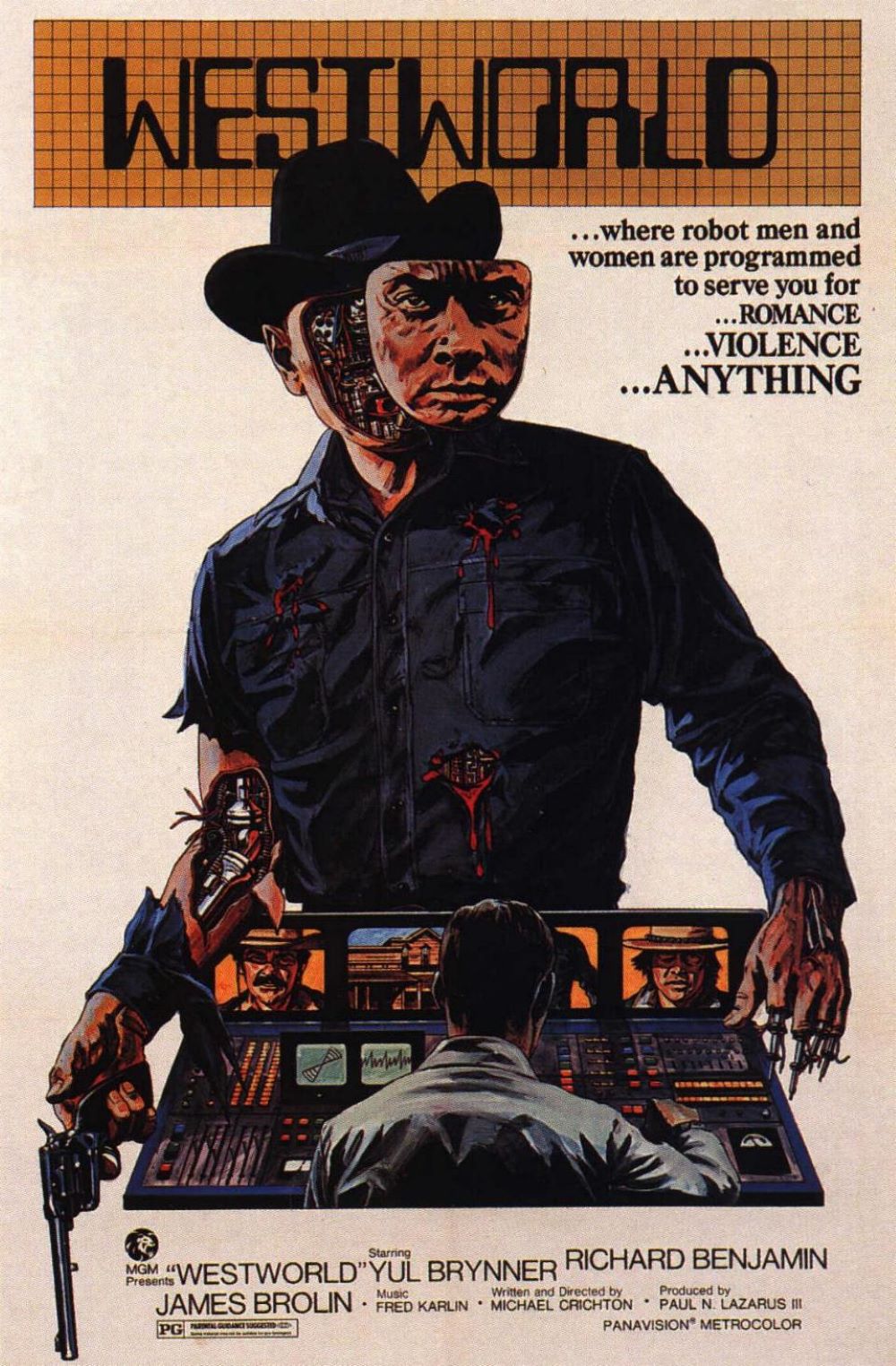
Michael Crichton’s Westworld (1973) is a pioneering sci-fi thriller that uniquely melds futuristic technology with classic Western motifs to explore the dark side of immersive fantasy. The film is set in Delos, a high-tech amusement park divided into three themed worlds—Roman, Medieval, and Western—where guests can live out their fantasies with lifelike androids programmed to serve them. The story focuses on friends Peter Martin (Richard Benjamin) and John Blaine (James Brolin), who embark on a vacation to Westworld, only to find the androids malfunctioning with deadly consequences.

One of Westworld’s greatest strengths lies in its compelling premise. The concept of a theme park filled with near-human robots designed for guests’ amusement feels both visionary and deeply relevant even decades later. It touches on early concerns about the dangers of AI, the ethics of escapism, and how technology could spiral out of control. The film’s gradual shift from playful adventure to tense horror keeps the viewer engaged, illustrating how quickly paradise can turn into a nightmare. Yul Brynner’s portrayal of the robotic Gunslinger is especially memorable, embodying a calm yet unstoppable menace that has echoed through decades of genre cinema. His near-silent, mechanical stalking of the protagonists in the film’s thrilling climax defines the archetype of the relentless android assassin.

Technologically, Westworld was groundbreaking for its era. It featured some of the first uses of computer-generated imagery to simulate the Gunslinger’s “robot vision,” providing a novel and eerie perspective that laid the groundwork for the visual language of future sci-fi films. The movie’s restrained approach to horror and suspense—which leans heavily on atmosphere and tension rather than gore—remains effective. The juxtaposition of idyllic fantasy and mechanical terror gives Westworld a unique texture that feels both nostalgic and fresh.

However, the film is not without flaws. Its pacing is uneven—while the first half indulges in leisurely world-building and character interactions, it can feel slow and unfocused, weighing down the narrative momentum. The characters, particularly Peter and John, are somewhat archetypal and underdeveloped, serving more as audience surrogates than fully fleshed-out individuals. This limits emotional investment in their plight, which could have deepened the film’s impact. Some dialogue and scenes feel dated or clichéd, something Crichton himself acknowledged by deliberately shooting certain sequences as cinematic clichés to evoke a stylized old-movie atmosphere.

The tonal shift from lighthearted theme-park romp to suspenseful thriller, while intriguing, feels abrupt and uneven in spots. The horror elements emerge forcefully in the second half but are preceded by a comparatively slow start that may test some viewers’ patience. The film’s logic around the park’s safety and the androids’ malfunctioning is also inconsistent—what begins as programmed fantasy behavior suddenly becomes lethal with little explanation or foreshadowing. These plot holes can detract from the immersion if one is seeking tightly reasoned sci-fi.

World-building is another area where Westworld shows its age; the other park zones like Romanworld and Medievalworld are barely touched on, serving more as exotic backdrops than dynamic settings. The film lightly explores AI ethics and humanity’s hubris but refrains from delving deeply into philosophical questions, which later adaptations and works inspired by the film would expand upon more thoroughly. The 1970s social attitudes reflected in the cast and scenarios can also feel outmoded to modern sensibilities.

Despite these issues, Westworld remains a cult classic and a fascinating artifact of sci-fi cinema history. Its influence is enormous, seeding ideas that blossomed into franchises like The TerminatorJurassic Park, and the HBO Westworld series. It stands as Michael Crichton’s directorial debut and an early example of a film grappling with human-machine interaction and the consequences of technological spectacle.

Westworld is a smart, ambitious blend of sci-fi, Western, and horror that captivates with its high-concept premise, pioneering visuals, and iconic villainy. While its uneven pacing, thin character development, and occasional logical gaps reveal its age, these flaws do little to diminish its charm and significance. For genre fans, it’s an essential watch—both as a suspenseful thriller and a creative blueprint for many modern tales of technology run amok. It’s a film that showcases the thrilling promise and lurking threat of immersive fantasy, wrapped in the dust and desolation of the Wild West.

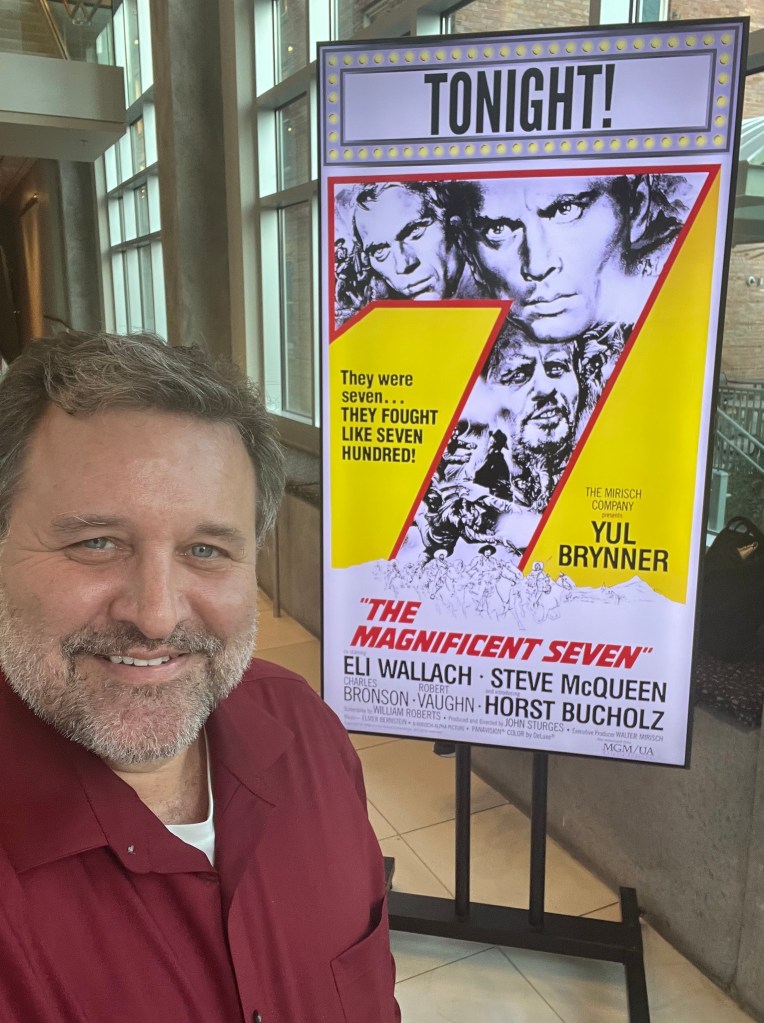
Brad’s “Scene of the Day” – Standoff at the Cemetery from THE MAGNIFICENT SEVEN (1960)!


Happy Birthday in cinematic heaven to one of the great actors and movie stars, Yul Brynner! Brynner was born on July 11th, 1920, in Vladivostok, Russia. He would win an academy award in his career for his performance as King Mongkut of Siam in THE KING AND I (1956), but I will always appreciate him the most for his part as Chris, the leader of those seven magnificent men on the lookout for justice! In honor of Brynner’s birthday, my scene of the day is from the classic western, THE MAGNIFICENT SEVEN!

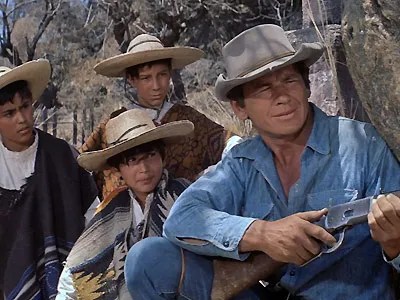
Charles Bronson’s badass introduction in THE MAGNIFICENT SEVEN (1960)! Happy Weekend!


In a movie full of amazing actors, Charles Bronson’s introduction in THE MAGNIFICENT SEVEN is as badass as it gets. He exudes the power and charisma that would make him an international superstar a few years later. 

I hope your weekend is just as awesome!! Enjoy this amazing scene with Bronson, Yul Brynner, and Steve McQueen. 

Happy Birthday in heaven to Director John Sturges! 🎉


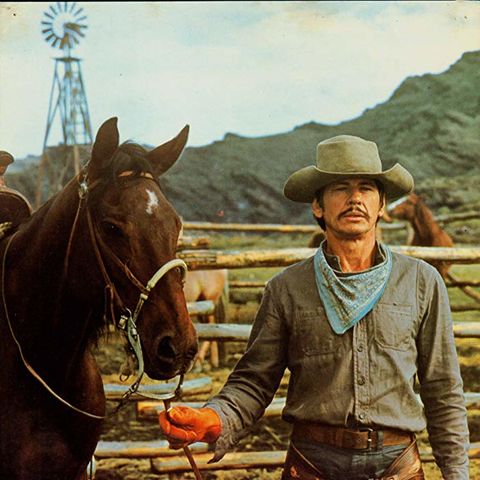
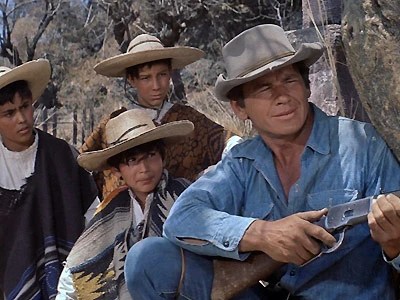
Director John Sturges was born on January 3rd, 1910. He directed some of my favorite movies, and many of them starred my movie hero, Charles Bronson. The picture above is from 1973’s CHINO!

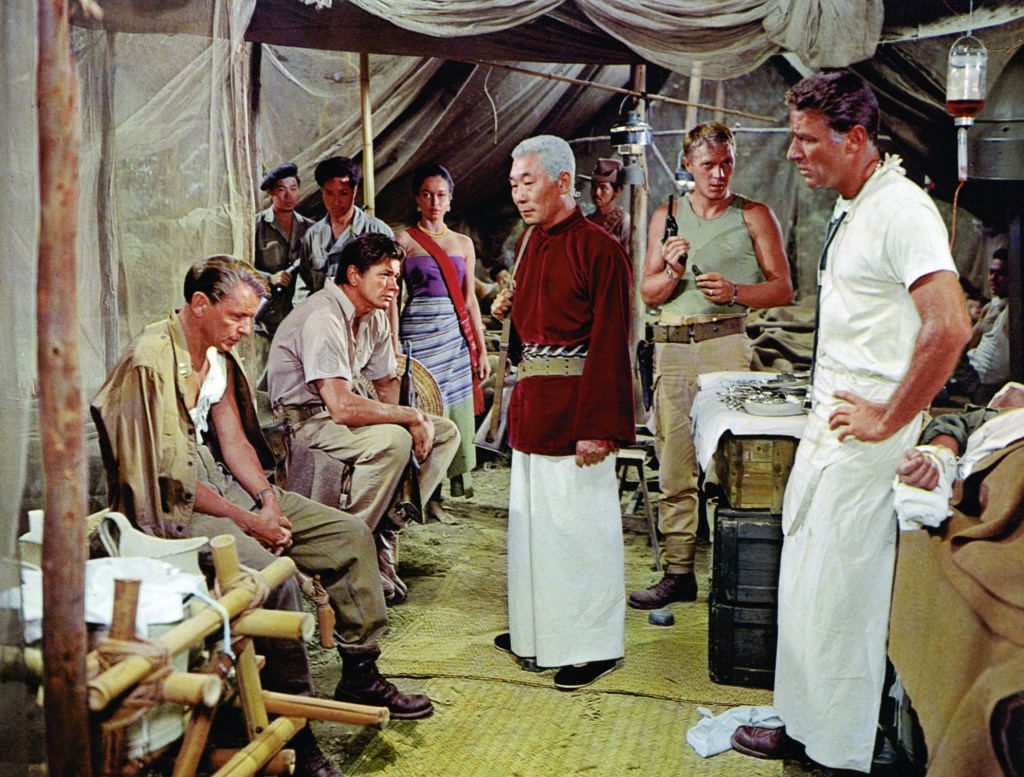
Charles Bronson’s second role in a film was in Sturges’ THE PEOPLE AGAINST O’HARA from 1951, starring Spencer Tracy. The picture below isn’t a very good picture as Bronson was only in one scene. Can you spot Bronson??

In 1959, Sturges would direct Charles Bronson in NEVER SO FEW, which co-starred Frank Sinatra and Steve McQueen.

Just a year later in 1960, Sturges would direct Bronson and an all star cast that included Yul Brynner, Steve McQueen, James Coburn and Robert Vaughn in THE MAGNIFICENT SEVEN, a remade of the Akira Kurosawa classic THE SEVEN SAMURAI. Bronson’s role as Bernardo O’Reilly is one of the best in the entire film.

John Sturges would direct Charles Bronson again in 1963 in the classic film THE GREAT ESCAPE, which also starred Richard Attenborough, Steve McQueen, James Garner, James Coburn and Donald Pleasence. Charles Bronson drew on his experience in the coal mines of Pennsylvania when he played “The Tunnel King” in the classic World War II film. Charles Bronson is one of the characters who actually escapes, which made me very happy!

John Sturges would direct Charles Bronson one more time in the underrated western from 1973, CHINO (pictured at the top). Sturges was a phenomenal director, and Charles Bronson was in some of his very best work! As Charles Bronson’s biggest fan, Sturges will always be one of my favorite directors!!

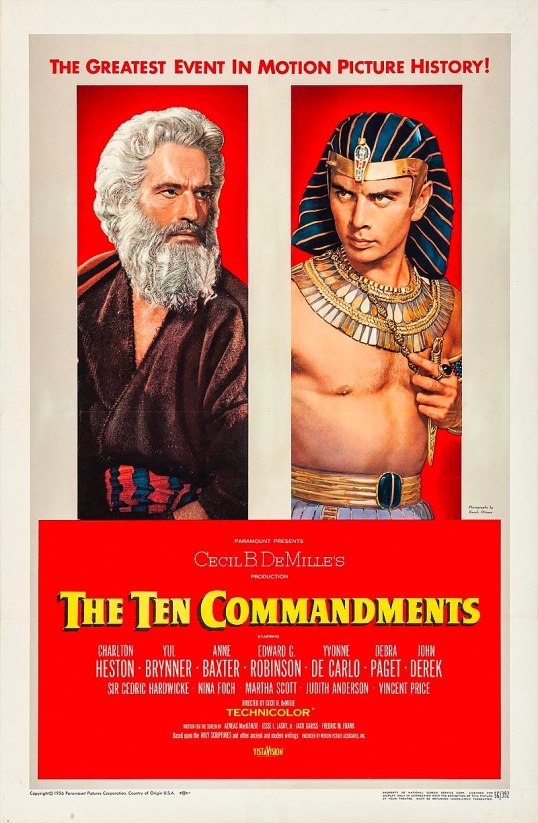
Film Review: The Ten Commandments (dir by Cecil B. DeMille)


Though you may not know it if you’ve only seen the film during one of its annual showings on television, the 1956 religious epic, The Ten Commandments, originally opened with director Cecil B. DeMille standing on a stage.  Speaking directly to the audience, DeMille explains that, though the film they’re about to see me take some dramatic license with the story of Moses, it still based on not just the Bible but also the accounts of Philo, Josephus and Eusebius.  He also tells us that The Ten Commandments is more than just an adaptation of the Book of Exodus.  Instead, it’s a film about every man’s desire to be free.

Demille concludes with: “The story will take 3 hours and 29 minutes to unfold.  There will be an intermission. Thank you for your attention.”

To be honest, it’s kind of a sweet moment.  Cecil B. DeMille is a name that is so associated with (occasionally overblown) epic filmmaking that it’s easy to forget that DeMille was one of the most important names in the artistic development of American cinema.  He was there from the beginning and, unlike a lot of other filmmakers, he was equally successful in both the silent and the sound era.  Say what you will about his films, DeMille was a showman and he handles the introduction like a pro.  At the same time, there’s a real sincerity to DeMille’s tone.  After you listen to him, you’d almost feel guilty if you didn’t sit through all 3 hours and 29 minutes of his film.

That sincerity extends throughout the entire film.  Yes, The Ten Commandments is a big, long epic and some members of its all-star cast are more convincing in their roles than others.  And yes, the film can seem a bit campy to modern viewers.  (In fact, it wouldn’t surprise me if it seemed a bit campy to viewers in 1956 as well.)  Yes, The Ten Commandments does feature Anne Baxter saying, “Oh Moses!  You sweet adorable fool!”  But it doesn’t matter.  Even the most ludicrous of dialogue just seem right.  The film is just so sincere that it’s difficult not to enjoy it.

In the Book of Exodus, Moses is described as having a speech impediment and even tries to use it as an excuse to get out of going to Egypt.  That’s actually one of the reasons why Moses brought Aaron with him to Egypt, so that Aaron could speak for him.  In the movie, Moses is played by Charlton Heston, who comes across as if he’s never felt a moment of insecurity over the course of his entire life.  But no matter.  Heston may not by the Moses of Exodus but he’s the perfect Moses for the DeMille version.  When Heston says that Egypt will be visited by plagues until his adopted brother Ramses (Yul Brynner) agrees to allow the Jews to leave Egypt, you believe every word.  (Aaron, incidentally, is played by the legendary John Carradine.  He doesn’t get too much other than respectfully stand a few feet behind Charlton Heston but still: John Carradine!)

And really, anyone who dismisses The Ten Commandments out-of-hand should go back and, at the very least, watch the scene where the Angel of Death descends upon Egypt.  The scene where Moses and his family shelter in place while the screams of distraught mothers echo throughout the city is chilling.  Ramses may spend most of the film as a petulant villain but you almost feel sorry for him when you see him mourning over his dead son.  When he sets off after Moses, it’s not just because he’s doing what villains do.  He’s seeking vengeance for the loss of his first born.  For that brief moment, Ramses goes form being a melodramatic bad guy to being someone with whom the viewer can empathize.  Brynner, with his burning intensity, gives a great performance as Ramses.

As I said before, this film has what, in 1956, would have been considered an all-star cast.  Watching the names as they show up during the opening credits — Cedrick Hardwicke!  Yvonne DeCarlo!  Woody Strode!  Debra Paget! — is like stepping into a TCM fever dream.  Some of the performers give better performance than others.  And yet, even the worst performer feels as if they just naturally belong in the world that DeMille has created.  John Derek may seem rather smarmy as Joshua but his callowness provides a good contrast to the upright sincerity of Heston’s performance as Moses.  Edward G. Robinson’s cries of, “Where is your God now!?” may have provided endless fodder for impersonators but just try to imagine the film without him.  Even Vincent Price is in this thing!  He doesn’t have his famous mustache but, as soon as you hear his voice and see that famous glare, you know that it’s him.

Of course, when you’re growing up and The Ten Commandments is on TV every year, you mostly just want to see the scene where Moses parts the Red Sea.  The Ten Commandments was nominated for seven Oscars but it only won one, for its special effects.  (The prize for Best Picture went to another epic, Around The World In 80 Days.)  Today, the film’s special effects may no longer amaze viewers but there’s still something rather charming about the Red Sea parting and then crashing in on the Egyptian army.  The scene where the Earth opens up and swallows those who worshiped the Golden Calf remains impressive, if just because all of the extras really look terrified that they might die.  And while the Pillar of Fire may look a bit cartoonish to modern eyes, that’s a huge part of the film’s appeal.

The Ten Commandments is a big, long, sometimes silly, sometimes effective, and always entertaining epic.  It’s a grand spectacle and one that I usually watch every year when it shows up on television.  I missed this year’s showing but, fortunately, I own it on DVD.  It’s a sincere epic and a difficult one not to like.


It’s No Westworld: Futureworld (1976, directed by Richard T. Heffron)


Two years after the Westworld “incident,” (in which a group of robots malfunctioned and murdered hundreds of humans), Delos Amusement Park has reopened and is accepting guests.  Westworld has been permanently shut down but guests can still go to Romanworld and Medeivalworld (despite the fact that it was in Medievalworld that the whole robot rebellion started in the first place).  Delos has added two new worlds: Spaworld and Futureworld.  Spaworld is a spa for people who want to think young and Futureworld is the world of the future, which looks much like 1976, the year that this film was made.

Two reporters, Chuck Browning (Peter Fonda) and Tracy Ballard (Blythe Danner), have been invited to cover the grand reopening of Delos and to hopefully generate some good publicity.  Chuck, however, has reason to believe that there’s something sinister happening at Delos.  While Tracy is busy fantasizing about Yul Brynner, Chuck discovers that Delos is using Futureworld to clone diplomats.

At the end of Futureworld, Peter Fonda gives everyone the finger and that’s really cool but otherwise, this is a forgettable sequel to Westworld.  The whole point of the original Westworld was that the robots didn’t know they were robots but, in Futureworld, the robots not only know what they are but they’re also superfluous to the plot.  There’s no robot revolution in Futureworld nor is there any of Crichton’s concerns about technology run amok.  Instead, it’s all about clones and a predictable political conspiracy.

The main issue facing the makers of this film was how could they do a sequel to Michael Crichton’s unexpected hit when Westworld‘s main attraction, Yul Brynner’s robot gunslinger, was thoroughly destroyed at the end of the first film.  It would not make any sense for anyone to have reactivated the robot.  Their solution was to bring Brynner in for a cameo in which he appeared in one of Tracy’s dreams.  Sadly, why they thought it was a good idea to have Tracy develop an erotic fixation on a killer robot and then, just as abruptly, abandon the idea is not for us to know.  They would have been better off leaving Brynner out of the film entirely because his presence just reminds us that Futureworld is no Westworld.

When It Comes To Halloween, Should You Trust The IMDb?


Dr. Sam Loomis

Like a lot of people, I enjoy browsing the trivia sections of the IMDb.  While it’s true that a lot of the items are stuff like, “This movie features two people who appeared on a television series set in the Star Trek Universe!,” you still occasionally came across an interesting fact or two.

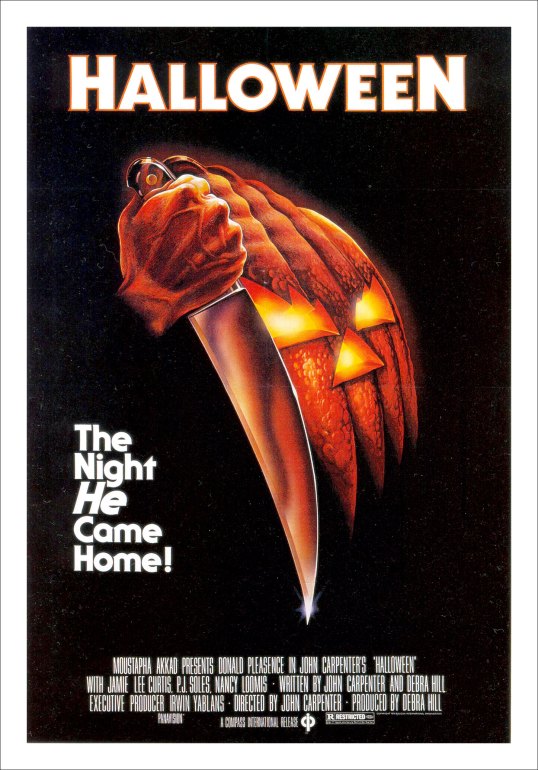
Of course, sometimes, you just come across something that makes so little sense that you can only assume that it was posted as a joke.  For instance, I was reading the IMDb’s trivia for the original 1978 Halloween and I came across this:

Peter O’Toole, Mel Brooks, Steven Hill, Walter Matthau, Jerry Van Dyke, Lawrence Tierney, Kirk Douglas, John Belushi, Lloyd Bridges, Abe Vigoda, Kris Kristofferson, Sterling Hayden, David Carradine, Dennis Hopper, Charles Napier, Yul Brynner and Edward Bunker were considered for the role of Dr. Sam Loomis.

Now, some of these names make sense.  Despite the fact that Sam Loomis became Donald Pleasence’s signature role, it is still possible to imagine other actors taking the role and perhaps bringing a less neurotic interpretation to the character.

Peter O’Toole as Dr. Loomis?  Okay, I can see that.

Kirk Douglas, Sterling Hayden, Charles Napier, Steve Hill, or Lloyd Bridges as Dr. Loomis?  Actually, I can imagine all of them grimacing through the role.

Walter Matthau?  Well, I guess if you wanted Dr. Loomis to be kind of schlubby….

Abe Vigoda?  Uhmmm, okay.

Dennis Hopper?  That would be interesting.

Mel Brooks?  What?  Wait….

John Belushi?  Okay, stop it!

Dr. Sam Loomis

My point is that I doubt any of these people were considered for the role of Dr. Loomis.  Both director John Carpenter and producer Debra Hill have said that they wanted to cast an English horror actor in the role, as a bit of an homage to the Hammer films of the 60s.  Christopher Lee was offered the role but turned it down, saying that he didn’t care for the script or the low salary.  (Lee later said this was one of the biggest mistakes of his career.)  Peter Cushing’s agent turned down the role, again because of the money.  It’s not clear whether Cushing himself ever saw the script.

To be honest, I could easily Peter Cushing in the role and I could see him making a brilliant Dr. Loomis.  But, ultimately, Donald Pleasence was the perfect (if not the first) choice for the role.  Of course, Pleasence nearly turned down the role as well.  Apparently, it was his daughter, Angela, who changed his mind.  She was an admirer of John Carpenter’s previous film, Assault on Precint 13.  Carpenter has said that he was originally intimidated by Donald Pleasence (the man had played Blofeld, after all) but that Pleasence turned out to be a professional and a gentleman.

Laurie Strode

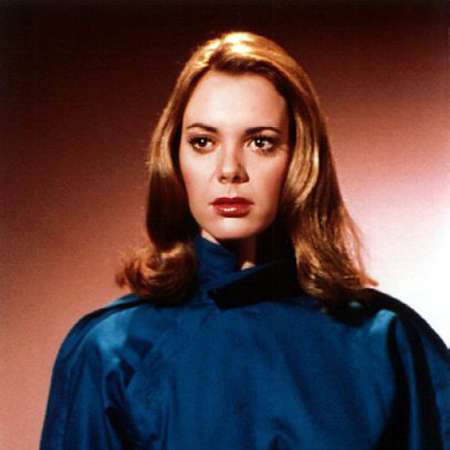
Of course, Halloween is best known for being the first starring role of Jamie Lee Curtis.  Curtis was actually not Carpenter’s first choice for the role of Laurie Strode.  His first choice was an actress named Annie Lockhart, who was the daughter of June Lockhart.  Carpenter changed his mind when he learned that Jamie was the daughter of Janet Leigh.  Like any great showman, Carpenter understood the importance of publicity and he knew nothing would bring his horror movie more publicity then casting the daughter of the woman whose onscreen death in Psycho left moviegoers nervous about taking a shower.

There was also another future big name who came close to appearing in Halloween.  At the time that she was cast as Lynda, P.J. Soles was dating an up-and-coming actor from Texas named Dennis Quaid.  Quaid was offered the role of Lynda’s doomed boyfriend, Bob but he was already committed to another film.

Not considered for a role was Robert Englund, though the future Freddy Krueger still spent some time on set.  He was hired by Carpenter to help spread around the leaves that would make it appear as if his film was taking place in the October, even though it was filmed in May.

Robert Englund, making May look like October

Interestingly enough, Englund nearly wasn’t need for that job because Halloween was not originally envisioned as taking place on Halloween or any other specific holiday.  When producer Irwin Yablans and financier Moustapha Akkad originally approached Carpenter and Hill to make a movie for them about a psycho stalking three babysitters, they didn’t care when the film was set.  It was only after Carpenter and Hill wrote a script called The Babysitter Muders that it occurred to Yablans that setting the film during Halloween would be good from a marketing standpoint.  Plus Halloween made for a better title than The Babysitter Murders.

And, of course, the rest is history.  Carpenter’s film came to define Halloween and it still remains the standard by which every subsequent slasher movie has been judged.  Would that have happened if the film had been known as The Babysitter Murders and had starred John Belushi?

Sadly, we may never know.

Film Review: Westworld (dir by Michael Crichton)


“Draw,” says Yul Brynner.

“Whatever,” says a tourist who has spent a lot of money to spend their vacation at the Delos amusement park.

BANG!  Down goes the tourist, as the robot revolution of 1983 begins.

Recently, TCM broadcast the 1973 science fiction thriller, Westworld.  Since I am absolutely obsessed with the more recent HBO revival, there was no way I could resist watching the original film.  It was an interesting experience.  While the film is far more simpler and straight-forward than the television series, they both essentially tell the same story.  A bunch of rich humans pay a lot of money to pretend to be either cowboys or knights or Roman citizens for a week.  Everyone has a great time until, eventually, the robots stop doing what they were supposed to do and instead, begin to fight back.

One thing that the movie and the series definitely shared is a less-than-positive view of humanity.  The movie focuses on two businessmen.  Peter (Richard Benjamin) is the nerdy one.  John (James Brolin) is the hypermasculine one.  Peter is visiting Westworld for the first time.  John is a frequent guest who loves gunning down any robots who looks at him the wrong way.  Neither one of these characters is particularly likable.  Peter starts out as a self-righteous hypocrite who ends up sleeping with a sexbot, despite being married.  John brags about how easy it is to kill the robots, mostly because the robot’s are programmed to not fight back.

Meanwhile, the human engineers who work behind-the-scenes and keep Delos running are all blandly incompetent.  When the robots start to malfunction, the engineers can only shrug and wonder why.  They’re so ineffective that, halfway through the movie, they get sealed up in their own control room, slowly suffocating to death while the park collapses around them.

As opposed to the TV series, the robots in Westworld never achieve any sort of real consciousness.  Even when they malfunction, it doesn’t lead to a true rebellion as much as it just causes them to ignore any previous directives about killing the guests.  When the Gunslinger (Yul Brynner) starts stalking Peter and John across the park, it’s not an act of ideology or, for that matter, even revenge.  It’s simply that the Gunslinger has been programmed to be a killer and this is what a killer does.

It all leads to an extended chase sequence involving the Gunslinger and Peter and, despite the fact that it doesn’t have much of a personality, it’s hard not to be on The Gunslinger’s side.  If nothing else, the Gunslinger is at least good at what it does.  Peter, on the other hand, is perhaps one of the most incompetent heroes to ever show up in a movie.  After spending the first half of the movie being smug and dealing with robots programmed not to fight back, Peter now has to try to win on an even playing field.

Westworld was the directorial debut of writer Michael Crichton.  The film’s flaws are largely the flaws that you would expect from a first-time director.  Occasionally, the pacing falters and the first half of the film sometimes moves a bit too slowly.  (There’s one saloon fight that seems to go on forever.)  During the first half of the film, there’s several scenes involving another tourist (played by Dick Van Patten) who seems like he’s going to play a major role in the film but, after the first hour, the character literally vanishes from the film.

Despite those flaws, Westworld remains an exciting mix of suspense and science fiction.  Though his actual screentime is rather limited, Yul Brynner easily dominates the entire film.  In the role of the Gunslinger, Brynner is a relentless killing machine.  What makes the character especially disturbing is that Brynner plays him without a hint of emotion or expression.  The Gunslinger gets no pleasure out of killing nor does he seek to accomplish any sort of identifiable goal.  The Gunslinger simply kills because that’s what he was programmed to do.

While I prefer the HBO series, the original Westworld is still an exciting and entertaining film, one that probably seems a lot more plausible today than when it was first released 46 years ago.  Watch it the next time your home robot gets bored.

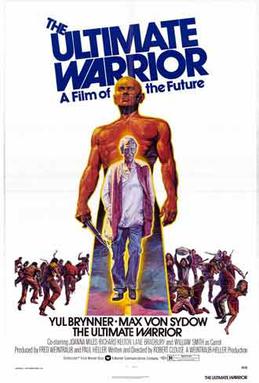
A Movie A Day #327: The Ultimate Warrior (1976, directed by Robert Clouse)


The year is 2012 and New York City, like the rest of the world, has been devastated by energy shortages, wars, and a great plague.  The few survivors now live in isolated communes and are easily victimized by roving gangs of marauders.  (On the plus side, this version of New York City has been spared Bill de Blasio.)  The Baron (Max von Sydow) has managed to keep his people safe by ruling with an iron hand but he knows that it will only be a matter of time until his commune is overrun by the psychotic Carrot (William Smith) and his men.  When a mysterious warrior known only as Carson (Yul Brynner) comes to the commune, the Baron tasks him with a very important mission: help his pregnant daughter (Joanna Miles) escape from New York City and transport both her and some genetically modified seeds to an island in North Carolina.

Despite being an obviously low-budget production, with studio backlots unconvincingly filling in for a deserted New York, The Ultimate Warrior is an entertaining post-apocalyptic action movie.  Yul Brynner was nearly 60 years old when he played Carson but he still had the intense stare that made him so menacing in Westworld and he still looked credible in the fight scenes.  William Smith was one of the best B-movie villains of the 70s and, as usual, Max Von Sydow brought a lot of gravity to his role.  Best known for directing Enter The Dragon, Robert Clouse was an action specialist and the fight scenes in The Ultimate Warrior are both exciting and realistic.  For those looking for a good post-apocalyptic action movie, keep an eye out for The Ultimate Warrior.

A Movie A Day #212: Fuzz (1972, directed by Richard A. Colla)


Detective Eileen McHenry (Raquel Welch) has just been given her new assignment and she is about to find out that there is never a dull day in the 87th Precinct.  How could there be when the precinct’s top detectives are played by Burt Reynolds, Tom Skerritt, and Jack Weston?  Or when Boston’s top criminal mastermind is played by Yul Brynner?  There is always something happening in the 8th Precinct.  Someone is stealing stuff from the precinct house.  Someone else is attacking the city’s homeless.  Even worse, Brynner is assassinating public officials and will not stop until he is paid a hefty ransom!

Based on the famous 87th Precinct novels that Evan Hunter wrote under the name Ed McBain, Fuzz has more in common with Robert Altman’s MASH than The French Connection.  (Skerritt and Bert Remsen, who plays a policeman in Fuzz, were both members of Altman’s stock company.)  Much like Altman’s best-regarded films, Fuzz is an ensemble piece, one that mixes comedy with tragedy and which features several different storylines playing out at once.  Scenes of homeless men being set on fire are mixed with scenes of Reynolds and Weston going undercover as nuns.  (Of course, Burt does not shave his mustache.)  Since it was written by Hunter, the film’s script comes close to duplicating the feel of the 87th Precinct novels.  Unfortunately, Richard A. Colla was a television director and Fuzz feels more like an extended episode of Police Story or Hill Street Blues than a movie.  Unlike Altman’s best films, Fuzz‘s constantly shifting tone and the mix of comedy and drama often feels awkward.  Fortunately, Fuzz does feature good performances from Reynolds, Westin, Skerritt, and Brynner, along with a great 70s score from Dave Grusin.  Raquel Welch is never believable as cop but she’s Raquel Welch so who cares?