That’s a question that’s asked frequently in the 1975 film, Tommy. An adaptation of the famous rock opera by the Who (though Pete Townshend apparently felt that the film’s vision was more director Ken Russell’s than anything that he had meant to say), Tommy tells the story of a “deaf, dumb, and blind kid” who grows up to play a mean pinball and then become a cult leader. Why pinball? Who knows? Townshend’s the one who wrote Pinball Wizard but Ken Russell is the one who decided to have Elton John sing it while wearing giant platform shoes.
Tommy opens, like so many British films of the 70s, with the blitz. With London in ruins, Captain Walker (the almost beatifically handsome Robert Powell) leaves his wife behind as he fights for his country. When Walker is believed to be dead, Nora (Ann-Margaret) takes Tommy to a holiday camp run by Frank (Oliver Reed). Oliver Reed might not be the first person you would expect to see in a musical and it is true that he wasn’t much of a singer. However, it’s also true that he was Oliver Reed and, as such, he was impossible to look away from. Even his tuneless warbling is somehow charmingly dangerous. Nora falls for Frank but — uh oh! — Captain Walker’s not dead. When the scarred captain surprises Frank in bed with Nora, Frank hits him over the head and kills him. Young Tommy witnesses the crime and is told that he didn’t see anything and he didn’t hear anything and that he’s not going to say anything.
And so, as played by Roger Daltrey, Tommy grows up to be “deaf, dumb, and blind.” Various cures — from drugs to religion to therapy — are pursued to no avail. As the Acid Queen, Tina Turner sings and dances as if she’s stealing Tommy’s soul. As the Therapist, Jack Nicholson is all smarmy charm as he gently croons to Ann-Margaret. Eric Clapton performs in front of a statue of Marilyn Monroe. Ann-Margaret dances in a pool of beans and chocolate and rides a phallic shaped pillow. As for Tommy, he eventually becomes the Pinball Wizard and also a new age messiah. But it turns out that his new followers are just as destructive as the people who exploited him when he was younger. It’s very much a Ken Russell film, full of imagery that is shocking and occasionally campy but always memorable.
I love Tommy. It’s just so over-the-top and absurd that there’s no way you can ignore it. Ann-Margaret sings and dances as if the fate of the world depends upon it while Oliver Reed drinks and glowers with the type of dangerous charisma that makes it clear why he was apparently seriously considered as Sean Connery’s replacement in the roles of James Bond. As every scene is surreal and every line of dialogue is sung, it’s probably easy to read too much into the film. It could very well be Ken Russell’s commentary on the New Age movement and the dangers of false messiahs. It could also just be that Ken Russell enjoyed confusing people and 1975 was a year when directors could still get away with doing that. With each subsequent viewing of Tommy, I become more convinced that some of the film’s most enigmatic moments are just Russell having a bit of fun. The scenes of Tommy running underwater are so crudely put together that you can’t help but feel that Russell was having a laugh at the expense of people looking for some sort of deeper meaning in Tommy’s journey. In the end, Tommy is a true masterpiece of pop art, an explosion of style and mystery.
Tommy may seem like a strange film for me to review in October. It’s not a horror film, though it does contain elements of the genre, from the scarred face of the returned to Captain Walker to the Acid Queen sequence to a memorable side story that features a singer who looks like a junior Frankenstein. To me, though, Tommy is a great Halloween film. Halloween is about costumes and Tommy is ultimately about the costumes that people wear and the personas that they assume as they go through their lives. Oliver Reed goes from wearing the polo shirt of a holiday camp owner to the monocle of a tycoon to the drab jumpsuits of a communist cult leader. Ann-Margaret’s wardrobe is literally a character of its own. Everyone in the film is looking for meaning and identity and the ultimate message (if there is one) appears to be that the search never ends.
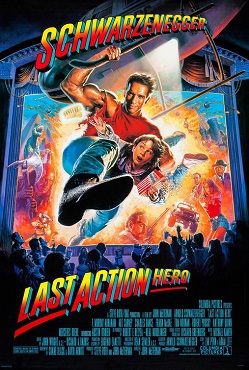
Ever since this film was first released in 1993, it’s usually held up as an example of a Hollywood fiasco. The script was originally written to be a modest satire of action films. The screenwriters wrote the character of Jack Slater, an movie action hero who comes into the real world, for Dolph Lundgren. Instead, the film became an Arnold Schwarzenegger extravaganza and the studio ended up tossing a ton of money at it. When the film was originally released, the reviews were mixed and the box office was considered to be disappointing. (That it went up against the first JurassicPark was definitely an underrated issue when it came to the box office.) Ever since then, The Last Action Hero has had a reputation for being a bad film.
Well, I don’t care. I like TheLastActionHero. Yes, it’s a bit overproduced for a comedy. (It breaks my own rule about how no comedy should run longer than two hours.) Yes, it gets a bit sentimental with ten year-old Danny Madigan (Austin O’Brien) using a magic, golden ticket to enter the film world of his hero, Jack Slater. If you want to argue that the film should have devoted more time to and gone a bit deeper into contrasting the film world with the real world, I won’t disagree with you. But I will also say that Sylvester Stallone starring as TheTerminator in Jack’s world was actually a pretty funny sight gag. Danny knowing better than to trust a character played by F. Murray Abraham made me laugh. Danny’s fantasy in which Arnold Schwarzenegger played Hamlet was made all the better by the fact that his teacher was played by Laurence Olivier’s wife, Joan Plowright. Danny DeVito as Whiskers the Cartoon Cat makes me laugh as well, even if it is perhaps a bit too bizarre of a joke for this particular film. (There’s nothing else about the Jack Slater films that would explain the presence of a cartoon cat.)
When you set aside the idea of the Last Action Hero being a symbol of Hollywood bloat and just watch it as a film, it emerges as an enjoyably goofy action movie, one that captures the joy of watching movies (because who hasn’t wanted to enter a movie’s world at some point in their life), and also one that features a rather charming performance from Arnold Schwarzenegger. (Schwarzenegger, I should add, plays both himself and Jack Slater. One of my favorite jokes is when the real Schwarzenegger is at a premiere and he mistakes the evil Ripper for Tom Noonan, the actor who played him in the previous Jack Slater film.) Yeah, the golden ticket is a little bit hokey but who cares? Underneath all of the special effects and action and money spent on star salaries, LastActionHero is an action movie and comedy with a heart. Danny meets his hero but also gets to become a hero himself. And Jack Slater turns out to be everything you would hope your movie hero would be. In the end, it’s obvious that a lot of the criticism of this film has more to do with the appeal of riding the bandwagon as opposed to what actually happens on screen.
LastActionHero is a movie that I’ll happily defend.
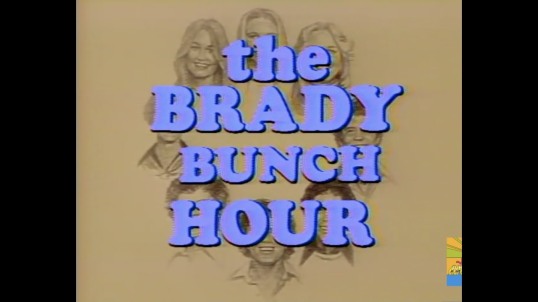
Welcome to Retro Television Reviews, a new feature where we review some of our favorite and least favorite shows of the past! On Fridays, I will be reviewing The Brady Bunch Hour, which ran on ABC from 1976 to 1977. All nine episodes can be found on YouTube!
Join me as I watched episode 3 of …. *shudder* …. The Brady Bunch Hour!
Episode 1.3
(Dir by Jack Regas, originally aired on February 27th, 1977)
As always, the episode opens with pictures of the Bradys being flashed across a screen as the announcer shouts out everyone’s names. One thing I immediately notice is that Christopher Knight is now referred to as being “Chris Knight,” which sounds less like the name of the actor who played Peter Brady and more like the secret of identity of a cheesy super hero. The crowd goes crazy for each Brady but they really go nuts when the announcer reveals that tonight’s special guest star will be Milton Berle.
That’s right, Milton Berle. I honestly have to imagine that, even in the 70s, Milton Berle probably seemed like a rather quaint guest star. The Bradys were hardly on the cutting edge of …. well, anything. But, even for them, Milton Berle feels a little bit past his prime.
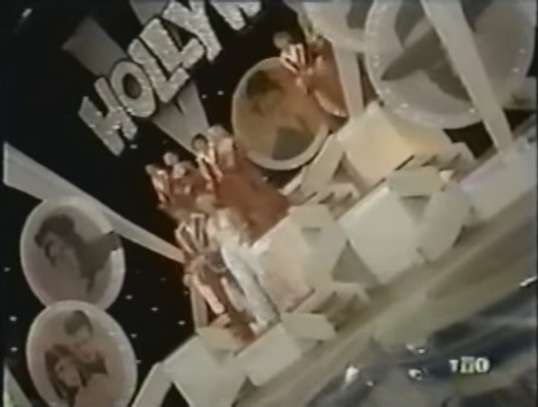
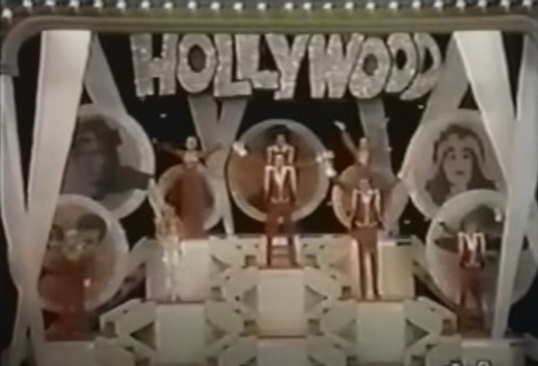
The Bradys come out and sing Hooray for Hollywood, which I’m sure was the song that all the kids were listening to in 1977.
Having finished singing, the Bradys banter. Everyone gets super excited when Carol says that their special guest is the “one and only Milton Berle!” And then it’s time for the family to once again sing Hooray for Hollywood. Hollywood may be a great thing but another great thing is being able to carry a tune and, unfortunately, that’s something that half of the Bradys apparently never managed to master.
(It’s okay, I can’t sing either.)
Obviously looking to punish the viewers even further, Hooray for Hollywood is followed by Mike, Carol, Greg, Marcia, and Pete singing Make ‘Em Laugh. Is tonight’s theme Broadway songs that are largely adored by people who have never actually seen a Broadway show? Alice and Rip Taylor — who I guess is still playing the Bradys landlord, Jackie Merrill — come out on stage after the performance and sing their own version of Make ‘Em Laugh. From the start of the performance, it’s pretty clear that Ann B. Davis would rather be anywhere other than sharing a stage with Rip Taylor. It’s actually painful to watch as two mismatched performers, neither one of whom appears to like the other, sing a song about making the audience laugh.
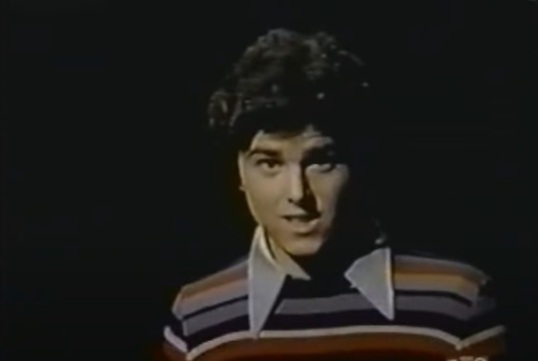
Mercifully, we then cut to Peter Brady. Because of the way the scene is lit, my first thought upon seeing Peter is that he’s going to confess to killing a bunch of co-eds.
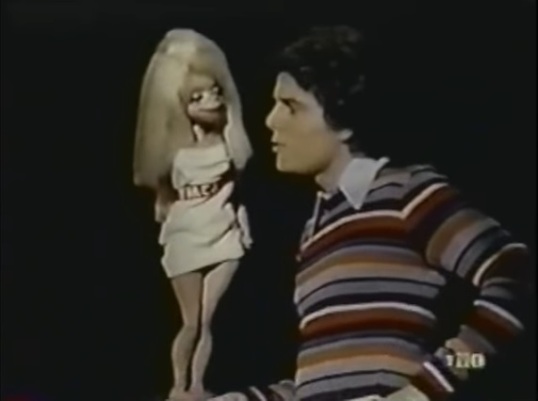
Instead, Peter explains that it’s time for him to do a song but no one in his family wants to introduce him. Wow, Peter! Your family sucks! Fortunately, a weird little puppet shows up and duets with Peter on Sing. It’s weird, dude.
We cut to Bobby, who complains that his family doesn’t know what’s funny. “This is funny,” Bobby says, before getting hit in the face with a pie. The audience agrees. Personally, I hate the whole pie-smashing thing because I know it’s probably a mess to clean up afterwards.
We go to the Brady House, where Alice is talking on a CB radio that has been set up in the kitchen. Mr. Merrill is in the kitchen for some reason. Carol, Mike, and Bobby come into the kitchen. Bobby thinks that the show isn’t funny enough. Mike and Carol think that Bobby is being a brat. “Compared to us,” Bobby says, “Donnie and Marie are Cheech and Chong!” Mike argues that they do more than comedy but he says that he’ll consider Bobby’s suggestions. Who died and made Mike the producer of the show?
After Carol, Alice, and Mike leave, the CB radio comes to life. It’s Milton Berle looking for someone to talk to! Bobby and Mr. Merrill talk to Berle. Berle insults Bobby, saying that he sounds like he belongs on Sesame Street. Bobby tells Berle that he’s funny and asks him if he wants to be a on a TV show. “A TV show? WHERE!? WHERE!?” Berle shouts in reply and I’ll admit that I actually did kind of laugh at that.
We go to commercial and, when we return, Rip Taylor welcomes us to the second half of the show. We then cut to Bobby and the Brady kids waiting for Milton Berle to show up at the house. They wonder why he’s late. “Maybe he’s watching The PartridgeFamily,” says Cindy. “Maybe he saw our show!” Bobby replies. When did Bobby become the smartest member of the family?
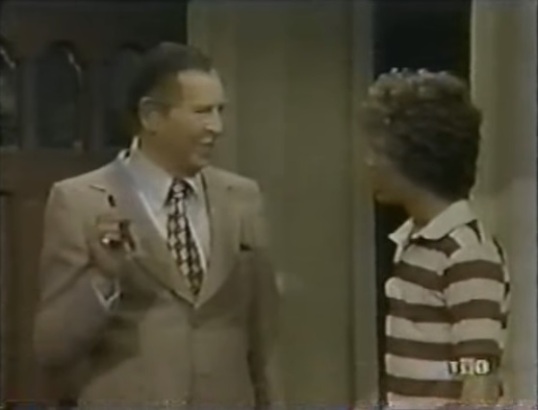
Anyway, Milton eventually rings the doorbell and enters the house, smoking a cigar.
It quickly becomes obvious that Milton Berle doesn’t know who the Bradys are and the Brady kids aren’t sure who Milton is. Fortunately, Carol and Mike return home and Carol explains that Milton Berle is a television pioneer and “the funniest man in the world.”
“Mr. Berle,” Mike says, “why are you here?”
“Bad luck, I guess,” Berle replies and again, I will admit that I laughed because Berle obviously meant every word.
Bobby says that Milton can make the show funnier. When Mike says that they don’t need the show to be funnier, Milton gets angry and says that he’s going to write for the show just to make Mike look bad. I’m really starting to like Milton Berle. Milton agrees to take over but he says that the family has to understand that they are to do everything that he says. He’s in charge now, not Mike. It’s about time!
Milton’s first act is to try to teach Peter how to enunciate. When Peter struggles, Milton Berle SLAPS him. Then he attempts to show Greg how to walk like a television star.
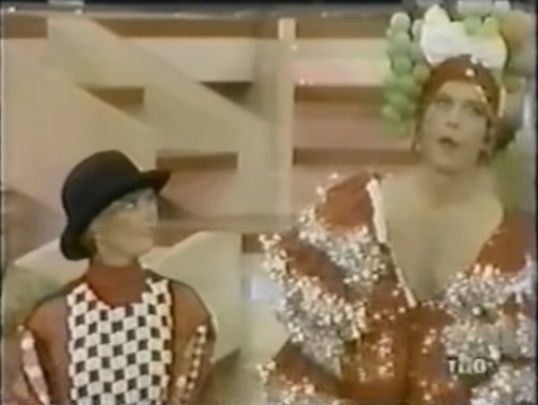
We cut to commercial. When we return, the announcer tells us that we are now watching “The Milton Berle Brady Bunch Hour, created by Milton Berle, produced by Milton Berle, written by Milton Berle….” You get the idea. The Bradys, who are now all wearing silly costumes, come out and sing Hooray for Hollywood again. Mike is not happy with his outfit.
Milton comes out on stage and yells at the Bradys to “sell the comedy.” The kids tells a few old vaudeville jokes. Milton runs out on stage with a fake plant and refers to Carol as being “Mrs. Bunch.” Mike complains about having to wear makeup. “What do you do when you and your wife have a fight?” Milton asks. “We make up,” Mike says, which leads to him being attacked by a makeup artist. Realizing that things aren’t going well, Milton resigns and apologizes. Okay, I guess that’s the end of that. It’s typical of this show that the one successful skit ends on a totally random note.
We go to commercial and when we return, Greg and Peter are standing next to the pool. Greg says that Peter is nervous because this is the part of the show where he always gets shoved into the pool. Considering the fact that Peter could die if he hits the water the wrong way, he has every right to be nervous. Greg says that, this week, he’ll let Peter push him in. Peter doesn’t believe him and jumps in the pool to escape his cruel older brother.
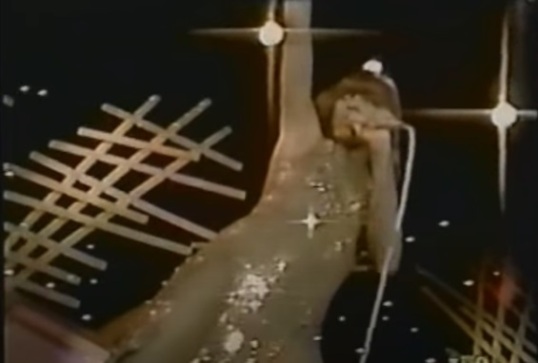
This is followed by Tina Turner who …. wait. What? The stupid pool gag is followed by TINA TURNER!? What a weird show! Needless to say, Tina’s great but it’s still hard not to feel that the Bradys shouldn’t be allowed anywhere near her. As a general rule, if you’re a singer who can’t carry a tune and who can’t dance and who is visibly uncomfortable performing on stage, don’t put yourself in a position to be compared directly to Tina Turner.
After Tina performs, we cut to more Brady nonsense as Carol, Mike, and Bobby inform Milton Berle that he’s been fired from the show. Wait a minute? What? I thought Milton made a big deal about stepping down as producer? I guess I must have misinterpreted that previous scene but honestly, I refuse to go back and rewatch it. If the show’s writers and performers couldn’t make this stuff clear, that’s on them.
“You’re giving me the pink slip?” Milton asks.
“We’re giving you all the costumes back,” Bobby says. The audiences goes nuts.
(By the way, I’m wearing a pink slip right now.)
With Milton gone (again), Carol comes out and sings Evergreen, the theme from A Star is Born. It’s a good song for her voice and I actually enjoyed listening to her version.
It’s time for the big finale! All the songs are about stars. I can’t even begin to describe it. Just watch, if you dare.
To my surprise, this episode was not terrible. Milton Berle’s obvious disdain for the family generated some laughs and Tina Turner’s performance was a definite highlight. Even Florence Henderson’s musical performance was effective. It was hardly perfect and both the opening and the finale reminded me of how tone deaf most of the Bradys were but still, this episode was probably about as good as anyone could expect from The Brady Bunch Hour.
Last week, I watched Mad Max. On Tuesday, I watched The Road Warrior and Mad Max Beyond Thunderdome. As such, it only seems appropriate that today’s music video of the day should be the theme song from Beyond Thunderdome, We Don’t Need Another Hero.
Performed by Tina Turner (who, of course, also co-starred in Beyond Thunderdome), We Don’t Need Another Hero seems like it was pretty obviously written in an attempt to land, at the very least, an Oscar nomination for Best Original Song. Well, the Academy didn’t nominate the song but it did win a Golden Globe and it went on to become one of Turner’s biggest hits.
The video is a mix of Turner singing and scenes from Beyond Thunderdome. It’s not a bad song, even if it is hard to imagine any of the other Mad Max films featuring a power ballad. Then again, each Mad Max film is it’s own unique work of art. That’s one thing that makes the entire series so effective.
Before MTV ever hit the airwaves, there was TOMMY, Ken Russell’s stylized cinematic vision of The Who’s 1969 ‘rock opera’. It was a match made in heaven, teaming Britain’s Wild Man of Cinema with the anarchic rock and roll of Pete Townshend, Roger Daltrey, John Entwistle, and Keith Moon (not to mention England’s own enfant terrible,Oliver Reed ). Russell both captures the spirit of Townsend’s hard rock opus and expands on it visually with an all-out assault-on-the-senses musical featuring an all-star cast that includes an Oscar-nominated performance by Ann-Margret as the mother of “that deaf, dumb, and blind kid” who “sure plays a mean pinball”!
The Who’s original album cover
Townshend, the group’s primary songwriter, had been experimenting with long-form rock’n’roll since the beginning, notably the nine minute suite “A Quick One While He’s Away” on their second album A QUICK ONE (retitled in America HAPPY JACK). TOMMY was…
In 1964, American International Pictures released the first concert film, The T.A.M.I. Show. After the success of T.A.M.I, AIP followed up with a second concert film. This one would be shot in front of a live audience at Los Angeles’s Moulin Rouge club on the night of November 29th, 1965. The line-up included Ray Charles, Petula Clark, The Lovin’ Spoonful, Bo Diddley, Joan Baez, The Ronettes, Roger Miller, The Byrds, Donavon, and Ike and Tina Turner. Phil Spector was recruited to produce the show and he brought with him a live orchestra. Conducting the orchestra and serving as the night’s emcee was The Man From UNCLE‘s David McCallum.
Originally announced as The T.A.M.I. Show Part II, the title was briefly changed to This Could Be The Night (after a song written by Spector and Harry Nilsson and performed by The Modern Folk Quartet) until AIP finally went with The Big TNT Show, an appropriate title considering the explosive performances that were recorded that night. The Big TNT Show also recorded the growing division between the rock and roll of the 50s and early 60s and the music of the emerging counter culture, with Ray Charles, Bo Diddley, and Ike Turner sharing the same stage as The Byrds and Donavon.
In one of the show’s best moments, Joan Baez sings You’ve Lost That Loving Feeling while Phil Spector accompanies her on piano.
Other highlights include the Byrds performing Turn, Turn, Turn,
Roger Miller performing his novelty hit King of the Road,
Petula Clark singing Downtown,
The Ronettes performing Be My Baby,
Donavon’s Universal Soldier,
and Ike and Tina Turner’s entire set.
At the end of the film, the viewers are told to “be sure to tune in for next year’s show!” but, one year later, both the world and music would be very different. The Big TNT Show captures that one final moment before things changed forever.



 Through the Shattered Lens