Yesterday’s song of the day came from Ben-Hur so it only seems appropriate that today’s song of the day should come from Elmer Bernstein’s classic score of 1956’s The Ten Commandments.
Yesterday’s song of the day came from Ben-Hur so it only seems appropriate that today’s song of the day should come from Elmer Bernstein’s classic score of 1956’s The Ten Commandments.
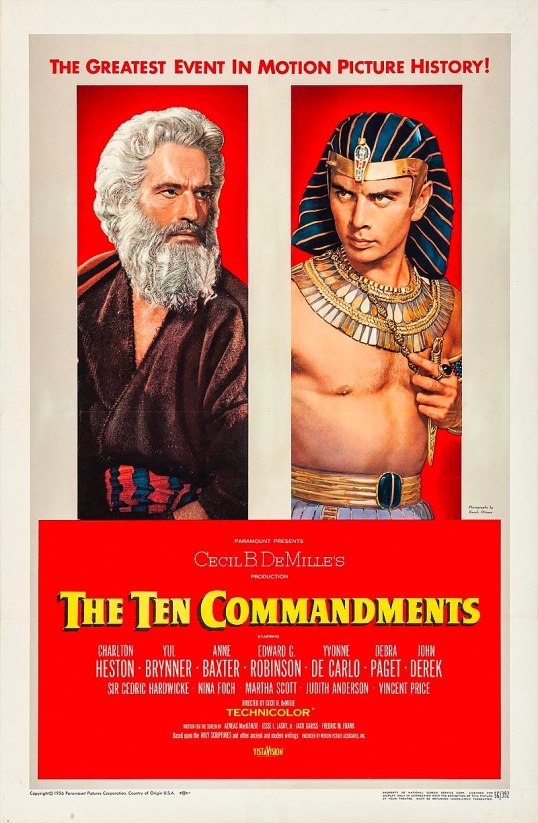
Today’s scene that I love comes from 1956’s The Ten Commandments.
Cecil B. DeMille is often unfairly dismissed as a director, just as Charlton Heston is often underrated as an actor. To me, this is one of the most powerful scenes in DeMille’s filmography. The sound of the screams is haunting. However, one must remember that, as with all the plagues that afflicted Egypt, the Pharoah was given fair warning.
4 Shots from 4 Films is just what it says it is, 4 shots from 4 of our favorite films. As opposed to the reviews and recaps that we usually post, 4 Shots from 4 Films lets the visuals do the talking!
4 Shots From 4 Biblical Epics
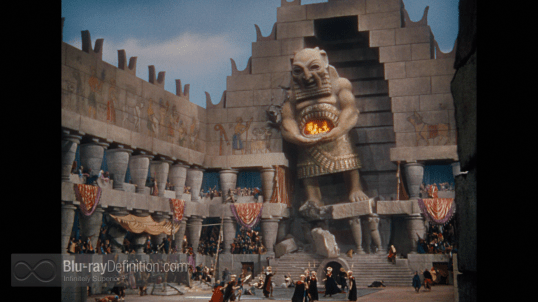
Samson and Delilah (1949, dir by Cecil B. DeMille, DP: George Barnes)
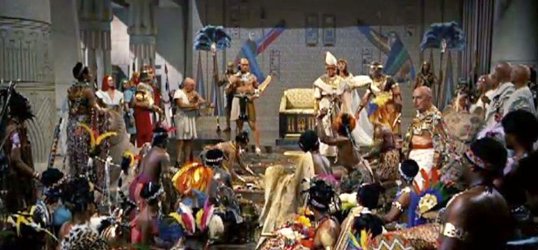
The Ten Commandments (1956, dir by Cecil B. DeMille, DP: Lloyd Griggs)
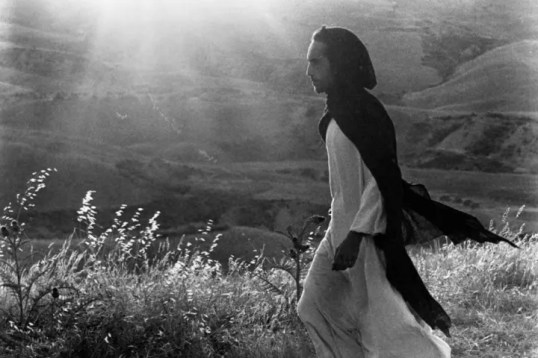
The Gospel According To St. Matthew (1964, dir by Pier Paolo Pasolini, DP: Tonino Delli Colli)

Jesus Christ Superstar (1973, dir by Norman Jewison, DP; Douglas Slocombe)
4 Shots from 4 Films is just what it says it is, 4 shots from 4 of our favorite films. As opposed to the reviews and recaps that we usually post, 4 Shots from 4 Films lets the visuals do the talking!
4 Shots From 4 Biblical Epics
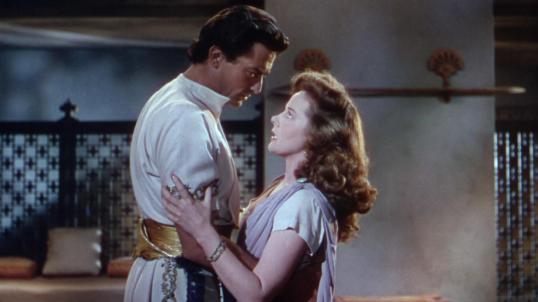
David and Bathsheba (1951, dir by Henry King. DP: Leon Shamroy)
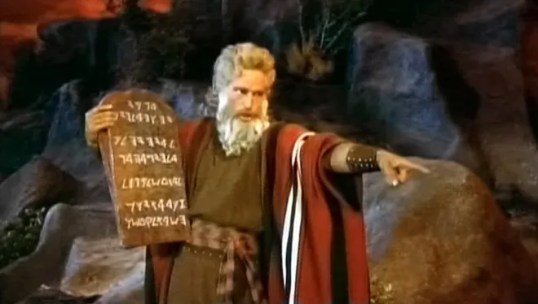
The Ten Commandments (1956, dir by Cecil B. DeMille, DP: Lloyd Griggs)
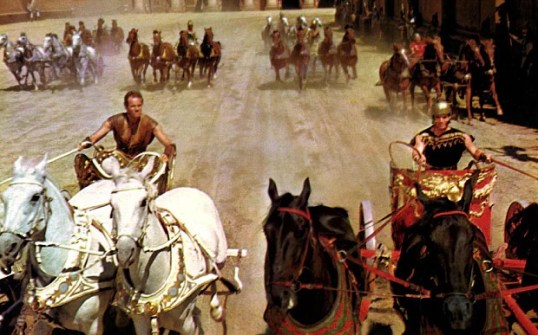
Ben-Hur (1959, dir by William Wyler, DP: Robert Surtees)

The Bible (1966, dir by John Huston, DP: Giuseppe Rotunno)
Yesterday’s song of the day came from Ben-Hur so it only seems appropriate that today’s song of the day should come from Elmer Bernstein’s classic score of 1956’s The Ten Commandments.
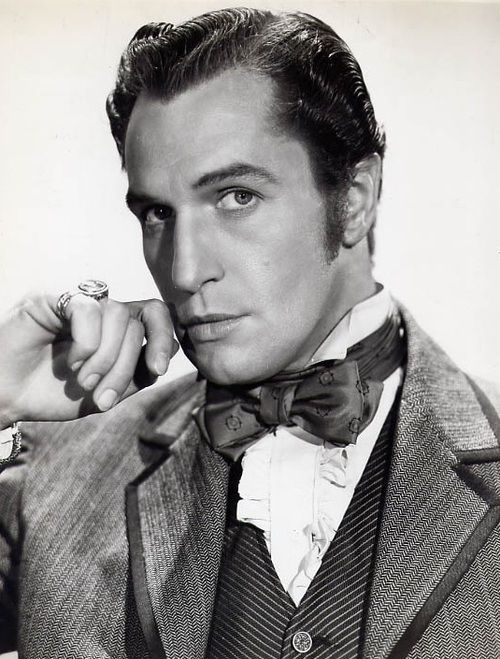
Vincent Price could have been Ashley Wilkes.
That may sound strange today, the idea of horror icon Vincent Price playing the courtly and handsome Ashley Wilkes in Gone With The Wind. But, when Price came to Hollywood in the late 30s, it actually seemed like ideal casting. Before he became known as a horror actor, the Missouri-born Price was known for being a handsome stage actor who specialized in playing romantic parts. Though Price would become best-known for his horror films, he was capable of much more and he also appeared in much more.
Here are just six of Vincent Price’s memorable non-horror performances!
At the age of 27, Vincent Price made his film debut in this romantic comedy, playing Robert Wade. Robert Wade is a young man from Albany who comes to New York City because he is trying to raise money that he can then use to build and perfect a new tractor. It’s in New York that he meets and eventually falls in love with a life coach named Helen Murphy (Constance Bennett). Helen is relieved to discover that the earnest Robert is someone who doesn’t need a life coach to tell him how to live his life …. or design a tractor as the case may be! This is a rather slight film but, in his film debut, Price is charming and handsome.
2. Vital Dotour in The Song of Bernadette (1943)
In this Oscar-nominated film, Price has a key role as the prosecutor who looks into the claims that a girl named Bernadette (Jennifer Jones) has experienced visions of the Blessed Virgin Mary. Though the role does carry some hints of the type of work that lay in Price’s future, it’s still a far cry from his later horror roles and Price brings some needed nuance to a characters who, in lesser hands, could have just been a flat-out villain.
3. Shelby Carpenter in Laura (1944)
Perhaps the best-known and most-regarded of all of Price’s non-horror films, Laura features Price in the role of the good-for-nothing, wealthy boyfriend of Laura (Gene Tierney). When Laura is (incorrectly) believed to have been murdered, Shelby Carpenter is one of the more obvious suspects. Price is wonderfully sleazy in the role of Shelby.
4. William Gibbs McAdoo in Wilson (1944)
Vincent Price doesn’t really get to do much in this epic biopic of America’s worst President but it’s still amusing to see the instantly recognizable Price as Wilson’s son-in-law and wannabe successor, William G. McAdoo.
5. Baka In The Ten Commandments (1956)
Perhaps the worst of all the villains to be found in The Ten Commandments, Baka’s cruelty ends only when he’s killed by Charlton Heston’s Moses. Price truly does a wonderful job turning Baka into a villain who can be despised by all viewers.
6. Nicholas Maranov in The Whales of August (1988)
In one of his final roles, Price played a charming Russian who visits two elderly sisters (Lillian Gish and Bette Davis) at the seaside vacation home in Maine. After decades of being typecast as a horror actor, Price showed off his considerable charm and wit in this role and received a nomination for Best Supporting Actor from the Independent Spirit Awards.
142 years ago, on this date, director Cecil B. DeMille was born in Ashfield, Massachusetts. From the silent era until his death in 1959, DeMille was one of Hollywood’s superstar directors. His films, which were often over the top and effective at the same time, helped to build the modern film industry.
Today’s scene that I love comes from DeMille’s final film. From 1956’s The Ten Commandments, Moses parts the Red Sea.
(Please note, this video starts with a frozen image that lasts for about 12 seconds.)
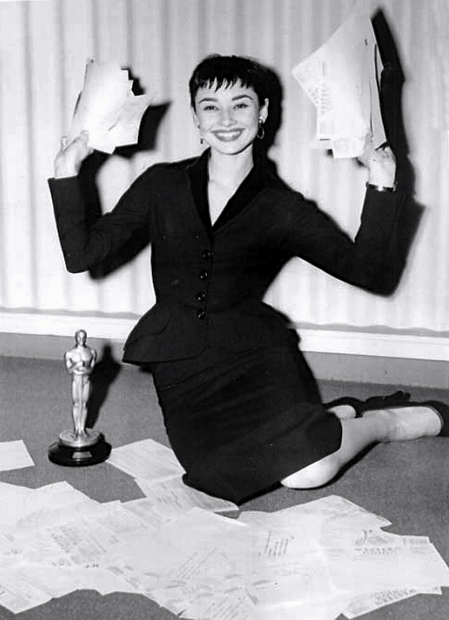
Audrey Hepburn and her Oscar. At least the Academy didn’t snub her!
Continuing our look at the Oscar snubs of the past, it’s now time to enter the 50s!
World War II was over. Eisenhower was President. Everyone was worried about communist spies. And the Hollywood studios still reigned supreme, even while actors like Marlon Brando and James Dean challenged the establishment. There were a lot great film released in the 50s. There were also some glaring snubs on the part of the Academy. Here’s twelve of them.
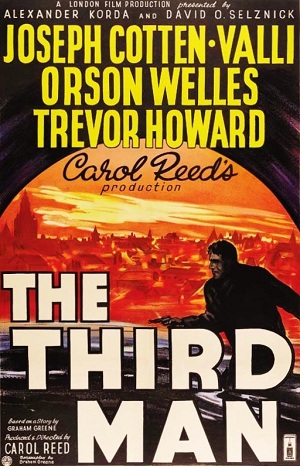
1950: The Third Man Is Not Nominated For Best Picture
….and Orson Welles was not nominated for Best Supporting Actor! The Third Man received three Oscar nominations, for Director, Cinematography, and Editing. The fact that Welles, Joseph Cotten, Alida Valli, and the film’s score were not nominated (and that King Solomon’s Mines was nominated for Best Picture instead of The Third Man) remains one of the more surprising snubs in Oscar history.
1952: Singin’ In The Rain Is Not Nominated For Best Picture
What the Heck, Academy!? This was the year that The Greatest Show On Earth won the Best Picture Oscar. Personally, I don’t think The Greatest Show On Earth is as bad as its reputation but still, Singin’ In The Rain is a hundred times better.
1953: Alan Ladd Is Not Nominated For Best Actor For Shane
How could Shane score a nomination for Best Picture without Shane himself receiving a nomination?
1954: Rear Window Is Not Nominated For Best Picture
Rear Window was not totally ignored by the Academy. Alfred Hitchcock received a nomination for directing. It also received nominations for Best Adapted Screenplay, Cinematography, and Sound. However, Rear Window was not nominated for Best Picture and James Stewart, Grace Kelly, Raymond Burr, and Thelma Ritter all went unnominated as well. Today, Rear Window is definitely better-remembered than the majority of 1954’s Best Picture nominees. Certainly, it deserved a nomination more than Seven Brides For Seven Brothers and Three Coins in The Fountain.
1955: Ralph Meeker Is Not Nominated For Best Actor For Kiss Me Deadly
I guess I shouldn’t be surprised. If the Academy wasn’t going to nominate Rear Window for Best Picture, there was no way that they would have nominated Ralph Meeker for playing a sociopathic private detective who, even if inadvetedly, helps to bring about the end of the world.
1955: Rebel Without A Cause Is Not Nominated For Best Picture or Best Actor
The 1955 Best Picture lineup was a remarkably weak one. The eventual winner was Marty, a likeable film that never quite escapes its TV roots. Picnic has that great dance scene but is otherwise flawed. Mister Roberts was overlong. Love Is A Many-Splendored Thing and The Rose Tattoo are really only remembered by those of us who have occasionally come across them on TCM. Perhaps the best-remembered film of 1955, Rebel Without A Cause, received quite a few nominations but it was not nominated for Best Picture. And while the Rebel himself, James Dean, was nominated for Best Actor, it was for his performance in East of Eden. 1955 was a strange year.
1955: Robert Mitchum Is Not Nominated For Best Actor For The Night of the Hunter
Robert Mitchum only received one Oscar nomination over the course of his entire career, for 1945’s The Story of G.I. Joe. He deserved several more. His performance as the villainous preacher in The Night of Hunter made Reverend Harry Powell into one of the most iconic film characters of all time.
1956: Cecil B. DeMille Is Not Nominated For Best Director For The Ten Commandments
Cecil B. DeMille was only nominated once for Best Director, for 1952’s The Greatest Show On Earth. DeMille, however, deserved to be nominated for The Ten Commandments. As campy as DeMille’s films can seem today, he was an expert storyteller and that’s certainly evident when one watches The Ten Commandments, a film that holds the viewer’s attention for nearly four hours. DeMille deserved a nomination for the Angel of Death scene alone. The screams in the night are haunting.
1957: Henry Fonda Is Not Nominated For Best Actor For 12 Angry Men
With 12 Angry Men, Fonda did something that very few actors can. He made human decency compelling. One gets the feeling that, much like Tom Hanks in Captain Phillips, Fonda made it look so easy that the Academy took him for granted.
1958: Touch Of Evil Is Totally Ignored
Anyone who had researched the history of the Academy knows that there was no way that the 1950s membership would have ever honored Orson Welles’s pulp masterpiece, Touch of Evil. That said, it still would have been nice if they had. Touch of Evil has certainly go on to have a greater legacy than Gigi, the film that won Best Picture that year.
1958: Vertigo Is Almost Totally Ignored
Vertigo did receive nominations for Art Direction and Sound but Alfred Hitchcock, James Stewart, and the film itself were snubbed.
1959: Some Like It Hot Is Not Nominated For Best Picture or Best Actress
Some Like It Hot received 6 Oscar nominations, including nominations for Best Director, Best Actor, and Best Adapted Screenplay. It did not receive a nomination for Best Picture and, sadly, Marilyn Monroe did not receive a nomination for Best Actress. Much as with Henry Fonda in 12 Angry Men, one gets the feeling that the Academy took Monroe for granted. It’s sad to realize that, while two actresses have been nominated for playing Marilyn Monroe, Monroe herself would never be nominated.
Agree? Disagree? Do you have an Oscar snub that you think is even worse than the 12 listed here? Let us know in the comments!
Up next: Things get wild with the 6os!
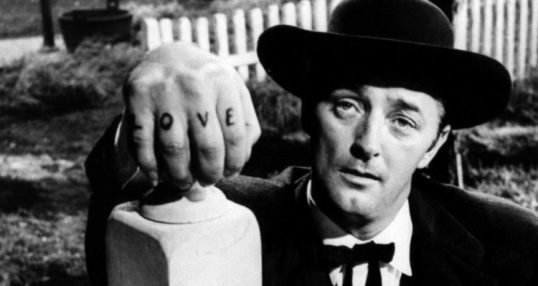
Night of the Hunter (United Artists 1955; D: Charles Laughton)
Though you may not know it if you’ve only seen the film during one of its annual showings on television, the 1956 religious epic, The Ten Commandments, originally opened with director Cecil B. DeMille standing on a stage. Speaking directly to the audience, DeMille explains that, though the film they’re about to see me take some dramatic license with the story of Moses, it still based on not just the Bible but also the accounts of Philo, Josephus and Eusebius. He also tells us that The Ten Commandments is more than just an adaptation of the Book of Exodus. Instead, it’s a film about every man’s desire to be free.
Demille concludes with: “The story will take 3 hours and 29 minutes to unfold. There will be an intermission. Thank you for your attention.”
To be honest, it’s kind of a sweet moment. Cecil B. DeMille is a name that is so associated with (occasionally overblown) epic filmmaking that it’s easy to forget that DeMille was one of the most important names in the artistic development of American cinema. He was there from the beginning and, unlike a lot of other filmmakers, he was equally successful in both the silent and the sound era. Say what you will about his films, DeMille was a showman and he handles the introduction like a pro. At the same time, there’s a real sincerity to DeMille’s tone. After you listen to him, you’d almost feel guilty if you didn’t sit through all 3 hours and 29 minutes of his film.
That sincerity extends throughout the entire film. Yes, The Ten Commandments is a big, long epic and some members of its all-star cast are more convincing in their roles than others. And yes, the film can seem a bit campy to modern viewers. (In fact, it wouldn’t surprise me if it seemed a bit campy to viewers in 1956 as well.) Yes, The Ten Commandments does feature Anne Baxter saying, “Oh Moses! You sweet adorable fool!” But it doesn’t matter. Even the most ludicrous of dialogue just seem right. The film is just so sincere that it’s difficult not to enjoy it.
In the Book of Exodus, Moses is described as having a speech impediment and even tries to use it as an excuse to get out of going to Egypt. That’s actually one of the reasons why Moses brought Aaron with him to Egypt, so that Aaron could speak for him. In the movie, Moses is played by Charlton Heston, who comes across as if he’s never felt a moment of insecurity over the course of his entire life. But no matter. Heston may not by the Moses of Exodus but he’s the perfect Moses for the DeMille version. When Heston says that Egypt will be visited by plagues until his adopted brother Ramses (Yul Brynner) agrees to allow the Jews to leave Egypt, you believe every word. (Aaron, incidentally, is played by the legendary John Carradine. He doesn’t get too much other than respectfully stand a few feet behind Charlton Heston but still: John Carradine!)
And really, anyone who dismisses The Ten Commandments out-of-hand should go back and, at the very least, watch the scene where the Angel of Death descends upon Egypt. The scene where Moses and his family shelter in place while the screams of distraught mothers echo throughout the city is chilling. Ramses may spend most of the film as a petulant villain but you almost feel sorry for him when you see him mourning over his dead son. When he sets off after Moses, it’s not just because he’s doing what villains do. He’s seeking vengeance for the loss of his first born. For that brief moment, Ramses goes form being a melodramatic bad guy to being someone with whom the viewer can empathize. Brynner, with his burning intensity, gives a great performance as Ramses.
As I said before, this film has what, in 1956, would have been considered an all-star cast. Watching the names as they show up during the opening credits — Cedrick Hardwicke! Yvonne DeCarlo! Woody Strode! Debra Paget! — is like stepping into a TCM fever dream. Some of the performers give better performance than others. And yet, even the worst performer feels as if they just naturally belong in the world that DeMille has created. John Derek may seem rather smarmy as Joshua but his callowness provides a good contrast to the upright sincerity of Heston’s performance as Moses. Edward G. Robinson’s cries of, “Where is your God now!?” may have provided endless fodder for impersonators but just try to imagine the film without him. Even Vincent Price is in this thing! He doesn’t have his famous mustache but, as soon as you hear his voice and see that famous glare, you know that it’s him.
Of course, when you’re growing up and The Ten Commandments is on TV every year, you mostly just want to see the scene where Moses parts the Red Sea. The Ten Commandments was nominated for seven Oscars but it only won one, for its special effects. (The prize for Best Picture went to another epic, Around The World In 80 Days.) Today, the film’s special effects may no longer amaze viewers but there’s still something rather charming about the Red Sea parting and then crashing in on the Egyptian army. The scene where the Earth opens up and swallows those who worshiped the Golden Calf remains impressive, if just because all of the extras really look terrified that they might die. And while the Pillar of Fire may look a bit cartoonish to modern eyes, that’s a huge part of the film’s appeal.
The Ten Commandments is a big, long, sometimes silly, sometimes effective, and always entertaining epic. It’s a grand spectacle and one that I usually watch every year when it shows up on television. I missed this year’s showing but, fortunately, I own it on DVD. It’s a sincere epic and a difficult one not to like.
4 Shots From 4 Films is just what it says it is, 4 shots from 4 of our favorite films. As opposed to the reviews and recaps we usually post, 4 Shots From 4 Films is all about letting the visuals do the talking. When it came to directing epics movies, there was Cecil B. DeMille, and there was everyone else. The quintessential Hollywood director was born on this date in 1881. Here are four shots from some of DeMille’s greatest films:
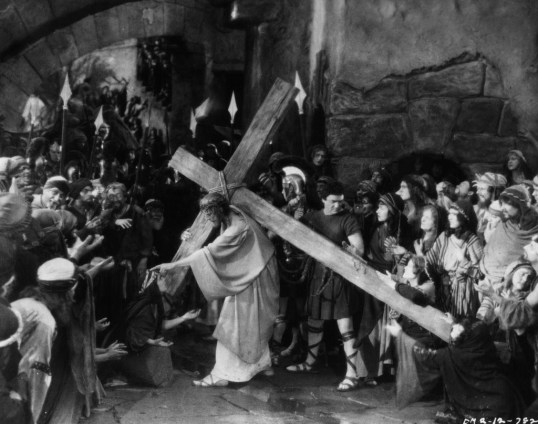
King of Kings (1927)
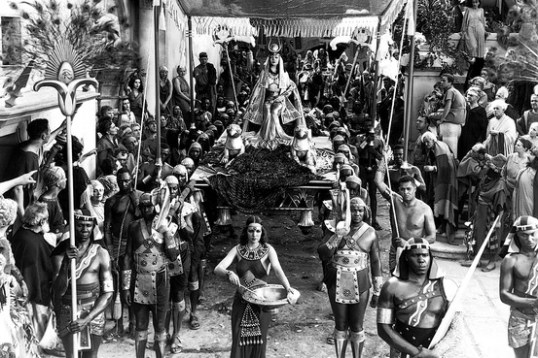
Cleopatra (1934)
Samson and Delilah (1949)

The Ten Commandments (1956)
 Through the Shattered Lens