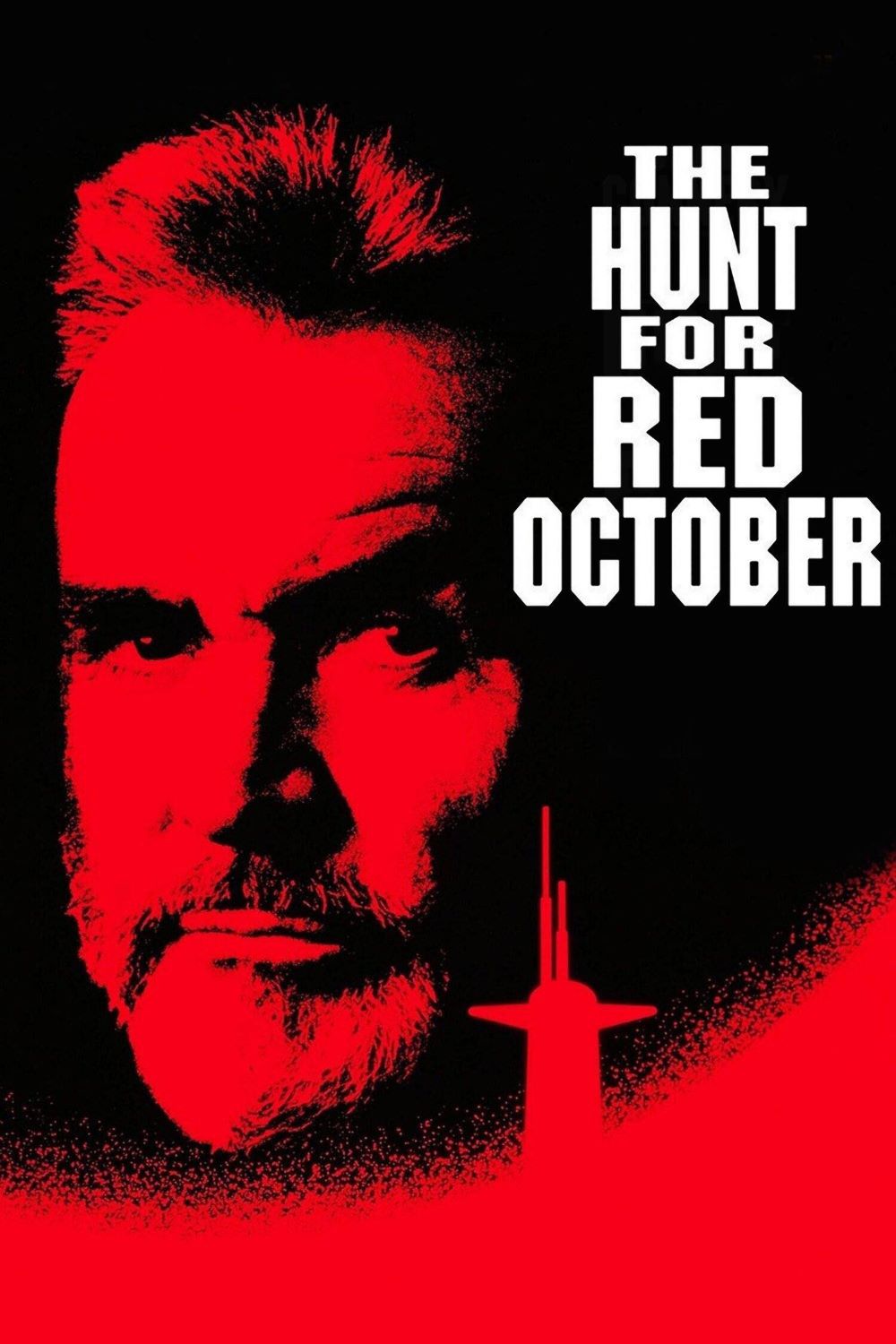
Review: The Hunt for Red October (dir. by John McTiernan)


“I’m a politician. Which means that I am a cheat and a liar, and when I’m not kissing babies, I’m stealing their lollipops.” — Dr. Jeffrey Pelt, National Security Advisor

The Hunt for Red October glides into the tail end of Cold War cinema like a stealthy sub cutting through midnight swells, packing a smart mix of spy intrigue and nail-biting underwater showdowns that keep you locked in from the opening credits. Directed by John McTiernan, fresh from helming Die Hard, this 1990 adaptation of Tom Clancy’s doorstopper novel smartly distills pages of naval geekery into a taut, propulsive thriller where Soviet skipper Marko Ramius—Sean Connery in full brooding mode—pilots the formidable Red October, a behemoth sub with a hush-mode propulsion system that ghosts past detection like a shadow in fog.

McTiernan shines in wrangling the script from Clancy’s tech-heavy tome, slicing through the babble to propel the story with crisp momentum and unrelenting suspense, turning potential info-dumps into pulse-quickening beats that hook casual viewers and sub nerds alike. The premise grabs fast: Ramius’s bold maneuvers ignite a transatlantic frenzy, with U.S. and Soviet forces locked in a paranoid standoff over what looks like an imminent crisis. That ’80s-era distrust simmers perfectly here, crammed into a runtime that pulses with fresh urgency decades later, amplified by those dim-lit sub corridors in steely teal tones that squeeze the air right out of the room.

Alec Baldwin embodies Jack Ryan as the reluctant brainiac from CIA desks, sweaty and green around the gills yet armed with instincts that cut through official noise like a periscope through chop. Pulled from family downtime—teddy bear in tow—he injects everyday stakes into the global chessboard, proving heroes don’t need camo or cockiness, just smarts and stubbornness. Connery’s Ramius dominates as a haunted vet with a personal chip on his shoulder, steering a tight-knit officer corps including Sam Neill’s devoted second-in-command, their quiet bonds hinting at deeper loyalties amid the red menace.

Standouts fill the roster seamlessly: James Earl Jones lends gravitas as the steady Admiral Greer backing Ryan’s wild cards; Scott Glenn commands the American hunter sub with laconic steel; Jeffrey Jones brings quirky spark to the sonar savant whose audio tricks flip the script on silence. The dialogue crackles with shorthand lingo and understated jabs, forging a crew dynamic that’s as pressurized as the hull plates, pulling you into hushed command post vibes without a whiff of cheesiness.

​​

McTiernan elevates the genre by leaning on wits over blasts—thrilling pursuits deliver without dominating, letting mind games and split-second calls drive the dread, all while streamlining Clancy’s minutiae into seamless propulsion. Gadgetry gleams without overwhelming: the sub’s whisper-quiet tech sparks clever cat-and-mouse in hazard-filled depths, ramping uncertainty to fever pitch. Pacing builds masterfully from war-room skepticism—Ryan battling brass skepticism—to heart-in-throat ocean dashes, every frame taut as a bowstring. Practical models and effects ground the peril in gritty tangibility, no digital gloss, evoking Ice Station Zebra‘s frosty traps but streamlined into a relentless machine that dodges the older film’s drag. It’s a clinic in balancing spectacle and smarts, where tension coils from isolation’s cruel math: one ping too many, and it’s lights out.

On the eyes and ears front, the movie plunges into submersed nightmare fuel—consoles pulsing crimson in battle stations, scopes piercing mist-shrouded waves, silo bays looming like sleeping leviathans. McTiernan tempers his action flair for thinker-thrills; Basil Poledouris’s great orchestral score surges with iconic power through the chases—those brooding horns, choral swells, and rhythmic pulses echoing engine throbs have etched into legend, pounding your chest like incoming cavitation and elevating every dive. Audio wizardry seals the immersion: hull groans, ping echoes, bubble roars craft a metallic tomb where errors echo eternally. Flaws peek through—early scenes drag with setup chatter, foes skew broad-stroked—but the core hunt erases them, surging to a sharp, satisfying close that nods to Ryan’s budding legend without overplaying the hand.

’90s tentpole lovers and thaw-era history fans find a benchmark here, as the film plays the long con of trust amid torpedoes, fusing bombast with nuance that reboots chase in vain. It bottles superpower jitters spot-on—frantic commands clashing with strike debates—yet softens adversaries via Connery’s world-weary depth and Neill’s subtle conviction. Endless rewatches uncover gems: crew hints dropped early, sonar hacks foreshadowing real tech leaps. Baldwin’s grounded Ryan—chopper-barfing, suit-clashing, chaos-navigating—earns triumphs the hard way, contrasting Das Boot‘s bleak grind with upbeat ingenuity that feels won, not waved. Poledouris’s motifs linger post-credits, a symphonic anchor boosting replay pulls.

Endurance stems from mastering sub-horror’s essence: solitude sharpening choices, where flubs invite apocalypse. Ramius embodies defector realism—war-weary idealist mirroring history’s turncoats—while Clancy’s specs (sub classes, velocities) anchor without anchoring down. McTiernan sidesteps flags; zero flag-waving, pure operator craft in dodges and climactic finesse that blends brains with boom. Quirks delight—the premier’s bluster, aides’ cool calculus—padding a 134-minute gem that exhales you surfacing, amped. Expands on score’s role too: “Hymn to Red October” choral rise mirrors Ramius’s quiet rebellion, threading emotional undercurrents through mechanical mayhem, a Poledouris hallmark outlasting the film.

Bottom line, The Hunt for Red October captivates via cerebral kick—shadow games in fluid physics, intellect over muscle, audacious plays punking empire folly. Sparks post-view chin-strokes on allegiances and risks. Connery’s gravelly “One ping only, Vasily” endures as gold; storm-watch it, trade sofa for sonar station—raw thrill spiked with savvy. Sub saga staple? This silent stalker nails every target.
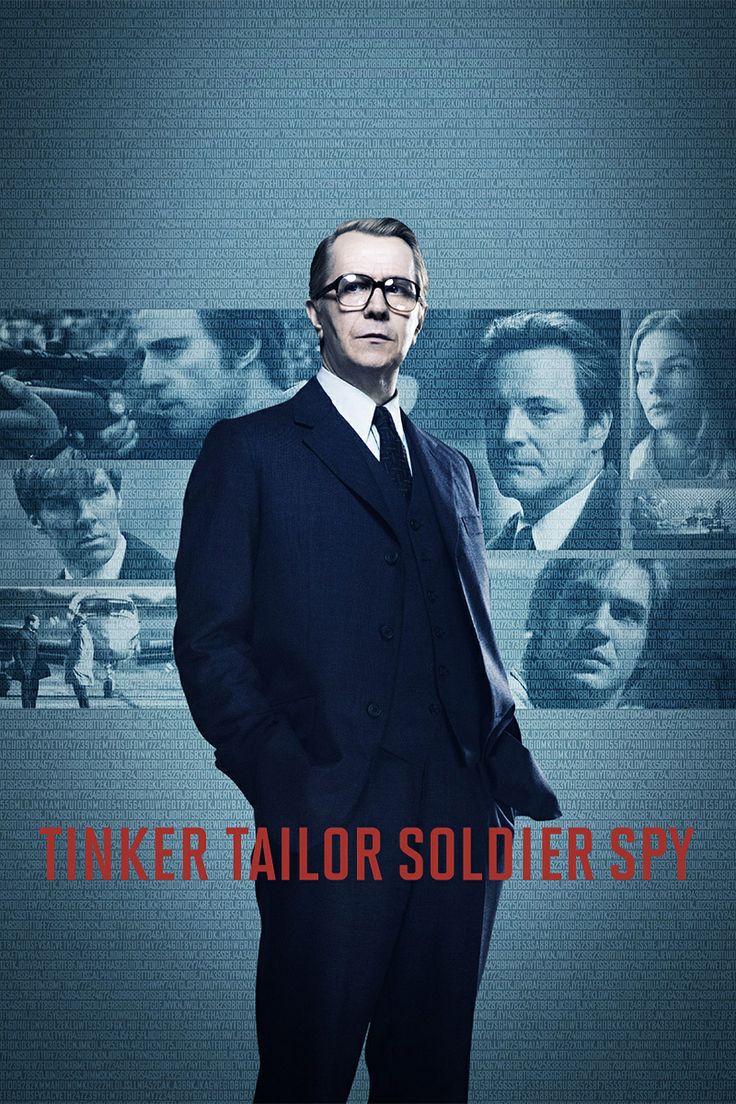
Review: Tinker Tailor Soldier Spy (dir. by Tomas Alfredson)


“We are not so very different, you and I.” — George Smiley

Tomas Alfredson’s Tinker Tailor Soldier Spy (2011) is a cold, coiled, and relentless march into the gray, rain-lashed corridors of British espionage—a film that exchanges Bond’s swagger for bureaucratic unease, where information is traded like poison and every conversation feels weaponized. The film is sheer confidence: so sure of itself, it expects you to keep up, get lost, and piece the puzzle together from the hushed fragments left in close-up reactions and glances across smoke-filled rooms. This is spy cinema not as spectacle, but as slow-burning existential puzzle.

A key element of the film’s mood is its distinctive brutalist aesthetic, which powerfully evokes the Cold War mentality not only behind the Iron Curtain but also in the West. Alfredson and cinematographer Hoyte van Hoytema immerse viewers in a London setting defined by greying, tired walls, bleak drizzle, and decaying interiors that feel as cold and institutional as the very espionage world they depict. This use of brutalism—with its bare concrete textures, utilitarian spaces, and sense of institutional decay—does more than create atmosphere; it visually projects the emotional and material exhaustion of a Britain entrenched in paranoia and internal rot. The characters seem physically and emotionally hemmed in by these spaces, reinforcing the film’s themes of secrecy, alienation, and moral corrosion.

There are no car chases or shootouts to speak of—just a masterclass in stillness where tension arises from precisely what remains unspoken. The film is closer to an autopsy than a thriller, dissecting the social and emotional costs of lives devoted to deception. It begins with a botched operation in Budapest—Jim Prideaux (Mark Strong), one of “the Circus’s” best agents, is captured in a tense, almost wordless scene that sets a tone of brooding unease. The fallout leads to a purge of the leadership, with Control (John Hurt) forced out and George Smiley (Gary Oldman), his quietly watchful confidant, retired—though soon to return for an unofficial mole hunt.

From there, the narrative unfolds elliptically, like a mosaic of recollections and betrayals, requiring viewers to assemble the truth from fractured glimpses. Gary Oldman’s Smiley is the film’s anchor—his performance a masterclass in minimalism and subtext. He’s the ultimate observer, haunted by decades of institutional compromises and personal betrayals.

The supporting cast is nothing short of exceptional, elevating the film through richly textured performances that bring vibrant life to an otherwise reserved script. Colin Firth as Bill Haydon delivers a quietly magnetic portrayal, his charm barely concealing the complexity beneath. Tom Hardy’s Ricki Tarr injects raw energy and restlessness, perfectly contrasting the film’s restrained atmosphere. Benedict Cumberbatch’s Peter Guillam is adept at conveying subtle shifts in allegiance and tension, his nuanced portrayal deepening the intrigue. John Hurt’s brief but potent presence as Control exudes weary gravitas, setting the tone for the murky world of espionage. Mark Strong as Jim Prideaux balances stoicism with vulnerable humanity, particularly in moments laden with pain and regret. Other supporting actors such as Ciarán Hinds, Toby Jones, and Kathy Burke contribute layered, compelling portrayals of individuals trapped within the machinery of the Circus. What binds these performances is a reliance on subtlety—expressing volumes through nuanced gestures and lingering silences, the cast anchors the complex narrative in a palpable human reality.

At its core, Tinker Tailor Soldier Spy is less a whodunnit than an exploration of institutional decay and emotional repression. The brutalist aesthetic mirrors this decline: just as the concrete and ochre walls close in on the agents, so too does the film reveal a Britain worn down by secrets and internal contradiction. Love and loyalty are liabilities in this world where everyone is alienated. The story’s emotional heart revolves around the search for a deeply embedded mole within the Circus—an elusive betrayal that shakes the organization to its core. The film carefully avoids easy reveals, maintaining a deliberate tension and exemplifying the emotional cost that the espionage game of the era had on everyone involved.

The film also explores themes of repressed queerness, class stratification, and misogyny, linking these to the numbing demands of espionage. The gloomy visuals and tightly controlled dialogue echo the emotional constraints on these men, underscoring that beneath the seemingly impenetrable exterior lies a fragile, fragile human cost.

This film is not an easy watch. Its elliptical storytelling, coded conversations, and subtle body language demand patience and multiple viewings. Yet that opacity is part of its power—uncertainty and not-knowing become central to the experience, enhanced by Alberto Iglesias’s restrained score and the claustrophobic mise-en-scène. Unlike many spy films, Tinker Tailor Soldier Spy is about process and detection, not action or glamour. Its cold, meticulous pacing trades on the cerebral seduction of uncovering hidden truths rather than adrenaline-fueled confrontations.

Ultimately, the film refuses easy resolutions. Though Smiley uncovers the mole and the Circus is superficially restored, there’s no real victory—only the acknowledgment of profound damage, both personal and institutional. The brutalist setting, with its unyielding, somber lines, stands as a perfect metaphor for this unresolved tension. Tinker Tailor Soldier Spy is a masterclass in unease and ambiguity, a film that stays with you because it reveals what you’ll never fully know about loyalty, betrayal, and the cost of secrets in a world where the line between friend and enemy is always blurred.

Jason Bourne Is Back


Jason Bourne is back and uses the biggest sporting event to showcase in an action-packed tv spot why people should care that he’s back.

Yes, we know who he is. He definitely knows who he is, but this time around it looks like he remembers everything. If that’s the case then the CIA may be in for another beating Paul Greengrass-style with all the shaky-cam we can shake a stick at.

Looks like, if this tv spot is any indication, that Jason Bourne wasn’t taking it easy physically while he was gone. He definitely didn’t skimp on the lifting.

Jason Bourne is set for a July 29, 2016 release.

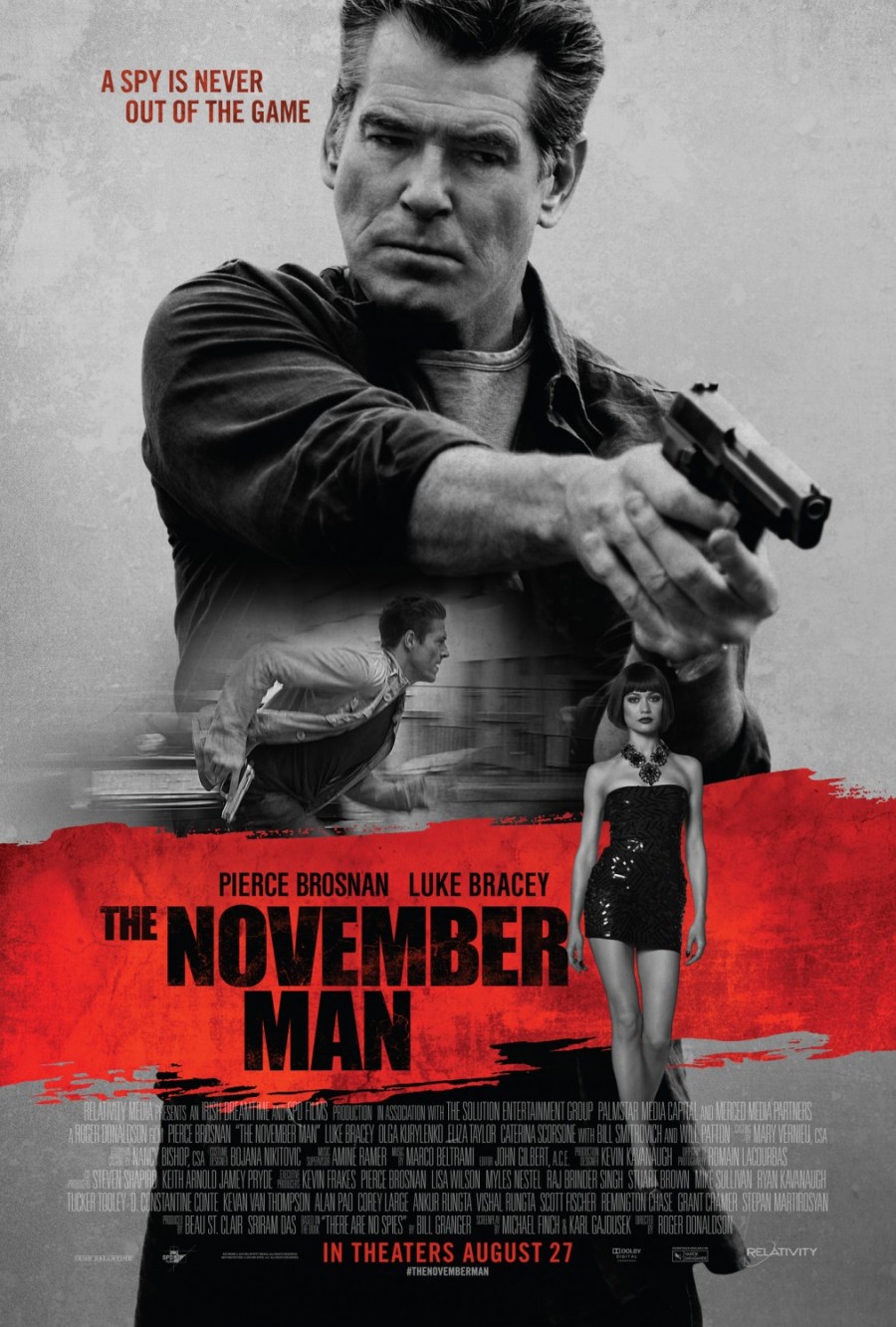
Trailer: The November Man


The-November-Man-poster-900x1333

Outside of Sean Connery, my other favorite James Bond has always been Pierce Brosnan. He was able to inject some of the fun that became camp when Roger Moore was Bond, but still retain the ice-cold lethality that Connery brought to the role. It was just bad luck that he ended up with Bond writers and directors that were hit or miss. I think Pierce woud’ve done just as good a job, if not better, in the films that Daniel Craig ended up doing as Bond.

We now have Brosnan back as a spy, but not as Bond, but as Peter Devereaux from the spy novel series written by Bill Granger. The November Man looks to be Brosnan’s attempt to try and add another spy thriller franchise in the mix with both Bond and Bourne. Whether Brosnan succeeds depends on how critics and audiences react to this film.

The trailer makes the film look interesting enough. Using the time-tested plot of master vs. protege, The November Man may have some success when it comes out at the tail end of the summer season with little to no competition.

One thing that’s good to see is Brosnan back on the screen. If Liam Neeson can transition into the elder action hero then I can’t see why Pierce Brosnan can’t do it as well. Neeson can’t be the only Irish kickass on the screen. Lisa Marie would agree that there’s never enough kickass Irish stars on the big-screen.

The November Man shoots its way onto the big-screen this August 27, 2014.

James Bond Review: Skyfall (dir. by Sam Mendes)


For almost a month, starting in mid-October and almost two weeks into November, we here at Through the Shattered Lens have watched and shared our reviews and thoughts on the 25 James Bond films (22 official EON productions with 3 non-official ones) which preceded this week’s release of the latest James Bond entry with Skyfall. We’ve shared which were our personal favorites of the series. Some preferred the Connery-era of the Bond franchise while some were in the Moore-era. What we here have all come to realize is just how timeless this franchise has become despite it having celebrated it’s 50th anniversary just last month.

The James Bond film franchise has gone beyond what Ian Fleming had imagined when he first came up with a literary character that would become a global pop icon and remain one of cinemas most successful franchises in history. There have been low points in the franchise (usually when the actor whohas been performing the role has outlived their stay) but then there have been some great highs. In the end, there’s always been one constant and that’s the character of James Bond — British secret agent 007 with a license to kill.

A franchise which began with on Sean Connery in the title role has now seen a return to prominence with the role now in the care of British actor Daniel Craig. The Craig-era began with the critically-acclaimed Casino Royalewhich also became popular with the mass audience. The sequel to this reboot would set the franchise back a step or two, but still became the second highest grossing Bond film in the franchise. We now come to the third Bond film in the Craig-era with 2012’s Skyfall and the question of whether the James Bond franchise can still remain relevant in this age of hyper-kinetic and ultra-violent action films remain to be answered.

Skyfall begins with Bond already in the middle of a mission to recover a computer hard-drive which stores the names of hundreds of NATO agents deep undercover within the many terrorist organizations around the world. Things are not going well for Bond and his fellow MI6 agents. He finds many of them already dead or dying and it’s up to him and another agent named Eve (played by Naomie Harris) to chase after the mercenary who has taken off with the hard-drive.

One thing we’ve come to expect with the more recent James Bond films (especially the Daniel Craig ones) are the action sequences which make up the opening section of the film. Even before we get to the recognizable Bond opening credit sequence this opening of the film using a very thrilling and elaborate action sequence tend to set the tone for the rest of the film. Skyfall was no different as Bond chases the mercenary Patrice through the rooftops of Istanbul’s Grand Bazaar right up to a one-on-one fight on top of a moving train. Through an unfortunate stroke of luck and a command decision by “M” back in MI6 headquarters in London we segue ito the always popular opening credits sequence with Bond having been shot by accident and left for dead.

The plot of Skyfall was somewhat similar to Goldeneye which saw Pierce Brosnan introduced as the new James Bond. James Bond finds himself racing against time and a former MI6 agent who feels betrayed not just by the country and organization he loyally served but by “M” herself. Raoul Silva (played with a sociopathic flair and panache by Javier Bardem) knows the in’s and out’s of MI6 and this allows him to penetrate both their physical and cyber defenses which puts the entire national security of Great Britain and the Commonwealth in extreme peril. It also puts “M” on the proverbial political hot seat as civilian oversight committees look to find a scapegoat for dead MI6 agents and Silva’s continuing assault on Britain’s intelligence apparatus.

To say anymore about the plot of Skyfall would ruin the biggest joy about this film. Mendes would’ve been one of the last people I saw being picked to direct a James Bond film, but he proves himself more than just capable, but also brings his own character-driven narrative sensibilities to raise the bar for future James Bond film. His handling of the quieter moments during the film shows that particular skill of his that has made him an Academy Award-winning filmmaker. It was on the action scenes that Mendes’ skill as a filmmaker would remain in doubt, but with the help of second unit director Alexander Witt, Skyfall manages to create action scenes that weren’t created for the sake of putting action on the screen but to move the story forward.

In the past, James Bond films rarely moved into introspection on it’s main character’s personal and professional motivations. This began to change when Daniel Craig was picked to help reboot the franchise. The first two films with Craig as Bond showed a much grittier and emotionally complex 007 than in years past. We also got a Bond who was still new to the role of being a 00-agent so we saw the character grow into the role. With Casino Royale and Quantum of Solace we got a Bond who moved from newly minted secret agent then to an agent going off the reservation and following his emotions to finish a mission (both official and personal). The one thing those two films didn’t do was give us a Bond that was fully capable and confident in his abilities to get the job done through the biggest odds. But before we finally get that Bond in Skyfall we see him go through personal doubts about whether he still has the skill to be 007 in a world that sees him and his kind of espionage a relic of the Cold War. By the time the film finishes to a close we find ourselves seeing this new modern, complex Bond finally meeting the old-school traditional Bond who delighted our parents and grandparents in the past.

There’s so much more to be said about this film which brings to the table the best of 50 years this franchise has been on the silver screen. The film pays homage to it’s cinematic history, but not so much that the film becomes a “Can you spot a past Bond reference” exercise. Each and every reference seemed to flow naturally into every scene it showed up in and some even got a nice ovation and reaction (classic Aston Martin DB for example). We even got to see the film poke a bit of cheeky fun at some of the franchises more over-the-top plot devices and all of it in good fun.

Then even with a strong story, great performances from the film’s principal cast members there’s still the question that always get asked whenever a new Bond film hits the screen. That question being how were the latest new Bond Girls.

While Naomie Harris’ Eve was a nice partner to Craig’s Bond their chemistry just didn’t flare up like most of the classic pairings in the franchise. That honor goes to Bond’s short, brief time with the character Severine (played by the ridiculously beautiful Bérénice Lim Marlohe). The scenes the two share in the Macau gambling house was one of the highlights of the film with Marlohe conveying both the femme fatale and damsel in distress in the same scene with the most subtle of acting touches. There’s a good chance that whenever “best of…” lists about Bond girls get made each and every year Marlohe as Severine would be on the top of most lists.

It took two films and six years of exploring, deconstructing and analyzing the character of James Bond through the performance of Daniel Craig. Through that time we’ve gotten to see a new side to James Bond without dismissing and forgetting about the character’s suave and deadly efficiency of past Bond films. While I still lean towards Sean Connery as the gold standard of all James Bond performances after seeing Craig as Bond for the third time in Skyfall the gap has shrunk considerably and I wouldn’t argue if some have Craig matching and/or surpassing Connery in the role. It’s a title that would be well-earned and with how the film ends a chance to see how Craig moves forward as Bond not just in the updated modern sense but the traditional that has made the character one of the most iconic figures in cinema history.

A last note, we get a return to old-school James Bond songs with Adele performing the film’s song which actually has the film’s title in it. The song also harkens back to the days of Shirley Bassey and If I had a choice in the matter I would just let Adele sing all future Bond songs for as long as she wants to.

Thus end Through the Shattered Lens’ retrospective on the James Bond franchise both past and present. It’s been a great ride and all thanks to the drive and organization of co-founder Lisa Marie Bowman who styles herself as the site’s resident Bond Girl.

Trailer: The Bourne Legacy


When Paul Greengrass completed The Bourne Ultimatum it looked like a perfect ending to the Bourne Series. Despite an ending that could be seen as a way to leave the door open to continue the series most people were content with the series ending as trilogy. That sort of thinking never enters the mind of studio executives who saw the success of this particular trilogy as still bankable even if it meant the filmmaker (Greengrass) and the series’ lead star (Matt Damon) weren’t going to participate.

What we ended up getting was a new lead in Jeremy Renner as another Treadstone-like agent, but one who didn’t have all the glitches that Jason Bourne had. Let’s just say that Renner’s character Aaron Cross would be Jason Bourne 2.0. I wasn’t convinced that a Bourne film minus Greengrass and Damon would work, but after seeing this latest official trailer from Universal Pictures I’m quite excited about this latest film.

With the success of The Avengers and Mission Impossible: Ghost Protocol where Renner had substantial roles in it looks like this latest film in the series could get a nice uptick in the amount of interest it gets from the public. The sort of action Renner’s character goes through in this film one could easily call this Hawkeye: The Early Years. All his character would need would be a nice hi-tech bow.

The Bourne Legacy is set for an August 17, 2012 release date.