Late Night Retro Television Review: CHiPs 3.21 “The Strippers”


Welcome to Late Night Retro Television Reviews, a feature where we review some of our favorite and least favorite shows of the past!  On Mondays, I will be reviewing CHiPs, which ran on NBC from 1977 to 1983.  The entire show is currently streaming on Prime!
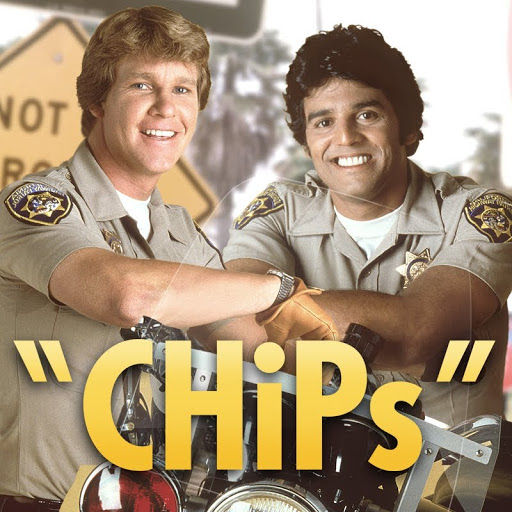
This week, the hills have eyes.

Episode 3.21 “The Strippers”

(Dir by Don Weis, originally aired on February 16th, 1980)

Calm down, boys, we’re not talking those types of strippers!

This episode of CHiPs finds Ponch and Jon searching through the California hill country for two rednecks who are stealing cars and stripping them for the parts.  One of the strippers is a fat guy who likes to sing while he’s working.  The other is a guy played by Evan C. Kim, who later played Clint Eastwood’s partner in The Dead Pool.  Baker’s girlfriend’s car gets stolen so this one is …. wait for it …. PERSONAL!  Of course, this being CHiPs, the episode is still mostly about Ponch even though Baker’s the one with a personal stake in the case.

It turns out that Ponch and Jon aren’t the only ones investigating crimes in the hills of California. The DEA is investigating a drug-running operation and they really don’t want to two motorcycle cops getting in the way.  (Doesn’t the DEA understand that motorcycles are cool?  At least they’re not bike cops like those schmucks on Pacific Blue.)  The head drug smuggler is played by Morgan Woodward, who was a veteran of the western genre.  The old cowboys are smuggling cocaine into Los Angeles.  It’s like an extremely depressing country song.  There’s no more cattle but there’s plenty of the devil’s dandruff to be sold.

If I seem to be rambling, it’s because there’s not really much to say about this episode.  Airing, as it did, late in the season, it’s hard not to feel that show’s writers were probably tired and out-of-ideas when it came to coming up with the plot for this one.  Ponch and Jon catch the car strippers who have information on the drug dealers.  The car strippers turn informant and hope that they’ll get a deal as a result.  Let’s hope so because prison is not a friendly environment to snitches.

This episode did feature one nicely-filmed accident scene, featuring multiple cars flying through the air (in glorious slo mo of doom!) and a bunch of broken glass.  Bonnie and Bear cleaned up the accident site so that Ponch and Baker could get back to searching for the car thieves.  That was nice of them.  It’s all about team work!

Retro Television Review: Miami Vice 4.5 “Child’s Play”


Welcome to Retro Television Reviews, a feature where we review some of our favorite and least favorite shows of the past!  On Mondays, I will be reviewing Miami Vice, which ran on NBC from 1984 to 1989.  The entire show can be purchased on Prime!

This week, Sonny is too quick to fire his gun.

Episode 4.5 “Child’s Play”

(Dir by Vern Gillum, originally aired on October 30th, 1987)

This is a dark, dark episode.

While breaking up what appears to be a case of domestic violence between Annette McAllister (Danitra Vance) and Walker Monroe (Ving Rhames), Sonny thinks that he spots someone holding a gun in the next room.  Sonny fires through the wall, hitting a 13 year-old boy who Annette claims is her son, Jeffrey.  While Jeffrey McCallister lies in a coma, a guilt-ridden Sonny starts to think about his ex-wife and their son, Billy.  They live upstate and it’s been a while since Sonny visited.  When Sonny does visit, he learns that his ex-wife’s fiancé wants to adopt Billy after the wedding.

Meanwhile, back in Miami, it turns out that there is no Jeffrey McAllister and that the boy who Sonny shot was actually a child soldier, recruited into a gang at an early age so that he couldn’t be sent to prison if arrested.  It turns out that Walker and Annette are both involved in a gunrunning operation that is headed up by Holliday (Isaac Hayes).  It all leads to one of those patented Miami Vice-style action sequences where Crockett, more or less, allows Walker to fall to his death.  Sonny is definitely not in a good mood for the majority of this episode.

Child’s Play could have just as easily been titled The Don Johnson Emmy Submission Episode.  This episode revolves entirely around Crockett and his feelings of guilt over shooting a child and also his fear of losing his son.  Johnson does a pretty good job in this episode.  Over the course of season 3 and the first few episodes of season 4, it really has sometimes seemed as if Crockett was losing his edge.  This episode presents us with the return of self-destructive, end-of-his-rope Sonny and not even Johnson’s mullet can distract from the drama.

Thematically, this episode is pretty bleak.  We never really learn much about the kid who was shot by Crockett, other than that he has a pretty sizable criminal record for a 13 year-old.  By the end of the episode, he’s woken up from his coma but, assuming that he is capable of leaving the hospital, he’s still wanted on several murder charges.  The kid basically has no future, even if he does make it to adulthood.  Meanwhile, Sonny’s son is growing up without his father and, when Sonny does visit him, there’s really not much of a connection between the two of them.

In other words, everyone’s doomed.  This was not a happy episode but, then again, Miami Vice was rarely a happy show.

Late Night Retro Television Review: Degrassi High 2.5 “Body Politics”


Welcome to Late Night Retro Television Reviews, a feature where we review some of our favorite and least favorite shows of the past!  On Sunday, I will be reviewing the Canadian series, Degrassi High, which aired on CBC and PBS from 1989 to 1991!  The series can be streamed on YouTube and Tubi

Just when Lucy thinks that she’s out, they pull her back in.

Episode 2.5 “Body Politics”

(Dir by Phillip Earnshaw, originally aired on December 3rd, 1990)

Lucy is depressed because the big dance is coming up and no one has asked her.  She makes another one of her video diaries for L.D., in which she says, “I know I can be kind of mouthy.”  That’s true but being “kind of mouthy” is a Degrassi tradition and screw anyone who can’t handle someone having an opinion!

Anyway, Lucy does get a date with Dale (Cameron Graham), a jock with a cute smile.  But when the Girls Volleyball Team discovers that the Boys Basketball Team has been given all of the best practice slots in the gym (basically, the basketball team gets to practice in the afternoon for as long as they want while the volleyball team only gets a few minutes in the morning), Lucy finds herself starting another protest.  However, when she discovers that Dale is the captain of the basketball team, Lucy starts to wonder if she should back off.  She wants to go to the dance!

The creepy Farrell twins insist that Lucy has to be their leader and their spokesperson.  This episode was the first time that the Farrells were prominently featured in the second season and I had forgotten how annoying they could be with their constant demand that Lucy lead every single protest.  Seriously, I’m kind of sympathizing with Lucy’s desire to avoid getting involved.

Lucy does eventually step up and make her argument about the girls deserving equal time to the Phys Ed. department.  It doesn’t do any good.  It turns out that, when Dale said that no one cares about Girls Volleyball, he was right.  Lucy loses her fight and her date.  But the president of the senior class, the never before-seen Bronco (L. Dean Ifill), is impressed by Lucy’s fighting spirit and asks her to the dance.  So, things work out.

(Lucy, of course, is destined to be crippled and blinded by Wheels in an auto accident but that’s a while off.)

As for the other plots in this week’s episode, Patrick, the Irish guy who was dating Spike at the end of last season, is single again and asks Liz out on a date.  Spike says she’s fine with it but actually she’s jealous. Hey, it happens!  And Alexa and Michelle finally decide to be friends again.  Yay!  Seriously, it’s always nice when friendships are saved.

This episode could have been better.  The main problem was that I didn’t buy a lot of the Lucy story.  I mean, how come there wasn’t a coach or anyone supervising the gym while the basketball players and the volleyball players were having their argument?  How come the athletic teams didn’t already have a set schedule for when they would practice?  Since when are the Farrell twins athletic and why can’t they ever do anything without demanding that Lucy be their spokesperson?  How exactly is L.D.’s father getting away with traveling around the world with his daughter who I imagine is legally required to be in some sort of school?  There were just too many unanswered questions.

Retro Television Review: Homicide: Life On The Street 3.12 “Partners”


Welcome to Retro Television Reviews, a feature where we review some of our favorite and least favorite shows of the past!  On Sundays, I will be reviewing Homicide: Life On The Street, which aired from 1993 to 1999, on NBC!  It  can be viewed on Peacock.

This week, the bar finally opens!

Episode 3.12 “Partners”

(Dir by John McNaughton, Originally aired January 20th, 1995)

As you can tell by the title, this episode was all about partners.

For instance, Megan Russert realized that her former partner from narcotics, Douglas Jones (Robert Clohessy, with his Bronx accent), has been beating up his wife, Natalie (Lily Knight).  He regularly puts her in the hospital, though Natalie always insists that she either fell down the stairs or walked into a door.  Jones, who is now working homicide during the night shift and under Russert’s command, insists that he would never hurt his wife.  When Russert asks Jones’s former boss if Jones had been having any trouble while working narcotics, he refuses to give her specifics.  It’s a boys club and the boys protect each other.  Eventually, Natalie ends up shooting Jones with his own gun, probably killing him.  (We’re told that he’s barely holding on.)  This storyline was well-acted and well-written but watching it, I was reminded of just how awkwardly this show tends to use Russert.  Because she commands a different shift, she doesn’t really get much interaction with the other main characters.  Her affair with Beau Felton has never really made sense.  From what I understand, Russert was created by NBC demanded more personal drama and some glamour.  Isabella Hofman does about as good a job as anyone could with her often underwritten character but there’s really just not much for her to do.

Meanwhile, with Pembleton under suspension and threatening to quit, Bayliss doesn’t have a regular partner.  His attempt to partner up with Lewis ends in disaster when Lewis’s bad (albeit hilarious) driving leads to Bayliss getting a minor concussion.  Fortunately, Pembleton does return to the Homicide Department, though not before nearly burning down his kitchen while trying to make dinner.  Unfortunately, before Pembleton can return to his job, he has to take the fall for offering to drop the investigation into Congressman Wade’s false kidnapping report.  Andre Braugher perfectly plays the scene in which Pambleton testifies in court.  It’s easy to see the emotional and mental pain that Pembleton feels as he essentially commits perjury, taking the blame and letting Commissioner Harris of the hook.  Pembleton is forced to compromise and it eats away at his soul.  At the same time, he also gets to return to doing what he does best.  Early on in the episode, Giardello acknowledges that he and Pembleton are not friends.  “I’ve never been to your house, I’ve never met you’re wife …. I am not your friend ….” but Giardello explains that Pembleton is a good detective.  He turns “red names black” and that’s why he wants and needs Pembleton to return.

Bayliss, Lewis, and Munch finally open their bar and, at the end of the episode, it looks like the entire city of Baltimore has turned out.  Bolander even looks like he’s having a good time!  Munch raises a glass in a toast to the best partners that anyone could hope for and I got tears in mismatched eyes.  Seriously, I was so happy to finally see that bar open!  It was also nice to see everyone else happy for once.  That doesn’t often happen on Homicide.

Late Night Retro Television Review: Check It Out! 3.17 “Fatal Harrassment”


Welcome to Late Night Retro Television Reviews, a feature where we review some of our favorite and least favorite shows of the past!  On Saturdays, I will be reviewing the Canadian sitcom, Check it Out, which ran in syndication from 1985 to 1988.  The entire show is currently streaming on Tubi and Peacock!

This week, Howard is getting sued!

Episode 3.17 “Fatal Harrassment”

(Dir by Alan Erlich, originally aired on January 10th, 1988)

The newest cashier at Cobb’s, Kim Dillard (Lolita Davidovich, in a very early role), is suing Howard for sexual harassment!

Actually …. yeah, I could see that.  Everything about Howard screams lawsuit, if not for sexual harassment than for something else.  The same can be said of the behavior of just about everyone who works at Cobb’s.  One thing I’ve noticed over the years that I’ve spent watching old sitcoms for the site is that, in the 80s and 90s, everyone just harassed everyone else and regularly made comments that would end friendships and lose jobs today.

Anyway, Howard swears that Kim was actually coming onto him and that he’s being set up.  Yeah, whatever, Howard.  No one buys that!  Except, it’s true!  It turns out that Kim has a history of taking jobs and then suing her boss for sexual harassment.  Since most of her bosses settle to avoid the bad publicity that would come with a trial, Kim makes a lot of money without having to prove anything.  Howard, however, threatens to go to court, which cause Kim to drop her suit.  Howard keeps his job, disappointing Christian who was hoping to take over the store.

This episode wasn’t great but it wasn’t terrible.  It was very middle-of-the-road, featuring a lot of obvious jokes that were saved by the cast’s third season chemistry.  That said, it also painted Kim as too obvious a villain and it again left me wondering why Edna is still wasting her time with Howard.  For three seasons now, Edna has been complaining about dating Howard.  Strangely, Edna always says that she’s been dating Howard for “Seven years,” even though three years have passed since she first said that.  Poor Edna!


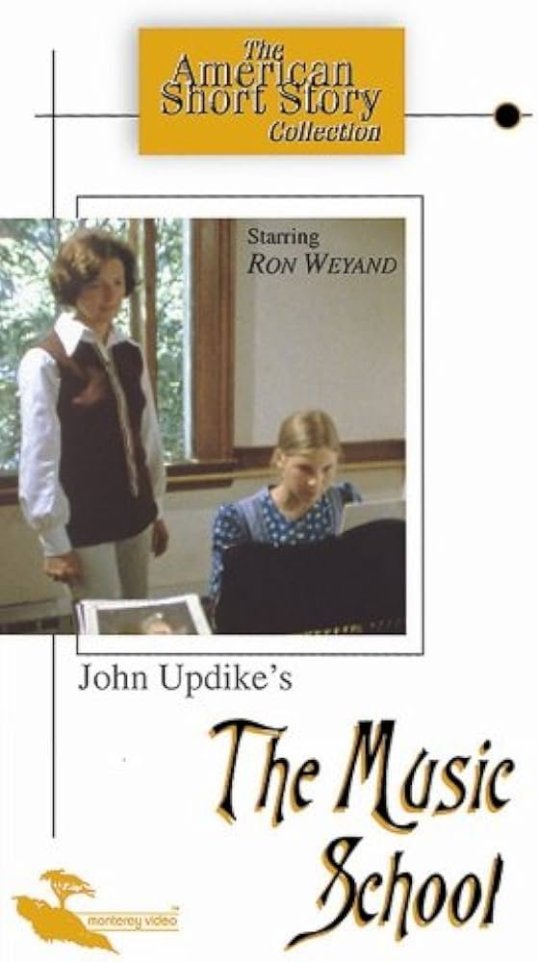
Retro Television Review: The American Short Story 1.1 “The Music School”


Welcome to Retro Television Reviews, a feature where we review some of our favorite and least favorite shows of the past!  On Saturdays, I will be reviewing The American Short Story, which ran semi-regularly on PBS in 1974 to 1981.  The entire show can be purchased on Prime and found on YouTube and Tubi.

Today, we start a new series of reviews with an adaptation of a John Updike short story!

Episode 1.1 “The Music School”

(Dir by John Korty, originally aired on January 1st, 1974)

The first episode of The American Short Story is based on a story by John Updike.  Alfred Schweigen (Ron Weyand) is a writer who sits at his typewriter and who occasionally looks out the window of his office.  His wife playfully sprays the window with a garden hose and the writer thinks about how she’s in therapy because of his affairs.  He remembers taking his daughter to her music school and thinks about the sounds of music floating through the building like ghostly memories.  He thinks about a priest who, while talking to a bunch of “Protestants and non-believers,” explained that it was now permissible to chew the Eucharist wafer instead of waiting for it to dissolve.  He thinks about a friend of his, a computer programmer, who was apparently assassinated by a random sniper while his family watched.  In his mind, Alfred takes the random thoughts and occurrences and builds a story around them.

It’s an interesting episode, even if it doesn’t quite work.  Tasked with bringing Updike’s words to visual life, this episode far too often falls back onto cliche and Ron Weyand often looks more annoyed that sincerely perplexed by life’s mysteries.  (The writer’s narration is provided by Henry Fonda, whose middle-American voice doesn’t quite match Weyand’s petulant performance.)  It’s a midlife crisis type of story, one in which the writer tries to deal with his own ennui and infidelities by turning them into fiction.  Unfortunately, this is a case of what was compelling on the page falling flat when it’s adapted for film.  I appreciated this episode’s ambition, even if it didn’t work in the end.

Next week, the American Short Story interprets a story by Ambrose Bierce!

Late Night Retro Television Review: Friday the 13th: The Series 3.13 “Midnight Riders”


Welcome to Late Night Retro Television Reviews, a feature where we review some of our favorite and least favorite shows of the past! On Fridays, I will be reviewing Friday the 13th: The Series, a show which ran in syndication from 1987 to 1990. The entire series can be found on YouTube!

This week, the show attempts a change of pace!

Episode 3.13 “Midnight Riders”

(Dir by Allan Eastman, originally aired on January 29th, 1990)

An odd episode, this one.

Jack, Micki, and Johnny head out to a small town so that Jack can look up into the night sky and see a once-in-a-lifetime convergence of the stars.  However, possibly as a result of the convergence (it’s never really made clear), a bunch of dead motorcycle riders are resurrected and they rumble into town, seeking vengeance on everyone who took part in the death of their leader.  If the bikers can kill every one of them, their leader will be resurrected.  Finally, the ghost of Jack’s father (Dennis Thatcher) shows up and works with Jack to stop the bikers.  It turns out that Jack and his father had a difficult relationship.  Ryan had a difficult relationship with his father.  Johnny was falsely accused of murdering his father.  We’ve never met Micki’s father but he’s probably a jerk too.

The weird thing about this episode is that it didn’t feature a cursed antique.  Instead, Jack and the crew went to a small town and supernatural stuff started happening shortly after they arrived.  That’s okay, I guess.  In theory, there’s nothing wrong with trying something new.  But, at the same time, the cursed antiques were what set this show apart from all of the other supernaturally-themed television series out there.  Personally, even when the antique’s curse makes no sense, I still enjoy seeing what the show comes up with.

This episode had a lot of atmosphere and a typically good performance from Chris Wiggins.  The ghost bikers were never quite as intimidating as they should have been, despite all of the murders.  If anything, they reminded me a bit too much of Sometime They Come Back.  This episode was a change of pace and, as if often the case with things like this, it didn’t quite work.  Here’s hoping next week will have a cursed antique!

Retro Television Review: St. Elsewhere 1.22 “Addiction”


Welcome to Retro Television Reviews, a feature where we review some of our favorite and least favorite shows of the past! On Fridays, I will be reviewing St. Elsewhere, a medical show which ran on NBC from 1982 to 1988.  The show can be found on Hulu and, for purchase, on Prime!

This week, the first season comes to a close.

Episode 1.22 “Addiction”

(Dir by Mark Tinker, originally aired on May 3rd, 1983)

“To life,” Dr. Auschlander toasts towards the end of the finale of St. Elsewhere’s first season and the sentiment could not be more called for.

While Auschlander has spent the episode hanging out with a friend of his and getting into fights with disrespectful street punks, Dr. Morrison’s wife has been giving birth to their son.  While someone breaks into the supply room and takes off with a huge supply of drugs, Dr. White is sobbing and telling his estranged wife that he knows he has to get help for his addictions.  While one drug addict (Ralph Seymour) commits suicide by injecting an air bubble into his veins, Dr. Craig’s cocky son, Stephen (Scott Paulin), visits from medical school and turns out to be quite a weed-smoking, pill-popping drug user himself.  Ehrlich, assigned to show Stephen around the hospital and teach him what it’s like being a resident, considers telling Dr. Craig that his son has a drug problem but apparently decides not to.  Dr. Craig is very proud that his son is going to follow the family tradition of becoming a surgeon.  Meanwhile, Dr. Fiscus cheats on Shirley Daniels with Kathy Martin.  Fiscus, you idiot.

Life goes on at St. Eligius.  That’s was the theme of the finale and it’s also been the theme of the first season.  For all the bad things that happen, there are also good things.  Some patients die.  Some doctors are incompetent.  But babies are born and doctors like Morrison and Ehrlich and Chandler haven’t given up and are still trying to make the world a better place.  Dr. Auschlander may be terminally ill with cancer but he embraces life and we should all do the same.

It’s a good ending for an overall good first season.  There were a few weak episodes.  Dr. Samuels was a pretty annoying character and I’m a bit relieved to see that David Birney left the show after this season.  Ed Flanders can be a bit overly somber as Dr. Westphall and Howie Mandel is still one of the least convincing doctors that I’ve ever seen.  That said, Morrison, Ehrlich, Chandler, Nurse Daniels, and even Dr. White are interesting characters and I look forward to seeing what happens with them during season 2.  The season’s stand-out was definitely William Daniels as the pompous yet still likable Dr. Craig.  Other than the terrible storyline where he cheated on his wife (and I still claim that was a dream episode, like almost all of the stuff with Dr. Samuels), Dr. Craig was this season’s standout character.

Next week, we start season 2!

Late Night Retro Television Review: Highway to Heaven 3.23 “Heavy Date”


Welcome to Late Night Retro Television Reviews, a feature where we review some of our favorite and least favorite shows of the past!  On Thursdays, I will be reviewing Highway to Heaven, which aired on NBC from 1984 to 1989.  The entire show is currently streaming on Tubi and several other services!

This week, Jonathan and Mark are back in Los Angeles.

Episode 3.23 “Heavy Date”

(Dir by Michael Landon, originally aired on March 18th, 1987)

Jonathan and Mark’s latest assignment finds them in Los Angeles, where they share an apartment in a building that is managed by Marge Davis (Peggy Pope).  Marge, a widow, is upset that her son, Gary (Patrick O’Bryan), doesn’t seem to have any direction in life.  When Gary loses his job, Marge kneels down and puts her head in the oven.  Uhmm …. okay.  Suicide humor, that’s great, I guess.

Alice Hartman (Lorie Griffin) shows up in Los Angeles and takes an apartment in the building.  Alice is seven months pregnant.  Her mother has created a cover story, that Alice has gone to Europe for the summer.  Instead, Alice has gone to Los Angeles so she can have the baby and give it up for adoption without her father finding out.  Jonathan works his magic and manipulates Gary and Alice into falling in love.  When Alice has her baby, Gary asks her to marry him and says that he wants to help her raise the baby.  So, I guess the nice couple who wanted to adopt the baby are just out of luck.

This episode was a bit odd.  When Alice first comes to Los Angeles, she says she’s seven months pregnant.  The episode takes place over  a longer period of time than usual and Alice eventually has the baby.  At no point does Alice ever appear to be pregnant.  She wears baggy clothes but still, there’s only so much that an extra-large sweater can conceal when you’re that pregnant.  There was also a weird scene where Gary, pretending to be the baby’s biological father, lied to the adoptive parents and claimed that he was on probation and that his mother was in a mental institution.  The show played it for laughs but again, the couple seemed so nice and happy about the idea of adopting that Gary’s lies just felt cruel.  And, for a show that was all about an angel on a mission from God, it’s interesting that Gary’s actions went unpunished.  If anything, he was rewarded for them.

(Seriously, the couple that wanted to adopt Alice baby, they were so nice!  That the episode just kind of pushed them aside really didn’t feel right.  I get that Jonathan and Mark’s assignment was to help Alice and Gary but Gary is kind of a jerk and Alice is kind of immature.  Whose going to help the Wallaces, who sincerely wanted to give the baby a good home?)

This episode was obviously heartfelt.  For once, Michael Landon is the sole credited writer so one gets the feeling that this episode’s story and message both meant a lot to him.  (That said, Landon’s approach to the story makes the message come across as being less pro-family and more anti-adoption.)   In the end, the main problem is that neither Gary nor Alice really seem worthy of all of the effort that Jonathan is putting into the assignment.  It’s hard not to feel that maybe Jonathan and Mark needed to help everyone out and not just Alice and Gary.


Retro Television Review: Malibu, CA 2.12 “Jason’s Deal”


Welcome to Retro Television Reviews, a feature where we review some of our favorite and least favorite shows of the past!  On Thursdays, I will be reviewing Malibu CA, which aired in Syndication in 1998 and 1999.  Almost the entire show is currently streaming on YouTube!

Yes, this is from the first season. I don’t care. I refuse to waste my time looking for a second season advertisement.

Jason humiliates himself again.

Episode 2.12 “Jason’s Deal”

(Dir by Gary Shimokawa, originally aired on January 22nd, 1990)

I guess Jason’s supposed to be a rock star now.  His CD has been released and he’s given a $20,000 advance by a guy (Christian Zimmerman) from the record company.  He proceeds to rent out an apartment of his own and spends a ton of money decorating it.  Will success spoil Jason Collins!?

Actually, failure spoils Jason Collins.  His CD only sells 70 copies and he’s dropped by the label.  He has to move back home.  Scott, Murray, and Alex are all angry because of the way he treated them when he thought he was a star.  He even lied so that he throw an industry party rather than hang out with his brother and their dorky friends.  Of course, the party was attended by Jason’s record company boss so maybe some understanding is in order here.  Scott, Murray, and Alex forgive him but only after reading, in the paper, that Jason has been dropped by the record company.  Would an obscure, generic singer getting dropped by a record company really be front page news?

(Speaking of which, maybe Jason’s CD would have sold if he and the record company had actually done something to …. oh, I don’t know, PROMOTE IT!?  Jason doesn’t go on the radio.  He doesn’t go on tour.  He doesn’t go on TRL.  Seriously, Jason, what did you think was going to happen?)

Meanwhile, Lisa (the character, not me) acts like a total bitch because her friends is dating Traycee.  Believe me, I don’t like tossing that word around (especially as an insult) but there’s really no other way to describe Lisa’s behavior.  Lisa’s friend, Curtis (James Castle Stevens), really likes Traycee and Lisa’s reaction is to act like a stuck-up snob.  Curtis is an environmentalist and Traycee is keeping him from saving the rain forest!  Or maybe Curtis is just realizing that there’s nothing one person can do to save the rain forest and, since he’s kind of a wimpy nerdy guy, he should enjoy life while he’s still young.  Either way, it’s really none of Lisa’s business.

Oh, this storyline annoyed me!  It’s a little bit difficult to fairly judge anyone’s performance on Malibu CA.  That said, Brandon Brooks, Priscilla Inga Taylor, and Edward Blatchford all manage to give decent performance despite the bad dialogue and dumb plotting.  Trevor Merszei (who played Scott) is giving a considerably better performance during the second season than he did during the first.  Meanwhile, Marquita Terry (who plays Lisa) is consistently terrible in a way that’s noticeable even by the standards of a Peter Engel-produced sitcom.

Eventually, Tracyee encourages her friend to go to the rain forest and Jason moves back home.  So, Jason will not be a rock star and Scott will not be going to the Olympics.  Instead, they’re destined to forever be busboys in their father’s restaurant.  It couldn’t happen to a group of more deserving people.