Back to School #71: An Education (dir by Lone Scherifg)


MV5BMTg4NjgzOTc0MF5BMl5BanBnXkFtZTcwOTc2OTE3Mg@@__V1_SX214_AL_

When I first started this series of Back To School reviews, my plans was to somehow write and post 80 reviews over the course of just one week.  What was I thinking?  That one week has now become one month.  However, even if it has taken me longer than I originally planned, I’ve enjoyed writing these reviews and I hope that you’ve enjoyed reading them.

We’ve been looking at these films in chronological order.  We started with 1946’s I Accuse My Parents and now, 70 reviews later, we have reached the wonderful year of 2009.  It seems somewhat appropriate, to me, that as we finally start to reach the end of this series (after this review, only 9 more to go!), we should take a look at one of my favorite films of all time, a film that was nominated for best picture and which introduced the world to one of the best actresses working today.

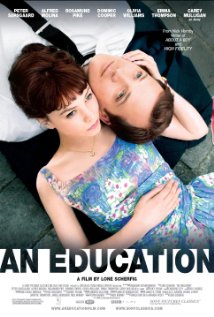
That film, of course, is An Education.

Set in 1961, An Education tells the story of Jenny (Carey Mulligan), an intelligent and headstrong 16 year-old girl.  Jenny lives in London with her father (Alfred Molina) and mother (Cara Seymour), both of whom have decided that Jenny will eventually attend Oxford University.  She attends public school, where she’s a star pupil and a favorite of her teacher, Miss Stubbs (Olivia Williams) and the stern headmistress (Emma Thompson).  Jenny is someone who, even at the age of 16, seems to have her entire life mapped out for her.

And then she meets David Goldman (Peter Sarsgaard).  David is a handsome and charming older man who, spying Jenny walking in the rain, offers to give her a ride home.  Soon, Jenny and David are secretly pursuing a romantic relationship.  At first glance, David seems to be the perfect dream boyfriend.  He’s sophisticated.  He’s witty.  He knows about art and music and seems to be the exact opposite of Jenny’s boring, conservative father.  And David also has two beautiful friends, Danny (a devastatingly charming Dominic Cooper) and Danny’s glamorous girlfriend, Helen (Rosamund Pike).

Jenny is drawn into David’s exciting circle of friends and, at first, it’s all so intoxicating that the little things don’t matter.  Jenny doesn’t ask, for instance, how David and Danny make their money.  When she finds out that David specifically moves black families into white neighborhoods in order to get people to move so that he can then buy and rent out their former homes, Jenny knows that it’s shady but she pretends not to be worried.  And when David and Danny steal a valuable antique map out of a country home, it’s far too exciting for Jenny to worry about the legality of it all…

26484527_

An Education is such a great film, I don’t even know where to begin in singing its praises.  The cast is absolutely brilliant, with Carey Mulligan proving herself to be a star and Peter Sarsgaard being so charismatic that, much like Jenny, you can’t help but get swept up in his world.  This was the first film that I ever noticed Dominic Cooper in and I walked out of the theater with a crush that I continue to have to this day.  The script, by novelist Nick Hornby, is full of witty lines and, even more importantly, it manages to find something very universal within Jenny’s very personal story.  We’ve all had a David Goldman in our life at some point.

However, what I think I really love about An Education is the way that it portrays the excitement of being just a little bit naughty.  One need only compare the vivid scenes in which David and Jenny dance at a club with the drab scenes of Jenny sitting in class to understand why Jenny (and so many other girls) would fall for a guy like David.

Perhaps my favorite image in the entire film is one in which, after having a fight out in the middle of the street, David and Jenny turn around to see Danny and Helen standing out on a beautiful balcony and waving down to them.  The two couples are just so beautiful and so glamorous that it really does become one of those moments where you really do wish you could just step into the movie and spend a few hours just hanging out with them.

An Education is one of the best!

6383165_orig

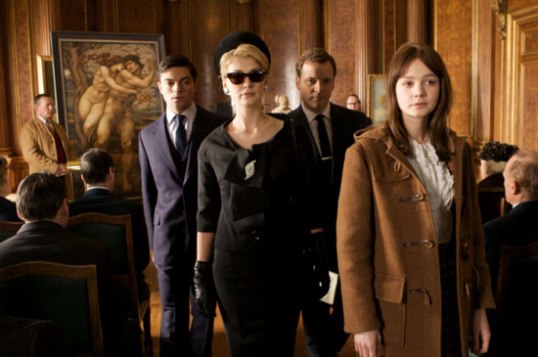
The Beautiful People (from L-R): Dominic Cooper, Rosamund Pike, Peter Sarsgaard, and Carey Mulligan.

Trash Film Guru Vs. The Summer Blockbusters : “Godzilla”


godzilla2014_poster2

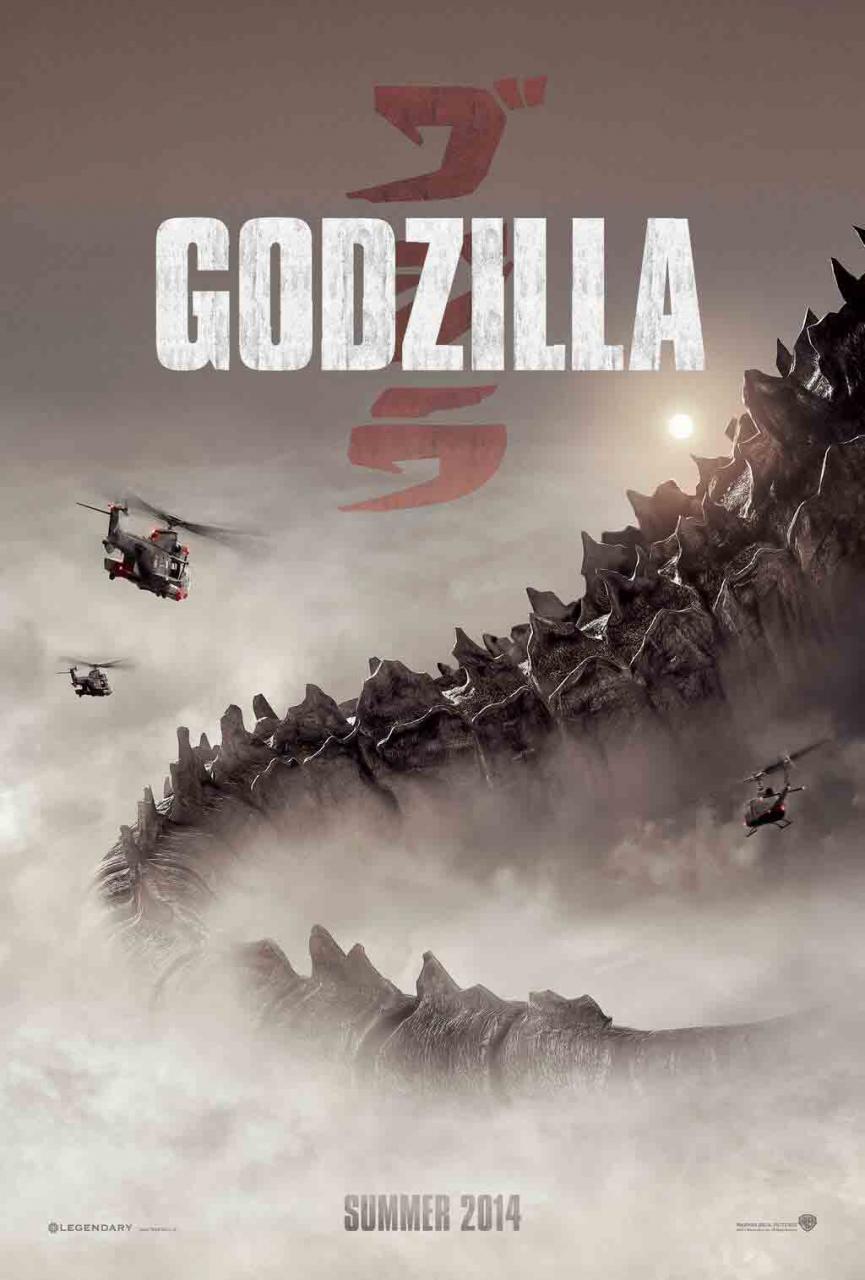
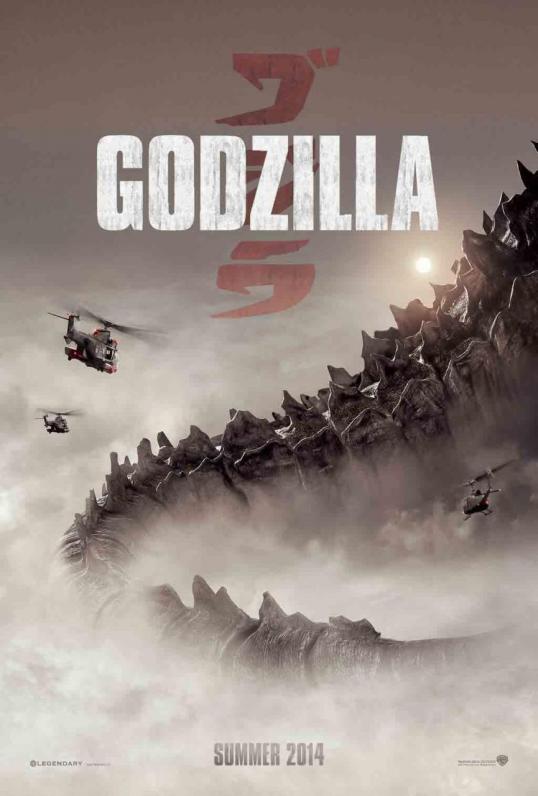
Here’s the thing when it comes to any and all Westernized takes on Japan’s most famous movie monster — Hollywood’s just never going to “get it” because, frankly, it can’t. Oh, sure, Gareth Edwards’ 2014 Godzilla is head and shoulders above Roland Emmerich’s 1998 abomination of a film, but the simple fact is that the Big Green Guy and all of his scaly, serpentine brethren that came to us courtesy of the venerable Toho studios were, at their core, celluloid manifestations of a deep-seated atomic angst that only a country that had been on the receiving end of, as Sting put it, “Oppenheimer’s deadly toy” could ever really give birth to. And while Ken Watanabe’s Dr. Ichiro Serizawa character does, in fact, explicitly mention Hiroshima and Nagasaki in this flick, it’s pure window dressing — Edwards and screenwriters Max Borenstein and Dave Callaham didn’t actually live through a time when they had to actively wonder what sort of nuclear fission-induced mutations were lurking beneath the waves just a few miles offshore, so they just can’t communicate that sort of unease with the same authenticity that the original Godzilla did.

And to those who would argue that a young Japanese filmmaker wouldn’t be able to imbue a project such as this with any more immediacy than Edwards does because they wouldn’t have lived though those horrific final days of WWII either, I’ve got one word for you : Fukushima.

Godzilla-2014-Roar

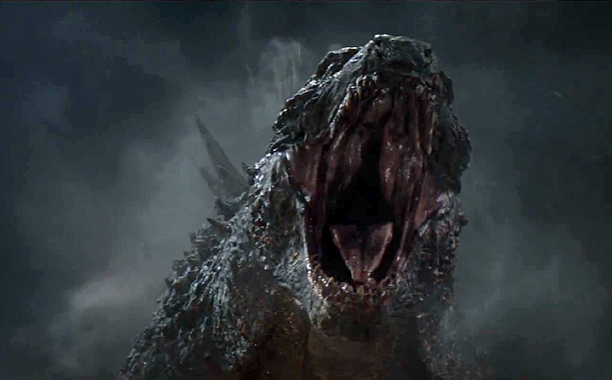
There’s also something about CGI in these flicks that always has, and always will, suck, no matter how “good” it is : you know, in the back of your mind, that it’s just not there. To be sure, Edwards and his visual effects crew do a bang-up job of realizing their monster once they do, finally, reveal him, but no matter how “unrealistic” watching the original Godzilla smash cardboard miniatures of buildings may be by today’s standards, it still feels more “real” than the essentially flawless computer graphics of 2014 can ever hope to. But maybe that’s just me —-

godzilla-trailer-02

Still, don’t get the wrong idea : I’m not so much “down on” the new Godzilla as I am completely indifferent to it. To be sure, Edwards’ heart seem to be in the right place here, and he’s very likely doing the best job that he can do — it’s just that his best is nowhere near good enough. A slow-burn plot doesn’t help matters much, either, and while I’m all for a prolonged buildup that leads to a big payoff, frankly the “character arcs” of all the principal players are so dull and uninvolving that when Compu-Zilla finally does make the scene, it feels more like a relief from soap opera-style tedium than anything else. Thankfully, there’s some effectively-realized mass destruction to bump up the “wow” factor a bit, and Godzilla doesn’t turn out to a solo act (that’s all I’ll say about that), but it’s still definitely a case of “too little, too late” as far as excitement here goes and a smorgasbord of good performances (Bryan Cranston, Juliette Binoche, David Strathairn, Sally Hawkins, and the aforementioned Ken Watanabe) and bad (Aaron Taylor-Johnson, Elizabeth Olsen) find themselves having equally gone, more or less, to waste when the proverbial train finally leaves the station.

Plot recaps probably make as much sense here as they do for a Hulk comic book — sure, the set-up matters on some level, but it’s all about “Hulk smash!” at the end of the day, isn’t it? Suffice to say that the main reason the various intermingling sub-plots here really don’t work is because the film goes from small-scale to so-big-it’s-off-the-scale at the drop of hat, with no transition period in between for either the characters or the audience. It’s all just a bit jarring — but maybe that’s not such a bad thing when I think about it because, truth be told, I was getting a little sleepy.

The “who are the real monsters?” theme that Edwards toys with is frankly a little bit old, too, and honestly represents something of a cop-out ( and here’s where my “Westerners will never get this right” thesis comes into play, by the way) :  sure, humans are bad news, we’re destroying everything, etc. I know that. But some of us are worse than others, and any side willing to drop a nuclear bomb and murder hundreds of thousands of innocent people in order to “win” a war is due for some special criticism, in my view . The makers of the original Godzilla understood that fact, even if they couldn’t say so explicitly, while in the franchise’s 2014 iteration we just all suck. No one, specifically, is to blame, and hey, it’s too late for recriminations anyway when you’ve got an overgrown reptile tearing up the town. Or something like that.

godzilla-attacks-golden-gate

Still, the film’s third act is enough to make even a hardened cynic like me gasp in awe on numerous occasions, and the “childlike wonder factor,” for lack of a batter term, really does kick into high gear here as events steamroll toward their conclusion. It’s worth the price of admission for the awesome (even if it is computer-generated) spectacle the final 45-or-so-minutes deliver. Sure, I wish we’d gotten nothing but a bad ride on a  bumpy road from start to finish, but I guess I’m still willing to take what I can get. Felling like you’re 12 years old all over again for even a little while is better than never feeling like it at all.

And yet — in addition to being this film’s greatest (perhaps even only) saving grace, perhaps that last act is also its greatest weakness, because it exposes the essential, unavoidable truth at the heart of Edwards’ Godzilla : it’s good enough to make you remember why you love monster movies in the first place, but nowhere near good enough to actually be one of those monster movies  that you love.

Godzilla – Attack at Pacific Promo Scene


Godzilla2014

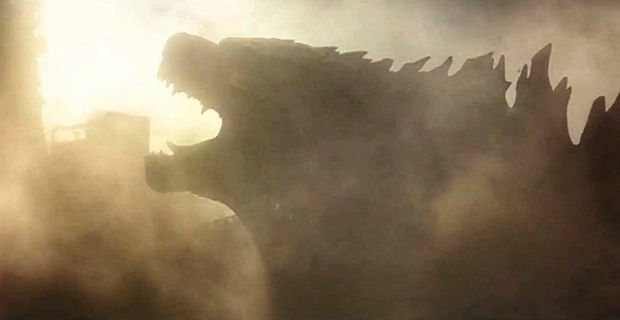
It is just a week to go before the premiere of Gareth Edwards’ Godzilla and the marketing has begun to go into overdrive.

In addition to trailers and the latest tv spots, Warner Bros. has begun to release clips and behind-the-scenes to help announce the latest arrival of the King of Monsters.

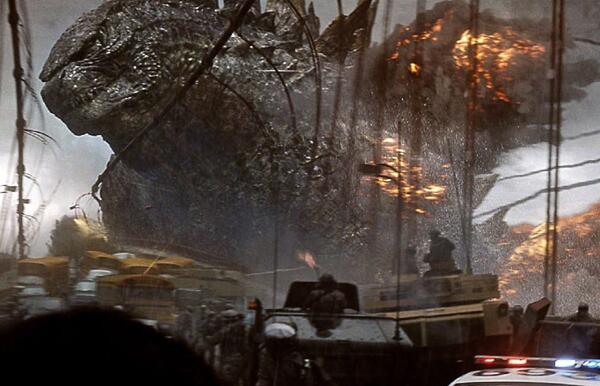
We have here a brief clip that shows the Big Guy taking on the U.S. Navy as it tries to defend Golden Gate Bridge and the Bay it straddles. This marks two straight years that the Golden Gate Bridge has been threatened and/or destroyed by these damn kaiju.

Trailer: Godzilla (Asia Edition)


Godzilla2014

Gareth Edwards’ upcoming Godzilla film has been gaining some major hype and buzz since last year’s Comic-Con and with each new teaser and trailer that the studio releases. Yet, outside of more and more looks at the King of Monsters himself we really haven’t seen anything to tell us that there will be other kaiju in this film.

Well, this latest trailer released for the Asian market finally answers the question of whether Godzilla will be wreaking destruction on human cities by himself or doing so while fighting other kaiju. From this latest trailer we see several glimpses of other giant monsters with a flying one being the most obvious. Some think this could be a new iteration of Godzilla rival and sometimes ally Rodan, but I’m hoping that it’s something new and that Rodan and other famous kaiju from past Godzilla films get introduced in later films (if there’s to be any).

Godzilla is set for a May 16, 2014 release date.

Trailer: Godzilla (Extended)


Godzilla2014

We are just a little over a month away from the release of the Gareth Edwards reboot of the classic kaiju film Godzilla.

As studios are now seeming to get into the habit to help build up the hype for their big tentpole summer releases we have a new extended trailer from Warner Bros. to remind everyone that the Big Guy is seriously in need of a Snickers bar.

While it’s still speculation and this extended trailer doesn’t really show any clues or evidence I still believe that this latest iteration of Godzilla will have him fighting another monster and/or monsters.

Godzilla is set for a May 16, 2014 release date.

Trailer: Godzilla (Official Main)


Godzilla2014

Last summer, we saw the return of the giant monster genre on Western screens with Guillermo Del Toro’s Pacific Rim. This summer we see the return of the King of the Monsters back on the big screen where he belongs.

Gareth Edwards’ Godzilla looks to bring back the King to lay massive destruction on humanity. The trailers haven’t shown whether Godzilla will be the villain of the film or back to fight other monsters. Either as protector or destroyer he will cause much collateral damage on the cities of mankind.

This latest trailer seems to intimate that Edwards’ film will actually be a sequel to the original 1954 film of the same name.

Godzilla will have a May 16. 2014 release date.

Trailer: Godzilla (Teaser)


Godzilla

This past summer saw the return of kaiju to the film vernacular with the release of Guillermo Del Toro’s Pacific Rim. The very same studios which released this film, Warner Bros. Pictures and Legendary Pictures return next summer with a similar film, but this time with the return of the granddaddy of all kaiju: Godzilla.

Godzilla is a reboot of the kaiju franchise with Gareth Edwards trying to make up for the travesty that was Roland Emmerich’s Godzilla of over a decade ago. This time around it looks like (at least from the teaser) that Edwards is going the serious route with this reboot. It helps that he has quite the cast to play around with. This Godzilla will star Bryan Cranston, Elizabeth Olsen, Aaron Taylor-Johnson and Ken Watanabe.

We also get a brief glimpse of Godzilla itself right near the end followed by the iconic monster scream that’s as recognizable as the tweets and twoots of R2-D2.

Godzilla will return to the big-screen on May 16, 2014.

It’s The 2014 Independent Spirit Nominations!


46-frances-ha

The nominees for the 2014 Independent Spirit Awards were announced earlier today.  While the Spirit noms aren’t exactly the most accurate of Oscar precursors (and the rules of Indie Spirit Awards are pretty much specifically designed to honor the type of low-budget films that are often ignored by the Academy), more than a few of the Spirit nominees are usually remembered when the Oscar nominations are announced.

The winners will be announced, by Patton Oswalt, on March 1st.

Myself, I’m just happy to see Frances Ha and Upstream Color’s Shane Carruth nominated.

Best Feature:
“12 Years a Slave”
“All Is Lost”
“Frances Ha”
“Inside Llewyn Davis”
“Nebraska”

Best Director:
Shane Carruth, “Upstream Color”
J.C. Chandor, “All is Lost”
Steve McQueen, “12 Years a Slave”
Jeff Nichols, “Mud”
Alexander Payne, “Nebraska”

Best Screenplay:
Woody Allen, “Blue Jasmine”
Julie Delpy, Ethan Hawke and Richard Linklater, “Before Midnight”
Nicole Holofcener, “Enough Said”
Scott Neustadter & Michael H. Weber, “The Spectacular Now”
John Ridley, “12 Years a Slave”

Best Female Lead:
Cate Blanchett, “Blue Jasmine”
Julie Delpy, “Before Midnight”
Gaby Hoffman, “Crystal Fairy”
Brie Larson, “Short Term 12″
Shailene Woodley, “The Spectacular Now”

Best Male Lead:
Bruce Dern, “Nebraska”
Chiwetel Ejiofor, “12 Years a Slave”
Oscar Isaac, “Inside Llewyn Davis”
Michael B. Jordan, “Fruitvale Station”
Matthew McConaughey, “Dallas Buyers Club”
Robert Redford, “All Is Lost”

Best Supporting Female:
Melonie Diaz, “Fruitvale Station”
Sally Hawkins, “Blue Jasmine”
Lupita Nyong’o, “12 Years a Slave”
Yolonda Ross, “Go for Sisters”
June Squibb, “Nebraska”

Best Supporting Male:
Michael Fassbender, “12 Years a Slave”
Will Forte, “Nebraska”
James Gandolfini, “Enough Said”
Jared Leto, “Dallas Buyers Club”
Keith Stanfield, “Short Term 12”

Best First Feature:
“Blue Caprice”
“Concussion”
“Fruitvale Station”
“Una Noche”
“Wadjda”

Best First Screenplay:
“In a World,” Lake Bell
“Don Jon,” Joseph Gordon-Levitt
“Nebraska,” Bob Nelson
“Afternoon Delight,” Jill Soloway
“The Inevitable Defeat of Mister and Pete,” Michael Starrbury

John Cassavetes Award:
“Computer Chess”
“Crystal Fairy”
“Museum Hours”
“Pit Stop”
“This Is Martin Bonner”

Best Cinematography:
Sean Bobbit, “12 Years a Slave”
Benoit Debie, “Spring Breakers”
Bruno Delbonnel, “Inside Llewyn Davis”
Frank G. DeMarco, “All Is Lost”
Matthias Grunsky, “Computer Chess”

Best Editing:
Shane Carruth & David Lowery, “Upstream Color”
Jem Cohen & Marc Vives, “Museum Hours”
Jennifer Lame, “Frances Ha”
Cindy Lee, “Una Noche”
Nat Sanders, “Short Term 12”

Best Documentary:
“20 Feet From Stardom”
“After Tiller”
“Gideon’s Army”
“The Act of Killing”
“The Square”

Best International Film:
“A Touch of Sin”
“Blue Is the Warmest Color”
“Gloria”
“The Great Beauty”
“The Hunt”

Robert Altman Award (given to a film’s director, casting director and ensemble cast)
“Mud”

Piaget Producers Award:
Toby Halbrooks & James M. Johnston
Jacob Jaffke
Andrea Roa
Frederick Thornton

Someone to Watch Award:
“My Sister’s Quinceanera,” Aaron Douglas Johnston
“Newlyweeds,” Shake King
“The Foxy Merkins,” Madeline Olnek

Truer Than Fiction Award:
“A River Changes Course,” Kalvanee Mam
“Let the Fire Burn,” Jason Osder
“Manakamana,” Stephanie Spray & Pacho Velez

Film Review: Made in Dagenham (dir. by Nigel Cole)


Made in Dagenham, an immensely likable and even inspiring film from England, is based on a true story.  It dramatizes the 1968 strike of sewing machinists at the Ford assembly plant in Dagenham, England.  The all-female workforce walked off the job in protest to the fact that they were not being paid an equal rate with their male co-workers.  Going from being treated as a sexist punchline to eventually shutting down production at the Dagenham plant, these women brought the issue of equal pay for equal work to the world’s attention and, ultimately, played a large part in the passage of legislation designed to guarantee equal pay regardless of sex.  And, while it might sound like the material for standard, overly sentimental move-of-the-week, Made in Dagenham is both a warm-hearted tribute and an immensely entertaining film.

Usually, I’m wary of films that claims to “pay tribute to strong women,” largely because they always 1) seem to be rather condescending towards the women they’re claiming to pay tribute and 2) always seem to be intent on providing a very narrow definition of what it means to be “strong.”  Far too often, either stridency or an idealized noble savagery is presented in the place of “strength.”  What makes Made in Dagenham a true tribute to strong women is that it portrays women as individuals and as human beings (as opposed to idealized figures of either reverence or loathing).  What a novel idea!  All of the strikers — from Sally Hawkins as the strike’s leader to Geraldine James as the oldest striker to Jaime Winestone as the youngest — are treated with a definite (and refreshing) respect yet at the same time they’re never so idealized as to become plastic saints.  They’re not presented as being models of perfection.  Instead, they’re just working mothers and wives who are simply standing up for their rights and you would have to be heartless not to end up rooting for them.

On my list of my 25 favorite films of 2010, Made in Dagenham was number #22 and that’s largely because of Sally Hawkins’ performance as the strike leader.  Hawkins is hardly a household name but if you’ve seen her in films like Happy-Go-Lucky, An Education, and Never Let Me Go, then you know that Hawkins is one of those rare performers who is capable of both being ordinary and a star at the same time.  She brings an authentic feel to her working class characters even when she’s acting for a condescending and elitist director like Mike Leigh.  To understand just how important Hawkins is to the success of this movie, just try to imagine the exact same film but starring either Sandra Bullock or Julia Roberts.  One can imagine that either Bullock or Roberts would be given a lot more inspiring speeches (complete with triumphant music in the background) and a few scenes where they would get to say something sassy (and ultimately pointless) to all the one-dimensional male chauvinists standing in their way.  They also probably would have contracts to keep from having to act underneath the hideous (but historically authentic) beehive hairdoes  that Hawkins and the other women in the film have.  Hawkins, however, gives her performance without any of the usual Hollywood safety nets and she is completely and totally winning playing a strong-willed but inherently nice woman who struggles to be a wife, a mother, a worker, and an activist all at the same time.  As I watched her performance, I couldn’t help but be reminded of my mom who raised four daughters on her own and who was the strongest woman I know.  I ultimately felt as if Hawkins performance was a tribute to not only my mom but every other woman throughout history whose strength is, far too often, ignored by those who do the recording.

Made in Dagenham is not a perfect film.  For all the authentic moments in the film, there’s a few that are a bit too obvious and, when they show up, they fit in so awkwardly with everything else on-screen that they temporarily throw the whole film out of whack.  This is the type of film where, as Sally Hawkins gives the most important speech of her life at a labor conference, she looks up just in time to see that her husband (Daniel Mays) has shown up in just the nick of time and is now standing in the back of the room, watching her with an apologetic smile on his face.  It’s a sweet scene and, for all I know, it actually did happen that way but it still temporarily makes the movie feel like a self-consciously inspirational Lifetime movie.

And then there’s the issue of Miranda Richardson, who essentially has an extended cameo role as Barbara Castle.  Though Castle is known not at all in the States (most of the people in the theater with me seemed to think Richardson was supposed to be playing Margaret Thatcher and I might have thought the same if I hadn’t looked the movie up on Wikipedia before seeing it), she was quite prominent in the UK.  A left-wing member of Parliament and a pioneer for women in politics, Castle was Secretary of State for Employment at the time of the strike and, as shown in the film, she eventually intervened in the strike and helped to bring about legislation designed to guarantee women equal pay with their male co-workers.  As such, Castle is as much of a part of this story as the actual strikers and you can’t fault the movie for including several briefs scenes featuring her watching the situation from afar.  What you can fault director Nigel Cole for is allowing Richardson to overact to such an extent that her scenes come across as so heavy-handed that they epitomize every negative cliché of a feminist film.  Richardson plays her role with an attitude that seems to shout, “The real star is here,” and I found myself resenting her because she seemed to be determined to ruin a truly inspiring film.

But the thing is, despite these flaws, Made in Dagenham is an inspiring film.  It’s inspiring because of Hawkins and it’s inspiring because of an ensemble of actresses (including Hawkins’ Education co-star Rosamund Pike who does a great job in a role that could have felt artificial if performed by a lesser actress) who come together perfectly.   I saw Made in Dagenham on January 1st and it was the perfect film to start 2011 off with.