4 Shots From 4 Films is just what it says it is, 4 shots from 4 of our favorite films. As opposed to the reviews and recaps that we usually post, 4 Shots From 4 Films lets the visuals do the talking!
Here are a few the classic films that we released in 1972.
4 Shots From 4 1972 Films
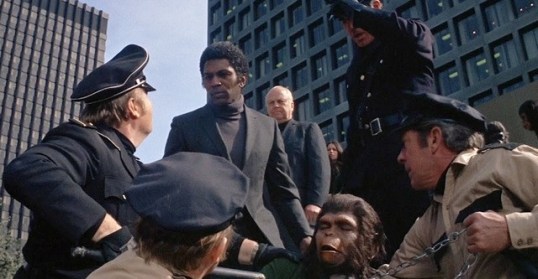
Conquest of the Planet of the Apes (1972, dir by J. Lee Thompson, DP: Bruce Surtees)
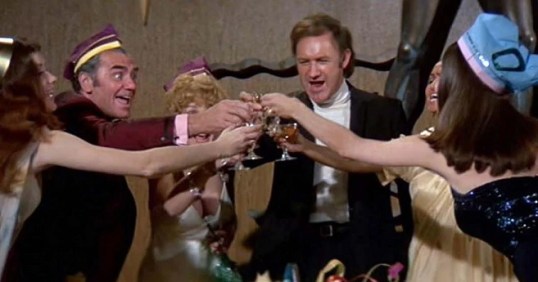
The Poseidon Adventure (1972, dir by Ronald Neame, DP: Harold E. Stine)
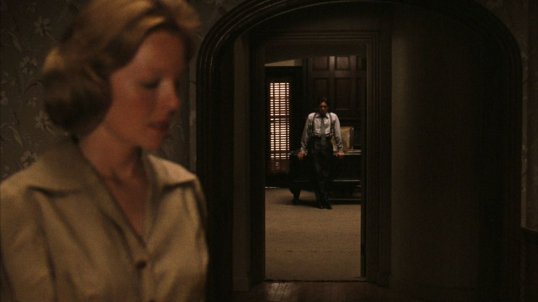
The Godfather (1972, dir by Francis Ford Coppola, DP: Gordon Willis)
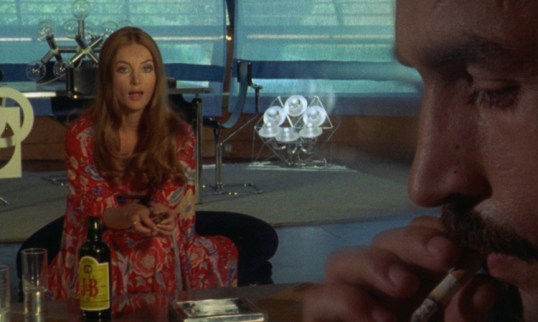
Don’t Torture A Duckling (1972, dir by Lucio Fulci, DP: Sergio D’Offizi)
4 Shots From 4 Films is just what it says it is, 4 shots from 4 of our favorite films. As opposed to the reviews and recaps that we usually post, 4 Shots From 4 Films is all about letting the visuals do the talking.
Today, we pay honor to one of my favorite genres, the disaster film!
It’s time for….
4 Shots From 4 Disaster Films
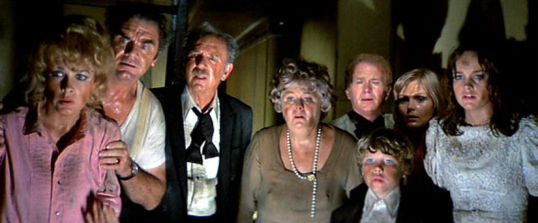
The Poseidon Adventure (1972, dir by Ronald Neame, DP: Harold E. Stine)
The Towering Inferno (1974, dir by John Guillermin and Irwin Allen, DP: Fred J. Koenekamp and Joseph Biroc)
Airport 1975 (1974, dir by Jack Smight, DP: Philip H. Lathrop)
The Swarm (1978, dir by Irwin Allen, DP: Fred J. Koenekamp)
4 Shots From 4 Films is just what it says it is, 4 shots from 4 of our favorite films. As opposed to the reviews and recaps that we usually post, 4 Shots From 4 Films is all about letting the visuals do the talking.
4 Shots From 4 Holiday Films
Santa Claus (1959, dir by Rene Cardona)
Santa Claus Conquers The Martians (1964, dir by Nicholas Webster)
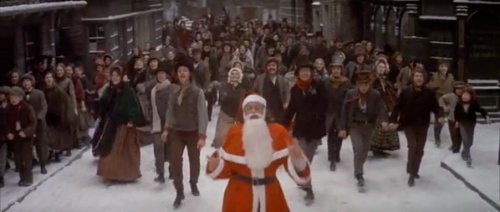
Scrooge (1970, dir by Ronald Neame)
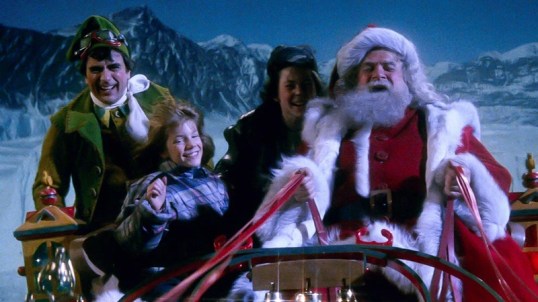
Santa Claus: The Movie (1985, dir by Jeannot Szwarc)
1979’s Meteor is about a big rock that is tumbling through space. Earth is directly in its path and, if it hits the planet, it could be an extinction-level event. Unfortunately, little bits of the rock keep breaking off and crashing into Earth, destroying cities and fleeing extras. Goodbye, Hong Kong. Goodbye, Switzerland, which is destroyed via stock footage lifted from Avalanche. Goodbye, New York, which blows up in such spectacular fashion that the scene was later re-used in The Day After.
It might seem like the planet is doomed. The meteor is unstoppable. Bruce Willis hasn’t become a star yet. But fear not! Some of the brightest faces of the 70s have been recruited to stop the meteor. Natalie Wood, in one of her final films, plays a translator and gets covered in muddy river water. Sean Connery wears a turtleneck and curses in that Scottish way of his. Karl Malden wears a hat and tells people to calm down while he calls the President. Brian Keith plays a Russian with all the grace and skill of a cat trying to rip open a bag of treats. Martin Landau is the military official who doesn’t think that the scientist know what they’re talking about. Henry Fonda is the president. That’s a lot of balding men for one movie and it’s hard not to notice that both Malden and Keith often seem to be wearing a hat whenever they share a scene with Connery. My personal theory is that the production, having spent all of their money on blowing up New York, couldn’t afford more than two toupees so everyone had to take turns wearing them. (The few scenes where Malden is hatless while in Connery’s presence are often oddly filmed, with either Connery on Malden standing with their back to the camera, almost as if the scenes were actually done with a stand-in.)
We’re supposed to breathe a sigh of relief when we see that Henry Fonda is playing the President but I’ve seen FailSafe and I remember him allowing the Russian to nuke New York City. Interestingly enough, New York gets destroyed in this film too. Why didn’t President Fonda care about New York City? Of course, the scientists and the military folks are all located in a control center that’s located under the city. Malden mentions that they’re right next to the Hudson River. It doesn’t seem to occur to anyone that this is a bad idea but, then again, they also elected Henry Fonda president again.
My late friend and colleague Gary Loggins described Meteor as being a “crashing bore.” I have to admit that this is one of the few times that I have ever disagreed with Gary. Meteor is a tremendous amount of fun, as long as you’re watching it with a group of people and nobody takes it seriously. (The first time I saw it was at one in the morning while I was in college. Jeff and I watched it in the lounge of one of the dorms. We may be the only two people to have romantic memories of Meteor.) Meteor features a cast of champion scenery chewers. Karl Malden, Sean Connery, Martin Landau, Brian Keith, none of them were exactly subtle actors and giving them an excuse to argue about how to deal with a meteor allows for a lot of very enjoyable overacting. As well, the special effects are so cheap and obviously fake that it’s hard not to laugh out loud whenever the film cuts to that shot of the meteor rolling through space or the incredibly shiny American and Russian missiles slowly heading towards it.
Meteor’s a lot of fun, even if it is one of those movies where no one points out that our heroes inevitably seem to make every situation worse with their own stupidity. It’s very much at the tail-end of the 70s disaster boom. Watch it for the stars. Watch it for the rock. And watch it for the hairpieces.
4 Shots From 4 Films is just what it says it is, 4 shots from 4 of our favorite films. As opposed to the reviews and recaps that we usually post, 4 Shots From 4 Films lets the visuals do the talking.
Happy New Year’s Day! Did you have as wonderful a celebration as the characters featured in today’s special edition of 4 Shots From 4 Films?
4 Shots From 4 Films
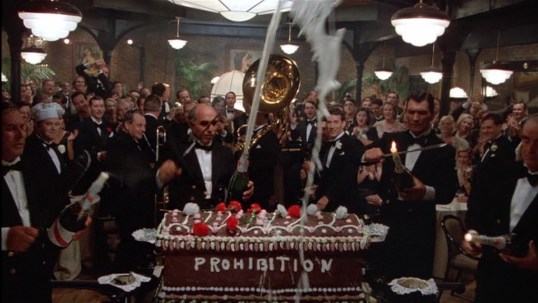
The Poseidon Adventure (1972, dir by Ronald Neame, DP: Harold E. Stine)
The Godfather Part II (1974, dir by Francis Ford Coppola, DP: Gordon Willis)
New Year’s Evil (1980, dir by Emmett Alston, DP: Edward Thomas)
Once Upon A Time In America (1984, dir by Sergio Leone, DP: Tonino Delli Colli)
4 Shots From 4 Films is just what it says it is, 4 shots from 4 of our favorite films. As opposed to the reviews and recaps that we usually post, 4 Shots From 4 Films lets the visuals do the talking.
Happy New Year’s Day! Did you have as wonderful a celebration as the characters featured in today’s special edition of 4 Shots From 4 Films?
4 Shots From 4 Films
The Poseidon Adventure (1972, dir by Ronald Neame, DP: Harold E. Stine)
The Godfather Part II (1974, dir by Francis Ford Coppola, DP: Gordon Willis)
New Year’s Evil (1980, dir by Emmett Alston, DP: Edward Thomas)
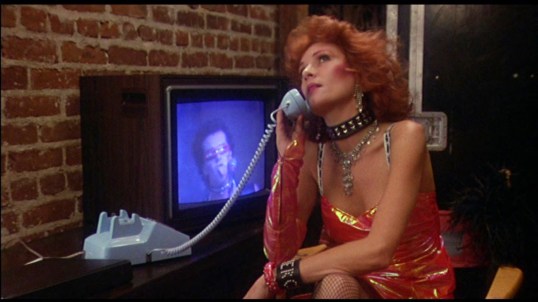
Strange Days (1995, dir by Kathryn Bigelow, DP: Matthew F. Leonetti)
With 2023 coming in like a tidal wave, it only seem fitting that the first scene that I love for this year should come from 1972’s The Poseidon Adventure. Just as how Die Hardhas recently been acclaimed as one of the great Christmas films, The Poseidon Adventures is one of the best of the New Year’s Day films. It’s also perhaps the only film in which Gene Hackman managed to overact more than even Ernest Borgnine. I mean, don’t get me wrong. It’s a strong competition between two great actors, neither of whom was known for being particularly subtle when it came to barking out their lines. But, in the end, Hackman still managed to take the overacting crown for this film.
(That said, what’s New Year’s Day without Borgnine shouting, “Where’s your God now, Preach-ah!?”)
In the scene below, the passengers ring in the new year while Leslie Nielsen faces the tidal wave that will soon turn the boat upside down. Whatever else you may want to say about this particular film, it does a great job of contrasting the celebrations in the ballroom with the dread on the bridge. While everyone else is counting down and celebrating and mugging for the camera, Nielsen can only stare in stoic horror as the wave approaches. He does the only thing that a captain can do. He sounds the alarm. He sends out an S.O.S. Unfortunately, the alarm can barely be hard over the celebrations of the new year and the S.O.S. man is quickly swept away by the crashing of the wave.
The scene goes from celebrating the future to highlighting the type of old-fashioned, nature-fueled destruction that has been wiping out civilizations since the beginning of time. It doesn’t matter how many plans you’ve made. It doesn’t matter how rich you are. It doesn’t matter how safe you feel or how much you cling to the furniture as the world turns upside down. Fate, whether it’s in the form of a wave or some other natural disaster, is pitiless. That’s one reason why disaster movies, as melodramatic as they could often be, so entranced audiences. Everyone knew that it would just as easily happen to them. Just as no one expected the tidal wave on New Year’s, no one would be expecting to leave the theater to be confronted by an earthquake or a tornado. But it could definitely happen. Life, like society, is a fragile thing. If not even Gene Hackman, Stella Stevens, Shelley Winters, and Roddy McDowall could make it to the end of the movie, what hope is there for anyone? Of course, the thing to remember is that they may not have made it but Ernest Borgnine, Red Buttons, Carol Lynley, and a few others did. They survived, though I imagine they spent the rest of their lives dreading January 1st.
Needless to say, neither the passage of time nor the wave can be escaped. As much as we may have things left to do in 2022, it’s too late now. 2023 is here and the world has moved on.
The 1942 British war film, In Which We Serve, opens with footage of the HMS Torrin, a destroyer, being constructed in a British shipyard. When the Torrin is finally finished, the men who worked on it cheer as it leaves on its maiden voyage. The film then abruptly jumps forward to the year 1941. The Torrin is sinking, the victim of German bombers. The surviving members of her crew float in the ocean, holding onto debris and watching as their home for the past few years capsizes and slowly goes underneath the surface of the water. Even as the Torrin sinks, German planes continue to fly overhead, firing on the stranded men and killing several of them.
As the men fight to survive both the ocean and the Germans, they remember their time on the Torrin. Captain Kinross (Noel Coward, who also wrote the script and co-directed the film) thinks back to 1939, when he was first given command of the Torrin. He remembers the early days of the war and the time that he spent with his wife (Celia Johnson) before leaving to do his duty. As the captain of the ship, Kinross was a tough but compassionate leader. He expected a lot out of the men but he also came to view them as his second family. Meanwhile, Shorty Blake (John Mills) thinks about his wife and his newborn son back in London. Everyone on the Torrin has left their families behind. Some of them even lose their loved ones during the war, victims of the relentless German Blitz. But, even as they float in the ocean, everyone continues to fight on, knowing that there will be bigger ships to replace the Torrin and that Britain will never surrender.
In 1942, British film producer Anthony Havelock-Allan approached Noel Coward and asked him if he would be interested in writing the screenplay for a morale-boosting propaganda film. Coward agreed, on the condition that he be given complete control of the project and that the film deal with the Royal Navy. Though one might not immediately think that the author of drawing room comedies like Easy Virtue and Private Lives would be the obvious choice to write a war film, Coward’s family actually had a long tradition of serving in the Navy and Coward based a good deal of the film’s action on the wartime exploits of his friend, Lord Mountbatten. Though there was initially some concern about Coward’s insistence that he should play the lead role on top of everything else, the Ministry of Information fully supported the production of In Which We Serve.
However, Corward knew that he would need help directing the film. He asked his friend, John Mills, for advice and Mills suggested that Coward should bring in, as co-director, “the best editor in Britain,” David Lean. Though Lean was initially only meant to handle the action scenes, Coward quickly discovered that he didn’t particularly enjoy all of the detail that went into directing a film. As a result, David Lean ended up directing the majority of the film. This would be Lean’s first film as a director and he would, of course, go one to become one the top British directors of all time.
(Also of note, frequent Lean collaborator Ronald Neame served as the film’s cinematographer. Neame later went on to have his own career as a director. In 1972, Neame directed another film about a capsized ship, The Poseidon Adventure.)
As for the film itself, In Which We Serve is an unapologetic propaganda film, carefully crafted to inspire the British people to support the war effort and also to win over the sympathy of American viewers. (During the film’s production, America had finally entered the war but there were still skeptics, at home and abroad.) Along with being a war film, In Which We Serve is also a rather touching and heartfelt tribute to the strength and determination of the British people. Though it’s a rather grim film at times and it doesn’t shy away from the fact that lives are going to be lost in the battle to defeat Hitler, it’s also a rather inspiring film. The sacrifice will be great, In Which We Serve tells us, but it will also be worth it. The entire ensemble — including future director Richard Attenborough, making his film debut as a frightened sailor — does an excellent job of creating memorable characters, some of whom only appear for a few fleeting moments before meeting their fate.
In Which We Serve was a box office hit in both the UK and the US. It was Oscar-nominated for Best Picture of the year, though it ultimately lost to another film about World War II, Casablanca.
4 Shots From 4 Films is just what it says it is, 4 shots from 4 of our favorite films. As opposed to the reviews and recaps that we usually post, 4 Shots From 4 Films lets the visuals do the talking.
Yesterday, we lost another great actor when Albert Finney passed away at the age of 82.
It seems strangely appropriate that Finney’s final film was the James Bond extravaganza, Skyfall. While Finney himself never played the world’s greatest secret agent, he was still definitely a part of the same British invasion that made 007 a worldwide phenomena.
Albert Finney got his start appearing on the British stage and it was the stage that remained his self-confessed first love. He started his film career by playing angry young men in gritty films like The Entertainer and Saturday Night, Sunday Morning. However,it was his starring role as a debauched 18th century adventurer in Tom Jones that made him a star. (Before being cast as Tom Jones, Finney came close to securing the lead role in Lawrence of Arabia. That role, of course, was played by another young British stage actor, Peter O’Toole.)
Because his focus was mostly on the stage, Finney did not appear in as many films as some of his contemporaries. When Finney did appear in the movies, it was often as a character actor as opposed to a traditional leading man. He played larger-than-life characters but he did so in such a way that, regardless of how flamboyant they may have been, they still felt real. He could play Scrooge and Hercule Poirot just as easily as he could play Tom Jones or a small town lawyer in Erin Brockovich. Even in his old age, Finney’s acting instincts remained strong. Just watch him in Big Fish or Before The Devil Knows Your Dead. Just watch him in Skyfall, giving off a gruff “Welcome to Scotland” after gunning down the assassins that have come for Bond and M.
So, in honor of Albert Finney, it’s time for….
4 Shots From 4 Albert Finney Films
Saturday Night and Sunday Morning (1960,dir by Karel Reisz)
Scrooge (1970, dir by Ronald Neame)
Miller’s Crossing (1990, dir by the Coen Brothers)
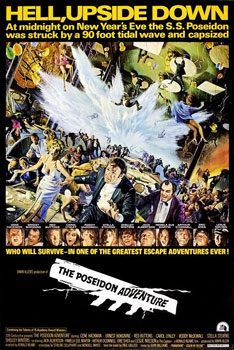
Although 1970’s AIRPORT is generally credited as the first “disaster movie”, it was 1972’s THE POSEIDON ADVENTURE that made the biggest splash for the genre. Producer Irwin Allen loaded up his cast with five- count ’em!- Academy Award winners, including the previous year’s winner Gene Hackman (THE FRENCH CONNECTION ). The special effects laden extravaganza wound up nominated for 9 Oscars, winning 2, and was the second highest grossing film of the year, behind only THE GODFATHER!
And unlike many of the “disasters” that followed in its wake, THE POSEIDON ADVENTURE holds up surprisingly well. The story serves as an instruction manual for all disaster movies to come. First, introduce your premise: The S.S. Poseidon is sailing on its final voyage, and Captain Leslie Nielsen is ordered by the new ownership to go full steam ahead, despite the ship no longer being in ship-shape. (You won’t be able to take…







 Through the Shattered Lens