Review: 48 Hrs. (dir. by Walter Hill)


“This ain’t no god damn way to start a partnership.” – Reggie Hammond

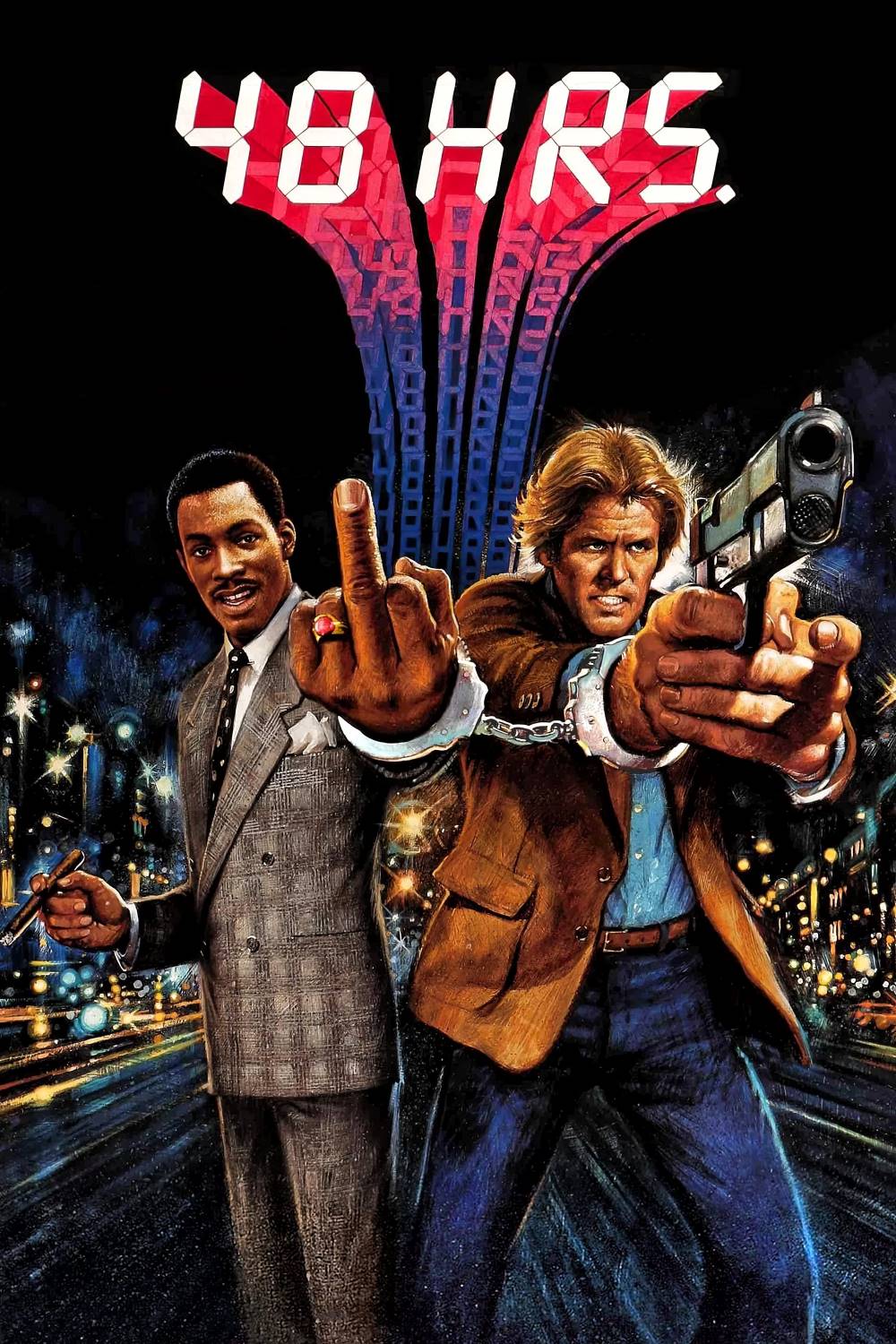
48 Hrs. bursts onto the screen with a gritty prison breakout that sets the stage for chaos in the foggy streets of San Francisco, where a pair of ruthless killers slip away after gunning down a cop’s partner in cold blood. Jack Cates, the surviving detective, is left battered and furious, piecing together a case that points to a slick convict named Reggie Hammond holding the key to the crooks’ whereabouts—and a stash of stolen cash. With time ticking down, Jack pulls strings to get Reggie out on a 48-hour pass, thrusting these two polar opposites into a reluctant alliance that turns the city into their personal battlefield of bullets, banter, and bad blood.

From the jump, Jack comes across as the ultimate rough-around-the-edges cop, nursing a flask under his trench coat, snapping at colleagues, and charging headfirst into danger like a man who’s got nothing left to lose. His apartment is a mess of empty bottles and regret, and his rocky relationship with his girlfriend underscores how the job has chewed him up and spit him out, leaving him more beast than man. Reggie, by contrast, rolls in with street-honed swagger, his prison jumpsuit barely containing the energy of a guy who’s survived by being quicker on his feet and sharper with his mouth than anyone around him. He’s got a girlfriend waiting with that hidden money, and no intention of playing nice with a cop who’s eyeing him like fresh meat.

The beauty of their pairing lies in how the film lets their friction spark from the very first shared car ride, where Jack’s growled commands clash against Reggie’s nonstop ribbing, turning a simple stakeout into a verbal demolition derby. Picture them peeling out after a lead goes south, tires screeching through narrow alleys while Reggie gripes about the beat-up car and Jack slams the dash in frustration—it’s these raw, unscripted-feeling moments that make the movie breathe. As they hit up seedy bars, chase informants through strip joints, and dodge ambushes, the script peels back layers: Jack’s not just a bully, he’s haunted by close calls; Reggie’s bravado masks real fear of ending up dead or broke.

One standout sequence drops them into a hillbilly roadhouse packed with hostile locals, where Reggie grabs the mic for an impromptu takedown that flips the room from menace to mayhem, buying them time while Jack backs him up with sheer firepower. It’s tense, hilarious, and perfectly timed, showing how their skills complement each other—Jack’s brute force meeting Reggie’s silver tongue—in ways neither saw coming. The villains, led by a stone-cold Luther and his trigger-happy sidekick, keep the heat cranked high, popping up for savage hits that leave bodies in the gutter and force the duo to improvise on the fly, like hot-wiring rides or shaking down lowlifes for scraps of intel.

Walter Hill’s direction keeps it all taut and visceral, with handheld cameras capturing the sweat and grime of every punch thrown or shot fired, no glossy filters to soften the blows. The San Francisco backdrop shines through rain-slicked hills, neon-lit dives, and shadowy piers, giving the action a grounded, almost documentary edge that amps up the stakes. Sound design punches too—the roar of engines, the crack of gunfire, the thud of fists—layered over a pulsing ’80s score that shifts from funky grooves during chases to ominous drones in quieter beats, mirroring the push-pull between comedy and threat.

Diving deeper into the characters, Jack’s arc feels earned through small touches: a hesitant phone call to his ex, a flicker of respect when Reggie saves his skin, moments that humanize the hardass without forcing redemption. Reggie evolves too, his initial scam-artist vibe giving way to flashes of loyalty, like when he risks his neck to protect that cash not just for himself, but to build something real outside the walls. Supporting roles flesh out the world—the precinct captain barking orders, the sultry singer tangled with the bad guys, Reggie’s tough-as-nails woman who won’t take guff—but they never overshadow the core duo, serving as sparks for conflict or comic relief.

Pacing-wise, the film rarely pauses for breath, clocking in under two hours yet packing in a full meal of twists, from double-crosses at motels to a frantic foot chase across rooftops that leaves you winded. The 48-hour ticking clock adds urgency without gimmicks, every dead end ramping tension as dawn breaks on their deadline. Humor lands organically too, not from slapstick but from character-driven zingers—Reggie calling out Jack’s outdated tough-guy schtick, Jack grumbling about Reggie’s flashy clothes—keeping the tone light even as blood spills.

Of course, watching through modern eyes, the dialogue packs some era-specific punches, with raw language around race, cops, and crooks that reflects ’80s attitudes head-on, for better or worse. It’s unapologetic, mirroring the film’s macho pulse, but adds texture to the time capsule feel, making replays fascinating for how boldly it leaned into taboos. The women, while fierce in spots, often play second fiddle to the bromance brewing, a hallmark of the genre that 48 Hrs. helped cement before it evolved.

What elevates this beyond standard action fare is how it nails the buddy dynamic’s slow burn: no instant high-fives, just gradual thaw from shared survival, culminating in a dockside finale where alliances solidify amid explosions and last stands. The editing zips between high-octane set pieces and downtime breather scenes, like a roadside diner heart-to-heart that reveals backstories without halting momentum. Cinematography plays with shadows and neon to heighten paranoia, turning everyday spots into pressure cookers.

Influence-wise, you can trace lines straight to later hits—the grizzled vet and smooth-talking newbie formula got refined here, blending Lethal Weapon grit with Beverly Hills Cop wit years ahead of schedule. Performances anchor it all: the leads’ chemistry crackles, carrying weaker beats on sheer charisma, while Hill’s lean style ensures every frame earns its keep. Runtime flies because it’s efficient, no fat, just muscle.

Final stretch ramps to operatic violence on those windswept docks, bullets flying as personal scores settle, leaving our heroes bloodied but bonded in a way that feels hard-won. 48 Hrs. endures as a rowdy blueprint for the genre, blending laughs, thrills, and toughness into a package that’s addictive on first watch and rewarding on revisit. It’s got heart under the bruises, edge in the jokes, and a vibe that’s pure ’80s adrenaline—grab it for a night of no-holds-barred entertainment that still packs a wallop over four decades later.
Review: Straw Dogs (dir. by Sam Peckinpah)


“Violence can be the only answer sometimes.” — David Sumner

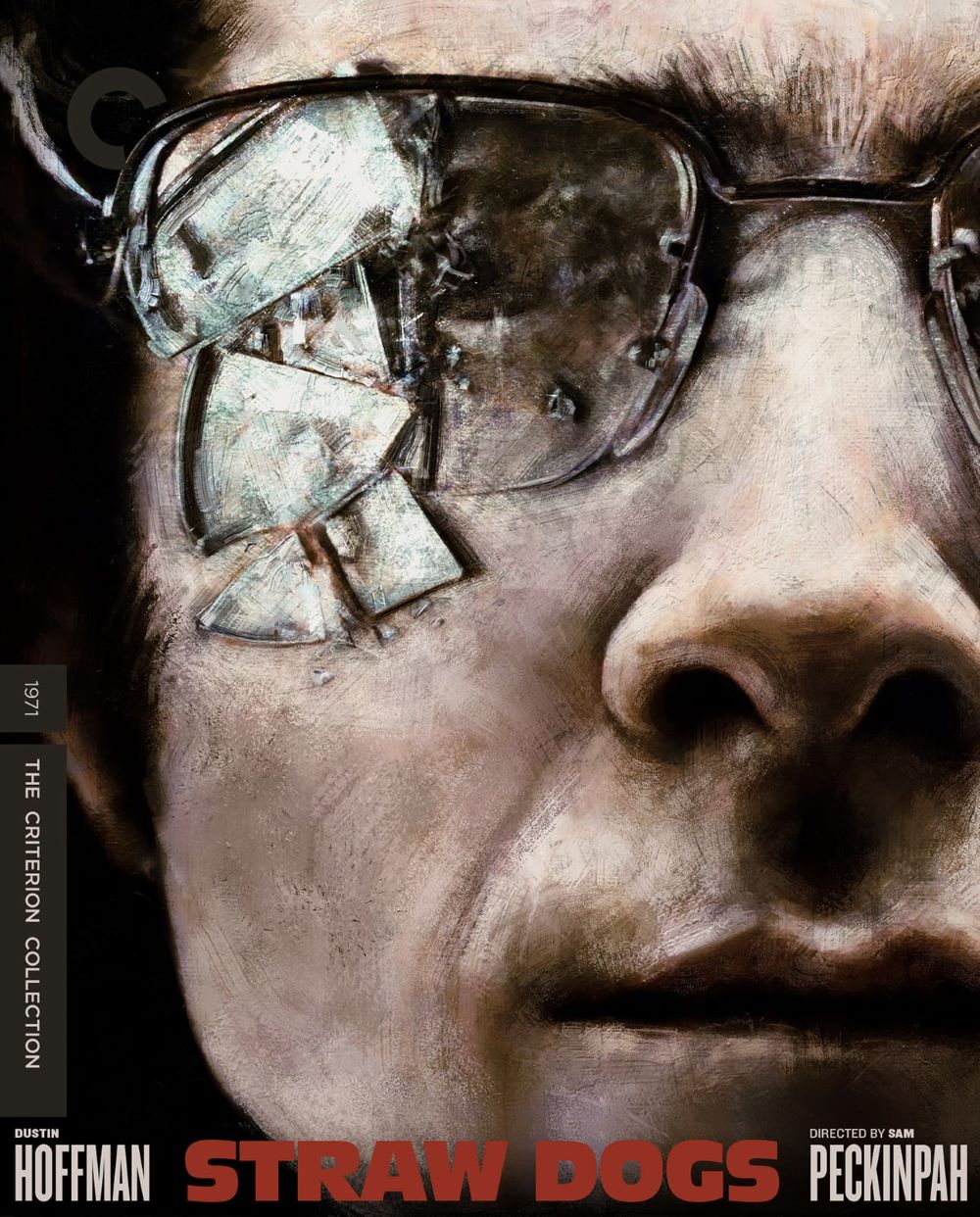
Sam Peckinpah’s Straw Dogs is a raw, compelling dive into the breakdown of civility and the primal instincts bubbling underneath. The story follows David Sumner, a mild-mannered American mathematician, who moves with his wife Amy to her rural English hometown. The couple’s plan for a quiet life takes a sharp turn when tensions with the locals spiral out of control, resulting in a violent showdown. At its core, the film examines how far a person can be pushed before the veneer of civilization peels away, revealing something much wilder underneath.

The tension starts subtly, as David’s intellectual and pacifist nature clashes with the rough, territorial mindset of the local men. This brewing conflict isn’t just about cultural difference but taps into deeper themes around masculinity, power, and identity. Straw Dogs asks difficult questions about what it means to be a man, exploring how fragile male identity can be when confronted with real or perceived threats. David’s journey is less about heroism and more about the psychological and emotional transformation forced upon a man who initially seems ill-equipped for the violence unleashed around him. The whole film operates as a kind of symbolic stage where primal instincts and societal expectations collide, forcing each character to confront their own limits.

Amy’s role in the film is both pivotal and deeply complex. Her experience of assault, handled with subtle but unflinching attention, adds emotional and thematic weight without dominating the narrative. The film portrays her trauma through its impact on her and the shifting dynamics in her relationship with David, inviting reflection on resilience and struggle for control. Amy is depicted not merely as a victim but as a layered character navigating vulnerability and strength amid the hostile environment. This approach challenges viewers to consider the nuanced and often contradictory responses to trauma, avoiding simplistic victim narratives while emphasizing its profound consequences.

The rural setting of Straw Dogs is more than just a backdrop; it becomes a character in its own right. The close-knit, insular community embodies a microcosm where social order teeters and violence hides just beneath the surface. Law enforcement and authority figures seem ineffective or indifferent, which heightens the sense of isolation and lawlessness. The hostility from some village locals, including Amy’s ex-boyfriend Charlie, feeds into a toxic masculinity that sees David as weak and out of place. Peckinpah carefully stages this clash, using tension and silence as expertly as physical violence, making viewers feel the pressure ramping up until it finally snaps.

Dustin Hoffman’s portrayal of David is quietly brilliant in its subtlety. He plays David as a man trapped between worlds—intellectual and physical, passivity and aggression—with a restrained but deeply affecting performance. Hoffman’s ability to convey complex emotions beneath a calm exterior makes David’s eventual transformation all the more gripping. Susan George delivers an equally powerful performance as Amy, capturing the mixture of fear, defiance, and heartbreak her character endures. Their dynamic feels authentic and layered, making the viewer invested in their peril. The supporting cast, including actors like Peter Vaughan, add a layer of authentic menace, embodying the grim rural antagonists with convincing grit and intensity. The performances overall ground the film’s explosive themes in believable, relatable humans.

Themes in Straw Dogs extend beyond just personal violence to address ideas about identity and societal breakdown. The film explores the notion of the “symbolic order”—how individuals fit into and negotiate the rules and roles imposed by society. David’s identity crisis and his uneasy place within the village spotlight questions of power, emasculation, and rebirth. Peckinpah uses psycho-sexual imagery—such as symbols of emasculation and phallic power—to deepen the psychological stakes of David’s journey. The film conveys how deeply fragile human identity is and how violence can act as a brutal yet transformative force pushing individuals to redefine themselves. At the same time, the portrayal of Amy complicates these themes by challenging traditional gender roles, making the film as much about female agency as male dominance.

The film’s violence is famously brutal and unsettling. Peckinpah does not shy away from showing the full consequences of escalating conflict, culminating in an intense and chaotic finale where the line between victim and aggressor blurs. This isn’t violence for spectacle but a narrative and thematic necessity that Peckinpah uses to strip away pretenses and reveal the raw human instincts beneath. It’s this uncompromising depiction that both shocked audiences at the time and continues to provoke discussion about the nature of power and survival. The film is also notable for its innovative editing, with Peckinpah’s use of jump cuts and slow-motion heightening the emotional intensity and pacing the violence with a rhythmic, almost visceral punch.

Ultimately, Straw Dogs is a challenging film that forces viewers to confront disturbing truths about human nature, relationships, and societal order. Its exploration of violence and masculinity is complex and often uncomfortable, presenting no easy answers. The film remains a significant piece of cinema for its bold themes, outstanding performances, and the way it captures the frailty and ferocity of its characters. Peckinpah’s direction melds tension, psychological drama, and physical action into a gripping, unforgettable experience. Though controversial for its content, Straw Dogs endures as a powerful work that asks what truly happens when the thin line between civilization and savagery breaks down.

The Best Of Times (1986, directed by Roger Spottiswoode)


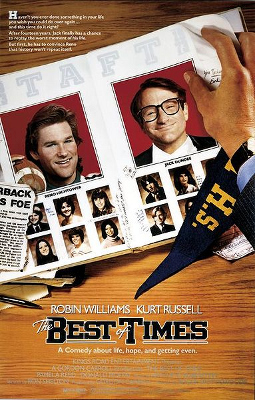
For years, banker Jack Dundee (Robin Williams) had been haunted by a pass that he dropped in high school.  The pass was perfectly thrown by quarterback Reno Hightower (Kurt Russell) but Jack couldn’t bring it in and, as a result, Taft High lost to its rival, Bakersfield.  Adding to Jack’s humiliation is that he now works for The Colonel (Donald Moffat), a confirmed Bakersfield fan who also happens to be Jack’s father-in-law.  When Jack visits a “massage therapist” (Margaret Whitton) and tells her about his problems, she suggests that he needs to replay the game.  Getting everyone interested in replaying the game is not easy.  No one wants to be humiliated a second time and Reno, who now fixes vans for a living, fears the he’s lost his edge.  Jack dresses up in the Bakersfield mascot’s uniform and vandalizes the town.  Finally, everyone is ready for the game.  Now, it’s a matter of town pride.

The Best of Times is a likable comedy about getting older and wishing you could have just one more chance to be young again and to have your entire future ahead of you.  Jack is haunted by that one dropped pass, feeling that it has cast a cloud over his entire life.  Reno is still a town hero but he’s struggling financially and in debt to Jack’s bank.  Replaying the game isn’t going to fix their lives but it is going to give them one last chance to relive their former glory and maybe an opportunity to learn that, even if they are getting older, they’re still living in the best of times.  The world that these two men live in is skillfully drawn and believable, with character actors like Moffat, M. Emmet Walsh, R.G. Armstrong, and Dub Taylor adding to the local color.  Jack and Reno’s wives are played by Holly Palance and Pamela Reed and they are also strong and well-developed characters.  Finally, Robin Williams and Kurt Russell are a strong comedic team.  Russell is perfectly cast as the aging jock and Williams gives one of his more restrained performances as Jack, allowing us to see the sadness behind Jack’s smile.

The stakes aren’t particularly high in The Best Of Times.  It’s just a football game between some middle-aged men looking to regain their youth.  But the story sticks with you.

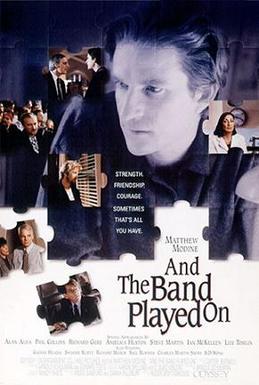
Film Review: And The Band Played On (dir by Roger Spottiswoode)


I live in a very cynical time.

That was one of my main thoughts as I watched 1993’s And The Band Played On.

Directed by Roger Spottiswoode and featuring an all-star cast, And The Band Played On deals with the early days of the AIDS epidemic.  It’s a film that features many different characters and storylines but holding it all together is the character of Dr. Don Francis (Matthew Modine), an epidemiologist who is haunted by what he witnessed during the Ebola epidemic in Africa and who fears that the same thing is going to happen in America unless the government gets serious about the mysterious ailment that is initially called “gay cancer” before then being known as “GRID” before finally being named AIDS.  Dr. Francis is outspoken and passionate about fighting disease.  He’s the type who has no fear of yelling if he feels that people aren’t taking his words seriously enough.  In his office, he keeps a track of the number of HIV infections on a whiteboard.  “Butchers’ Bill” is written across the top of the board.

Throughout the film, quite a few people are dismissive of Dr. Francis and his warnings.  But we, the audience, know that he’s right.  We know this because we know about AIDS and but the film also expects us to trust Dr. Francis because it’s specifically stated that he worked for the World Health Organization before joining the Center For Disease Control in Atlanta, Georgia.  As far as the film is concerned, that’s enough to establish his credentials.  Of course, today, after living through the excesses of the COVID pandemic and the attempts to censor anyone who suggested that it may have begun due to a lab leak as opposed to some random guy eating a bat, many people tend to view both the WHO and the CDC with a lot more distrust than they did when this film was made.  As I said, we live in a cynical time and people are now a lot less inclined to “trust” the experts.  To a large extent, the experts have only themselves to blame for that.  I consider myself to be a fairly pragmatic person but even I now find myself rolling my eyes whenever a new health advisory is issued.

This new sense of automatic distrust is, in many ways, unfortunate.  Because, as And The Band Played On demonstrates, the experts occasionally know what they’re talking about.  Throughout the film, people refuse to listen to the warnings coming from the experts and, as a result, many lives are lost.  The government refuses to take action while the search for a possible cure is hindered by a rivalry between international researchers.  Alan Alda gives one of the best performances in the film, playing a biomedical researcher who throws a fit when he discovers that Dr. Francis has been sharing information with French scientists.

It’s a big, sprawling film.  While Dr. Francis and his fellow researchers (played by Saul Rubinek, Glenne Headly, Richard Masur, Charles Martin Smith, Lily Tomlin, and Christian Clemenson) try to determine how exactly the disease is spread, gay activists like Bobbi Campbell (Donal Logue) and Bill Kraus (Ian McKellen) struggle to get the government and the media to take AIDS seriously.  Famous faces pop up in small rolls, occasionally to the film’s detriment.  Richard Gere, Steve Martin, Anjelica Huston, and even Phil Collins all give good performances but their fame also distracts the viewer from the film’s story.  There’s a sense of noblesse oblige to the celebrity cameos that detracts from their effectiveness.  All of them are out-acted by actor Lawrence Monoson, who may not have been a huge star (his two best-known films are The Last American Virgin and Friday the 13 — The Final Chapter) but who is still heart-breakingly effective as a young man who is dying of AIDS.

Based on a 600-page, non-fiction book by Randy Shilts, And The Band Played On is a flawed film but still undeniably effective and a valuable piece of history.  Director Roger Spottiswoode does a good job of bringing and holding the many different elements of the narrative together and Carter Burwell’s haunting score is appropriately mournful.  The film ends on a somber but touching note.  At its best, it’s a moving portrait of the end of one era and the beginning of another.

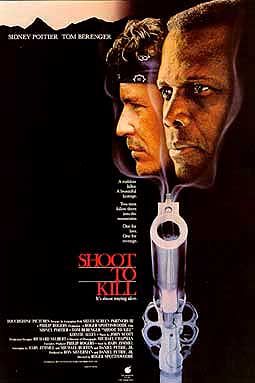
Film Review: Shoot to Kill (dir by Roger Spottiswoode)


I am not one for camping.

I’m actually kind of alone amongst my family as far as that’s concerned.  All three of my sisters enjoy spending the night outdoors, listening to sounds of nature and looking up at the stars.  They know how to set up tents and make campfires and they enjoy hiking and rafting and exploring the great outdoors.  Myself, I do enjoy occasionally spending the weekend up at Lake Texoma and I like the fact that, even though we live in the city, we still occasionally get to see wildlife running around.  I think possums are cute.  A few days ago, I squealed with delight when I saw that there was a raccoon hanging out in one of our backyard trees.  (“Don’t go near that thing, Lisa Marie!” Erin snapped as I reached for the den door.)  Growing up, I spent time in both the country and the city.  While I love living in the city, there’s still a part of me that’s still a country girl.  That said, I definitely prefer sleeping inside to outside.  The inside is safe.  The inside is comfortable.  The inside is free of creepy bugs that crawl on the ground.

Watching 1988’s Shoot to Kill definitely did not do much to change my opinion about camping.  In this thriller from director Roger Spottiswoode, Sidney Poitier plays Warren Stantin, an FBI agent who is obsessed with capturing a sadistic criminal who blackmails people into doing his work for him.  At the start of the film, the extortionist has forced a jeweler to break into his own jewelry store by taking the jeweler’s wife hostage.  Stantin’s attempt to capture the extortionist leads to the jeweler’s wife taking a bullet in the eye.  (AGCK!  Seriously, this guy is mean!)  Stantin traces the man to Washington State, where he discovers that the extortionist has committed another murder and stolen the victim’s identity.  The extortionist is now a member of a five-man fishing party that is being led by a local guide, Sarah Renell (Kirstie Alley).  Stantin teams up with Sarah’s partner, Jonathan Knox (Tom Berenger), and the two of them attempts to track down the group before the murderer among them makes his move.

The action cuts back-and-forth, between Sarah’s party and Knox and Stantin.  Most viewers will probably be able to quickly figure out which member of Sarah’s party is the killer but director Spottiswoode still creates a little suspense by casting actors like Richard Masur, Andrew Robinson, and Clancy Brown as the suspects.  All three of the actors have played their share of sinister characters.  (Andrew Robinson was the Scorpio Killer, for God’s sake!)  While Sarah leads the murderer though the wilderness, Knox teaches Stantin how to survive in the great outdoors.  As is typical with films like this, Knox and Stantin go from disliking each other to depending on each other.  Have you ever wanted to see Sidney Poitier get into a verbal altercation with a bear?  This is the film for you!

Shoot to Kill is a superior genre film.  The story’s predictable but it’s told so well that it doesn’t matter.  Kirstie Alley, Tom Berenger, and Sidney Poitier all give good performances as sympathetic characters.  As for the actor who turns out to be the killer, he gives a performance that is, at times, absolutely terrifying.  Shoot to Kill is an entertaining thriller.  Just don’t watch it if you’re going camping the next day.

Film Review: The Last Innocent Man (dir by Roger Spottiswoode)


In 1987’s The Last Innocent Man, Ed Harris plays Harry Nash.

Harry is a criminal defense attorney, one who specializes in defending people who have been charged with committing murder.  He’s good at his job but he’s not sure that he’s happy with his life.  He went into the law to save people from Death Row but years of getting acquittals for guilty people have taken their toll on Harry’s psyche.  His most recent client was Jonathan Gault (David Suchet), a man accused of having killed his wife.  The verdict was “not guilty” but Harry suspects that Gault may have been guilty of both what he was charged with and also countless crimes for which he hasn’t been charged.  It doesn’t help that Gault confronts Harry in a parking lot and says he wants Harry to co-write a book about how he got Gault acquitted.  Gault proceeds to tell Harry that he did kill his wife, before suddenly laughing and saying that he’s only joking.

Despite all of the money and the fame, Harry needs a break from dealing with guilty people.  He tells his shocked partner that he will be temporarily stepping back from their practice.  Along with being burned out, Harry is also interested in pursuing a romantic relationship with Jenny Stafford (Roxanne Hart).  Jenny is married but she assures Harry that she is in the process of getting a divorce from her husband, Philip (Darrell Larson).

However, when Philip is arrested and accused of murdering a policewoman who was working undercover as a prostitute, Harry finds himself defending Philip in court.  Philip swears that he’s innocent of the crime and that he’s never even been with a prostitute.  He claims that, when the murdered occurred, he was at home with his wife.  Jenny is willing to collaborate Philip’s alibi, even though Harry suspects that she’s lying.

As you can probably guess, there are plenty of twists and turns to the plot of The Last Innocent Man.  Unfortunately, they’re not exactly shocking twists and turns.  The Last Innocent Man is a courtroom drama and it pretty much sticks to the rules of the genre, which means a lot of snarky comments between Harry and the prosecutor and also plenty of scenes of various lawyers snapping “Objection!” and demanding a recess.  This is the type of film where people fall apart on the witness stand and the audience in the courtroom murmurs whenever something shocking happens.  The Judge can’t pound that gavel hard enough to make The Last Innocent Man anything more than a standard courtroom drama.

That said, director Roger Spottiswoode keeps the action moving at a quick-enough pace and Ed Harris is ideally cast in the role of the morally conflicted Harry Nash.  As well, there’s an entertaining supporting performance from Clarence Williams III, cast here as a cocky pimp, and David Suchet is chillingly evil as the worst of Harry’s clients.  The Last Innocent Man doesn’t quite reach the Hitchcockian heights that it was reaching for but, still, fans of courtroom dramas will enjoy it or, at the very least, show a little leniency in their judgment.

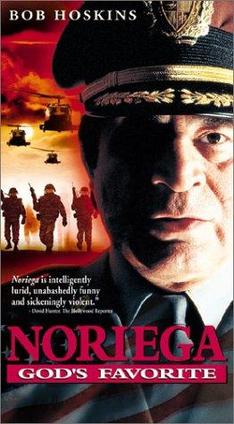
Film Review: Noriega God’s Favorite (dir by Roger Spottiswoode)


Everyone’s an expert on the Panama Canal nowadays.

Largely, that’s a result of President-elect Donald Trump openly musing about taking the canal back from Panama.  As soon as Trump uttered those words, every self-appointed pundit on every social media site in existence immediately jumped over to Wikipedia and skimmed over the articles on Panama, the Panama Canal, and Teddy Roosevelt.  Then, after Jimmy Carter died, those same people jumped onto Wikipedia and skimmed articles about Carter selling the canal to Panama for a dollar and the controversy that followed.  For weeks, it has been impossible to look at Twitter or Bluesky or even Mastodon without seeing someone giving their opinion on the canal, the 1989 American invasion of Panama, and the connection between the CIA and Manuel Noriega, the man who served as Panama’s military dictator for most of the 80s before being deposed and tossed into prison for being a drug smuggler.

Myself, I know better than to get my information from Wikipedia.  Instead, I get my information from movies.  For that reason, I attempted to educate myself on Panama and the canal by watching 2000’s Noriega: God’s Favorite.

Directed by Roger Spottiswoode, Noriega: God’s Favorite opens with a title card informing us of the story so far.  Manuel Noriega was born in the slums of Panama.  He grew up in poverty and was shunned because his mother was not married to his father.  Noriega spent his youth doing whatever he had to do in order to survive.  He was clever and ruthless but it wasn’t until he entered the Panamanian National Guard that he was able to really use those skills to his advantage.  Noriega became a CIA asset and worked his way through the ranks.  In 1983, with the support of American intelligence, Noriega became the de facto dictator of Panama, even though he never officially held any sort of title or executive position.

The film follows Manuel Noriega (Bob Hoskins) over the course of his final years as Panama’s dictator.  He’s portrayed as being a ruthless man who often pretends to be a buffoon in order to get his enemies to underestimate him.  He works with the CIA but still passes along intelligence to Fidel Castro (Michael Sorich), who is seen hitting on Noriega’s wife (Denise Blasor) during a visit to Cuba.  Noriega presents himself as a family man while having a number of mistresses.  He claims to an ally in the United States’s War on Drugs while attending cocaine-fueled parties.  He presents himself as being a pragmatist while actually being very superstitious.  A CIA agent (Edward Ellis) wins Noriega’s trust by manipulatively interpreting Bible verses for him.  When an army officer (played by Nestor Carbonell) tries to lead a coup against Noriega, he can only watch helplessly as Noriega personally executed all of his co-conspirators, going so far as to even chop off one man’s hands.  By the end of the scene, Noriega is drenched in blood but he’s undeniably happy.  Everyone knows that Noriega is an impulsive and dangerous dictator but the CIA allows him to stay in power until he starts to become an inconvenience.  Once Noriega’s notoriety starts to overshadow his usefulness, the U.S. promptly invades and Noriega’s power crumbles around him.

Bob Hoskins might seem like a strange choice to play a South American dictator but he does a good job in Noriega, playing the title character as being both a charismatic dictator and also an overgrown child who has never gotten over the struggles of his youth.  (Early on in the film, he is seen getting treatments to smooth his pockmarked skin, an indication that all the power in the world can’t cure lifelong insecurity.)  In the end, Noriega has much in common with the gangster that Hoskins played in The Long Good Friday.  Noriega is ruthless enough to become powerful but he ultimately falls victim to his own hubris.  When you’re in charge of something as valuable as the Panama Canal, the last thing you should do is anger the country that built it.

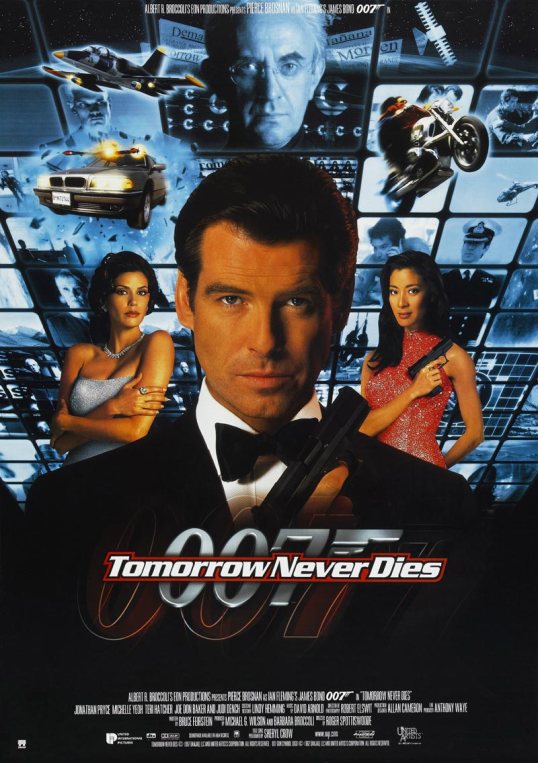
Scenes That I Love: James Bond Does His Thing In Tomorrow Never Dies


1997’s Tomorrow Never Dies, which was directed by Roger Spottiswoode, was one of the most underrated of the Bond films.  Perhaps not coincidentally, it also starred the most underrated Bond, Pierce Brosnan.

In this pre-credits opening scene, Brosnan shows us exactly who James Bond is meant to be.  He’s the best at his job but he still knows how to enjoy himself.  After the recent Daniel Craig films, it can be somewhat surprising to go back see how enjoyable James Bond was when he was angst-free.

Where does the admiral want his bombs delivered?


4 Shots From 4 Films: Special Roger Spottiswoode Edition


4 Shots From 4 Films is just what it says it is, 4 shots from 4 of our favorite films. As opposed to the reviews and recaps that we usually post, 4 Shots From 4 Films lets the visuals do the talking.

Today, the Shattered Lens wishes a happy 80th birthday to Roger Spottiswoode.  After starting his career as Sam Peckinpah’s editor and co-writing the script for Walter Hill’s 48 Hours, Spottiswoode went on to become a dependable director who effortlessly moved from genre to genre.  He may not be a household name but he’s a director who has been responsible for some truly memorable films.

It’s time for….

4 Shots From 4 Roger Spottiswoode Films

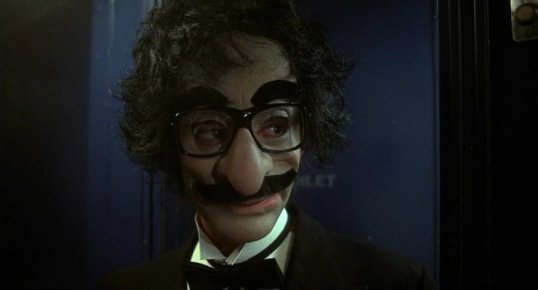
Terror Train (1980, dir by Roger Spottiswoode, DP: John Alcott)

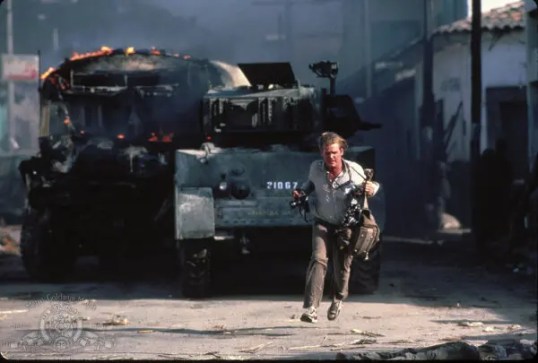
Under Fire (1983, dir by Roger Spottiswoode, DP: John Alcott)

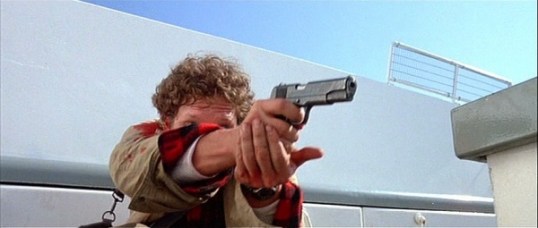
Shoot to Kill (1988, dir by Roger Spottiswoode, DP: Michael Chapman)

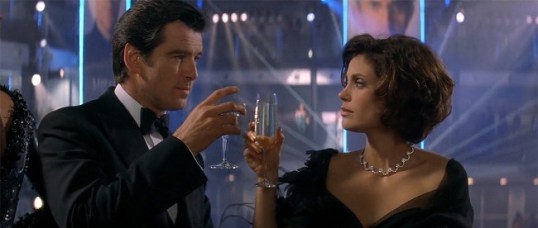
Tomorrow Never Dies (1997, dir by Roger Spottiswoode, DP: Robert Elswit)

THE CHILDREN OF HUANG SHI (2008, directed by Roger Spottiswoode) – The incredible story of English adventurer George Hogg!


My wife and I love to watch movies based on true stories and real people. I had never heard of English adventurer George Hogg prior to 2008, which was the year that I found out that Chow Yun-Fat would be co-starring in a film based on Hogg’s life. Chow Yun-Fat is my favorite living actor, so I make it a point to watch every film he’s in. I even watched the horrendous DRAGONBALL EVOLUTION, even worse, at the theater!! As I looked into the film a little closer all those years ago, I thought Hogg’s real-life story had major dramatic potential. I thought the cast was interesting as well. At the time, Jonathan Rhys Meyers was starring in a popular series called THE TUDORS, where he played King Henry VIII. He seemed ready for the role of real-life hero George Hogg. Radha Mitchell had somewhat recently starred in the Denzel Washington action film, MAN ON FIRE, which I’m very fond of. And coolest of all, outside of Chow Yun-Fat of course, was the casting of Michelle Yeoh, another favorite of mine from her years in Hong Kong films. She and Chow Yun-Fat were captivating together in CROUCHING TIGER HIDDEN DRAGON. And finally, I saw that Roger Spottiswoode would be directing the film. The veteran filmmaker has had a hand in some of my favorite films, from editing HARD TIMES with Charles Bronson, to writing 48 HRS. with Nick Nolte and Eddie Murphy, and even directing the excellent action film SHOOT TO KILL, with Sidney Poitier and Tom Berenger. I was expecting a good, solid film!

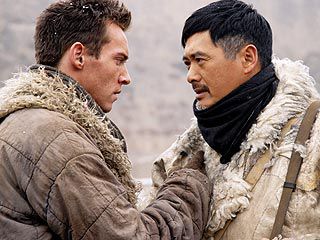
The story opens in 1937 with British reporter George Hogg (Jonathan Rhys Meyers) worming his way into Nanjing, China, to cover the Japanese occupation of the city. While there, he sees and photographs horrific violence against the Chinese people. Discovered by the Japanese authorities with his camera, it appears he’s headed for execution. But luckily for Hogg, just prior to having his head lopped off, he’s saved by Chinese resistance fighter Chen Hansheng (Chow Yun-Fat). Injured while escaping, Hogg awakens under the care of Nurse Lee Pearson (Radha Mitchell), who is also taking care of Chen. Needing time to recover from his wounds, Hogg is sent to a boy’s orphanage in Huang Shi by Chen and Nurse Pearson. Initially reluctant to get involved with the 60 or so orphans, Hogg eventually begins to try to improve their living conditions. He begins teaching the boys, and he comes up with a way to guarantee needed food and supplies in town when he strikes a deal with the local merchant, Mrs. Wang (Michelle Yeoh). Over the next few years, it seems like everything is going pretty well. But when the Chinese nationalist military camps outside of the orphanage, and some of their leaders come to the orphanage and threaten to take some of the boys into their army by force, Hogg makes the decision that they should leave the area. Thus begins an incredible journey over mountains and through deserts to the city of Shandan, which is approximately 700 miles away, but in an area that Hogg believes will be safe. Will they be able to survive the journey and start all over again with a better life in Shandan?

With THE CHILDREN OF HUANG SHI, Director Roger Spottiswoode delivers a solid, but certainly not spectacular, movie. Even if writers James MacManus and Jane Hawksley take some liberties with the actual events for dramatic effect, the basic story about George Hogg working to improve the lives of these orphaned boys and then leading them to safety across hundreds of miles of treacherous terrain and away from war, is good stuff. I’m glad I watched it, and at times it managed to stir up my emotions. With that said, there still seemed to be something missing. I don’t think the movie as executed ever moved me as far emotionally as I hoped it would. Thinking back on the performances, I found Jonathan Rhys Meyers only adequate as George Hogg. He delivers some good moments, but I didn’t leave the film really thinking that much about him. I’d say that Radha Mitchell did better with her role as the nurse who saves Hogg, and who eventually falls in love with him. Her character had some complexity, and I felt myself more drawn to Mitchell’s performance. Chow Yun-Fat and Michelle Yeoh are in true supporting roles. Chow has so much natural charisma, that you can’t help but like his character, and anytime he’s on-screen things pick up. He’s actually quite fun as resistance fighter “Jack” Chen. The problem is that there are large chunks of the film’s 125-minute running time that he’s nowhere to be seen. Much of the same can be said of Michelle Yeoh. She’s very effective when she’s on the screen, but it seems she has even less screen time than Chow. It’s hinted at that her character has hidden layers of depth, but there just isn’t enough time to really develop anything. She is so beautiful, and I did enjoy every time she appeared. Thanks to cinematographer Xiaoding Zhao (THE CURSE OF THE GOLDEN FLOWER), there are many times that the movie itself is just so beautiful to look at. It appears that some of the most beautiful places on earth were captured for this film.

THE CHILDREN OF HUANG SHI has an awesome ace up its sleeve at the very end of the film, and by the end I mean the credits. As the credits begin to roll, some of the actual boys who lived through these harrowing experiences, now older men, appear on screen and provide some of their memories of the journey and of Hogg. That kind of stuff always gets to me and it did here as well. It was a strong ending to a decent film.