“People don’t go to the movies to see how miserable the world is; they go there to eat popcorn, be happy“- Wynton (Jim Backus) in HIS KIND OF WOMAN
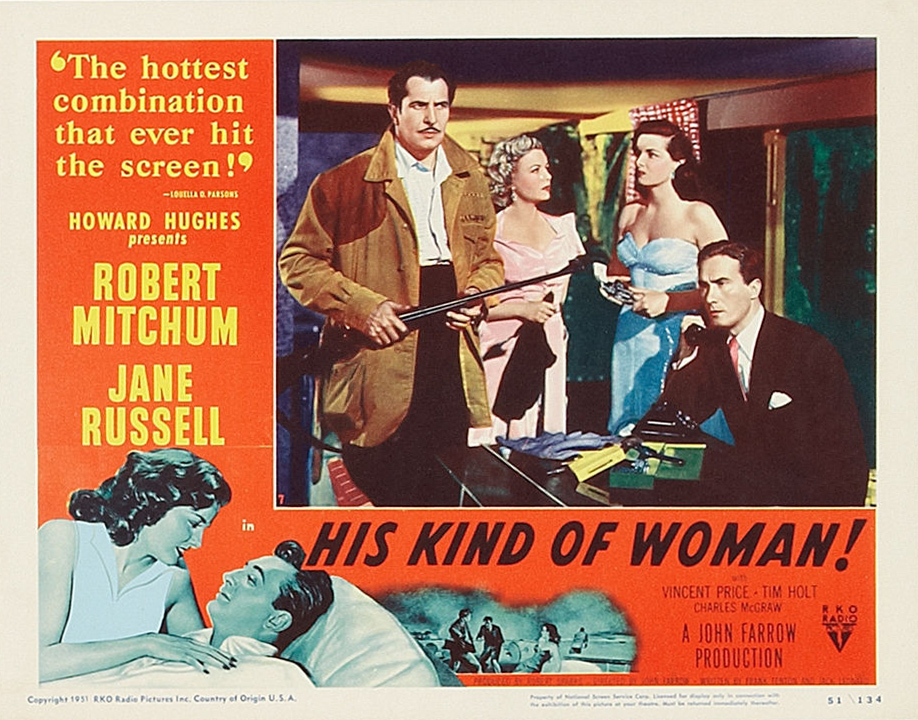
Right you are, Mr. Howell, err Backus. There’s an abundance of fun to be had in HIS KIND OF WOMAN, the quintessential RKO/Robert Mitchum movie. Big Bob costars with sexy Jane Russell in a convoluted tale that’s part film noir, part Monty Python, with an outstanding all-star cast led by Vincent Price serving up big slices of ham as a self-obsessed movie star. And the backstory behind HIS KIND OF WOMAN is as entertaining as the picture itself!
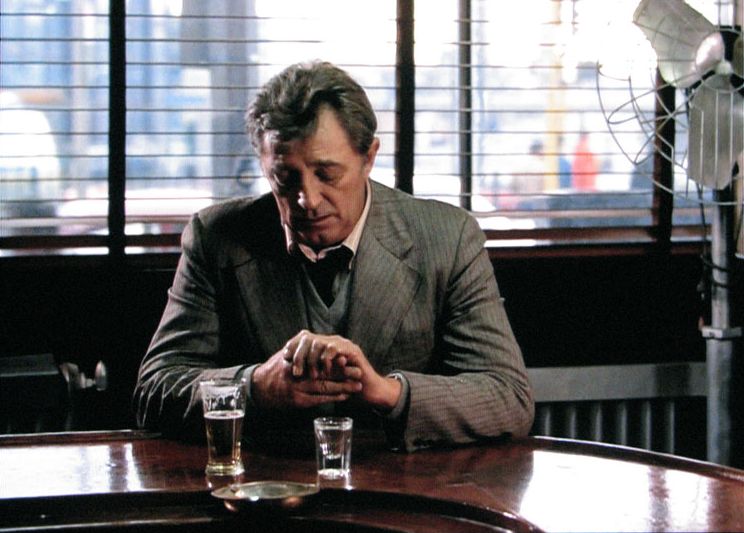
But we’ll go behind the scenes later. First, let’s look at the movie’s plot. We meet down on his luck gambler Dan Milner (Mitchum) in a bar…. drinking milk! Dan just got done doing a 30 day stretch in a Palm Springs jail…
Thanks to TCM’s 31 Days of Oscar, I now have several movies on my DVR that I need to watch over the upcoming month. Don’t get me wrong — I’m not complaining. I’m always happy to have any reason to discover (or perhaps even rediscover) a movie. And, being an Oscar junkie, I especially enjoy the opportunity to watch the movies that were nominated in the past and compare them to the movies that have been nominated more recently.
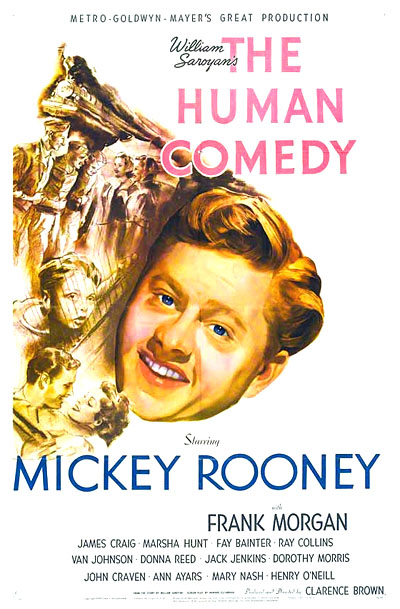
For instance, tonight, I watched The Human Comedy, a film from 1943. Along with being a considerable box office success, The Human Comedy won on Oscar (for Best Story) and was nominated for four others: picture, director (Clarence Brown), actor (Mickey Rooney), and black-and-white cinematography. The Human Comedy was quite a success in 1943 but I imagine that, if it were released today, it would probably be dismissed as being too sentimental. Watching The Human Comedy today is something of a strange experience because it is a film without a hint of cynicism. It deals with serious issues but it does so in such a positive and optimistic manner that, for those of us who are used to films like The Big Short and Spotlight, a bit of an attitude adjustment is necessary before watching.
And yet that doesn’t mean that The Human Comedy is a bad film. In fact, I quite enjoyed it. The Human Comedy is a time capsule, a chance to look into the past. It also features a great central performance, one that was quite rightfully nominated for an Oscar. As I watched Mickey Rooney in this film, I started to feel guilty for some of the comments I made when I reviewed Mickey in The Manipulator last October.
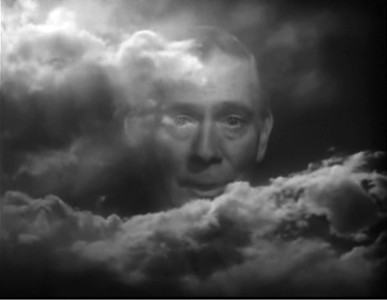
The Human Comedy opens with an overhead shot of the small town of Ithaca, California. The face of Mr. McCauley (Ray Collins, who you’ll recognize immediately as Boss Jim Gettys from Citizen Kane) suddenly appears in the clouds. Mr. McCauley explains that he’s dead and he’s been dead for quite some time. But he loves Ithaca so much that his spirit still hangs around the town and keeps an eye on his family. Somehow, the use of dead Mr. McCauley as the film’s narrator comes across as being both creepy and silly.
But no sooner has Mr. McCauley stopped extolling the virtues of small town life than we see his youngest song, 7 year-old Ulysseus (Jack Jenkins), standing beside a railroad track and watching a train as it rumbles by. Sitting on the cars are a combination of soldiers and hobos. Ulysseus waves at some of the soldiers but none of them wave back. Finally, one man waves back at Ulysseus and calls out, “Going home, I’m going home!” It’s a beautifully shot scene, one that verges on the surreal.
That opening pretty much epitomizes the experience of watching The Human Comedy. For every overly sentimental moment, there will be an effective one that will take you by surprise. The end result may be uneven but it’s still undeniably effective.
The majority of the film deals with Homer McCauley (Mickey Rooney). Homer may still be in high school but, with his older brother, Marcus (Van Johnson), serving overseas and his father dead, Homer is also the man of the house. Homer not only serves as a role model for Ulysseus but he’s also protector for his sister, Bess (Donna Reed). (At one point in the film, she gets hit on by three soldiers on leave. One of them is played by none other than Robert Mitchum.) In order to bring in extra money for the household, Homer gets a job delivering telegrams.
In between scenes of Homer in Ithaca, we get oddly dream-like scenes of Marcus and his army buddies hanging out. Marcus spends all of his time talking about how much he loves Ithaca and how he can’t wait for the war to be over so he can return home. One of his fellow soldiers says, “I almost feel like Ithaca is my hometown, too.” Marcus promises him that they’ll all visit Ithaca. As soon as the war is over…
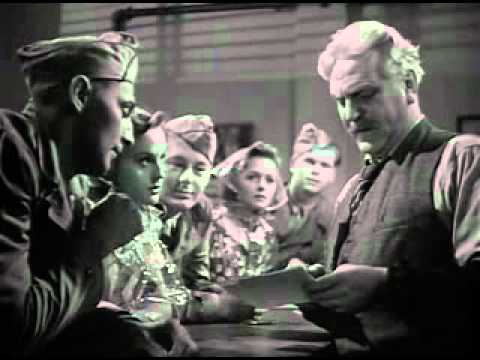
With World War II raging, Homer’s job largely consists of delivering death notices (and the occasional singing telegram, as well). Telegraph operator Willie Grogan (Frank Morgan) deals with the burden of having to transcribe bad news by drinking. Homer, meanwhile, tries to do his job with compassion and dignity but one day, he has to deliver a telegram to his own house…
The Human Comedy is an episodic film, full of vignettes of life in Ithaca and Homer growing up. There’s quite a few subplots (along with a lot of speeches about how America is the best country in the world) but, for the most part, the film works best when it concentrates on Homer and Mickey Rooney’s surprisingly subdued lead performance. By today’s standards, it may seem a bit predictable and overly sentimental but it’s also so achingly sincere that you can’t help but appreciate it.
The Human Comedy was nominated for best picture but it lost to a somewhat more cynical film about life during World War II, Casablanca.
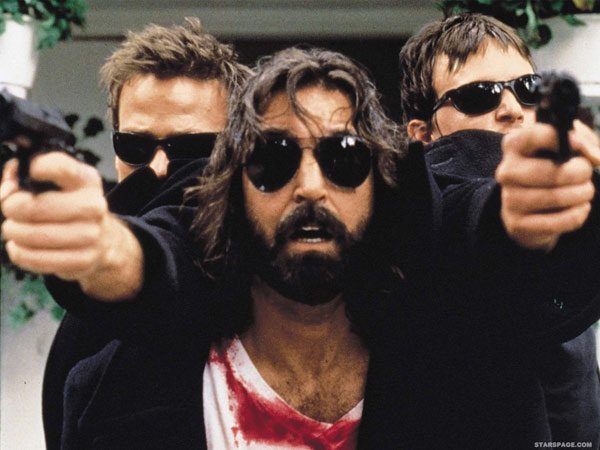
4 Shots From 4 Films is just what it says it is, 4 shots from 4 of our favorite films. As opposed to the reviews and recaps that we usually post, 4 Shots From 4 Films is all about letting the visuals do the talking. After watching Black Mass last night, I thought it’d be fun to take a look at some other Boston-based crime films from over the years. So here are four scenes from four wicked cool films:
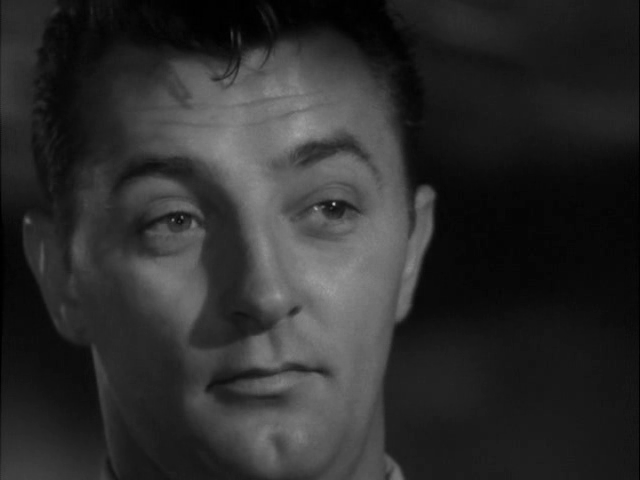
One of my favorite actors, the laconic, iconic Robert Mitchum was born August 6, 1917 in Bridgeport, Connecticut. Rugged Robert had a wandering spirit, riding the rails in the days of the Depression, and even did time on a Georgia chain gang. Mitchum eventually ended up in California , and was bitten by the acting bug. After small roles in Laurel & Hardy comedies and Hopalong Cassidy oaters, Mitchum got noticed in a series of B-Westerns based on the novels of Zane Grey. His big break came as a tough sergeant in 1945’s THE STORY OF G.I. JOE, which he received an Oscar nomination for Best Supporting Actor. But the role that made him a star was world-weary private eye Jeff Bailey in the film noir classic OUT OF THE PAST.
We meet Bailey running a gas station in the small town of Bridgeport, California (an homage to Mitchum’s hometown, perhaps?) He has a mute…
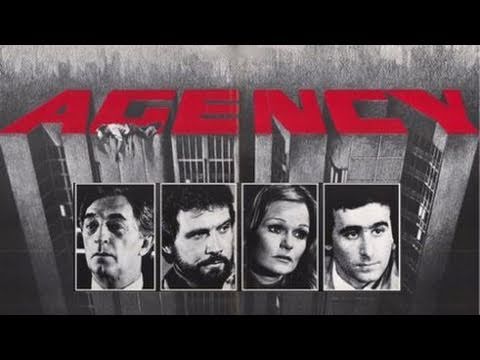
“Who are the other two lugs on this poster? And who’s the dame? Baby, I just don’t give a damn…” Robert Mitchum in Agency.
Like a lot of writers who occasionally have issues when it comes to balancing ambition with time management, I’ve discovered that it helps if I listen to music while I write. For instance, while writing the majority of the reviews for Shattered Politics, I’ve been listening to Big Data’s Dangerous.
And that choice of music has actually turned out to be extremely appropriate. No, not just because it’s dangerous to write about politics. But also because the official music video for Dangerous deals with advertising and, more specifically, how sex and violence are used to sell everything from shoes to politicians.
Now, I don’t know about you but, whenever I see that video, I feel like I’m ready to put on a sports bra, running shorts, and of course my Big Data running shoes so that I can take control and headbutt my way through life! A good commercial can do that. (And don’t even get me started on what I’m going to do to the next person I see eating a hot dog…)
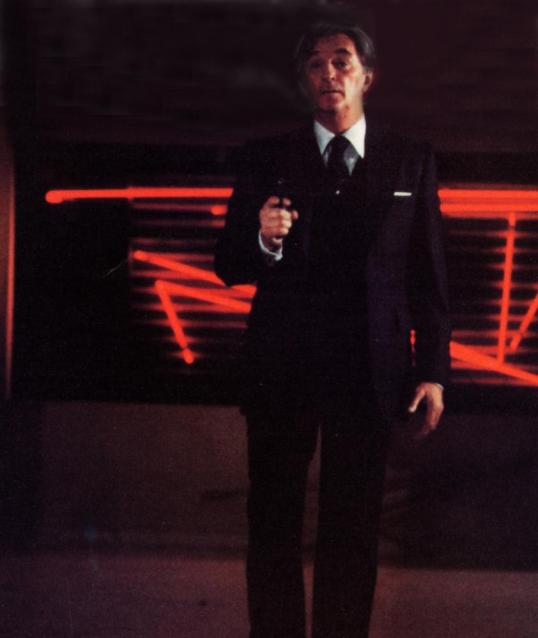
Interestingly enough, the 47th film that I’m reviewing for Shattered Politics also deals with the power of advertising. First released in 1980, Agency stars Robert Mitchum as Ted Quinn, the mysterious new owner of a major ad company. Out of all of the old school movie stars, Robert Mitchum is one of my favorites because he was not only a great actor but he was also a very honest one. If he didn’t give a damn about a role, he wasn’t going to try to fool the audience otherwise. Instead, he was going to deliver his lines and kind of smirk with his eyes, his way of subliminally asking the audience, “Are you actually watching this shit?” And while this may have led to Mitchum giving several performances that were unworthy of his talent, it also means that if you see Robert Mitchum actually invested in a role than that means the film must be something really special.
Unfortunately, Agency is not one of those “something really special” films. And Mitchum’s bored performance reflects that fact.
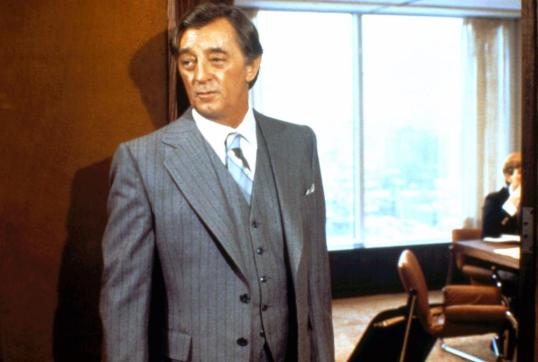
“Just try to make me care.” Robert Mitchum in Agency.
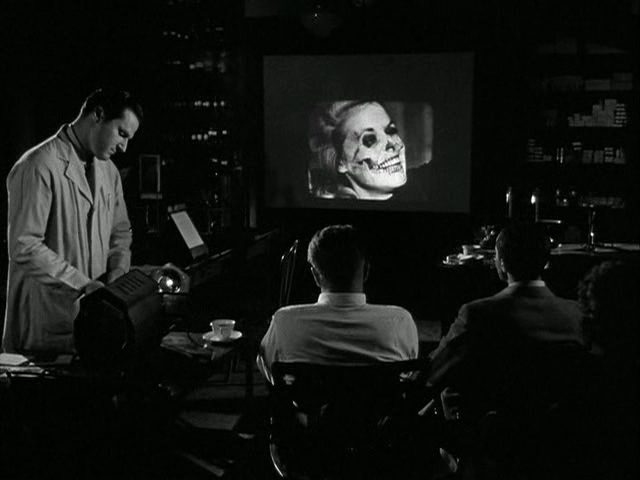
Anyway, under Ted Quinn’s leadership, the ad agency is doing commercials for all the usual clients. The movie starts with one of those commercials — a leather-themed, disco-scored short film extolling the virtues of No Sweat deodorant. And then there’s also the big chocolate energy drink commercial. However, copywriter Sam Goldstein (Saul Rubinek) suspects that Ted might have sinister motives. After a right-wing candidate comes out of nowhere to win a seat in the U.S. Senate, Sam suspects that the deodorant commercial may have contained subliminal messages…
That’s right! It’s exactly like that episode of Saved By The Bell where Zack Morris brainwashed Mr. Belding by giving him that subliminally-spiked tape of the Beach Boys.
Well, before you can say “Zack Morris is a blonde Tom Cruise,” Sam has been murdered and it’s up to Sam’s best friend, Philip Morgan (Lee Majors), to reveal the truth about Ted’s sinister agenda…
Like many U.S.-set thrillers from the 1980s, Agency was actually a Canadian film. Montreal stands in for an unnamed American city where it frequently snows and the supporting cast is full of actors with noticeable Canadian accents. Mind you, that’s not a complaint. I love Canada, I love Canadians, and I especially love Canuxploitation films.
That said, Agency is probably one of the least interesting Canadian thrillers that I’ve ever sat through. (I should add, of course, that I saw Agency on a very low-quality DVD that was released by Miracle Pictures. And I really do have to say that this was absolutely one of the worst transfers that I’ve ever seen. It appears that the DVD was copied from an old VHS tape.) It’s not so much that it’s a terrible film as much as it’s just not a very interesting one. With the exception of Rubinek, the actors go through the motions with little enthusiasm and the story plods along. Maybe back in 1980, the whole idea of subliminal advertising seemed exciting and relevant. But seen today, it just all seems incredibly silly.
So, in the end, Agency did not make me want to headbutt my way through life.
Sorry.
(I still love you, Canada!)
(And you too, Robert Mitchum!)
“Baby, I just don’t give a damn.” Robert Mitchum in Agency.
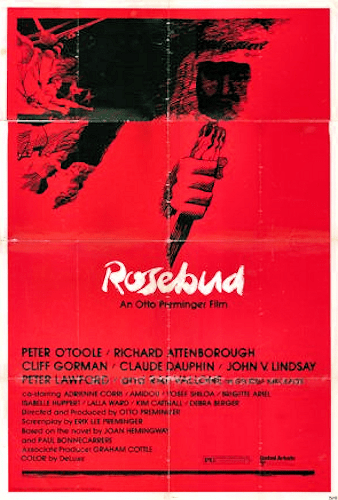
Before I review the 1975 film Rosebud, allow me to tell you about how I first discovered the existence of this particular film.
The greatest used bookstore in the world is located in Denton, Texas. It’s called Recycled Books and it is three stories of pure literary goodness! (Plus, there are apartments on the top floor where I attended some pretty interesting parties but that’s another story….) When I was attending the University of North Texas, I used to stop by Recycled Books nearly every day. One day, I happened to be searching the Film and TV section when I came across a beat-up paperback called Soon To Be A Major Motion Picture.
This book, which was written by Theodore Gershuny, told the story of how the previously acclaimed director Otto Preminger attempted to make a film about terrorism. Starting with the attempts of Preminger’s son, Erik Lee Preminger, to come up with a workable script and then going on to detail how Peter O’Toole came to replace Robert Mitchum as the star of the film and ending with the film’s disastrous release, Soon To Be A Major Motion Picture proved to be a fascinating read.
After finishing the book, I simply had to see Rosebud for myself. Unfortunately, at that time, Rosebud had not yet been released on Blu-ray or DVD. So, I actually ended up ordering an old VHS copy of it. The tape that I got was not in the best condition but it played well enough and I can now say that, unlike the majority of people in the world, I’ve actually seen Rosebud!
Which is not to say that Rosebud is any good. It’s not the disaster that I had been led to expect. In fact, it probably would have been more fun if it had been a disaster, as opposed to being just a forgettable film from a director who was probably capable of better. Preminger started his career in the 30s and was considered, at one point, to be quite innovative. He directed Laura and Anatomy of a Murder, two great films. Unfortunately, there’s really nothing innovative about his direction of Rosebud. In Gershuny’s book, Preminger comes across like an intelligent and thoughtful man who was too set in his ways to realize that what was shocking in 1959 was no longer that big of a deal in 1975. (And, needless to say, it’s even less of a big deal in 2015.)
As for what Rosebud‘s about, it’s about a man named Sloat (Richard Attenborough), a former journalist who now lives in a cave in Israel and dreams of establishing a worldwide terrorist network. Under Sloat’s direction, terrorists storm a yacht named the Rosebud and take the girls on board hostage. The girls are wealthy and privileged. Their fathers are judges, senators, and businessmen. CIA agent Larry Martin (Peter O’Toole) is tasked with tracking down and rescuing the girls. If it sounds like an action film — well, it’s not. This is not a prequel to Taken. Instead, it’s a very talky film that has a few isolated good moments and performances but otherwise, is fairly forgettable.
That said, the film does have an interesting cast. Peter O’Toole seems bored by his role (and who can blame him?) but Attenborough briefly livens things up in the role of Sloat. As for the girls being held hostage, they’re not given much to do. One of them is played by a young Isabelle Huppert. Long before she would play Samantha on Sex and the City, Kim Cattrall plays a hostage here. The English hostage is played by Lalla Ward, who is now married to Richard Dawkins.
And then there’s the girl’s parents, who are played by an odd assortment of character actors. Raf Vallone, an Italian, plays a Greek. (His daughter, meanwhile, is played by the French Isabelle Huppert.) Peter Lawford, looking somewhat dazed, shows up as Lalla Ward’s father. (One of the sadder scenes in Gershuny’s book deals with Lawford’s attempts to remember his lines.) And than, in the role of Cattrall’s father, we have a very distinguished looking man named John Lindsay.
John Lindsay was the former mayor of New York City, a man who ran for President in 1972 and, three years later, attempted to launch a new career as an actor. Rosebud was his both his first and final film. (Rumor has it that Martin Scorsese attempted to convince Lindsay to play Senator Palatine in Taxi Driver but Lindsay turned the role down.) Lindsay is not particularly memorable in Rosebud. It’s not so much that Lindsay gives a bad performance as much as it’s just the fact that he has a very bland screen presence. That blandness probably served him well as a politician but, as an actor — well, let’s just say that John Lindsay was apparently no Fred Thompson.
And so that’s Rosebud. It’s a film that, much like Maidstone, you can only appreciate if you know what went on behind the scenes. I can’t really recommend Rosebud but, if you ever come across a battered old copy of Soon To Be A Major Motion Picture in a used bookstore, be sure to buy it!
I recently decided that I wanted to watch and review every single movie ever nominated for the Academy Award for best picture. As part of that mission, I recently rewatched one of my favorite also-rans, 1947’s Crossfire.
Crossfire is a message movie disguised as a B detective flick. A group of soldiers who have just returned from World War II decide to get together for a drink. At the bar, they run into a civilian named Joseph Samuels (Sam Levine). The soldiers end up going back to Samuels’s apartment and the next morning, Samuels is found dead. Obviously, he was killed by one of the soldiers but which one. Suspicion falls on the meek (and missing) Floyd Bowers (Steve Brodie) but police detective Finlay (Robert Young) and Sgt. Peter Keeley (Robert Mitchum) both (correctly) suspect that Samuels was actually murdered by the far more outspoken and imposing Montgomery (Robert Ryan). It quickly becomes obvious that Montgomery is an anti-Semite who killed Samuels solely because he was Jewish. However, neither Finlay or Keeley can prove it. The film quickly becomes a darkly intense duel between these three men as Finlay and Keeley attempt to trick Montgomery into implicating himself while Montgomery attempts to further frame Bowers for the murder.
Before Crossfire, director Edward Dmytryk specialized in making low-budget “B” movies and he brings that noir, near-grindhouse sensibility to Crossfire. As a result, Crossfire is a one of those rare “message” films that is actually entertaining. Only a few times does the film start to feel preachy and luckily, Robert Mitchum is there being his usual cynical self. If anyone could deflate the pompous nature of the mid-40s message movie, it was Robert Mitchum. The film says, “Love one another.” Mitchum replies, “Baby, I just don’t give a damn,” and he keeps things from getting too heavy-handed. Mitchum is one of three Roberts to star in this film. Robert Young plays the police inspector with just the right amount of world-weary indignation while Robert Ryan is a force of nature as the film’s brutal murderer. Don’t get me wrong. You can pretty much peg Ryan as a killer from the first minute he shows up on-screen. If Mitchum and Young smartly underplay their roles, Ryan goes the exact opposite direction. He’s an obvious brute but he’s also totally believable. You look at his character and it’s not difficult to imagine him passing the collection plate at Westboro Baptist Church. As well, Crossfire also features an excellent supporting term by one of my favorite noir actresses, the great and wonderful Gloria Grahame. She plays Bowers’ married girlfriend and gives a compellingly, real performance that suggests that maybe Hollywood in the 40s wasn’t quite as clueless as we all like to assume.
Crossfire was nominated for Best Picture of 1947 but it lost to another film about anti-Semitism, Elia Kazan’s Gentleman’s Agreement. (Oddly enough, both Kazan and Dmytryk would end up naming names during the McCarthy Era.) Like Gentleman’s Agreement, Crossfire was based on a novel. However, in the original novel, the victim was not Jewish but instead was gay. However, back in the 1940s, the Hollywood Production Code specifically forbade any open depiction of homosexuality and so, the crime went from being motivated by homophobia to anti-Semitism.