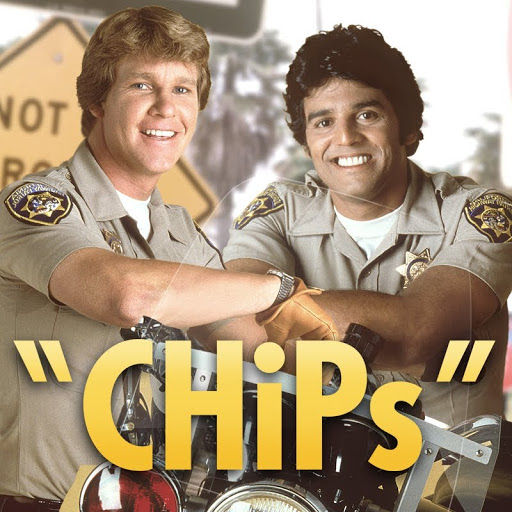
Welcome to Late Night Retro Television Reviews, a feature where we review some of our favorite and least favorite shows of the past! On Mondays, I will be reviewing CHiPs, which ran on NBC from 1977 to 1983. The entire show is currently streaming on Prime!
This week, Ponch solves all the world’s problems. Thank God!
Episode 4.3 “To Your Health”
(Dir by Barry Crane, originally aired on October 5th, 1980)
A farmer (Paul Gale) just wants to deliver his crops to various health food stores across Los Angeles but someone keeps sabotaging his truck. Ponch wants to get laid so he pretends to like health food so he can get closer to the women who lives with the farmer. Meanwhile, a kid keeps causing accidents whenever he goes windskating. The kid’s father isn’t paying enough attention to him so Ponch gives both of them a stern talking to. Ponch also helps the farmer make his deliveries and he saves the life of two women after a massive highway pileup. Baker just stands around looking grim.
It’s the Ponch Show!
This episode was a bit of a mess but it was CHiPs in its most distilled form. What little story there was only existed as an excuse for multiple car crashes. Every time the kid went windskating, he caused an accident. THREE MASSIVE, MULTI-CAR ACCIDENTS, all caused by this kid. I’m talking accidents that involve cars flying through the air in slow motion. This kid is going to get people killed! And yet, he never really gets in trouble for it. He gets scolded. He gets dragged down to the police station. But he’s always set free and apparently, he and his father somehow manage to get through episode without getting sued.
Meanwhile, that farmer wrecked his truck three times! You would think that the farmer would get a new truck after a while. And again, every accident seemed to lead to a car flying in slow motion through the air. Amazingly, no one was ever seriously injured.
Baker was concerned about both the farmer and the windskating kid but, in the end, it was Ponch who solved all the problems. In the past, Baker was always the one who gave the kids a good talking to. But now, it’s Ponch who has all the wisdom. Sorry, Baker. You’ve been replaced by the blinding smile of Erik Estrada.
Really, what can we say about this episode? Thank God for Ponch, right? Los Angeles would be doomed without him.
Mark (John Larroquette) and Jessa Bannister (Kirstie Alley) have a perfect yuppie lifestyle going until their respective family members show up at their California home and refuse to leave. First, it’s Mark cousin (John Diehl) and his wife (Jessica Lundy). Then it’s Jessa’s sister, Claudia (Alison LaPlaca), who has just left her husband and now has to find a new man to support her lifestyle. Mark and Jessa just want some time alone but instead, they have to deal with a cat who is frequently mistaken for dead, broken marriages, a shipment of cocaine, and a neighbor (Robert Ginty) who builds weird bed frames. Mark has a big contract to land and Jessa is trying to succeed as a television news reporter but it’s not easy when you’re living in a madhouse.
There are some films that you just like despite yourself and that’s the way I feel about Madhouse. It’s very much an 80s film, with its emphasis on material goods and achieving the perfect lifestyle. (The appearance of Dennis Miller as Mark’s co-worker only reminds us of just how much a product of its era that Madhouse is.) There are a lot of jokes that don’t work and some, like the cat that is continually mistaken for dead, that shouldn’t work but do. It’s a sitcom transferred to the movies and the humor rarely rises above that level. It ever stars two of the decade’s biggest sitcom stars, John Larroquette and Kirstie Alley. Larroquette shows us why he was better suited for television while Alley shows how tragic it was that she didn’t have a bigger film career. Kirstie Alley gives such a dedicated and fearless performance as someone who has been driven to the end of her rope that it keeps you interested in the film. Alley, like the great comedic actresses of Hollywood’s golden age, was an actress who could mix physical comedy with barbed one-liners and who was undeniably appealing as she moved from one disaster to the next. In Madhouse, she was beautiful, frantic, sexy, neurotic, relatable, and funny all at the same time. By the end of this movie, you really do wish she had gotten more and better opportunities to show off her talents in the years after Cheers went off the air.
Madhouse is nothing special. It’s a generic comedy about unwanted family guests. But I’ll always appreciate it for Kirstie Alley.
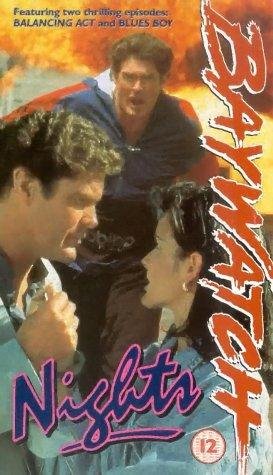
Welcome to Late Night Retro Television Reviews, a feature where we review some of our favorite and least favorite shows of the past! On Tuesdays, I will be reviewing Baywatch Nights, a detective show that ran in Syndication from 1995 to 1997. The entire show is currently streaming on YouTube!
This week, Donna’s got a knife!
Episode 2.11 “Possessed”
(Dir by David W. Hagar, originally aired on February 2nd, 1997)
A notorious serial killer dies when a prison bus is struck by several cars. His blood gets on several of the people present at the accident and, as a result, he starts possessing them person-by-person. He inhabits a body, commits several murders, and, once his current body expires, he moves on to the next person.
For instance, lifeguard Donna DiMarco was on the scene of the accident and soon, she finds herself putting on sexy lingerie, grabbing a knife, and driving around in search of young hitchhikers to seduce and kill. Oh no! That’s not the Donna that we all know. Fortunately, Mitch and Ryan realize what’s happening and Mitch is able to track Donna down before she kills her first hitchhiker. The killer’s spirit flees Donna’s spirt and possesses its next victim.
Ray Reegun (Robert Ginty) is a cop who was one of the first people on the scene of the accident. When he becomes possessed by the killer, he immediately heads down to Mitch’s office and kidnaps Ryan. While Mitch tries to find them, Ray takes Ryan to an abandoned movie theater and tells her about all of the great movies that have premiered at the theater.
“Is this you or is this the killer?” Ryan asks.
It seems like a strange question to ask. I mean, does it really matter? Ray is possessed by a serial killer and is holding Ryan prisoner. So, whether it’s Ray or the killer who is into the movies really doesn’t seem that important. Bad people can like movies too, after all. And Ray’s married so if he’s the one flirting with Ryan at the theater, that’s not a good thing.
Fear not, though. Mitch is able to save both Ryan and Ray. It’s left ambiguous as to whether or not the evil spirit has truly been defeated after it leaves Ray’s body. The episode actually ends with Ryan and Mitch leaving to check on another person who was at the accident so who know? We know that Mitch went back to being a lifeguard after the end of this season but we don’t know what happened to Ryan. Maybe she’s still running around the country, trying to track down that spirit.
It’s an interesting idea. I liked the idea of the spirit jumping from person-to-person and the idea of the spirit moving in the order of the people who arrived at the scene of the accident predates the Final Destination films. The first half of the show, which featured Donna trying to kill that hitchhiker, was enjoyably absurd, But the stuff with Ray and Ryan got bogged down with Ray giving that endless monologue in the theater. Watching this, one gets the feeling that whoever wrote the episode lost intrest about halfway through. Not even the presence of Robert Ginty can liven things up.
Oh well. Next week — two Vikings come back to life and they’re mad! Woo hoo!
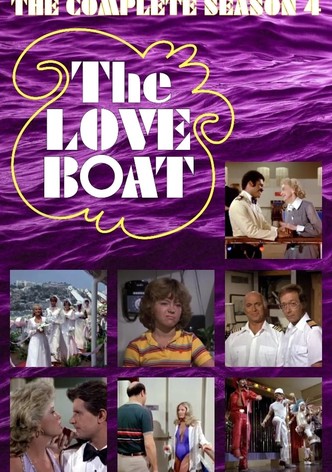
Welcome to Retro Television Reviews, a feature where we review some of our favorite and least favorite shows of the past! On Wednesdays, I will be reviewing the original Love Boat, which aired on ABC from 1977 to 1986! The series can be streamed on Paramount Plus!
It’s time for another cruise on …. THE LOVE BOAT!
Episode 4.21 “Clothes Make The Girl/Black Sheep/Hometown Girl”
(Dir by Earl Bellamy, originally aired on February 28th, 1981)
This week’s cruise is all about money!
For instance, in this episode, we learn that Doc Bricker is from a small town called Cedar Flats. Doc was the head of a committee that raised the money necessary to send Mike Lucas (Randy Powell) to medical school so that Mike could return home and serve as the town doctor. However, when Mike boards the cruise with his fiancée, Tracy (Cindy Morgan), it turns out that he has some bad news. Tracy’s wealthy father has offered Mike a job working at a Park Avenue clinic in Manhattan. Mike is planning on taking the job because of the money and the fact that Tracy doesn’t want to live in a small town. Unfortunately, that will leave Cedar Flats without a doctor.
Doc Bricker, showing that he actually is a man of integrity despite also being a walking HR nightmare, decides that he has no choice but to return to Cedar Flats and serve as their doctor until someone can be found to replace him. He asks Captain Stubing for a six-month leave of absence. Stubing agrees but warns that the cruise line might hire someone to take Doc’s place.
Meanwhile, Suzy Marshall (Kyle Aletter) is excited because it appears that her daughter, Anne (Lee Meriwether), has attracted the attention of a wealthy man named Jonathan (Larry Breeding). Little do they know that Jonathan is actually just Johnny, the ship’s valet. Johnny is wearing another passenger’s clothes and pretending to be rich.
At one point, Johnny takes Anne back to his cabin, making this the first episode to show us what a low-level employee’s cabin looks like. It’s small and cramped and located at the bottom the boat, which means it’ll be the first to flood if The Love Boat ever hits an iceberg. It’s also mentioned that Johnny is not allowed to eat in the main dining room with the passengers. I have to admit that it’s all a bit disillusioning. Apparently, the Love Boat is a terrible place to work!
Finally, a passenger named Donald Gray (Robert Ginty) tells the Captain that he works for the Secret Service. He is on the Love Boat because he hopes to capture a notorious counterfeiter. But what will happen when that counterfeiter turns out to be Jesse (Demond Wilson), Issac’s ne’er-do-well uncle who claims to have turned a new leaf? Poor Isaac!
Well, don’t worry. Everything works out:
1) Mike realizes that he has to honor his commitment to Cedar Flats and, after talking to her father, Cindy realizes that she loves Mike enough that she can be happy in a small town. (Cindy’s father says some very dismissive things about Cedar Flats but it turns out that he was only doing that to get Mike so outraged that he would have no choice but to return home. He was doing it as a favor to Doc Bricker. Can you imagine if that plan didn’t work? What if Mike just said, “You’re right! New York, here we come!”)
2) Anne learns the truth when she sees Johnny in his valet uniform. Luckily, she doesn’t care.
3) It turns out that Donald is actually a criminal who is masquerading as a treasury agent and Uncle Jesse is an undercover government agent! Isaac is happy to learn this but also agrees to keep Jesse’s secret. “You’re my favorite nephew,” Uncle Jesse replies. Awwwww!
This was an okay cruise. The guest stars weren’t particularly interesting but Bernie Kopell and Ted Lange both got an opportunity to show what they could do when given a real storyline to deal with. Kopell especially deserves a lot of credit for showing that humanity that lurked underneath Doc’s carefree surface. This episode kept me entertained and I enjoyed the scenery. Really, what else can you ask for from The Love Boat?
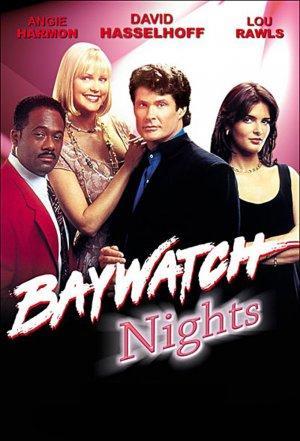
Welcome to Late Night Retro Television Reviews, a feature where we review some of our favorite and least favorite shows of the past! On Tuesdays, I will be reviewing Baywatch Nights, an detective show that ran in Syndication from 1995 to 1997. The entire show is currently streaming on Youtube!
This week, Ryan goes undercover!
Episode 1.6 “976 Ways To Say I Love You”
(Dir by Charles Bail, originally aired on November 4th, 1995)
The sixth episode of Baywatch Nights opens with Mitch and Garner doing a surveillance job on someone. They are sitting out in their car and watching their target and talking about how much they hate having to work surveillance.
One thing that I’ve noticed about the first few episodes of Baywatch Nights is that Mitch and Garner both seem to spend a lot of time complaining about their job. It’s a bit odd because it’s not like there’s any reason why they have to work as private detectives. Garner could rejoin the police department if he wanted to. Mitch actually has another full-time job as one of the top lifeguards in California. There’s nothing that says they have to spend their nights doing surveillance. (In fact, I’m not even sure how Mitch is balancing being a lifeguard with being a private eye.) I mean, if it’s such a bother being a private eye, just don’t do it anymore!
The surveillance subplot doesn’t really have anything to do with the rest of the episode. (It’s mostly just there so the episode can feature a joke about Garner and Mitch getting dusted by a crop duster that happens to fly over their convertible.) Instead, the majority of this episode deals with Mitch, Garner, and Ryan helping Addy (Heather Campbell), a former phone sex operator who was scammed by her boss and who is now apparently being stalked by someone who is trying to murder everyone who was involved with Addy’s former career. This is one of those cases that doesn’t really add up to much but it does provide Garner with a chance to do some real detective work and abandon his idea to abandon crime fighting and open a chicken franchise.
(Seriously, that’s what Garner was planning on doing.)
The investigation also leads to Ryan putting on a blonde wig and going undercover as a phone sex operator. Watching this episode, I got the feeling that the entire pitch was, “Angie Harmon says sexy things on the phone,” and the plot was basically developed around that one idea. It should be said that Angie Harmon actually does a pretty good job playing up Ryan’s irritation with having to go undercover. The way she rolled her eyes whenever some mouth-breather started to talk to her told us everything we needed to know about the experience. Unlike her whiny partner, Ryan did what she had to do to solve the case and good for her! Really, this entire series should have just been Ryan kicking ass and solving crimes. Garner and Mitch are just taking up space.
Along with Angie Harmon’s work as Ryan, this episode was also distinguished by the performance of Robert Ginty as the owner of the phone sex company. Ginty was wonderfully sleazy as a businessman who made no apologies for how he made his money. As well, Police Academy fans will probably be happy to see Michael Winslow, as a surveillance technician who imitates static.
The episode was not bad, even if it wasn’t particularly memorable. Ryan did a good job and again proved herself to be the best private eye in California. Seriously, though, Mitch and Garner need to stop crying so much. If you don’t want to do detective stuff, don’t become a detective!
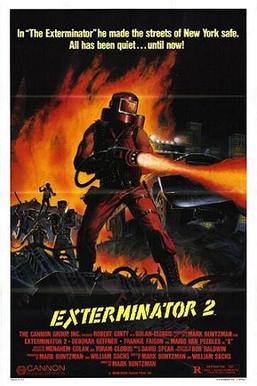
Four years after the end of the first Exterminator, the man they drove too far is driven too far again….
As you may remember, the first Exterminatorended with the CIA shooting vigilante John Eastland (Robert Ginty) because Eastland’s anti-crime activities were somehow making the President look bad. The wounded Eastland fell into the Hudson River. “Washington will be pleased,” the CIA agent said to the gunman. However, the film’s final shot revealed that Eastland had survived his plunge.
1984’s Exterminator 2 opens with Eastland returning to New York City. He’s got a small apartment and a police scanner and when he hears a report that an elderly couple is being menaced by a group of thugs, he puts on a welding mask and uses his flame thrower to set the criminals on fire. Of course, he doesn’t actually arrive in time to save the old couple from getting shot and killed. Just because Eastland has decided to become a vigilante, that doesn’t mean that he’s particularly good at it.
The first Exterminator was a grim and gritty thriller that took itself very seriously. In fact, one could argue that it took itself a bit too seriously. Exterminator 2, which was produced by Cannon Films, takes a slightly different approach. This is obvious as soon as Mario Van Peebles shows up as X, a cult leader who is looking to take over the New York drug trade. Van Peebles, with his model good looks and his quick smile, is not exactly the most intimidating of villains. And X is not exactly the most brilliant of bad guys. For one thing, he drives a car with a big red X spray painted on one of the doors, which doesn’t seem to be the smartest thing to do when you have both the police and crazed vigilante hunting for you.
Fortunately, for X, John Eastland is easily distracted. After he sets a few people on fire, he seems to lose interest in actually being a vigilante and instead, a large portion of the film is taken up with him getting a job collecting garbage with his friend, Be Gee (Frankie Fasion). (Much like the previous film’s Michael Jefferson, Be Gree served with Eastland in Nam.) Eastland also meets and falls in love with a dancer named Caroline (Deborah Geffner). Unfortunately, a trip to Central Park leads to Caroline getting attacked by a bunch of X’s followers. With Caroline in a wheelchair, Eastland has little choice but to pick up his flame thrower and transform his garbage truck into a tank of destruction….
Exterminator 2‘s production was a troubled one. Director Mark Buntzman was one of the producers of the first Exterminator and apparently, Cannon disliked his first cut of Exterminator 2. Director William Sachs (who was Cannon’s resident “film doctor”) was brought in to do extensive reshoots in Los Angeles. Unfortunately, by the time Sachs was brought in, Robert Ginty had already moved on to another project and Sachs was forced to use his stunt double for any scenes involving Eastland. (This is one reason why Eastland spends much of the film wearing a welder’s mask.) Also because of Ginty’s absence, Sachs ended up adding a lot of scenes that focused on Van Peebles’s performance as X, with the end result being that the film often seems to be more about X and his gang than it is about Eastland and his hunt for revenge. (Unfortunately, this also led to a lot of unresolved subplots, including one in which X orders one of his roller skating henchman to kidnap a woman off the street so she can be used to test a new batch of heroin.) Many of the scenes featuring Ginty have a totally different feel to them from the scenes featuring Van Peebles and Ginty’s stunt double.
The end result is a film that really doesn’t have any sort of narrative momentum. One is never really sure what either X or Eastland is hoping to accomplish. Instead, they just kind of wander around until they have their final confrontation. Along the way, there’s a few poorly edited fights but there’s also a lot of scenes that are just included to serve as filler. As I already mentioned, Van Peebles is not a particularly menacing villain but Ginty also isn’t a particularly compelling hero. Ginty’s goofy screen presence was nicely subverted by the grime and grit of the first Exterminator but, in the second film, he just comes across as being petulant and even a bit whiny.
The first Exterminator famously ended with the lines, “Washington will be pleased.” I don’t think anyone would particularly be pleased with Exterminator 2. As a final note, I will admit that I was so bored with this film that, when I watched it, I barely noticed when it ended and Tubi segued into showing a film called Executioner 2. That pretty much sums up the entire Exterminator 2 experience.
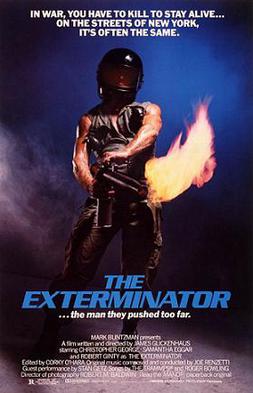
First released in 1980, The Exterminator begins during the Vietnam War.
Two soldiers, John Eastland (Robert Ginty) and Michael Jefferson (future Cannon Film mainstay Steve James) have been captured by the Viet Cong and can only watch as a third soldier is beheaded by his captors. (The graphic beheading, in which the camera lingers on the head slowly sliding off the neck, is an early warning of what this film has in store for its audience.) Jefferson manages to free himself from his bonds and kills most of the enemy soldiers. After Jefferson frees him, Eastland fires a bullet into the still twitching body of the VC commander.
The film jumps forward to 1980. Living in New York City, Jefferson and Eastland are still best friends and co-workers at a warehouse. For a second time, Jefferson saves Eastland’s life when the latter is attacked by a gang calling themselves the Ghetto Ghouls. When the Ghouls get their revenge by tracking down Jefferson and piecing his spine with a meat hook, Eastland gets his revenge by killing …. well, just about everyone that he meets.
Though The Exterminator was obviously inspired by Death Wish, a big difference between the two films is that Eastland doesn’t waste any time before starting his anti-crime crusade. In the original Death Wish, Paul Kersey (played by Charles Bronson) starts out as a self-described “bleeding heart” liberal who was a conscientious objector during the Korean War. Even after his wife and daughter are attacked (and his wife killed) by Jeff Goldblum, Kersey doesn’t immediately pick up a gun and start shooting muggers. Indeed, it’s not until the film is nearly halfway over that Kersey begins his mission and, in one of the film’s more memorable moments, he reacts to his first act of violence by throwing up afterwards. While one could hardly call Death Wish an especially nuanced film, it does at least try to suggest that Kersey’s transformation into a vigiliante was a gradual process.
The Exterminator, on the other hand, goes straight from Eastland informing Jefferson’s wife about the attack to Eastland threatening a tied-up Ghetto Ghoul with a flame thrower. When did Eastland kidnap the Ghetto Ghoul? Why does Eastland have a flame thrower? Where exactly has Eastland tied up the Ghetto Ghoul? None of this is explained and the film’s abruptness gives it an almost dream-like feel. The film plays out like the fantasy of everyone who has ever been mugged or otherwise harassed. Magically, Eastland suddenly has the skills and the resources to outsmart not just the criminals but also the police who have been assigned to stop him. Even the CIA is assigned to take down Eastland because his anti-crime crusade is inspiring people to wonder why the President hasn’t been able to reduce crime. The film plays out like the type of daydreams that Travis Bickle had when he wasn’t driving his taxi.
Eastland is ruthless in his kills but fortunately, everyone he kills is really, really bad. The Ghetto Ghouls clubhouse is decorated with a poster of Che Guevara but Che’s revolutionary rhetoric isn’t worth much when the Exterminator’s after you. A mob boss makes the mistake of not telling Eastland about the Doberman that’s guarding his mansion so into the meat grinder he goes. New Jersey loses a state senator when Eastland discovers him torturing an underage male prostitute. The film was shot on location in New York City and the camera lingers over every grimy corner of the city. A scene where Eastland walks through Times Square takes on a cinéma-vérité feel as people jump out at him and try to entice him to take part in everything the city has to offer. If Death Wish suggested that Paul Kersey’s actions were saving New York, The Exterminator suggests that we should just let John Eastland burn the whole place down.
With his youthful face, Robert Ginty looks more like a mild-mannered seminarian than a hardened veteran of both Vietnam and the mean streets of New York but, ultimately, that works to the film’s advantage. If anything, it explains why everyone who meets him trends to underestimate what he’s capable of doing. B-movie vet Christopher George overacts in his usual amusing way as he plays the detective who has been assigned to catch The Exterminator. Samantha Eggar plays a doctor who starts dating George for no discernible reason. The scenes featuring George and Eggar often seems as if they belong in a different film but they do provide some relief from the rather grim and gruesome scenes of The Exterminator killing almost everyone who he meets.
The Exterminator was controversial when it was originally released and it still retains the power to shock. It’s easy to laugh at some of the film’s more melodramatic moments but there were still more than a few scenes that I watched with my hands over my eyes. The film’s hard edge grabs your attention from the start and the idea of the CIA sending assassins to take out a neighborhood vigilante is so over the top and ridiculous that it’s kind of hard not to appreciate it. That the film totally buys into its paranoid worldview (“Washington will be pleased.”) makes the whole thing far more compelling than it should be.
As ludicrous as it all is, The Exterminator is a film that defies you to look away.
The 1983 Italian film, Warrior of the Lost World, opens with a long title card that explains that society has collapsed, due to radiation, disease, wars, and multiple bank bail-outs. The world of the future is a dangerous place, where the roads are ruled by dangerous scavengers. It’s a world where survival is not guaranteed and only those who are willing to fight will live to see another day and….
Well, look, I’ll be honest. It was a really long title card and, as anyone who knows me can tell you, I don’t have a particularly long attention span. I read about the radiation and the diseases and then I kind of zoned out. The important thing to know is that the film takes place in the future and that the film was made in the wake of the international success of The Road Warrior. In the early 80s, the Italian film industry briefly abandoned zombies to make movies about people driving cars through a post-apocalyptic landscape. In fact, I initially assumed that David Worth was a pseudonym for someone like Enzo Castelleri or even Umberto Lenzi. David Worth is actually a cinematographer who worked on a few Clint Eastwood films and who went to Italy to make his directorial debut with Warrior of the Lost World. After this film, Worth went on to direct Kickboxer and handful of others.
(One thing that’s always interesting about watching these films is discovering that people were speculating about the collapse of society long before 2023. It’s kind of nice to be reminded that people have always been panicking about something, even while society itself continued to survive and grow.)
Robert Ginty stars as The Rider, a man so tough that he doesn’t even need a name. The Rider and his motorcycle travel across the country. The Motorcycle can talk, though it’s screechy voice might make you wish that it couldn’t. It warns The Rider whenever there’s danger nearby. When a bunch of punk rock rejects attempt to attack the Rider, his motorcycle identifies them as being “dorks.” Later, when the Rider is looking at a woman who he has just saved from death, the Motorcycle orders, “Kiss the girl!” The Motorcycle has a weird quirk where it says everything three times. The Rider talks back to the Motorcycle but he always mumbles all of his lines, to the extent that it’s often difficult to really understand what he’s saying. It’s hard not to get the feeling that Robert Ginty couldn’t believe that he was actually having to pretend as if he was a heart-to-heart with a motorcycle.
(The Rider’s bike is actually named Einstein but, to me, it will always by The Motorcycle.)
After the Rider crashes into a wall, he’s nursed back to health by a bunch of old people who are trying to organize a rebellion against the evil Prossor (Donald Pleasence), who rules the State of Omega. Prossor has kidnapped the rebellion’s leader, Prof. McWayne (Harrison Muller, Jr). The old people want The Rider to accompany McWayne’s daughter, Natasia (Persis Khambatta), to Prossor’s city. The Rider whines about being asked but eventually agrees to do so. I’m not sure why The Rider agrees to help because The Rider seriously never stops complaining about how inconvenient the whole journey is. While The Rider does manage to rescue McWayne, Natasia gets left behind so, of course, the Rider has to do it all over again. Fortunately, it turns out that the Omega army isn’t quite as competent as everyone claims that they are. In fact, outsmarting Prosser is so easy that you can’t help but wonder why no one bothered to it before.
Warrior of the Lost World is not necessarily a good movie but, when watched with a group of friends and with the right snarky attitude, it is a fun movie. The action and the plotting is just so over-the-top and ridiculous that it’s hard to look away from the screen and Robert Ginty seems so genuinely annoyed by every little thing that happens that it’s hard not to wonder if maybe The Rider read the script before heading off to confront Prossor. An extended sequence is devoted to everyone singing the Rebellion’s national anthem, the great Donald Pleasence rants like a pro, Fred Williamson has a largely pointless cameo, and the film features what appears to be a 20-minute kiss between The Rider and Natasia. (The Motorcycle watches.) If you can’t have fun while watching Warrior of the Lost World, I just don’t know what to tell you.
Well, here we are! It’s January 1st. In just a few days, the Oscar nominations will be announced and then, on February 9th, the winners will be revealed! From now until the day of the ceremony, I will be taking a look at some of the films that were nominated for and won Oscars in the past. As of this writing, 556 films have been nominated for best picture. I hope that, some day, I will be able to say that I have seen and reviewed every single one of them.
Let’s start things off with the 1978 Best Picture nominee, Coming Home!
Coming Home takes place in California in 1968. While hippies stand on street corners and flash peace signs, teenagers are being drafted and career military men are leaving for Vietnam and people continue to tell themselves that America is doing the right thing in Indochina, even though no one’s really sure just what exactly it is that’s going on over there. At the local VA hospital, the wounded and the bitter try to recover from their wartime experiences while struggling with an often heartless bureaucracy and feelings of having been abandoned by their country.
When Marine Corps. Capt. Bob Hyde (Bruce Dern) is deployed to Vietnam, he leaves behind his wife, Sally (Jane Fonda). Told that she can no longer live on the base while her husband is overseas, Sally gets an apartment, a new car, and eventually a new hairdo. She also gets a new friend, Vi Munson (Penelope Milford). Vi smokes weed and is critical of the war in Vietnam. It doesn’t take long for Sally to start to enjoy the idea of being free and not having to cater to Bob’s every whim. Sally even ends up volunteering at the local VA hospital.
That’s where she meets Luke (Jon Voight, looking youngish and incredibly sexy), a bitter but sensitive vet who, having gone to Vietnam and returned to the U.S. as a paraplegic, is now outspoken in his opposition to the war. Luke is also friends with Billy (Robert Carradine), who is Vi’s shell-shocked brother. When Luke and Sally first meet, they collide in a hallway and Sally gets a bag full of urine spilled on her. It’s only later that Luke and Sally realize that they knew each other in high school and soon, they’re having an affair. Luke, who is as gentle a lover as Bob is brutish, brings Sally to her first orgasm in a sensitively-directed scene that should be studied by any and all aspiring filmmakers.
Unfortunately, the problem with having an affair while your husband is away is that, eventually, your husband’s going to come back. Bob returns from Vietnam and he’s no longer the confident and gung ho officer that he was at the start of the film. He now walks with a pronounced limp and, like Luke, he’s angry. However, whereas Luke has channeled his anger in to activism, Bob tries to keep his emotions bottled up. (He does take the time to give the finger to a few protesters and, considering how obnoxious most of the protesters in this film are, you can’t help but feel that Bob may have had a point.) When Bob discovers that Luke and Sally have been having an affair, he snaps….
Meanwhile, Billy is having a hard time readjusting to life, Vi is getting picked up by sleazy men in bars, and there’s a ventriloquist who shows up a few times. There’s a lot going on in Coming Home and, at times, it feels like the film’s trying to cram in too much. The film often seems a bit disjointed, with semi-documentary footage of Voight hanging out with real paraplegic vets awkwardly mixed in with didactic scenes of Sally turning against the war.
That the love story between Sally and Luke is so effective has far more to do with the performances of Jane Fonda and especially Jon Voight, than it does with anything in the film’s script. Indeed, the script itself doesn’t seem to be too concerned with who Luke and Sally were before they collided in that hallway and it also doesn’t seem to be all that interested in who they’ll be after the end credits role. As written, they’re just plot devices, specifically created and manipulated to express the film’s antiwar message. But then you see Jon Voight’s haunted eyes while he’s listening to a group of vets discuss their experience or you hear the pain in his voice while he talks to a bunch of high school students and it’s those little moments and details that tell you who Luke is. By that same token, Jane Fonda does a good job of showing each stage in Sally’s liberation, even if you can’t help but feel that the main reason Sally becomes an anti-war feminist is because she’s played by Jane Fonda.
Of course, in the end, the entire film is stolen by Bruce Dern. You actually end up feeling very sorry for Bob Hyde (and, to the film’s credit, you’re meant to). It would have been very easy to just portray Bob as being a close-minded pig but the film respects his pain just as much as it respects Luke’s anti-war activism and Sally’s need to be free. In the end, you actually feel worse for Bob than you do for either Luke or Sally. Bob is as much a victim of the war as anyone else in the film.
Coming Home was one of the first films about Vietnam to ever be nominated for best picture. Jane Fonda and Jon Voight both won Oscars but the film itself lost to a far different look at the war in Vietnam, The Deer Hunter.
For the longest time, I thought that Two-Minute Warning was a movie about a gang of art thieves who attempt to pull off a heist by hiring a sniper to shoot at empty seats at the Super Bowl. As planned by a master criminal known as The Professor (Rossano Brazzi), the sniper will cause a riot and the police will be too busy trying to restore order to notice the robbery being committed at an art gallery that happens to be right next to the stadium.
I believed that because that was the version of Two-Minute Warning that would sometimes show up on television. Whenever I saw the movie, I always through it was a strange plan, one that had too many obvious flaws for any halfway competent criminal mastermind to ignore them. What if the sniper was captured before he got a chance to start shooting? What if a riot didn’t break out? The sniper spent the movie aiming at empty seats but, considering how many people were in the stadium, it was likely that he would accidentally shoot someone. Were the paintings really worth the risk of a murder charge?
Even stranger was that Two-Minute Warning was not only a heist film but it was also a 1970s disaster film. Spread out throughout the stadium were familiar character actors like Jack Klugman, John Cassevetes, David Janssen, Martin Balsam, Gena Rowlands, Walter Pidgeon, and Beau Bridges. It seemed strange that, once the shots were fired and Brazzi’s men broke into the gallery, all of those familiar faces vanished. When it comes to disaster movies, it is an ironclad rule that at least one B-list celebrity has to die. It seemed strange that Two-Minute Warning, with all those characters, would feature a sniper shooting at only empty seats. For that matter, why would there be empty seats at the Super Bowl?
That wasn’t the strangest thing about Two-Minute Warning, though. The strangest thing was that Charlton Heston was in the film, playing a police captain. In most of his scenes, he had dark hair. But, in the scenes in which he talked about the art gallery, Heston’s hair was suddenly light brown.
Recently, I watched Two-Minute Warning on DVD and I was shocked to discover that the movie on the DVD had very little in common with the movie that I had seen on TV. For instance, the television version started with the crooks discussing their plan to rob the gallery. The DVD version opened with the sniper shooting at a couple in the park. In the DVD version, there was no art heist. The sniper had no motive and no personality. He was just a random nut who opened fire on the Super Bowl. And, in the DVD version, he did not shoot at empty seats. Several of the characters who survived in the version that I saw on TV did not survive in the version that I saw on DVD.
What happened?
The theatrical version of Two-Minute Warning was exactly what I saw on the DVD. A nameless sniper opens fire and kills several people at the Super Bowl. In 1978, when NBC purchased the television broadcast rights for Two-Minute Warning, they worried that it was too violent and too disturbing. There was concern that, if the film was broadcast as it originally was, people would actually think there was a risk of some nut with a gun opening fire at a crowded event. (In 1978, that was apparently considered to be implausible.) So, 40 minutes of new footage was shot. Charlton Heston even returned to film three new scenes, which explains his changing hair color. The new version of Two-Minute Warning not only gave the sniper a motive (albeit one that did not make much sense) but it also took out all of the violent death scenes.
Having seen both versions of Two-Minute Warning, neither one is very good, though the theatrical version is at least more suspenseful than the television version. (It turns out that it was better to give the sniper no motive than to saddle him with a completely implausible one.) But, even in the theatrical version, the potential victims are too one-dimensional to really care about. Ultimately, the most interesting thing about Two-Minute Warning is that, at one time, an art heist was considered more plausible than a mass shooting.



 Through the Shattered Lens