Brad’s “Scene of the Day” – Richard Thomas in SEPTEMBER 30 1955 (1977)!


Actor Richard Thomas turns 74 years old today. He’s especially important to me because of two specific roles. First, he co-starred with my favorite actor Charles Bronson in the 1991 Christmas movie, YES VIRGINIA, THERE IS A SANTA CLAUS. Along with IT’S A WONDERFUL LIFE, I watch YES VIRGINIA every year during the Christmas season. Second, he filmed a movie in central Arkansas back in 1977 called SEPTEMBER 30, 1955. Part of the movie was filmed along the Arkansas River in Toad Suck, AR. This is the community I grew up in, and my parents still live there. As a matter of fact, I’ll be spending Father’s Day with my Dad in Toad Suck. In my “scene of the day,” I share a scene from SEPTEMBER 30, 1955 where Thomas’ character learns of the fatal car crash of James Dean. Notice in the scene that his shirt has the initials ASTC, which stands for Arkansas State Teachers College. My dad received his teaching degree from ASTC. This college is now called The University of Central Arkansas (UCA), and that’s where I received my Finance Degree. The entire scene is filmed on the campus of UCA, and I’ve played tennis on those courts many times. I’ve attended football games at that stadium. The campus has been completely updated since this move was filmed in 1977, but it still looked a lot like that when I began my college years in 1991. It’s a trip down memory lane for me. 

Happy Birthday, Richard Thomas!! 

Dennis Quaid in Toad Suck, Arkansas!


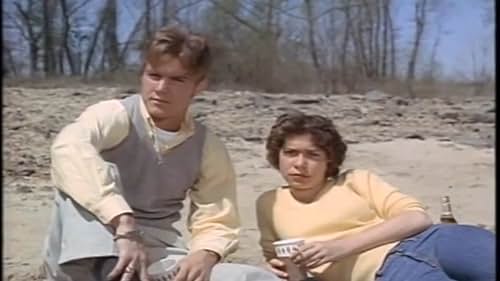
Happy 71st Birthday to Dennis Quaid. He’s been in a lot of good movies over the years, but I’m quite partial to a movie he made in 1977 called SEPTEMBER 30, 1955. He stars alongside Richard Thomas, Tom Hulce, Susan Tyrrell, Deborah Benson and Lisa Blount. The movie is about a group of friends at the Arkansas State Teachers College, which is my Alma mater the University of Central Arkansas, who deal with the death of James Dean. It’s a good movie that was filmed all around central Arkansas, including my home community of Toad Suck, Arkansas. In the picture above he’s sitting on a “beach” along the Arkansas River in Toad Suck. I’ve been there many times. The movie was written and directed by the talented Arkansan James Bridges, of THE PAPER CHASE and URBAN COWBOY fame. It’s a film well worth searching out. I’ve included the trailer below.

A Blast From The Past: Barefoot In The Park (dir by Harvey Medelinsky)


Our regularly scheduled review of Welcome Back Kotter will not be posted this week so that we may bring you this special presentation….

From 1982 and filmed for HBO, it’s a stage production of Barefoot In The Park!  I’ve always loved the Robert Redford/Jane Fonda film version but I also enjoy this recording of one of the play’s periodic Broadway revivals.  Richard Thomas and Bess Armstrong play the newlyweds and they really bring Neil Simon’s dialogue to life.

Without further ado, here is Barefoot In The Park!

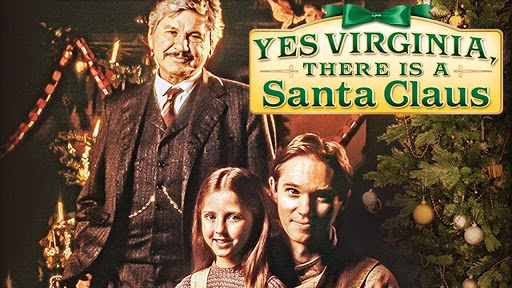
YES VIRGINIA, THERE IS A SANTA CLAUS (1991) – Charles Bronson made a Christmas movie, and it’s a family classic at my house. 


On December 8, 1991, YES VIRGINIA, THERE IS A SANTA CLAUS, starring Charles Bronson, made its world premiere on the ABC Network. I was 18 years old and working at the local grocery store that night so I had to set up my VCR to record the film. I was so nervous that something might happen to mess up my timed recording. In those days, all it took was a quick power flicker and your recording was screwed. I was so happy when I got home that night and everything had gone perfectly. I was a starving Bronson superfan who had not seen anything new from the man since KINJITE: FORBIDDEN SUBJECTS had been released in February of 1989. Since KINJITE’S release, Charles Bronson had faced the most difficult emotional times of his life. The love of his life, Jill Ireland, had fought valiantly against cancer but lost her battle with the disease in May of 1990. When he chose to start working again, his first two films, THE INDIAN RUNNER and YES VIRGINIA, featured him in roles where he was playing a man who is dealing with the pain from having recently lost his wife. These were tough times for the aging star, and it seems he was working out some deep emotional struggles in these two performances. At the time, the prospect of Charles Bronson performing in a heartwarming Christmas movie about a classic newspaper editorial was such a surprising film choice. I was all in! 

YES VIRGINIA opens with renowned journalist for The New York Sun newspaper, Francis P. Church, cleaning the snow off of his recently deceased wife and daughter’s tombstones. He turns away to take a drink of whiskey out of shame and then walks away. It seems that since they passed away, Church has become a shell of his former self. He has a lot of guilt because he was always away on newspaper business instead of being at home with his family. He’s dealing with that pain by drinking way too much. He’s not working on the stories he’s been assigned by his editor, Edward P. Mitchell (Ed Asner), and it seems he’s lost the will to live. 

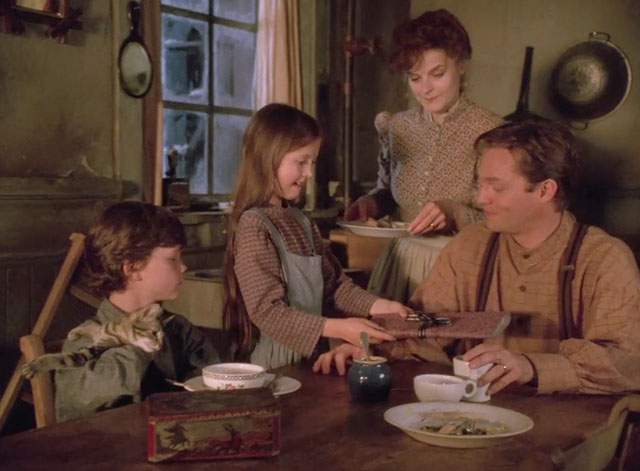
At the same time that Francis Church is dealing with his issues, we’re introduced to the O’Hanlon clan. James O’Hanlon (Richard Thomas) is the head of the family that includes his wife Evie (Tamsin Kelsey), daughter Virginia (Katharine Isabelle), and sons Teddy and Sean. We meet James on the same day that he loses his job for beating up a bigot who was insulting his Irish heritage. We follow him as he attempts to find a job so he can provide for his family. His sweet-natured daughter Virginia is having some issues of her own. One day while playing jump rope at school, some of the other girls decide to tell her that there is no such thing as Santa Claus. This cause’s Virginia a lot of stress, so she asks her dad if it’s true. Holding yesterday’s copy of the New York Sun, he tells her that if he sees it written in The Sun, he knows it’s true. Being a smart young lady, she decides to write her own letter to The Sun. 

And this is where the two stories converge. Editor Mitchell assigns Church the job of answering Virginia’s question. This turns out to be just what he needs to begin seeing the good in the world around him again.  

That night in December of 1991, even after working the late shift at the grocery store, there was no way I was going to wait until the next day to watch a new Charles Bronson movie for the first time in almost 3 years. I pressed play and settled in for a film that is dealing with some really serious subject matter. The main characters are dealing with severe depression, alcoholism, bigotry, extreme poverty, and attitudes of indifference and disbelief towards Santa Claus himself! Sounds like an uplifting story doesn’t it? The truth is that it is a very uplifting story because it features people with good hearts who care about the people around them. Sure, there are some jerks in the movie. This is one of those kinds of movies where those jerks end up getting their asses kicked. James O’Hanlon and his friend Donelli get the opportunity to beat up the bigots who call them potlickers and poured their beer on them. As a fan of Bronson, one of the most satisfying scenes in the movie is when Church punches out the smug, elitist A-hole, Cornelius Barrington (John Novak) who’s being disrespectful about one of Church’s female co-workers. Those scenes are satisfying, but my favorite parts of the movie are the sentimental acts of kindness we get to see throughout the film. We see co-workers taking care of co-workers. We see neighbors taking care of neighbors. We see family members taking care of each other at different times and different ways. It’s so satisfying when we see good things happen to these good people simply because someone cares enough to be kind. 

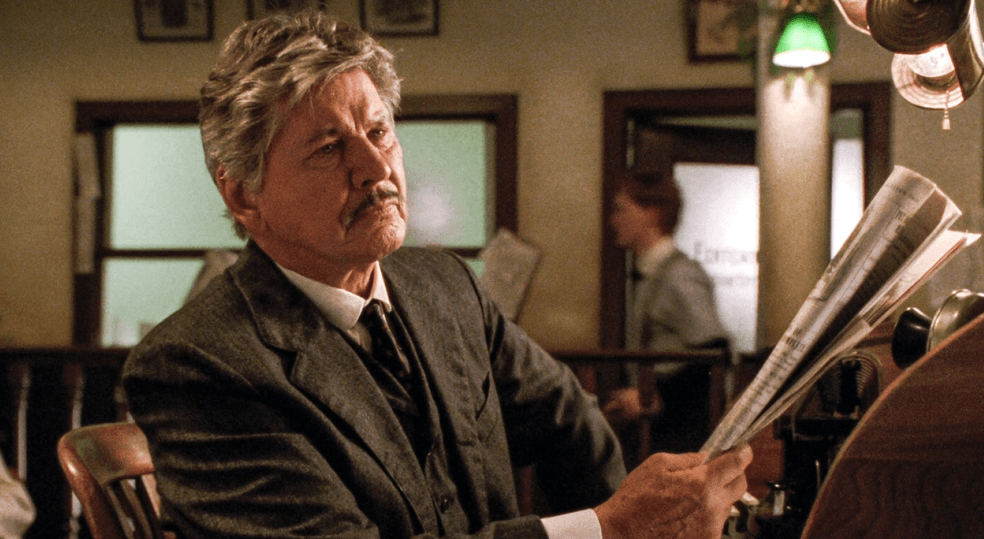
The cast in this film is so good. Of course Charles Bronson is excellent as Francis P. Church. You can really feel his character’s grief, and you can understand why he runs away to the bottle. And knowing that Bronson had recently lost his wife in real life only adds to the emotional power of the performance. And I think Katharine Isabelle is so good as Virginia. The wrong person in her role could have ruined the film. They got it right with Katharine. Ed Asner is perfect as Edgar P. Mitchell, with just the right combination of toughness and caring. I really enjoy seeing the two grizzled veterans, Bronson and Asner, working together. And finally, I like  Richard Thomas in this movie as well. He plays the highs and lows of his character in a dramatic way without going too far. The main cast had to be good for the movie to work, and they more than fit the bill. 

And what about that famous editorial where Church answers Virginia’s question, “Is there a Santa Claus?” I just love the scene in the movie when the sweet girl gets her answer. I won’t spoil it for you with all the details, but I will say that it features so much thoughtfulness and thankfulness leading up to the reading of the actual editorial that ran in New York Sun in 1897. And the look on Virginia’s face when her dad reads “Yes Virginia, there is a Santa Claus” is priceless. It’s the perfect example of why I love the movie, and therefore, it’s a perfect ending to the film. 

BONUS CONTENT – I had the great privilege to be part of an interview with Lindsay Ireland, Charles Bronson’s and Jill Ireland’s niece, as part of the “This Week in Charles Bronson” podcast. She gives so much insight into her uncle and aunt. She also provides additional context on just how hard Jill’s passing was on Bronson just prior to filming YES VIRGINIA, THERE IS A SANTA CLAUS. I’ve linked the interview below if you want to know more.

Holiday Film Review: Yes, Virginia, There Is A Santa Claus (dir by Charles Jarrott)


The year is 1897 and eight year-old Virginia O’Hanlan (Katharine Isabelle — yes, that Katharine Isabelle) has a problem.  All of her “little friends” say that there is no Santa Claus!  When she asks her father (Richard Thomas) about whether or not there’s a Santa Claus, he suggests that she write a letter to the New York Sun.  “If you see it in the Sun,” he says, “it must be true!”  The letter ends up on the desk of a gruff editor (Edward Asner) who assigns Virginia’s question to Frank Church (Charles Bronson), an alcoholic who is still mourning the deaths of his wife and child. Conquering his own cynicism and depression, Church writes an editorial reply that goes on to become not just a holiday classic but also the most frequently reprinted editorial in history.  Yes, Virginia, Church begins, there is a Santa Claus….

This 1991 film is a sweet-natured retelling of the famous story of Frank Church’s editorial.  Of course, it takes considerable liberties with the actual story.  Here’s just a few examples.

In real life, the editorial was published in September.  In the movie, it’s published on Christmas Eve.

In real life, Virginia’s father was a doctor and she came from a middle class family.  In the movie, Virginia’s father is an Irish immigrant and laborer who is so poor that the O’Hanlan’s might not be able to afford a Christmas!  They live in a tenement and Virginia’s father is frequently harassed by not only the cops but also corrupt labor officials.

In real life, Frank Church was a notoriously cynical atheist who reportedly had little use for Christmas and specifically didn’t sign his name to his famous editorial because he didn’t think much of it.  At the time that he wrote the editorial, he was also a bachelor.  He did marry shortly after the editorial was published but he never had any children.  In the film, Frank is a widower who rediscovers his zest for life and who smiles broadly while listening to Virginia’s father read it aloud.

And, of course, in real life, it’s very probable that the letter was written by Virginia’s parents because how many eight year olds would actually write something like, “Some of my little friends say there is no Santa Claus.”  In the movie, however, Virginia writes the letter herself.

In other words, this is a nice movie that just happens to be terrible history.  The film does end with a disclaimer that clarifies that “certain events have been fictionalized.”  Actually, the entire story has been fictionalized, with the exception of the content of Church’s editorial.  That said, this is a sweet-natured and generally likable movie.  If nothing else, it’s a film that means well and, as tempting as it may be to roll your eyes at the film’s unabashed sentimentality, it’s sincerity feels right for the holiday season.  It’s a made-for-TV movie from the early 90s so don’t expect any surprises but it’s nicely acted and even Charles Bronson seems to be in a good mood by the end of it.

As far as movies about journalists lying to children are concerned, this is a good one.  Just don’t watch it for a history lesson.

Horror Film Review: It (dir by Tommy Lee Wallace)


Last month, before I saw the latest film version of Stephen King’s It, I watched the 1990 miniseries version.

This was my first time to watch the It miniseries, though I had certainly heard about it.  Most of the reviews that I had read seemed to be mixed.  Everyone seemed to agree that Tim Curry was the perfect choice for the role of Pennywise the Dancing Clown.  However, many other reviewers complained that the program’s television origins kept It from being as effective as it could be.  “Not as scary as the book,” everyone seemed to agree.  The actors who played the members of the Loser Clubs as children all seemed to receive general acclaim but not everyone seemed to be as enamored with the adult cast.  And everyone, even those who liked the miniseries as a whole, complained about the show’s finale, in which Pennywise took the form of a giant spider.

Well, I have to agree about the giant spider.  That spider looked painfully fake, even by the standards of 1990s television.  Not only does the spider look too fake to truly be scary but, once that spider showed up, that meant that Tim Curry disappeared from the film.  Curry deserved every bit of acclaim that he received for playing the role of Pennywise.

All that said, the miniseries was still a lot better than I had been led to believe.

Certainly, it’s not as frightening as the book or the movie.  Considering that the It miniseries was produced for network television, that’s not surprising.  As opposed to the movie, the miniseries attempts to cover King’s entire novel.  That’s a lot of material, even when you have a five hour running time.  Obviously, a good deal of the story had to be cut and there are a few scenes in the miniseries that feel a bit rushed.  Characters like Audrey Denbrough and Stanley Uris, who were compelling in the novel, are reduced to being mere bystanders.  Some of the novel’s most horrific scenes — like Henry Bowers cutting Ben — are either excised or heavily toned down.  If the novel was as much about the hypocrisy of the adults of Derry as the paranormal horror of Pennywise, that theme is largely left out of the miniseries.

That said, It still had its share of memorable moments.  The image of a clown standing on the side of the road, holding balloons, and waving is going to be creepy, regardless of whether it’s found in a R-rated film or on ABC.  The death of little George Denbrough is horrific, regardless of whether you actually the bone sticking out of his wound or not.  Even the library scene, in which a grown-up Richie Tozier deals with a balloon filled with blood, was effectively surreal.

As for the actors who played the members of the Losers Club, the results were occasionally uneven.  The actors who played them as children were all believable and had a credible group chemistry.  You could imagine all of them actually being friends.  As for the adults, some of them I liked more than others.  Harry Anderson, Dennis Christopher, and Tim Reid gave the best performances out of the group.  John Ritter and Annette O’Toole were somewhere in the middle.  Richard Thomas was absolutely awful and I found myself snickering whenever he was filmed from behind and I saw his pony tail.  Richard Masur, unfortunately, wasn’t around long enough to make much of an impression one way or the other.

Ultimately, though, the miniseries (much like the book) suffers because the adults are never as interesting as Pennywise.  Tim Curry dominates the entire movie and, when he’s not onscreen, his absence is definitely felt.  Watching the miniseries made me appreciate why the film version kept Pennywise’s screen time to a minimum.  Pennywise is such a flamboyant and dominant character that, if not used sparingly, he can throw the entire production out of balance.

Despite its flaws, I liked the miniseries.  Yes, it’s uneven.  Yes, it’s toned down.  Yes, it works better in pieces than as a whole.  But, taken on its own terms, It was effective.  Director Tommy Lee Wallace creates a suitably ominous atmosphere and the child actors are all properly compelling.  And, finally, that damn clown is always going to freak me out.

Just for fun, here’s a trailer for It, recut as a family film:

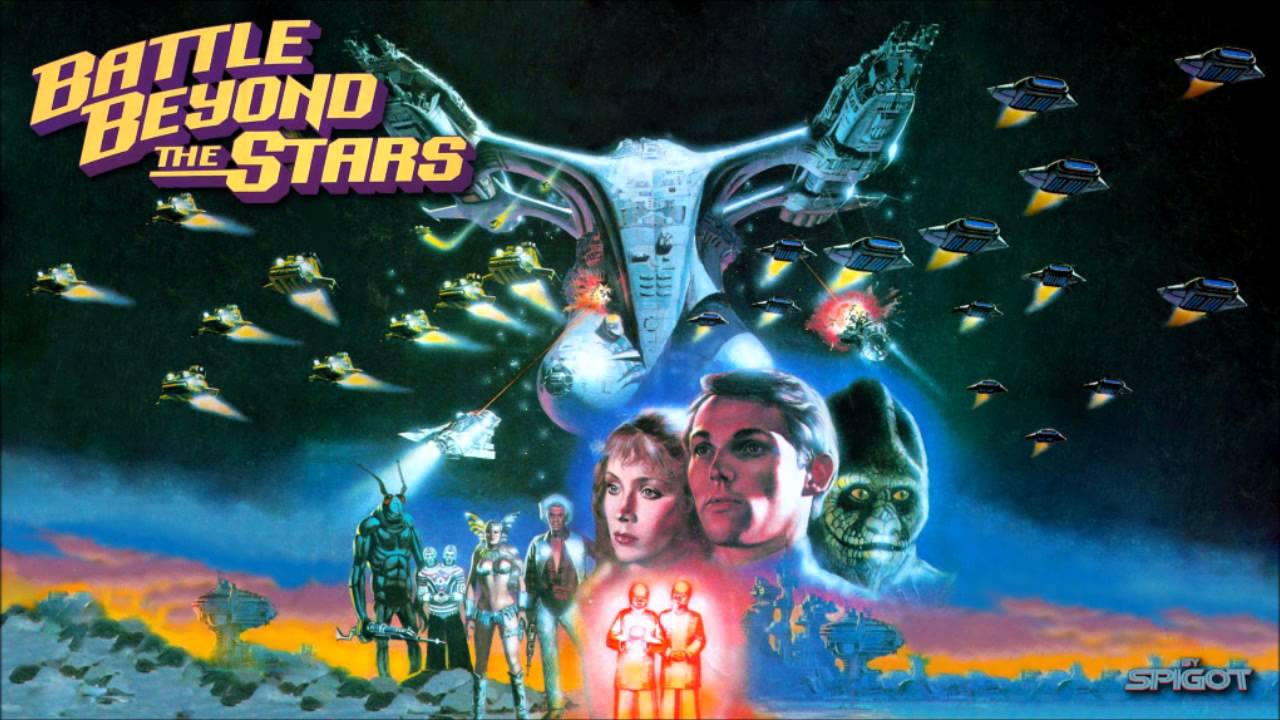
Guilty Pleasure No. 22: Battle Beyond the Stars (dir. by Jimmy T. Murakami)


maxresdefault

Two of my favorite films of all-time happen to be very similar. In fact, one could say that they’re pretty much the same films. I’m talking about Akira Kurosawa’s Seven Samurai and it’s Western-remake by John Sturges, The Magnificent Seven. Kurosawa’s film is one of the greatest films of all-time and it’s no wonder that many have taken the film’s story of the downtrodden hiring a band of misfits, rogues, but still honorable men to help them fight against huge odds.

One such film that tries to add onto Kurosawa film’s legacy was the Roger Corman-produced scifi-adventure film Battle Beyond the Stars. This 1980 film was one of Corman’s many attempts to cash-in on the Star Wars phenomena, but in his usual low-budget style.

For a low-budget scifi film, Battle Beyond the Stars happened to have quite a cast one doesn’t usually see in such productions. While it had such grindhouse and exploitation regulars as John Saxon and Sybil Danning, it also starred the wholesome Richard Thomas from The Waltons and George Peppard (who would later become famous with a new generation as Hannibal Smith of The A-Team). The film would be directed by Jimmy T. Murakami, but from watching the film one could see Corman’s fingerprints all over the production from the script which was pretty lean and cut to the basic outline of Kurosawa’s original film. There’s not much fluff to bog down the pacing of the film.

This film has always been a guilty pleasure of mine because it so resemble Seven Samurai and The Magificent Seven, but adds in it’s own unique style and look to a well-worn and well-trodden plot. It was much later that I found out that James Cameron had a major hand in the special effects work in the film. Think about that for a moment. The self-proclaimed “King of the World” who literally breaks film budget records every time he begins work on a film did FX work on battle Beyond the Stars whose effects budget probably wouldn’t buy a day’s worth of crafts table eating for his most modestly budgeted films.

Lisa Marie always loved to say that grindhouse and exploitation films are some of most honest films out there. There’s no bullshit to what we see on the screen. It’s filmmakers forced to be daring and inventive because the lack of resources forces them to think outside the box. Battle Beyond the Stars might be seen as a mediocre attempt to cash-in on a scifi cultural phenomena, but it does so with a go for broke mentality that makes it such a fun film to watch. It’s not the greatest thing Corman has ever produced and some would even call it a very bad film, but once one looked past it’s rough and flawed surface then one could see a gem in the rough hidden beneath.

Oh, this remake of the remake of the original also happened to star one Robert Vaughn who was one of original Magnificent Seven.

  1. Half-Baked
  2. Save The Last Dance
  3. Every Rose Has Its Thorns
  4. The Jeremy Kyle Show
  5. Invasion USA
  6. The Golden Child
  7. Final Destination 2
  8. Paparazzi
  9. The Principal
  10. The Substitute
  11. Terror In The Family
  12. Pandorum
  13. Lambada
  14. Fear
  15. Cocktail
  16. Keep Off The Grass
  17. Girls, Girls, Girls
  18. Class
  19. Tart
  20. King Kong vs. Godzilla
  21. Hawk the Slayer

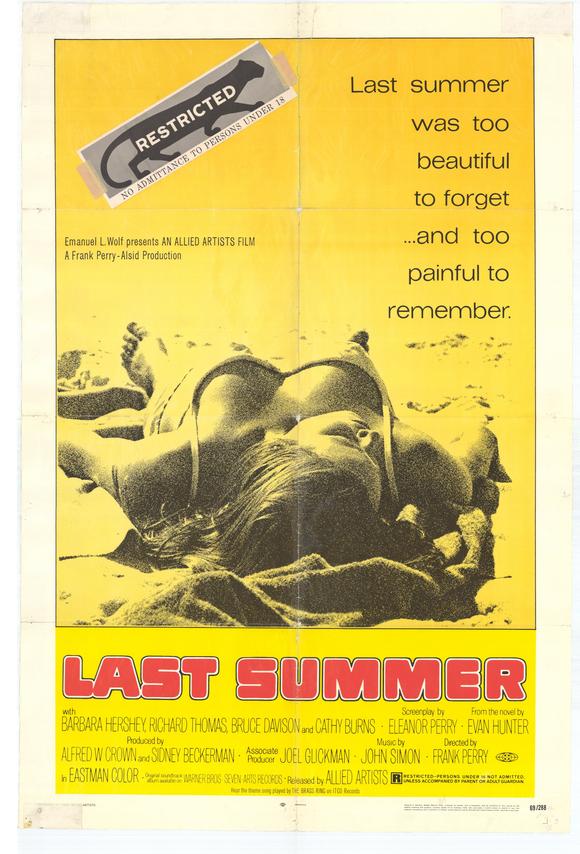
Embracing the Melodrama #24: Last Summer (dir by Frank Perry)


last-summer-movie-poster-1969-1020204164

Let’s close out today’s series of melodrama reviews by taking a look at an unfairly obscure film from 1969, Last Summer.  Directed by Frank Perry (who also directed at least part of The Swimmer before getting into an argument with Burt Lancaster), Last Summer is a film about four teenagers who make the mistake of hanging out with each other during one fateful summer.

Peter (Richard Thomas) and his best friend Dan (Bruce Davison) meet Sandy (Barbara Hershey) on the beach.  Sandy recruits them into helping her take care of a seagull with a broken wing and soon, the three of them are inseparable.  The sexually inexperienced Peter and Dan are both attracted to Sandy while Sandy shown proves herself to have a casually destructive streak.  The two boys are so infatuated with Sandy that they even forgive her after she gets bored with the seagull and kills it.

Eventually, Rhoda (Catherine Burns, who was Oscar-nominated for her performance) starts to hang out with the three of them.  Overweight and shy, Rhoda is, at first, an awkward addition to the group but soon, she and Peter start to grow close.  Sandy, who was previously more interested in Dan until she realized that Peter was losing interest in her, reacts by looking for more and more ways to humiliate the insecure Rhoda.  Eventually, they set Rhoda up on a blind date with a shy Puerto Rican man, a cruel prank which quickly goes wrong.

When Rhoda eventually stands up to her three new “friends,” it leads to a disturbing finale that it is all the more effective specifically because it is so inevitable.

I have to admit that I have a weakness for out-of-control youth films, largely because — while I never went as crazy as Sandy or made as many mistakes as Rhoda — I still had my moments back when I was in high school.  In ways both good and bad, I could relate to the two female leads of Last Summer.  There have been times in my life when I’ve felt like the intellectual and naive Rhoda and then there’s been other times when I’ve felt like the beautiful and self-assured Sandy.  For the most part, I’m usually prouder of myself when I feel like Rhoda but I have a lot more fun when I feel like Sandy.  While the two boys largely remain ciphers, Last Summer is worth seeing for the outstanding performances of Barbara Hershey and Catherine Burns.  Combined with Frank Perry’s atmospheric direction (you can literally see the layers of ennui and humidity clinging to some of the scenes), the end result is an effectively creepy coming-of-age film.

For some unknown reason, Last Summer appears to one of those rare Oscar-nominated films that has never been released on DVD or Blu-ray.  However, it does occasionally show up on TCM and I would suggest keeping an eye out for it.

Last Summer 1969 Thomas Hershey Davidson

(Incidentally, California Scheming — was was released earlier this year — is pretty much an unacknowledged remake of Last Summer, right down to the bit with the seagull.  California Scheming is actually not a bad film.  It’s certainly deserves better than some of the online reviews that it’s received.)