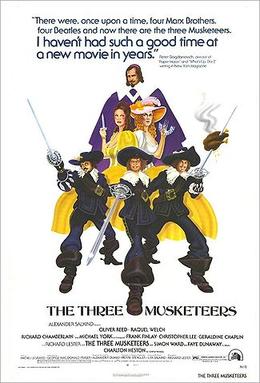
The Three Musketeers (1973, directed by Richard Lester) and The Four Musketeers (1974, directed by Richard Lester)


In 1973, director Richard Lester and producer Ilya Salkind decided to try to get two for the price of one.

Working with a script written by novelist George McDonald Fraser, Lester and Salkind had assembled a once-in-a-lifetime cast to star in an epic film adaptation of Alexandre Dumas’s The Three Musketeers.  Michael York was cast as d’Artagnan, the youthful swordman who goes from being a country bumpkin to becoming a King’s Musketeer.  His fellow musketeers were played by Oliver Reed, Richard Chamberlain, and Frank Finlay.  Faye Dunaway and Christopher Lee were cast as the villains, Milady and Rochefort.  Charlton Heston played the oily Cardinal Richelieu.  Geraldine Chaplin played Queen Anne while Simon Ward played the Duke of Buckingham.  Comedic relief was supplied by Roy Kinnear as d’Artagnan’s manservant and Raquel Welch as Constance, d’Artagnan’s klutzy love interest.  The film was a expensive, lushly designed epic that mixed Lester’s love of physical comedy with the international intrigue and the adventure of Dumas’s source material.

The only problem is that the completed film was too long.  At least, that’s what Salkind and Lester claimed when they announced that they would be splitting their epic into two films.  The cast and the crew, who had only been paid for one film, were outraged and the subsequent lawsuits led to the SAG ruling that all future actors’ contracts would include what was known as the Salkind clause, which stipulates that a a single production cannot be split into two or more films without prior contractual agreement.

But what about the films themselves?  Both The Three Musketeers and The Four Musketeers are currently available on Tubi.  I watched them over the weekend and, of the many films that have been made out of Dumas’s Musketeer stories, Richard Lester’s films are the best.  Lester captures the swashbuckling spirit of the books while also turning them into two films that are easily identifiable as Lester’s work.  There’s a lot physical humor to be found in Lester’s adaptation, especially during the first installment.  d’Artagnan runs through the streets of Paris, convinced that he has been insulted by the haughty Rochefort.  d’Artagnan manages to get challenged to three separate duels, all to take place on the same day.  After his first swordfight as a member of the Musketeers, d’Artagnan tries to tell the men that he wounded about an ointment that will help them with their pain.  Raquel Welch also shows a genuine flair for comedy as Constance, which makes her fate in the second film all the more tragic.
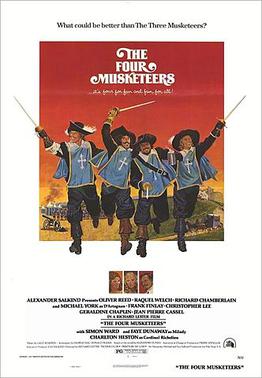
For all the controversy that it caused, splitting the story into two films was actually the right decision.  If The Three Musketeers is an enjoyable adventure film, The Four Musketeers is far more serious.  In The Four Musketeers, Oliver Reed’s melancholic Athos steps into the spotlight and his story of his previous marriage to the villainous Milady casts his character in an entirely new light.  In The Four Musketeers, the combat is much more brutal and the humor considerably darker.  Likable characters die.  The Musketeers themselves commit an act of extrajudicial brutality that, while true to Dumas’s novel, would probably be altered if the film were made today.  From being a naive bumpkin in The Three Musketeers, The Four Musketeers finds d’Artgnan transformed into a battle weary soldier.

The cast is fabulous.  This is a case of the all-star label living up to the hype.  Oliver Reed, Frank Finlay, and Richard Chamberlain all seems as if they’ve been riding and fighting together for decades.  Christopher Lee plays Rochefort as being an almost honorable villain while Faye Dunaway is a cunning and sexy Milady.  What truly makes the film work, though, is the direction of Richard Lester.  Lester stay true to the spirit of Dumas while also using the material to comment on the modern world, with the constant threat of war and civil uprising mirroring the era in which the films were made.  Interestingly enough, Richard Lester first became interested in the material when Ilya Salkind reached out to the Beatles to try to convince them to play the Musketeers.  While the Beatles were ultimately more interested in a never-produced adaptation of The Lord of the Rings, Richard Lester was happy to bring Dumas’s characters to life.

Both The Three Musketeers and The Four Musketeers are currently on Tubi, for anyone looking for a truly great adventure epic.
6 Shots From 6 Films: Special 1968 Edition


6 Shots From 6 Films is just what it says it is, 6 shots from 6 of our favorite films. As opposed to the reviews and recaps that we usually post, 6 Shots From 6 Films lets the visuals do the talking!

Today, we pay tribute to the year 1968!  It’s time for….

6 Shots From 6 1968 Films

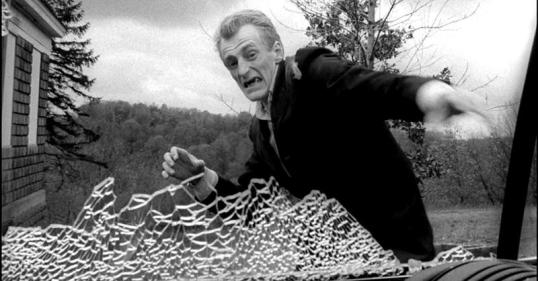
Night of the Living Dead (1968, dir by George Romero, DP: George Romero)

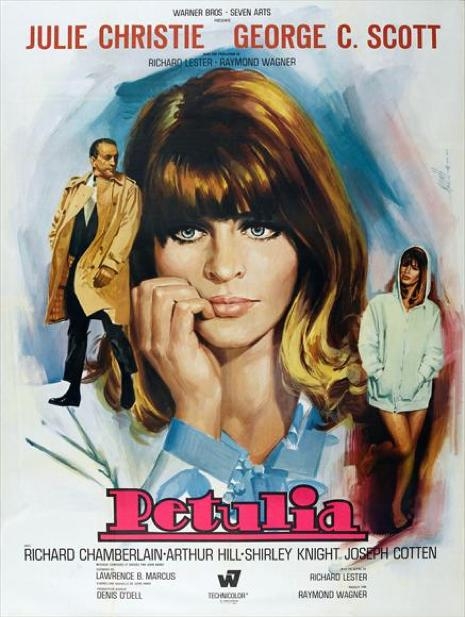
Petulia (1968, dir by Richard Lester, DP: Nicolas Roeg)

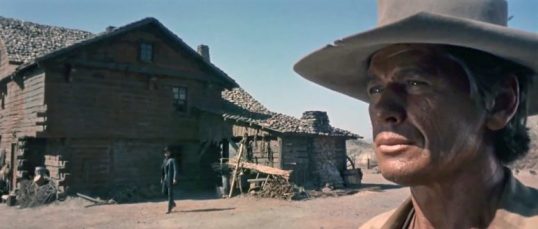
Once Upon A Time In The West (1968, dir by Sergio Leone, DP: Tonino Delli Colli)

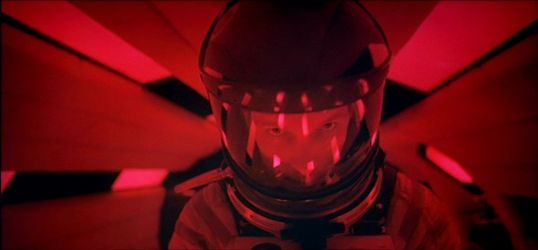
2001: A Space Odyssey (1968, dir by Stanley Kubrick, DP: Geoffrey Unsworth)

Psych-Out (1968, dir by Richard Rush, DP; Laszlo Kovacs)

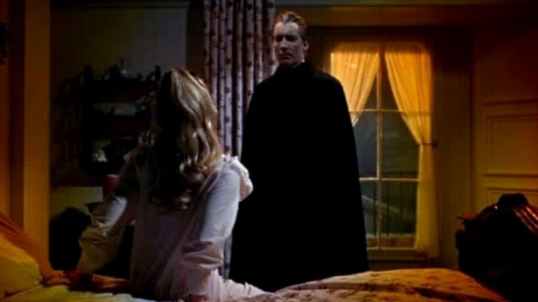
Dracula Has Risen The Grave (1968, dir by Freddie Francis, DP: Arthur Grant)

4 Shots From 4 Films: Special Richard Lester Edition


4 Or More Shots From 4 Or More Films is just what it says it is, 4 shots from 4 of our favorite films. As opposed to the reviews and recaps that we usually post, 4 Shots From 4 Films lets the visuals do the talking!

Today, the Shattered Lens wishes a happy birthday to the legendary director, Richard Lester!  It’s time for….

4 Shots From 4 Richard Lester Films

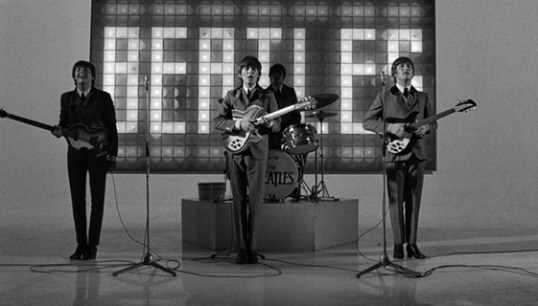
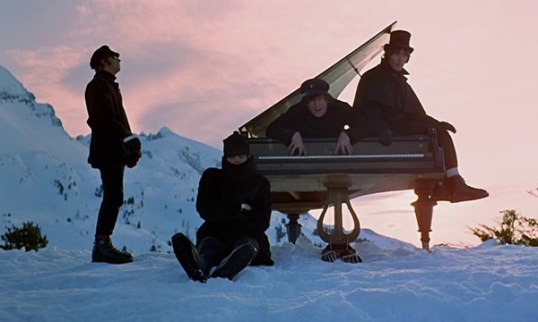
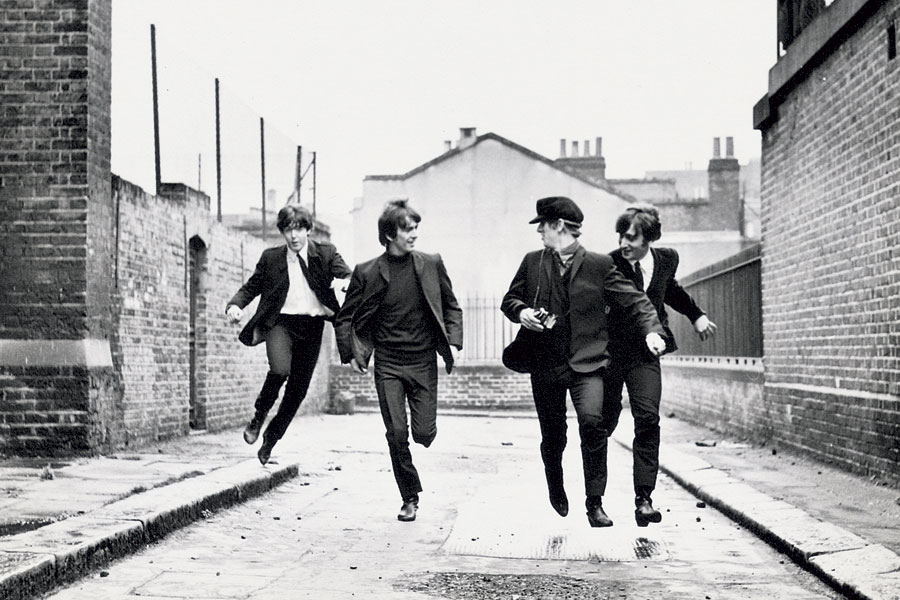
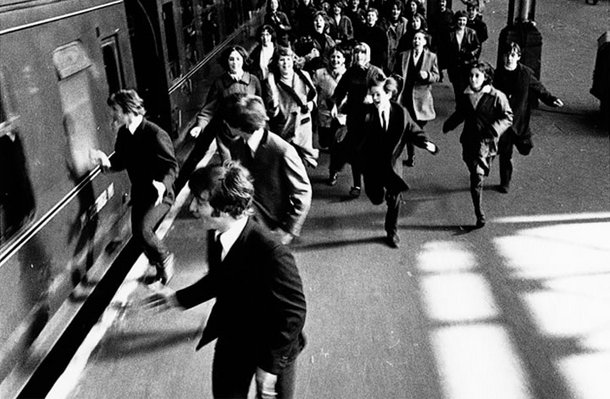
A Hard Day’s Night (1964, dir by Richard Lester, DP: Gilbert Taylor)

Help! (1965, dir by Richard Lester, DP: David Watkin)

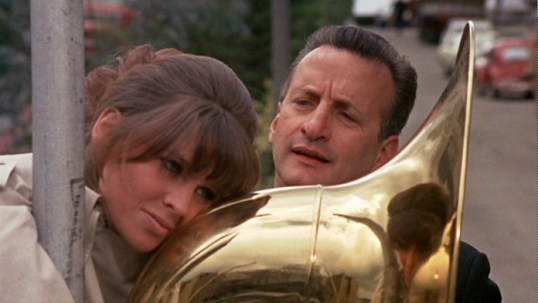
Petulia (1968, dir by Richard Lester, DP: Nicolas Roeg)

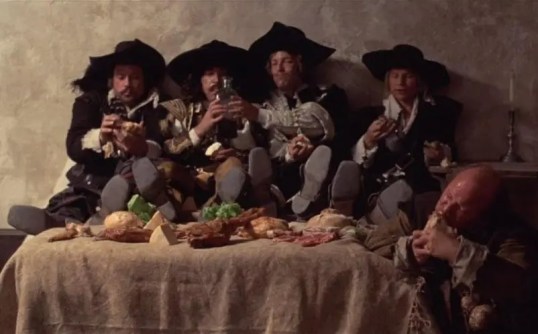
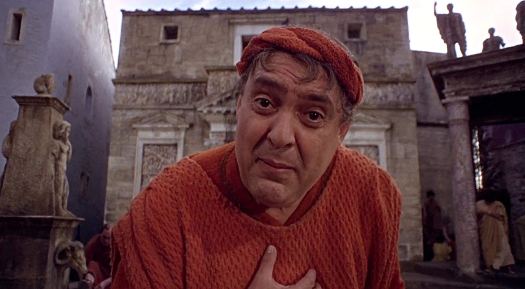
The Three Musketeers (1973, dir by Richard Lester, DP: David Watkin)

10 Oscar Snubs From The 1960s


Ah, the 60s. Both the studio system and the production code collapsed as Hollywood struggled to remain relevant during a time of great social upheaval. The Academy alternated between nominating films that took chances and nominating films that cost a lot of money. It led to some odd best picture lineups and some notable snubs!

1960: Psycho Is Not Nominated For Best Picture and Anthony Perkins Is Not Nominated For Best Actor

To be honest, considering that the Academy has never really embraced horror as a genre and spent most of the 60s nominating big budget prestige pictures, it’s a bit surprising that Psycho was actually nominated for four Oscars.  Along with being nominated for its production design and its cinematography, Psycho also won nominations for Alfred Hitchcock and Janet Leigh.  However, Anthony Perkins was not nominated for Best Actor, despite giving one of the most memorable performances of all time.  The film literally would not work without Perkins’s performance and, considering that Perkins pretty much spent the rest of his career in the shadow of Norman Bates, it’s a shame that he didn’t at least get a nomination for his trouble.  Psycho was also not nominated for Best Picture, despite being better remembered and certainly more influential than most of the films that were.

1962: The Man Who Shot Liberty Valance Is Almost Totally Snubbed

The Man Who Shot Liberty Valance was not totally snubbed by the Academy.  It received a nomination for Best Costume Design.  But still, it deserved so much more!  John Ford, James Stewart, John Wayne, Lee Marvin, Vera Miles, and the picture itself were all worthy of nominations.  Admittedly, 1962 was a year full of great American films and there was a lot of competition when it came to the Oscars.  Still, The Man Who Shot Liberty Valance definitely deserved a best picture nomination over the bloated remake of Mutiny on the Bounty.  Today, if the first Mutiny on the Bounty remake is known for anything, it’s for Marlon Brando being difficult on the set.  But The Man Who Shot Liberty Valance is still remembered for telling us to always print the legend.

1964: From Russia With Love Is Totally Snubbed

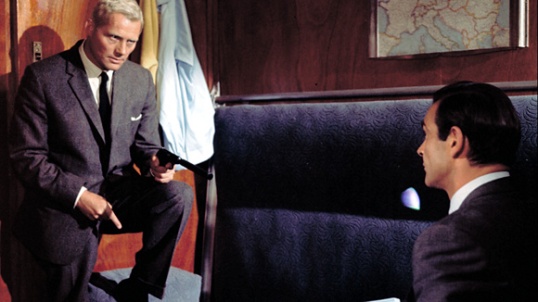
The same year that the Academy honored George Cukor’s creaky adaptation of My Fair Lady, it totally ignored my favorite James Bond film.  From Russia With Love is a Bond film that works wonderfully as both a love story and a thriller.  Sean Connery, Lotte Lenya, Robert Shaw, and Terence Young all deserved some award consideration.  From Russia With Love was released in the UK in 1963.  In a perfect world, it would have also been released concurrently in the U.S., allowing From Russia With Love to be the film that gave the the Academy the chance to recognize the British invasion.  Instead, Tom Jones was named the Best Picture of 1963 and From Russia With Love had to wait until 1964 to premiere in the U.S.  It was snubbed in favor of one of old Hollywood’s last grasps at relevance.

1964: Slim Pickens Is Not Nominated For Best Supporting Actor

Playing three separate roles, Peter Sellers dominates Dr. Strangelove: Or How I Learned To Stop Worrying And Love The Bomb.  But, as good as Sellers is, the film’s most memorable image is definitely Slim Pickens whooping it up as he rides the bomb down to Earth.  George C. Scott and Sterling Hyaden also undoubtedly deserved some award consideration but, in the end, Pickens is the one who brings the film to life even as he helps to bring society to an end.

1967: In Cold Blood Is Not Nominated For Best Picture

In Cold Blood, though not a perfect film, certainly deserved a nomination over Dr. Doolittle.  In Cold Blood is a film that still has the power to disturb and haunt viewers today.  Dr. Doolittle was a box office debacle that was nominated in an attempt to help 20th Century Fox make back some of their money.

1967: Sidney Poitier Is Not Nominated For Best Actor For In The Heat Of The Night

In 1967, Sidney Poitier starred in two of the films that were nominated for Best Picture but somehow, he did not pick up a nomination himself.  His restrained but fiercely intelligent performance in In The Heat Of The Night provided a powerful contrast to Rod Steiger’s more blustery turn.  That Poitier was not nominated for his performance as Virgil Tibbs truly is one of the stranger snubs in Academy history.  (If I had to guess, I’d say that the Actors Branch was split on whether to honor him for In The Heat of the Night or Guess Who’s Coming To Dinner or even for To Sir With Love and, as a result, he ended up getting nominated for none of them.)

1968: 2001: A Space Odyssey and Planet of the Apes Are Not Nominated For Best Picture

Neither one of these classic science fiction films were nominated for Best Picture, despite the fact that both of them are far superior and far more influential than Oliver!, the film that won that year.

1968: The Good, The Bad, and the Ugly Is Totally Ignored

Not even Ennio Morricone’s score received a nomination!

1968: Petulia Is Totally Snubbed

Seriously, I don’t know what was going on with the Academy in 1968 but it seems they went out of their way to ignore the best films of the year.  Richard Lester’s Petulia is usually cited as one of the definitive films of the 60s but it received not a single Oscar nomination.  Not only did the film fail to receive a nomination for Best Picture but Richard Lester, George C. Scott, Julie Christie, Shirley Knight, Richard Chamberlain, and the film’s screenwriters were snubbed as well.

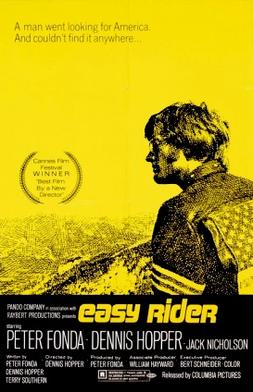
1969: Easy Rider Is Not Nominated For Best Picture

Yes, I know.  Easy Rider is a flawed film and there are certain moments that are just incredibly pretentious.  That said, Easy Rider defined an era and it also presented a portrait of everything that was and is good, bad, and timeless about America.  The film may have been produced, directed, and acted in a drug-razed haze but it’s also an important historical document and it was also a film whose success permanently changed Hollywood.  Certainly, Easy Rider’s legacy is superior to that of Hello, Dolly!

Agree? Disagree? Do you have an Oscar snub that you think is even worse than the 10 listed here? Let us know in the comments!

Up next: It’s the 70s!

Scenes That I Love: The Viola Lee Blues Montage from Richard Lester’s Petulia


Who, you may be asking yourself, could have brought George C. Scott, Julie Christie, and the Grateful Dead all together in one movie?

The answer to that question is Richard Lester, who today celebrates his 91st birthday!  Though Lester is best-known for his work with the Beatles and with the Superman films, I think his best film was undoubtedly 1968’s Petulia.  A sharp social satire, Petulia took a look at what happened when the counter culture and the establishment collided in San Francisco.  And there’s perhaps no better symbol of that collision than George C. Scott, wearing a turtleneck and smoking cigarette while attending a Grateful Dead show.

While the band plays Viola Lee Blues, Scott wanders through 1960s San Francisco.

https://www.youtube.com/watch?v=h88K3TiPPos

4 Shots From 4 Films: Happy Birthday, Richard Lester!


4 Shots From 4 Films is just what it says it is, 4 shots from 4 of our favorite films. As opposed to the reviews and recaps that we usually post, 4 Shots From 4 Films lets the visuals do the talking!

Today, retired director Richard Lester is 88.  Richard Lester made films about everyone from The Beatles and the Three Musketeers to Robin Hood and Superman and, along the way, he changed the face of pop culture forever.

Despite being forever associated with the swinging London of the 60s, Richard Lester was born in Philadelphia and started his career directing episodes of a western television series called Action in the Afternoon.  After moving to London in the 50s, Lester went to work for the BBC and directed episodes of The Goon Show.  In 1959, he directed the Oscar-nominated short film, The Running Jumping & Standing Still Film.  One huge fan of that short film was John Lennon and, when the Beatles were looking for someone to direct their first movie, it was Lennon who suggested Richard Lester for the job.

And the rest is history.

4 Shots From 4 Films

A Hard Day’s Night (1964, directed by Richard Lester)

Petulia (1968, directed by Richard Lester)

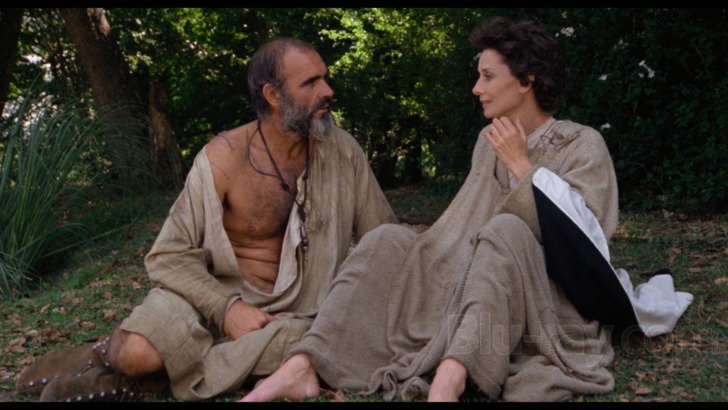
Robin and Marian (1976, directed by Richard Lester)

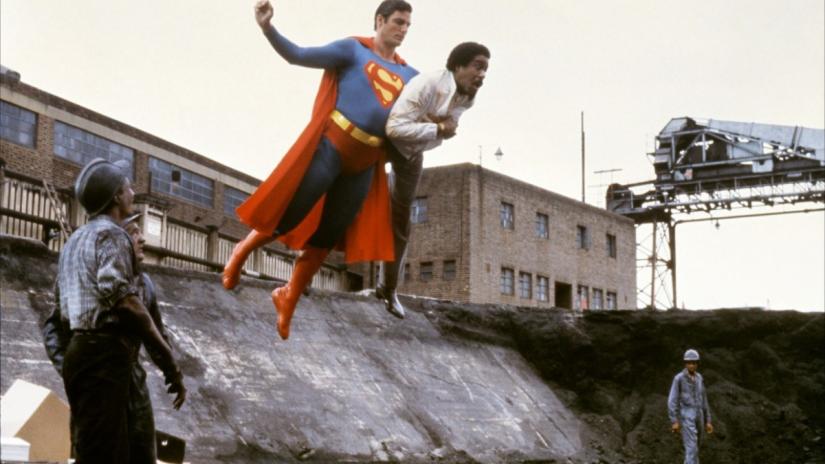
Superman III (1983, directed by Richard Lester)


4 Shots From 4 Audrey Hepburn Films: Funny Face, Breakfast at Tiffany’s, Wait Until Dark, Robin and Marian


4 Shots From 4 Films is just what it says it is, 4 shots from 4 of our favorite films. As opposed to the reviews and recaps that we usually post, 4 Shots From 4 Films lets the visuals do the talking.

Today would have been Audrey Hepburn’s 90th birthday!  In honor of the legacy of this wonderful actress and humanitarian, here are….

4 Shots From 4 Audrey Hepburn Films

Funny Face (1957, dir by Stanley Donen)

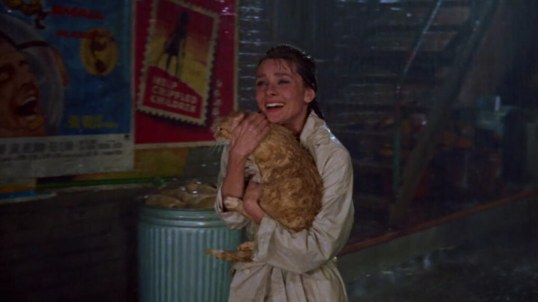
Breakfast at Tiffany’s (1961, dir by Blake Edwards)

Wait Until Dark (1967, dir by Terence Young)

Robin and Marian (1976, dir by Richard Lester)

6 Good Films That Were Not Nominated For Best Picture: The 1960s


Sonny and Cher walk down the 1968 Oscars Red Carpet

Continuing our look at good films that were not nominated for best picture, here are 6 films from the 1960s.

Psycho (1960, dir by Alfred Hitchcock)

The director was nominated.  Janet Leigh was nominated.  Amazingly enough, Anthony Perkins was not nominated for playing the role that would come to define him.  And, in the end, the film itself was not nominated for best picture.  Perhaps it was too sordid for the Academy.  Perhaps they resented no longer feeling safe in the shower.  Regardless, Psycho has gone on to influence every horror thriller made since 1960.  And let’s not even talk about how much we all cried while watching the finale of Bates Motel.

From Russia With Love (1963, dir by Terence Young)

The first great James Bond film should have also been the first Bond film to be nominated for best picture.  Actually, looking over the films that actually were nominated in 1963, From Russia With Love should have been the first Bond film to win best picture.

Blow-Up (1966, dir by Michelangelo Antonioni)

Mimes playing tennis and David Hemmings briefly breaking out of his shell of ennui to investigate a murder that has no solution!  How could the Academy resist?  Somehow, they did.  Michelangelo Antonioni received a nomination but the film was, at the time, considered to be too controversial to nominate.

The Good, The Bad, and the Ugly (1967, dir by Sergio Leone)

Though initial reviews were mixed, Sergio Leone’s Civil War epic has come to be recognized as one of the greatest and most important Westerns of all time.  Perhaps it’s understandable that the Academy of 1967 would be skeptical of an Italian western starring Clint Eastwood, Eli Wallach, and Lee Van Cleef.  Still, it would have been one of the coolest best picture nominees of all time.  (Shockingly, not even Ennio Morricone’s iconic score was nominated.)

Petulia (1968, dir by Richard Lester)

Though Richard Lester will probably always be best known as the man who directed the first two Beatles films, he also directed one of the definitive 60s films, Petulia.  Sadly, in a year when many lackluster films were nominated, the challenging and rather melancholy Petulia was not.

Night of the Living Dead (1968, dir by George Romero)

Again, we really can’t be shocked that the Academy held off an recognizing a low-budget, independent film about zombies  But come on!  A Night of the Living Dead vs. Petulia Oscar race would have bene one for the ages.

Up next, in an hour or so, the 1970s!

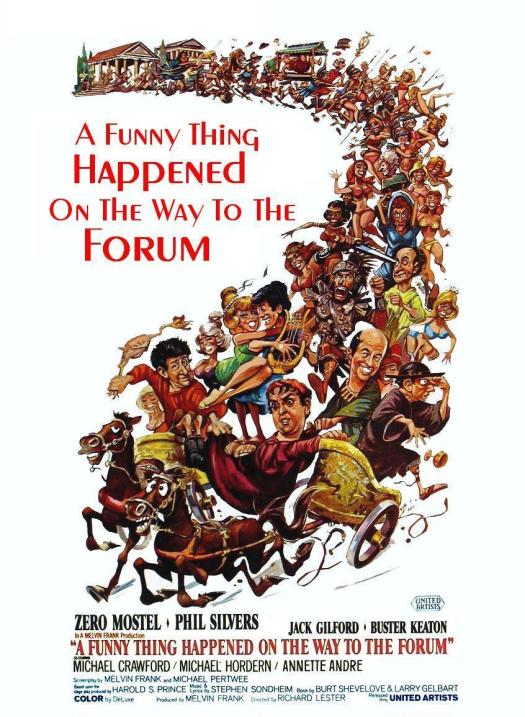
Comedy Tonight: A FUNNY THING HAPPENED ON THE WAY TO THE FORUM (United Artists 1966)


gary loggins's avatarcracked rear viewer

Director Richard Lester made the jump from The Beatles to Broadway in filming A FUNNY THING HAPPENED ON THE WAY TO THE FORUM, but it wasn’t that far a leap. In adapting the Tony-winning musical comedy to the screen, Lester energizes the film with his unmistakably 60’s cinematic style, resulting in one of the decade’s best comedies, aided and abetted by a cast of pros including Zero Mostel , Phil Silvers, Jack Gilford, and the great Buster Keaton in his final film performance.

The credits roll to the tune of Stephen Sondheim’s “Comedy Tonight”, which may be my favorite song from any musical, as Zero introduces us to the main players. He’s Psuedolus, a slave owned by young Hero (Michael Crawford), son of unhappily married Senex (Michael Hordern) and his shrewish (not Jewish) wife Domina (Patricia Jessel, who’s a riot!). Hero has fallen in love with Philia (Annette Andre), the…

View original post 586 more words

Rockin’ in the Film World #7: The Beatles in A HARD DAY’S NIGHT (United Artists 1964)


gary loggins's avatarcracked rear viewer

beatles1

(It’s a Sunday night, February 9, 1964. Everybody’s watching THE ED SULLIVAN SHOW to get a peek at this new phenomenon called Beatlemania. The adults in the room are disgusted, saying things like “They look like a bunch of girls!”, “They must be sissies!”, and “Yeah yeah yeah? What the hell kind of song is that??” They just don’t get it.  But the six-year-old kid watching along does, and a lifelong obsession with rock’n’roll is born…)

beatles2

From the opening shot of the Fab 4 being chased down the street by screaming teenyboppers to the final clanging guitar notes of the title tune, A HARD DAY’S NIGHT makes a joyful noise introducing The Beatles to the silver screen. John, Paul, George, and Ringo come off as a mod version of the Marx Brothers with their anarchic antics, guided by the deft hand of director Richard Lester. Shot in cinema verite style, this zany, practically…

View original post 517 more words