Brad’s reflections on STAND BY ME (1986), directed by Rob Reiner!


“I was twelve going on thirteen the first time I saw a dead human being.”

These are the first words spoken in director Rob Reiner’s classic coming of age film, STAND BY ME, which received its widespread theatrical release in the United States on August 22nd, 1986. Actor Richard Dreyfuss spoke words that gave an exact description of my own age in the summer of 1986 when the film was released, and I certainly felt a connection to the characters in Reiner’s film. I watched STAND BY ME many times as a teenager, and with a humble and hurting heart, I decided to watch it again last night. On its surface, it’s a pretty simple story… 

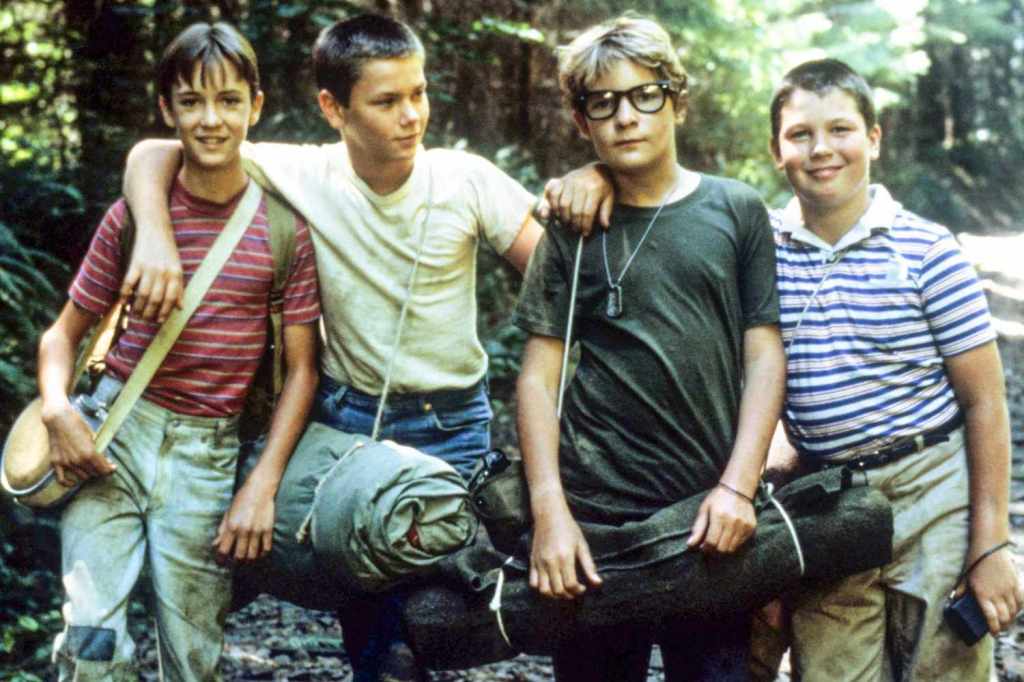
After accidentally learning of the location of the body of a local boy who’s been missing for several days, four boys (played by Wil Wheaton, River Phoenix, Corey Feldman, and Jerry O’Connell) set off on a weekend adventure to find the body in hopes of becoming local heroes. Along the way, they dodge trains, get sucked on by leeches, tell gross-out stories around a campfire, tackle traumatic personal issues, and eventually stand up to a group of older bullies (led by Kiefer Sutherland)! When the weekend is over, they move on with their own lives, lives that are never quite the same again.                   

The main reason I have a real personal connection to STAND BY ME is the fact that I recognize myself and some of my friends in its young characters. I grew up in a very small rural community in Arkansas called Toad Suck. It wasn’t even a town; it was more of just a spot in the road where a few homes built up near a dam and bridge on the Arkansas River. Often when I’d spend the night with my best friend, we’d go walking down the railroad track that ran through our community, carrying our BB guns and hanging out on the railroad bridges where we could take aim at rocks, sticks, turtles, and, at times, the dreaded water mocassin! Like the boys in the movie, we’d always have to be on the lookout for the oncoming trains. As a very naïve and sheltered kid of the mid-80’s who was raised in a strict religious household, I tended to be somewhat judgmental. STAND BY ME forced me to think deeper thoughts and try to find a more mature empathy for those kids I hung out with and saw at school every day. While none of the characters in the film are an exact replica of me or my friends, we knew of people who were probably experiencing abuse, who were looked down upon as “less than,” and who were neglected by their parents. And I think we have all experienced times when we felt insecure, lacked confidence, or were afraid and didn’t have the maturity to handle it in a positive manner. I felt compassion for these characters, which in turn helped me feel more understanding towards those around me in my real life! As a filmmaker in complete control of his craft, Rob Reiner made a movie that even affected someone like me, and I’ve never forgotten those feelings. 

My feeling of kinship with the actors who played in STAND BY ME didn’t end when the movie ended either. Wil Wheaton, River Phoenix, Corey Feldman and Jerry O’Connell were all very close to my age when they filmed the movie, and I’ve followed each of their careers fairly closely my entire life. My two favorites were River Phoenix and Corey Feldman. It was painful to me when River Phoenix died in 1993 at just 23 years of age. I remember all the issues Corey Feldman had with drug addiction. I’m so glad that he’s been able to overcome that addiction and achieve sobriety for multiple decades. I’m not a Star Trek completist, but I always got a kick out of seeing Wil Wheaton on THE BIG BANG THEORY. And then Jerry O’Connell definitely lost his baby fat and has gone on to a solid acting career! The common thread, of course, is the fact that Reiner got great performances from each of these young actors in STAND BY ME. Combine those performances with the quality of the film and the time in my own life when the film came out, and you can start to get the idea of why the film has a position of reverence in my life. You can also see why I have such respect for Rob Reiner as a filmmaker. 

Overall, STAND BY ME is simply one of my favorite films of all time. It has some of the most memorable on-screen moments of my childhood. The pie eating barf-o-rama and the crotch leeches are scenes that are burned into my psyche. Along with the great cast of boys, Kiefer Sutherland gives one of his solid, bully performances in an 80’s film. Sutherland would go on later in his career and play one of my all-time favorite TV characters, Jack Bauer, in 24. More important than all of that, though, is the fact that the coming-of-age film STAND BY ME helped 12-13 year-old me grow up a little bit myself by making me feel something. I guess the greatest compliment you can give any director is to tell them that their film made you think about things more important than yourself and made a difference in your own life. Today, I pay you that great compliment and say Rest in Peace, Mr. Reiner! 
Lisa Marie Reviews An Oscar Winner: The Graduate (dir by Mike Nichols)


Hello darkness, my old friend….

After watching 1967’s The Graduate, I defy anyone to listen to Simon and Garfunkel sing about the darkness without immediately picturing a young-looking Dustin Hoffman (he was 30 when the film was made but he was playing 22) standing on a moving airport walkway with a blank expression on his face.

If you don’t picture that, maybe you’ll picture Dustin Hoffman floating in a pool, wearing dark glasses and barely listening to his parents asking him about graduate school.

Or maybe you’ll remember him driving his car across the Golden Gate bridge.  Or perhaps sitting at the bottom of his pool with a scuba mask on.  Or maybe you’ll see him awkwardly standing at the desk in the lobby of a fancy hotel, trying to work up the courage to get a room.  Or maybe you’ll just see him and Katharine Ross sitting at the back of that bus with a “what do we do now?” expression on their faces.

(Supposedly, that expression was not planned and was just a result of the shot running longer than expected.)

Ah, The Graduate.  Based on a novel by Charles Webb, Buck Henry’s script remains one of the quotable in history.  “Mrs. Robinson, you’re tying to seduce me …. aren’t you?”  “Plastics.”  “Elaine!”  Myself, I have an odd feeling of affection for the line “Shall I get the cops?  I’ll get the cops.”  Perhaps that’s because the line is delivered by a young and uncredited Richard Dreyfuss, appearing in his second film and adding to the film’s general atmosphere of alienation.

Alienation is the main theme of The Graduate.  As played by Hoffman, Benjamin Braddock feels alienated from everything.  He was a track star.  He was a top student in high school and college.  Now, he’s just a college graduate with no idea what he wants to do with the rest of his life.  One can argue, of course, that Braddock brings a lot of his alienation on himself.  He can be a bit judgmental, even though he’s the one who is having an adulterous affair with Mrs. Robinson (Anne Bancroft) while also falling for Mrs. Robinson’s daughter, Elaine (Katharine Ross).  His parents (William Daniels and Elizabeth Wilson) can be overbearing but it’s possible they have a point.  Is he planning on spending the rest of his life floating in their swimming pool?  Benjamin says that he just needs time to finally relax.  After being pushed and pushed to be the best, he just wants time to do what he wants to do before his life becomes about plastics.  When I first saw this movie, I was totally on Benjamin’s side.  Now, as I’ve gotten older, I’ve started to understand where his parents were coming from.  Still, it’s hard not to feel that Benjamin deserves at least a little bit of time to enjoy himself.  That’s what Mr. Robinson (Murray Hamilton) thinks, at least initially.

Mrs. Robinson is the most interesting character in the film, a force of chaos who lives to disrupt the staid world around her.  She’s bored with her marriage and her conventional but empty lifestyle so she has an affair with Benjamin.  Later, she grows bored with Benjamin and his desire to “just talk” for once and she moves on from him.  Benjamin and Elaine are both likable and you find yourself wishing the best for them but Mrs. Robinson is the character who you really remember.  Mrs. Robinson grew up without losing her sense of rebellion.  One doubts that Benjamin and Elaine are going to do the same.

A portrait of American suburbia and 60s alienation, The Graduate would prove to be one of the most influential social satires ever made.  A box office hit, it was nominated for seven Academy Awards.  It was nominated for Best Picture, Best Director (Mike Nichols), Best Actor (Dustin Hoffman), Best Actress (Anne Bancroft), Best Supporting Actress (Katharine Ross), Best Adapted Screenplay (Buck Henry and Calder Willingham), and Best Cinematography (Robert Surtees).  The Simon and Garfunkel songs that set the film’s mood were, for the most part, not eligible.  (Only Mrs. Robinson was written specifically for the film.)  I would argue that the film deserved to be nominated for its editing as well.  In the end, the film only won one Oscar, for Mike Nichols.  But, regardless of what awards it won or lost, The Graduate‘s legacy lives on.


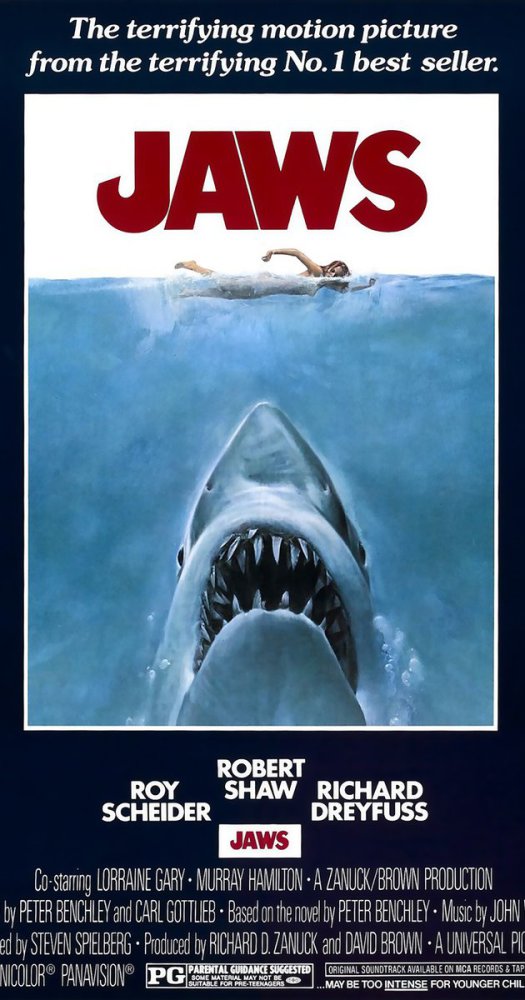
Scenes I Love: Jaws


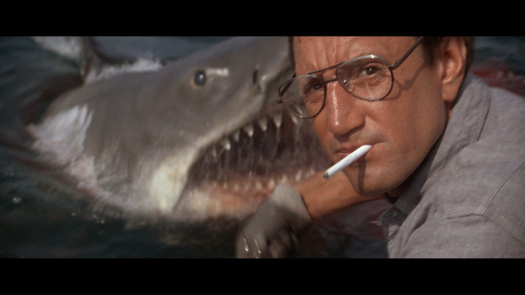
“You know the thing about a shark, he’s got…lifeless eyes, black eyes, like a doll’s eye. When he comes at ya, doesn’t seem to be livin’. Until he bites ya and those black eyes roll over white.” — Quint

People have blamed Spielberg and his breakout film, Jaws, as the cause of the blockbuster mentality that studios have had since this film came out. Studios and producers wanted to recreate the ultra-successful box-office numbers of Jaws. Despite the fact that this film was modestly budgeted, people nowadays who think they’re film experts point to it as the culprit. They’ve called it the film that begun the dumbing down of Hollywood when creativity was sacrificed for profit.

Why did I pick a scene from this film as a favorite? I picked this particular scene because it’s one reason why the film succeeded and made people come back again and again. It’s a scene that perfectly captures one reason why we love to see films in a communal setting. We want to share the same experience and emotions this scene brought up from the pit of each audience’s psyche.

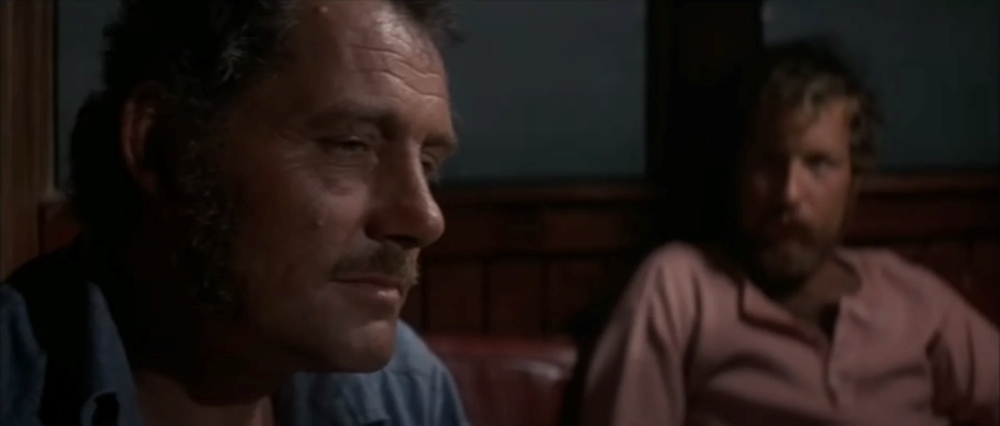
Jaws didn’t ruin the creativity in filmmaking. I like to think that this one film was a filmmaker at his most creativie (shark wouldn’t work properly so Spielberg kept it off-screen which just added to the terror and tension in the film). This very scene goes down as one of the greatest film monologues. It sets up the danger the trio faces with some anecdotal evidence from the very person who survived the experience, but who might have become unhinged because of it. I love the look of frozen terror on the face of Richard Dryefuss’ character as he listens to Robert Shaw tell the story of the ill-fated journey of the U.S.S. Indianapolis.

This latest “Scenes I Love” is why I consider Spielberg one of the best filmmaker of his generation and probably beyond that.

Embracing The Melodrama: Poseidon (dir by Wolfgang Petersen)


The plot of 2006’s Poseidon may sound familiar.

There’s this cruise ship.  It’s a luxury liner and it’s sailing across the ocean on New Year’s Eve.  There’s a lot of passengers on the liner.  Most of them are wealthy and the majority of them are played by familiar actors.  Everyone is in the ballroom, celebrating the upcoming new year.  They do the countdown.  They cheer when they hit zero.  Kisses are exchanges.  Dances are danced.  A blonde woman sings a song.  Suddenly, a tidal wave smashes into the Poseidon, turning it over.  Explosions rock the ship as it ends up floating upside down.  The majority of the crew and the passengers are killed immediately.  The survivors face a decision.  Do they stay in the ballroom or do they attempt to climb upwards to safety?

Yep, Poseidon is a remake of The Poseidon Adventure.  It tells basically the same story but with slightly better special effects and slightly less histrionic actors.  The original Poseidon Adventure had Gene Hackman and Ernest Borgnine yelling at each other for over two hours while Shelley Winters swam until she died.  “WHERE’S YOUR GOD NOW, PREACHER!?” Borgnine shouted while Hackman yelled, “ROGO!” over and over again.  (Rogo was Borgnine’s character.  Hackman shouted the name with a wonderful amount of loathing.)  It was a very loud and every entertaining movie.  The cast of Poseidon is a bit more low-key but Poseidon is also more interested in special effects than any sort of human (melo)drama.

For instance, Josh Lucas plays a Navy veteran-turned-professional gambler.  He gives a good performance as the de facto leader of the survivors but he never gets to yell as much as Gene Hackman did in the original.  Richard Dreyfuss plays an architect and you would think that Dreyfuss, of all people, would chew up the scenery in this disaster film with relish but Dreyfuss is oddly subdued.  Jacinda Barrett is the mother who tries to protect her son (played by Jimmy Bennett).  Fergie is the singer who embraces the ship’s captain (Andre Braugher) as the ballroom floods.  Emmy Rossum is the rebellious teenager.  Mike Vogel is her boyfriend.  And Kurt Russell plays the former mayor of New York City.  He also happens to be a former fireman.

It’s a good cast.  Kurt Russell is especially good in his role, believable as both a fireman (a role that he’s played in a few films) and as a politician.  It’s a talented group of actors but no one really goes overboard in the way that Gene Hackman, Ernest Borgnine, Shelley Winters, Stella Stevens, Roddy McDowall, and even Leslie Nielsen did in the first one.  The premise of the film is so silly that it really does require the cast and the director to fully embrace the melodrama.  As opposed to the original, this film only gives the melodrama a quick hug and instead concentrates on explosions, water, and flames.  The special effects overshadow the humans and that’s unfortunate because there’s a lot of interesting people in this movie.  A good performance can last a lifetime.  There’s a reason why we still talk about Kurt Russell in films like Escape From New York and The Thing.  Good special effects, on the other hand, still look incredibly dated after three years.

I’m not really sure that it was necessary to remake The Poseidon Adventure in the first place.  I’m just glad they left Beyond The Poseidon Adventure alone.

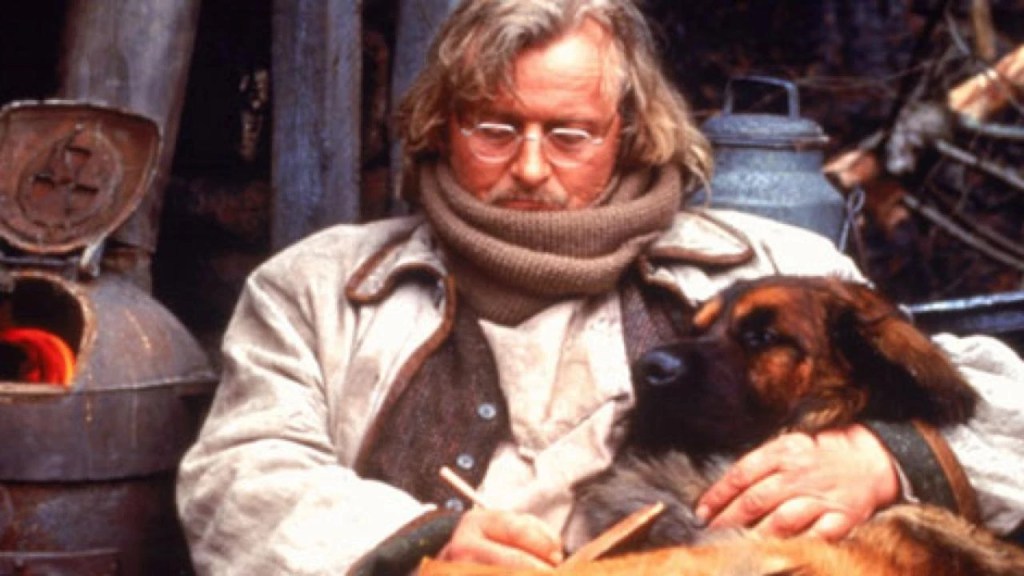
THE CALL OF THE WILD (1997) – Rutger Hauer stars in this version of the classic Jack London novel!


THE CALL OF THE WILD (1997) is based on Jack London’s classic story about Buck, a domesticated dog who lived the first four years of his life on the regal estate of Judge Miller. In 1897, he’s kidnapped and shipped up north to the frozen arctic regions where powerful dogs are in high demand. And Buck, a St. Bernard-Scotch Collie mix, is as powerful as it gets. 

On his journey, we see Buck fall into the hands of three different masters. First, he’s purchased by a dispatch courier for the Canadian government named Perrault (Luc Morissette) whose sled driver is Francois (Robert Pierre Cote). Perrault and Francois are kind to the dogs, but life is still harsh as they carry their dispatches across the snowy, frozen north. Buck sees a dog killed by other dogs for the first time. This is where he first learns that only the strong survive, and he soon has to prove it when he’s forced to fight and kill Spitz, the lead dog of the team. Unfortunately, circumstances require Perrault to sell Buck and his sled team to a group of greenhorns led by Hal (Charles Edwin Powell), his sister Mercedes (Bronwen Booth) and her husband Charles (Burke Lawrence). These morons have no business looking for gold in the Yukon. They have no clue as to what they’re doing and seem to be leading the group to certain death. Starving, tired, and sensing disaster, Buck is lucky that the group arrives at the camp of John Thornton (Rutger Hauer) just in the nick of time. Collapsing at the doorstep of Thornton’s tent, Buck refuses to get up and go any further. As Hal begins to beat Buck with a stick, even going so far as pulling his gun to shoot him, Thornton forcibly takes Buck from the morons. With Thornton, Buck has finally found his “human.” John Thornton nurses Buck back to health and the two become inseparable. Buck has found love for the first time with Thornton and will not let him out of his sight for fear he might lose him. Then something strange happens, he starts feeling a call from the forest, and the promise of a freedom he’s never known before. His love for Thornton is strong, but is it as strong as the call of the wild? 

Even though this 1997 version of THE CALL OF THE WILD is narrated by Richard Dreyfuss and includes the great actor Rutger Hauer in its cast, the true star of this film is Buck the dog. We really pull for Buck as we see him adapt to his new way of life after he’s stolen from his comfortable southern home. As hard as it is to see the animals kill the weakest among them, these are important lessons for Buck. His new world is no place for the weak, and he decides that he will never be weak again. Even though Buck has gotten tough, it’s still a relief when he ends up with John Thornton, the Hauer character. My favorite part of the film is when the two take off together in search of gold. Hauer is only in the film for about thirty minutes, but the relationship he shares with Buck is the highlight of the film as far as I’m concerned.

The last thing I want to mention about the film is that it’s directed by Peter Svatek. Svatek’s next film, BLEEDERS (aka HEMOGLOBIN) would also star Rutger Hauer, and he would follow that up with SILVER WOLF, starring Roy Scheider. For what it’s worth, the man definitely had something going for him since he was able to work with talents like Hauer and Scheider! 

I’ve never read Jack London’s novel, but I have read that this version of THE CALL OF THE WILD may be the most faithful adaptation of the book out there. If that’s truly the case or not, I still really enjoyed this adaptation, and it’s an easy recommendation from me. 

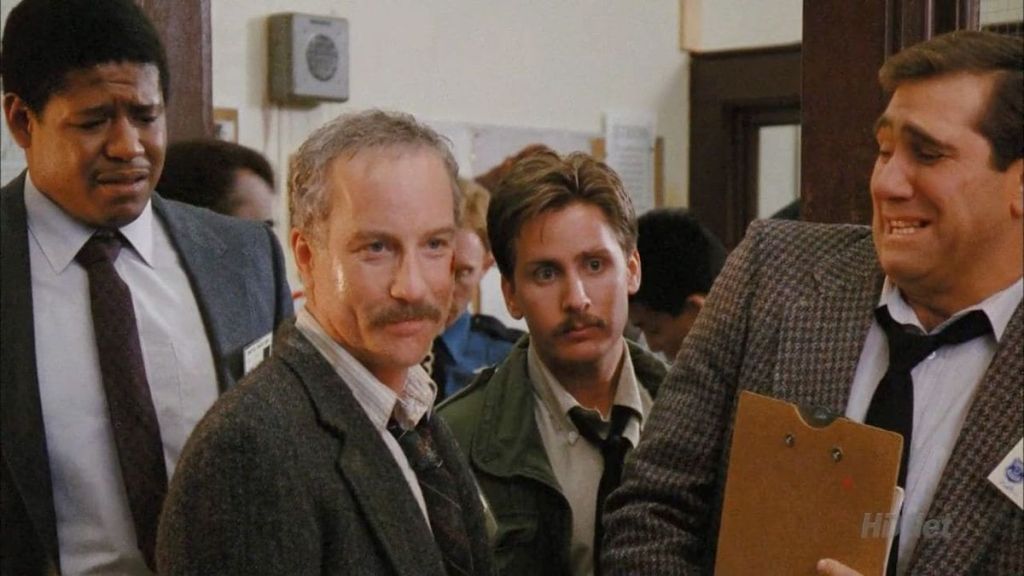
STAKEOUT (1987) – Richard Dreyfuss and Emilio Estevez stakeout the beautiful Madeline Stowe!


What were those years in your life where movies really became something special to you? I’d say mine began in around 1984 and extended all the way through about 1991, when I headed off to college and the realities of the world started kicking in. Our family got our first VCR around 1984, and this is when I first truly began to fall in love with the cinema. These are the years when I would spend every moment I could in our local video stores inspecting every film in their stock. So many of my favorite movies came out during this time and hold a sense of nostalgic value in my life even now. One of those movies is STAKEOUT, an action comedy from 1987 starring Richard Dreyfuss and Emilo Estevez. 

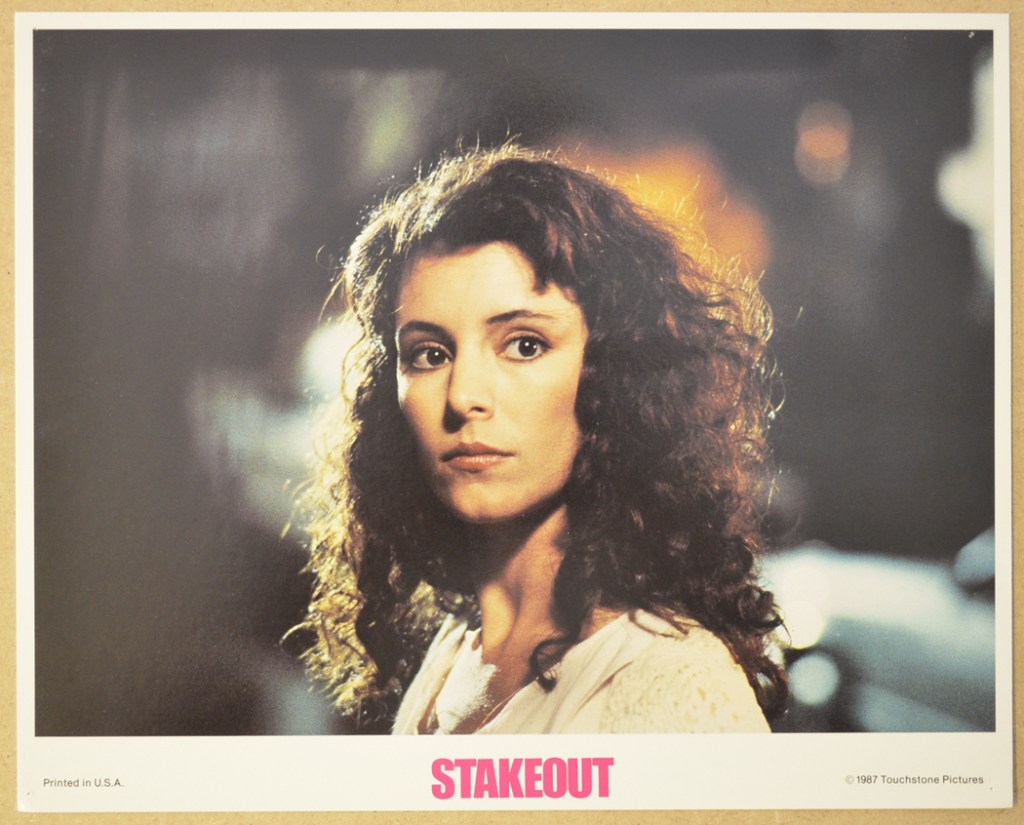
STAKEOUT begins with Richard “Stick” Montgomery (Aidan Quinn) escaping from prison, where he has been sent for killing an FBI agent a year earlier. Enter Seattle police detectives Chris Lecce (Richard Dreyfuss) and Bill Reimers (Emilio Estevez). They are assigned to stakeout the home of Montgomery’s beautiful ex-girlfriend Maria (Madeleine Stowe). In order to listen to her phone conversations, Chris impersonates a telephone repairman and meets her when he goes into her home to install the “bugs.” As fate would have it, he runs into Maria again at the local grocery store when he’s gone out to buy some supplies and donuts. She asks him to give her a ride home when she discovers she has a flat tire on her bike. He reluctantly gives her a ride home, but once he’s there, he puts up her groceries, she makes him a spicy dinner, and then he not so reluctantly makes love to her… all while his partner Bill is across the street waiting for his donuts. As you might imagine, this complicates the entire situation. And meanwhile, “Stick” Montgomery keeps making his way Seattle and Maria’s house where he stashed his cash before going away to prison.

STAKEOUT is one of those movies that our family rented in the late ‘80’s, and I immediately fell in love with. It’s my favorite kind of movie, the buddy cop film. Richard Dreyfuss and Emilio Estevez have a really nice chemistry together, and they come across as old friends. Even though there’s quite a bit of violence, the movie has a playful streak that I enjoy. There’s a series of running gags where Chris and Bill play practical jokes back and forth with the cops who relieve them on the stakeout each day, played by Dan Lauria and Forest Whitaker. The movie even throws in a little self-referential humor. In order to relieve the boredom of the stakeout, Estevez’ character is asking Dreyfuss movie trivia questions. He asks him to identify the movie where the line “this is no boating accident!” is from! Dreyfuss’ character has no idea. These are fun moments for me.

Another thing I love about STAKEOUT is the presence of the gorgeous Madeleine Stowe, who was making her first major film appearance. Seeing the film for the first time as a teenager of 14 years old made me a fan of hers for life. I’m not saying the movie was made specifically for 14-year-old boys, but it certainly wasn’t trying to push us away with its ad campaign that prominently featured the lovely Ms. Stowe. I’ll also point out that Aidan Quinn is effective and intimidating as the escaped murderer Richard “Stick” Montgomery. The fact that his character really does seem dangerous helps to make the film even more exciting when everything finally comes to a head. Veteran Director John Badham has made some really good movies in his career, including SATURDAY NIGHT FEVER (1977), BLUE THUNDER (1983), THE HARD WAY (1991), and NICK OF TIME (1995), to name a few. He knows what he’s doing, and I really started following his work based on how much I enjoyed STAKEOUT.

As much as I enjoy STAKEOUT, it’s one of those movies I don’t hear that much about these days even though it was a substantial box office hit. There was a misguided sequel made in 1993, ANOTHER STAKEOUT, that brought back Dreyfus, Estevez, and director Badham. I remember watching the sequel in the 90’s, but I honestly don’t remember anything about it. One of the reasons I enjoy writing about movies is because it gives me an opportunity to share a part of who I am, the things I enjoy, and maybe even serve as a reminder to others of films like STAKEOUT. I don’t think of these movies often myself, but when I was looking at my DVD collection earlier today, I smiled when I saw it and happily pulled it off the shelf to watch it again for the first time in several years!

I’ve included the trailer below:

Scenes That I Love: Bo Hopkins and Richard Dreyfuss Flip A Cop Car in American Graffiti


I just read that the veteran actor Bo Hopkins has passed away at the age of 84.  The last movie of note that I saw Hopkins in was Hillbilly Elegy, where he had a small role as Glenn Close’s husband.  However, if you’re a fan of older films, you will probably recognize Bo Hopkins, even if you don’t know the name.  He was a handsome but weathered actor with a Texas accent and a reckless attitude.  He was a doomed member of a gang of old west bank robbers in The Wild Bunch.  In Midnight Express, he played a mysterious government agent who turned out to be not as benevolent as he originally seemed.

And, in the 1973 classic American Graffiti, he played the leader of the Pharaohs, the local gang of small town James Dean wannabes.  Even though Hopkins didn’t get a lot of screentime in American Graffiti, he definitely made an impression as the intimidating but ultimately friendly aspiring delinquent.  In the scene below, he and Richard Dreyfuss flip a cop car.

RIP, Bo Hopkins.

Nobody Can Stop Gina Carano In The Trailer For Daughter Of The Wolf!


Seriously, Gina Carano kicks so much ass!

She managed to survive starring in one of Steven Soderbergh’s worst films and has gone on to become one of my favorite action movie stars.  Though she may be best-known for her supporting roles in Fast & Furious 6 and Deadpool, Gina Carano’s best work is usually found in an underappreciated genre films like In The Blood and Scorched Earth.  For me, there’s little that’s more empowering than watching Gina Carano single-handedly take down an army of mercenaries and evil-doers.

The trailer for Carano’s upcoming film features her doing what she does best.  This time, she’s a mother trying to rescue her child and it would appear that screen veteran Richard Dreyfuss is playing the bad guy.  Carano vs. Dreyfuss?  I wonder who will win that one.

Here’s the trailer for Daughter of the Wolf!

A Big Screen, Some Popcorn, and JAWS (Universal 1975)


gary loggins's avatarcracked rear viewer

Dun-dun, dun-dun, dun-dun, dun-dun…..

This past Wednesday night, I went out to New Bedford’s Zeiterion Theater to watch a screening of the summertime classic JAWS. The Z, as we locals call it, began life as a vaudeville palace in 1923, and five months later changed its name to The State and ran the latest silent movies. The State operated as a movie house until the late 70’s, with the historic building refurbished in 1982 and retro rebranded as the Zeiterion, hosting concerts, plays, dance, and other performing arts. The city (which now owns and operates the Z) recently purchased a state-of-the-art high-definition digital projector and, after an absence of almost a year,  movies are back in New Bedford! They kicked off a “summer series” of films with Steven Spielberg’s summer blockbuster scarefest, filmed not far from here (just a fast ferry ride away aboard the Sea Streak) on Martha’s Vineyard.

“You’re gonna need a bigger boat!”

And…

View original post 330 more words

Worst of the Worst: Mad Dog Time (1996, directed by Larry Bishop)


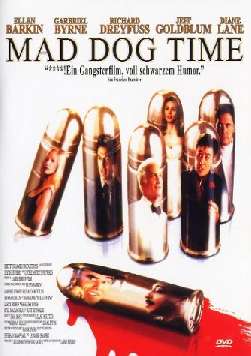
Mad_dog_time_4841Remember how, in the 1990s, every aspiring indie director tried to rip off Quentin Tarantino by making a gangster film that mixed graphic violence with quirky dialogue, dark comedy, and obscure pop cultural references?  That led to a lot of terrible movies but not a single one (not even Amongst Friends) was as terrible as Mad Dog Time.
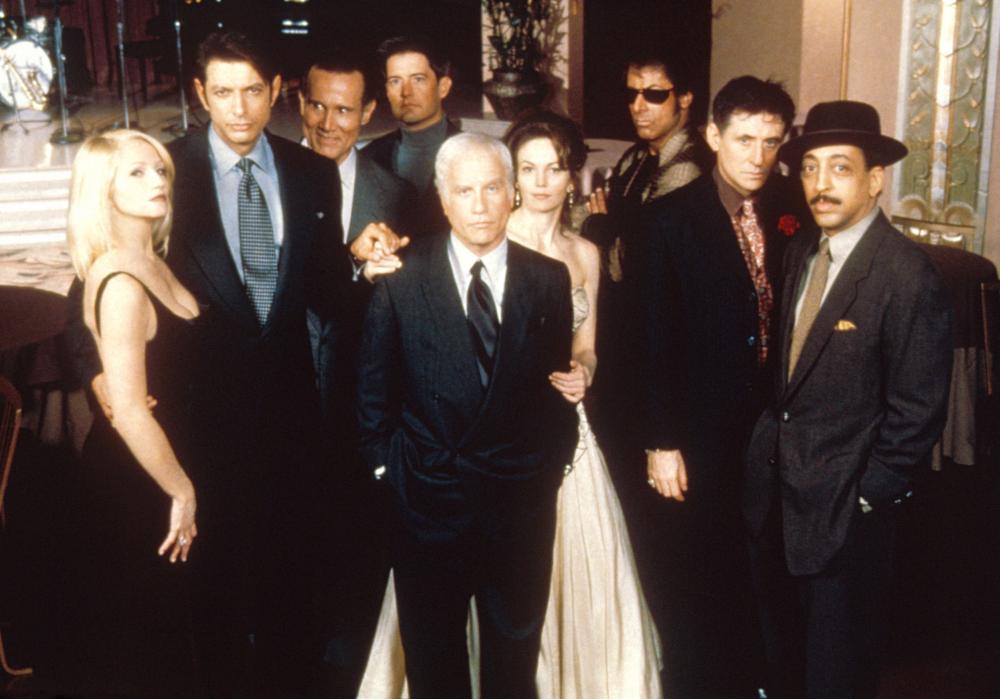
That Mad Dog Time was terrible should come as no surprise.  Most directorial debuts are.  What made Mad Dog Time unique was the sheer amount of talent that was assembled and wasted in the effort to bring this sorry movie to life.  As the son of Joey Bishop, director Larry Bishop was Hollywood royalty and was able to convince several ridiculously overqualified actors to play the thinly drawn gangsters and rouges who populated Mad Dog Time.  Much like the Rat Pack movies that his father once starred in, Larry Bishop’s debut film was full of familiar faces.  Some of them only appeared for a few seconds while others had larger roles but they were all wasted in the end.  Hopefully, everyone was served a good lunch in between filming their scenes because it is hard to see what else anyone could have gotten out of appearing in Mad Dog Time.

Mob boss Vic (Richard Dreyfuss) has just been released from a mental hospital.  With the help of his main enforcer, Mick (Jeff Goldblum), and a legendary hitman named Nick (Larry Bishop, giving not only the worst performance in the film but also the worst performance of the 1990s), Vic is going to reassert his control over the rackets.  Vic also wants to find his former mistress, Grace Everly (Diane Lane) but he doesn’t know that Grace is now with Mick and that Mick is also having an affair with Grace’s sister, Rita (Ellen Barkin).

(Grace and Rita are the Everly Sisters!  Ha ha, between that and all the rhyming names, are you laughing yet?)

Anka and Byrne

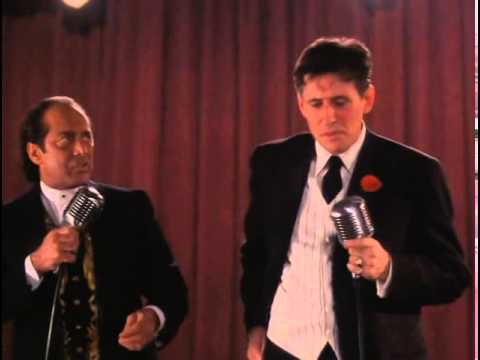
Ben London (Gabriel Byrne) has taken over Vic’s nightclub and, while singing My Way with Paul Anka, tells Vic that he should take an early retirement because he’s a paranoid schizophrenic.  Before he can deal with Ben, Vic has to kill all of his other rivals, all of whom are played by actors like Michael J. Pollard, Billy Idol, Kyle MacLachlan, Gregory Hines, and Burt Reynolds.  The bodies start to pile up but Jimmy the Undertaker (Richard Pryor, looking extremely frail in one of his final roles) is always around to make sure that everyone gets a proper burial.

And there are other cameos as well.  Joey Bishop is the owner of a mortuary.  Henry Silva is wasted as one the few gangsters to stay loyal to Vic.  Christopher Jones, who previously co-starred with Larry Bishop and Richard Pryor in Wild In The Streets before dropping out of a society, plays a hitman who pretends to be Nick Falco.  Even Rob Reiner shows up a limo driver who talks too much.

Almost every poorly paced scene in Mad Dog Time plays out the same way.  Three or more men confront each other in a room.  Hard-boiled dialogue is exchanged for an interminable length of time until someone finally gets shot.  You would think, at the very least, it would be watchable because of all the different people in the cast but none of the actors really seem to be into it.  Richard Dreyfuss and Jeff Goldblum resort to smirking through their scenes while Gabriel Byrne often appears to be drunk.  Whenever he’s in a scene, Burt Reynolds seems to be trying to hide his face and it is hard to blame him.  There were many terrible movies released in the 90s but none were as bad as Mad Dog Time.