On Stage On The Lens: The Andersonville Trial (dir by George C. Soctt)


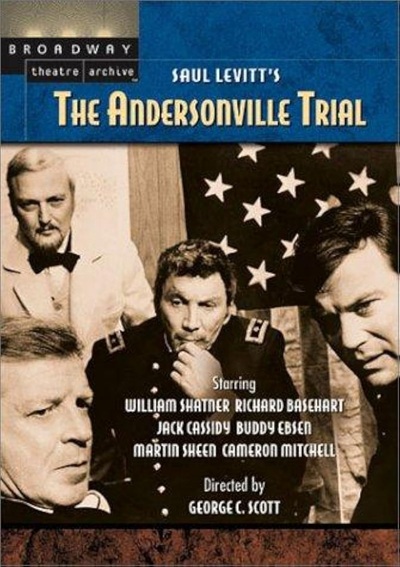
1970’s The Andersonville Trial takes place in one muggy military court room.  The year is 1865.  The Civil War is over but the wounds of the conflict are still fresh.  Many of the leaders of the Confederacy are still fugitives.  Abraham Lincoln has been dead for only a month.  The people want someone to pay and it appears that person might be Captain Henry Wirz (Richard Basehart).

Originally born in Switzerland and forced to flee Europe after being convicted of embezzlement, Henry Wirz eventually ended up in Kentucky.  He served in the Confederate Army and was eventually named the commandant of Camp Sumter, a prison camp located near Andersonville, Georgia.  After the war, Captain Wirz is indicted for war crimes connected to his treatment of the Union prisoners at the camp.  Wirz and his defense counsel, Otis Baker (Jack Cassidy), argue that the prison soon became overcrowded due to the war and that Wirz treated the prisoners as well as he could considering that he had limited resoruces.  Wirz points out that his requests for much-needed supplies were denied by his superiors.   Prosecutor Norton Chipman (William Shatner) argues that Wirz purposefully neglected the prisoners and their needs and that Wirz is personally responsible for every death that occurred under his watch.  The trial is overseen by Maj. General Lew Wallace (Cameron Mitchell), the same Lew Wallace who would later write Ben-Hur and who reportedly offered a pardon to Billy the Kid shortly before the latter’s death.  Wallace attempts to give Wirz a fair trial, even allowing Wirz to spend the trial reclining on a couch due to a case of gangrene.  (Agck!  The 19th century was a scary time!)

The Andersonville Trial started life as a 1959 Broadway production.  On stage, George C. Scott played Chipman, an experience he described as difficult because, even though Chipman was nominally the play’s hero, Wirz was actually a much more sympathetic character.  When the play was adapted for television in 1970, Scott returned to direct.  Admittedly, the television version is very stagey.  Scott doesn’t make much effort to open up the play.  Almost all of the action is confined to that courtroom.  We learn about the conditions at Fort Sumter in the same way that the judges learned about the conditions.  We listen as the witnesses testify.  We listen as a doctor played by Buddy Ebsen talks about the deplorable conditions at Fort Sumter.  We also listen as a soldier played by Martin Sheen reports that Wirz has previously attempted to suicide and we’re left to wonder if it was due to guilt or fear of the public execution that would follow a guilty verdict.  We watch as Chipman and Baker throw themselves into the trial, two attorneys who both believe that they are correct.  And we watch as Wirz finally testifies and the play hits its unexpected emotional high point.

As most filmed plays do, The Andersonville Trial demands a bit of patience on the part of the viewer.  It’s important to actually focus on not only what people are saying but also how they’re saying it.  Fortunately, Scott gets wonderful performances from his ensemble cast.  Even William Shatner’s overdramatic tendencies are put to good use.  Chipman is outraged but the play asks if Chipman is angry with the right person.  With many of the Confederacy’s leaders in Canada and Europe, Wirz finds himself standing in for all of them and facing a nation that wants vengeance for the death of their president.  Wirz claims and his defense attorney argues that Wirz was ultimately just a soldier who followed orders, which is what soldiers are continually told to do.  The Andersonville Trial considers when military discipline must be set aside to do what is morally right.

Admittedly, when it comes to The Andersonville Trial, it helps to not only like courtroom dramas but to also be a bit of a history nerd as well.  Fortunately, both of those are true of me.  I found The Andersonville Trial to be a fascinating story and a worthy production.
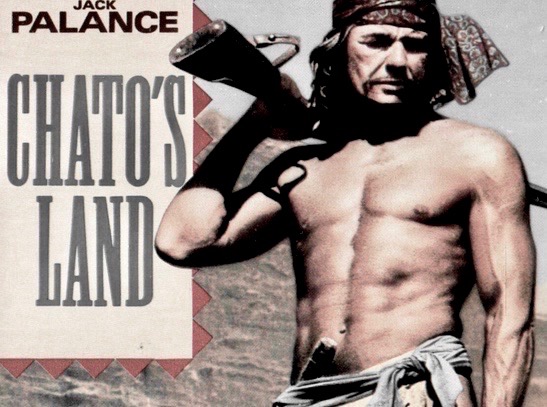
CHATO’S LAND (1972) – Jack Palance leads a posse after Charles Bronson!


One of the most enjoyable things about being a dad is introducing your favorite things to your kids. I taught my son Hank the sports of basketball, baseball, and golf, and even now there’s nothing we enjoy doing more together than playing a round of golf. Of course, as one of the world’s biggest Charles Bronson fans, I’ve introduced him to many films starring my cinematic hero. It seems that two movies have stood the test of time and have gone on to become two of his favorite movies. The fact that THE DIRTY DOZEN (1967) is one of his favorites isn’t a big surprise as he’s always enjoyed playing video games set during World War II. The other, CHATO’S LAND (1972), was more of a surprise. A few years ago, when Hank was home from college, I asked him if there was a movie he wanted to watch. It could have been any movie in the world, and I was honestly a little surprised when he said he’d been wanting to watch CHATO’S LAND again. Needless to say, this dad was very proud. 

Charles Bronson is Pardon Chato, a half breed Apache who’s minding his own business and having a drink in the saloon, when a small-town sheriff decides to give him hell just for being a “breed.” Forced to kill the racist POS in self-defense, Chato heads out of town a day ahead of the posse led by the former confederate Captain Quincey Whitmore (Jack Palance). Whitmore may be leading the posse, but the Hooker Brothers (played by Simon Oakland, Ralph Waite, and Richard Jordan) are just as bigoted as the sheriff who was killed, and they set about bullying their neighbors into joining their hunt for Chato. A couple of the guys who go along because it’s “expected of them” are Joshua Everette (James Whitmore) and Gavin Malechie (Roddy McMillan). When the posse comes across Chato’s home and woman, some of the members decide the wise thing to do is rape her and tie her up as bait. This is clearly not going to work out well for the posse, even those who tried to stop the rape. Using his sneaky Indian skills and the help of a fellow Indian, Chato is able to create a diversion and rescue his woman, but his friend is killed in the process. With his friend murdered and his woman brutalized and raped, Chato is no longer willing to just run away. From this point forward, the hunters will become the hunted as he leads them all further into CHATO’S LAND. 

There are several things that I find interesting about CHATO’S LAND. This is the first of six films that director Michael Winner and Charles Bronson would make together. They would all be financially successful films with THE MECHANIC (1972) and the original DEATH WISH (1974) standing out as true 70’s classics. Charles Bronson’s last number one box office hit would be DEATH WISH 3 (1985), which would also be his final film with Winner. It should also be noted that the character of Chato would be an early precursor of the kind of character Bronson would go on to embody almost exclusively throughout the rest of his career, that of the quiet but deadly man of action. Chato only says 13 lines in the entire movie and most of those are in a Native American dialect. Chato doesn’t have that much actual screen time either, but his presence dominates every scene. He’s like the angel of death hanging over the entire proceedings waiting to strike, and Winner continues to build on this tension as the film moves towards its inevitable conclusion. It’s an incredible, physical performance that can only be delivered by an actor like Bronson. Finally, the film has an outstanding cast, a cast that Winner himself would call “as good a cast as I ever assembled.” In addition to Bronson, Jack Palance is excellent as the confederate captain who’s never gotten over losing the war, and who now finds himself losing the battle to control the men in the posse. James Whitmore and Roddy McMillan are solid as a couple of decent men who went along because they felt it was their duty to their neighbors, who now find themselves caught up in a bad situation with even worse men. And finally, Simon Oakland, Ralph Waite & Richard Jordan are the kind of men you love to hate as the ignorant and bigoted Hooker brothers. It doesn’t hurt your feelings at all to see those guys get what’s coming to them.

Overall, CHATO’S LAND is a very good western, dominated by Bronson’s presence in the same way that JAWS (1975) is dominated by a giant killer shark. It was also a hugely profitable film upon its initial release, guaranteeing that Bronson would continue to get starring roles in films backed by American studios. Bronson liked to work with the same directors once he felt comfortable with them, and his collaboration with Winner would prove to be extremely fruitful and help turn him into one of the biggest box office stars in America. Thanks, Michael! 

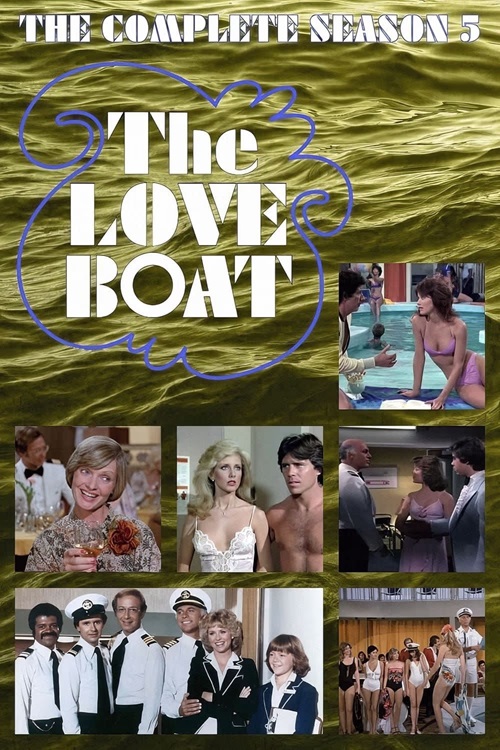
Retro Television Review: The Love Boat 5.6 “Chef’s Special/Beginning Anew/Kleinschmidt”


Welcome to Retro Television Reviews, a feature where we review some of our favorite and least favorite shows of the past!  On Wednesdays, I will be reviewing the original Love Boat, which aired on ABC from 1977 to 1986!  The series can be streamed on Paramount Plus!

Set sail for adventure, your mind on a new romance!

Episode 5.6 “Chef’s Special/Beginning Anew/Kleinschmidt”

(Dir by Richard Kinon, originally aired on October 7th, 1981)

As the passengers board the boat and prepare to set sail, Isaac and Vicki can’t help but notice Gertrude Turner (Trish Noble) and Kurt Kleinschmidt (Siegfried van Kapelhoff).  Gertrude is rich, single, and wearing a very valuable ring.  Kleinschmidt is a German insurance agent who Gertrude has hired to guard her jewelry, though she later reveals that she’s not really that worried about her jewels but instead, she just enjoys Kleinschmidt’s company.

“That man looks just like Doctor Bricker!” Isaac says.

And yes, it must be said that, despite his thick German accent, Siegfried van Kapelhoff, the actor playing Kleinschmidt, does indeed look a lot like Bernie Kopell, the actor who played Doc Bricker.  They’re both tall, thin, in their early 40s, and they even have the same hair color and bone structure.  What are the chances of that happening?  I mean, seriously….

Wait a minute….

THAT’S NOT SIEGFRIED VAN KAPELHOFF AT ALL!

Just as Gavin MacLeod used to do whenever one of Stubing’s brothers boarded the boat, this episode finds Bernie Kopell playing two roles.  Not only does he play Doc Bricker but he also play Kleinschmidt.  And yes, there is a scene where Kleinschmidt talks to Doc Bricker.  It’s done via split screen and it’s not at all convincing.  Bricker doesn’t even appear to be looking at Kleinschmidt while talking to him.

Gertrude’s ring does vanish at one point, which leads to Kleinschmidt interrogating the crew and eventually attempting to arrest Gopher.  Of course, the truth of the matter is that Gertrude herself hid the ring so that Kleinschmidt would stay on the boat with her.  (Kleinschmidt, feeling insecure about his detective abilities, was originally planning on flying home as soon as the boat docked in Mexico.)  When Stubing learns that Gertrude faked the robbery, he is surprisingly understanding, despite the fact that doing so led to Kleinschmidt harassing his entire crew.  I’m not sure that I really bought Stubing’s reaction but maybe he just thought Kleinschmidt was Doc in disguise.

The Kleinschmidt story was far more amusing than it really had any right being.  That was almost totally due to Bernie Kopell, who seemed to really enjoy the chance to play such an over-the-top character.  Kleinschmidt was definitely a bit cartoonish but Kopell’s likability went a long way towards making the character’s stupidity not just tolerable but also kind of sweet.

While all that’s going on, the Love Boat’s chef (Jay Johnson) gets upset when a new chef (Leslie Easterbrook) is hired to work in the kitchen with him.  This storyline requires the audience to believe that 1) no one would bother to warn the original chef that he’s getting a new colleague and 2) that the new chef would risk ruining her reputation just to avoid hurting her predecessor’s feelings.  The less said about this story the better.

Finally, Jenny Langley (Joan Fontaine) boards the cruise and is stunned to see that her former lover, Stan Ellis (Richard Basehart), is on the boat.  Jenny and Stan haven’t seen each other since the end of World War II.  Now, Stan is a widower who has been in a wheelchair ever since the car accident that killed his wife.  Jenny tries to help Stan come out of his shell and find the courage to embrace life.  Stan is resistant but finally comes around.  But when Stan asks Jenny to marry him, Jenny refuses.  Jenny is going blind.  Stan, however, doesn’t care about that.  And, also …. Stan can walk!  It turns out that his paralysis was just psychosomatic.

This storyline was one that I probably would have liked better if I hadn’t found myself thinking about my Dad whenever Stan was onscreen.  (Before he died, my Dad was also in a wheelchair as the result of a traffic accident.)  I will say that Joan Fontaine is wonderful in her role.  This storyline was handled well but right now, the pain of losing my Dad is still too fresh for me to have really enjoyed it.  That said, Fontaine and Basehart were old pros at this type of melodrama and this storyline had a lot to offer fans of old school romance.  This was definitely a storyline for the TCM crowd and I mean that as a compliment!

With two stories that worked and a third one that wasn’t too much of a distraction, this was a worthwhile cruise.


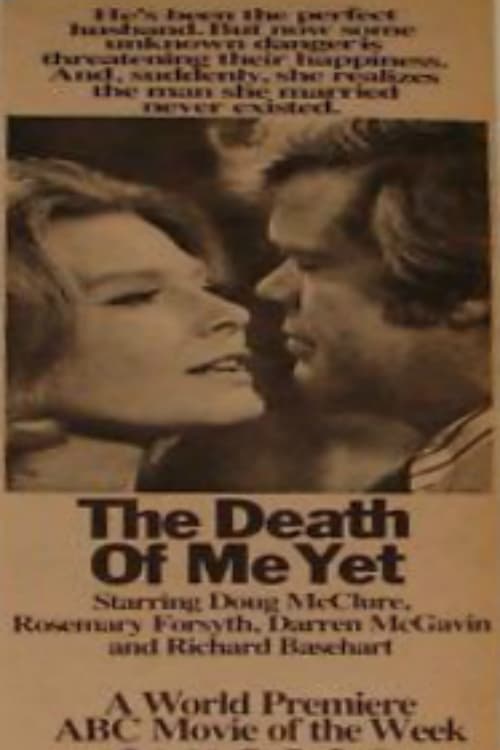
Retro Television Review: The Death Of Me Yet (dir by John Llewellyn Moxey)


Welcome to Retro Television Reviews, a feature where we review some of our favorite and least favorite shows of the past!  On Sundays, I will be reviewing the made-for-television movies that used to be a primetime mainstay.  Today’s film is 1971’s The Death Of Me Yet!  It  can be viewed on YouTube.

Welcome to Middletown!

Middletown is a nice, comfy, and friendly little town.  As you might guess from the name, it seems just like the type of town that you would expect to find in the middle of the country.  Edward Young (Doug McClure) is a friendly and popular citizen of the town.  Everyone loves to see Edward walking around Middletown with his girlfriend, Alice (Meg Foster, of the otherworldly eyes).  But one day, Edward comes home to find a message waiting for him.  He has been “activated” and it’s time for him to leave Middletown and head to …. THE UNITED STATES!

You see, Middletown is in the middle of a country.  It’s in the middle of Russia, to be exact.  It’s a KGB training center, where sleeper agents learn how to pass for Americans.

Edward heads to America, where he takes on the name of Paul Towers.  Over the years, Paul settles in a town that looks a lot like Middletown.  Paul becomes a newspaper publisher and he comes to love America.  He also marries Sibby (Rosemary Forsyth), the sister of defense contract Hank Keller (Dana Elcar).  When one of Hank’s executives dies under mysterious circumstances, Hank offers to bring Paul into the business.

Paul is reluctant, both because he doesn’t know if he could pass the background check that the FBI is going to run on him and also because he suspects that someone is trying to kill him!  When he sees Alice and his former KGB handler (Richard Basehart) in town, Paul realizes that he’s going to have to pick a side and face the consequences of all of his actions.

The Death of Me Yet is an enjoyably twisty thriller, one that embraces the melodrama while having some fun with the idea of a bunch of sleeper agents doing business in a generic American town.  Doug McClure’s natural earnestness makes him an odd choice for the role of a lifelong spy but the casting works in that it explains why no one has ever suspected Paul in the past.  As always, Darren McGavin is a welcome presence as the FBI agent who assures Paul that he will be doing a thorough background check.  Richard Basehart makes for a good villain and Meg Foster’s enigmatic screen presence keeps the viewer guessing as to what her ultimate goal may be.

The film ends with the hint of continued adventures for Paul.  It wouldn’t surprise me if this movie was made with an eye on turning it into a weekly series.  As far as I know, that series never happened, though The Americans would later feature many of the same themes and ideas found in The Death of Me YetThe Death of Me Yet holds up as an entertaining espionage thriller.

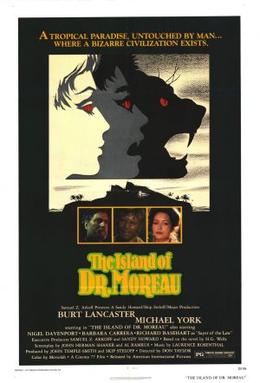
The Island of Dr. Moreau (1977, directed by Don Taylor)


After the ship that he’s working on sinks, engineer Andrew Braddock (Michael York) washes up on an uncharted island. It’s a beautiful island but it quickly proves dangerous as another survivor of the sinking is killed by wild animals. The injured Braddock passes out and when he wakes up, he’s being cared for by a mysterious scientist named Moreau (Burt Lancaster).

Braddock discovers that the island is populated by creatures that are half-human and half-animal. Led by the Sayer of the Law (Richard Basehart), these creatures are the results of experiments conducted by Moreau and his assistant, Montgomery (Nigel Davenport).  Moreau’s experiments are expected to obey Moreau’s laws.  Should they fail, they will be taken to the House of Pain and punished.  When Baddock objects to Moreau playing God, Moreau plots to reverse the experiment on Braddock and turn him into an animal. Even as he falls in love with a former cheetah (played by Barbara Carrera), Braddock realizes that he must escape the Island of Dr. Moeau.

This is the forgotten adaptation of H.G. Wells’s classic novel, as well as being the most faithful. The Island of Lost Souls, from 1932, is considered to be a classic. The third version, directed by John Frankenheimer and starring Marlon Brando and Val Kilmer, is a legendary disaster. This version, though, is usually overlooked. It’s also my favorite of the three but that might be because it was the first version that I ever saw. It’s a straight-forward version of H.G. Wells’s story of science gone mad with director Don Taylor not wasting any time getting the action started. Michael York, always an underrated actor, convincingly portrays Braddock’s outrage and his struggle to maintain his humanity after Moreau starts to experiment on him while Carrera is beautiful and mysterious as Maria. Probably the film’s biggest surprise is Burt Lancaster, who turns out to be ideally cast as Moreau. More subdued than either Charles Laughton or Marlon Brando, Lancaster plays Moreau as a brilliant but callous man who is too arrogant to realize that he’s become as much of an animal as those he claims to be perfecting.  What makes Lancaster’s Moreau so disturbing is that he doesn’t have the excuse of being insane.  Instead, he’s just too stubborn to admit that he’s potentially made a huge mistake.

It may be forgotten but this still the version of The Island of Dr, Moreau that I would recommend.

(Trailer courtesy of Classic Movie Reviews)

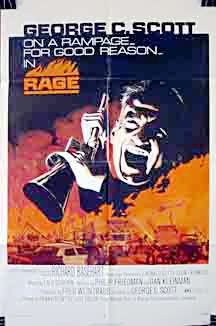
Rage (1972, directed by George C. Scott)


Wyoming sheep rancher Dan Logan (George C. Scott) and his teenage son, Chris (Nicolas Beauvy), spend a night camping out on their land.  While Dan stays in the tent, Chris decides to sleep outside, underneath the stars.  The next morning, Dan leaves the tent to discover that all of his sheep are dead and that Chris is having violent convulsions.  Dan rushes his son to the local hospital, where he hopes that the family’s longtime physician, Dr. Caldwell (Richard Basehart), can save his son’s life.

However, at the hospital, Dan is separated from his son.  Two doctors that he’s never met before — Dr. Spencer (Barnard Hughes) and Major Holliford (Martin Sheen) — take over his case.  They tell him that Chris was probably just exposed to an insecticide and that both Dan and his son are going to have to stay at the hospital for a few days.  Dan is confined to his room and not allowed to see his son.

What Dan doesn’t know is that both he and his son have been unwittingly exposed to a secret army nerve gas.  Though the experiment was only meant to be performed on the animals that were grazing on Dan’s land, Dan and Chris were accidentally sprayed.  When Dan discovers the truth about what’s been done to him and his son, he sets out to try to get revenge with what little time he has left.

Fresh from refusing an Oscar for Patton, George C. Scott made his feature film directorial debut with Rage.  (He had previously directed The Andersonville Trial for television.)  As a director, Scott sometimes struggles.  Rage is so relentlessly grim and serious that even the most experienced director would have had a difficult time making it compelling.  The scenes in the hospital are effective claustrophobic but they’re also often dramatically inert.  The only humor in the film comes from Scott’s overuse of slow motion.  When even simple scenes, like throwing coffee on a campfire, are shown in slow motion, it goes from being ominous to unintentionally humorous.

As a director, Scott did make a very wise decision by casting himself in the lead role.  No one was better at portraying pure, incandescent anger than George C. Scott and the film picks up once Dan discovers what’s been done to himself and his son.  Once Dan sets off to get revenge, Rage becomes an entirely different film, one that is about both a father’s anger and the cold calculation of a government that views him as just as a subject to be tested upon.  The final scene is especially effective and suggests that Scott could have become an interesting director if he had stuck with it.

Scott would direct one more film, The Savage Is Loose, before devoting the rest of his distinguished career to performing.

The Bounty Man (1972, directed by John Llewellyn Moxey)


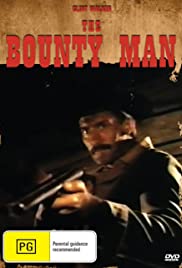
Kinkaid (Clint Walker) is a bounty hunter in the old west who doesn’t have time for sentiment or friendship.  All he cares about is the money that his next bounty is going to bring in.  When he captures outlaw Billy Riddle (John Ericson), it should be a cool $5,000 payday.  The only problem is that Billy’s girlfriend, a prostitute named Mae (Margot Kidder), insists on accompanying Kinkaid while he takes Billy to jail.  Though she initially conspires to help Billy escape, Mae soon starts to fall for the outwardly unemotional Kinkaid, especially when she discovers the details of his tragic backstory.  (Every bounty hunter has one!)

However, the three of them soon run into another problem.  Angus Keogh (Richard Basehart) and his gang have decided that they want to collect the bounty for themselves.  Kinkaid, Billy, and Mae find themselves trapped in a canyon, under siege and with no food or water.  The three of them will have to work together to survive but can they trust one another?

The Bounty Man was a made-for-TV western and it feels like it was originally mean to be a pilot.  There’s not really much to the story, beyond establishing Kinkaid and Mae as characters who could potentially have a new adventure every week.  I did like the performance of Richard Basehart, especially in the scene where he taunts the trapped Kinkaid by demonstrating that he has so much water that he can pour it out of his canteen without having to worry about running out.  Basehart was a good villain and Walker was a believable hero, even if the character wasn’t very interesting.  Margot Kidder, not surprisingly, is the best thing about the film.  Mae is stock role, the prostitute with a heart of gold, but Kidder brings a lot of life to the part.

The Bounty Man was one of many TV movies directed by John Llewelleyn Moxey.  He does a good job moving the action along.  The Bounty Man is a quick, 70-minute diversion for undemanding western fans.

Snap! Crackle! Pop!: TENSION (MGM 1949)


gary loggins's avatarcracked rear viewer

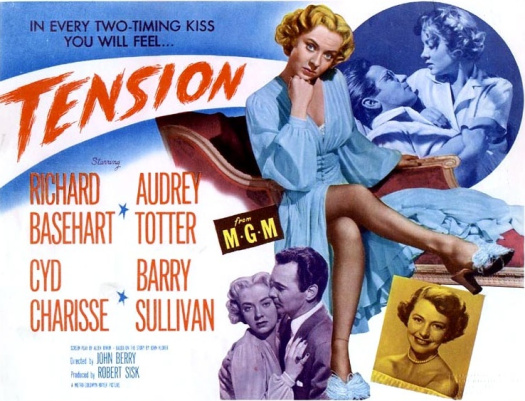
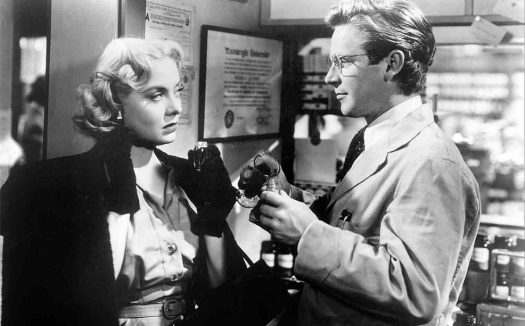
The best films noir deal with post-WWII disillusionment, and that’s exactly what drives Richard Basehart’s sad sack Warren Quimby in TENSION. This cynical, downbeat, and downright sordid little tale of infidelity and murder is  boosted by first-rate performances from Basehart and scorchingly hot Audrey Totter as his manipulative bimbo of a wife, with a taut screenplay by Allen Rivkin and solid direction by John Berry. It may not make anyone’s top ten list (or even top thirty), but it’s one of those ‘B’ films that really works, provided you’re willing to suspend disbelief for an hour and a half.

Mild mannered pharmacist Quimby met and married Claire while stationed in San Diego during the war. He, like many others, hopes to someday live the American Dream: house, kids, the whole nine yards. Trampy Claire doesn’t give a crap about that; she prefers excitement, the high life. Claire is messing around…

View original post 484 more words

30 Days of Noir #24: Fourteen Hours (dir by Henry Hathaway)


As a genre, film noir has always been associated with crime: murder, brutish gangsters, seductive femme fatales, and occasionally a cynical private detective doing the right thing almost despite himself.  However, not all film noirs are about criminals.  Some are just about desperate characters who have found themselves on the fringes, living in a shadow-filled world that appears to be monstrously indifferent to all human suffering.

That’s certainly the case with the 1951 noir, 14 Hours.  The film centers around Robert Cosick (Richard Basehart, who previously played a murderer in another classic noir, He Walked By Night).  Robert isn’t a gangster.  He’s not a private detective.  He doesn’t carry a gun and he doesn’t provide any sort of hard-boiled narration.  In fact, for the majority of the film, Robert is defined by less who he is and more by what he’s doing.  Robert Cosick, having earlier checked into a room on the 15th floor of a New York hotel, has climbed out of a window and is now standing on a ledge.  Robert says that he’s going to jump.

What has driven Robert Cosik to consider such an extreme action?  The film never settles on any one reason, though it gives us several clues.  When his father (Robert Keith) and his mother (Agnes Moorehead) show up at the scene, they immediately start bickering about old family dramas.  When Robert’s ex-fiancee (Barbara Bel Geddes) begs him to step in from the ledge, he listens a bit more to her than he did to his parents but he still refuses to come in from the ledge.

But perhaps the real reason that Robert Cosick is out on that ledge can be found in the film’s shadowy visuals.  Directed in a semi-documentary fashion by Henry Hathaway and featuring harsh, black-and-white cinematography that’s credited to Joe MacDonald, Fourteen Hours emphasizes the indifference of the city.  From the menacing landscape of concrete buildings to the crowds gathering below the ledge to see if Robert lives or dies,  New York City is as much as a character in this film as Robert, his family, or the cop (played by Paul Douglas) who finds himself trying to talk Robert into reentering his hotel room.  When night falls, the city may light up but it does nothing to alleviate the shadows that seem to be wrapping themselves around Robert.  For the fourteen hours that Robert is on that ledge, he may be the center of the world but the film leaves little doubt that New York City will continue to exist in all of its glory and its horror regardless of how Robert’s drama plays out.  Whether he lives or dies, Robert appears to be destined to be forgotten.

When the film isn’t concentrating on the cops trying to talk Robert into getting back in the hotel room, it shows us the reactions of the people who see him standing out on that ledge.  (If this film were made today, everyone would be holding up their phones and uploading Robert’s plight to social media.)  Some people are moved by Robert’s struggle.  For instance, a young woman played by Grace Kelly (in her film debut) reaches a decision on whether or not to get a divorce based on what she sees happening on the ledge.  Two office workers (played by Jeffrey Hunter and Debra Paget) even strike up a romance as they wait to see what will happen.  Some people view Robert as being a madman.  Others see him as being a victim.  And then there’s the many others who view him as being either a minor distraction or a piece of entertainment.  For them, it’s less important why Robert’s on the ledge or even who Robert is.  What’s important to them is how the story is going to end.

It’s not a particularly happy film but it’s made watchable by Hathaway’s intelligent direction and the performances of Paul Douglas and Richard Basehart.  With its theme of instant fame and hollow indifference, it’s a film that remains as relevant today as when it was initially released.

30 Days of Noir #20: He Walked By Night (dir by Alfred L. Werker and Anthony Mann)


The 1948 film noir, He Walked By Night, opens with a policeman named Rawlins on his way home from work.  As he drives down the street, he sees a man walking alone at night.  Because there’s been a number of recent burglaries in the area and the man’s a stranger, Rawlins decides to pull over and ask the man for his ID.

What Rawlins doesn’t realize is that the man is Roy Morgan (Richard Basehart) and yes, Roy is indeed the burglar.  Roy is something of a mystery man.  (Needless to say, Morgan is not his real last name.)  In the pre-Internet age, he has very carefully and very meticulously avoided leaving any sort of paper trail.  He lives, by himself, in a small apartment, his only companion being an adorable dog and the police scanner that Roy uses to always stay a few steps ahead of the cops.  When Rawlins pulls him over, it’s the closest that Roy has ever come to being caught.  Roy get out of the situation by shooting the cop and then running into the night.

The rest of the film deals with the efforts of two police detectives (played by Scott Brady and James Cardwell) and their captain (Roy Roberts) to discover who shot Rawlins and bring him to justice.  It’s not easy because not only has Roy done a good job of obscuring his very existence but his police scanner always gives him advanced warning whenever they cops start to close in on him.  The only lead that the cops have is a salesman named Paul Reeves (Whit Bissell).  Reeves has been buying and reselling the electronic equipment that Roy’s been stealing from houses all over Hollywood.  When Reeves tells the cops that he had no idea the stuff was stolen, the cops all share a weary roll of the eye.  No matter whether Reeves is telling the truth or not, he’s now the key to tracking down a cop killer….

He Walked By Night is a police procedural and, while the plot may sound familiar, the film is elevated by the atmospheric direction of Alfred Werker and an uncredited Anthony Mann.  As visualized by Werker and Mann, the streets of Los Angeles have never been darker and more menacing.  Roy emerges from the fog to commit his crimes and then disappears back into the mist, like some sort of paranormal spirit.  The film reaches its high point when the police chase their quarry through the sewers of Los Angeles, a scene that will remind many of the famous finale of The Third Man.

Though the film offers up clues to Roy Morgan’s motivation, he remains an enigma for much of the film.  Richard Basehart plays him as a paranoid man who only seems to be confident and happy when he’s stealing or when he’s outsmarting the police.  In many ways, regardless of whether he escapes the police or not, Roy’s destined to spend his life trapped in a prison of his own design.  Even hiding out on the fringes of society, Roy knows that his time is limited.  There’s only so many times one person can escape their fate.  Until he’s either captured or killed, Roy is destined to always walk the night, alone.