Two thoughts upon watching this new video:
First, I love The Chemical Brothers!
Secondly, this is the film that The Martian should have been.
Enjoy!
Two thoughts upon watching this new video:
First, I love The Chemical Brothers!
Secondly, this is the film that The Martian should have been.
Enjoy!
“Freedom!”
This video features a prison break. Apparently, the best way to escape from prison is to go straight up. Don’t waste your time with any of that digging stuff. I would actually be in a lot of trouble if I ever had to escape from prison. I’m scared of heights so I can’t really go through the roof. And I have a thing about not getting dirt under my fingernails so I’d have a hard time tunneling through the walls. I guess if I was in prison, I’d have to seduce the warden or something. Either that or I’d just do my time and then write a book about it. Chained Redhead: The Lisa Marie Bowman Story. It would be a best seller, I think.
Among the prisoners escaping from the prison is Hardwell. I’m glad he made it.
Speaking of prison, has anyone watched that 60 Days In show on A&E? By the time this post drops, this season’s finale will have aired. I have to say that this season was a hundred times better than the previous seasons. I’m just a little bit worried about how everyone’s going to adjust to being out of prison. For instance, Abner and David both really got into the whole prison mentality. Anyway, if you didn’t watch this season, you really missed out.
Enjoy!
Would I love you if you killed someone for me?
Well, it would probably depend on who you killed and what the exact circumstances were. For the most part, I’m against killing but I also support self-defense. If you killed someone who was about to kill me, I would at least be appreciative. I can’t guarantee that I’d love you but I’d probably allow you to take me to a movie.
Of course, Alec Benjamin isn’t actually offering to kill anyone in this song. Instead, he’s singing about changing who he is to please the person to whom he is singing. He’s willing to “kill” who he has been and become someone new. That’s really not the best way to go about a relationship, of course.
As for the video, it’s got a nicely ominous atmosphere. A truck stop is always a good place to have an existential crisis.
Enjoy!
“Is it okay to still listen to the music of Michael Jackson?”
Over the past few days, I’ve seen many different variations of that headline. The Guardian asked, “Can We Still Listen To Michael Jackson?” From Slate: “Will Michael Jackson songs still play at weddings? We asked three DJs.” And, of course, Entertainment Weekly chimed in with: “Can we still listen to Michael Jackson’s music after HBO doc Leaving Neverland?” As far as I know, the Guardian has yet to accuse Entertainment Weekly of headline plagiarism. That’s how seriously this question is being considered.
Fortunately, for me, it’s not a question that I have to answer. Michael Jackson’s music has never been an important part of my life. All of the songs and albums that people rave about — Thriller, Bad, that song about the rat — were all pretty much before my time. Usually, whenever I have heard any of those so-called classics, my usual reaction has been that 1) they’re ludicrously overproduced and 2) they tend to drag on forever. (Seriously, there’s no reason to ask Annie if she’s okay that many times.) Some people grew up with the idea of Michael Jackson being the King of Pop and a musical innovator. I grew up with the idea of Michael Jackson being a rather frightening eccentric who didn’t appear to have a nose and who wrote songs about how unfair it was that the world wouldn’t accept that he just really, really enjoyed the company of children. Since neither Jackson nor his music have ever been an important part of my life, it’s rather easy for me to shrug and say, “Sure, let us never hear his music again.”
Still, there are many people debating the question of whether or not it’s time to cancel the legacy of Michael Jackson. That’s because of Leaving Neverland, a 4-hour documentary that premiered at Sundance and which recently aired on HBO. Leaving Neverland deals with two men — choreographer Wade Robson and former actor Jimmy Safechuck — who claim that they were both sexually abused by Michael Jackson as children. Interviewed separately, both Robson and Safechuck tell nearly identical stories about first meeting Jackson, being invited into the sanctuary of Jackson’s Neverland, and eventually being brainwashed, abused, and eventually abandoned by Jackson. It’s not just that Robson and Safechuck both separately tell the same story. It’s also that the details will be familiar to anyone who has ever been abused. The grooming. The manipulation. The thrill of sharing a secret eventually giving way to the guilt of feeling that you’re somehow at fault. And, of course, the combination of fear and denial that both Robson and Safechuck say initially caused them to lie and deny having been abused by Jackson. Both men talk about how Jackson used their own broken families to control them, suggesting that only he understood what they were going through and that they were only truly safe when they were with him. Jimmy Safechuck, in particular, speaks in the haunted manner and nervous cadences of a survivor. Their stories are frequently harrowing and, watching the documentary, one can understand why counselors were on hand for the Sundance showing.
That said, those who have complained that Leaving Neverland is a very one-sided affair do have a point. (To see what many of Michael Jackson’s supporters have to say about the men and their stories, check out #mjinnocent on twitter.) Leaving Neverland is very much a product of our current cancel culture. From the start it clearly chooses a side and, for four hours, it focuses only on that side. Far more attention is paid to the civil suit that Jackson settled out of court than the criminal trial in which Jackson was acquitted. Much has been made on twitter about inconsistencies in Safechuck and Robson’s stories. Yet, are those inconsistencies the result of an intentional attempt to subvert the truth or are they the result of the trauma that the two men suffered at the hands of their abuser? When I checked in on twitter during the documentary’s airing, it was fascinating to watch as the two camps debated who should be cancelled, Michael Jackson for being accused of pedophilia or Wade Robson for saying that Jackson’s hair felt like a brillo pad.
https://twitter.com/morgandallasx/status/1103422069495250950
Ultimately, Leaving Neverland is a portrait of the power of fame. One imagines that if a stranger had approached the mothers of Wade Robson and Jimmy Safechuck and said that he wanted to spend a weekend sleeping in the same bed as their sons, the mothers would have a very different response than they did when Michael Jackson did essentially just that. For all the red flags to be found in Jackson’s public behavior, he was often dismissed as just being an eccentric artist, a harmless Peter Pan-like figure. (You have to wonder if there was no one in his camp who was willing to say, “Y’know, Michael, maybe you should stop being photographed with little boys for a while.”) One of the more interesting things about the documentary is to see how quickly Jackson recovered from the 1993 abuse allegations. The same reporters who very gravely report the allegations about Jackson in ’93 are later seen glibly referring to Jackson as being the “king of pop,” just a few years later.
Leaving Neverland is a powerful documentary but I doubt it will change anyone’s mind. That’s one of the dangers that comes from picking a side as deliberately and unapologetically as this documentary does. Your argument may be great but only those who agree with you are going to listen. Those who support Jackson will see it as being a hit piece. Those who believe Jackson was guilty will see the documentary as being validation. Ultimately, whether or not it’s still okay to listen to Michael Jackson’s music is a decision that only you can make for yourself.
If there’s one thing that totally annoys the Hell out of me, it’s when people on YouTube leave comments under songs like, “Who still listening in August of 2017?” I mean, yeah, I get it. It’s a good song. You’re still listening to it years after it was first released. You’re the best. Go get yourself a coke or something because you earned it! Seriously, it’s so stupid.
That said, it’s now March of 2019, I’m still listening to this.
Enjoy!
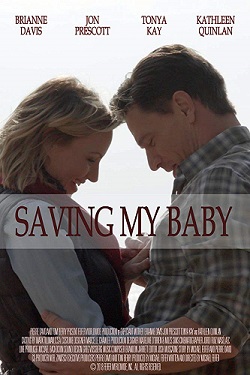
Poor baby Lilly!
She’s only a few weeks old and her life is already all drama all the time!
First off, Lilly was born slightly premature, shortly after her mother, Sarah (Brianne Davis), was involved in a serious and suspicious auto accident. Then, while her mother is still in a coma, her father, Travis (Jon Prescott), decides to take Lilly and run off to Palm Springs with her. Accompanying Travis is his overprotective mother, Virginia (Kathleen Quinlan) and Jessica (Tonya Kay), who just happens to be the friend who introduced Sarah to Travis in the first place. Speaking of just being friends, that’s what Travis swears that he and Jessica are but we all know that’s not the case. We know this because this is a Lifetime film and it’s rare that anyone’s ever just a friend in the world of Lifetime. Of course, Sarah’s parents and her sister object to Travis taking the baby to Palm Springs but what can they do? He’s the father.
Of course, eventually, Sarah wakes up and she’s like, “Where’s my baby?” When she hears that Lilly has been taken to Palm Springs, she quickly calls up Travis and demands to know what’s going on. Travis assures Sarah that his mother is looking after Lilly and promises that they’ll return the following morning. Sarah then hears Jessica talking in the background.
“IS JESSICA THERE!?” Sarah asks.
Travis, not surprisingly, doesn’t have a quick answer for that.
As should already be obvious, there was a lot more to Sarah and Travis’s whirlwind romance than just love. Unlike the attempted murder, the baby was never a part of the plan. However, now that Lilly’s been born, Travis definitely wants to keep her. Jessica, meanwhile, is concerned about how much Sarah and her family are willing to pay for the return of Baby Lilly….
Kidnapped children are pretty much a staple plot point when it comes to Lifetime movies. That really shouldn’t be surprising. The most effective Lifetime films are the ones that deal, however melodramatically, with real-life fears and what could be more scary than the thought of losing your baby? Whereas other mothers in Lifetime kidnapping films at least get to spend some time with their child before the abduction happens, Sarah wakes up to discover that her baby has been taken to another city. When she desperately asks her sister for information of how the baby looked before she was taken away, it’s a moment of intense emotional honesty.
Saving My Baby is a bit unique among Lifetime kidnapping films in that it actually spend more time with the kidnappers than with the family of the kidnapped. Don’t get me wrong. Sarah is a sympathetic character and Brianne Davis does a good job playing her but the film is far more interested in Jessica, Travis, and Virginia. As played by Jon Pescott, Travis spend most of his screentime wearing the haunted expression of someone who knows that he’s made the biggest mistake of his life. Not only does he have his wife angry at him but his mother won’t stop telling him that he’s a terrible father and his girlfriend keeps demanding that he get rid of both his mother and his daughter. Kathleen Quinlan does a great jon, keeping you guessing about Virginia. You’re never quite sure how much she knows about what Travis and Jessica are planning. However, the film is totally stolen by Tonya Kay, who is like a force of destructive nature in the role of Jessica. Jessica may be evil but you can’t help but sympathize with her frustration at times. I mean, everyone around her is just so incompetent!
Saving My Baby is an entertaining Lifetime kidnapping film. Wisely, the film eventually moves the action to Las Vegas, which is the perfect location for the movie’s melodrama. For the film’s finale, Saving My Baby makes good use of the Nevada desert, with the desolation perfectly capturing the feeling of hopelessness that Sarah’s been feeling ever since the disappearance of her daughter. It all leads to gunfire and tears and hopefully, a lesson learned about letting your no-good son-in-law take your granddaughter to Palm Springs. We can only hope.
The next time that you’re tempted to get mad at your Uber driver (or your Lyft driver, depending on which company you’re boycotting at the time), remember this video. Seriously, you have no idea what your driver may have just had to deal with. Sure, the driver’s picking you up now but, for all you know, someone may have bled to death in the backseat just an hour ago or so.
That is actually my number one concern when it comes to Uber. I always find myself wondering who was in the car before me and did they take a shower before entering a vehicle. That’s another reason why I refuse to consider using public transportation. I get that it’s good for the environment and everything but people are really disgusting sometimes. I mean, I’m all far saving the planet but people do all sorts of stuff when they know that they’re not the ones who are actually going to have to clean up after themselves.
For instance, the driver in this video — I mean, he’s got people crying in the backseat. He’s got people bleeding all over his car. He’s got a lot to deal with but, at the end of the video, we see why he puts up with it all and it’s a nice “awwwwwww!” moment. I like this video. If it was a feature-length film, the driver would be played by Jason Statham. Of course, I really wouldn’t want Jason Statham to be my Uber driver, just because it seems like he would constantly be stopping the car to get into a fight with other drivers. Add to that, I’d probably be tempted to ask him why he’s driving an Uber instead of making a movie and he’d probably get mad at me for prying.
Anyway, enjoy!
The future is always neon.
If there’s anything that films set in the future always seem to have in common, it’s that there’s a lot of neon. In fact, the only futuristic films that aren’t full of neon are those films that take place after an atomic war, where everyone’s living in the desert and driving around on motorcycles. But even those films often seem to end with the promise that, once society is up and running again, we’ll get a lot of neon.
Personally, I’m hoping that I’ll spend my retirement years in a hot pink house with neon walls.
The other thing that the future always seems to have is a divide between the decadent rich and the rebellious lower classes, the majority of whom seem to spend a lot of time wandering down red hallways. Maybe one reason why everyone in the future always seems to be fighting is because there’s so much red around. Maybe if they used blue neon, everyone would calm down and accept their social status.
Who knows? I guess we’ll have to wait and see. I imagine it should be the future in another two years or so.
Until then, enjoy!
Hypnotic, dream-like, surreal, oddly beautiful, all that and more can be said about today’s music video of the day.
Enjoy!
Today’s music video of the day comes to use from Austin’s own Gary Clark, Jr.
The video for What About Us? takes place in and around a trailer park and it really does capture the feel of the place. Now, before anyone asks, I’ve never lived in a trailer park but I’ve visited more than a few. Trailer parks are often both ominous and hopeful at the same time. While you definitely see some people who have fallen on hard times, you also see a lot of acts of small kindness. There’s a community spirit to a good trailer park. When you’re on the outskirts of “acceptable” society, it’s always good to have people who you can depend upon.
This video was directed by Savannah Leaf, who also did the video for Clark’s This Land. The gorgeous black-and-white cinematography is credited to Isaac Bauman. Bauman has served as director of photography on several music videos. He’s got 66 credits listed at the Imvdb, including Avicii’s Broken Arrow.
(We miss you, Avicii!)
Enjoy!

