Horror on TV: Baywatch Nights 2.15 “Mobius” (dir by David Livingston)


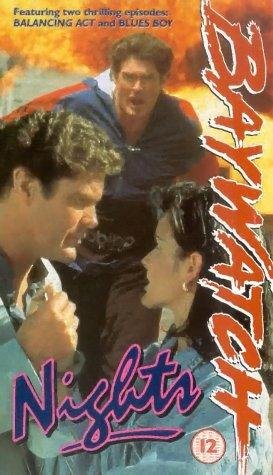
On tonight’s episode of Baywatch Nights, David Hasselhoff and Angie Harmon get zapped into a parallel universe, one where lifeguards regularly battle the denzieins of Hell.  Oh wait a minutes …. that’s this universe!

This episode originally aired on March 2nd, 1997!

Horror on the Lens: The Brain Wouldn’t Die (dir by Joseph Green)


I hate to say it but it’s getting more and more difficult to find public domain horror films on YouTube that we have yet to share on this site.  I mean, the fact of the matter is that we’ve been doing these horrorthons for ten years now and there’s definitely a limited supply of films to choose from.  (For the most part, I try to pick films that I know aren’t going to get yanked down because of a copyright claim.  For instance, you might be able to find something like Hereditary or Midsommar on YouTube but I can guarantee you that it won’t be there long.)

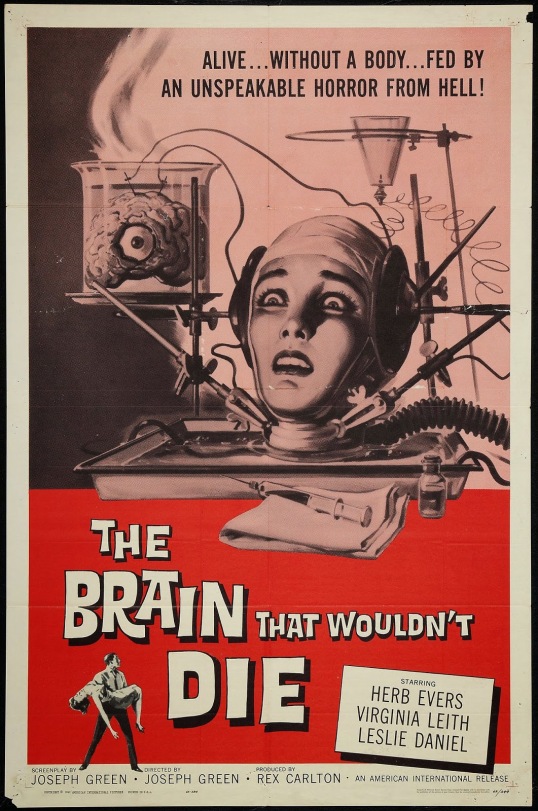
Last night, I was really happy when I came across The Brain That Wouldn’t Die on YouTube.  “Finally!” I said, “A film were haven’t used yet!”  Then I did some research and I discovered that we did share it, way back in 2011.

Well, guess what.  We’re sharing it again.  After all, it’s always a good time to watch a movie about a disembodied head, a monster in a closet, and a man losing his arm in a scene that’s surprisingly graphic for 1962.  To me, the best thing about this film is just how pissed off that head is at being brought back to life.

So, for a second time, enjoy The Brain That Wouldn’t Die!

Horror on TV: Baywatch Nights 2.14 “Ascension” (dir by Jon Cassar)


Tonight’s episode of Baywatch Nights is an odd one.  Mitch gets kidnapped.  Ryan dreams about it happening.  There’s a lot of weird torture devices.  Somehow, the Knights Templar are involved.  It always comes down to the Knights Templar, doesn’t it?

Seriously, how does one go back to being a lifeguard after all of this?

This episode originally aired on February 23rd, 1997.

Enjoy!

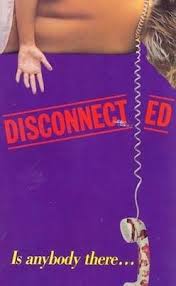
The TSL’s Horror Grindhouse: Disconnected (dir by Gorman Bechard)


Disconnected, an independent and low-budget horror film from 1984, is an odd one.

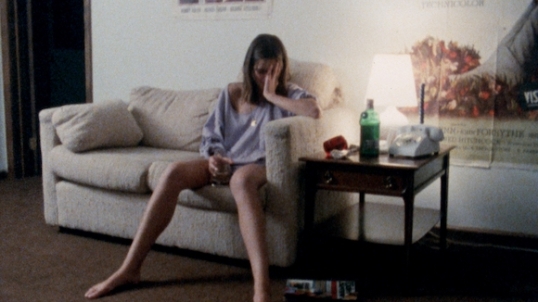
Actually, odd might be too mild of a description of this film.  It’s about Alicia (Frances Raines, niece of Claude) who works in a video store and who keeps getting strange phone calls.  Alicia has a boyfriend named Mike (Carl Koch) and a twin sister named Barbra Ann (Raines, again) and, one night, she answers her landline phone and suddenly hears Mike and Barbara Ann talking about the affair that they’re having!  She then starts having nightmares in which Mike and Barbara Ann team up to kill her.

At the same time that Alicia is dreaming about being murdered, Franklin (Mark Walter) actually is murdering women all over town.  Franklin also keeps asking Alicia for a date and, after she discovers that Mike has been cheating on her, Alicia finally says yes.  One morning, Franklin wakes up in bed, grabs a knife, and attempts to stab Alicia, just to discover that she’s already left for the day.  Franklin just ends up stabbing a pillow, which is unfortunate because it was a nice pillow.

Meanwhile, Detective Tremaglio (Carmine Capobianco) is trying to figure out the identity of the serial killer.  For some reason, Detective Tremaglio spends a good deal of the film talking directly to the camera, as if he’s being interviewed.  Tremaglio is quick to point out how cheap the police station looks and he also says, at one point, that he feels like he’s in a low-budget horror film.

It creates a rather odd atmosphere.  On the one hand, you’ve got Franklin wandering around town, hitting the bars and searching for new victims.  On the other hand, you’ve got Alicia isolated in her apartment, dealing with the phone constantly ringing and basically having a Repulsion moment.  Who is calling Alicia?  It’s hard to say.  It’s definitely not Franklin.  Is Alicia imagining the phone calls?  Or is it some sort of a supernatural force?  And how is it connected to the mysterious old man who keeps wandering through the film at certain points, popping up like a red herring from the 2nd season of Twin Peaks?

Disconnected raises a lot of questions but it doesn’t answer many of them.  And while it’s tempting to suggest that this is just a case of sloppy storytelling, there’s enough intentionally arty moments in the film that I actually think that Disconnected was intentionally designed to be a riddle wrapped in an enigma.  For instance, there’s a scene where Alicia answers the phone.  For some reason, the camera is placed directly in front of a window.  The sun is streaming in through the window, which leads to an almost blinding lens flare.  The viewer is vaguely aware of Alicia moving around the room and answering the phone but, due to that lens flare, it’s impossible to actually make out any real details.  It sounds like an error in camera placement and yet the scene goes on for so long that there’s no way it wasn’t intentional.  (It should also be noted that the scene itself wasn’t particularly important so, if that lens flare was an honest mistake, there’s no reason why the scene couldn’t have been left on the cutting room floor.)  Obviously, the director liked the effect and just decided to go with it.  And yes, it’s kind of annoying but it’s kind of fascinating too.

The entire plot of Disconnected has a kind of “let’s make this up as we go along” feel to it and it’s hard not to appreciate the film’s enthusiastic incoherence.  At its best the film achieves a sort of dream-like intensity.  In the end, it all means nothing and yet, thanks to Frances Raines’s better-than-average performance, you are invested in what happens to Alicia.  You want to know what it all means, even if it only adds up to the ringing of that cursed phone.
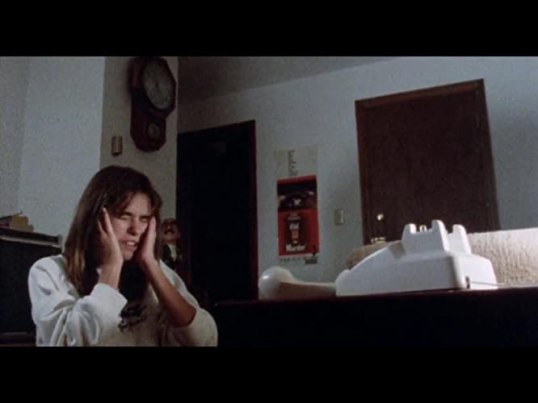
So, does that means I’m recommending Disconnected?  Kinda.  As I’ve said many times in the past, I have a weakness for low-budget, amateur films.  This one was filmed out in the middle of Connecticut and most of the actors were obviously not professionals.  There’s something oddly likable about a film like this, one that makes no sense but, at the very least, was still made and — 36 years later — is still being watched and reviewed.  So …. yeah, I am kind of recommending this film.  It’s weird enough to be worth at least one viewing.
Horror Film Review: The Grudge (dir by Nicolas Pesce)


Eh, who cares?

Released way back in January (and, in fact, I think it may have been the first horror movie released in 2020), The Grudge is the latest film to tell the story of a house where ghosts compel inhabitant after inhabitant to kill themselves and their families.  Look, we all know how it works.  We’ve all seen Ju-on.  We all know that it begins with someone dying while extremely angry or extremely sad and then a curse being passed on from person to person.  The original Japanese films are frightening while the American versions tend to get bogged down in all of the usual horror clichés.  We all know how these things work.

Anyway, this version of The Grudge takes place, for the most part, at 44 Reyburn Drive, where a number of people die over the course of the film.  The Grudge is told in a nonlinear fashion, so we hope back and forth in time.  We meet a lot of different people and sit through a lot of different stories but none of them are particularly interesting.  Two real estate agents discover that their unborn child is going to have a rare genetic disorder.  An elderly couple prepare for an assisted suicide.  A nurse is haunted by the things that she saw while she was working in Japan.  A detective obsesses on all of the murders.  In the present day, another detective (Andrea Riseborough) tries to figure out why so many murders are connected to the house.  It’s difficult to really get caught up in her investigation because we already know the answer.

It’s all pretty dull.  Maybe if I had never seen any of the other Grudge films, I would have found this movie more interesting but The Grudge doesn’t really bring anything new to the table.  All it really does is remind you of how formulaic the American version of franchise has always been.  Of course, everyone’s going to die and, of course, there’s going to be a shock ending.  (Interestingly enough, the international version has a different ending.)  It’s all rather boring and it’s hard not to get annoyed that the film assembled a truly amazing cast and then basically didn’t anything with them.  Consider some of the people in this film: Andrea Riseborough, Demian Bichir, John Cho, Betty Gilpin, Lin Shaye, Jacki Weaver, William Sadler, Frankie Faison.  Wasting a cast with that much talent really does amount to cinematic malpractice.  It seems like it should be an impossible mistake to make but The Grudge somehow manages to do it.

The film’s nonlinear format doesn’t add much to the story.  I mean, you know everyone’s going to die eventually so having the story told in random chunks and pieces doesn’t really add any sort of suspense.  One could argue that the film does deserve some credit for being as dark as it is.  I mean, it does kill the type of sympathetic characters who, normally, would survive other horror films.  But, even with that in mind, it’s all just kind of boring.  I don’t hold a grudge against anyone for trying to reboot the franchise but this film just doesn’t bring anything new to the table.


Horror on The Lens: Invitation to Hell (dir by Wes Craven)


Today’s horror on the lens is a made-for-tv movie directed by Wes Craven.

First televised in 1984, Invitation to Hell is a wonderfully over-the-top depiction of what happens when an engineer (Robert Urich) sells out and goes to work for a big evil corporation.  Long story short, Satan (in the form of Susan Lucci) takes over his family.  Admittedly, this film does start slowly but, in the end, it’s a lot of fun.

Horror on TV: Baywatch Nights 2.13 “Nights to Dragon One” (dir by Richard Friedman)


Tonight’s episode of Baywatch Nights originally aired on February 16th, 1997.

In this episode of Baywatch Nights, David Hasselhoff and Angie Harmon are hired to track down a missing man and his daughter.  Their search leads to them becoming literally trapped inside a virtual reality where they either have to defeat the crazed Game Master (Vincent Schiavelli) or die!  There’s even a scene where Angie Harmon has to pick up and roll a giant die!  Taking full advantage of the inherent ludicrousness of David Hasselhoff’s screen persona, this is an episode that has to be seen to be believed.

So, watch below and believe.

The TSL’s Horror Grindhouse: 2001 Maniacs (dir by Tim Sullivan)


A lot of people die over the course of this 2005 film but none of them are particularly likable so who cares.

A remake of the Herschell Gordon Lewis classic (though Lewis’s film only featured Two Thousand Maniacs!), 2,001 Maniacs is about a small town called Pleasant Valley in Georgia.  During the Civil War, Union soldiers killed 2,001 of the residents of Pleasant Valley so, as a result, the angry spirits of the town will not be happy until they’ve killed 2,001 Northerners.  Luckily, for them, some yankee college students come driving through on their way to Daytona Beach for Spring Break.  That means it’s time to bring out the hooks, the blades, the flames, and all the other things that can be used to dismember people on screen.  It’s a bloody good time in Pleasant Valley.

The mayor of Pleasant Valley is played by Robert Englund and, if nothing else, Englund brings a lot of demented glee to the role.  One thing that I’ve always liked about Englund is that, even though he could probably get away with it, he’s always refused to coast on the fact that he’s a horror icon.  No matter the quality of the film in which he’s appearing, Englund always goes all out and gives a memorable performance.  As played by Englund, the mayor comes across as being an affable and welcoming guy, or at least he does until he starts killing people.  The viewers automatically know that the mayor’s a bad guy because they know the type of role in which Robert Englund typically gets cast.  But, and this is the important, you can at least understand why the film’s victims didn’t automatically run in fear as soon as they met him.  The mayor is all about hospitality.  (That, and bloody revenge.)

Anyway, it’s tempting to view 2,001 Maniacs as being some sort of statement about Confederate war memorials but …. eh.  I mean, again, it’s tempting but I think it’s ultimately kind of pointless.  This is not a subversive film.  This is not a film that’s attempting to scratch the surface of any major issues.  This is just another gory film that examines the amount of ways someone’s body can pulled apart.  That’s not necessarily a bad thing.  There’s a lot of classic horror films that are centered around people dying in gory ways.  The problem with 2,001 Maniacs is that, since none of the people dying are particularly interesting, you don’t really care about how they die or even the fact that they’re dead.  “Oh hey,” you find yourself saying, “at least I won’t have to listen to that guy talk anymore.”

Despite being a bit on the dull side for most of its running time, 2,001 Maniacs does have an effective final few minutes.  There’s a big battle between a survivor and a ghost that is surprisingly well-directed and would have been exciting if we actually cared about whether or not the survivor was actually going to …. well, survive.  As for the film itself, it ends on a properly macabre note.  I actually laughed at the film’s ending, even though perhaps I shouldn’t have.  Again, it all comes down to not really caring that much about anyone in the movie.

Anyway, 2,001 Maniacs didn’t do much for me.  The Lewis version is still the version to go with.  Thank God for Robert Englund, though.  That man can act.


Horror Book Review: The Grave by Christopher Pike


First published in 1999, this is a weird book.

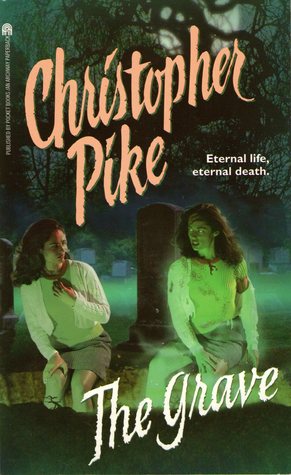
It opens with a college student named Ted Lovett thinking that he’s going to meet a woman in the woods, just to instead get captured by a cult who strip him naked and then bury him alive.  We then jump over to the story of Kerri, who is a typical 90s YA heroine — she’s got a job at a record store, her sister is dead, her father abandoned the family, her mom is hooked on cocaine, and her boyfriend is clingy loser.  It’s the boyfriend part that bothers Kerri the most.  She’s totally bored with him but just can’t bring herself to sit down with him and tell him that it’s over.

Then, one day, the mysterious and handsome Oscar shows up in the record store and soon, Kerri is spend the night over at his place and kind of cheating on her boyfriend.  I say “kind of” because Kerri doesn’t really consider him to be a boyfriend, despite the fact that they’re dating and they’ve slept together a few times.  With her mother still abusing drugs and Oscar acting all mysterious, Kerri has a lot to deal with but all of that drama is nothing compared to what happens when Oscar tosses Kerri into a freezer.

So, is Oscar a part of the cult that buried poor Ted Lovett?  Or is he the ghost of Ted Lovett and this all a part of grand plan to turn Kerri into a half-dead, half-living zombie who is pregnant with the modern day equivalent of Pan, a hooved God who will maybe save the world but maybe not?

Yes, The Grave is an odd book.  There’s a lot going on in The Grave.  In fact, there’s probably a little bit too much going on.  The Grave is only a 194 pages long, which means that Kerri is often surprisingly quick to accept the strangest explanations for what’s going on.  If you learned that you had been selected to give birth to a satyr that’s going to save the world but, in order to do so, you have to basically die first, you’d probably demand a bit more of an explanation than Kerri does.  I know that I would.

Speaking of Kerri, how much drama can one person have in their life?  Abandoned by her father, haunted by her sister’s death, and forced to deal with her mom’s cocaine addiction, just one of those would have been enough but tossing all three in there just feels like overkill.  And that’s eve before she becomes pregnant with Pan.

With The Grave, you get the feeling that Christopher Pike just tossed a bunch of random stuff at the wall to see what would stick.  It’s a mess but occasionally, it’s entertaining in its messiness.  If nothing else, it has an important lesson to impart about not putting yourself in a situation where you can be buried alive.  That’s an important lesson to learn.