Today’s music video of the day features Danny Trejo riding a motorcycle through the desert and doing other badass, Danny Trejo-type things. I know that a lot of people will watch this video and think to themselves, “My God, he can sing too!” However, believe it or not, Trejo is just lip-syncing. I know. I was shocked to find that out, too. That said, Trejo does a pretty good job lip-syncing and it’s possible that he may have been singing during the filming.
Seriously, who doesn’t love Danny Trejo? Not only is he a good actor who appears to sincerely want to improve the lives of other people but he’s got a pretty inspiring personal story too. So today, we happily wish the best of birthdays and we invite you to….
I have to admit that I groaned a bit when I discovered that the fourth episode of part 3 of Chilling Adventures of Sabrina was going to center around yet another holiday. Seriously, how many holidays do these witches have to celebrate over the course of year? This time, the holiday was the Hare Moon, which involves everyone dressing in white, going on a picnic, and not killing a rabbit. The holiday itself doesn’t make much sense and, to the show’s credit, this episode opens with Sabrina telling her aunts that it doesn’t make much sense.
So, I wasn’t expecting much from The Hare Moon but, to my surprise, it actually turned out to be a pretty good episode. At the very least, it held my interest and that’s more than I can say for the episode that came immediately before this one. I think it helped that a good deal of this episode took place in the woods during the day, which meant that I could, for once, actually see what was happening without having to strain my eyes. I know that I spend a lot of time complaining about how underlit and dark the majority of Sabrina‘s interior scenes are but I think this episode proved my point. When I could actually see who was talking, it was a lot easier for me to actually care about what they were talking about.
The highlight of this episode came when, during the Hare Moon ceremony, the witches ran into the pagan carnival people, who were all celebrating a holiday of their own. The interaction between the two groups was wonderfully awkward and, even more importantly, the carnival people seem like worthy adversaries to the witches. The carnival people worship the Green Man and, by the end of the episode, they had delivered an ultimatum to the witches. The witches can either worship the Green Man or they can die. Since the covens powers have been weakened by a petulant Satan, the witches are momentarily at a disadvantage.
In other developments, Harvey and Roz decided to investigate the carnival on their own, which led to Roz getting turned into a statue and …. well, I mean, it’s Harvey and Roz. If either one of them had a personality beyond Harvey being amiably stupid and Roz having an overprotective father, it might be interesting but they don’t so who cares? Nick also ended up setting Satan free because Nick’s main reason for being on the show is to do stuff like that. Of course, the Spellmans were going to free Satan anyway so that they could get back their powers but Nick decided to go ahead and do it so now the Spellmans are still weak and even more screwed than before. Way to go, Nick!
Anyway, this was actually a pretty entertaining episode. The carnival people are wonderfully sinister and Will Swenson was well-cast as their leader. Kiernan Shipka remains the show’s greatest strength and even Miranda Otto and Lucy Davis got a few good lines in this episode. There was still a bit too much filler but all in all, this was one of the better episodes. If only every episode was this good.
What’s this?, you ask. Just now, you’re finally getting around to reviewing Chapter 23 of Chilling Adventures of Sabrina?
Admittedly, it has taken me a while. The third season or third part or whatever the Hell you want to call it of this show was released on Netflix all the way back in January. That’s a long time ago even by normal standards. In May of 2020 (this is May, right?), January seems as if it might as well have been a decade ago. You remember what the world was like in January — Iowa caucuses, open movie theaters, strong economy, and no social distancing — and it feels like some sort of lost age. Case reviewed the first twoepisodes of Sabrina‘s third season back in February. I was supposed to review episodes three and four as soon as I got back from my vacation in March. Of course, as soon as I got back, the entire world went into lockdown and it was easy to get distracted from the latest Greendale drama.
Plus, I have to be honest. So far, for the most part, I just haven’t enjoyed Chilling Adventures of Sabrina. There have been a few tolerable episodes and Kiernan Shipka deserves to be a bigger star but the show itself often feels like a dead end. The pace is often maddeningly slow and, other than Sabrina, almost all of the characters are rather flat and dull. With the exception of Sabrina, everyone gets one defining trait and the show tends to beat viewers over the head with that trait. As such, Aunt Zelda is always going to be arch and dismissive. Hilda is always going to be naive and neurotic. Ambrose is always going to decadent in the most boring ways possible. Harvey is always going to be a dullard. Roz is always going to be boring. Beyond the one-dimensional characters, the whole look of the show bugs me. Why does no one in Greendale ever turn on a light? Why do I always have to strain my eyes trying to see what’s happening? It gets frustrating. Working up any enthusiasm to sit through another one of Sabrina’s adventures can be a struggle.
And yet, I will continue to watch the show because I do think that it has potential. Now, to be honest, some of that is because the show is often so bad that it has nowhere to go but up. But occasionally, there will be an interesting twist or a line of dialogue that doesn’t crash to the ground with a thud. It doesn’t happen often but it does happen enough that I keep hoping Chilling Adventures will get things together. My main hope is that, someday, the show will actually be worthy of Kiernan Shipka’s consistently excellent lead performance.
Just take the third episode of Part Three for example. On the plus side, this episode features a trip to a wonderfully creepy carnival. And even though the carnival itself is pretty obviously borrowed from Something Wicked This Way Comes and The Seven Faces of Dr. Lao, it’s still a lot of fun and effectively surreal and ominous. However, to get to the carnival, we have to suffer through a lot of underlit drama featuring one-note characters. We have to sit through Roz and Harvey having the least interesting relationship ever to appear in a Netflix drama. We have to deal with Nick and his PSTD. We have to deal with Miranda Otto delivering all of her lines in the same monotonous style. We also have to sit through yet another quest. In this case, Sabrina has to find three artifacts to hold onto the title of the ruler of Hell. She manages to find Herod’s Crown but she still loses it to her rival for the throne, Prince Caliban. So, I guess Sabrina is going to have to find the other two artifacts over the course of the season. I’d probably care more if Hell, as presented on this show, wasn’t so damn boring. Presenting witchcraft as being tedious might make for an effective short film but making an entire series out of it is another thing all together.
And yet, Kiernan Shipka gives such a good performance in the lead role that you can almost overlook how annoying the show itself tends to be. Shipka brings so much sincerity to her role that you want Sabrina to succeed. I just wish the show was more often worthy of the talents of its star.
Oh well. Fear not! I actually liked the episode that came after this one. I’ll be rewatching and reviewing it soon!
Earlier this week, I watched The Sopranos on Prime. I started with the very first episode and then I watched all the way up until that famous black out at the end of the final episode. It took me about 6 days to watch the whole series. In case you were curious why I haven’t posted many film reviews over the past few days, it’s because my mind has been preoccupied with the New Jersey mafia.
Needless to say, I’ve now got the Sopranos theme song — Woke Up This Morning — stuck in my head and it only seems appropriate to select it for today’s music video of the day. Now, I should point out that Alabama 3 did not write Woke Up This Morning for the show. (And the version in this video is, needless to say, a bit different from the version that most people know from the opening credits of The Sopranos.) In fact, Woke Up This Morning is not about the mafia at all.
Instead, the song was based on the true story of a woman who, after years of being abused by her husband, finally killed him. She stabbed him to death but “got yourself a knife” doesn’t have quite the same impact as “got yourself a gun.” The song was a minor hit when originally released. It became a much bigger hit once it was featured on The Sorpanos, though its doubtful that Tony Sopranos and his misogynistic crew would have approved of the song’s actual theme.
Originally, David Chase, the creator of The Sopranos, wanted to start every episode with a different song but he was overruled by HBO, who felt that viewers would be confused unless they heard the same song at the start of each episode. However, Chase did end each show with a different song.
I’ve always liked Garbage as a band. Only Happy When It Rains seems like a song that could have been written about me and, of course, Shirley Manson and I are both members of the 2% of the population who were blessed with red hair. Having red hair means that …. well, basically it means that we’re better than everyone else in the world and that’s just the way it goes.
Magnetized appears on Garbage’s 6th studio album, Strange Little Birds. I like this video because it’s creepy and dream-like and I’ve always wanted to have a mad scientist laboratory to hang out in. Not that I would actually want to do anything in the laboratory because that’s not really my thing. I’d just like to have it there as a conversation starter.
When I watch this video without the music, my immediate assumption is that it’s about someone who joined a cult and who has just discovered that the leader of the cult is either from outer space or from the future. The video just has that sort of threatening, science fiction feel to it. That said, the song is actually about someone looking back on a breakup that was apparently a long time coming but which she still might not have been emotionally prepared for.
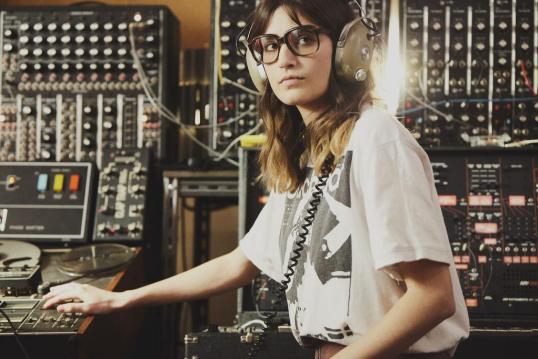
The Shock of the Future follows one day in the life of a composer named Ana (Alma Jodorowsky).
The year is 1978 and Ana is living in a studio in Paris. It’s not her studio. The owner is currently in India and no one knows when he’ll be returning. He’s lent it to Ana and she’s moved in. She shares the space with a truly impressive collection of synthesizer equipment. She swears, to everyone who stops by over the course of the day, that she can use the equipment to make wonderful music that will replace all of the dinosaur rockers who have outlived their usefulness. Some believe her. Some are skeptical.
Ana has been paid a good deal of money to write a commercial jingle but she has no interest in jingles, no matter how many times the sleazy ad guy (Phillippe Rebbot) drops by the studio and tries to intimidate her with his tough guy act. She doesn’t care about “50s rock” nor does she care about the “soft voices” of acoustic folk. Drummers, she says, are not necessary when she has a machine that can do the job. In fact, she doesn’t need a band at all! Rebbot is not particularly impressed and orders her to either write him a jingle or pay him back the money.
Throughout the day, more people drop by the apartment. Geoffrey Carey plays a friend who brings her the latest records from the UK. Teddy Melis shows up to deliver a piece of equipment and to smoke a joint. A singer (played by Clara Luciani) unexpectedly shows up and she and Ana bond over their mutual dislike of the sleazy men in the business and then proceed to work on a song together. It all leads to a party, in which Ana plays her new song for a dismissive producer who tells her that that “there’s something there” but it will never catch on. The producer is especially dismissive because the song’s lyrics are in English. “We are French!” he all but announces.
However, not all hope is lost. By the end of the film, we’ve been reminded that there actually is a world outside of Ana’s studio and that the future cannot be stopped….
The Shock of the Future is a deceptively simple film. Nearly the entire film takes place in one location and the majority of the action consists of people entering the studio, talking to Ana, and then eventually leaving. This is one of those films that I’m sure some people will watch and claim that there wasn’t enough of a story for the film to hold their interest. Of course, those people are wrong. The Shock of the Future is a film about the act of creation and anyone who creates for a living — whether they’re a composer like Ana or a writer like me or a photographer like my sister — will automatically be able to understand and relate to Ana’s story. If you’ve ever had someone dismiss your work by saying that it’s “too strange” or that it didn’t conform to whatever society’s current standards may be, you’ll relate to Ana. You will understand what she is going through and why she refuses to surrender to the condescending naysayers around her. All visionaries are initially dismissed by a world that’s not ready for them, by a world that’s not ready for the shock of the future. Alma Jodorowsky does a wonderful job in the role of Ana. There’s not a moment when she’s not onscreen and she’s compelling even when she’s just staring at her machines and waiting for inspiration to come.
The Shock of the Future is a tribute to the female pioneers of electronic music, the women who changed the direction of music and saved us from the tyranny of acoustic folk bullshit and who were often overlooked by future historians. The film ends with a dedication to the “women who pioneered in electronic music: Clara Rockmore, Wendy Carlos, Daphne Oram, Delia Derbyshire, Elaine Rodrigues, Laurie Spiegel, Susan Ciani, Johanna Beyer, Bebe Baran, Pauline Oliveiras, Else Marie Pade, Beatriz Ferrerya, et al.” Ana serves as a stand-in for all of them and also as a stand-in for every artist who had the courage to follow their own vision. In the end, Ana is one of us and we are all Ana.
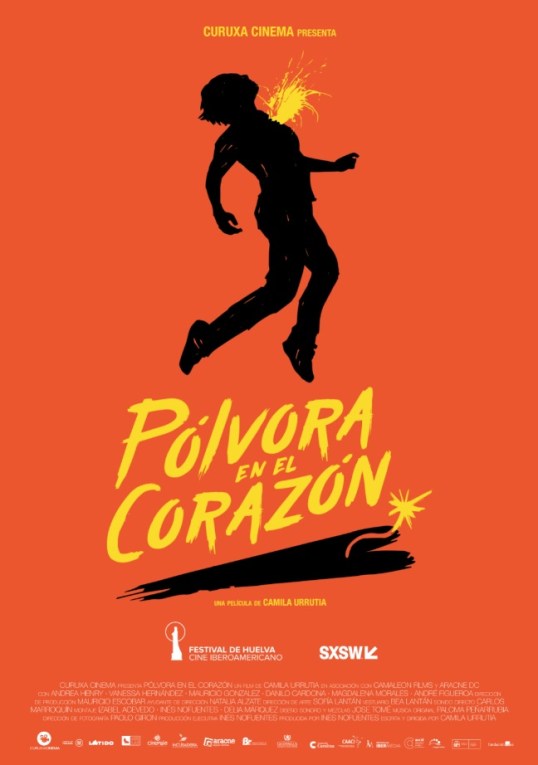
Also known as Pólvora en el corazón, Gunpowder Heart is a raw and angry film from Guatemala.
Set (and filmed in) Guatemala City, Gunpowder Heart tells the story of two girlfriends. Claudia (Andrea Henry) is the calmer of the two and works at a call center, where she says that she spends almost all of her time talking to “gringos.” Maria (Vanessa Hernandez) is the more emotional of the two. Whereas Claudia always seems to be holding back, Maria is in constant motion. She lives in a dilapidated house with her mother.
One night, when Claudia and Maria go to a local carnival, Maria reveals to Claudia that she’s carrying a gun for their protection. From what we’ve seen of Guatemala City, it seems like Maria has a point. The streets — or at least, the streets in the neighborhoods in which this film takes place — are filthy. The walls are covered in graffiti. The police who patrol those streets often appear to be more dangerous and menacing than the criminals from which they’re supposed to be providing protection. From the minute that we see Claudia riding her motorcycle through the streets of the city, there’s an ominous atmosphere of unease that just grows heavier and heavier as the film progresses.
However, Claudia does not want Maria to carry a gun and, when Maria isn’t looking, Claudia takes the gun and hides it from her. Later that night, as they leave the carnival, Maria and Claudia are attacked by three men who force the girls to strip and then sexually taunt and abuse them. It’s only the arrival of a clueless security guard that gives Claudia and Maria the chance to escape.
Angry that she didn’t have a weapon to protect herself, Maria manages to find the gun. Maria is determined to use that gun to get revenge. However, it turns out that getting revenge is not as easy as it may appear to be in the movies. Maria’s plan is a messy and disorganized one and Claudia finds herself torn between her desire for vengeance and her knowledge that there’s no way things are going to end well. Perhaps not surprisingly, it all leads to disaster and tragedy.
As I said at the start of this review, Gunpowder Heart is a raw and angry film, one that seems to be conflicted about whether or not to embrace Maria’s fury or to tolerate Claudia’s caution. (That’s a conflict that many in the audience will share as well.) Using the techniques of cinéma vérité, Gunpowder Heart put you right in the middle of Maria and Claudia’s shared existence. The camera never stops moving, perfectly mirroring not only the anxiety of their lives but also the anxiety of those of us watching the two of them. Throughout the film, Maria talks about leaving Guatemala. She says that she wants to go to Europe and then later to America. But, ultimately, there is no easy escape from the reality of what it means to be a woman (especially a woman who identifies as being queer) in a society controlled by violent and entitled men.
It’s a rough film and probably one that won’t appeal to everyone. By refusing to come down firmly on the side of either Maria or Claudia, the film will probably alienate those who like their films to have a clear cut point of view. As some reviewers have pointed out, we don’t learn much about who Maria and Claudia were before that night but I would argue that who they were before doesn’t matter. From the moment that they’re assaulted outside of the carnival, Maria and Claudia’s old life ends and their new one begins.
Blessed with two brave and outstanding lead performances from Andrea Henry and Vanessa Hernandez, Gunpowder Heart is a powerful and anxiety-filled film. It’s currently available to be viewed, for a limited time, on Prime.
Tonight, as I continued my viewing of all the SXSW films that are currently available on Prime, I watched three short documentaries. Each one of them dealt with real people seeking their own artistic truth.
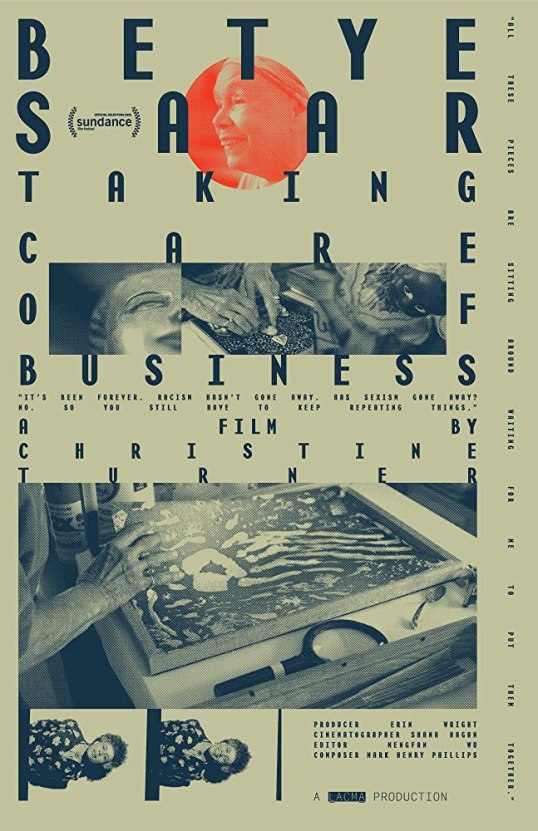
Betye Saar: Taking Care of Business (dir by Christine Turner)
Betye Saar: Taking Care of Business is essentially an interview with the legendary artist Betye Saar, with some archival footage worked in and, of course, some footage of her artwork. It’s a simple format but that’s okay. It’s a fascinating documentary because Betye Saar is a fascinating artist. Saar has been creating art for over 70 years and, at the age of 93, she’s still working in her Los Angeles studio, creating works that can make people angry and that can make them think.
The film delves into Saar’s civil right activism and how, through her artwork, she has taken the stereotypical images that were once used to demean African-Americans and has weaponized them in the fight for equal rights. As we see in the documentary, one of Saar’s most acclaimed pieces features Aunt Jemima with a rifle and a grenade.
It’s a short documentary. Betye Saar is such a lively and outspoken subject that you find yourself wishing that the documentary was a bit longer. You also wish that the documentary had spent more time on the briefly mentioned “occult” influences on Saar’s work. Still, by the end of the film, you’re happy for the time that the filmmaker did have with Saar. She’s a fascinating artist.
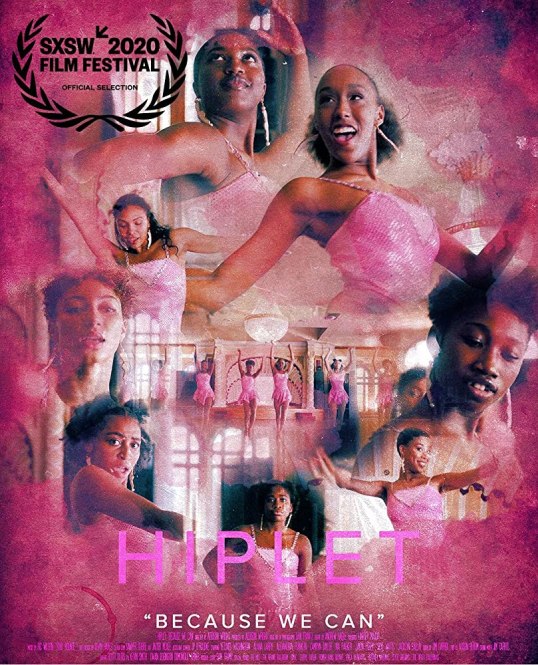
Hiplet: Because We Can (dir by Addison Wright)
This likable 8 minute film is about the Hiplet Ballerinas. (Hiplet is a mix of classical ballet and hip hop. It’s pronounced Hip-lay.) Though there is a black-and-white sequence where the dancers talk about themselves and what hiplet means to them, the majority of the film is just made up of footage of the Hiplet Ballerinas performing. They are amazing dancers and exciting to watch. If you love dance, as I do, you’ll not only enjoy this documentary but you’ll also be excited about it. This is a documentary that reminds us that dance is for every one. As many of the dancers point out, they may not be stereotypical ballerinas but it doesn’t matter because stereotypes were made to be destroyed. As this documentary shows, dancing is beautiful and dancing is for all.
Quilt Fever (dir by Oliva Merrion)
Quilt Fever was a real surprise. This documentary deals with a subject (quilting) that I don’t know much about and it’s almost exclusively populated by people with whom I don’t have much in common but I still found it be enthralling and ultimately, rather touching.
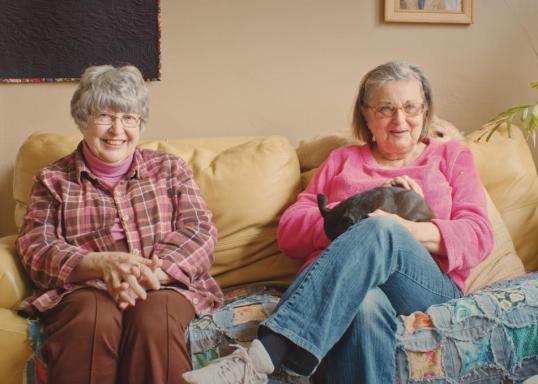
Quilt Fever follows an annual quilting competition that takes place in the town of Paducah, Kentcuky. It’s known as the Academy Awards of Quilting and it attracts quilters from all over the country. The film not only shows us the competition but it also features profiles of a few of the people who are competing. As you might guess, they’re all a bit eccentric. For the most part, they’re all older women, the type of people who living in “fly over country” and who are usually looked down upon by the coastal elitists. They may not be celebrities but they’ve found fame in the quilting world and they’ve also found a welcoming (if competitive) community. Quilt Fever is an even-handed and nonjudgmental look at that community, one that never indulges in the type of condescension that we far too often see in documentaries about people in the middle of the country. It’s a sweet-natured documentary and definitely a treat to watch.
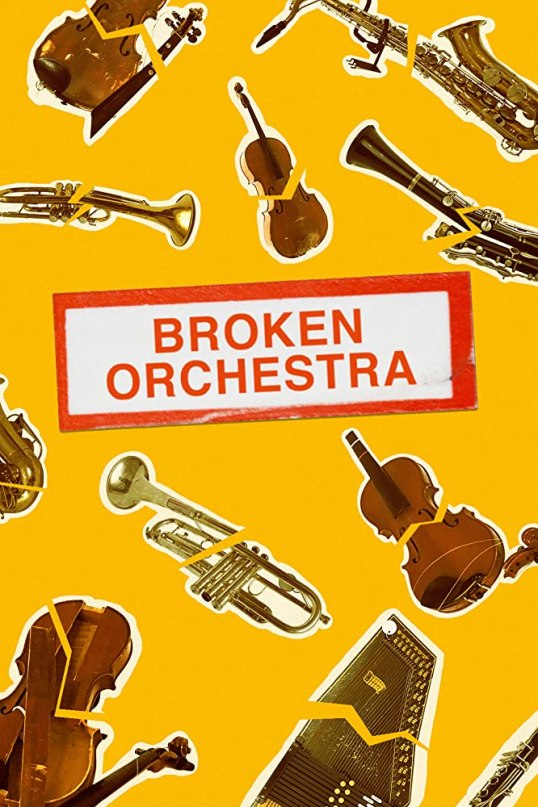
In the 13-minute documentary, Broken Orchestra, a camera glides through a deserted high school in Philadelphia, moving down hallways and up stairwells and occasionally entering into classrooms that are full of broken-down instruments. Throughout the high school, there are television sets and, on each television, a different persons talks about being a part of the Broken Orchestra.
At a time when the schools of Philadelphia (which, we’re told, is the poorest big city in America) were struggling, budget cuts were leading to the cancellation of music programs. Those programs that managed to survive often had to make due with damaged instruments. Because students were having to use damaged tools, they often couldn’t play the type of music that they wanted create.
When a huge amount of damaged instruments were found in an abandoned high school, the Broken Orchestra was born. The all-volunteer orchestra played on those instruments and proved that even a damaged instrument could be used to make unique music and, in much the same way, greatness can even come out of a damaged school or a damaged city. Even a damaged instrument still has something to say. Even a damaged instrument is still worth listening to.
It’s certainly in inspiring story and one that also makes a good argument for funding music and other artistic programs. Everyone who discusses their part in the Broken Orchestra was obviously touched by the experience and it’s impossible not to get swept up in their emotions. If I do have a complaint, it’s that I wish we had heard a bit more of the orchestra but still, it’s an inspiring story.

 Through the Shattered Lens