A Blast From The Past: Vincent (dir by Tim Burton)


Today is Vincent Price’s birthday!

Price was born 111 years ago, in St. Louis, Missouri.  When he first began his film career in the 1930s, he was promoted as a leading man and he was even tested for the role of Ashley Wilkes in Gone With The Wind.  (Imagine that!)  However, Price would find his greatest fame as a horror icon. 

Among the fans of Price’s horror films was a young animator named Tim Burton.  In 1982, Price and Burton would work together for the first time, with Price providing the narration for a short, stop motion film that Burton had written and directed.  Called Vincent, the film was about a seven year-old boy named Vincent who wanted to be — can you guess? — Vincent Price!  The six-minute film follows Vincent as he gets involved in all sorts of macabre activities.  Of course, as Vincent’s mom points out, Vincent isn’t actually a monster or mad scientist.  He’s just a creative child with an overactive imagination.  (To say the short feels autobiographical on Burton’s part would be an understatement.)  The animation is outstanding and full of wit but it really is Vincent Price’s wonderful narration that makes this short film a classic.

Both Price and Burton would later call making this film one of the most creatively rewarding collaborations of their respective careers.

On Vincent Price’s birthday, enjoy Vincent!

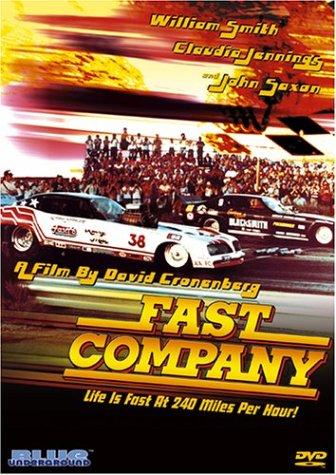
The TSL’s Grindhouse: Fast Company (dir by David Cronenberg)


Released in 1979, Fast Company is a Canadian film about fast cars and the fast-living people who drive them.  Lonnie Johnson (William Smith) is a veteran drag racer who is so good at his job that his nickname is “Lucky Man.”  He rarely loses a race.  He’s never without an adoring fan or two, though he always remains loyal to his girlfriend, Sammy (Claudia Jennings).  Lonnie is so lucky that, even when one of his cars explodes, he walks away without even a scratch.

Lonnie and his protégé, Billy (Nicholas Campbell), are being sponsored by Fast Company, an international oil consortium.  The money is okay but Lonnie is getting old and he would like to step back and spend some more quality time with Sammy.  Unfortunately, the team boss is Phil Adamson (John Saxon) and the viewers knows that Phil is a bad guy because he’s played by John Saxon and, instead of driving to the races, he pilots his own private plane.  When Lonnie starts to rebel against Phil’s management, Phil schemes to not only replace him and Billy with rival driver Gary Black (Cedric Smith) but he also plots to repossess Lonnie’s prized car!

Okay, so it’s kind of a silly and predictable film.  In fact, there’s really only two reasons why Fast Company is remembered today.  

One is because it was the last film to feature B-movie star Claudia Jennings before her death in a traffic accident. Jennings was nicknamed the “Queen of the B movies” and, over the course of her brief career, appeared in a lot of films about fast cars.  She gives a likable performance as Sammy, even if the film’s script doesn’t really give her much to do.

Secondly, this film was directed by David Cronenberg.  This was Cronenberg’s first time to direct a film that he hadn’t written.  This was his first job as a “director for hire” but, interestingly enough, it was while directing this film that Cronenberg first worked with some of his most important future collaborators, including cinematographer Mark Irwin and actor Nicholas Campbell.  Cronenberg directed Fast Company in between Rabid and The Brood and Fast Company might as well take place in a different universe from either of those films.  To be honest, there’s not much about this film that would lead anyone to suspect that it had been directed by Cronenberg if they hadn’t already seen his name in the credits.  Cronenberg’s signature style is really only evident when the camera lingers over the scenes of the mechanics working on the cars.  In those scenes, there’s a hint of the Cronenberg that everyone knows, the Cronenberg who is fascinated by both the relationship between man and machine and how things work inside the body of both the driver and the car.

For the most part, Fast Company is a typical 70s racing film, one that was made for drive-in audiences and which makes no apologies for that fact.  (Nor should it.)  There’s a lot of shots of denim-clad Canadians cheering as their favorite driver crosses the finish line.  William Smith brings a world-weary dignity to the role of Lonnie Johnson but, while John Saxon is always fun to watch, Phil Adamson is so evil that he threatens to throw the tone of the film out of whack.  The light-hearted scenes of Lonnie, Billy, and head mechanic Elder (Don Francks) don’t always seem to belong in the same movie with scenes of John Saxon scheming to cheat and risk the lives of his drivers.  

In the end, though, the important thing is that the cars are fast and so is this quickly paced movie.  I’m enough of a country girl that I have to admit that I have a weakness for fast cars that leave a cloud of dust behind them.  On that level, I enjoyed the film and really, that’s the only level that matters when it comes to a film like Fast Company.

Lisa Reviews a Palme d’Or Winner: Paris, Texas (dir by Wim Wenders)


With the 2022 Cannes Film Festival coming to a close in the next few days, I’ve been watching some of the films that previously won the prestigious Palme d’Or.  They’re an interesting group of films.  Some of them have been forgotten.  Some of them are still regarded as classics.  Some of them definitely deserve to be seen by a wider audience.  Take for the instance that winner of the 1984 Palme d’Or winner, Paris, Texas. This is a film that is well-regarded by cineastes but it definitely deserves to be seen by more people.

Though released in 1984, Paris, Texas opens with an image that will resonate for many viewers today.  A dazed man stumbles through the desert while wearing a red baseball cap.  Though the cap may not read “Make America Great Again,” the sight of it immediately identifies the owner as being a resident of what is often dismissively referred to as being flyover country, the long stretch of land that sits between the two coasts.  Travis (Harry Dean Stanton) is lost, both figuratively and literally.  After he stumbles into a bar and collapses, he’s taken to a doctor (played by German film director Bernhard Wicki) who discovers that Travis has a phone number on him.  When the doctor calls the number, he speaks to Travis’s brother, Walt (Dean Stockwell).  Walt has not seen Travis for three years and the viewer gets the feeling that Walt spent those years assuming that Travis was dead.  Walt agrees to travel to West Texas to retrieve his brother and take him back to Los Angeles.

When Walt retrieves his brother, he’s annoyed that Travis refuses to explain where he’s been for the past three years.  In fact, for the first fourth of the film, Travis doesn’t say anything.  He just stares into space.  Finally, when he does speak, it’s to tell Walt that he wants to go to Paris.  Walt tells him that going to Paris might have to wait.  Travis elaborates that he wants to go to Paris, Texas.  He owns an empty parking lot in Paris, Texas.

It takes a while to learn much about Travis’s past.  Like many of Wim Wenders’s films, Paris, Texas moves at its own deliberate pace and it features characters who tend to talk around their concerns instead of facing them head-on.  What we do eventually learn is that Travis has a son named Hunter (Hunter Black).  Travis’s wife, Jane, (played by Natassja Kinski) disappeared first.  Travis disappeared afterwards, leaving Walt and his wife (Aurore Clement) to raise his son.  At first, when Travis arrives in Los Angeles, he struggles to reconnect with Hunter but eventually, he does.  He tries to be a father but, again, he sometimes struggles because, while Travis has a good heart, he’s also out-of-step with the world.

As for Jane, we eventually learn that she’s in Houston.  She’s working in a tacky sex club, one where the customers and the strippers are separated by a one-way mirror.  The customer can see and talk to the stripper but the stripper can’t see the customers.  It’s all about manufactured intimacy.  The customer can delude themselves into thinking that the woman is stripping just for him while the woman doesn’t have to see the man who is watching her.  There are no emotions to deal with, just the illusion of a connection.

Even as Travis begins to make a life for himself in Los Angeles, he finds himself tempted to return to Houston to search for his wife….

As I said, Paris, Texas is a deliberately paced film.  With a running time of 2 hours and 20 minutes, it feels like it’s actually three films linked together.  We start with Travis and Walt traveling back to Los Angeles.  The second film deals with Travis’s attempts to bond with his son.  And the third and most powerful film is about what happens when Travis finally finds Jane.  It all comes together to form a deceptively low-key character study of a group of lost souls, all of whom are dealing with the mistakes of the past and hoping for a better future.  The film’s most memorable moment comes when Travis delivers a long and heartfelt monologue about his marriage to Jane.  Beautifully written by Sam Shephard (who co-wrote the script with L.M. Kit Carson) and wonderfully acted by Harry Dean Stanton, it’s a monologue about regret, guilt, forgiveness, and ultimately being cursed to wander.

Despite the heavy subject matter, Paris, Texas is an undeniably joyful film.  In a rare leading role, Harry Dean Stanton plays Travis as someone who is full of regrets but who, at the same time, retains a spark of hope and optimism.  Life has beaten him down but he has yet to surrender.  Once he reaches Los Angeles and Travis starts to fully come out of his fugue state, there’s a playful energy to Stanton’s performance.  The scene where he dresses up as what he thinks a dad should look like is a highlight.  For Travis, being a responsible adult starts with putting on a suit and walking his son home from school.  Stanton’s excellent performance is matched by good work from Dean Stockwell and, especially, Natassja Kinski.

Visually, the film is all about capturing the beauty and the peculiarity of the landscape of the American southwest.  Like many European directors, Wim Wenders seems to be a bit in love with the combination of rugged mountains and commercialized society that one finds while driving through the west.  In the scenes in which Stanton wanders through West Texas, the landscape almost seems like it might consume him and, later, in Los Angeles and Houston, the garishness of the city threatens to do the same.  Wherever he is, Travis is slightly out-of-place and the viewer can understand why Travis is compelled to keep wandering.  At times, it seems like Travis will never fit in anywhere but the fact that he never gives up hope is comforting.  In many ways, Travis’s own journey mirrors Stanton’s career in Hollywood.  He had the talent of a leading man but the eccentric countenance of a great character actor.  He may have never been quite fit in with mainstream Hollywood but he never stopped acting.

The film itself never visits Paris, Texas.  Travis just talks about the fact that he owns an empty lot in the town and that he would like to see it.  Still, I like to think Travis eventually reached Paris and I like to think that he did something wonderful with that lot.

Music Video of the Day: Last Drag by Traci Lords (2011, dir by Zalman King)


Today’s music video of the day was directed by Zalman King, who would have turned 82 years old today.  King started his career as an actor and appeared in some fairly strange films in the 70s but, in the 80s, he reinvented himself as cinema’s number one purveyor of extremely pretentious yet oddly sincere erotica.  

This video came out a year before King’s death in 2012 and everything about it — from the visual style to the star of the show — is easily identifiable as having been done in King’s signature style.

Enjoy!

Music Video of the Day: Monica Lewinsky by Upsahl (2022, dir by George Gallardo)


Today’s music video of the day is the latest from Upsahl.  Monica Lewinsky is not so much about Monice as its about wanting to be famous like Monica …. and Lindsay …. and Britney.  It’s all about wanting to make history.  Who doesn’t want to do that?  With this video Upshal and her director create a viral video about wanting to star in a viral video.

Enjoy!

LYRICS:
I wanna make, wanna make history (like who?)
Like Britney
Like Lindsey
Stunna like Monica Lewinsky (so cute)
No really
That stone cold hot girl feeling
Unapologetic with a fucked up mind
Doing all the crazy like it’s lady like like woo
History
I wanna make, wanna make history

On the year that I was born
Girls were fucking presidents in the residence
Then when I was four
Shaving all their heads and toying with the press
Yea I just gotta know where’d bad bitches go
Who’s gonna do it like they did back then?
1 2 3 check

Wanna make, wanna make history (like who?)
Like Britney
Like Lindsey
Stunna like Monica Lewinsky (so cute)
No really
That stone cold hot girl feeling
Unapologetic with a fucked up mind
Doing all the crazy like it’s lady like like woo
History
I wanna make, wanna make history

All of these songs gone viral
But when’s the last time you saw a pop star spiral
Too many tits with a blurred out face
I just dropped an album, so I think I’ll drop a tape
Hannah raised me, Miley made me
Pulled some psycho on the daily
I’ll make you love me till you hate me
Cause baby lately

I wanna make, wanna make history (like who?)
Like Britney
Like Lindsey
Stunna like Monica Lewinsky (so cute)
No really
That stone cold hot girl feeling
Unapologetic with a fucked up mind
Doing all the crazy like it’s lady like like woo
History
I wanna make, wanna make history

Lisa Marie’s Week In Television: 5/15/22 — 5/21/22


We’ve been up at Lake Texoma for most of this week and, because I’m supposed to be relaxing, I didn’t take my usual detailed notes about what I watched this week so I apologize if this latest recap seems a bit …. well, skimpy.  Trust me, though, I needed the break and the chance to recharge.

Anyway, here’s what I remember about what I watched this week:

A Very British Scandal (Prime)

This three-episode miniseries told the true story of the scandalous divorce of two aristocrats, who were played by Paul Bettany and Claire Foy.  It was all enjoyably sordid and neither one of the two characters were likable enough for you to feel bad about their lives getting turned upside down.  If you’re into melodrama with a British accent, you should enjoy A Very British Scandal.  If nothing else, the clothes and the furniture were to die for and the miniseries served as a nice reminded that having a title didn’t necessarily mean someone was rich.  Paul Bettany’s character may been a Duke but he still had to marry for money.  In fact, he had to do it three times.

Allo Allo (PBS, Sunday Night)

I watched four episodes of Allo Allo on Sunday so I am happy to say that I am now caught up with the show.  Despite Michelle’s efforts, the plan to send the British airmen out of France in a hot air balloon fizzled.  A few episodes later, she decided to disguise the airmen as monks so that they could sneak past the Germans and board a secret flight to Germany.  However, Rene decided to hop on the plane himself.  He was hoping to escape with Yvette, just to find that Edith had misinterpreted his plans and …. well, look, I can’t really explain it all.  What’s important is that  Rene and Edith are now flying to the UK.

Atlanta (Thursday Night, FX)

The finale of this odd but intriguing season finally allowed Zazie Beetz a chance to shine as we discovered what Val has been doing in Europe while everything else has been going on.  Come for the biting social commentary and surreal satire, stay for the Alexander Skarsgard cameo!

Barry (Sunday Night, HBO)

Barry blew up a house!  And then Sally dumped Barry, which she probably should have done a lot earlier.  At least Gene’s career is looking up.

Better Call Saul (Monday Night, AMC)

Jimmy and Kim continued to plot against Howard.  The show is moving at its own deliberate pace but when you’ve got a cast this good, you can take all the time that you want.  That said, I love Patrick Fabian’s performance as Howard so I hope he’ll be around just a little bit longer.

Beyond the Edge (Wednesday Night, CBS)

This vaguely silly but entertaining show came to an end this week.  Colton Underwood won this season!  Yay!  I’m just happy all the celebrities survived.

The Brady Bunch (Sunday Morning, MeTV)

The theme of last Sunday’s Brady Bunch bloc was that Jan sucks.  First, Jan thought she won an essay contest, just to discover that a mistake has been made while tabulating the scores.  Then, Jan ended up stealing a bicycle because she needed glasses.  That’s the same way I got my new car, by the way.  Poor Jan!  I hear it’s not easy being the middle sister.  Fortunately, I’m the youngest Bowman sister so I’ve never had to worry about it.

Court Cam (Monday Night, A&E)

I watched one or two episodes.  If I sound unsure, it’s because all of the episodes of Court Cam tend to blend together.  Once you’ve seen one judge yelling at an incompetent lawyer, you’ve seen them all.  Still, I do have to admit that I kind of enjoy this show.  It’s always fun to watch people in authority make stupid mistakes.

Creepshow (Shudder)

On Thursday, I finally watched the first two episodes of the third season of Shudder’s horror anthology and I enjoyed both of them.  Creepshow is the show that American Horror Story pretends to be.

The Curse of Degrassi (YouTube)

I watched this old favorite on Saturday night.  Read my review here!

Full House (Sunday Afternoon, MeTV)

DJ went to the school dance but, when her date got caught drinking, Uncle Jesse blamed her!  Not surprising, DJ was pissed off.  And she should have been!  Seriously, DJ never gets to have any fun.  MeTV showed three other episodes, none of which I really remember.

The Last Drive-In (Friday Night, Shudder)

What better way to watch Nosferatu than with Joe Bob Briggs?  Technically, I do think that Joe Bob goes on for a bit too long during his host segments but I really don’t mind.  Joe Bob may pretend to be a redneck who tells dad jokes but, as he showed while discussing the career of Werner Herzog, he truly loves cinema and, even more importantly, he knows his stuff.

Law & Order (Thursday Night, NBC)

When an off-duty cop is killed, Nolan Price has to deal with pressure from both the NYPD and community as he prosecutes the defendant.  This episode was typical of the Law & Order revival — compelling but heavy-handed.  Is Sam ever going to get to do anything other than gaze adoringly at Nolan?  The fact that, after several episodes, we still know nothing about her character, her background, or her opinions is a bit annoying.  The episode ended with the defendant acquitted on one count and convicted on another and the entire city still angry.  It was all appropriately bleak.  Also, Mariska Hargitay made a cameo appearance and basically came across like she couldn’t wait to get back to SVU.

The Love Boat (Sunday Evening, MeTV)

Gopher taught everyone on the boat how to perform CPR.  Good going, Gopher!

Survivor (Wednesday Night, CBS)

I wrote about the latest episode of Survivor here!

We Own This City (Monday Night, HBO)

This week’s episode of We Own This City dealt with the Freddie Gray uprising.  It made for compelling viewing and Jon Bernthal and Josh Charles continued to give good performances as two men who epitomized everything that people dislike about cops.  Still, I wish the timeline was a bit less jumbled and the scenes with the Justice Department investigators continue to be a bit of a slog.  Overall, though, this is a worthwhile show.  Just don’t watch it with the expectation that it’s going to be the second coming of The Wire.

Lisa Reviews A Palme d’Or Winner: M*A*S*H (dir by Robert Altman)


With the Cannes Film Festival underway, I have been watching some of the past winners of the prestigious Palme d’Or.  On Thursday night, Jeff and I watched the winner of the 1970 winner of the Grand Prix (as the Palme was known at the time), Robert Altman’s M*A*S*H.

There are, of course, three versions of M*A*S*H.  All three of them deal with the same basic story of Dr. Hawkeye Pierce and his attempts to maintain his sanity while serving as a combat surgeon at the 4077th Mobile Army Surgical Hospital during the Korean war.  All three of them mix comedy with the tragedy of war.  However, each one of them takes their own unique approach to the material.

The one that everyone immediately thinks of is the old television series, which ran for 11 seasons and which can be found on Hulu and on several of the retro stations.  The television series starred Alan Alda as Hawkeye.  I’ve watched a handful of episodes and, while the episodes that I’ve seen were undeniably well-acted and well-written and they all had their heart in the right place, the show’s deification of Hawkeye can get to be a bit much.  Not only is Hawkeye the best surgeon at the 4077th, he’s apparently the best surgeon in all of Korea.  In fact, he may be the best surgeon on the entire planet.  Not a single thing happens in the camp unless Hawkeye is somehow involved.  When a nurse is killed by a landmine in one episode, the focus is not on the other nurses but instead on how Hawkeye feels about it.  When bombs are falling too close to the camp, the focus is again only on Hawkeye and how much he hates the war.  If you didn’t already know that he hated the war, Hawkeye will let you know.  Wish Hawkeye a good morning and he’ll yell at you about how many people are going to be wounder by the end of the day.  Even when one agrees with Hawkeye, the character’s self-righteousness can be a bit much.

Less well-known is the first version of M*A*S*H, a short and episodic novel that was published in 1968.  The novel was written by Dr. Richard Hornberger, who actually had served in Korea at a M*A*S*H unit and who reportedly based Hawkeye on himself.  The book is a rather breezy affair.  Reading it, one can definitely tell that it was inspired by someone telling Hornberger, “Your stories about Korea are so funny and interesting, you should write them down!”  The book avoids politics, reserving most of its ire for military red tape.  Hornberger was a Republican who so disliked Alan Alda’s interpretation of Hawkeye that, when he wrote a sequel to M*A*S*H, he included a scene in which Hawkeye talked about how much he enjoyed beating up hippies.

And then there’s the version that came in between the book and the television series, the 1970 film from Robert Altman.  The film retains the book’s episodic structure while also throwing in the anti-war politics that would define the television series.  (Though the film was set in the 50s, Altman purposefully made no attempt to be historically accurate because he wanted it to be clear that this film was more about Vietnam than Korea.)  From its opening, the film announces its outlook, with shots of helicopters carrying severely wounded (possibly dead) soldiers to the camp while a song called Suicide is Painless plays on the soundtrack.  The song was written by director Robert Altman’s fourteen year-old son, Mike.  Reportedly, it took Mike five minutes to come up with the lyrics.  When the instrumental version of the song was later used as the theme song for the television series, Mike Altman made over a million dollars in royalties.

The film opens with Hawkeye Pierce (Donald Sutherland) and Duke Forrest (Tom Skerritt) arriving at the 4077th MASH in a stolen jeep and it ends with them getting sent home in the same jeep.  Though Duke is set up to be a major character, he soon takes a backseat to another surgeon, the unfortunately nicknamed Trapper John (Elliott Gould).  Much as with the television series, the movie centers around Hawkeye and Trapper John’s antics.  When they’re not in the operating room, they’re drinking, carousing, and playing pranks that are far more mean-spirited than anything the television versions of the characters would have ever done.  (Indeed, the book and movie versions of Hawkeye probably would have hated Alan Alda’s Hawkeye.)  Unlike the television version of Hawkeye, the film’s Hawkeye is not the best surgeon in Korea.  In fact, he’s not even the best surgeon at the 4077th.  (That honor goes to Trapper.)  Instead, he’s just one of many doctors on staff.  They’re rotated in and then, at the end of their tour, they’re rotated out.  Hawkeye loses as many patients as he saves.  The film’s doctors are not miracle workers, nor are they crusaders.  Instead, they are overworked, neurotic, often exhausted, and frequently bored whenever there aren’t any wounded to deal with.  The film emphasizes that the doctors are as professional inside the Operating Room as they’re rambunctious outside of it.  Unlike the television series, Hawkeye doesn’t joke while working.  He’s usually too busy trying to stop his patients from bleeding to death to tell jokes or to complain about the war that brought them to the OR.

Indeed, the film version of M*A*S*H communicates its anti-war message not through indignant speeches but instead through bloody imagery.  The operating room scenes don’t shy away from showing the ugliness of war and they are occasionally so visceral that they almost seem to shame the audience for have laughed just a few minutes earlier.  One of the film’s more famous (and controversial) sequences features Hawkeye driving Frank Burns (Robert Duvall) to insanity by crudely taunting him about his affair with head nurse Margaret Houlihan (Sally Kellerman).  Burns attacks Hawkeye, a response that actually seems rather justified even if it is played for laughs.  A scene of Burns being driven out of the camp in straitjacket is followed by a close-up of a geyser of blood erupting from a wounded soldier’s throat.  It’s a jarring transition but one that makes a stronger anti-war statement than any self-righteous monologue would have.  While Hawkeye and Trapper are taunting Burns and Margaret, soldiers are still being sent off to die.

The humor in M*A*S*H is often brutally misogynistic.  Margaret is described as being “a damn good nurse” but is continually humiliated because she believes in maintaining military discipline.  One can disagree with her emphasis on following all of the proper regulations while also realizing the Hawkeye and Trapper’s treatment of her is unreasonably cruel.  The scene where Trapper and Hawkeye expose her while she’s taking a shower is especially difficult to watch and there’s no way to justify their actions.  It’s frat boy humor, the type of stuff that you would expect from a bunch of former college football players, which is what we’re told Hawkeye and Trapper are.  (That, of course, is another huge difference between the film and television versions of the characters.)  That said, it’s debatable whether or not were supposed to find either Hawkeye or Trapper to be heroic or even likable.  As a director, Robert Altman shied away from making films with unambiguous heroes or villains.  Just as Margaret could be a “damn good nurse” and a “regular army clown” at the same time, Hawkeye can be both a dedicated doctor and a bit of a jerk.

After 90 minutes of bloody operating room scenes and Trapper and Hawkeye making crude jokes, M*A*S*H suddenly becomes a sports film as the the 4077th plays a football game against their rivals, the 325th Evac Hospital.  The change of tone can be a bit jarring but it’s perhaps the most important sequence in the film.  For a few hours, the doctors bring “the American way of life” to Korea and the end result is a game that’s played for money and which is only won through cheating and deception.  (Future blaxploitation star Fred Williamson made his film debut as the ringer who the 4077th recruits for the game.)  For all of the broad comedy of the game, it’s followed by a shot of the doctors playing poker while a dead soldier is transported out of the camp, wrapped in a white sheet.  Football may provided a distraction.  The money may have provided an incentive.  But the war continued and people still died.

Much of M*A*S*H‘s humor has aged terribly but the performances still hold up and the anti-war message is potent today.  Though Sutherland and Gould are undeniably the stars of the film, M*A*S*H is a true ensemble film, full of the overlapping dialogue and the small character performances that Robert Altman’s films were known for.  One reason why the film works is because it is an immersive experience, the viewer truly does feel as if they’ve been dropped in the middle of an operating field hospital.  Though Hawkeye and Trapper may be at the center of the action, every character, from the camp’s colonel to the lowliest private, seems to have their own story playing out.  This a film where paying attention to the little things happening in the background is often more rewarding than paying attention to the main action.  I particularly liked the performances of David Arkin as the obsequies Staff Sergeant Vollmer and Bud Cort as Pvt. Warren Boone.  Boone, especially, seems to have an interesting story going on in the background.  The viewer just has to keep an eye out for him.  Also be sure to keep an eye out for Rene Auberjonois, who reportedly improvised one of the film’s best-known lines when, after Margaret demands to know how Hawkeye reached a position of authority in the army medical corps, he deadpanned, “He was drafted.”

One of the first major studio films to be openly critical of the military and the war in Vietnam, M*A*S*H won the Palme d’Or, defeating films like Investigation of a Citizen Above Suspicion and The Strawberry Statement.  Unlike many Palme winners, it was also a box office success in the United States.  Though controversial, it received an Oscar nomination for Best Picture.  However, unlike the Cannes jury, the Academy decided to honor a different film about war, Patton.

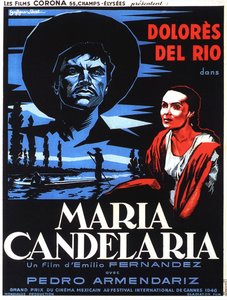
Lisa Reviews A Cannes Winner: Maria Candelaria (dir by Emilio Fernandez)


The very first Cannes Film Festival was held in 1946.  (The festival was originally schedule to debut in 1939 but the start of World War II put those plans on hold.)  45 films from 18 nations were entered into competition and, when it came time to announce that winner of the Grand Prix (which later became known as the Palme d’Or), the result was a tie.  With the number of films competing, that’s not surprising.  In fact, there have been many ties over the history of Cannes.  What is surprising is that the tie was between a total of 11 films: Brief Encounter, Hets, The Last Chance, The Lost Weekend, Men Without Wings, Neecha Nagar, Red Meadows, Rome Open City, La symphonie pastorale, Velikiy perelom, and Maria Candelaria.

Last night, Jeff and I watched Maria Candelaria on YouTube.

Directed by Emilo Fernandez (who many consider to be the father of the Mexican film industry), the majority of Maria Candelaria takes place in Mexico in 1909, shortly before the start of the Mexican Revolution.  Delores del Rio plays Maria, an indigenous woman who is shunned by the people of her village because her mother was a prostitute.  The corrupt and greedy store owner, Don Damian (Miguel Iclan), is entranced by Maria’s beauty and wants her for himself.  However, Maria loves a poor but honest farmer named Lorenzo (Pedro Armendariz).  Though Maria and Lorenzo want to get married, they find their efforts thwarted at every turn by the jealous Don Damian, with Damien going so far as to shoot the pig that Lorenzo was hoping to be able to sell to have the money to not only marry Maria but also to pay off a long-standing debt that he owed Damian.  When Maria grows ill, Damian spitefully refuses to sell Lorenzo the medicine that she needs.  When Lorenzo breaks into the store and attempts to steal it, he’s sent to prison.  Now desperately needing money to get Lorenzo out of prison, Maria poses for a well-meaning painter (Alberto Galan).  When the villagers find out that Maria is posing, a chain of events are unleashed that lead to tragedy.

After reading all of that, you may be wondering how many bad things can happen to one well-meaning and loving couple.  Nothing seems to go right for Maria and Lorenzo over the course of this film but, at the same time, their love never falters.  They remain innocent, regardless of how much they are wronged by the greedy Damian and judged by the hypocritical villagers.  Though the film focuses more on melodrama and romance than politics, the pro-revolutionary message is easy to see.  The Mexican Revolution, the film argues, had to be fought for the honor of people like Maria and Lorenzo.

It’s all a bit heavy-handed but it’s effectively directed and acted and it’s hard not to get caught up in a film that is so unapologetic about embracing the melodrama.  Delores del Rio was a Hollywood starlet who, tiring of the stereotypical roles that she was being offered, returned to Mexico and made several films with Emilo Fernandez.  She and Pedro Armendariz have a very real chemistry as Maria and Lorenzo and they both bring a certain world-weariness to their parts that prevents Maria and Lorenzo from becoming idealized stereotypes.  Maria and Lorenzo may be optimistic and often naïve but they’re not fools.  They know that life will never be easy.  Visually, the film is full of striking images of the Mexican countryside, which Fernandez portrays as being slowly corrupted by the growth of civilization.

Maria Candelaria was a hit not only at Cannes but also in Mexico.  It’s still regularly cited as one of the best movies to come out of Mexico’s film industry.  Though she eventually tired of working with the moody Fernandez, del Rio would continue to appear in movies in both Mexico and Hollywood.  Fernandez went on to spend several decades as Mexico’s most popular director, before eventually falling out of favor for Luis Bunuel.  Today, most cineastes remember him for playing the evil General Mapache in Sam Peckinpah’s The Wild Bunch.

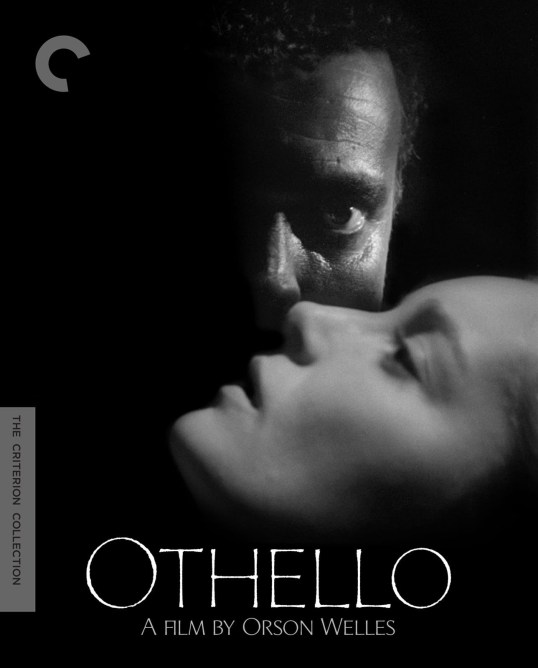
Lisa Marie Reviews A Cannes Festival Winner: Othello (dir by Orson Welles)


With the Cannes film festival underway in France, I’ve decided to spend the next few days watching and reviewing some of the films that previously won the Festival’s top prize.  In 1952, what would eventually become the Palme d’Or was known as Grand Prix du Festival International du Film and it was actually awarded to two separate films.  One of those films was Renato Castellani’s Two Cents Worth of Hope.  The other was Orson Welles’s adaptation of Othello.

Oh, Othello.  Where to begin, with this well-made Shakespearean adaptation that, by today’s standards, many would consider to be problematic?

Othello is one of Welles’s most important films, not just because of its quality but also because it was one of the first films of his European exile.  It was also the first Welles’s production to last for over a year.  In this case, it took three years to finish filming Othello.  As Welles himself often pointed out, one of the film’s key sequences began in Morocco but ended in Rome.  Working with a low budget, Welles would take roles just to have enough money to shoot another few feet of film.  (Reportedly, his salary for The Third Man went right into Othello.)  Pieces of scenes would be filmed years apart, often with the actors speaking to the camera as opposed to another performer.  Actors regularly became unavailable and were replaced.  And yet somehow, Welles managed to edit all of the seemingly random bits and pieces into a coherent and frequently powerful film.  Over the years, the chaotic production of Othello would become the norm for Welles and he would become as known for the films he was forced to abandon as he was for the films that he had made.  But, in 1952, Welles’s perseverance and his determination to bring his vision to the screen were still appreciated and the Cannes jury, headed by author Maurice Genevoix, saw fit to honor his achievement.

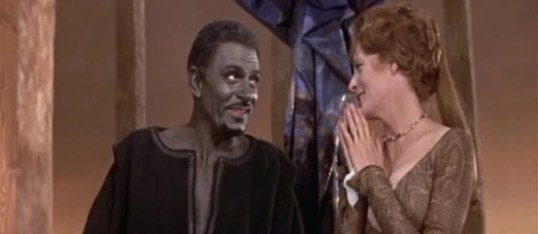
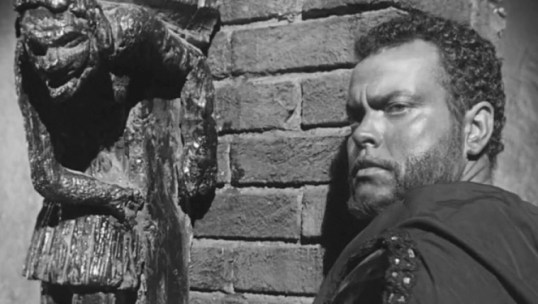
At the same time, this is also the film in which the white Orson Welles played the Moor of Venice.  Of course, in 1951, it was still pretty much a tradition that every Shakespearean would eventually play Othello and that he would wear dark make-up while doing so.  Welles opts for a light bronzer, one that makes him appear to have a deep tan.  While it’s undeniably jarring to see Orson Welles playing a North African, it’s still not quite as jarring as seeing what Laurence Olivier did in his Oscar-nominated version of the play.

Laurence Olivier’s Othello

Orson Welles’s Othello

I have to admit that I held off on seeing this film precisely because I didn’t want to watch a film featuring Orson Welles, a director who I greatly admire, in blackface.  Many people are probably never going to see this film for precisely that reason and that’s certainly understandable.  In the end, it’s a decision that everyone will have to make for themselves.  That said, having watched the film, I can now say that Orson Welles gives one of his best performances as Othello, playing him as a brilliant warrior who knows that, because of his background, he will never be fully accepted by the people of Venice.  They’ll expect him to fight their battles for him but, when he marries the white Desdemona (Suzanne Cloutier), he is still expected to prove that he’s not some sort of savage.  In fact, the only thing that prevents him from being brought up on charges is that Venice needs him to fight in another battle.  Being a permanent outsider leaves Othello open to the manipulations of the evil Iago (Michael Mac Liammor), who pretends to be a friend but who instead views everyone around him with contempt and jealousy.  Welles captures Othello’s anger but also his emotional vulnerability.  As a permanent outsider, Othello is so used to being betrayed that it doesn’t take much from Iago to push him over the edge.

Welles directs the film like a film noir, filling the screen with menacing shadows and framing the film’s tragic finale like a horror film.  He makes the film’s low-budget works to its advantage.  As opposed to the grandeur that one normally associates with Shakespeare, there’s a seediness to the locations in Welles’s version of Othello.  As Othello’s jealousy and paranoia grows, Venice itself appears to become more cluttered and cramped.  It’s as if the viewer is seeing the location through Othello’s eyes, a once imposing city that, with each little secret or lie, edges closer to death.  As both a director and an adapter of Shakespeare’s original text, Welles tells the entire story of Othello in less than 90 minutes, a pace that reflects Othello’s quick decent into irrational paranoia.

Admittedly, it’s not a perfect film.  Mac Liammor was reportedly the best Irish stage actor of his time but his inexperience with film acting is obvious and it makes him a less than ideal Iago.  Traditionally, Othello is usually dominated by whichever actor plays the role of Iago, as it’s Iago who pushes the story forward and narrates the action.  However, Welles removes the moments when Iago narrates and speaks to the audience.  Welles gives us an Othello that is clearly about the title character and this production is less interested in the reasons behind Iago’s betrayal than in what happens to Othello as a result.  (Othello becomes yet another Welles film that is ultimately about the importance of friendship and loyalty.)  Not surprisingly, with the film firmly centered on Welles’s performance, the rest of the cast struggles to make as strong of an impression.  Only Suzanne Cloutier, cast as Desdemona, manages to give a performance that escapes from Welles’s shadow.

At Cannes, Othello defeated, among others, An American In Paris, Detective Story, Umberto D., and Viva Zapata.  As often happened with Welles’s later films, it didn’t get much of an initial release in America but it has since been rediscovered by film connoisseurs.  Needless to say, the Criterion release is the one to check out.