October “True” Crime: Bundy Reborn (a.k.a. The Inflicted) (dir by Matthan Harris)


Right now, on Tubi, you can find a film that the service says is titled Bundy Reborn.  It’s a horror film, one that centers on a medical student named David O’Hara (played by the film’s director, Matthan Harris) who turns into a serial killer.  Struggling with the trauma of having witnessed his father (Bill Moseley) murder his younger sister, David kidnaps Melissa Daniels (Lindsay Hightower) and then disappears into the night when Melissa is rescued by Inspector Lorenzo (the one and only Giovanni Lombardo Radice).  Nine months later, David comes out of hiding after Melissa gives birth to their child.  David once again kidnaps Melissa and kills several other people as well.

It’s pretty much a standard serial killer film.  Despite the title, it has little to do with Ted Bundy.  In fact, Bundy isn’t even mentioned in the film.  David, like Bundy, is a handsome serial killer who went to college.  But, whereas Bundy killed because he enjoyed it, David is trying to recreate a family that was destroyed by his equally sociopathic father.  There’s a germ of an interesting idea to be found in this film.  For all of his crimes and his evil actions, David really is just carrying on the family tradition.  Can evil be passed down genetically?  Or would David be perfectly normal if he just hasn’t witnessed his father killing his sister?  Those are legitimate questions that this film raises and then promptly seems to forget about.  The title, however, suggests that David is literally Ted Bundy in a new body and that’s simply not the case here.

Indeed, the film was originally released under a totally different title, The Inflicted.  That title worked well with this film’s portrayal of a son who inherited his murderous compulsions from his father.  David has been inflicted with the same evil that his father carries in his heart.  The Inflicted is an honest title but, at the same time, it’s not a title that’s going to grab the audience.  It’s a title that feels a bit too generic.  Bundy Reborn, on the other hand, is an acknowledgement of the fact that Ted Bundy is a particularly macabre part of the American pop cultural landscape.  As evil and worthy of hate as Ted Bundy may have been, viewers just can’t get enough of him.  Ted Bundy never had much of a chance to pursue his political ambitions but today, more people probably know who Ted Bundy was then know that Connecticut Senator Richard Blumenthal lied about serving in Vietnam.

As for the film, the plot is full of contrivances and moments that just don’t make much sense.  For horror fans, it is a chance to see several icons in one film, though most of them have extremely small roles.  That said, it’s nice to see a usually villainous actor like Sid Haig cast as a kindly psychiatrist.  Bill Moseley is properly menacing as David’s father.  Doug Bradley seems to be enjoying himself as an FBI agent.  As for Giovanni Lombardo Radice, how can you not smile when he’s onscreen?  Radice’s Italian accent may seem out of place in a film that is shot and was made in North Texas.  But Radice had an undeniable screen presence and he looked good wearing a trenchcoat and holding a gun.  He simply was Lorenzo.

On a persona note, this film was shot in my part of the world.  Several scenes were shot in my hometown.  Several other scenes were filmed in the town where I went to college.  When Inspector Lorenzo gets a call about David’s activities, I immediately yelled, “Oh my God, he’s at the Shops at Legacy!”  Later, my heart ached when I saw that the hospital that Melissa was taken to was the same hospital that my father was taken to immediately after his car accident back in May.  I recognized almost every location in the film as some place that I had been personally and that was definitely kind of exciting.

Finally, let’s all just be happy that Bundy has not been reborn but instead was apparently cremated and dumped out over some anonymous swimming pool somewhere.
 

Horror Film Review: All You Need Is Death (dir by Paul Duane)


Folk music is the music of evil people.

That’s something that I’ve been saying for years.  Of course, as is usually the case with such pronouncements, I was only being half-serious when I originally said it.  The first time I said it, it was to an older relative who had just forced me to sit through a 20 minute performance of I’ll Fly Away.  The second time I said it, it was to a friend who was really into Woody Guthrie, Pete Seeger, and all those commies  After that, I found many excuses to say it because I was going to college that was renowned for its music program.  It was one of those colleges where you couldn’t turn a corner without potentially running into someone who was taking a class in folk music.  They were always a bit annoying.  For folkies, it wasn’t enough to tell you that their music was better than your music.  They also had to tell you why listening to the Weavers on scratchy vinyl made them better human beings than you.

That said, I was never totally serious about folk music being the music of evil people.  That seemed like a far more appropriate thing to say about prog rock.  But, having watched All You Need Is Death, I’m now not so sure.  Folk music may very well be evil.

All You Need Is Death tells the story of Anna (Simone Collins) and Aleks (Charlie Maher), a couple who live in Dublin.  Anna is a gifted singer and, when we first see the two of them, Anna and Aleks appear to be deeply in love.  They work for an academic named Agnes (Catherine Siggins), whose goal is to find the oldest known versions of various folk songs.  Their work brings them to an apparently demented old woman named Rita (Olwen Fouere), who is rumored to know a song that is in a language the predates the Irish language.  Rita reveals that she does indeed know the song, which was apparently inspired by a romantic betrayal and a brutal death.  She explains that the song has been passed down from one woman to another over the centuries.  It can never be recorded and men are not allowed to hear the song.  After Aleks excuses himself, Rita sings the song to Anna.  As they drive back home, Anna tries to sing the song from memory but struggles, which isn’t surprising considering that the song isn’t even in a living language.  However, they’re stopped by Agnes who reveals that she secretly recorded Rita singing.  Meanwhile, Rita is herself gruesomely murdered by a mysterious force.

Things get progressively stranger from there, as Anna finds herself being targeted by Rita’s unhinged son (Nigel O’Neill) and Anna and Alek’s previously blessed relationship suddenly seems to be cursed.  There’s even a touch of Cronenbergian body horror as the film plays out.  The film’s plot is not always easy to follow and that’s not a bad thing.  This is one of those horror films that works because the audience never feels quite secure in their understanding of what they’re seeing.  The story plays out at its own pace, putting an emphasis on atmosphere over easy shocks and jump scares.  It’s about as close to a filmed dream as the viewer is likely to find.  It’s a horror film that sticks with you after the end credits role.  You’ll never listen to another folk song.

Horror Film Review: The Tomb of Ligeia (dir by Roger Corman)


Did Roger Corman have an issue with cats?

That’s the question I asked myself as I watched 1964’s The Tomb of Ligeia.  Loosely based on a short story by Edgar Allan Poe, The Tomb of Ligeia tells the story of Verden Fell (Vincent Price).  Fell’s wife, Ligeia, has recently died but Fell worries that her spirit is still haunting and watching him.  One gets the feeling that Fell hated his late wife but, at the same time, was obsessed with her.  Fell has an eye condition which causes him to wear dark glasses on the rare occassions that he leaves his manor.  He’s definitely a creepy guy but that doesn’t stop Rowena (Elizabeth Shepherd) from falling in love with him and leaving her fiancé, Christopher Gough (John Westbrook), to marry him.  Unfortunately, Rowena is soon feeling the spirt of Ligeia as well, in the form of a black cat who keeps attacking Rowena.

Now, in all honesty, I doubt that Roger Corman specifically had an issue with cats.  It’s possible the Edgar Allan Poe had an issue with cats, as he lived at a time when cats were rarely kept as pets and were instead just used to catch and kill mice and rats.  (And, in fairness to the 19th century, that was a very important job in those days of bad hygiene and outhouses.)  There’s no cats to be found in Poe’s short story about Ligeia but there was one very prominently featured in The Black Cat.  As Ligeia was not exactly one of Poe’s most detailed stories, it’s probable that Corman and screenwriter Robert Towne just included the evil black cat because that story was one of Poe’s best-known.

That said, for me, it was difficult to watch an entire movie about people hating and attempting to destroy a cat.  It’s certainly not the cat’s fault that it’s been possessed by the spirit of Ligeia.  As I watched the film, it occurred to me that cats may not have been as popular in the 1960s as they are today.  I mean, there was no internet when this film was made and, as a result, people weren’t constantly being bombarded by cute cat pictures.  Instead, people probably just knew cats for their habit of hissing at people and scratching their owners.  Today, we find that behavior to be cute.  Perhaps back in 1964, people felt differently.

If I seem to be rambling on about the cat, that’s because there’s not really a lot to be said about The Tomb of Ligeia.  It was the last of Corman’s Poe films and neither Corman nor Price seem to be particularly invested in the material.  Price is actually rather miscast as Verden Fell.  Fell is meant to be a mysterious aristocrat, in the spirit of Maxim de Winter from Rebecca.  But Vincent Price is …. well, he’s Vincent Price.  Vincent Price was a wonderful actor and personality but he wasn’t particularly enigmatic.  From the first minute we see Price, we know that he’s being haunted by his dead wife because he’s Vincent Price and the same thing happened to him in several other films.

The Tomb of Ligeia is full of the ornate sets and beautiful costumes that were featured in all of Corman’s Poe films.  And even a miscast Vincent Price is still fun to watch.  But, when compared to the other films in the Poe Cycle, this one falls flat.

Bonus Horror On The Lens: I Was A Teenage Frankenstein (dir by Herbert L. Strock)


From 1957, it’s I Was A Teenage Frankenstein!

This film was produced as a direct result of the box office success of I Was A Teenage Werewolf.  Just as in Teenage Werewolf, Whit Bissell plays a mad scientist who makes the mistake of trying to play God.  (He also makes the mistake of keeping an alligator in his lab but that’s another story.)  The end result …. Teenage Frankenstein!

The makeup on the Teenage Frankenstein is probably the best thing about this film.  If nothing else, this film features a monster who actually looks like he was stitched together in a lab.

Enjoy and please be sure to read my review of this film at Horror Critic!

Horror On The Lens: I Was A Teenage Werewolf (dir by Gene Fowler, Jr.)


1957’s I Was A Teenage Werewolf combines two genres that were very popular in the late 50s.

On the one hand, it’s a film about a teenage rebel.  Tony Rivers (Michael Landon) is a teenager that means well but he keeps losing his temper.  If he can’t learn to control his anger, he could very well be looking at a life behind bars.

On the other hand, it’s also a horror film.  When Tony visits a hypnotist (Whit Bissell), the end result is Tony turning into a werewolf and going on a rampage, all while still wearing his letterman jacket.

All in all, this is a pretty fun little movie.  You can check out my review of it by clicking here.

And you can watch the movie below!

Horror Song of The Day: Cat People (Putting Out Fire) by Giorgio Moroder and David Bowie


Today’s song comes the hypnotic soundtrack of Paul Schrader’s Cat People.  This song was so good that it later showed up and was used to equally strong effect in Quentin Tarantino’s Inglourious Basterds.

Guilty Pleasure No. 72: The Canyons (dir by Paul Schrader)


It took me a while to appreciate The Canyons.

In fact, it took me so long to appreciate this film that I’m writing a second review it. I initially reviewed The Canyons way back in 2013, the same year that it was released.  I praised Lindsay Lohan’s performance as Tara, an actress who is living with a sociopathic producer named Christian (adult film actor James Deen, who was a bit of a celebrity when this film came out but whose star has dimmed considerably since).  I complained that the film was too slow and that director Paul Schrader seemed to be trying too hard to find some sort of existential meaning within Bret Easton Ellis’s pulpy script.  Though I didn’t really mention it in my initial review, I also felt that rest of the cast was rather dull.  Lohan was great, playing a character to whom she could probably relate.  Deen was stiff but oozed enough charm to be believable as the manipulative Christian.  The rest of the largely unknown cast came across as being dull and somewhat lost.

Though I was nowhere near as critical of The Canyons as some critics, I still was not initially impressed.  I thought of it as being a showcase for Lohan’s attempted comeback and little else.  But I have to admit that The Canyons has stuck with me.  It’s a film that I’ve rewatched more than a few times.  While all of the flaws are still there, I have come to better appreciate the film’s languid decadence.  I’ve come to see that there was a bit more wit to both Ellis’s script and Schrader’s direction than I initially realized.  James Deen’s performance as Christian has grown on me.  I like that he’s a neurotic sociopath.  He’s evil but he’s needy and, though he’ll never admit it, he knows that he’ll be nothing if Tara ever leaves him.  He’s desperate to be loved but he has no idea how to give that love back.

When I first saw the movie, I thought Nolan Funk, who played Tara’s ex-lover, was a bit dull in the role.  Upon subsequent rewatches, I’ve come to see that his dullness is actually very important to the film.  Ryan is written to be boring.  That’s why Tara is drawn to him.  His dullness provides some relief from Christian’s mood swings.  But, because Ryan is so boring, he can also never truly take Christian’s place.  In the end, Ryan still sells out his integrity, first to get a part and then to obsessively check in on Tara.  Ryan and Christian are ultimately revealed to be two sides of the same coin.  Ryan may be “the good guy,” but — in a typical Ellis and Schrader twist — there’s nothing likable or even that good about him.  One gets the feeling that, if had Christian’s money, he would be just as bad.

You really do find yourself feeling sorry for Tara, who is basically trapped between two men who both want to control her.  Lohan’s performance continues to be the strongest things about The Canyons.  There’s a lot of courage to Lohan’s performance, courage that goes beyond taking part in the film’s sex scenes.  Lohan reveals the vulnerability that’s at the heart of Tara.  She’s someone who knows that she needs to escape but she also knows that she’s a creation of Hollywood.  Hollywood is her home and her world and it’s hard to imagine her surviving anywhere else.  Tara is interesting not because she’s trapped but because, in many ways, she would prefer to be trapped to being free.

The film’s flaws are still there, don’t get me wrong.  The Canyons still has a lot of moments that don’t quite work.  The opening scene, where Christian, Ryan, Tara, and Gina (Amanda Brooks, whose performance also improves on repeat viewing) have an awkward dinner, is almost laughably bad.  (In that opening scene, James Deen delivers his dialogue like Dirk Diggler in Angels Live In my Town.)  That said, this is a trashy and colorful movie that does stick with you.  You might not want it to stick with you but it does!  It’s portrayal of sexual decadence and neurotic Hollywood players is far more entertaining than it has any right to be.  It may not be a great film but it is one that’s a bit more interesting than many originally thought.

Previous Guilty Pleasures

  1. Half-Baked
  2. Save The Last Dance
  3. Every Rose Has Its Thorns
  4. The Jeremy Kyle Show
  5. Invasion USA
  6. The Golden Child
  7. Final Destination 2
  8. Paparazzi
  9. The Principal
  10. The Substitute
  11. Terror In The Family
  12. Pandorum
  13. Lambada
  14. Fear
  15. Cocktail
  16. Keep Off The Grass
  17. Girls, Girls, Girls
  18. Class
  19. Tart
  20. King Kong vs. Godzilla
  21. Hawk the Slayer
  22. Battle Beyond the Stars
  23. Meridian
  24. Walk of Shame
  25. From Justin To Kelly
  26. Project Greenlight
  27. Sex Decoy: Love Stings
  28. Swimfan
  29. On the Line
  30. Wolfen
  31. Hail Caesar!
  32. It’s So Cold In The D
  33. In the Mix
  34. Healed By Grace
  35. Valley of the Dolls
  36. The Legend of Billie Jean
  37. Death Wish
  38. Shipping Wars
  39. Ghost Whisperer
  40. Parking Wars
  41. The Dead Are After Me
  42. Harper’s Island
  43. The Resurrection of Gavin Stone
  44. Paranormal State
  45. Utopia
  46. Bar Rescue
  47. The Powers of Matthew Star
  48. Spiker
  49. Heavenly Bodies
  50. Maid in Manhattan
  51. Rage and Honor
  52. Saved By The Bell 3. 21 “No Hope With Dope”
  53. Happy Gilmore
  54. Solarbabies
  55. The Dawn of Correction
  56. Once You Understand
  57. The Voyeurs 
  58. Robot Jox
  59. Teen Wolf
  60. The Running Man
  61. Double Dragon
  62. Backtrack
  63. Julie and Jack
  64. Karate Warrior
  65. Invaders From Mars
  66. Cloverfield
  67. Aerobicide 
  68. Blood Harvest
  69. Shocking Dark
  70. Face The Truth
  71. Submerged

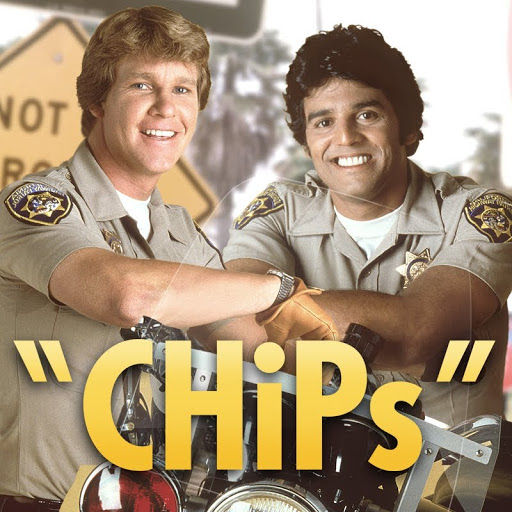
Late Night Retro Television Review: CHiPs 2.18 “Rally ‘Round The Bank”


Welcome to Late Night Retro Television Reviews, a feature where we review some of our favorite and least favorite shows of the past!  On Mondays, I will be reviewing CHiPs, which ran on NBC from 1977 to 1983.  The entire show is currently streaming on Freevee!

This week, Ponch’s mom comes to visit!  Will she get on a motorcycle?  Uhmm …. no.  She doesn’t.  It probably would have been cool if she had.  She could have helped chase down this week’s set of bad guys.  This seems like a missed opportunity.  It’s still a good episode, though.

Episode 2.18 “Rally ‘Round The Bank”

(Dir by Barry Crane, originally aired February 3rd, 1979)

Ponch is nervous because his mom, who is deathly afraid of flying, has boarded an airplane and flown from Chicago to Los Angeles to visit him.  (In this episode, we discover that Ponch’s family apparently got rich and moved to Chicago sometime between the end of the first and the start of the second season.)  Why is Ponch’s mother visiting?  Ponch isn’t sure.  He spends a lot of time worrying but, in the end, it turns out that his mother (well-played by Anna Navarro, no relation to that annoying woman on The View) came to town because Baker and Getraer called to tell her that Ponch would be receiving a special safety citation from Getraer.

Awwwww!

Apparently, Ponch has gone a whole year without crashing his motorcycle.  I’m pretty sure I saw Ponch crash his motorcycle just a few episodes ago but whatever.  The important thing is that this is actually a good Ponch episode.  For once, Erik Estrada’s tendency to overact is not a distraction and his relationship with his mom is actually really sweet.  When I watched this episode, my first thought was that Navarro looked way too young to be Estrada’s mother.  If anything, she actually looked like she might be a few years younger than him.  Then I checked with imdb and discovered that Navarro actually was sixteen years older than Estrada.

(I will admit that Anna Navarro — again, the actress and not that annoying woman who hosted a day of the Democratic National Convention — reminded me a lot of my own mom, which is maybe one reason why I liked this episode more than I thought I would.)

Ponch and Baker also find time to chase after two bank robbers, played by Frank Ashmore and Ron Hajak.  Because the robbers are a part of a nation-wide rally race that is passing through Los Angeles, Ponch and Baker get to know some of the other racers.  Two women invite Ponch and Baker to a square dance.  Baker has to decline so Ponch brings Getraer instead.  Getraer turns out to be a surprisingly good dancer.  Ponch’s mom comes to the square dance as well and, for a few minutes, I thought maybe she and Getraer were going to announce to the world that they were in love.  That would have been a great CHiPs moment but it didn’t happen.  That’s another missed opportunity.

Missed opportunities aside, this was a good episode.  It was fun and it was sweet and it made me smile.

Horror on TV: One Step Beyond 3.26 “Signal Received” (dir by John Newland)


Tonight’s episode tells the story of three sailors who hear an unexpected message on the radio.  Two of the sailors hear that their ship will soon sink.  The third sailor hears that he will live a long and fulfilling life.

One Step Beyond always claimed that all of its stories were “based on fact.”  This episode actually goes the extra mile by interviewing one of the real-life sailors about the message and about whether or not he believes in the supernatural.

This episode originally aired on April 4th, 1961.

Retro Television Review: Miami Vice 3.5 “The Good Collar”


Welcome to Retro Television Reviews, a feature where we review some of our favorite and least favorite shows of the past!  On Mondays, I will be reviewing Miami Vice, which ran on NBC from 1984 to 1989.  The entire show can be purchased on Prime!

This week, even more innocent lives are destroyed by an unwinnable war on drugs.

Episode 3.5 “The Good Collar”

(Dir by Mario DiLeo, originally aired on October 24th, 1986)

This week’s episode of Miami Vice tells the story of several wars playing out on the streets of Miami.

One of the wars is the skirmish between two street gangs, made up exclusively of teenagers.  Led by Count Walker (Samuel Graham), the Regular Fellas are pushing drugs and even forcing a promising football star named Archie Ellis (Keith Diamond) to deliver a package of black tar heroin for them.  The Regular Fellas are at war with The Apostles.  Among the members of the Apostles is Ramirez (Jsu Garcia), an undercover cop who is actually 23 but who is pretending to be seventeen.

When Crockett and Tubbs bust Archie, all three of them find themselves dragged into the National War On Drugs.  Assistant State Attorney William Pepin (Terry Kinney) wants to take Count Walker down, if just so he can claim a rare victory.  When Archie helps Crockett and Tubbs make a bust and also saves them from getting shot in a back alley, Pepin agrees to drop all the charges against Archie.  But after Ramirez is blown up by the Regular Fellas, Pepin decides that he’s going to go ahead and charge Archie unless Archie wears a wire and gets Count Walker to confess to his crimes.

Crockett, the former football star, is outraged by Pepin’s decision to put Archie in danger.  Crockett even offers to doctor the records so that Archie’s arrest will be dismissed by the courts.  However, Archie refuses.  Archie says that he’s responsible for his own mistakes and he’ll deal with the consequences.  Unfortunately, in this case, the consequences involve Archie being shot and killed by Count Walker, though not before getting Walker to confess on tape.  Walker is arrested and his gang is destroyed but at the cost of Archie’s life.  Pepin is happy.  Ramierz’s supervisor, Lt. Lee Atkins (John Spencer), is happy.  But social worker Ed McCain (Charles S. Dutton) blames Crockett for Archie’s death.  And Archie’s grandmother slams the door in Crockett’s face when he attempts to come by to pay his final respects.

What a dark episode!  However, it does get to the truth of the matter.  There was no way to win the War on Drugs.  Even the victories in this episode feel hollow.  Regular viewers of Miami Vice would have understood that someone else would eventually step into the vacuum left by Walker’s arrest.  Meanwhile, Archie — a good kid with the athletic talent necessary to win a college scholarship and have a chance to escape from the poverty that he grew up in — is shot and killed because a state’s attorney needed to notch up at least one victory.  Miami Vice was at its best when it was cynical and it doesn’t get much more cynical than this heartbreaking episode.