They Live (1988, dir by John Carpenter, DP: Gary B. Kibbe)
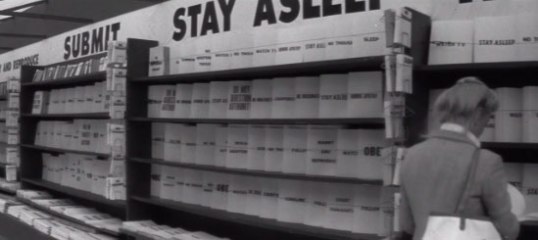
Today, we continue to wish John Carpenter a truly happy birthday! Needless to say, today’s scene that I love comes from a Carpenter film, 1988’s They Live. Though They Live was apparently not a huge box office success when it was first released, it’s a film that feels more relevant with each passing day. Carpenter is often described as being a great horror director but, with this film and The Thing, he shows that he’s a master of capturing cinematic paranoia.
There’s definitely a reason why They Live continues to find new fans over 30 years since it was originally released. Who hasn’t experienced that secret message of “OBEY!”
It’s always interesting to compare American films about the UK with the films made by the people who actually live there.
American films about the UK are all about meeting quirky people, visiting clean and brightly-lit castles, maybe falling in love with a member of royalty, and perhaps discovering that your father is actually a member of Parliament played by Colin Firth. If the action moves out of London or into Scotland or Wales, one cab be assured that it will involve an American having car trouble outside of a goat farm and then meeting an eccentric but handsome veterinarian. If the film takes place in Scotland, the veterinarian and his randy father will wear a kilt. The same thing will happen if the film is set in Wales because most Americans don’t know the difference between Scotland and Wales.
Films about the UK that are actually made in the UK tend to be visually moody and full of people dealing with economic uncertainty while living in depressingly tiny flats. The cities are often portrayed as being covered in graffiti and no one, not even the film’s hero, is ever particularly happy. British films about the UK are full of melancholy, rainy atmosphere and are often as violent as American films about the UK are quirky.
Dead Before They Wake takes place and was filmed in some of the darkest corners of Glasgow. Nathan Shepka plays Alex, a nightclub bouncer who occasionally takes on other jobs. He’s someone who knows how to handle himself in a fight and he often returns to his small and cramped home with split knuckles and a bruised face. At the same time, he’s also a loving son whose deaf and very ill father is in a retirement community. (His father encourages Alex to settle down and get married.) Outside of his father, the only person with whom he has an regular contact is Gemma (Grace Cordell), a teacher who moonlights as a stripper to make extra money. (That said, she still finds herself receiving an eviction notice.) Alex pays Gemma to have sex with him but it’s obvious that there’s something more to their relationship than just a transaction. They’re two people lost in an increasingly dark world.
Alex is approached by a shabby but well-intentioned attorney named Evan (Sylvester McCoy). Evan hires Alex to track down a 14 year-old girl who Evan believes has been abducted by a sex trafficking ring. The girl’s mother is a heroin addict. The girl’s father is a government official. Alex reluctantly takes the job and he soon manages to link the girl’s disappearance to a low-rent operation run by Amar (Manjot Sumal). Amar is someone who is very protective of his own teenage daughter but who has no problem with the idea of abducting girls who are the same age or younger and forcing them to work in his makeshift brothel. While Alex tries to find a way to infiltrate Amar’s operation, a mysterious man named Holden (Patrick Bergin) watches from the shadows.
Though the plot may remind some of Taken, Dead Before They Wake is far more thoughtful than any Liam Neeson’s admittedly entertaining thrillers. Alex is not a former secret agent with a precise set of skills. He’s just a tough guy who knows how to throw (and take) a punch and his investigation of Amar’s operation pushes him over the edge not because he’s trying to rescue a family member but because Alex is a human being who cannot believe or forgive the amount of depravity that he discovers during his investigation. Throughout the film, there are hints that Amar’s operation is actually fairly small-scale when compared to some of the others. A meeting with a representative of a national syndicate brings to mind the scandals of the late British DJ Jimmy Savile, who may not be well-known in the States but who, in the UK, became a symbol of depravity when it was revealed, after his death, that he was a prolific pedophile and sex abuser whose actions were largely ignored and sometimes even covered up by the British establishment.
Throughout Dead Before They Wake, there are scenes and details that establish that the film is more than just a revenge flick. Gemma’s struggle to survive financially is handled with sensitivity and Grace Cordell gives an authentic performance in the role. The scene where she tries to hide her growing fear upon learning that a picture of her dancing has appeared online and been seen by at least one of her students is wonderfully-acted. The film contrasts Alex’s small flat with the large home that is owned by Amar and the film opens with a disturbing scene that shows just how exactly Amar kidnaps the girls who he then gets hooked on drugs and forces to work for him. Dead Before They Wake is about much more than just action.
Dead Before They Wake does have its flaws. Towards the end of the film, we’re expected to believe that one character overlooked something so obvious that it momentarily makes it difficult for us to suspend our disbelief. But, for the most part, this is a disturbing and effective thriller, one that concludes on a proper note of Scottish melancholy.
I love watching movies that are filmed in my home state of Arkansas. We’ve had our share of big stars show up in the Natural State. Burt Reynolds, Billy Bob Thornton, Bill Paxton, Robert De Niro, Dennis Quaid, Matthew McConaughey, Tom Cruise and Andy Griffith have all filmed really good movies here. Martin Scorsese directed one of his very first movies in southern Arkansas. It’s going to be fun revisiting some of my favorite Arkansas movies and sharing them with you!
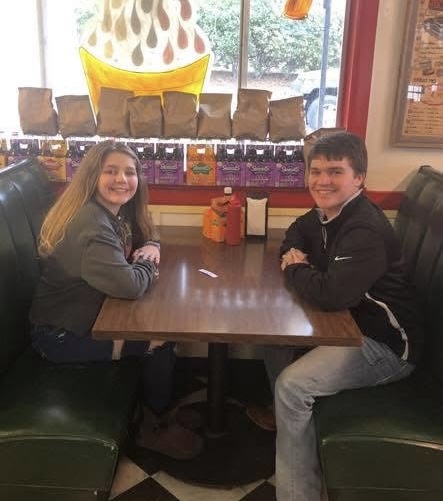
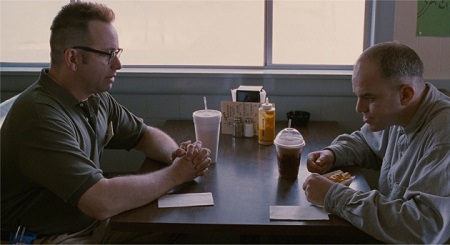
I live out in the country in Saline County, Arkansas. Back in 1996, Billy Bob Thornton wrote, directed and starred in a little film made right here called SLING BLADE (1996). It’s one of my favorite movies. Here’s a picture of our son and daughter sitting at the same table at Garry’s Drive-In Diner where Billy Bob Thornton and John Ritter sat in the movie.
Thornton stars as Karl Childers, a developmentally disabled man who was abused as a child by his parents and the other children in the community. At the age of 12, he murdered his mom and her teenage lover Jessie Dixon with a sling blade. After 30 years in the mental hospital, the state decides he’s no longer dangerous, so they give him his stack of books and send him on his way. Karl has no clue of how to get on with his life, but the administrator of the hospital (James Hampton) helps him get a job as a small engine mechanic in his hometown. Hanging out at the laundromat one day, Karl meets a boy named Frank (Lucas Black) and helps him carry his bags of clothes back to his house. The two become friends and start hanging out a lot together. Frank introduces Karl to his mom, Linda (Natalie Canerday), and her gay best friend and boss, Vaughan (John Ritter). Karl also meets Linda’s abusive and alcoholic boyfriend, Doyle (Dwight Yoakam). Karl grows to love Frank and Linda. When he witnesses a drunk Doyle’s abusive and threatening behavior towards Frank and Linda one night, Karl starts thinking that Doyle may really hurt his friends someday. He decides he’s going to make sure that can never happen.
First and foremost, I love SLING BLADE because of Billy Bob Thornton’s performance as Karl Childers. He had been developing the character of Karl for many years before the movie was made. He loved pulling “Karl” out when he was just hanging out and goofing around with his friends. He based his character on bits and pieces of so many different people in his life. As a native Arkansan, many of the words he says and the way he says them reminds me of different people I’ve known over the years. His opening monologue where he describes the murders of his mother and the young Jessie Dixon is a masterpiece in and of itself. Thornton created a truly unique character, and that’s extremely rare these days. It’s a performance for the ages and continues to inspire terrible imitations to this day!
The remainder of the cast in SLING BLADE is so good and natural. Lucas Black is phenomenal as Frank. Billy Bob Thornton has been asked how he got such a great performance from the then 12-year-old boy from Alabama. He says he didn’t get that performance; that’s just the kind of actor Lucas Black is. The relationship between Karl and Frank is the key to the film working, and Black is perfect. Natalie Canerday is excellent as Frank’s mom, Linda. She’s from Russellville, Arkansas, so her accent is authentic, and she just blends perfectly into the film. John Ritter provides a very solid supporting performance as Linda’s gay friend who cares deeply for her and Frank. Thornton was part of the cast of Ritter’s early 90’s sitcom with Markie Post called HEARTS AFIRE. He actually wrote this screenplay while working on the show. The two were great friends off camera and Ritter actually worried that he wouldn’t be able to give a serious performance opposite Thornton’s portrayal of Karl. And then there’s country music superstar Dwight Yoakam as the abusive bully Doyle Hargraves. He’s simply great in the film. He doesn’t just portray Doyle as a monster either. There are many people in this world like Doyle Hargraves, and Yoakam is able to capture that. Director Jim Jarmusch has a memorable cameo in the film. He sells Karl his “french fried potaters.” And the great Robert Duvall even makes a short appearance in the film as Karl’s dad. Duvall was over in the Memphis area filming his own movie A FAMILY THING, which was written by Thornton. He just made the 2 hour drive over for the day and filmed his scene.
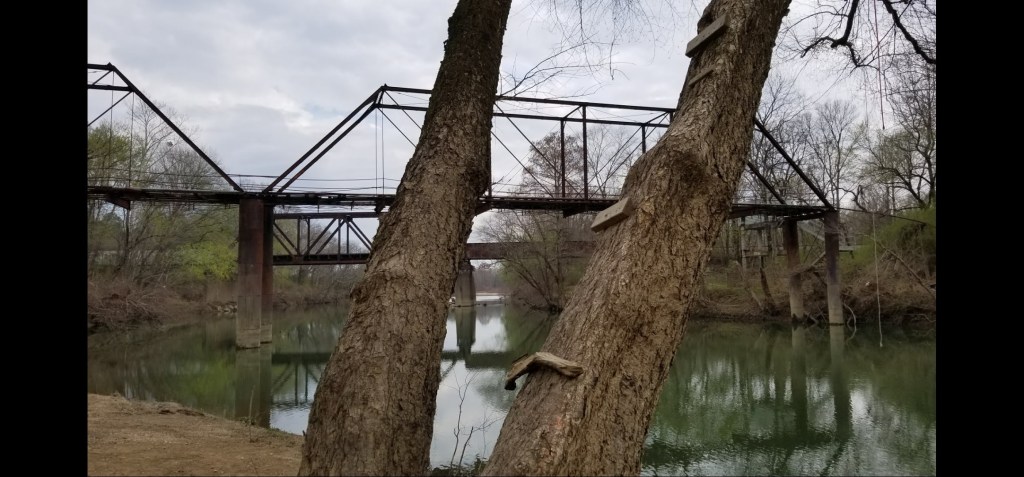
Every scene filmed in SLING BLADE is filmed here in Benton and Saline County. The opening and closing scenes between Thornton and actor J.T. Walsh at the “nervous hospital” were filmed at the old Benton Services Center, which is now a psychiatric nursing home just outside of Benton. I’ve driven by the location of the home where Linda and Frank lived. I drive by the laundromat where Karl meets Frank every time I go eat at Garry’s Sling Blade Drive-in. I’ve driven out to the bridge over the Saline River that is prominently featured in the film (see picture below). Heck, I even went to college at the University of Central Arkansas with one of the young ladies who interview Karl at the beginning of the film. I love this movie, and I’m so proud that it was filmed in my backyard.
SLING BLADE is an incredible film with a truly unique character at its center. The film is at times funny, heartbreaking, violent, slow, awkward, dramatic, and thrilling. It’s a resounding success for Billy Bob Thornton as a director, actor, and writer, even winning him an Oscar for his screenplay. I give this film my highest recommendation.
I’ve included the trailer for SLING BLADE below:
Past reviews in the #ArkansasMovies series include:
Right now, I have a cold so I can relate to the song’s title. It’s a good song and a straight-forward video. No, it’s not a cover of the song from Top Gun that played whenever Tom Cruise looked up at the sky.
1988’s Mississippi Burning opens on a lonely Mississippi backroad in 1964. A car is pulled over by the police. Inside the car are three young men, one black and two white. Judging from their nervous expressions and the sound of the people who stopped them and the fact that they’re in Mississippi during the 60s, we can guess what is about to happen to the people in the car.
With the three men, who were civil rights activists who were involved in voter registration efforts, officially considered to be missing, the FBI sends down two agents to find out what happened. The two agents are Alan Ward (Willem DaFoe) and Rupert Anderson (Gene Hackman). Ward is a Northerner who does things by the book and who resents having to deal with lax Southern law enforcement. He is serious-minded and, just in case we need a reminder of how serious he is, he wears bar-rimmed glasses that make him look like the world’s most fearsome IRS agent. Anderson is from Mississippi. He’s a talkative good ol’ boy who was a sheriff before he joined the FBI. “You know what has four eyes but can’t see?” Anderson asks, “Mississippi.” It’s a tense partnership, as Ward sometimes disapproves of Anderson’s methods and Anderson thinks that Ward doesn’t understand how things work in Mississippi.
From the first minute we meet local law enforcement, we know that they’re the killers. Just the fact that one of them are played by Brad Dourif is evidence enough. However, no one in town is willing to say a word against the police or their cronies. The white citizens are either too intimidated or they agree with what happened to the three civil rights workers. (The three men are often referred to as being “outside agitators.”) The black townspeople live in fear of the Klan and have no reason to trust the word of white FBI agents like Ward and Anderson.
Ward and Anderson investigate the case, hoping that they can find some bit of evidence that will prove the guilt of Sheriff Stuckey (Gailard Sartain), Deputy Pell (Brad Dourif), KKK leader Clayton Townley (Stephen Tobolowsky), and maybe even the town’s mayor (R. Lee Ermey). One advantage that the FBI has is that the murderers are incredibly stupid. Another is that Deputy Pell’s abused wife (Frances McDormand, giving the film’s best performance) might be persuaded to testify against her husband.
Mississippi Burning is an example of both powerful filmmaking and problematic history. Like Ridley Scott, director Alan Parker got his start making commercials and he brought the same sensibility to his movies. He knew what audiences wanted to see and he made sure to give it to them. Mississippi Burning looks fantastic and is full of memorable performances. (Both McDormand and Hackman received Oscar nominations). The action moves quickly and the villains are so hateful that watching them end up getting humiliated really does bring about a sort of emotional release.
At the same time, this is a film about the Civil Rights era that presents the FBI as being the heroes. And while it’s true that the FBI did investigate the real-life murders that inspired this film, Mississippi Burning leaves out the fact that the FBI was just a rigorous in harassing and wire tapping Martin Luther King as they were in keeping an eye on the leaders of the Klan. It’s a film about racism in which the heroes are as white as the villains. Gene Hackman gives a good performance as Rupert Anderson but the film never really delves all that deeply into Anderson’s feelings about racism in the South. We’re told that he was a sheriff in Mississippi but we never learn much about what type of sheriff Anderson was. He’s opposed to the Klan but, historically, the same can be said of many segregationists in the 60s, many of whom felt the Klan’s activities brought unwanted federal attention to what was happening in their home states. By not delving into Anderson’s own history as a member of Mississippi law enforcement or the FBI’s own more problematic history when it comes to the civil rights movement, the film provides viewers with the escape of viewing the bad guys as being aberrations as opposed to being the norm in 1964. In the end, Mississippi Burning is an effective thriller with strong heroes and hateful villains. Just don’t watch it for historical accuracy.
Mississippi Burning was nominated for Best Picture but it lost to Rain Man.
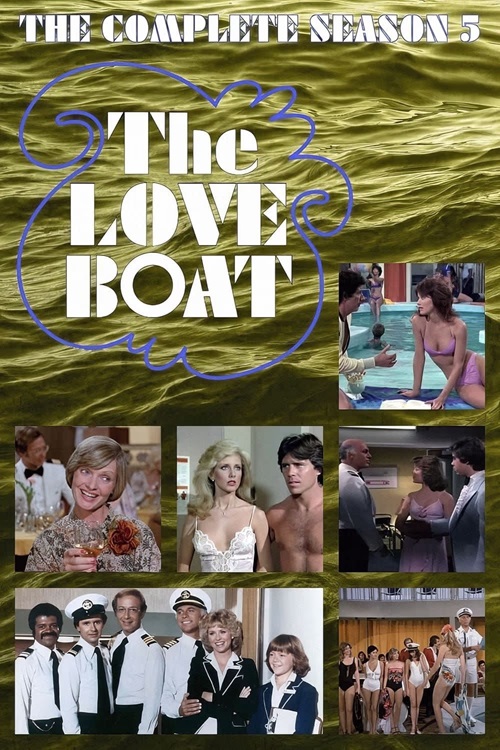
Welcome to Retro Television Reviews, a feature where we review some of our favorite and least favorite shows of the past! On Wednesdays, I will be reviewing the original Love Boat, which aired on ABC from 1977 to 1986! The series can be streamed on Paramount Plus!
Love, exciting and new….
Episode 5.13 “Doc Take the Fifth/Safety Last/A Business Affair”
(Dir by Bruce Bilson, originally aired on Jan. 2nd, 1982)
Returning from his vacation, Doc boards the boat with a young Russian blonde woman named Tania (Irena Ferris). Oh, the crew says, Doc has a new girlfriend.
No, Doc has a new wife! Doc and Tania met after Doc saw her performing as a member of a communist symphony during his vacation. They struck up a conversation and, according to Doc, it was love at first sight, After a whirlwind courtship, Doc and Tania got married, mere hours before heading to the boat. It’s going to be a working honeymoon for Doc and he can’t wait to consummate the marriage. The crew can’t wait for him to do it either. (Seriously, they are oddly obsessed with Doc Bricker’s sex life.) This is Doc’s fifth marriage and it’s going to last!
Except …. Tania doesn’t seem to want to consummate the marriage. In fact, once the boat sets sail, Tania seems to be avoiding Doc. Doc wonders if maybe Tania is just shy but seriously — refusing to have sex with your new husband on a luxury cruise ship? No one’s that shy! Then Doc spies Tania kissing another passenger.
“Adam,” the captain says, “you don’t know Tania that well.”
Indeed, Adam does not. Eventually, Tania tells Doc Bricker the truth. She married Adam so she could stay in the country with the true love of her life, political dissident Mikhail (Kai Wulff). Tania says that she really, really likes Doc but she is not in love with him. Both Tania and Mikhail apologize to Doc and tell him that Tania will get the marriage annulled and return to Russia.
Personally, I think Doc would have been justified in tossing them both overboard. Instead, Doc asks Captain Stubing to call a friend at the State Department and arrange for Tania to get permanent refugee status in the United States. Awwww, that was nice of Doc!
This storyline was depressing but, as I’ve said before, I always appreciate it when The Love Boat allows Doc Bricker to be something other than just a lech. Bernie Kopell was so likable in the role that it was always nice when he got to play Doc as being a nice guy as opposed to a manipulative sex addict. Kopell did an especially good job in this episode, especially at the end where he appears to be on the verge of tears as he watches Tania and Mikhail leave the boat.
As for the other two stories, neither one was particularly interesting. A safety inspector (Don Adams) is so obsessed with safety that he nearly misses a chance for romance with Alice (Britt Ekland). Luckily, Isaac is there to set him straight. A business executive (Robert Fuller) is upset that everyone thinks he’s sleeping with his Vice President (Judy Norton). But then he falls in love with her and sleeps with her for real so I guess the rumors were true!
Those stories were boring but Doc’s story redeemed this week’s cruise. Poor Doc! Maybe the sixth time will be the charm.
Laws of Man opens with two U.S. marshals driving through the desert of Utah. Tommy Morton (Jackson Rathbone) is young and impulsive, a Korean war vet who is quick to open fire. Frank Fenton (Jacob Keohane) is older and more cautious. He also served in the military, though his service was during World War II. Frank is haunted by flashbacks to a particularly gruesome battle. Tommy and Frank may spend most of their time wearing black suits in the desert but neither one breaks a sweat.
The year is 1963. Kennedy is in the White House. The communists are on the move. And Tommy and Frank are busy executing arrest warrants in the most desolate part of the country. An attempt to arrest Mormon cult leader Crash Mooncalf (Ricard Brake) leads to a bloody shootout that leaves Mooncalf and his followers dead. Their next assignment leads them to a small town in Nevada, where Bill Bonney (Dermot Mulroney) and his violent family is suspected of killing local ranchers and stealing their land.
From the minute that Tommy and Frank arrive in Nevada, something feels off. They stay at a cheap motel, where Tommy picks up a woman named Dinah (Ashley Gallegos) and Frank spends his time talking to a bartender named Callie (Kelly Lynn Reiter). An old rancher named Don Burgess (Forrie J. Smith) shows off his gun and says that he would rather suffer a violent death than give up his land. A traveling preacher named Cassidy Whitaker (Harvey Keitel) approaches Frank in the parking lot and starts talking about sin and redemption. Meanwhile, FBI agent Galen Armstong (Keith Carradine) appears to be curiously unconcerned with the Bonneys and their reign of violence. As for the sheriff (Graham Greene), he spending his time sitting outside a burned-out ranch house. The charred bodies of the owners are still inside, seated around the dinner table.
An attempt to arrest Bill Bonney at his home leads to a violent shootout, one in which no one is killed but Bill is still not happy about having a bunch of bullet holes in his roof. Tommy and Frank attempt to serve the arrest warrant, just to discover that it’s not going to be as easy as they thought. Frank, whose World War II flashbacks are getting more and more intense, wants to leave town. Tommy, however, is obsessed with discovering what exactly everyone is hiding.
And, through it all, people who know their history will notice that the film is taking place in November of 1963 and the 22nd is rapidly approaching….
Laws of Man gets off to a strong start but begins to meander about halfway through. Luckily, the film’s final third features a wonderfully insane twist that recaptures the viewer’s attention. No matter what you may think is going on in the film, it can’t prepare you for just how weird things eventually get. Laws of Man is an entertaining film, one that is occasionally a bit too self-consciously quirky for its own good but which ultimately works. Jackson Rathbone and Jacob Keohane both give strong performances in the lead roles and the familiar faces in the film’s supporting cast all do their best to bring the film’s often surreal world to life. Dermot Mulroney and Keith Carradine give especially strong performance while Harvey Keitel appears to be having fun as the offbeat preacher.
Laws of Man managed to truly take me by surprise. For fans of paranoid cinema, it’s definitely worth making time for.
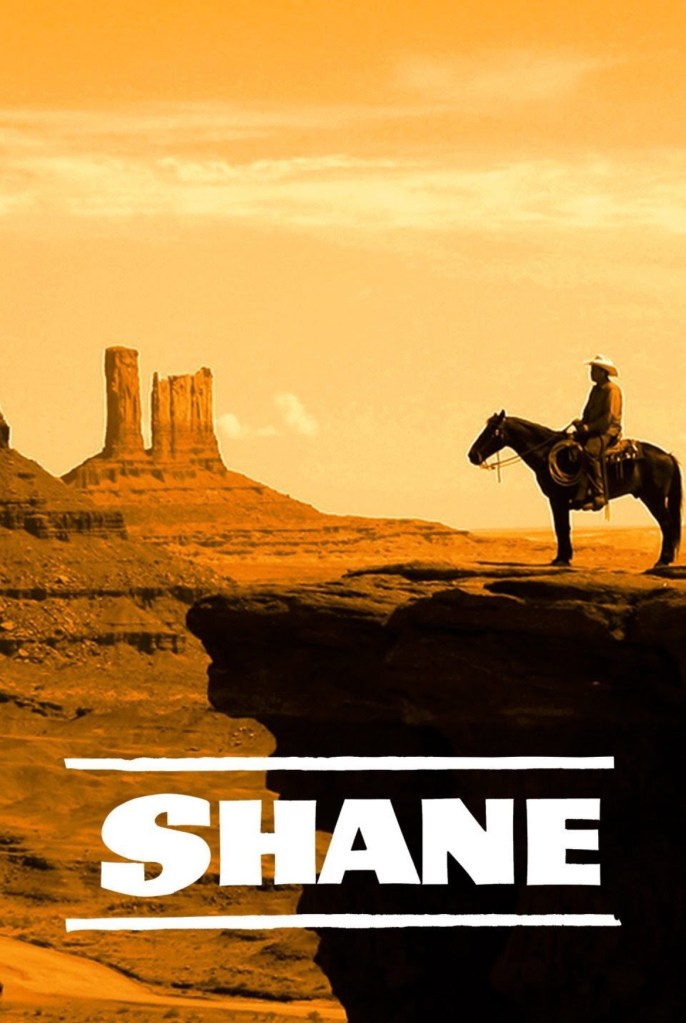
Episode 3 opens with Shane (David Carradine) and Joey (Christopher Shea) watching as geese are flying over the ranch on their way south. Joey wonders how the geese know to go south. Shane tells him that it’s instinct, almost like they have an internal clock telling them when it’s time to go. It seems like we’re supposed to be reading something deeper into this conversation, like maybe it’s time for Shane to be heading out.
In the next scene, Shane and Marian Starett (Jill Ireland) are at Sam Grafton’s General Store. Sam (Sam Gilman) agrees to loan the Starett’s money for the purchase of some hogs. It seems that disease has struck their stock. They offer a 20 acre stand of wheat to Sam as their collateral. Unfortunately, soon after the deal is made, a herd of cattle stampede the wheat, destroying any potential crop and leaving them with no ability to purchase the hogs. Shane and the Staretts immediately suspect that Rufe Ryker (Bert Freed) is behind the stampede based on his desire to have their land at any cost. Threats are made, but Ryker denies it.
With these financial difficulties as a backdrop, a group of men show up at Sam’s saloon looking for Shane. The leader of the bunch is Johnny Wake (Don Gordon), a guy Shane has ridden with in the past. He’s come to see if he can buy Shane and his gun for $300 to help with a range war they’re involved in. Normally, Shane would be able to say no, but with the Starett’s farm in trouble, it may now be time for Shane to leave. Is Shane like one of the wild geese? Did Ryker stampede the wheat field? Will Shane go back to his old ways with Johnny Wake and the funky bunch? We’ll soon find out.
I liked this episode. Ryker was set up to be such an A-hole in the pilot, but I found myself believing him when he told Shane that he was not responsible for the stampede that ruined the Starett’s wheat. He’s still an A-hole though. I also liked that there’s some tension between Shane and Marian in this episode. She makes it clear that no matter how bad things are financially for their family, she will never accept “blood money” as help. They look at each other longingly several times over the course of the episode’s 45 minutes. Is this heading towards a big smooch at some point? I like that little Joey gets to say “I love you, Shane” as he’s leaving the farm in this episode. Finally, I like that Shane gets to actually use his gun here. I won’t spoil who it’s used on, but I will admit that it’s satisfying.
Three episodes in, and I’m really enjoying the series! I can’t wait to check out Episode 4!
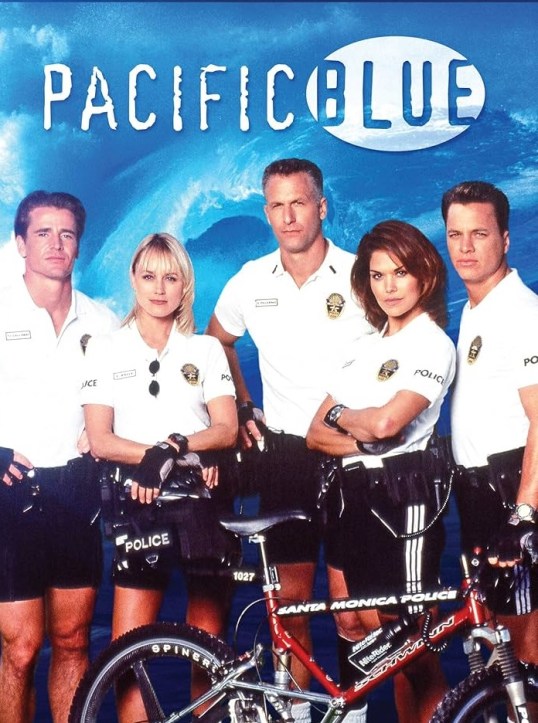
Welcome to Late Night Retro Television Reviews, a feature where we review some of our favorite and least favorite shows of the past! On Tuesdays, I will be reviewing Pacific Blue, a cop show that aired from 1996 to 2000 on the USA Network! It’s currently streaming everywhere, though I’m watching it on Tubi.
This week, the bicycle cops continue to expect to be taken seriously.
Episode 1.2 “First Shoot”
(Dir by Michael Levine, originally aired on March 9th, 1996)
It’s a busy time for the bicycle cops of Santa Monica.
Elvis (David Lander), the bicycle repairman who speaks with an indecipherable accent, is paranoid because a group of Bulgarian men are wandering the beach and asking if anyone knows where they can find him. It turns out that the men are not dangerous but instead, they are the members of Bulgaria’s Olympic bicycling team. They want Elvis to be their official team repairman. However, Elvis previously had an affair with the girlfriend of one of the Olympians so he declines the offers. He prefers the glamour of California.
Meanwhile, a pickpocket is robbing people on the boardwalk. When he makes the mistake of grabbing the wallet of an old Italian man named Mr. Tataglia (Joseph Campanella), Tataglia goes to Lt. Palermo and explains that he wants the wallet back because it contains a picture of his wife. He would consider it a matter of personal respect if Palermo retrieved the wallet and he promises to repay the favor. Fortunately, the brave bicycle cops do catch the pickpocket. Mr. Tataglia watches from a distance and nods. I guess Mr. Tataglia is meant to be a mobster. Believe it or not, not all Italians are in the Mafia. I’m a fourth-Italian and I’m fairly sure that side of my family is not mob-related.
While that’s going on, Chris and Del Toro ride their bikes out to a film set and provide security for a spoiled movie star named Scott Magruder (Bojesse Christopher). Chris is the one who has a crush on Magruder but it’s Del Toro who is seduced by the prospect of fame. When Magruder gives Del Toro a line in the movie, Del Toro has visions of movie stardom in his head. But then the scene gets cut. Sorry, Del Toro, looks like you’re just going to have to spend the rest of your life riding around the beach on a Schwinn like a dumbass. Scott later gets arrested in a bar fight but it turns out it was a publicity stunt. Chris is saddened to learn that celebs aren’t as likable in real life as they are in the gossip pages. Myself, I’m just wondering why Chris has gone from being the smart and driven character that she was in the pilot to being a total airhead just one episode later.
Finally, Cory and the bike cops help the real cops bust a group of drug dealers. Cory shoots an aspiring rapper named Rasheed (Jeremiah Birkett). Rasheed claims that he didn’t have a gun. Cory is determined to prove that he did. Apparently, this was the first time that Cory ever shot anyone. Strangely, it doesn’t seem to rattle her at all that she nearly ended someone else’s life. I mean, it seems like most people would have a more emotional reaction to nearly killing a man, even if that guy was a criminal with a gun. Cory, however, is cool and calm and kind of creepy about it. It’s established that Cory comes from a family of cops so maybe that’s why the shooting doesn’t faze her.
There was a lot going on in this episode. Actually, there was probably too much going on. This is only the second episode of the show and it’s not like any of the characters have really developed much of an individual personality. Everyone is still pretty much interchangeable. As a result, none of the action in this show carried much of an emotional impact. The characters are all still strangers to me.
Maybe things will improve next week.
(Seriously, let’s hope so! I’ve got a lot of episodes to make my way through before I’m done with Pacific Blue.)

 Through the Shattered Lens