Late Night Retro Television Review: Highway to Heaven 3.18 “A Mother And A Daughter”


Welcome to Late Night Retro Television Reviews, a feature where we review some of our favorite and least favorite shows of the past!  On Thursdays, I will be reviewing Highway to Heaven, which aired on NBC from 1984 to 1989.  The entire show is currently streaming on Tubi and several other services!
This week, Jonathan is considered for a promotion!

Episode 3.18 “A Mother And A Daughter”

(Dir by Michael Landon, originally aired on February 4th, 1987)

Jonathan and Mark are in Hollywood …. again!

Seriously, it’s interesting how many episodes of Highway to Heaven found Jonathan and Mark dealing with movie stars and entertainment executives in Hollywood.  Every Hollywood episode basically followed the same plot.  Jonathan is all-business while Mark is excited to meet one of his old screen idols.  One thing that is a bit odd is that Mark always acts as if he’s never been in Hollywood before, even though almost every season usually featured several Hollywood episodes.

This time, they’ve been assigned to repair the relationship between veteran film star Phoebe Hall (Gloria DeHaven) and her estranged daughter, Gail (Judith Chapman).  Gail is writing a tell-all book about Phoebe, one that is set to be published at the same time that Phoebe is receiving a lifetime achievement award at a televised ceremony.  Can Jonathan get Gail to forgive her mother by showing Gail a bunch of old home movies?  Can Mark show Pheobe how much her career means to her fans?  Episodes in which Jonathan dealt with a film star who hadn’t been there for their children always seemed to hit Michael Landon extra hard.  His children have said that Landon was a bit of a workaholic and not always the most present of fathers.  One gets the feeling that this episode was Landon’s way of dealing with his own regrets.

While Jonathan works, he’s observed by another angel, Henry Clifford (Basil Langston).  Henry confides to Mark that Jonathan is being considered for a promotion into Heaven.  Mark briefly thinks about purposefully tanking the assignment so that Jonathan will stay on Earth with him.  Jonathan explains that they can’t do that and, to the show’s credit, Mark quickly realizes that Jonathan’s correct.  (Doing a bad job on purpose would have gone against everything the show had established about Mark’s character.)  In the end, Henry says that Jonathan will be staying on Earth for the time being because that’s obviously where Jonathan can do the most good.  Jonathan and Mark are happy.

That said, I do find it curious that the show has never really examined how Jonathan feels about the prospect of finally heading “upstairs.”  I mean, as Jonathan explains during this episode, he’s dead.  He’s been dead for a long time.  Wouldn’t he like to relax and enjoy his final reward?  Some people really like to work.  To be honest, I’d probably be the same way.  Give me a choice between going to Heaven and reviewing movies as a ghost …. well, it would be a hard decision for me.

Anyway, this was a sweet episode.  Highway to Heaven‘s strength was that it was shamelessly optimistic and earnest and that’s certainly the case here.

Song of the Day: Do Lung by Francis Ford Coppola and Carmine Coppola


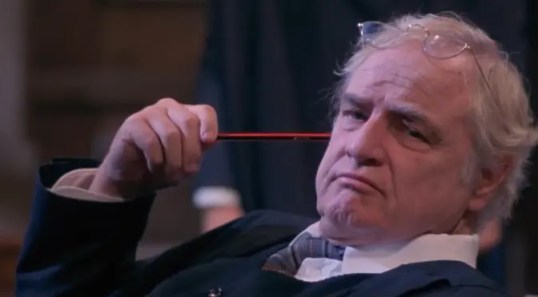
Since today is Marlon Brando’s birthday, it only seems appropriate that today’s song of the day should come from the soundtrack of one of his films.  (I’ll also be watching this film later tonight.)

From 1979’s Apocalypse Now, here is the haunting music that plays as Willard and the boat approach the infamous bridge that is built every day so that it can be destroyed every night.

Retro Television Review: Malibu CA 2.7 “The Long Goodbye”


Welcome to Retro Television Reviews, a feature where we review some of our favorite and least favorite shows of the past!  On Thursdays, I will be reviewing Malibu CA, which aired in Syndication in 1998 and 1999.  Almost the entire show is currently streaming on YouTube!

Yes, this is from the first season. I don’t care. I refuse to waste my time looking for a second season advertisement.

This week, Jason ruins his life.  Or at least, that’s what I assume happened.

Episode 2.7 “The Long Goodbye”

(Dir by Gary Shimokawa, originally aired on November 20th, 1999)

Here’s the plot of this week’s episode, according to the imdb:

After a successful audition before Alex’s uncle the producer, Jason gets the go-ahead to make a demo recording. He’s surprised to see that the producer sent to work with him is a woman: a young, attractive one. Jason works with Kendall and there seems to be a spark between them. Stads calls from Europe. Jason tells her about the demo but not that the producer is female.

Wow, that sounds great!  (If you’re detecting heavy sarcasm, you are indeed a perceptive reader.)  Too bad this episode is one of the ones that has not been uploaded to YouTube.  Or actually, maybe it’s not that bad that I have an excuse not watch it.  I’ve never bought into the whole idea of Jason being this massively talented singer and songwriter.  According to Wikipedia, this episode was the last appearance as Stads so I’m going to guess that Jason not mentioning his producer being female led to a break-up.  Oh well!

Consider this a placeholder.  If this episode ever is uploaded, I’ll review it.

Film Review: A Dry White Season (dir by Euzhan Palcy)


In 1990, Marlon Brando received his final Academy Award nomination when he was nominated for his supporting performance in 1989’s A Dry White Season.

Brando played Ian McKenzie, a human rights lawyer who lives and work in South Africa at the height of the Apartheid regime.  When we first see McKenzie, he’s sitting in his office and complaining about how all the flowers surrounding him have given him a permanent allergy.  When Ben Du Toit (Donald Sutherland) explains that he’s trying to learn the truth about why his gardener and his gardener’s son both died in the custody of South Africa’s “special branch,” McKenzie replies that bringing the case would be a waste of time.  McKenzie makes several dismissive comments about the case and tells Du Toit that pursing the matter would lead to Du Toit becoming a pariah himself.  Only when Du Toit says that he’ll just find another lawyer to pursue the manner does McKenzie agree to take the case.  His comments may have seemed callous but they were McKenzie’s way of testing Du Toit’s commitment to actually getting to the truth.

Up until the death of his gardener, Ben Du Toit was someone who blindly believed in the system.  A former rugby star and a teacher, Ben grew up in South Africa and is proud to call himself a “true African.”  (In one of the film’s best scenes, Ben’s driver, Stanley — played by Zakes Mokae, — informs Ben that being an African in South Africa means not being allowed to vote and having to carry identification papers everywhere with him.)  When the gardener’s son is first arrested, Ben repeatedly says, “He must have done something.”  When Ben’s gardener is arrested, Ben believes that it’s all just a terrible mistake and that he’ll be released soon.  Even after the gardener is killed, Ben initially believes the official story that the death was a suicide.  It’s only after Stanley takes Ben to the funeral home and shows him the gardener’s tortured body that Ben finally comes to realize that he was tortured to death by Captain Stolz (Jurgen Prochow).

Still, Ben is naive enough to assume that McKenzie will be able to get some sort of justice.  In court, McKenzie easily exposes the flaws in Stolz’s story.  When Stolz claims that the dead man’s injuries were the result of the man throwing himself against the bars of his cell, McKenzie mentions that the man’s back was injured and then asks if he was throwing himself backwards.  Stolz smirks and says that the man was “an animal.”  McKenzie may be a brilliant lawyer but it’s a foregone conclusion that he’s going to lose the case.  Stolz is exonerated and the expression on McKenzie’s face is one that indicate that he is not surprised at all.

It’s a small role.  Brando gets less than ten minutes of screentime but he makes perfect use of them and shows that, even in the latter half of his career, Brando could still give a good performance when he cared about the material.  Both Brando and Susan Sarandon took small roles in this anti-Apartheid drama because they believed in the message.  Sarandon’s casting is a bit distracting.  She never becomes the journalist she’s playing, instead she just seems like a movie star lending her name to a cause that she believes in.  But Brando becomes Ian McKenzie and he expertly reveals the absurd lengths to which the Apartheid government will go to excuse its actions.

The majority of the film deals with Ben Du Toit and his slow-awakening about the truth of the country that he calls home.  Upon realizing the truth about the country’s government and its actions, Du Toit declares that he can no longer go back to being who he once was and it costs him his family, his home, and ultimately his life.  Donald Sutherland does a wonderful job, portraying Du Toit’s growing understanding of what’s actually happening in South Africa.  Wisely, the film doesn’t portray Du Toit as being a saint.  It fully understands that Du Toit only started to care about Apartheid when it effected somebody that he knew and fortunately, Stanley is always there to call Du Toit out whenever he starts to forget about his own role in supporting the system that he now opposes.  It’s a powerful and heartfelt film, one that is well-known for Brando’s performance but works just as well when Brando is off-screen as well.

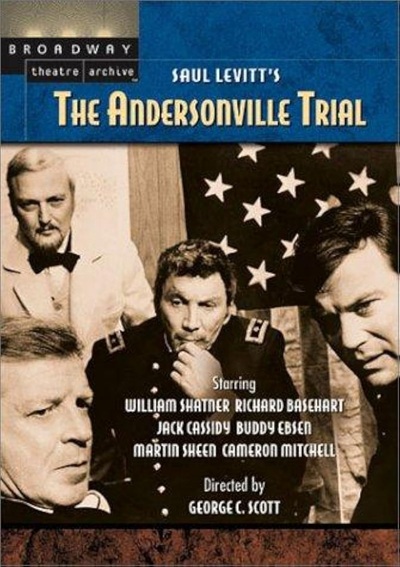
On Stage On The Lens: The Andersonville Trial (dir by George C. Soctt)


1970’s The Andersonville Trial takes place in one muggy military court room.  The year is 1865.  The Civil War is over but the wounds of the conflict are still fresh.  Many of the leaders of the Confederacy are still fugitives.  Abraham Lincoln has been dead for only a month.  The people want someone to pay and it appears that person might be Captain Henry Wirz (Richard Basehart).

Originally born in Switzerland and forced to flee Europe after being convicted of embezzlement, Henry Wirz eventually ended up in Kentucky.  He served in the Confederate Army and was eventually named the commandant of Camp Sumter, a prison camp located near Andersonville, Georgia.  After the war, Captain Wirz is indicted for war crimes connected to his treatment of the Union prisoners at the camp.  Wirz and his defense counsel, Otis Baker (Jack Cassidy), argue that the prison soon became overcrowded due to the war and that Wirz treated the prisoners as well as he could considering that he had limited resoruces.  Wirz points out that his requests for much-needed supplies were denied by his superiors.   Prosecutor Norton Chipman (William Shatner) argues that Wirz purposefully neglected the prisoners and their needs and that Wirz is personally responsible for every death that occurred under his watch.  The trial is overseen by Maj. General Lew Wallace (Cameron Mitchell), the same Lew Wallace who would later write Ben-Hur and who reportedly offered a pardon to Billy the Kid shortly before the latter’s death.  Wallace attempts to give Wirz a fair trial, even allowing Wirz to spend the trial reclining on a couch due to a case of gangrene.  (Agck!  The 19th century was a scary time!)

The Andersonville Trial started life as a 1959 Broadway production.  On stage, George C. Scott played Chipman, an experience he described as difficult because, even though Chipman was nominally the play’s hero, Wirz was actually a much more sympathetic character.  When the play was adapted for television in 1970, Scott returned to direct.  Admittedly, the television version is very stagey.  Scott doesn’t make much effort to open up the play.  Almost all of the action is confined to that courtroom.  We learn about the conditions at Fort Sumter in the same way that the judges learned about the conditions.  We listen as the witnesses testify.  We listen as a doctor played by Buddy Ebsen talks about the deplorable conditions at Fort Sumter.  We also listen as a soldier played by Martin Sheen reports that Wirz has previously attempted to suicide and we’re left to wonder if it was due to guilt or fear of the public execution that would follow a guilty verdict.  We watch as Chipman and Baker throw themselves into the trial, two attorneys who both believe that they are correct.  And we watch as Wirz finally testifies and the play hits its unexpected emotional high point.

As most filmed plays do, The Andersonville Trial demands a bit of patience on the part of the viewer.  It’s important to actually focus on not only what people are saying but also how they’re saying it.  Fortunately, Scott gets wonderful performances from his ensemble cast.  Even William Shatner’s overdramatic tendencies are put to good use.  Chipman is outraged but the play asks if Chipman is angry with the right person.  With many of the Confederacy’s leaders in Canada and Europe, Wirz finds himself standing in for all of them and facing a nation that wants vengeance for the death of their president.  Wirz claims and his defense attorney argues that Wirz was ultimately just a soldier who followed orders, which is what soldiers are continually told to do.  The Andersonville Trial considers when military discipline must be set aside to do what is morally right.

Admittedly, when it comes to The Andersonville Trial, it helps to not only like courtroom dramas but to also be a bit of a history nerd as well.  Fortunately, both of those are true of me.  I found The Andersonville Trial to be a fascinating story and a worthy production.

The Eric Roberts Collection: The Reliant (dir by Paul Munger)


First released in 2019 and funded by an Indiegogo campaign, The Reliant is the epitome of a late-era Eric Roberts film.

Roberts appears towards the beginning of the film.  He gets roughly 45 seconds of screen time.  He delivers three lines, all in close-up.  His character is named Mr. Johnson but, to know that, you have to sit through the entire film so that you can track down his name in the end credits.  We don’t know anything about his character, other than he’s a hardware store owner.  We don’t know anything about his fate.  When last seen, his store is being overrun by a bunch of Antifa goons.  It’s not looking good for Mr. Johnson but luckily, he has a lot of weapons.

Kevin Sorbo is also in the film.  His role is slight larger.  He only gets maybe 16 minutes worth of screentime.  His character is killed off fairly early but he does get to appear in a few flashbacks and a fantasy sequence.  He plays a father who has taught his children how to shoot guns and survive in case society breaks down.  Society does break down and he dies while defending his family.  He probably would have survived if his liberal daughter Sophie (Mollee Gray) hadn’t hid the key to the gun safe.  Sophie (boo!) doesn’t believe in the Second Amendment and doesn’t like it when her father goes shooting.  Not even the sight of hundreds of angry rioters getting ready to open fire on her house can change Sophie’s mind.  Boo, Sophie, boo!

Sophie doesn’t believe in killing, even if self-defense.  (I don’t believe in killing either.  That said, if someone’s coming at you with a gun, you have every right to defend yourself.)  When she finds out that her fiancé, Adam (Josh Murray), has had to kill people while she and her siblings were hiding out in the woods, Sophie throws a fit and says that she doesn’t even want Adam — who can barely walk due to an injury — staying at her family’s camp.  Sophie is a …. well, I swore off profanity for Lent.

Sophie and her family are being stalked by Jack (Brian Bosworth), an angry man who has a personal grudge against them.  Along with Roberts and Sorbo, Bosworth is the other “name” in this movie and he actually does get substantial screentime.  And he actually gives a good performance as well, certainly the best in this film.

The Reliant is a technically well-made film and some of the action sequences are surprisingly effective.  Unfortunately, whenever the characters are arguing about faith and whether or not guns cen be a useful tool, the movie becomes painfully draggy.  The Reliant is occasionally fun in a “I’m going to show this to the most annoying leftie I know and watch them get offended” sort of way.  But, for the most part, it’s just too talky and slow for its own good.

Previous Eric Roberts Films That We Have Reviewed:

  1. Star 80 (1983)
  2. Runaway Train (1985)
  3. Blood Red (1989)
  4. The Ambulance (1990)
  5. The Lost Capone (1990)
  6. Love, Cheat, & Steal (1993)
  7. Voyage (1993)
  8. Love Is A Gun (1994)
  9. Sensation (1994)
  10. Dark Angel (1996)
  11. Doctor Who (1996)
  12. Most Wanted (1997)
  13. Mercy Streets (2000)
  14. Wolves of Wall Street (2002)
  15. Mr. Brightside (2004)
  16. Six: The Mark Unleased (2004)
  17. Hey You (2006)
  18. Amazing Race (2009)
  19. In The Blink of an Eye (2009)
  20. Enemies Among Us (2010)
  21. The Expendables (2010) 
  22. Sharktopus (2010)
  23. The Dead Want Women (2012)
  24. Deadline (2012)
  25. The Mark (2012)
  26. Miss Atomic Bomb (2012)
  27. Bonnie And Clyde: Justified (2013)
  28. Lovelace (2013)
  29. The Mark: Redemption (2013)
  30. Self-Storage (2013)
  31. A Talking Cat!?! (2013)
  32. This Is Our Time (2013)
  33. Inherent Vice (2014)
  34. Road to the Open (2014)
  35. Rumors of War (2014)
  36. Amityville Death House (2015)
  37. A Fatal Obsession (2015)
  38. Stalked By My Doctor (2015)
  39. Enemy Within (2016)
  40. Joker’s Poltergeist (2016)
  41. Prayer Never Fails (2016)
  42. Stalked By My Doctor: The Return (2016)
  43. The Wrong Roommate (2016)
  44. Dark Image (2017)
  45. Black Wake (2018)
  46. Frank and Ava (2018)
  47. Stalked By My Doctor: Patient’s Revenge (2018)
  48. Clinton Island (2019)
  49. Monster Island (2019)
  50. The Savant (2019)
  51. Seven Deadly Sins (2019)
  52. Stalked By My Doctor: A Sleepwalker’s Nightmare (2019)
  53. The Wrong Mommy (2019)
  54. Exodus of a Prodigal Son (2020)
  55. Free Lunch Express (2020)
  56. Her Deadly Groom (2020)
  57. Top Gunner (2020)
  58. Deadly Nightshade (2021)
  59. The Elevator (2021)
  60. Just What The Doctor Ordered (2021)
  61. Killer Advice (2021)
  62. The Poltergeist Diaries (2021)
  63. The Rebels of PT-218 (2021)
  64. A Town Called Parable (2021)
  65. Bleach (2022)
  66. My Dinner With Eric (2022)
  67. Aftermath (2024)
  68. The Wrong Life Coach (2024)
  69. When It Rains In L.A. (2025)

SHANE (The TV Series) – Episode 14: The Big Fifty (originally aired December 10th, 1966)


Episode 14 begins with one of Rufe Ryker’s men, Ed Bain, cutting barbed wire fence on the Starett ranch so their herd of cattle can go to a watering hole. As he’s cutting the fence, the sounds of gunshots from a “Big 50” rifle ring out as he’s shot and falls over. Shane (David Carradine) and Joey (Christopher Shea), who are riding through the area, hear the shots and find the wounded man. He rushes him to Sam Grafton’s saloon to see if Sam (Sam Gilman) can do anything to save him. Unfortunately the man was shot in the gut and there is no hope. About the time he dies, Rufe Ryker (Bert Freed) and his men come into the bar. He immediately asks Shane why he killed him. Shane, picking the wrong time to be a smartass, tells Ryker that if he had killed him it would have been for his cutting their fence, but that he didn’t do it. Ryker doesn’t believe him and neither do his men. They decide that Ed Bain deserves justice because “he was not only a good hand, but he was a good man.” Out for blood, Ryker decides he’s going to put Shane on trial for murder right then and there with only his men as the witnesses and jury. I call this the “Saint Bain” portion of the story. Harve (Lawrence Mann) tells us what a brave and hardworking man Bain was. Bain’s best friend Greevey (a guest starring Wayne Rogers) tells about all of their good times and card playing together. It seems that Bain is such a good guy that Shane clearly deserves to die even though none of them actually saw him shoot the man. 

While the sham of the trial is going, the saloonkeeper Ben (Owen Bush) slips out the back and rides out to the Starett ranch to tell Tom (Tom Tully) and Marian (Jill Ireland) what’s going on. The two immediately set about trying to round up some of the homesteaders to go into town with them to try to stop Ryker and his men from hanging Shane. One by one, each of the homesteaders turn them down because “this is not their fight” and reason that Shane probably did it because “he’s a gunfighter.” Knowing they have zero chance against Ryker on their own, Tom and Marian come up with a plan. He’ll head to Laramie to get the U.S. Marshall, and she’ll go try to buy some time from Ryker with the only bargaining chip they have, the deed to the family ranch. 

Episode 14 of Shane is a bit of a mixed bag. On the positive side, the gun that is used to kill Ed Bain at the beginning is a unique and interesting element of the story. The weapon is a Sharps “Big 50,” a .50 caliber rifle that was designed for buffalo hunting and introduced in 1872 by the Sharps Rifle Manufacturing Company. The Big 50 joins a tradition of powerful weapons in filmed entertainment that provide their users with an advantage over their adversaries. Other examples include the Winchester 73 rifle, Dirty Harry’s 44 Magnum and Paul Kersey’s 357 Wildey Magnum in DEATH WISH 3. At one point, the killer is firing the Big 50 into the Starett cabin at Shane, Marian and Joey. Based on the power of the gun as already shown, there is a real sense of danger that someone could be seriously hurt. There was also one good scene centered around the unspoken love between Shane and Marian, even if Shane wasn’t a part of it. With Shane’s life seriously in jeopardy, Tom reassures his daughter-in-law, “honey, you’ve only been in love with 2 men in your whole life. I’m gonna make sure you don’t lose them both.” She sure doesn’t protest. It was a sweet scene and I enjoyed that as well. 

On the negative side, episode 14 featured the most lazy storytelling thus far in the series. The series has gone to great lengths to show Rufe Ryker as a man who’s hard-as-nails, but also mostly reasonable. The writers throw that out the window in this storyline and require him to behave completely irrational in his quest for vengeance for his hired man. It would be one thing if Ed Bain was his son or something, but Ryker’s line about him being a “good man” doesn’t get close to explaining the turnaround in his behavior. And not only do they present him as irrational, they make him incompetent to boot. Joey rides up and convinces Ryker that he’s only there to take Shane some food. Ryker even checks his slicker for a gun before letting him go in. Turns out Joey did have a gun under his jacket and Ryker just didn’t find it. The show had seemed to really be hitting its stride before this episode and the lazy storytelling surprised me. They should have introduced a new character if they were going to make him so irrational and incompetent. That description just doesn’t fit the Ryker of the first 13 episodes. 

Overall, this may have been the least enjoyable episode so far. While it did have some good moments, I’m still struggling to let go of the way they changed Ryker’s character so completely for this one. We’ll see what happens with him over the last few episodes of the series. While I’m slightly disappointed with episode 14, I’m still looking forward to seeing what happens next. 

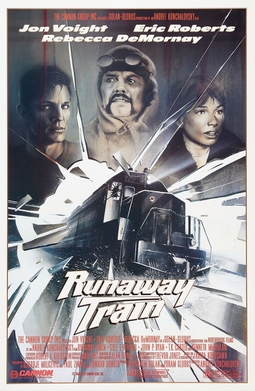
The Eric Roberts Collection: Runaway Train (dir by Andrei Konchalovsky)


In 1985’s Runaway Train, Eric Roberts plays Buck McGeehy, a prisoner at Stonehaven Maximum Security Prison in Alaska.

Like the majority of the prisoners, Buck looks up to Manny (Jon Voight), a bank robber who has just been released from spending three years in solitary confinement.  Manny is a tough guy who refuses to allow the prison system to beat him down.  Warden Ranken (John P. Ryan) views Manny as being a threat to his authority and he’s especially angry that it was the courts that ordered that Manny finally be released from solitary.  When Ranken tries to arrange for Manny to be assassinated at a prison boxing match, it’s Buck who saves Manny’s life.  When Manny later manages to escape from the prison, Buck tags along.

Manny and Buck are a study in contrasts.  Manny is as cold as the Alaskan landscape.  He’s ruthless and doesn’t allow himself to get too close to anyone but, at the same time, he does live by a definite code.  Buck is simple-minded, an earnest guy who talks too much and who probably wouldn’t have survived a day in prison if it wasn’t for his skill as a boxer.  Buck and Manny manage to make their way across the frozen wilderness but, when they hop on a train, they soon find themselves trapped on the out-of-control locomotive, along with a railroad engineer named Sara (Rebecca De Mornay).  The three of them have to find a way to either escape from or stop the train.  At the same time, the obsessed Warden Ranken is determined to recapture Manny and, if that means flying a helicopter over the train so that Ranken can lower himself onto it, so be it.

Runway Train, which was based on a script by Akira Kurosawa, was one of the few Cannon films to find success with not just critics but also audiences and the industry.  The Golden Globes nominated it for Best Film.  The Academy didn’t go quite that far but they did nominate the film for Best Editing, along with also nominating Jon Voight for Best Actor and Eric Roberts for Best Supporting Actor.  While Voight is a multiple-Oscar nominee (and one-time winner for Coming Home), Runaway Train is, so far, the only film for which Eric Roberts has been nominated.  (He should have been nominated for Star 80 but his character in that film was a bit too realistically sleazy for the Academy to honor.)  Roberts has described Runaway Train as being one of his favorite films and he even used the title for his autobiography.  It was on this film that he met Danny Trejo, who not only trained Roberts for the boxing scenes but also helped Roberts kick his addiction to cocaine.

And Roberts has every reason to be proud.  Runaway Train is a fast-moving, visually stunning thrill ride, a masterpiece of the pulp imagination.  Yes, the symbolism of the runaway train is a bit obvious.  Yes, the philosophical edge of the film’s dialogue can sometimes feel a bit out-of-place.  Who cares?  John Voight and Eric Roberts sell their characters with such skill that you don’t care that they’re both criminals who have done terrible things.  From the minute we see that frozen jail and the prisoners tossing burning pieces of paper at the guards, we know why both Manny and Buck have to escape.  John P. Ryan turns the warden into everyone’s worst nightmare of a small, pretty man with power, an authoritarian who uses the system to control the lives of others and who resents anyone who does not bow down before him.  Even though her role is largely limited to reacting to what everyone else does around her, Rebecca de Mornay still turns Sara into a compelling character and never allows her to become merely a damsel in distress.  Runaway Train is a heart-pounding action film and one that still holds up today.

Previous Eric Roberts Films That We Have Reviewed:

  1. Star 80 (1983)
  2. Blood Red (1989)
  3. The Ambulance (1990)
  4. The Lost Capone (1990)
  5. Love, Cheat, & Steal (1993)
  6. Voyage (1993)
  7. Love Is A Gun (1994)
  8. Sensation (1994)
  9. Dark Angel (1996)
  10. Doctor Who (1996)
  11. Most Wanted (1997)
  12. Mercy Streets (2000)
  13. Wolves of Wall Street (2002)
  14. Mr. Brightside (2004)
  15. Six: The Mark Unleased (2004)
  16. Hey You (2006)
  17. Amazing Race (2009)
  18. In The Blink of an Eye (2009)
  19. Enemies Among Us (2010)
  20. The Expendables (2010) 
  21. Sharktopus (2010)
  22. The Dead Want Women (2012)
  23. Deadline (2012)
  24. The Mark (2012)
  25. Miss Atomic Bomb (2012)
  26. Bonnie And Clyde: Justified (2013)
  27. Lovelace (2013)
  28. The Mark: Redemption (2013)
  29. Self-Storage (2013)
  30. A Talking Cat!?! (2013)
  31. This Is Our Time (2013)
  32. Inherent Vice (2014)
  33. Road to the Open (2014)
  34. Rumors of War (2014)
  35. Amityville Death House (2015)
  36. A Fatal Obsession (2015)
  37. Stalked By My Doctor (2015)
  38. Enemy Within (2016)
  39. Joker’s Poltergeist (2016)
  40. Prayer Never Fails (2016)
  41. Stalked By My Doctor: The Return (2016)
  42. The Wrong Roommate (2016)
  43. Dark Image (2017)
  44. Black Wake (2018)
  45. Frank and Ava (2018)
  46. Stalked By My Doctor: Patient’s Revenge (2018)
  47. Clinton Island (2019)
  48. Monster Island (2019)
  49. The Savant (2019)
  50. Seven Deadly Sins (2019)
  51. Stalked By My Doctor: A Sleepwalker’s Nightmare (2019)
  52. The Wrong Mommy (2019)
  53. Exodus of a Prodigal Son (2020)
  54. Free Lunch Express (2020)
  55. Her Deadly Groom (2020)
  56. Top Gunner (2020)
  57. Deadly Nightshade (2021)
  58. The Elevator (2021)
  59. Just What The Doctor Ordered (2021)
  60. Killer Advice (2021)
  61. The Poltergeist Diaries (2021)
  62. The Rebels of PT-218 (2021)
  63. A Town Called Parable (2021)
  64. Bleach (2022)
  65. My Dinner With Eric (2022)
  66. Aftermath (2024)
  67. The Wrong Life Coach (2024)

An Offer You Can’t Refuse: Dragnet (dir by Jack Webb)


1954’s Dragnet opens with a gangland slaying.  We watch as a man is brutally gunned down in a field in Los Angeles.  The rest of the film deals with the efforts of the LAPD to track down and arrest the killers.

Based on the televisions show that gave birth to the whole “cop show” format, Dragnet features Jack Webb as Sgt. Joe Friday, calmly and efficiently investigating the slaying.  Working with Friday is Officer Frank Smith (Ben Alexander) but the film (just like the show) is ultimately about how the whole criminal justice system works together as a machine designed to protect the citizenry and to punish crime.

Or, at least, that’s the way it’s supposed to work.  Especially if you’re only familiar with Dragnet from its late 60s incarnation and the countless parodies that followed, the 1954 Dragnet can seem surprisingly cynical and rough-edged.  The killings are violent, the criminals are ruthless, and the cops are often frustrated in their attempts to solve crimes.  In this film, at least, justice is not guaranteed.

The shooting victim is identified as a low-level gangster named Miller Starkie and Friday and Smith immediately suspect that he was killed on the orders of West Coast mob boss Max Troy (Stacy Harris).  Friday and Smith know that Troy is guilty and they even figure out who worked with Troy to kill Starkie.  But, throughout the film, they struggle to get any sort of concrete evidence tying Max to the crime.  Dragnet is a police procedural that follows every bit of the investigation, including the attempts to convince a grand jury to indict Max.  One of the more interesting moments in the film is when Friday gives his grand jury testimony and it becomes obvious that the district attorney was right to be skeptical about trying to bring charges.  Friday really doesn’t have enough evidence to justify arresting Max for the crime that everyone knows he committed.  To the film’s credit, it doesn’t attack the grand jury system or suggest that the system is unfairly rigged for the criminals.  Friday may be frustrated but he understands that the system has to protect the rights accused first.  One has to be presumed innocent until proven guilty even when everyone knows that person is guilty.

That said, Friday and Smith and the entire LAPD end up harassing Max Troy in a way that would probably not fly if the film were made today.  At one point, a line of police cars park in front of Max’s house and then all shine their lights into his windows.  Friday and Smith end up following Max everywhere that they he goes, stopping him and randomly frisking him before ordering him to empty his pockets.  Today, I imagine this would lead to lawsuit.  Even in the film, it doesn’t exactly pay off.

What does pay off is sending a police woman (played by Ann Robinson) into Max’s nightclub undercover, with a recording device.  This whole sequence is interesting because it’s apparent that the idea of a tiny recording devices — something that we take for granted nowadays — was apparently a new and exciting concept in 1954.  (Indeed, the one used in this film actually looks a bit bulky.)  For a few minutes, the action stops so Dragnet can show off the LAPD’s latest toy.

I liked Dragnet.  It’s an nicely-paced time capsule and, despite its docudrama style and television origins, director Jack Webb manages to come up with a few memorable visuals.  As someone who has binged the late 60s version of Dragnet, it was interesting to see a tougher and much more cynical version of the series.  While Webb was hardly an expressive actor, his dour demeanor serves him well as Joe Friday and Stacy Harris is appropriately sleazy as the crime boss.  Despite all of Friday’s frustrations, the case eventually comes to a conclusion in the 1954 film, even if it’s not the one that Friday and his bosses wanted.  Max may be able to escape the police but he can’t escape his own health.  Friday and Smith move on to investigate the next case.  As always, the names will be changed to protect the innocent.