Lt. Joe Bookman is a cop. He works for the New York Public Library, helping to track down delinquents who vandalize books and fail to pay their late fees. Yes, the library cop is named Bookman but he has already heard all the jokes.
1971. That was Bookman’s first year on the job. Bad year for libraries. Bad year for America. Hippies burning library cards. Abbie Hoffman telling everyone to steal books. Bookman doesn’t judge a man by the length of his hair or the type of music that he listens to. Rock and roll was never his bag. But he’ll make sure you put on a pair of shoes before you step into the New York Public Library, fella!
You know that little stamp, the one that says “New York Public Library?” That may not mean anything to you but it means a lot to Joe Bookman. One whole hell of a lot. Why would Bookman make such a big stink over old library books? Here’s a hint, junior. Maybe we can live without libraries, people like you and me. Sure, we’re too old to change the world. But what about that kid, sitting down, opening a book, right now, in a branch at the local library and finding drawings of pee pees and wee wees on The Cat In The Hat and The Five Chinese Brothers? Doesn’t he deserve better?
Of the many odd characters who appeared on the sitcom Seinfeld, Joe Bookman (played by Philip Baker Hall) remains one of the most popular. Unlike Kramer’s lawyer Jackie Chiles or Larry David’s impersonation of George Steinbrenner, Mr. Bookman only appeared in two episodes. He had a cameo in the series finale and, before that, he appeared in the third season episode, The Library. The scene where Bookman mercilessly grills Jerry Seinfeld about whether or not Seinfeld returned Tropic of Cancer is a classic, with Hall playing the dogged library cop like a modern-day Inspector Javert and Seinfeld obviously struggling not to laugh.
Seinfeld was famously described as being a show about nothing. What set Lt. Bookman apart from the show’s regular characters was that he believed in something. Joe Bookman believed in the sanctity of the New York Public Library. He was an old-fashioned man with a code of honor, the type of man who take a bullet to save a book.
When he first appeared in 1991, Bookman was already angry about the way the world was changing around him. He is probably even less happy today. Where is Joe Bookman right now? Maybe he’s retired and sitting on a beach, drinking a piña colada and reading Henry Miller. Maybe. But I like to believe that he is still on the job, collecting fines and searching for overdue books.
Whatever Bookman is doing now, he will always be there in syndication, reminding us to put our shoes on before stepping into the library and to return our books on time.
The 1997 film Boogie Nights (which, amazingly enough, was not nominated for best picture) is a bit of an overwhelming film to review. It’s a great film and, if you’re reading this review, you’ve probably seen Boogie Nights and you probably already know that it’s a great film. And if you haven’t seen Boogie Nights, you really should because it’s a great film. So, this review, in short, amounts to: Great film.
Boogie Nights takes place in the late 70s and the early 80s. Eddie Adams (Mark Wahlberg) is a high school dropout who works as a busboy, lives with his parents, and has a really big cock. (Indeed, one of the film’s most famous lines is, “This is a giant cock.”) When we first meet Eddie, he’s likable and cute in a dumb sort of way. Then he meets adult film director Jack Horner (Burt Reynolds) and becomes a star. At first, everything is great. Eddie changes his name to Dirk Diggler and no longer has to deal with his abusive mother (a chilling Joanna Gleason). Jack and Amber Waves (Julianne Moore) become his new parents. He gets a cool older brother in the form of actor Reed Rothschild (John C. Reilly, totally nailing the “People tell me that I look like Han Solo,” line). He makes friends with other adult film actors, like the desperately unhip Buck (Don Cheadle), the free-spirited (and secretly very angry) Rollergirl (Heather Graham), and the poignantly insecure Jessie St. Vincent (Melora Walters). He gets new admirers, like Scotty J. (Philip Seymour Hoffman). He also gets addicted to cocaine. And while Dirk falls from stardom, the adult film industry is taken over by gangsters like Floyd Gondolli (Philip Baker Hall) and self-styled artists like Jack Horner find themselves pushed to the side.
And you may have noticed that I mentioned a lot of actors in the paragraph above. That’s because Boogie Nights is a true ensemble piece. It’s full of great performances and memorable characters. Along with everyone that I mentioned above, the cast also includes William H. Macy as cinematographer “Little Bill” Daggett. From the minutes we first meet Little Bill, we get the feeling that he might be a little bit too uptight for pornography. Maybe that’s because his wife — played by the inspiring sex positive feminist and veteran adult film star Nina Hartley — is constantly and publicly cheating on him. Macy and Hartley do not have as much screen time as the rest of the cast but, ultimately, their characters are two of the most important in the film.
And then there’s Robert Ridgely, who is marvelously sleazy as the paternal but ultimately icky Col. James. When we first meet the Colonel, he’s almost a humorous character. But then, suddenly, there’s one chilling scene where he opens up to Jack Horner and we are forced to reconsider everything that we had previously assumed about both the Colonel and his business.
And how can we forget Luis Guzman, as a club owner who desperately wants to appear in one of Jack’s films? Or Ricky Jay as a plain-spoken cameraman? Or how about Thomas Jane, playing one of those tightly wound characters who you know is going to be trouble as soon as you see him? And finally, nobody who has seen Boogie Nights will ever forget Alfred Molina, singing along to Sister Christian and running down the street, clad only in black bikini briefs and firing a shotgun.
But it’s not just the actors who make Boogie Nights a great film. This was Paul Thomas Anderson’s second film and, under his direction, we feel as if we’ve been thrown straight into Dirk’s exciting and ultimately dangerous world. When the film begins, the camera almost seems to glide, capturing the excitement of having everything that you could possibly want. But, as things go downhill for Dirk, the camerawork gets more jittery and nervous. A sequence where Anderson cuts back and forth between Jack trying to shoot a movie on video (as opposed to his beloved film) and Dirk nearly being beaten to death in a parking lot remains one of the best sequences that Anderson has ever directed.
And then there’s the music! Oh my God! The music!
And the dancing!
And the singing!
I’ll be the first admit that I have no idea whether or not Boogie Nights is a realistic portrait of the adult film industry in the 70s and 80s. But ultimately, Boogie Nights is not about porn. It’s about a group of outsiders who form their own little family. At the end of the film, you’re happy that they all found each other. You know that Dirk will probably continue to have problems in the future but you’re happy for him because, no matter what happened in the past or what’s going to happen in the future, you know that he’s found a family that will always love him.
As I mentioned at the start of this appreciation, Boogie Nights was not nominated for best picture. Titanic was named the best picture of 1997. As I’ve said before, I loved Titanic when I was 12. But, nearly 18 years later, Boogie Nights is definitely the better picture.
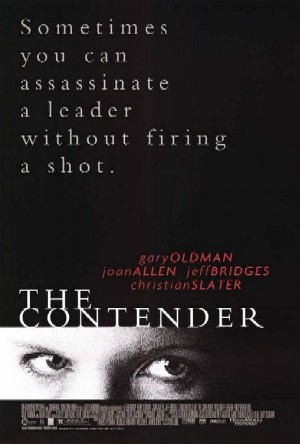
The 2000 political melodrama The Contender is one of the most hypocritical films that I’ve ever seen.
The Contender tells the story of what happens when U.S. Sen. Laine Hanson (played by Joan Allen) is nominated to be vice president by President Jackson Evans (Jeff Bridges). During Laine’s confirmation hearings, Rep. Shelly Runyon (Gary Oldman) dredges up rumors that, at a college frat party, Laine took part in a threesome in exchange for money.
When Runyon asks Laine about the rumors, she replies that she refuses to answer any questions about what she may or may not have done while she was younger. She replies that it is “simply beneath my dignity” and you know what? She’s absolutely right. First off, if someone could be disqualified just because of what they did in college then nobody would eve be eligible to be President. Secondly, and far more importantly, nobody would care about Laine’s sexual history if she was a man.
For over two hours, Laine refuses to answer any questions about the allegations and instead, she turns the tables on her attackers. And while this alone would not have made The Contender a good film (because, after all, The Contender was written and directed by Rod “Straw Dogs” Lurie), it at least would have been a film that I could respect.
But, Rod Lurie being Rod Lurie, he just couldn’t help but fuck it all up.
Towards the end of the film, Laine is attending a White House reception. She and President Evans sit down on the White House lawn and, as the stars shine above them, Evans says, “Just between us, is it true?”
Now, there’s two things that Laine could have said here that would have kept this film from falling apart. Laine could have said, “It’s none of your business.” And that would have been the right thing to say because, quite frankly, it is none of the President’s business. The whole point of the movie has been that it’s not anyone’s business.
Or, if the film actually had any guts, Laine could have said, “Yes, it’s totally true. Like most people, I experimented when I was in college. But that doesn’t have anything to do with whether or not I’m qualified to be your vice president.”
But no. Instead, Laine smiles and says, “Nothing happened. Two guys propositioned me, I said no, and they spread rumors.”
So, basically, the film is saying, “It’s nobody’s business if Laine was sexually active in college but don’t worry, Mr. and Mrs. American Audience, she was a virgin until she turned 30. So, it’s still okay for you to like her…”
And that’s the thing about The Contender. It’s a film that doesn’t have the courage of its own convictions. It’s a film that drags on for over two hours and it expects you to forgive it just because it pretends to have good intentions. As a woman, there’s nothing I hate more than being pandered to and, for all of its attempts to come across as being feminist, The Contender is all about pandering.
What makes The Contender an interesting bad film — as opposed to just your usual bad film — is how even the littlest details feel false. It’s obvious that Lurie knew all of the legal details that go into confirming a Vice President but he didn’t know how to make any of those details dramatically compelling. So, the film becomes a bit of a know-it-all lecture. By the time that Saul Rubinek popped up and said, “Do you know what Nelson Rockefeller said about the vice presidency?,” I found myself snapping back, “No, what did Nelson Rockefeller say about the Vice Presidency? Please tell because ah am so sure that it is just goin’ to be the most fascinatin’ thang that ah will ever hear in mah entire life!”
(The more annoyed I get, the more pronounced my Texas accent.)
There’s a lot of weird little things about The Contender that just don’t work. They may not sound like major problems but when combined together, they start to add up. For instance, there’s a long shot where we see U.S. Rep. Reginald Webster (Christian Slater) and his blonde wife at a White House reception and the shot just lingers on them for no particular reason. Long after you would expect the shot to end, it’s still going. This wouldn’t be an issue if there was some narrative reason for that shot. Instead, it’s just randomly dropped in there.
And then, after Laine is nominated, we see the front page of a newpaper and there, in the middle of the page, is a headshot of Joan Allen. Underneath it, a small headline reads, “It’s Laine!” It just feels so fake. Wouldn’t the nomination of the first female vice present actually rate a bigger headline and a more dynamic picture?
Speaking of fake, towards the end of the film, President Evans picks up a framed magazine cover and stares down at it. The magazine, itself, looks like one of those joke “Man of the Year” pictures that people pose for at a state fair. On the cover is a picture of Last Picture Show era Jeff Bridges. The headline on the magazine reads: “President Jackson Evans. His ideas have changed the world.” Not his actions, mind you. Not his policies. Instead, his ideas have changed the world. But the film shows us no evidence of this and, during Laine’s confirmation hearings, everyone spends the whole time debating the same old shit that they always seem to be debating in Washington.
(Of course, if you’re lucky enough to have a name like Jackson Evans, I guess you might as well become President.)
Of course, when it looks like Laine might not be confirmed, President Evans speaks before Congress. “For the first time, a woman will serve in the executive!” he declares, which seems like a hilariously awkward way to put it. (People in this film don’t talk like human being as much as they talk like characters in some fucked up Washington D.C. fanfic.) He then adds, “There are traitors among us!”
So, I guess the message here is yay for demagogues.
And don’t even get me started on Kathryn Morris, as the cheerful FBI agent who investigates Laine’s past and who, at one point, announces, “Laine is hope!” Would a male FBI agent ever have to deliver a line that stupid?
And also don’t even get me started on the subplot about Gov. Jack Hathaway (William Petersen), who stages an auto accident in an attempt to convince President Evans to nominate him for vice president.
The Contender is not a good film but it could have at least been a respectable film. But then, Rod Lurie had to have President Evans ask whether it was true or not.
Perhaps being a hypocrite was the idea that changed the world.
For the past two and a half weeks, we’ve been taking a chronological look at some of the best, worst, most memorable, and most forgettable teens films ever made. We started with twofilms from 1946 and now, 43 films later, we’ve reached the end of the 80s. And what better way to close out the decade that is often considered to be the golden age of teen films than by taking a look at two films from 1989 that both paid homage to the films that came before them and also served to influence the many films that would come after.
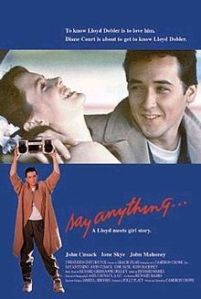
When people talk about Say Anything…, they usually seem to talk about the fact that it was the directorial debut of Cameron Crowe (who, it must be said, launched the golden age of teen films by writing Fast Time At Ridgemont High) and that it features what may be John Cusack’s best performance. Famously, Cusack apparently felt that — after performances in Class, Sixteen Candles, and Better Off Dead — he was through playing teenagers. But then he read Crowe’s script and was so impressed by it that he agreed he would play a student one last time.
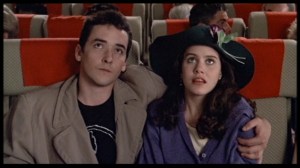
It may, however, have helped that the character Cusack plays, a likable and easy-going kickboxing enthusiast named Lloyd Dobler — is only briefly seen as a student. He graduates from high school early on in the movie. That majority of Say Anything… deals with the summer right after high school.* Lloyd has an unlikely but heartbreakingly real romance with Diane Court (Ione Skye), the valedictorian.
Cusack is so charming as Lloyd (and, needless to say, he gets all of the best lines) that I think people tend to overlook the fact that Ione Skye is equally as good. Diane is actually a far more challenging role than Lloyd. Whereas Lloyd is distinguished by his confidence and his friendly manner, Diane is neurotic, shy, and unsure of herself. She’s won a scholarship to study in England and is scheduled to leave at the end of the summer but she’s scared of flying. Even worse, her father, Jim Court (John Mahoney), is being investigated by the IRS. As the summer progresses, Diane is forced to deal with the fact that not only has her seemingly perfect father broken the law but, when he’s confronted with his crimes, he uses his daughter as his excuse. Yes, Jim seems to be saying, I stole money but I only did it to give you the best life possible.
Everyone seems to remember Say Anything… as the film that has that scene where Lloyd serenades Diane by holding that radio over his head. And yes, that’s a wonderfully romantic scene, even if it’s been parodied so many times that it’s probably no longer as effective as it was when the film was first released. But for me, Say Anything… is truly about Diane growing up and realizing that her father is not the saint that she thought he was. (Making this realization especially upsetting is the fact that, initially, Mahoney is so likable in the role.) You’re happy that Lloyd is there for her and you truly do come to love him because he is the perfect boyfriend, but ultimately, Say Anything… is Diane’s story.
(That said, though, I have to admit that some of my favorite scenes are just Lloyd talking to his friends. Lili Taylor gives a great performance and how can you not laugh at Jeremy Piven hanging out at the convenience store?)
Ultimately, of course, the film works because both Lloyd and Diane come across as real human beings. They’re not just boyfriend and girlfriend. Instead, they’re two very likable characters who have been lucky enough to find each other. In the end, you love Lloyd not because he’s funny or quirky but because he loves Diane for who she is.
Of course, it also helps that Say Anything has the perfect ending.
Ding!
—-
* On a personal note, the summer after I graduated high school was the best summer of my life because I spent most of it in Italy! Viva Iatalia!
I’ll admit right now that I’m a true crime junkie. Maybe it’s because I work for a lawyer or maybe I’m just morbid-minded but, for whatever reason, I am fascinated by this stuff. And while we all love to watch a good mystery and see if we can solve it before everyone else, it’s the mysteries without a solution that hold a special grip on my imagination. That’s why I was really looking forward to seeing the film All Good Things. Directed by Andrew Jarecki and starring Ryan Gosling, All Good Things is based on not one true crime case but three! (And two of those crimes remain unsolved to this day.)
All Good Things is based on the life of Andrew Durst, who was born into a wealthy New York family just to eventually find himself accused — at one time or another — of two murders and actually put on trial for a third. Oh, and did I mention that in-between being accused of killing people, Durst also found the time to drop out of high New York society and, despite being a very wealthy man, wandering around the country like a homeless transient? And, would you also believe that when Durst eventually ended up moving down to Galveston, Texas, he apparently also became a transvestite? And once Durst was in Galveston, he ended up living in a run-down boarding house with another transient who Durst eventually ended up decapitating? Of course, all of this happened long after the mysterious disappearance of his first wife and the execution-style shooting his best friend (who also happened to be the daughter of a Las Vegas mob boss). Durst, it should be noted, has only been put on trial once and, in that case, was acquitted. (For a better account of the various unproven allegations against Robert Durst, click here.)
Yes, Robert Durst is a man who has found himself at the middle of several very intriguing mysteries and All Good Things pretty much sticks to the facts of the case, recreating all the scenes that we Durst watchers are familiar with while leaving the ultimate question of Durst’s guilt or innocence ambiguous. For legal reasons, the names are changed but that’s about it. The film even begins with a title card telling us that the film is based on the Durst case even if Ryan Gosling is technically playing a character named David Marks. We watch as David meets and romances sweet but lower class Katie (Kirsten Dunst) despite the disapproval of his wealthy father. (David’s father is a real estate mogul who owes his fortunes to the peep shows and grindhouses on 42nd Street.) Once David and Katie have married, we watch the marriage turn into a nightmare as David grows increasingly abusive and Katie starts to abuse drugs. We meet all the familiar characters that we know about from reading about the case, especially David’s devoted friend Deborah (Lilly Rabe). We see the way that Deborah fanatically defends David after Katie mysteriously vanishes and eventually, we see David in Galveston, a blank-faced recluse who has lost the ability (if he ever had it) to exist in reality. Yes, it’s an interesting story but does the film do it justice?
Frustratingly, the answer is yes and no.
There’s a great movie to be found in the life of Robert Durst and unfortunately, director Andew Jarecki doesn’t find that great movie with All Good Things. Despite telling a fictionalized version of a true story, Jarecki still approaches the material as if he’s making another documentary. By simply concentrating on the public record of the Durst case (and, for the most part, declining to engage in any poetic license while telling the story), he keeps his distance from the characters and their world and, as a result, you watch fascinated because the story is so bizarre but not because you have any emotional investment in anything happening onscreen. Like a good documentarian, Jarecki concentrates on providing the evidence and leaving the ultimate verdict to the audience. If this film was a documentary about Robert Durst, this would be commendable. However, All Good Things is a movie about a vaguely sinister guy named David Marks who remains a cipher throughout the entire film.
However, this is not the fault of the cast who manage to redeem this movie with several carefully conceived character turns. In a frustrating and vague role, Ryan Gosling gives a far better performance than anyone would really have the right to expect. He plays the role with a vague sense of blank desperation, creating a portrait of a man who wants to fit in with reality but just doesn’t know how to do it. When we first meet see David wandering around 42nd street and struggling to maintain a facade of normalcy, it’s hard not to feel sorry for him. He looks like a lot child and your natural reaction is to want to protect him and help him find his place in the world. Add that vulnerability to the fact that he looks like Ryan Gosling and you can believe that Kirsten Dunst’s character would find him attractive and would eventually marry him, despite his quirks. Its only once David is married (and, in theory, no longer has to worry about losing Dunst) that he starts to show his true face. Any woman who has ever been in an abusive relationship will know the type of person that David Marks is. As played by Gosling, he becomes every boyfriend or husband who has ever transformed into a different person once we’ve made the mistake of falling in love with him. He’s every man we’ve ever been happy to have out of our life even as we wondered if we were to blame for whatever went wrong. Gosling’s strongest moments come when David simply stares at his own reflection, the look on his face indicating that he’s just as confused by himself as we are. Kirsten Dunst is sympathetic as his wife and there’s excellent character turns from Frank Langella, Philip Baker Hall, Diane Venora, and Lilly Rabe.
So, what I recommend All Good Things? I would. It makes for a good introduction to the Durst case and, if nothing else, it’s worth seeing for Gosling’s performance. The definitive version of Durst’s case hasn’t been told yet but All Good Things is, at the very least, a start.
 Lt. Joe Bookman is a cop. He works for the New York Public Library, helping to track down delinquents who vandalize books and fail to pay their late fees. Yes, the library cop is named Bookman but he has already heard all the jokes.
 Of the many odd characters who appeared on the sitcom Seinfeld, Joe Bookman (played by Philip Baker Hall) remains one of the most popular. Unlike Kramer’s lawyer Jackie Chiles or Larry David’s impersonation of George Steinbrenner, Mr. Bookman only appeared in two episodes. He had a cameo in the series finale and, before that, he appeared in the third season episode, The Library. The scene where Bookman mercilessly grills Jerry Seinfeld about whether or not Seinfeld returned Tropic of Cancer is a classic, with Hall playing the dogged library cop like a modern-day Inspector Javert and Seinfeld obviously struggling not to laugh.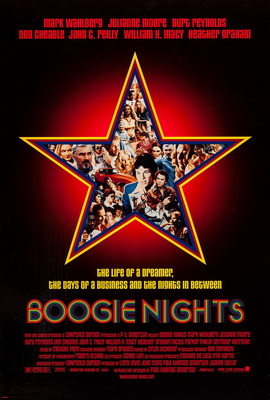
 Through the Shattered Lens