Trailer: The Hobbit: An Unexpected Journey


While Christopher Nolan’s The Dark Knight Rises is the most anticipated summer blockbuster for this upcoming 2012 then it would be safe to say that the most anticipated film for 2012 for some would be Peter Jackson’s The Hobbit: An Unexpected Journey.

This is a film that has been years in the making and even more years in development hell as the rights to J.R.R. Tolkien’s novel, The Hobbit, was entangled through many different studios. Once those entanglements were finally resolved and the film set to be put into production the film suffered more setbacks as budget and script rewrites kept things from starting. The original filmmaker picked to helm this two-part prequel, Guillermo Del Toro, had to back out after years of delays though he still remains as producer and his ideas and conceptual art and design has become the foundation for the film.

The film finally got the greenlight to start filming once Peter Jackson stopped searching for Del Toro’s replacement and took on the role as director once again. While Del Toro was a great choice I think most fans of the original trilogy were glad that Jackson decided to just take up the director’s chair once more. Who else knew the world of Middle-Earth on film better than the man who made what was called the unfilmable novel into the new millenium’s iconic film trilogy.

Like the production of the Lord of the Rings trilogy, Jackson and his geniuses at WETA have been pretty good with showing fans progress made on the films through video blogs released by Jackson himself. With just a year left to go before part one of this two-part prequel premieres we finally have the first official teaser trailer to the film and I must say that it’s great. Even from just snippets shown in the teaser one could see some of Del Toro’s more darker concepts and influence in the film’s look and tone. But then some of it also comes from Jackson himself whose early background as a filmmaker was all about dark, macabre subjects and themes.

The Hobbit: An Unexpected Journey is set for a December 14, 2012 release.

Song of the Day: Into the West (by Howard Shore feat. Annie Lennox)


This latest “Song of the Day” marks the final and third entry in the weekend-long theme of picking song and music from The Lord of the Rings Trilogy. What better choice to cap of this themed weekend than picking the final song to close out Peter Jackson’s fantasy epic: “Into the West”.

It’s this song as composed and arranged by the trilogy’s master composer, Howard Shore, featuring the vocal talents of singer Annie Lennox. Her work on this song was at times quite gentle and subdued with some strong vocals once the chorus arrives and repeats a second time. Some have complained that someone with more classical training would’ve been better suited to tackle this song, but I rather enjoyed Lennox’s powerful rendition of the chorus in the song.

“Into the West” is a song that’s both one of hope and a bittersweet lament as it speaks of the leaving of the Elf race on their Grey Ships to sail into the west towards Valinor. Some of the lyrics in the song even comes from sections of the final chapter of The Return of the King novel.

When this song played at the end of The Return of the King it surely brought more than just a few people to tears as it helped marked the end of three years of fantasy filmmaking which became a cultural phenomenon from 2001 through 2003 as the world became enraptured by Peter Jackson’s fantasy trilogy. What better song to end this weekend theme than the very song which ended the trilogy of which this weekend was all about.

Into the West

Lay down
Your sweet and weary head
Night is falling
You have come to journey’s end
Sleep now
And dream of the ones who came before
They are calling
From across a distant shore
Why do you weep?
What are these tears upon your face?
Soon you will see
All of your fears will pass away

Safe in my arms
You’re only sleeping

What can you see
On the horizon?
Why do the white gulls call?
Across the sea
A pale moon rises
The ships have come to carry you home
And all will turn
To silver-glass
A light on the water
All souls pass

Hope fades
Until the world of night
Through shadows’ falling
Out of memory and time
Don’t say
We have come now to the end
White shores are calling
You and I will meet again

And you’ll be here in my arms
Just sleeping

What can you see
On the horizon?
Why do the white gulls call?
Across the sea
A pale moon rises
The ships have come to carry you home
And all will turn
To silver-glass
A light on the water
Grey ships pass
Into the West

Scenes I Love: The Lord of the Rings: The Return of the King


“Arise, arise Riders of Théoden (Riders of Rohan)! Fell deeds awake: fire and slaughter! Spear shall be shaken, shield be splintered, a sword-day, a red day, ere the sun rises! Ride now, ride now! Ride for ruin… and the world’s ending! Death! Death! Forth Eorlingas!” – Theoden, King of Rohan

This marks the final “Scenes I Love” series from Peter Jackson’s fantasy epic, The Lord of the Rings. The last couple days have seen a favorite scene picked from the first two film. Today’s pick was a tie between two scenes. One a third of the way into The Return of the King with the second being two-thirds in and a logical consequence of the first scene picked. I could’ve easily picked one over the other, but I’ve always seen the two as connected in some way. I also didn’t want to pick one over the other so we have two scenes instead of one. I say that’s a bonus for everyone.

The first scene was (continues to be one of my most favorite scenes ever put on film) the lighting of the beacons which signals Gondor’s call for aid to it’s far neighboring kingdom of Rohan. This scene just builds and builds until the rousing “Gondor theme” reaches it’s peak and shows each beacon lighting up one right after the other until it reaches the mountain peaks outside Rohan. No matter how often I see this scene (especially now on blu-ray) I can’t help but still feel a sense of awe at what Peter Jackson and his crew pulled off. One buys into the scene and just marvels at the sequence. A film which, up until the lighting of the beacons, had such a hopeless tone to it suddenly had hope appear.

The second scene finally sees the culmination of the lighting of the beacons. Rohan has responded in force as every able-bodied man and his horse have gathered on a rise above Pelennor Fields. With Theoden knowing the forces of Sauron arrayed and besieging Mina Tirith dwarfs even his own cavalry force he nonetheless orders his men to charge the Mordor lines to help break the siege. His speech in this scene trumps even Aragorn’s own rousing speech later on in the film which is saying much. The charge of the Rohirrim down into the Mordor lines gets a nice assist from Howard Shore’s score which begins with the “Rohan theme” signalling the arrival of the Rohirrim to the battle then transitioning to the “Nature theme” which is heard for the first time in full orchestral mode before returning to the “Rohan theme” as the Rohirrim charge finally crashes into the Mordor lines.

The charge itself looked great when I saw it on the big-screen and still the best way to see it. Barring not seeing it on the big-screen the best option would be to see it on blu-ray and on a large HDTV screen. The wide, overhead shot of the massed cavalry gradually gaining speed with Theoden at the elongating tip in the middle makes for great, epic filmmaking. The scene sells itself as Jackson used hundreds of extras in real armor and on charging horses (with CGI copies expanding their numbers into the thousands) to show true weight to the scene. I recommend to those who want to revisit this scene to watch it again but using their surround sound system on high and feel the thundering hooves of the charging Rohirrim until they crash into the Mordor lines. It’s the only way to see and experience the scene.

Song of the Day: Theoden Rides Forth (by Howard Shore)


For my chosen song from Howard Shore’s orchestral film score for Peter Jackson’s The Lord of the Rings: The Two Towers I picked the tune which starts off my favorite scene in from that film. This will be the latest song for “Song of the Day”.

“Theoden Rides Forth” begins with the scene of Theoden, Aragorn, Legolas and what remains of the Rohan cavalry riding out for one last time out of the Keep at Helm’s Deep into the thick of the Uruk-Hai forces. The song takes the “Rohan theme” first heard in the early part of the film, but with a heroic flair that transitions to full brass blaring the theme to great effect. The song then segues into a brief appearance of the “Fellowship theme” as Gandalf, Eomer and the Rohirrim appear to save their king and companions. From there the song brings in the “Shadowfax theme” with child soprano Ben Del Maestro providing the solo chorus as the charge comes down the steep incline and into the ranks of Uruk-Hai waiting below. But the song doesn’t end there as it moves into the follow-up scene using the “Nature theme” to show Treebeard and the Ents make their final march to war against Isengard.

This track from the score finishes off the two parallel story lines of Helm’s Deep and Isengard. The transitions in the song from one story line to the other were flawless. The fact that Shore was able to incorporate and combine so many different themes not just from this film but from the previous one shows an artist who is definitely a master of his craft. There’s no denying why “Theoden Rides Forth” became the best tune from the The Two Towers film score and why so many fans of the film and the score wholeheartedly agree.

Scenes I Love: The Lord of the Rings: The Two Towers


Yesterday, I had chosen my favorite scene from Peter Jackson’s The Lord of the Rings: The Fellowship of the Ring. Today, I just finished re-watching the sequel to that film (though I think of it more as the second act of a 12-hour film), The Two Towers. From this second act I chose the one of the three climactic sequences in the film: Gandalf the White’s arrival and subsequent charge of the Rohirrim to break the siege of Helm’s Deep.

This second act had so many excellent scenes. From the last march of the Ents as they go to war against Isengard, to Gandalf’s descent and fight against the Balrog right up to the hour-long battle for Helm’s Deep. In the end, it was the charge by Gandalf, Eomer and the Rohirrim which sealed the deal for me. It wasn’t just the dramatic entrance of these characters to save their friends, but Howard Shore’s score which really added to the scene.

I love how just as the Rohirrim charge was about to smash into the front ranks of the Uruk-Hai spearmen the sun behind the charge peaked above the top of the incline and blinded the defenders at the bottom. For someone who has studied military tactics and maneuvers in battle this was a textbook use of the sun at a charging forces back to blind and confuse the enemy. Many who saw this film probably just saw it as just part of the scene, but not I. This is the major reason why this scene was my favorite in The Lord of the Rings: The Two Towers.

Scenes I Love: The Lord of the Rings: The Fellowship of the Ring


“I would have would have followed you, my brother… my captain… my king.” – Boromir, Captain and High Warden of the White Tower

It’s been five days since the season finale of the first season of Game of Thrones and the withdrawal symptoms are definitely starting to kick in. Season two of this fabolous series won’t be back for at least ten months. To help alleviate some of the withdrawal symptoms I decided to go on The Lord of the Rings Trilogy marathon all weekend. Tonight will be The Fellowship of the Ring (Extended Edition). It’s from this first leg of the trilogy that I choose today’s scene that I love.

The scene I have chosen is very close to the end of the film and it’s a scene between Viggo Mortensen’s Aragorn and Sean Bean’s Boromir. It’s soon after the attack of Saruman’s Uruk-Hai on the group. Boromir valiantly tries to protect and save Merry and Pippin from the Lurtz and his band of Uruk-Hai. It’s the scene which arrives after that really hits home for me just how great Peter Jackson’s adaptation of the first part of Tolkien’s massive tome.

This quiet and heartbreaking scene between Aragorn and Boromir cements Viggo’s performance as the reluctant hero moving towards embracing his legacy and destiny while at the same adding complexities to Sean Bean’s performance as Boromir being a flawed and tragic hero in his own right. It is a scene that will cause more than just a few tears to be shed.

Scenes I Love: Dead Alive


Sometimes, you watch a movie and there’s a line that will jump out at you so brightly that you have to stand up and take notice. You carry it with you and find that even if it didn’t mean to be, it just comes across as cool or funny. My family watches tons of movies, so at any given time you can make the room smile by screaming something sudden like “They cut the power?! How could they cut the power man? They’re animals!!”

I give you the awesomeness that is Peter Jackson’s Dead Alive. In this scene, which was both shocking and funny, a priest takes offense to zombies causing trouble in the cemetery behind his church. I laugh every time I think of this. Enjoy.

Guillermo Del Toro Leaves The Hobbit


Sad news for Tolkien fans worldwide as Guillermo Del Toro has announced that he will be leaving the planned two-part film project to adapt J.R.R. Tolkien’s classic novel, The Hobbit. As his announcement on TheOneRing.Net explains the many delays to the start of the project has made his role as director to the two films untenable. He had signed up to spend three years in New Zealand to do the films and has even moved his family to have them closer to him during the process, but the constant delays to getting an official start date would mean he would need to spend double the time he had originally signed up for.

These delays have made him put on the backburner his own film projects which seem very close and dear to him. He still has to finish off his Spanish Civil War Trilogy (The Devil’s Backbone and Pan’s Labyrinth being the first two). There’s also his wish to do a third Hellboy film (the second film setting up what could be an epic closing to the franchise). Then there’s his dream project to bring to the big-screen a film adaptation of H.P. Lovecraft’s novella, At the Mountains of Madness.

With Del Toro now gone as headliner for the two Hobbit films there’s surely going to be new rumors about who shall replace him. There was major scuttlebutt that Sam Raimi was in the running in the beginning before Del Toro signed on. I wouldn’t be surprised if Raimi’s name came up once again. He definitely has free time now that he’s off the Spider-Man franchise. Will Jackson do another “out of left field” decision and tap Blomkamp to take over for Del Toro. I think that’s a brave move if it happens, but also one that could backfire and stunt Blomkamp’s career. He’s already been part of plans to adapt a major franchise only to have it taken away from him.

In the end, it looks like The Hobbit may just end up not being made or, at the very least, not make a 2012 release date many insiders have set it two-part film for.

Source: TheOneRing.Net

10 Reasons Why I Hated Avatar


(The opinions in this review are mine and mine alone.  They reflect the feelings of Lisa Marie Bowman and not the feelings of any other editor on this site.  To prove that the opinions below are solely mine, check out this very positive review of Avatar that was posted on this very site last December.)

In case you didn’t already know this from my previous reviews, I’m going to confess something here.  I hated Avatar.  It was probably my least favorite film of 2009.  How much did I hate Avatar?  Well, I didn’t care much for The Hurt Locker either but I still cheered when it won best picture because it meant that Avatar didn’t. 

Most of my friends and family loved Avatar and, I’m proud to say, that none of them have allowed our difference of opinion to effect our relationship.  Indeed, most Avatar fans have been very tolerant of my dissenting views.  However, there’s always an exception.  From the 1st time I ever openly admitted to disliking Avatar, I have had to deal with a small but vocal group of people who not only disagree but apparently feel that I’ve committed a crime against humanity.  So, why bring it up now?  Because on Thursday, Avatar is going to be released on DVD and Blu-ray.  In honor of that event, here are 10 reason why I personally hated Avatar

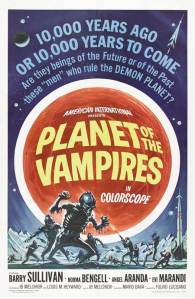
1) Ironically enough, most people who love Avatar will probably agree with the majority of my criticisms.  They’ll argue that yes, the story is predictable and yes, James Cameron is heavy-handed as both a writer and a director but none of that matters because of all the brilliant visual effects.  They’ll argue that Cameron made a whole different world, Pandora, come to life.  To a certain extent, they’re right.  Cameron does manage to make Pandora believable and wow, Pandora certainly turns out to be a boring planet.  Seriously, does that jungle cover the entire freaking planet?  However, regardless of my personal feelings about Pandora, James Cameron is hardly the 1st director to make an alien world believable.  Peter Jackson did it with his Lord of the Rings trilogy and the same can, arguably, be said of the Narnia films.  Even earlier, Mario Bava did it with Planet of the Vampires and he did it with a lot less money.  Of course, none of these films were in 3-D but so what?  Just because the mundane appears to be inches in front of your nose doesn’t make it any less mundane.
2) Speaking of mundane, wouldn’t you be let down if, when you first met the members of a totally alien race, they all turned out to be a bunch of movie stereotypes?  The Na’vi appear to have developed their entire culture as the result of a steady diet of Hollywood westerns, New Age self-help books, and some 16 year-old’s half-assed understanding of what it means to be a Pagan.  I remember when I first saw Avatar, it was impossible for me not to compare it unfavorably with District 9, a film that addressed many of the same themes and issues as Avatar but did it with a much lower budget and a much more intelligent script.  This was especially evident when one compares Avatar’s Na’vi with District 9’s prawns.  While the prawns were believable as both individual characters and as representatives of a totally alien race, the Na’vi are essentially the reflections of James Cameron’s sophomoric noble savage fantasies.

3) District 9 wasn’t the only great science fiction film to come out in 2009.  There was also Moon, which featured a great performance by Sam Rockwell and excellent direction from Duncan Jones.  When /Film asked Jones for his opinion of Avatar, Jones replied, “…at which point in the film did you have any doubt what was going to happen next?”  It’s a good question. 

In all honesty, I’m a horror girl.  I haven’t seen much science fiction and therefore, I’m not as well acquainted with the genre’s clichés as I am with horror.  However, I can still say that, at no point, did anything that happened in Avatar take me by surprise.

Of course, some of my favorite movies were (and are) very predictable.  Georges Polti argued that there were really only 36 basic plots available to use in fiction so its understandable that you’re going to come across the same one used several times.  However, a predictable plot can be forgiven if maybe that plot features at least a few interesting characters or maybe an occasional unexpected line of dialogue.  Avatar, however, can’t even manage this.  Our hero is an impulsive man of action.  The villains are all evil because … well, they just are.  In the manner of most oppressed races in American film, the Na’vi are noble savages who require a white guy to come save them.  The only lines of dialogue that I remember are the ones that made me roll my eyes.  I’m talking about stuff like a bunch of 22nd century marines being greeted with “You’re not in Kansas anymore.”  Well, that and “I see you,” which was apparently included in the script so that it could serve as the title of a syrupy theme song.

4) Strangely enough, even though the movie took absolutely no narrative risks, it was still full of plot holes and things that just didn’t make much sense. 

For instance, why does Quaritich promise to give Jake back his legs (“your real ones”)?  I mean, does Quaritich have them sitting in a freezer somewhere? 

As part of his deal with Quaritich, Jake agrees to make videos about the Na’vi.  Oddly enough, it appears that he’s still making the videos even after he turns against Quaritich and you have to wonder exactly why.  Also, Jake records many of these videos in an isolated, apparently one-room outpost occupied by him and two other scientists yet the scientists are later shocked and outraged when told that Jake was making the videos.  Okay, what did they think he was doing all that time?  Were they just not listening to what he was saying? 

What exactly was the backstory of Sigourney Weaver’s character and when exactly did she join Sully in the Na’vi camp?   And why were the Na’vi willing to let her into their tribe when they would only grudgingly accepted Sully even after the Goddess selected him?  I mean, if Weaver already had such a great relationship with the Na’vi, it seems like she could have saved a lot of time by just taking Sully straight to them.  (Editor’s Note: According to the comments below, this issue actually was addressed in the film. — LMB)

Sully, after the final battle, decides to stay on Pandora and he might as well since the Tree of Souls (good God!) transferred his soul into his Na’vi body.  But what’s in it for Max and Norm?  We seem them at the end (though really, Norm should be dead) standing there pointing guns at all the humans that are leaving.  Norm, at least, could still probably hang out in his avatar but what about Max?  Why is Max, who has had nothing to do with Na’vi, so quick to join the revolution?

I’m sure a lot of this is because scenes were edited out and I know that Cameron has a reputation for reinserting those scenes once his movies come out on DVD and blu-ray.  Well, more power to him.

5) The film suffers from a really bad case of the white man’s burden disease.  This is another one of those films where a caucasian character befriends an oppressed minority and, with remarkably little dissent, manages to appoint himself as the leader of that minority.  It’s a fantasy, one in which members of the bourgeoisie (like James Cameron) can live out their childhood fantasies of being outlaws without having to worry about  (unlike actual “outlaws,”) being punished for taking their stand.

Once again, it’s hard not to compare Avatar with District 9.  Both of them feature lead characters who are transformed into aliens.  The difference is that, with the exception of one brief scene, Jake Sully accomplishes the transformation rather easily and quickly becomes the best Na’vi there is while in District 9, poor Sharlto Copley is terrified by the process and, even though it does lead to him understanding the prawns (and ironically, learning how to show a little humanity), the movie never pretends that Copley isn’t losing his own individuality in the process of transforming.

6) The lead character is named Jake Sully.  Did James Cameron get frustrated and just use a Random Generic Movie Hero Name Generator to come up with that?  I wonder if Nick Sully was Cameron’s 2nd choice.  It’s not that there’s anything wrong with either name.  It’s just that it feels so generic.  Of course, the leader character is going to be named Jake and, of course, he’s not going to be an intellectual and, of course, Sigourney Weaver’s going to spend the whole movie making sarcastic comments about how stupid he is.  Speaking of which…

7) Sigourney plays Dr. Grace Augustine.  Her character and her performance are typical of a rather annoying Hollywood tradition, that of portraying any “strong” female as a total and complete bitch.  If you want the audience to know they’re supposed to take a woman seriously, have that woman spend the entire movie pissed off about something, as if the only way a woman can be strong is by sacrificing anything that might make her unique.  Now, there’s a lot I could say about why, from a cultural perspective, American movies often seem to be so conflicted about how to portray any woman who is neither an Eve nor a Lillith.  But in the case of Avatar, its hard not to feel that it comes down to screenwriter Cameron’s inability to make any of his characters interesting unless something nearby is exploding.

8 ) And while we’re on the subject of misunderstood women…okay, let’s say you discover a planet and this planet is a lush, beautiful paradise.  Why the Hell would you then call it Pandora?  Yes, I understand that newly discovered planets are usually named after mythological figures.  But there’s still usually some sort of vague logic behind the names.  For instance, Mars was named after the God of War because of its red hue.  Venus was often considered to be the most beautiful star in the sky.  Mercury has the fastest orbit.  Jupiter’s the biggest planet.  Pluto (before it got downgraded) was considered the darkest and coldest of the planets.  Pandora, however, was the woman who opened up the jar that released everything terrible, evil, and destructive into the world.  Why would anyone name a planet after her?  It’s possible, of course, that all the good names were taken.  Of course, it’s also possible that this is just another example of how thuddingly obvious Avatar is in its symbolism and subtext.

9) Speaking of obvious, what about the villain played by Stephen Lang?  More specifically, what about that accent?  It’s true that Cameron doesn’t exactly encourage his villains to be subtle.  Just check out Billy Zane in Titanic.  Zane, however, at least appeared to be having a little fun at his director’s expense.  He, alone among the cast, seemed to realize that Titanic was a silly melodrama and so he gave something of a silly performance.  It’s no great secret that it’s often more important to have a good villain than to have a good hero.  A good villain usually has some sort of motivation beyond just being the villain.  This is something that Cameron has never seemed to be able to grasp.  Whenever I see a military figure show up in a James Cameron movie, I get the same feeling that I get whenever a preacher shows up in a Stephen King novel.  Automatically I know that they’re going to turn out to be evil and I find myself dreading having to even waste the time with the “shocking” discovery of that evil. 

10) Perhaps most importantly, this is a movie that wants to preach peace but celebrate war.  Avatar contains all the trendy environmental messages that you’d expect from a Hollywood film but — even though director Cameron seems to be in a state of denial about it — the film’s heart is with its villanous soldiers.  Much as how Titanic, for all the rhetoric about the passengers in third class, was really only interested in portraying the lives (and deaths) of those in first class, Avatar spends a lot of time talking about trees but is much more interested in blowing them up with the destruction of the Home Tree serving as the money shot.

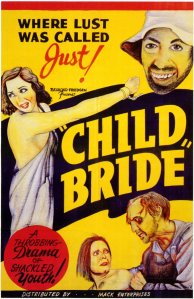
To be honest, I don’t mind a little hypocrisy when it comes to movies.  Most exploitation films celebrate hypocrisy.  The filmmakers knew it and, for the most part, the audiences knew it.  The fact that a movie like Child Bride could be advertised as “an important movie every parent must see!” became something of a shared joke between the filmmaker and his audience.  Rather than being hypocritical, the exploitation filmmaker is simply inviting his audience to join in a conspiracy against the forces of dullness.
Unfortunately, Avatar is not an exploitation film.  If Avatar was simply a B-movie, none of the my previous complaints would matter.  They would add to the film’s rogue charm.  Avatar, however, is too expensive to be considered an exploitation film.  And James Cameron, as he proved when he went ballistic over Kenneth Turan’s negative review of Titanic and as he has continued to prove with his recent comments regarding global warming, does not have the sensibility of a B-movie maker.  Arguably, he once did.  This is a man who, after all, did the special effects for Galaxy of Terror and made his directorial debut with Piranha IIThe Terminator was a great B-movie, right down to the accusations of plagiarism from Harlan Ellison.  However, as he’s become the most financially succesful director in history, Cameron has lost that B-movie sensibility. 

In other words, James Cameron takes himself seriously now and that, ultimately, is the main reason I hated Avatar.  It just takes itself too damn seriously.

Yes, I’ve read quite a few favorable reviews that have argued that Avatar‘s sole purpose is to entertain and that people like me who occasionally expect unique characters and an interesting story should just lie back and enjoy it.  I’ve seen the term “popcorn epic” used in quite a few reviews. 

I’m sorry but I’m not buying it.  If Avatar was truly setting out to be a “popcorn epic,” than I’d be a lot more willing to cut it some slack.  However, when the script contains lines about how on Earth, humans have “destroyed all the green,” and when the villains are accused of launching a “shock and awe” campaign, it’s ludicrous to then argue that Avatar isn’t setting itself up to be judged by a higher standard. 

It becomes hard to escape the fact that Cameron, regardless of how well he handles the special effects, has essentially made a stupid movie about deep issues.

As I said before, the majority of the people I know love Avatar.  I don’t hold it against them or think any less of them because, ultimately, movies are a subjective experience.  Whether or not a movie is good has less to do with the actual movie and more to do with the person watching it.

It would be nice to have the same courtesy extended to me .  Since I first revealed my opinion of Avatar on a non-Avatar related message board, I have found myself frequently attacked by little fanboys who apparently cannot handle the fact that one human being didn’t enjoy Avatar.  I’ve been told that, as a female, I can’t be expected to understand Avatar.  I’ve been accused of being “unimaginative,” “a snob,” “a bitch,” and my personal favorite “the type of cunt who cried at the end of the Blind Side.” 

I realize the risk I’m taking by openly admitting my dislike of Avatar but then again, movies are supposed to inspire conversation and not just pavlovian agreement.  So, in conclusion, I’ll just admit that yes, I am female and yes, I did cry at the end of The Blind Side, and yes, I hated Avatar.

Review: District 9 (directed by Neill Blomkamp)


It is a rare feat that an unknown filmmaker is first introduced to the public to take control of the reins to major motion picture with legions of fans. Fans who have both high expectations and also equally high trepidation about hwo their favorite intellectual property will be handled and adapted to the big-screen. The year was 2007 and Peter Jackson (who had been given producing duties by Microsoft, Fox and Universal Pictures) announced to the world that he had selected a young South African filmmaker by the name of Neill Blomkamp to direct the film adaptation of Microsoft’s hugely popular sci-fi action shooter, Halo. The reaction to this news was bewilderment, grumblings and major headscratching from fans and studio executives alike.

Who was Neill Blomkamp and what has he done of note to be given the reins to one of the largest and most popular video game franchises?

Peter Jackson definitely saw something in this young South African. While fans of the Halo game wanted Jackson himself to direct the film he decided to let this unknown take the job. To give a glimpse of what he was capable of and to prove to both fans and executives that he was the right man for the job, Blomkamp filmed three short films depicting live-action scenes of Halo to be released as part of the Halo 3 media ad-campaign blitz for its 2007 release. All three short films were dynamic and had a grittiness to it which definitely showed the young man had talent, but in the end it wasn’t enough to save the Halo film from being declared postponed then cancelled. Studio executives from both Fox and Universal (both had licensed the rights to release the Halo film for domestic and international release. They were also to help put up the $150million stated budget) wanted a higher percentage of gross profits from the film. Microsoft who was putting up a large share of the budget refused and studio politicking literally ended the film while pre-production by Blomkamp, Jackson and his WETA team were five months in.

What had become a major blow to the beginning of Blomkamp’s filmmaking career might be the very thing which puts him on the map as one of the brightest and most inventive filmmakers of his generation. With $30million dollars of his own money, Peter Jackson gave Blomkamp a second chance to make another sci-fi actioner, but this time do so independently and away from the control and interference of major studios from Hollywood. The film Neill Blomkamp ended up making after the cancellation of his Halo might just turn out to be the best film of the summer of 2009 and one of the best of the year. The film is District 9.

Born and raised in South Africa, Blomkamp’s experience growing up in the final throes of apartheid and the societal chaos which succeeded the end of minority white rule could be seen in the basic foundations of District 9‘s story (screenplay co-written by Neill Blomkamp and Terri Tatchell). It is a story detailing an alternate historical event in world history when in the late 1980’s a massive alien spacecraft suddenly appears over Johannesburg, South Africa. This momentous event in human history soon turns into a worldwide “humanitarian” undertaking people soon discovered that the aliens who inhabited this spacecraft (numbering over a million) were not the all-conquering or benevolent beings as shown by Hollywood, but malnourish, sickly and aimless beings who appeared to be bipedal, barely humanoid looking crustaceans. Derogatively called “prawns” by the inhabitants of Johannesburg, these aliens spend the next 20 years of their existence on Earth housed in a heavily-policed and walled shanty tow and slum area in the city named District 9.

It is in this District 9 where most of the action of the film takes place as a plan by the government and it’s hired private corporation of Multi-National United to relocate these aliens to a more remote camp of District 10. A camp 200 kilometers away from the population center of the nation’s capital to the relief and delight of the population. In charge of this relocation program is one Wikus van der Merwe. A middling middle-manager within MNU who may have gotten this particular job for no reason other than being the husband to the daughter of MNU’s chief executive. Wikus van der Merwe appears in the early going of the film like a cross between Lumbergh of Office Space and Michael Scott of The Office. Wikus seems to relish and delight in his new-found authority leading MNU bureaucrats and their company private security teams in forcibly removing the aliens from their shanties. Wikus’ racist attitude towards the aliens is quite evident as he uses the derogatory name for the aliens (prawns) every chance he gets. It is during the inspection of a secret lab in one of the shanties where the film deftly switches from the first third of the film as a scifi allegorical study of South Africa’s (and most likely the world as a whole) racist apartheid past and into a Fugitive-like chase film which make’s up the middle third.

To say that what Wikus finds in the alien makeshift laboratory makes a profound impact on him is quite an understatement. Blomkamp shows not just Jackson’s influence as a director of horror, but also has quite a handle on the Cronenbergian aspects of the storyline. Blomkamp shows rather than tell through long-winded expositions what is happening to Wikus that suddenly made him the most wanted man in South Africa, if not the whole entirety of the planet. Wikus’ starts the final third of the film literally transforming from the nebbish and weasly character from the beginning into something of a reluctant hero, albeit for his own self-interest.

It is the final 20-30 minutes of the film where those audiences still on the fence about District 9 will probably end up finally getting hooked with the rest of the audience. Blomkamp has shown in the first two third of the film that he knows how to handle social commentary in a scifi story without being too heavy-handed and preachy. He’s also shown a knack for keeping a constant pace and adding to the tension which finally explodes in the last half hour of the film. It’s the pay off that action-flick fans had been waiting for and they won’t go away disappointed. Alien weaponry are finally put into play and we see just how effective they can be when used on humans. Bodies are literally blasted apart whether by lighting blasts or from high-powered rapid-fire guns.

Not lost from all the social and allegorical commentaries within the story and the rolelrcoaster ride of a finale is the fact that Neill Blomkamp has deft eye for creating a believable alternate reality for this film to inhabit. With the help of his cinematographer Trent Opaloch and a battery of Red One digital cameras, Blomkamp settles for a gritty and grainy look for the film. This gives the production a very documentary-like feel. They’ve also used to great effect the so-called “shaky-cam” technique to simulate a cinema verite look for the more chaotic scenes in the film. It is not a new way to film as films like Blair Witch Project, Cloverfield plus the Bourne Trilogy. What this film was able to do which those films failed to some extent was to allow the shaky-cam effect not to distract too much. This is shaky-cam as if being handled by a professional combat filmmaker taking in a battlezone as it happens. While the first half of the film relies mostly on patched together scenes from news reports, official MNU company videos and video interviews of select individuals, the second half moves away from this mockumentary-style and into a more traditional narrative technique. It is easy to nitpick this change in techniques after the fact but Blomkamp’s chief editor in Julian Clarke makes it possible for a near-seamless transition from one film-style to the next without skipping a beat.

The peformances from a literal cast of unknowns (at least to Hollywood and those outside of South Africa) could easily have been the main weakpoint in District 9 but it turns out to not be the cast. Headed by first time lead actor, Sharlto Copley as Wikus, the film’s cast does a very good job of lending an air of realism and credibility to a fantastical story. Their performanaces are mostly understated except for the role of MNU security-team leader Koobus Venter as played by David James. While James played the role in its early stages as the usual no-nonsense military veteran the character soon turns into a major villain to hound Wikus in his flight. While this transformation wouldn’t be such a bad thing the overreaching and over-the-top performance by James turned Koobus into a caricature of a villain. One almost expected the man to cackle (at times he almost did) and bellow out the classic evil laugh. In the end, Copley’s performance as Wikus was the highlight of the film’s cast performance. In the beginning it is quite easy to detest this bookish and sycophantic functionary, but as we follow him throughout the film we see his transformation into something of a coward who must turn into a reluctant hero to serve his needs. Finally, we see him make a sacrifice which redeems him in the eyes of the audience.

It is not often that a film comes along which makes a major impact on a genre, especially from a filmmaker making his debut feature film. While not a huge blockbuster in terms of budget District 9 manages to outdo the usual tentpole event films from the major studios this summer. Budget constraints doesn’t keep the film from becoming a sweeping epic not seen since another low-to-midbudget R-rated scifi actioner that went by the title of Robocop. Like that film from the late 80’s, Blomkamp’s film manages to find a balance between saying something about his home country’s past racial and societal problems, but also give the scifi genre a frenetic, action-packed, kick-ass of an action film that doesn’t turn out to be silly, contrived or stale. Not everyone will enjoy this film as the best ever or even as the best of recent years, but it is hard to argue or dismiss the fact that District 9 is film which refuses to be pigeonholed into a particular type of film. It’s a message film and a scifi film. It’s also a film of body horror and a study of the human condition both its darker and better natures.

District 9 is a film that lived up to the hype surrounding it and surpassed expectations. This film also makes a star out of first-time director Neill Blomkamp. He will certainly be flooded by offers from the very major studios who doubted him during his aborted attempt to turn a major pop culture franchise into a film. It also validates the notion that a summer blockbuster doesn’t have to be dumbed down or stripped of its thrills to have both. Or that it has to have a budget in the hundreds of millions to make it look like one. A near-perfect film and one that should be the driving influence for the scifi genre for years to come.