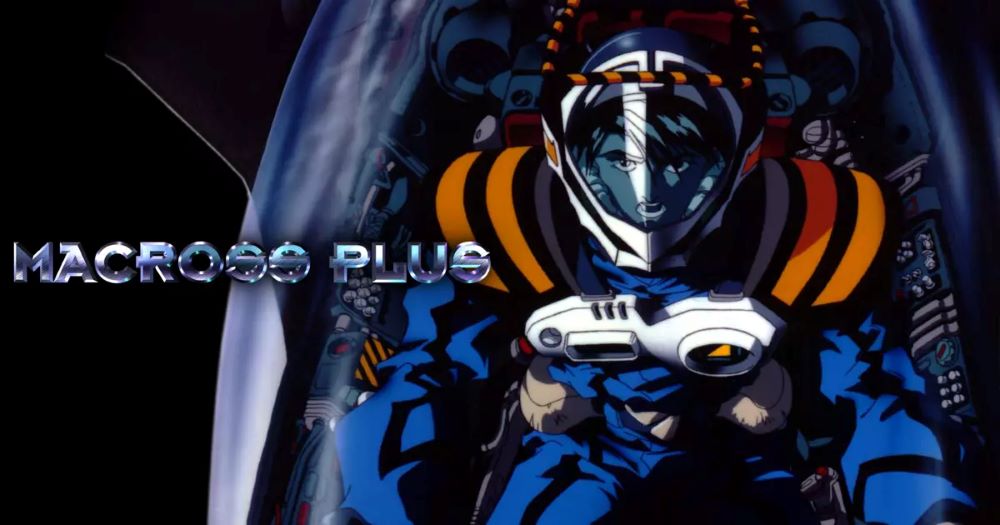
Anime You Should Be Watching: Macross Plus


“Life without pain isn’t real life!” — Isamu Dyson

Macross Plus is a landmark anime OVA series from 1994 that continues to resonate with both newcomers and longtime fans of the genre. It stands out within the larger Macross franchise—one of the most influential in anime history—that includes various series beginning with the original Super Dimension Fortress Macross in the early 1980s. While Macross Plus is just one of several entries under this umbrella, it serves as a crucial bridge between the earlier incarnation of the series produced during the 1980s and the more modern take that the franchise would eventually develop in the late 1990s and into the 2000s. This OVA represents a stylistic and thematic evolution that helped transition the series from its original space opera roots into a more mature, complex narrative form that appeals to contemporary audiences.

Set decades after the destructive war between humanity and the alien Zentradi featured in the original series, Macross Plus takes place in the year 2040 where the UN Spacy conducts flight trials on a remote planet to select the next generation of Variable Fighters. The story revolves around Isamu Dyson, a cocky and passionate pilot; Guld Goa Bowman, his calm and talented rival who is revealed to be a Zentradi/human hybrid; and Myung Fang Lone, a woman emotionally entangled with both men and managing the artificially intelligent holographic idol Sharon Apple. The narrative explores themes of rivalry, friendship, human connection, and emotional tension with nuance and depth, distinguishing it within the franchise and offering a compelling experience for both newcomers and longtime fans.

Viewers can experience Macross Plus either as a four-episode OVA or through the re-edited movie version titled Macross Plus: Movie Edition. The movie version condenses the original four episodes into a much shorter runtime, around 115 minutes, with certain scenes expanded, some new scenes added, and others shortened or removed entirely. While the movie includes roughly 20 minutes of new or alternate footage, it retains much of the OVA’s original material. The film format emphasizes a more cinematic presentation and features a widescreen format, contrasting the original OVA’s 1.37 aspect ratio. However, while the movie streamlines some narrative aspects and adds a few striking sequences, some fans feel the OVA’s longer runtime allows for richer character development and storytelling depth. Both versions have their merits, with many recommending watching the OVA first to appreciate the fuller experience before exploring the movie edition.

One of Macross Plus’s standout features is its animation quality, especially remarkable for a mid-1990s production. The series blends traditional hand-drawn artistry with pioneering computer graphics, particularly in its spectacular aerial dogfight sequences featuring transforming fighter jets. These dynamic battle scenes convey a vivid sense of speed and intensity, demonstrating a level of technical sophistication that remains impressive today. Though some fans note minor differences in character design from Haruhiko Mikimoto’s original work, the visual impact overall is striking and immersive, providing a thrilling experience for newcomers and a nostalgic appreciation for veteran viewers.

Integral to the anime’s atmosphere is its unforgettable soundtrack, composed by the legendary Yoko Kanno. Her wide-ranging score—from haunting melodies to energetic action themes—perfectly complements the show’s tonal shifts. While “Voices,” performed by Akino Arai, is the song most fans distinctly remember and cherish for encapsulating the emotional core of the series, the rest of the soundtrack stands out as excellent in its own right. Notably, the tracks tied to the Sharon Apple AI subplot add an additional layer of mood and narrative depth. The song “Information High,” performed by Sharon Apple, is particularly praised for its ethereal, electronic style that perfectly captures the AI’s hypnotic and otherworldly presence in the story. This track complements the themes of technology, identity, and artificial emotion explored through Sharon Apple’s character, enhancing the viewer’s immersion in the high-tech world of Macross Plus.

Another rarity in the anime world that Macross Plus represents is its highly regarded English-language dub. Unlike many anime dubs that face criticism, the Macross Plus English dub is considered excellent by fans and critics alike. One notable factor is the casting of a younger Bryan Cranston (before his Breaking Bad fame) as the voice of Isamu Dyson. His performance brings genuine energy and nuance to the role, contributing to the dub’s reputation as a quality adaptation worthy of both newcomers who prefer English audio and longtime fans who appreciate a well-executed dub.

A core thematic insight in Macross Plus lies in its exploration of technology, especially artificial intelligence, highlighting how even advanced AI must learn from humans as templates, inevitably influencing its behavior. Sharon Apple, the AI pop star and central figure of the subplot, cannot authentically generate emotion on her own. Instead, she relies on the emotional input provided by Myung Fang Lone, her producer and the emotional source behind Sharon’s performances. This dependency underlines a profound implication: true sentience and emotional authenticity in AI require imitation and absorption of human feelings, experience, and behavior. Consequently, Sharon’s increasingly autonomous actions become shaped by the complex and sometimes conflicted emotional landscape of the humans around her, illustrating how AI, while synthetic, is ultimately tied to the human condition and its imperfections. The series presents this relationship critically, showing both the potential and danger of AI learning and evolving from human templates, culminating in Sharon’s struggle to assert an identity that is both alien and deeply rooted in human emotions.

Importantly, Macross Plus is recognized as the first official sequel to the original Macross series by its creator Shoji Kawamori. The earlier Macross II was later retconned by Kawamori as an alternate reality or parallel world separate from the main timeline. This status cements Macross Plus as the canonical continuation of the original saga, reinforcing its significance within the franchise and its role in guiding Macross’s future directions.

The narrative structure—whether experienced as the OVA’s four episodes or the condensed movie version—strikes a balance between introspective character moments and exhilarating mech combat, keeping viewers engaged while allowing emotional depth to unfold. Though some supporting characters receive limited development and the antagonist can seem somewhat one-dimensional, these elements do not detract significantly from the memorable storytelling, animation, and thematic richness.

For newcomers, Macross Plus serves as a powerful introduction to anime that blends sophisticated storytelling, technical artistry, and philosophical inquiry. For veterans, it offers a compelling revisit to a milestone work that elegantly bridges the franchise’s classic roots and modern evolution.

Macross Plus holds a revered place within the Macross franchise and the wider anime landscape for several reasons. It was pioneering in its integration of traditional cel animation with early computer-generated imagery (CGI), setting a precedent for the increasing use of digital effects in anime. This blend allowed for its visually stunning aerial combat sequences which remain influential in mecha animation.

The series also marked the start of a significant collaboration between director Shinichirō Watanabe and composer Yoko Kanno, whose work on Macross Plus would lead to iconic projects such as Cowboy Bebop. The soundtrack’s genre-spanning style influenced how music could serve as a narrative force in anime, intertwining with story and character development rather than merely accompanying visuals.

Narratively, Macross Plus helped reaffirm the franchise’s thematic core—the interplay of love, war, and music—while pushing it toward more mature and psychological storytelling, expanding the appeal beyond traditional mecha fans. Its exploration of AI and human emotion was ahead of its time, posing philosophical questions still relevant in today’s discussions about technology and identity.

The excellent English dub, featuring talents like Bryan Cranston, contributed to its international acclaim, helping it become a gateway series for many Western viewers into the Macross universe and anime more broadly.

Its legacy continues not only through ongoing Macross installments but also in manga adaptations and video game tie-ins, as well as in inspiring countless mecha and sci-fi creators. To this day, Macross Plus is frequently cited as a high watermark of 1990s anime, a timeless fusion of innovative animation, memorable music, and complex, emotionally resonant storytelling that helped shape the trajectory of anime as a global medium.

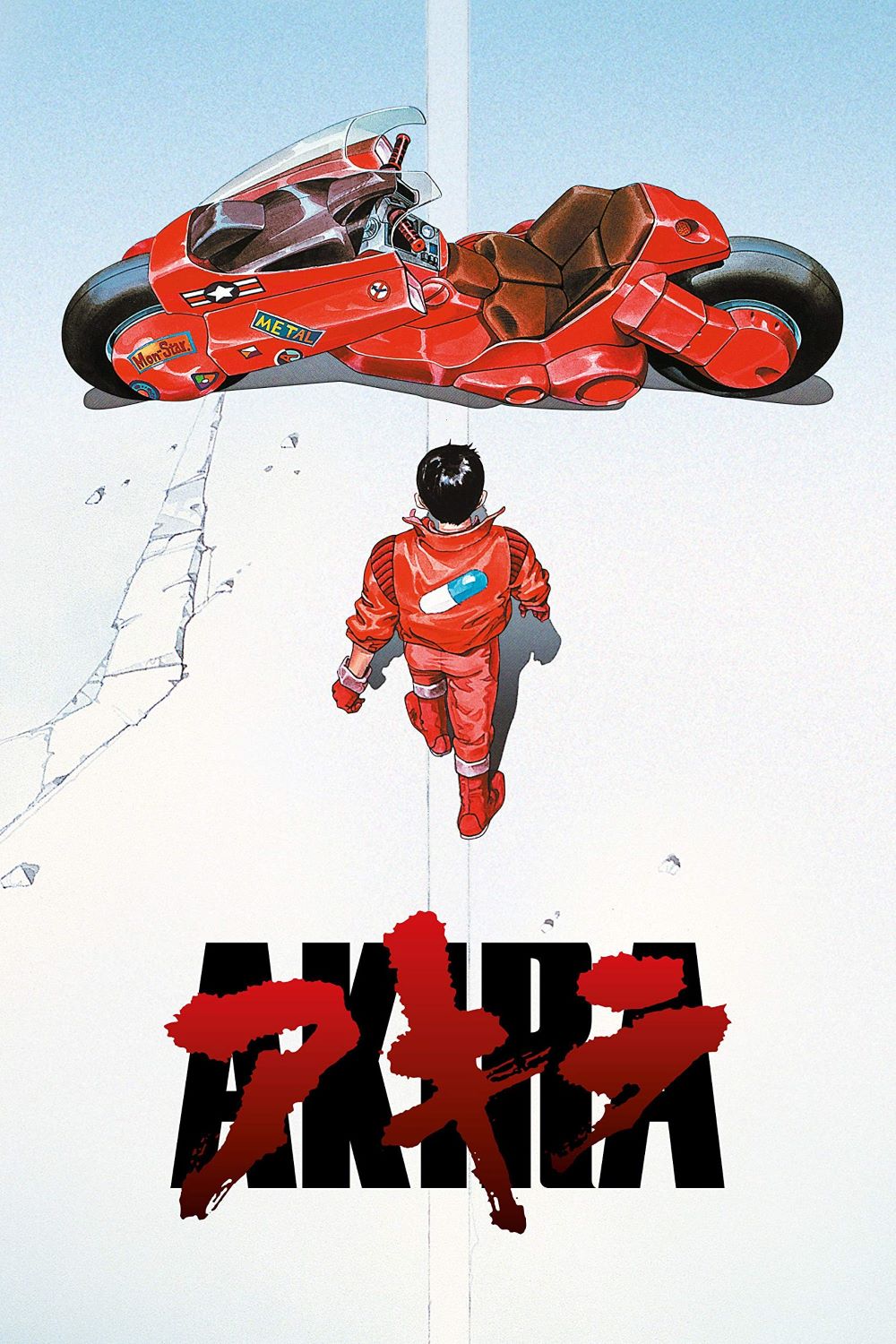
Anime You Should Be Watching: Akira


“The future is not a straight line. It is filled with many crossroads. There must be a future that we can choose for ourselves.” — Kiyoko

Akira is a landmark anime film that has left an indelible mark on both the medium and popular culture, widely regarded as a masterpiece blending dystopian cyberpunk aesthetics with potent social and political themes. Directed by Katsuhiro Otomo and released in 1988, it is an adaptation of Otomo’s own manga of the same name, adding layers of depth from its source material. The film remains a touchstone for its groundbreaking animation, complex narrative, and deep thematic explorations that resonate decades after its release.

At its surface, Akira tells the story of a post-apocalyptic Neo-Tokyo, a city ravaged by past destruction and on the brink of chaos again due to psychic powers unleashed unexpectedly on its streets. The narrative centers around two childhood friends caught in this upheaval: Kaneda, a rebellious gang leader, and Tetsuo, whose sudden acquisition of devastating psychic abilities leads to uncontrollable transformation and societal breakdown. This conflict draws viewers into a gripping tale of friendship, power, and loss.

Beneath the action-packed plot lies a rich tapestry of themes. One of the most striking is the exploration of loss of humanity through power. Tetsuo’s descent into madness as his psychic abilities spiral beyond his control serves as a visceral metaphor for how absolute power corrupts and alienates. The transformation he undergoes, from a troubled youth into a monstrous entity, dramatizes the fear of losing oneself when faced with forces that cannot be tamed. Meanwhile, the other characters and factions, including the military and resistance groups, depict varying responses to such disruptive power, from authoritarian control to emergent heroism among society’s outcasts and delinquents, emphasizing resilience in adversity.

Akira’s setting is crucial to understanding its impact. Unlike other dystopian sci-fi that glamorizes technology, Neo-Tokyo is raw and unpolished—a place of grime, corruption, and social decay. This lack of fetishization makes the depicted world more relatable and unsettling, reflecting post-World War II anxieties in Japan. The narrative draws clear analogies between the trauma of nuclear devastation and the cyclic nature of destruction and rebirth. The film and manga respectively underline how societies can be dehumanized by catastrophe yet still harbor hope for renewal and change.

The adolescent characters also embody a universal coming-of-age struggle, where uncertainties of identity, power, and responsibility mirror Japan’s own postwar societal shifts. Tetsuo’s monstrous growth and Kaneda’s protective yet rebellious nature capture the complex emotions of fear, resentment, and desire for control, making the story as much about internal battles as external ones. This allegorical layer brings timeless relevance, inviting viewers to reflect on personal and collective growth in times of turmoil.

From a technical and artistic standpoint, Akira set new standards for animation. The film’s fluid motion, attention to detail, and atmospheric world-building were revolutionary for the time and still hold up remarkably well. Otomo’s insistence on lip-syncing dialogue and meticulous frames elevated the cinematic experience far beyond typical anime productions of the 1980s. Its high-budget production values and painstaking artistry make every scene visually immersive, from frenetic gang fights to apocalyptic psychic battles.

One of the film’s most iconic and influential moments is the “Akira slide”—the flawless and stylish maneuver where Kaneda slides his motorcycle to a perfect stop amidst a high-speed chase. This scene has become emblematic not only of Akira’s kinetic energy and visual prowess but also of the potential for animation to convey dynamic motion with a sense of weight, style, and personality. The technique has been endlessly referenced and homaged in both anime and live-action works worldwide, shaping how filmmakers portray fast-paced chase and action scenes. Its balance of fluid animation, camera angles, and character flair set a new benchmark for kinetic storytelling, inspiring generations of animators and directors to capture similar moments of cool, precise motion.

Moreover, Akira’s soundtrack and sound design contribute significantly to its gritty and intense atmosphere, reinforcing the emotional beats and tension throughout the film. The score blends pulsating electronic music with haunting melodies, capturing the film’s blend of futuristic dread and human vulnerability.

Critically, Akira is celebrated not just for its technical achievements but also for its complex storytelling and thematic depth. It does not offer neat resolutions or clear heroes; instead, it portrays a morally ambiguous world where power is both destructive and transformative. The lack of easy answers enhances its emotional and intellectual resonance, making it a powerful narrative of destruction, evolution, and hope.

Akira stands among the most influential works in animation and film, a piece that’s carved its place indelibly in cultural history. Its influence isn’t just in the stunning visuals or the groundbreaking animation techniques; it’s also in how it expanded the horizons of what anime could achieve on a global scale. Otomo’s dystopian vision challenged viewers to confront uncomfortable truths about power, chaos, and societal resilience. Years after its debut, the film continues to inspire and provoke new generations of creators—each eager to capture some fragment of its raw energy and layered storytelling. Akira’s legacy is not just that of a cinematic masterpiece but as a catalyst that reshaped the possibilities for animated storytelling, making it a timeless beacon for artists and audiences alike.

AMV of the Day: You Can Be King Again (Hotarubi no Mori e)


hotarubi no mori e

In my absence, Lisa Marie did quite a great job picking up the slack when it came time to put up a new anime music video. She had quite the eclectic choice of videos that ran the gamut from comedy, space opera, ecchi to drama.

As I continue my return back I thought it was high time to put up a new AMV and this time from an anime I haven’t even seen. It’s actually an anime that even the site expert pantsukudasai56 hasn’t seen but had heard of. The anime in question is the supernatural romance anime film Hotarubi no Mori e.

Just from researching what the anime was about I knew this was going to be one of those shoujo fares that I would need to find time to watch. It helps that the video’s creator, youlazybum, did such a great job pairing scenes from the anime with one of my favorite songs these past ten years, Lauren Aquilina’s “King.”

So, here’s my latest AMV of the Day, “You Can Be King Again.”

Anime: Hotarubi no Mori e

Song: “King” by Lauren Aquilina

Creator: youlazybum

Past AMVs of the Day

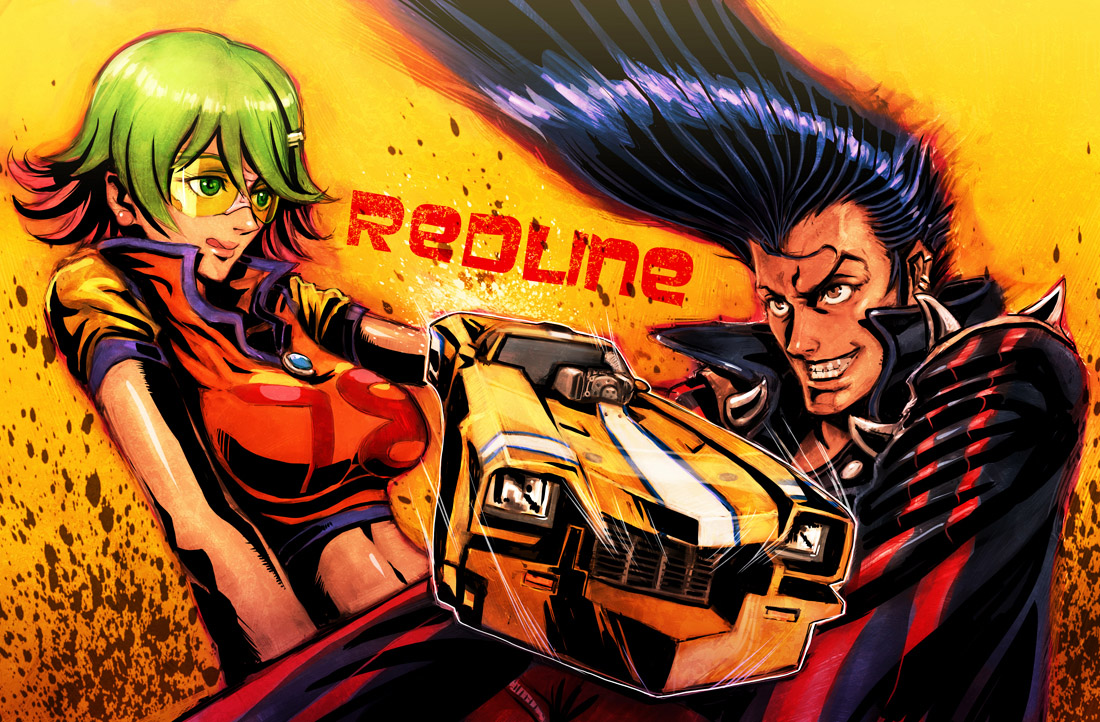
Anime You Should Be Watching: Redline


314090-redline

Anime has always skewed towards the hyperkinetic imagery that most Western animation rarely, if ever, put on the screen. Where Western animation has a much more flowing style that tries to mimic realism in the artform with anime we get intense action in the animation no matter what genre.

One recent anime that pretty much takes this hyperkinetic style to a new level was 2009’s OVA (original video animation) title from renowned anime studio Madhouse simply called Redline. It’s a wall-to-wall scifi action film that combines futuristic setting and world-building with the speed freak action of the racing genre.

Redline was directed by Takeshi Koike and it took him and his crew of animators from Madhouse a total of seven years and millions of dollars to finish the project. This was a project that pushed the animation to it’s limits with the film using over 100,000 hand-drawn pages of animations that at times looked like it was something that looked more computer-generated. It’s a film that showed many of Koike-san’s artistic influences from his mentor Yoshiaki Kawajiri (well-known for classic anime titles as Vampire Hunter D and Ninja Scroll) right up to the thick lines and heavy blacks of Frank Miller.

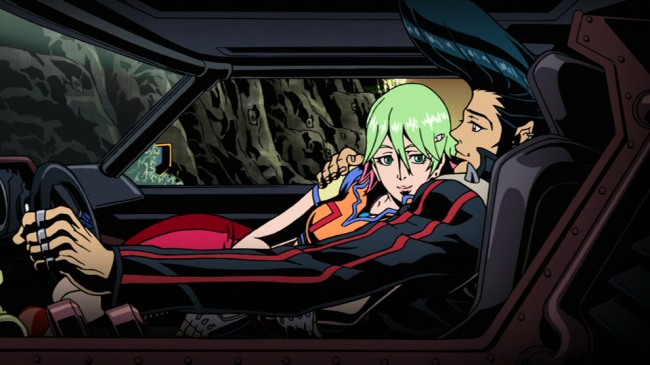
The plot for Redline is really not that complex and for some it’s too simple that it became a flaw. It’s a story about the a futuristic race that uses the greatest groundcar racers in the galaxy (instead of the current hovercar this world has turned to using) to tell a story about the underdog fighting against adversity to win not just the ultimate prize but the love of a girl who also happens to be one of his main rivals in the film. The story revolves around the main characters of Sweet JP, with his ludicrous pompadour (the subject of many jokes in the film) and 50’s-style Greaser leather jacket, and his main rival and love interest in Sonoshee.

Redline-BR-ext3

Redline barely brings the main leads past being cardboard cutouts as characters, but the story gives the two enough backstory to make them easy to relate to. Yet, it’s not the story that will hook and pull in anime fans both veterans and newbies. It’s all about the action and animation that makes this film one of those anime that people really should be watching. There’s so much action going on in the film that one could easily lose themselves in all that kinetic energy to forgive it’s story’s basic simplicity.

Some have called Redline as the anime version of the latest Fast and Furious films (mainly the last two), but I disagree with that assessment. The latest Fast and Furious films are attempts to make a live-action version of Redline. The two share similar traits and follow that racing creed that the Vin Diesel franchise has popularized: “Ride or Die”.

Redline might not the be the greatest story ever told in anime, but for pure-adrenaline action from beginning to end there’s none better. One can watch it on Youtube on their streaming service, yet I recommend that people who have a huge HDTV (especially the latest 4K screens) watch it on that to see hand-drawn animation at it’s best.


Anime You Should Be Watching: Wolf Children Ame and Yuki


Wolf Children Ame and Yuki

In late summer of 2010 the anime and film community lost one of its brightest stars with the passing of Satoshi Kon. With Miyazaki getting up there in age there was now a clamor to see who would take on the mantle that Kon had left behind with his passing. It didn’t take long for many fans of anime to finally look at Mamori Hosoda as the heir apparent. While Hosoda’s body of work as a feature-length animation film director hasn’t been as extensive as Kon’s or Miyazaki’s what he has done has garnered a near universal acclaim for their excellent storytelling, fully-conceived characters and lush, humanistic animation style.

In 2009’s most people were finally made aware of Hosoda’s skill as a director with the worldwide success of Summer Wars and this success made people look forward to what his next film would be. It took three years, but in 2012 Hosoda and anime fans were finally given his next film with the animated film Wolf Children Ame and Yuki (Ōkami Kodomo no Ame to Yuki). It would be a departure from the scifi themes which has been Hosoda’s go to themes for his first two films.

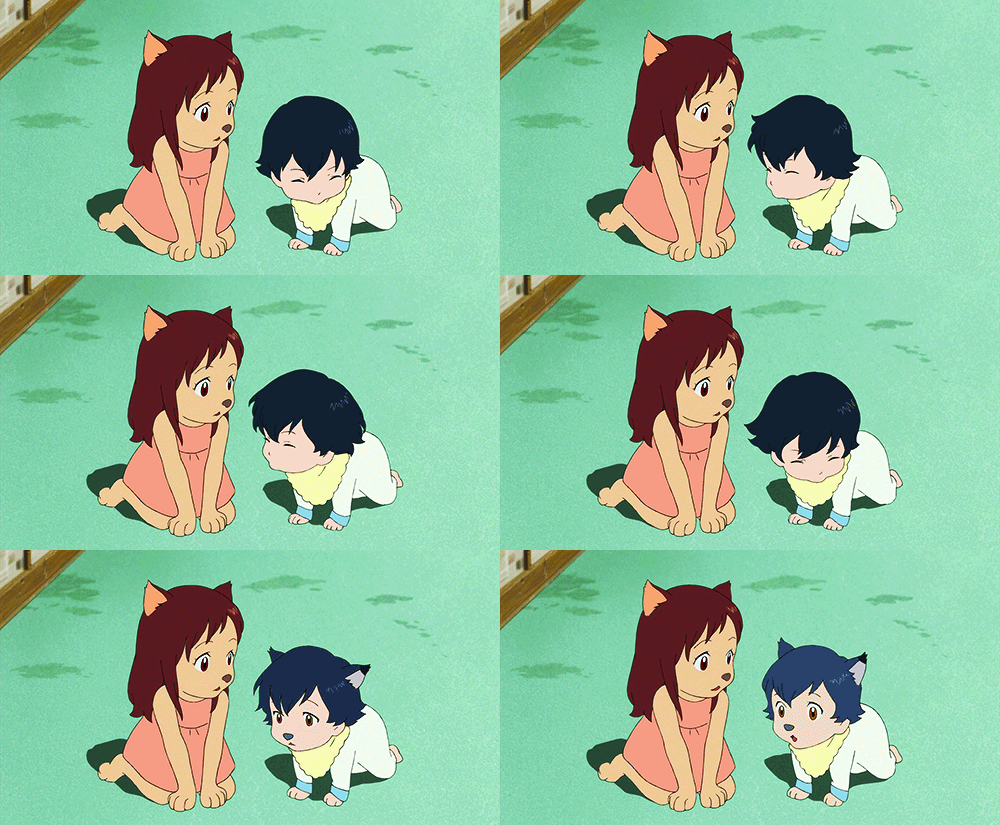
Wolf Children explores the themes of the unconventional family unit of a single mother of two children born of her love and relationship with an Okami (a sort of spirit-animal who can turn from human to wolf). It’s these two young children, Ame and Yuki (who have inherited their father’s gift for turning into wolves themselves), who become the focus of the film. The two children must navigate their childhood and teenage years knowing that they’re different from the rest of the kids in school and both must make the life-altering decisions to follow their own paths whether it be as a human or as a wolf.

tumblr_mk4qp8nT8M1qidzr6o2_500

To say that the film skews more towards the naturalistic and humanistic themes of the Hayao Miyazaki films would be an understatement. Hosoda doesn’t steal from the master, but instead takes what made the Miyazaki films such timeless and global classics to spin his own tale on the role of a mother’s love for her children even after suffering through a terrible loss and right up to the exploration of nature. So much of the wonder in this film comes from the two children exploring the wild nature around them. It’s a joy to see and at times will even bring tears to some.

It’s no wonder that Hosoda has become the latest name to be seen as Miyazaki’s next heir apparent. While it’s unfair to put so much on Hosoda to accomplish he seems to be more than willing to take on the task and have done so with surprising success.

Wolf Children Ame and Yuki might be a slight departure from Hosoda’s two previous works, but it just goes to show that he’s a director who is willing to branch out thematically and stylistically. This latest film might not be on the same level as his two previous, but it’s definitely one that should help build his reputation as one of the best director’s in the anime and film community.

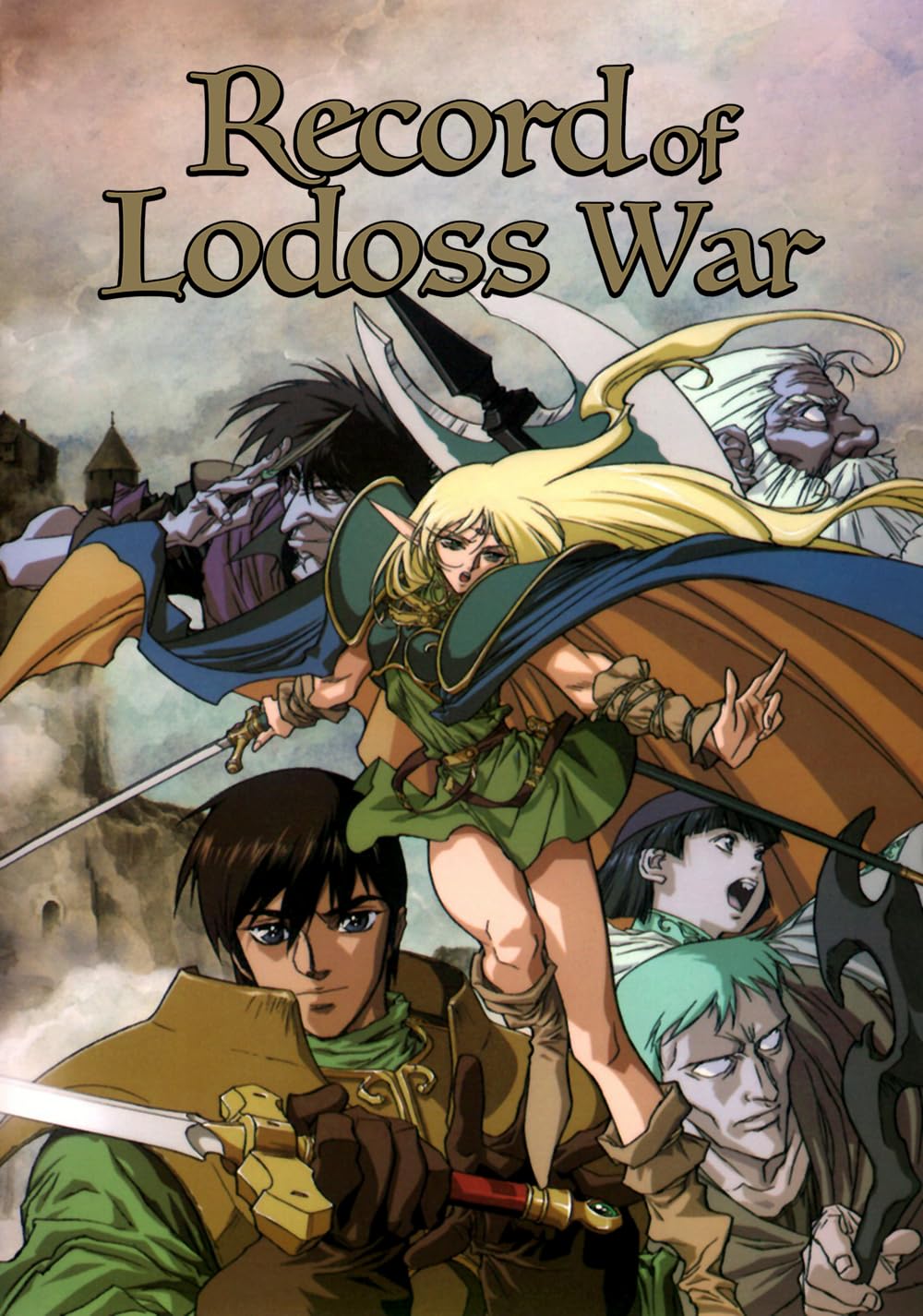
Anime You Should Be Watching: Record of Lodoss War (Rōdosu-tō Senki)


The last couple months has been all about HBO’s Game of Thrones fantasy series adapted from the novel of the same name. With that series’ first season now in the books and the fifth book on it’s way to it’s inevitable release on July 12, 2011 I had to find something to fill the void until the new season rolls around next spring. One fantasy series which I loved when I first saw it almost 20 years ago and still do to this day is the fantasy anime 13-episode series Record of Lodoss War (Rōdosu-tō Senki).

This fantasy series was adapted from a series of novels and role-playing games by Mizuno Ryo which borrowed heavily on the core rules and role-classes from the classic Dungeons & Dragons pen-and-paper role-playing games. In fact, the first time I saw the anime (through the VHS set which cost quite a penny when it was released by Central Park Media in the US in the early 1990’s) my first thoughts were that Record of Lodoss War was almost like Dungeons & Dragons.

The series lasted 13 episodes and were produced by acclaimed Japanese animation studio Madhouse (Highschool of the Dead, Summer Wars, The Girl Who Leapt Through Time, Gunslinger Girl) and even 20 years since the series first premiered the animation still holds up. The story of Record of Lodoss War was your typical high fantasy epic tale of a young man’s journey into becoming a hero, a complex antagonist whose agenda never becomes fully known until the end, a world on the brink of war and chaos plus a diverse group of characters who band together to save the world. Anyone who has ever played a Dungeons & Dragons game and/or read the countless fantasy novels of the past 40 years would be right at home with Mizuno Ryo’s Record of Lodoss War.

I really would recommend this anime series, old as it is compared to the latest ones, to those needing to find a way to fill the void before season 2 of Game of Thrones begins. While the story might seem to be right out of typical high fantasy the characters in the anime were actually more developed that your usual fantasy characters. It’s hard not to watch the dark knight Ashram through the 13-episode run and not have him become a favorite character. Record of Lodoss War has something for everyone and someone doesn’t even have to be a huge anime fan to fully appreciate just how entertaining the series turns out to be.

Anime You Should Be Watching: Chōjin Densetsu Urotsukidōji


Hentai: slang for the Japanese term “hentai seiyoku” which literally means sexual perversion. A word used by Western fans of anime to signify anime/manga as being of the pornographic variety.

In 1990, during my junior year of high school, I was introduced to a form of animation unlike anything I had known before—the darkly imaginative and transgressive world of hentai. While explicit Japanese media had existed long before, the particular title that marked my first encounter with the genre was Chōjin Densetsu Urotsukidōji. The work did not simply define hentai; it transformed how adult animation would be viewed by audiences in both Japan and the West.

Prior to its release, erotic or explicit manga had long circulated quietly within Japan, often categorized separately from mainstream entertainment. Yet when mangaka Maeda Toshio’s Chōjin Densetsu Urotsukidōji was adapted into animation by director Takayama Hideki in the late 1980s, something shifted. The result was a film that combined the grotesque, the apocalyptic, and the erotic into a single overwhelming experience. Takayama’s adaptation was not content to merely illustrate Maeda’s ideas—it amplified them into a fever dream of violence and desire that pushed the medium into territory rarely explored in animation.

This era in Japanese media was also defined by strict obscenity laws. Direct depictions of genitalia or explicit intercourse were prohibited, both in live-action and animation. To circumvent these limitations, artists employed mosaics or invented visual metaphors. Takayama approached the problem with disturbing creativity: he replaced human anatomy with monstrous, tentacle-like appendages. These served a dual purpose—they satisfied censors while reinforcing the story’s occult and otherworldly atmosphere. Inadvertently, this gave rise to one of the most infamous tropes in hentai culture: “tentacle rape.” What began as a method of evading censorship evolved into a symbol of perversion, horror, and fascination.

Though Maeda initially regarded Takayama’s interpretation as excessively cruel and sadistic, he expressed admiration for the director’s ability to explore the darker undercurrents of his story. In time, Maeda’s own works would adopt similar motifs, blending eroticism with the supernatural. His later projects—including Yōjū Kyōshitsu GakuenAdobenchā Kiddo, and the enduring Injuu Gakuen La Blue Girl—refined the sensibilities born from Urotsukidōji, mixing violence, humor, and demonic imagery. These works often shifted in tone but never strayed far from the genre’s defining combination of horror and sexual excess.

Chōjin Densetsu Urotsukidōji can best be described as a collision of disparate influences: the mythic nihilism of H. P. Lovecraft, the explicit confrontational style of Larry Flynt, and the occult transgression of Aleister Crowley, all underscored by the philosophical cruelty associated with the Marquis de Sade. The film’s narrative combines apocalypse with pornography, constructing a universe where gods, demons, and humans become locked in violent and erotic cycles of destruction and rebirth. It is both a nightmare and a spectacle, a work that examines desire as an extension of cosmic chaos.

Watching the OVA as a seventeen-year-old was an experience of shock and bewilderment. Nothing in my understanding of animation prepared me for it. The optimism and adventure of series like RobotechStarblazers, and Voltron stood in stark contrast to the nihilistic intensity of Urotsukidōji. If such a term had been common at the time, “culture shock” would have described it perfectly. Yet beyond my initial disorientation, I recognized something compelling beneath the shock value—a strange vision that treated eroticism not as mere indulgence but as a reflection of human fear and fascination.

Takayama’s film succeeded because it used obscenity as both spectacle and metaphor. The sexualized violence was horrifying, but it also emphasized the collapse of moral order within its world. The boundaries between sensuality and monstrosity blurred, suggesting that both sprang from the same primal source. In this way, Urotsukidōji transformed its limitations into aesthetic strength. Censorship forced invention, and invention created symbolism: the tentacle became an image of corruption, domination, and inhuman desire.

When Urotsukidōji began circulating in the West through VHS imports in the early 1990s, it acquired immediate notoriety. For many international viewers, the notion that animation could contain such extreme imagery was almost unthinkable. Western audiences, accustomed to animation as a medium for children or adolescent adventure, suddenly encountered a work that combined cinematic brutality with mythology and eroticism. Owning or viewing it became an act of curiosity and defiance. Accessing such media often meant seeking imported tapes or attending small conventions—a process that only heightened its sense of exclusivity and taboo.

Not everyone perceived Urotsukidōji as art. Its reputation became divisive; for some, it represented the most exploitative and grotesque tendencies of Japanese culture, while to others, it was a bold exercise in creative freedom. Regardless of one’s stance, its influence was undeniable. The film inspired countless imitators, establishing a visual and thematic template for subsequent hentai and “erotic horror” animation. Even as later works diversified into comedy, fantasy, and romance, the long shadow of Urotsukidōji remained.

There is also a deeper irony in its legacy. The same adaptation Maeda once criticized expanded the reach and visibility of his creation beyond what any manga publication could have achieved. The collaboration between artist and director—however fraught—produced a convergence of imagination that shaped both the erotic and horror dimensions of modern anime. In a broader sense, it demonstrated that the animated form could explore the same depths of transgression, myth, and existential dread that live-action cinema often reserved for its most daring auteurs.

Seen through this lens, Urotsukidōji becomes more than a piece of pornographic shock cinema. It emerges as a cultural artifact—one that reflects how desire, repression, and fantasy intersect within specific historical and artistic contexts. The work exposes how censorship and creativity can collide to produce unexpected invention, and how audiences, whether through fascination or outrage, help define a genre’s legacy.

For those of my generation, encountering Urotsukidōji was a defining moment that reshaped perception. It suggested that animation could express not only beauty and adventure but also the darker instincts of the human psyche. What began as disbelief evolved into a kind of reluctant respect for its ambition. Beneath the grotesque imagery lay a thematic depth that continues to invite examination—questions about power, violation, and the thin line separating horror from desire.

Today, both Maeda Toshio’s manga and Takayama Hideki’s adaptation occupy a controversial yet essential place in the history of Japanese media. They are remembered not only for their sensational content but for their cultural and aesthetic audacity. The story of Chōjin Densetsu Urotsukidōji endures because it refuses simplification—it is at once abhorrent and visionary, obscene yet strangely philosophical.

From the most ardent anime historian to the casual viewer, its reputation persists. Whether reviled or revered, Urotsukidōji remains the ultimate symbol of hentai’s origins and its infamous reach. It stands as both a warning and a testament: that art, when unfettered by convention and driven by instinct, can explore places society dares not name.