Brad reviews ESCAPE FROM DEATH BLOCK 13 (2021), starring Robert Bronzi!


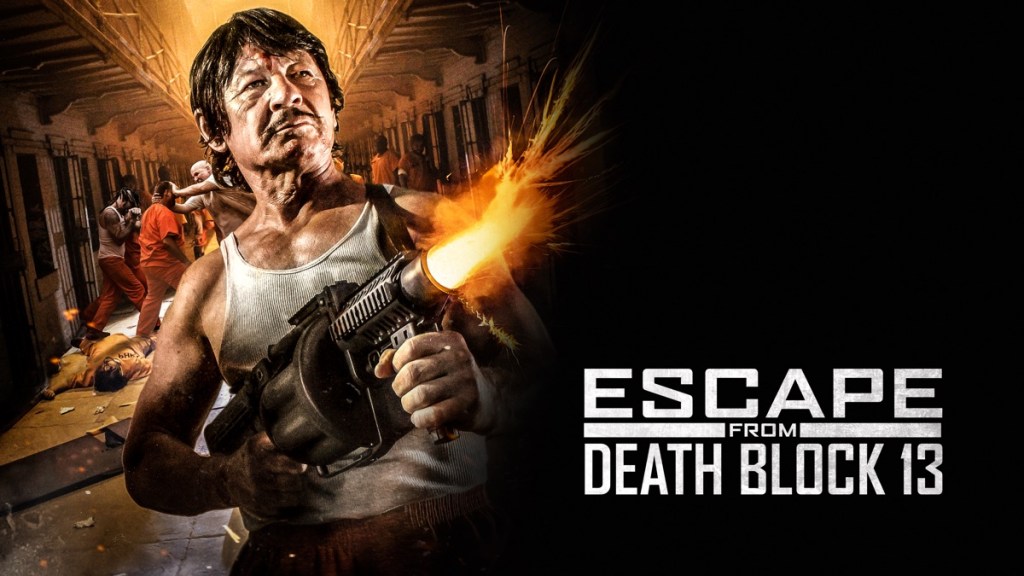
Well, I finally did it. I finally made it all the way through a movie starring Robert Bronzi, the Hungarian Charles Bronson lookalike who started making movies a few years ago with titles like DEATH KISS (2018), ONCE UPON A TIME IN DEADWOOD (2019) and 12 TO MIDNIGHT (2024). Any person who’s read any of my work on here knows that Charles Bronson is my all-time favorite actor, and that I’ve been obsessed with him for over 40 years. I’ve known about Bronzi since he first popped up in 2017, but I haven’t had much interest in him because his only similarity to Bronson is his very basic look. I watched enough of DEATH KISS back in the day to know that he doesn’t have any of Bronson’s charisma, grace or acting ability. I turned it off or fell asleep and never finished it. Well, this past week, I was on the set of a movie that’s being filmed here in Central Arkansas that’s using my brother’s convenience store as one of its filming locations. I was talking to a producer of the film (David Wade), and of course, as the conversation went on I eventually told him that I’m obsessed with Charles Bronson. If you hang around me long enough, that information is sure to be shared at some point! Once David knew this, he told me that he acted in a film with Robert Bronzi in 2021 called ESCAPE FROM DEATH BLOCK 13 that was filmed at the Mansfield Reformatory in Ohio, the location made famous as the prison used in the classic THE SHAWSHANK REDEMPTION (1994). He was impressed that I was fully aware of Bronzi and his resemblance to Bronson. I promised him that I’d watch the film since he’s in it, so here we are! 

The plot of ESCAPE FROM DEATH BLOCK 13 is simple. After his brother’s death, Hungarian construction worker Mick Kovacs (Robert Bronzi) travels to America seeking justice. Visiting a recycling factory owned by the shady Renda (Nicholas Turturro), Mick demands compensation owed to his brother’s family. When Renda’s goons attack him, Mick is framed for extortion and attempted murder, and finds himself in the Pleasant Hill Penitentiary, where he faces sadistic guards, violent inmates, and the corrupt Warden Jack (Debbie Scaletta). Before going to prison, Kovacs is offered a deal by Detective Borelli (Lyindaa Russell) and FBI Agent Langley (Lawrence Hilton-Jacobs) to uncover a drug ring. Once inside, he discovers that Renda and the Warden are responsible for his brother’s death. Driven by a desire for vengeance, Mick sparks a violent riot in hopes of bringing justice to all those who have done his family wrong!

I’m not going to spend much time reviewing ESCAPE FROM DEATH BLOCK 13. If you’re a movie viewer who thinks the idea of watching an ultra low budget prison movie, filmed at Shawshank prison, with terrible acting, terrible special effects, and a lead actor who looks kind of like Charles Bronson sounds fun, then this could be the movie for you. This movie is not even close to the quality of Bronson’s 80’s Cannon films. Those films had good directors who delivered entertaining low budget action films, and Bronson was always worth the price of admission. Bronson’s Cannon movies were extremely profitable, especially in the golden age of VHS rentals. In the case of ESCAPE FROM DEATH BLOCK 13, director Gary Jones has delivered a terrible movie that is fun if you like bad movies. This movie knows it’s a bad movie, leans into its turkeydom, and hopes you will like it because Bronzi looks like Bronson, and there is action. In other words, it’s complete schlock that’s looking for an audience that digs the cheesiest of cheese. There’s not a thing wrong with liking cheesefests. I just want to make sure you know that’s what you’re getting into!

I did find it interesting that ESCAPE FROM DEATH BLOCK 13 is full of references to Charles Bronson’s TV and movie filmography. In this film, Robert Bronzi plays a character named Mick Kovacs. From 1958-1960, Bronson starred in the TV series MAN WITH A CAMERA playing a character named Mike Kovac. Nicolas Turturro plays a bad guy named Renda in this film. Al Lettieri played a bad guy named Frank Renda in Bronson’s excellent 1974 action film MR. MAJESTYK. And finally, in this film, Kenny Hendrix plays a bare knuckle prison boxer named Chaney. In my personal favorite Charles Bronson film, HARD TIMES (1975), Bronson plays a bare knuckle boxer named Chaney. I will admit these references were fun to spot as they came up throughout the film’s 105 minute runtime, which is probably a good 30 minutes longer than it needs to be. 

As I mentioned earlier, I watched ESCAPE FROM CELL BLOCK 13 because David Wade, who plays a prison guard in the film, asked me to. David does a fine job as guard Schaffner, with his performance fitting in perfectly with the vibe of the film. His friendly manner on the movie set at my brother’s store gave me a rooting interest in the film, and from that standpoint, I thoroughly enjoyed it! 
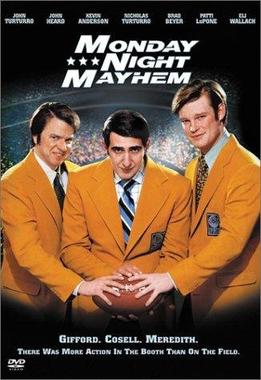
Monday Night Mayhem (2002, directed by Ernest Dickerson)


In the late 1960s, television coverage of football is dull and boring.  The games are played during the day and the announcers have no personality.  An executive at ABC named Roone Arledge (John Heard) changes all of that by convincing the NFL to start scheduling games for Monday night.  Arledge launches Monday Night Football, a broadcast that puts the viewers at home in the stadium.  Arledge explains that he wants cameras everywhere.  He wants the sidelines and the stands to be mic’d up.  And he wants announcers who will make the game interesting.  He picks an experienced radio announcer named Keith Jackson (Shuler Hensley), former Dallas quarterback Don Meredith (Brad Beyer), and finally an egocentric, loquacious, and opinionated sports reporter named Howard Cosell (John Turturro).  The straight-laced Jackson only lasts a season and finds himself overshadowed by Meredith’s good ol’ boy charisma and Cosell’s eccentricities.  Arledge brings in Frank Gifford (Kevin Anderson) as a replacement and changes both sports and television forever.  Monday night football becomes huge but so do the egos of the men involved.

Based on a non-fiction book by Bill Carter, Monday Night Mayhem is a look at the early days of Monday Night Football, with most of the attention being given to the mercurial Howard Cosell.  As a work of history, it’s pretty shallow.  There’s a lot of montages set to familiar 70s tunes and there’s plenty of familiar stock footage.  Beyer and Anderson do adequate impersonations of Meredith and Gifford without really digging for much under the surface.  Monday Night Mayhem is dominated by John Turturro’s performance as Howard Cosell.  Turturro doesn’t look like Cosell and he really doesn’t sound that much like Cosell but he does capture the mix of arrogance and bitterness that made Howard Cosell such a memorable and controversial announcer.  In its breezy manner, the film hits all the well-know points of Cosell’s life and career, from defending Mohammad Ali to considering a run for the Senate to trying to reinvent himself as a variety show host to the controversy when he was though to have uttered a racial slur during one of the games.  I wish the film had a bit more depth but John Turturro’s committed but bizarre performance keeps it watchable.

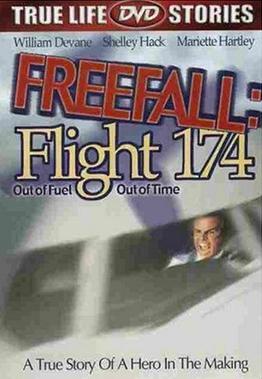
Freefall: Flight 174 (1995, directed by Jorge Montesi)


During a routine flight from Montreal to Edmonton, the two pilots (played by William Devane and Scott Hylands) discover that they do not have enough fuel to make it to their destination.  Their aircraft was one of the first in the fleet to use the metric system but a conversion era led to the ground crew measuring the plane’s fuel in pounds instead of kilograms.  With the help of an air  traffic controller (Nicholas Turturro), the pilots try to land their plane before it falls out of the sky.

Based on a true story, Freefall is one of the many airflight disaster films that were made for television in the 80s and 90s.  (Not surprisingly, the genre became less popular after 9-11.)  The emphasis is on the pilots and ground control remaining calm and professional in the face of seemingly insurmountable odds.  While Devane and Hylands look for a place to land, flight attendant Shelley Hack keeps the passengers from panicking.  In typical disaster movie style, the passengers have their own dramas that are wrapped up as they wait for the plane to either land or crash.  It’s a low-budget movie but the cast does a good job.  William Devane is one of those actors who just looks credible flying an airplane.

The movie’s main lesson?  Don’t use the Metric System unless you absolutely have to,


Phantom Punch (2008, directed by Robert Townsend)


Ving Rhames plays Sonny Liston, one of the greatest heavyweights who ever boxed but whose legacy will forever be overshadowed by the man who defeated him twice, Muhammad Ali.

Phantom Punch hits all of the well-known notes of Liston’s life.  He grows up dealing with poverty and racism.  He goes to prison as a young man and it is there that a sympathetic priest (Rick Roberts) helps him discover that his talent for fighting can be transformed into the skills needed to be a heavyweight contender.  Sonny turns pro after he’s released but, even as he angles for a championship fight, he’s still collecting debts for mobsters like Savino (David Proval).  Sonny becomes the champ after defeating Floyd Patterson but is hated by white boxing fans who resent that, unlike previous black champs, he doesn’t seem to care about their approval.  Both of his losses to Ali lead to accusations that he threw the fights.  With the help of his manager (Nichols Turturro), he works his way back up the rankings and is poised for another shot at the title but the Mafia now wants him to throw his fights for real.  In 1971, Liston dies of what the police claim was a heroin overdose even though everyone knew that Liston hated needles.  There’s not much new to be found in Robert Townsend’s biopic of Liston but Ving Rhames is convincing as Sonny and even brings some humanity to one of boxing’s most fearsome champs.  It was a movie made for boxing fans and Rhames looks credible throwing a punch.

As I watched the movie, I wondered whether Liston really did throw his fights against Ali.  I don’t think he did, even though both fights were strange.  In the first fight, Sonny put something on his gloves that irritated Ali’s eyes.  When that didn’t stop Ali, Sonny retired to his corner and didn’t come out for the seventh round.  That led to rumors that the Mob ordered him to throw the fight but if you watch the match, it’s obvious that Sonny was trying to win and he just wasn’t prepared for Ali’s quickness.  Liston knew he was losing and, with an aggravated shoulder injury making it difficult for him to throw his heavy punches, Liston bowed to the inevitable and refused to give Ali the chance to knock him out.  The second fight was the one where the phantom punch occurred.  Liston fell so quickly that, when I first saw it, I thought he had thrown the fight.  It wasn’t until I watched the fight in slow motion that I saw that Ali did make contact with Liston before he fell.  Liston may have been many things but but he wasn’t a chump.  The so-called phantom punch was fast but it was real.

October True Crime: The Hillside Strangler (dir by Chuck Parello)


2004’s The Hillside Strangler opens with a woman stepping into a dressing room with several tops.  She removes all of the tags.  Then she puts all of them on and finally covers them with the sweater that she was wearing when she first stepped into the dressing room.

What she doesn’t realize is that she’s being watched by a security guard named Kenneth Bianchi (played by C. Thomas Howell, with a thin mustache).  Bianchi isn’t the type of security guard who relies on cameras.  Instead, he sneaks around in the store’s heating ducts and stares down into the dressing room.  Bianchi manages to get out of the duct quickly enough to stop the woman as she walks out of the store.  He takes her back to his office and orders her to remove each layer of stolen clothing while he watches.

Agck!  Seriously, as a former teen shoplifter, this scene totally freaked me out.  Beyond the creepiness of seeing Bianchi in the air ducts, this scene also captures the authoritarian mindset.  As soon as we see Bianchi, we know that his job is about more than just a paycheck to him.  His job is about wielding power and giving orders.  Wearing his uniform, Bianchi feels that he’s untouchable.

Bianchi dreams of being a real cop but the Rochester Police Department rejects his application to join because his test scores were too low.  Sick of having to listen to him whine, Bianchi’s mother sends him to Los Angeles so that he can stay with his cousin, Angelo Buono (Nicholas Turturro).  Maybe Angelo can knock some sense into him.  Maybe Angelo can teach him about being a man.

Instead, Angelo soon gets as tried of Bianchi as everyone else.  Still, he is impressed when Bianchi orders a fake diploma from Colombia University and sets up a practice as a sex therapist.  When Angelo attempts to set himself up as a pimp, he makes Bianchi is partner.  When Angelo and Bianchi fail at being pimps, they start picking up women and strangling them.  Angelo and Bianchi start out by stalking sex workers but soon, they’re using a fake LAPD badge to prey on anyone that catches their interest.

Based on the true crimes of Angelo Buono and Kenneth Bianchi, The Hillside Strangler is a grim and frequently trashy film, a portrait of two misogynists who can only feel confident when they’re hurting others.  Bianchi is the type who wears a t-shirt that reads, “Official Local Sex Instructor.”  Buono has a doormat that reads, “Italian Stallion” and a sign on his wall that announces, “Candy is Dandy But Sex Won’t Rot Their Teeth.”  Turturro and Howell give two disturbing performances as two losers who feed on each other’s sadism and anger.  Bianchi is desperate for Bouno’s approval.  Buono finds Bianchi to be annoying but he still enjoys being the younger man’s idol.  Would Bianchi and Buono have committed their crimes if they had never met?  The film leaves you wondering.  As a viewing experience, it’s effective and disturbing.

In real life, Angelo Buono died in prison in 2002.  Kenneth Bianchi continues to serve his life sentence.

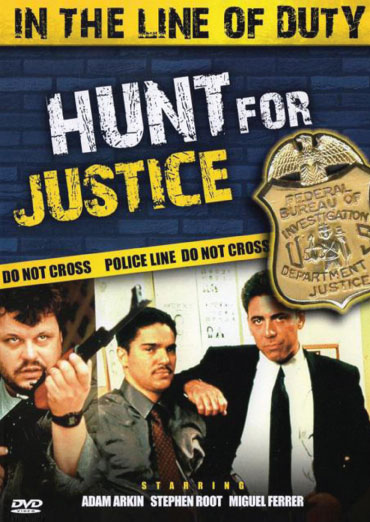
In the Line of Duty: Hunt For Justice (1994, directed by Dick Lowry)


When New Jersey State Trooper Philip Lomonaco (Dan Lauria) pulls over a car for having mud on its license plate, he doesn’t know that the car is being driven by two members of the United Freedom Front, a group of left-wing revolutionaries.  While Lomonaco talks to Tom Manning (Miguel Ferrer), Dickie Williams (Dell Yount) opens fire.  Lomanaco is killed and Tom and Dickie flee to their safehouse in New England.  While the United Freedom Front plots their next series of bombings and bank robberies, Lomonaco’s ex-partner (Nicholas Turturro) teams up with an FBI agent (Adam Arkin) to track down the terrorists and get justice for his fallen friend.

Hunt For Justice was the ninth of NBC’s In The Line of Duty films.  The previous films featured religious cults, anti-tax protestors, drug lords, and mobsters.  In this one, the antagonists are all former 60s radicals who are still trying to overthrow the system.  The FBI views the United Freedom Front as being a threat to national security while Lomonaco’s partner just wants to make sure that Lomonaco’s death won’t go unpunished.  Dan Lauria was actually a mainstay of the In The Line of Duty films, appearing previously in A Cop for the Killing and and Ambush in Waco.  (Nicholas Turturro was previously featured, on the other side of the law, in Mob Justice.)  Since most people who watch this film will probably remember Lauria as being Kevin Arnold’s father in The Wonder Years, everyone will want his killers to be brought to justice.

As with the previous In The Line of Duty movies, the action is evenly divided between law enforcement and the criminals that they’re pursuing.  At first, Miguel Ferrer seems like odd-casting as a leftist who admires Che Guevara but he gives a good performance as someone who regrets some of the decisions that he made in the past but who knows that he can’t change them now.  Melissa Leo is also very good as his wife.  Stephen Root and Dean Norris, two other actors who you would not necessarily expect to see playing left-wing revolutionaries, are cast as the other members of the United Freedom Front and Hunt For Justice does a good job of contrasting their middle class lifestyles with their revolutionary rhetoric.  One of the ironies of the film is that the revolutionaries are leading much more comfortable and financially-stable lives than the men who are trying to hunt them down.  In fact, the main problem with the movie is that the revolutionaries are so interesting that it’s always a letdown when the action shifts over to Turturro and Arkin, whose characters are far less interesting.  Arkin and Turturro go through the expected paces.  The FBI doesn’t like it when local cops try to interfere with their investigations.  Who knew?

Hunt for Justice is a pretty standard In The Line of Duty movie but no movie featuring Miguel Ferrer, Melissa Leo, and Stephen Root is ever going to be a total loss.  The cast is the best thing that Hunt For Justice has going for it.

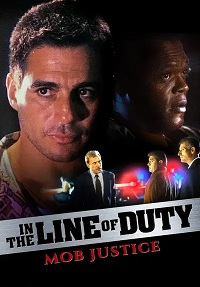
In The Line of Duty: Mob Justice (1991, directed by Peter Markle)


The fourth of NBC’s In The Line of Duty movies, Mob Justice opens with the murder of an undercover DEA agent by a low-level gangster who has just been released from prison.  While the gangster goes into hiding, the DEA mobilizes and starts to make life so difficult for all of the other mobsters in New York that soon, the Mafia is as determined to get justice as law enforcement.

This was the first In The Line Of Duty film not be directed by Dick Lowry.  Lowry’s fast-paced style is missed as Mob Justice takes forever to get going and regularly gets bogged down with scenes lifted from other mafia movies.  The old mobsters talk about the importance of family, play cards in the backroom, and eat big dinners.  Opera blares on the soundtrack when the DEA starts to harass them.  For a movie that is supposed to honor the work and the sacrifice of federal law enforcement, the DEA actually comes across as being thoroughly incompetent in Mob Justice.  A dumb mistake leads to the first murder.  A series of other misjudgments lead to the Mafia dispensing the own type of violent justice before the DEA can arrest their man.

The most interesting thing about Mob Justice is the cast.

The trigger-happy gangster is played by Tony Danza, who I guess was trying to prove himself as a dramatic actor after spending years on Taxi and Who’s The Boss but who still comes across like Tony Micelli having a bad day.  His best friend is played Nicholas Turturro, who later played a straight arrow detective on NYPD Blue.  Frank Vincent and Leonardo Cimino plays the mob bosses who knows that murdering a federal agent is bad for business.

The head of the investigation is played by Ted Levine, who has had a long career but will always be remembered as the killer from The Silence of the Lambs.  Working under him is Dan Lauria, who a generation will instantly recognize as being the long-suffering and frequently angry father from The Wonder Years.  You know that this is a big case is Buffalo Bill and Jack Arnold are working together.  (Dan Lauria actually appeared in several In The Line of Duty films, always playing different characters.)

And finally, the murdered DEA agent is played by none other than Samuel L. Jackson.  It’s never a good thing when the best actor in a movie is killed off after the first fifteen minutes.

The cast is great but Mob Justice is forgettable.  The main problem is that, after Jackson is taken out of the picture, the rest of the movie is just Danza hiding in different apartments while Levine and Lauria annoy Frank Vincent.  Danza’s murderer is never smart nor interesting enough to be a compelling antagonist and there’s never any doubt that, one way or another, he will pay for his stupidity.  There is one memorable scene where Danza freaks out while wearing a blonde wig but otherwise, Mob Justice doesn’t leave much of an impression.

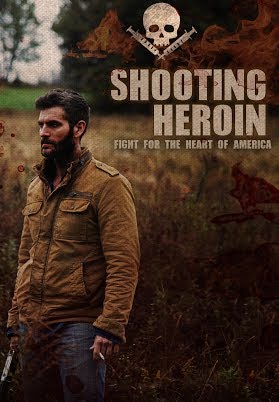
The Films of 2020: Shooting Heroin (dir by Spencer T. Folmar)


Shooting Heroin takes place in a small town in Pennsylvania, a once close-knit community that is dying a painful death.

As the film opens, we meet several people who have lost loved ones to the Opioid Epidemic.  Hazel (Sherilyn Fenn) speaks at a school assembly about how both of her sons overdosed within hours of each other and the only response she gets is a few students snickering at her.  Adam (Alan Powell) loses his sister to heroin and has to take her baby into his home.  Sitting in a bar, prison guard and local hunter Edward (Lawrence Hilton-Jacobs) demands to know why the police aren’t doing more to lock up the dealers.  The town’s sole lawman, Jerry (Garry Pastore), can only explain that he is only one person and that he can only arrest someone if he has proof that they’re actually dealing drugs.  Suspicions and gossip aren’t enough.

After a night of heavy drinking and heavier emotions, Adam comes up with the idea of a voluntary drug taskforce.  He recruits Edward and Hazel and, after Jerry reluctantly deputizes them, the three of them set out to battle the drug dealers their own way.  (“By any means necessary,” as Edward puts it.)  Of course, all three of them have their own thoughts on how to best deal with the issue.  Hazel puts up crudely painted but well-intentioned signs, asking teenagers if they truly want to break their mother’s heart.  Edward stops every car that’s heading into town and does a search.  (Yes, it’s highly unconstitutional.)  As for Adam, he wants revenge against the man who he believes was his sister’s dealer.  And if that means setting a house on fire and picking up a rifle to go hunting, that’s what Adam’s going to do.

Now, from that plot description, you might think that Shooting Heroin is a run-of-the-mill revenge flick but it’s not.  It definitely has its pulpy elements but, for the most part, Shooting Heroin is an intelligently written and well-directed look at how the Opioid Epidemic is ravaging communities across America.  The film approaches the subject with the type of empathy that, far too often, is missing from films like this.  There are no easy villains, the film tells us, and there are also no perfect heroes.  Adam, Edward, and Hazel all have their own approaches, each with their own set of strengths and flaws but the ultimate message of the film is that nothing is going to get better until we stop attacking and demonizing one another.  That’s an important message and one that, unfortunately, doesn’t get broadcast as much as it should.  Far too often, the war on drugs is a war on those members of the community who are at their most vulnerable.

The film is full of familiar faces, with Sherilyn Fenn giving the strongest and most poignant performance as Hazel.  There’s something very touching about the combination of Hazel’s determination to get through to teenagers and her total cluelessness about the best way to actually do so.  For all of her grief and anger, Hazel remains innocent enough to believe that telling a drug addict that they’re breaking their mother’s heart is the ultimate solution to the crisis.  When she joins the task force, she hands out adrenaline shots so that addicts can be revived.  When she confronts of a pharmacy worker who has filled an obviously faked prescription, Hazel speaks with the anger of someone who has seen the damage done to her community.  When she’s handed a gun, she says that she’s not going to carry anything that can kill.  Hazel, like so many people, is just trying to do her best in a unwinnable situation and it’s sometimes both heartbreaking and inspiring to watch her.

Shooting Heroin brings empathy to its look at the Opioid Epidemic, which is something that has been lacking in far too many other examinations of the what’s currently happening in America.  What’s happening in middle America is, for many in the political and media establishment, an inconvenient truth.  During the Obama years, the Opioid Epidemic was ignored because acknowledging it would have meant acknowledging the failure of Obama’s economic policies.  During the Trump years, the victims of the Opioid Epidemic were dismissed by a media and a political class who insisted on viewing every issue through the prism of red state vs. blue state.  One can only guess how these ravaged communities will fare during the Biden years, though there’s little reason to be optimistic that a 78 year-old career politician is going to do anything differently from his predecessors.  Shooting Heroin is a film about what’s happening today and it’s a film that will leave you thinking about the future.

Playing Catch-Up With The Lesser Films of 2015: Get Hard, Paul Blart: Mall Cop 2, Pixels, The Wedding Ringer


SPOILER ALERT!

One or more of the films reviewed below will appear on my list of the 16 Worst Films of 2015!  Can you guess which one(s)?

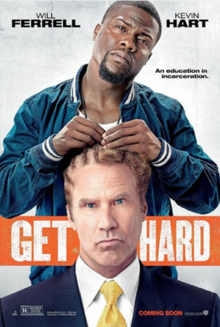
Get_Hard_film_poster

Get Hard (dir by Etan Cohen)

Will Ferrell is funny and Kevin Hart is funny and you would think that putting them together in one movie would be especially funny but … nope.  Get Hard, which I watched on HBO a few weeks ago, is incredibly not funny.  Ferrell plays a hedge fund manager who is convicted of fraud and embezzlement and it’s a sign of how haphazard this film is that I was never really sure whether he was supposed to be guilty or not.  Anyway, Ferrell is terrified of going to prison but fortunately, he runs into Kevin Hart.  Hart is playing the owner of a car wash here, a mild-mannered family man who simply wants to be able to afford to send his daughter to a good school.  However, Ferrell assumes that, since Hart is black, Hart must be an ex-con.

So, Ferrell hires Hart to teach him how to survive in prison and Hart agrees.  And, to be honest, this is not a terrible idea for an edgy satire but the film pulls it punches and never really exposes or challenges the racism that led to Ferrell hiring Hart in the first place.  Instead, it’s more interested in making homophobic jokes about prison rape (there’s a particularly long and unpleasant scene where Ferrell attempts to learn how to give a blow job that feels like it was lifted from a deservedly forgotten 90s film) and eventually, it devolves into a painfully predictable action film.

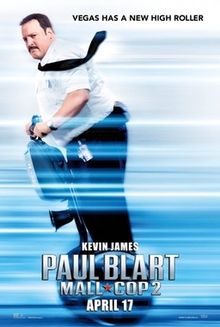
Paul_Blart_-_Mall_Cop_2_poster

Paul Blart: Mall Cop 2 (dir by Andy Fickman)

I know what someone out there is saying.

“YOU’VE NEVER EVEN SEEN THE FIRST PAUL BLART: MALL COP!!!  WHO THE HELL ARE YOU TO REVIEW THE SEQUEL!?”

Well, listen — it’s true.  I’ve never seen the first film and the only reason I watched the second one (on HBO at a friend’s house, which means that it literally cost me nothing) was because I had heard how terrible it was and I figured that I should see it before making out my list of the worst films of the year.  But, even with that in mind, I think I can still give this film a fair review.

(At the very least, I’ll try.  Dammit, I’ll try.)

Paul Blart: Mall Cop 2 is one of those films that is so forgettable that you forget about it while you’re watching.  Kevin James plays Paul Blart, a mall security guard who goes to Las Vegas for a security guard convention and ends up getting involved in thwarting a big heist.  It’s a comedy, though I can’t think of a single time I laughed.  Paul Blart: Mall Cop 2 was not quite the abomination that I had been led to expect.  It was, in no way, comparable to Birdemic, April Rain, or Man of Steel.  Instead, it was just an incredibly empty and soulless film.  It was a zombie movie that existed only to eat money.

One thing that is frustrating about a film like Paul Blart: Mall Cop 2 is that Kevin James seems like he could actually survive appearing in a good film, if he could just get a chance to make one.  He’s likable and he’s got an everyman quality about him.  But, for now, he seems to be trapped in films where he either plays Paul Blart or he’s surrounded by talking animals.

PixelsOfficialPoster

Pixels (dir by Chris Columbus)

Speaking of Kevin James, he’s also in Pixels!  He plays William Cooper.  When he was a kid, he was obsessed with playing video games.  Now that he’s an adult, he’s the President of the United States!  And he still keeps in contact with his best friend from childhood, Sam.  Sam, needless to say, will never be President.  When Sam was a kid, he was traumatized when he lost a national video game championship.  Now that he’s an adult, he installs home-theater systems and he’s played by Adam Sandler…

When Earth is invaded, it turns out that the aliens are under the impression that video games are real!  So, they recreate a bunch of classic video game characters and send them off to do havoc.  Who better to stop them than the President and Sam?  And who better to help than a nerdy conspiracy theorist (Josh Gad) and Eddie Planet (Peter Dinklage), the same guy who cheated in order to defeat Sam at the video game championship….

If you’re thinking that sounds like way too much plot for a silly comedy about video games coming to life, you’re right.  Pixels has some cute moments (though, based on the comments and occasional laughter of the middle-aged people in the theater around me, I get the feeling that a lot of the film’s video game-themed humor was a bit too “before my time” for me to fully appreciate) but oh my God, it was such an unnecessarily busy movie.  The idea behind Pixels had some potential but the film refused to take advantage of it.

I’ve said this before and I always get some strange looks but I honestly do think that — if he would actually break out of his comfort zone and stop doing movies that mostly seem to be about finding an excuse to hang out with his friends — Adam Sandler could be an acceptable dramatic actor.  Check out his work in Punch-Drunk Love, Funny People, Reign Over Me, Spanglish, and even the first half of The Cobbler.  (Tarantino even wrote the role of Donny Donowitz in Inglourious Basterds with Sandler in mind.)  The fact that Sandler could be doing good work makes his continual bad work all the more frustrating and annoying.

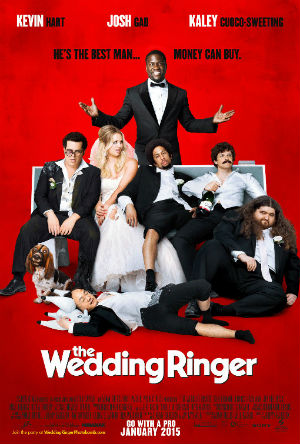
TheWeddingRingerPoster

The Wedding Ringer (dir by Jeremy Garelick)

And speaking of Josh Gad…he’s also in The Wedding Ringer!  For that matter, so is Kevin Hart.  Hart plays a guy who, for a sizable fee, will pretend to the lifelong best friend (and best man) for grooms who do not have enough real friends to fill out a wedding party.  Hart refuses to get emotionally involved with his clients but that all changes when, despite himself, he becomes friends with Josh Gad, who is on the verge of getting married to Kaley Cuoco.

The Wedding Ringer got terrible reviews but it also was very popular with audiences and I imagine a lot of that had to do with the relationship between Hart and Gad.  Both of them give very sincere performances that elevate some otherwise unpromising material.  The Wedding Ringer wasn’t good (it’s predictable, it’s portrayal of Kaley Cuoco’s character verges on misogynistic) but, at the same time, it wasn’t as bad as it was made out to be.  In the end, it was pretty much a typical January film.

I'm so excited!  I'm so excited!  I'm so ... wait a minute, am I just here because this is a post about bad movies?

I’m so excited! I’m so excited! I’m so … wait a minute, am I just here because this is a post about bad movies?

Which of these four films will make my list of the worst 16 films of 2015?  The answer shall be revealed soon!