Review: Ghost Bath – Moonlover


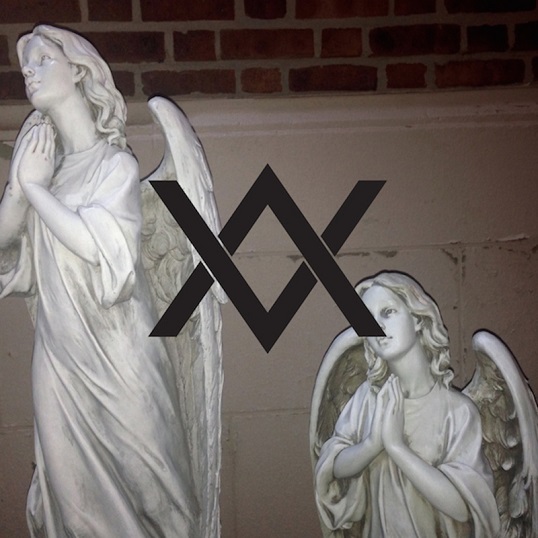
Gimmicks don’t always work out as intended. When I heard that Ghost Bath were not, as they once claimed, Chinamen from Chongqing Municipality, but rather well-mustached American hipsters, I believe my first question was “who?” But if this band’s efforts to fool fans before they actually had any comes off a bit less clever than stupid, my negative points end there. Moonlover is a pretty interesting work from its cover all the way to the closing track. Hailing from the far more obscure and frostbitten wasteland of North Dakota, Ghost Bath have forged a really solid sophomore LP that should stand among the better metal albums we hear this year.

Track: “Golden Number

After a brief, haunting intro track that definitely lends credence to their name, Moonlover makes an awkward but forgivable transition into a really uplifting number that has everyone on the internet comparing them to Deafheaven. With one of those explosions of emotional, half-heartbroken half-triumphant post-black metal glory that sounds more familiar every year, followed by a kind of punk lick underlined by passionate, poppy drumming straight off Amesoeurs’ Ruines Humaines and unearthly vocal shrieks, “Golden Number” is certainly in line with the trend of the day. It kind of feels like someone drug Woods of Desolation out of their basement and shoved them into a top-notch recording studio, and yes, the comparisons to Sunbather have their merit too. But if Ghost Bath are not necessarily pioneers, they are definitely refining the machine.

Much like post-rock, where you had a whole bunch of totally distinct bands making waves while everyone else ripped off Mono–and we could hardly complain about that–post-black metal is definitely developing a “standard” sound. “Golden Number” is that sound to a T, and I absolutely love the clarity with which Ghost Bath pull it off. This is a genre born of static noise. It was the realization that you could invoke a lot of emotion by hiding something pretty in an aural cesspool that really kicked off the scene, and even Deafheaven’s “Dream House”, for all its ability to swoon foreign audiences, was really heavily distorted. The noise carried the passion, but it was also limiting. Moonlover is a surprisingly clean album, and because of it the band can do subtle things that I don’t often hear. The tremolo at the beginning of “Golden Number”, for instance, is complemented by a second, barely audible guitar that’s tapping instead of picking. Maybe post-bm has gone that route before, but if so I never noticed it. The clarity on this song, at least relative to its genre, allows me to detect these things, and the end product feels so much more full of life for it.

“Ghost Number” ends with two minutes of piano, and “Happyhouse” picks the metal back up with a totally different feel from the song before it. Three minutes of melancholy plodding lead into a fresh vision of that ghostly guitar we heard in the intro track, and Dennis Mikula treats us to more of his otherworldly screams. Amesoeurs again comes to mind, and I have to believe Neige was an inspiration on this band in more ways than one, but to me Mikula’s vocals sound most reminiscent of Ygg, a short-lived but brilliant Ukrainian trio featuring former members of Nokturnal Mortum and Helg from Khors. “Happyhouse” erupts into black metal for only a passing burst of intensity before returning to its moody plod. Post-rock guitar ultimately defines the song’s direction, while Mikula’s outstanding vocal performance brings the depth. “Happyhouse” could be a cookie-cutter bore, but the band’s keen execution and knack for making their short repeated phrases consistently catchy turns it into something I can really embrace.

10 minutes go by before you hear another ounce of metal, but I would hardly call it a wait. “Beneath the Shade Tree” and “The Silver Flower pt. 1” are both dreamy guitar-driven visions of forests and streams, feeling perhaps a cross between Agalloch and Alcest. The nature effects on the latter track especially brought to mind the intro and outro to Alcest’s “Le Secret”, though I’m sure you could name a dozen other bands that might have played an influential hand here. The origins are quite irrelevant; these two songs only beg identification because they are so vivid and beautiful. The sound is ultimately the band’s own.

Track: “The Silver Flower pt. 2

When Moonlover‘s heavier half does return, it feels infused with the spirit of the instrumental tracks before it. “The Silver Flower pt. 2” floats along with no edge to speak of beyond the first minute, drifting on the dream that came before. If it weren’t for Mikula’s persistently tormented vocals–a bit out of place now, I must admit–it could pass as a moody but up-tempo rock song. The style feels strikingly familiar, yet I can’t put a finger on it. It’s sort of equivalent to how Katatonia were playing around with the metal sounds of their day in the late 90s, and it calls the whole “black metal” label for this band into question. Moonlover incorporates so much more, riding a dozen different stylistic approaches to take us on a journey. We started out with a burst of passion–a sense of fulfillment and life–on “Golden Number”, then road down a path into depression with “Happyhouse”. The commune with nature in “Beneath the Shade Tree” and “The Silver Flower pt. 1” revitalizes, moving the album from positive and negative extremes to an even-keel, smooth ride on “The Silver Flower pt. 2”. The final track, “Death and the Maiden”, sort of brings us around in a circle. The equilibrium of “pt. 2” picks up its pace here, growing in excitement until the return of a black metal sound breaks it. We’re back to highs and lows, and we end on the latter. The album trickles out in a dark depressing grind back into the haunting sounds of the introduction, and that opening melody repeats, now made even more ghostly through a synth whistling tone.

I like it. Moonlover feels like a complete package, flushing out a musical narrative that consistently develops from track to track. It might not match up precisely to the picture it painted in my mind, but a progression is definitely there. Ghost Bath refuse to restrict themselves to one genre, incorporating a wide array of styles into a really coherent whole. The drums are tight, the guitarists can pull off some neat noodling but know when to keep it simple, and the album is book-ended by its two best tracks. I don’t think it would have hurt Dennis Mikula to chill out on the screaming for a bit on “The Silver Flower pt. 2”, but over all I love his vocals. There’s not much I can complain about. And since I want to start making a point to link where you can purchase the albums I ramble about: go adopt a moon on Bandcamp.
Review: Pyramids – A Northern Meadow


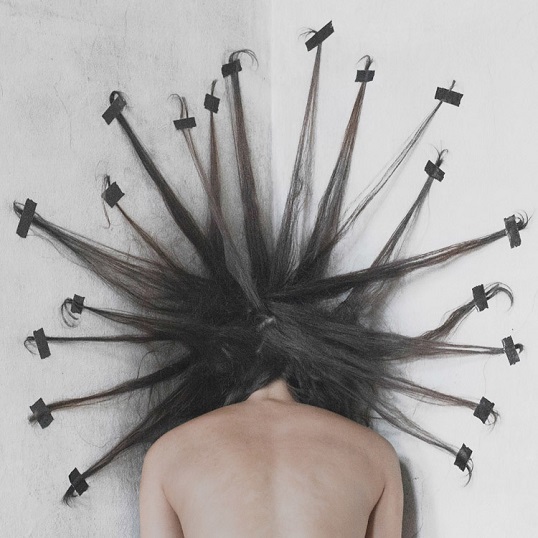
Pyramids are four seemingly random Joes from Denton, Texas, who have managed to attract some huge names in the world of music, possibly through their completely ridiculous album covers. Well, maybe not that, but the genre-defying oddity known as Pyramids and their associated acts have shown an uncanny knack for recruiting stars to their projects. Originally signed to Aaron Turner’s (Isis, Old Man Gloom) acclaimed Hydra Head Records, they managed a transition to metal’s newest cutting edge label, Profound Lore, as soon as the former went defunct. Their self-titled debut in 2008 scored Colin Marston (Krallice), Vindsval (Blut Aus Nord), and Justin Broadrick (Godflesh, Jesu), among others, to contribute to a remix album, while band leader R. Loren’s White Moth and Sailors with Wax Wings projects have featured David Tibet (Current 93), Alec Empire (Atari Teenage Riot), Jonas Renkse (Katatonia), John Gossard (Weakling), Simon Scott (Slowdive), Hildur Guðnadóttir (múm), and Aaron Stainthorpe (My Dying Bride), to name… a few? The 2009 follow-up, a collaborative album with Nadja, featured Simon Raymonde (Cocteau Twins), and there’s an Ulver remix of it floating around out there. They also lead some cassette tape project with 49 bands I’ve never heard of and This Will Destroy You.

In spite of the absolutely ridiculous, confounding string of names I just threw out, this band remains pretty damn obscure. A Northern Meadow, their first full-length since 2009, may well change all that, with positive reviews on sites like Pitchfork Media ensuring them a moment in the spotlight. Moreover, Colin Marston and Vindsval are active guest musicians this time, with pretty encompassing roles.

track: “In Perfect Stillness, I’ve Only Found Sorrow

The opening track, “In Perfect Stillness, I’ve Only Found Sorrow”, kicks off with Marston’s quintessential tremolo and Vindsval’s equally iconic drum programming, while R. Loren’s vocals quickly cue us into the fact that this isn’t going to be a straight metal album. Instead, we face a prolonged melancholy that finds its essence in the vocals and never really resolves into anything. This brooding approach carries throughout the album, but as the minutes tick by you can notice a slight sort of development–little hints at a more complex animal below the surface. “The Earth Melts Into Red Gashes Like The Mouths Of Whales” rises out of the plod for thirty seconds of really catchy guitar before dissolving back into bleak noise. “The Substance Of Grief Is Not Imaginary” feels like a Blut Aus Nord song in slow motion, offering all of their accustomed madness with none of the speed or volume, while Loren briefly confounds the mood with a really beautiful but short lived vocal melody. “Indigo Birds” extends the vocal presence, with Loren singing longer with more effects and range. As the song dissolves out into distorted droning and ultimately three minutes of dissonant synth, the album approaches a modest transition in character. The interlude resets the mood, allowing the remainder of the album to take, I think, a slightly more abrasive or confrontational approach.

Track: “I Am So Sorry, Goodbye

The second half of the album is more distinct, with more drive in the guitar and a faster rate of transition. “I Have Four Sons, All Named For Men We Lost To War” starts off with the most crushing tones on the album, enhanced in their finality by the still slow pace set by Vindsval’s drums. “I Am So Sorry, Goodbye” has a really memorable industrial groove, with some synth tones that invoke for the first time in me a real vision of something… perhaps ancient, a sort of primordial ruin made all the older by Loren’s forlorn, beautiful vocals. Like “Indigo Birds”, the song dissolves out into low-tuned guitar and synth droning, but the feeling is more complete. The substance of the song gives you more to reflect on in the haze of noise that follows.

On “I Am So Sorry, Goodbye” and growing throughout the remainder of the album, Loren’s vocals start to sound subtly reminiscent of Chino Moreno to me–high-pitch meanderings that feel slightly unstable yet always harmonious. It’s an effect he pulls off well, and it makes the album feel rather back-loaded to me. “Consilience” wraps things up with a turn back to the darker side. More chaotic, and with a new touch of pessimism to the vocals, it concludes an already morbid album on a particularly bleak note. Oppressive synth creeps its way in a bit earlier, and a hard stop takes us to fading noise and silence.

A Northern Meadow leaves me with pretty mixed feelings. R. Loren has a clear aural agenda that he sticks to throughout, yet I can’t escape the feeling that the album’s highest points were those most distant from the overarching theme. The beat-down opening of “I Have Four Sons…”, the synth early in “I Am So Sorry, Goodbye”, Marston’s driving 30-second sweep in “The Earth Melts…”, the short-lived vocal burst at the start of “My Father, Tall as Goliath”… I find myself anticipating these finer moments through a lot of the moody grind, rather than just enjoying the ride and taking the highs as they hit me. That grind has a lot of character at times, especially the further into the album I get, but not enough to match the talent Loren was working with here.

I guess I would say that A Northern Meadow is a very unique album, and I love Loren’s dedication to uniting awesome musicians, but I don’t feel very compelled to keep listening to it as the novelty begins to wear off. If its slightly chaotic morbidity strikes a chord with you, you might love it, but if you can’t connect to that feeling it will inevitably grow tedious at times. Marston’s noodling isn’t extensive enough to keep me constantly engaged the way a Krallice album can–a tall order, considering how equally brilliant that band’s other three members are–nor do I think Vindsval’s drum tones hold up in this sort of mono-tempo drag. It doesn’t help that both musicians inevitably play themselves. Like say, Humphrey Bogart or Morgan Freeman, they are so distinctly themselves that you feel like you’re hearing the actors, not the characters they are meant to portray. There is nothing of the instrumental synergy both produce in their main bands. I don’t hear the chemistry of two great musicians working together here. I just hear two great musicians, like some mash-up with Loren mixing vocals and synth into the pot. There may be some truth to that: if I understood Loren’s recent interview with Decibel Magazine correctly, I’m pretty sure Vindsval and Marston had no direct communication while crafting this.

I’m not saying A Northern Meadow is bad. Not at all. But it does leave me wanting something more. I can’t help but wonder what could come out of Loren, Marston, and Vindsval sitting down in a recording studio together, and I suspect it would be something more substantive than this, with a lot more motion and a lot less gloom. But that meeting might be pretty difficult to arrange, and who knows whether they would see eye to eye if Loren had allowed them less freedom to do their own things. I might yet get into this, if I can get over what it isn’t sufficiently to appreciate what it is.

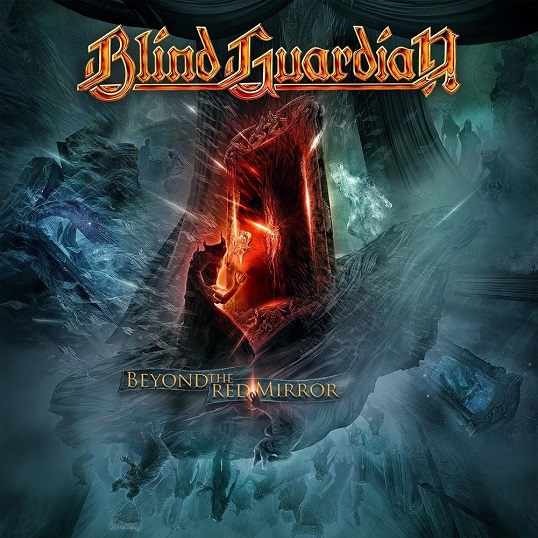
Review: Blind Guardian – Beyond the Red Mirror


If Blind Guardian are not by now regarded with the sort of reverence generated by Metallica or Iron Maiden, it is a crime against heavy metal. Formed slightly before I was born, they might be the longest tenured band in existence that still carry extraordinarily high expectations. No one realistically expects a band to stay at the peak of their inspiration for thirty years, but Blind Guardian are the exception. They’ve never shown their age or wavered towards mediocrity. Does Beyond the Red Mirror keeps that tradition running strong?

“Yes” is the short answer. A thousand times “yes”, and only a fool would deny it. But when you’re talking about a band that released the unequivocal greatest power metal album of all time, there is still plenty of room for discussion.

Blind Guardian pulled off a pretty tough transition in 2002. They followed up Nightfall in Middle-Earth (1998), their magnum opus by nearly everyone’s measure, with a relatively significant change in style. A move like that has spelled disaster for many great bands, but when Blind Guardian traded in an edgier, crisper production for smooth and seamless symphonic beauty on A Night at the Opera (2002), it totally worked. Their next two albums continued in that direction, and I never had the slightest cause to question it. While A Twist in the Myth (2006) ranks relatively low in their discography for me, that resulted from what I felt was a bit of lackluster songwriting–not pervasive, but present enough to leave the album somewhat diminished in the shadow of its two groundbreaking predecessors. At the Edge of Time (2010) was a grand return to form, definitively proving that this band would not suffer a slow decline as the years caught up to them.

Beyond the Red Mirror opens up with a lot less steam than “Sacred Worlds” lent to At the Edge of Time. The first track, “The Ninth Wave”, kicks off with a pretty typical epic introduction, complete with a professional choir and orchestra, but it’s the sort of sound that really hinges on what will follow. We’re used to a sort of constant rise from symphonics into metal, but “The Ninth Wave” is far more brooding at the outset. “Underwhelming” might be the right word for any other band, and nothing about the lead in really grabs me, but let’s not forget what band this is. I feel pretty neutral–not negative–about the album until the first chorus kicks off. And when that point is reached–“Sail on till you reach the promised land. We all drown in the fifth dimension. The ninth wave.“–you get this big dump of pent-up anticipation that you never knew you had. The five year wait is over. Beyond the Red Mirror is here, and the chorus carries all the grandeur you knew would be coming. It feels so complete and full, so Blind Guardian to the core, that the introduction isn’t sour in retrospect. Instead, the slow motion into glory lets the album creep into you. One second you’re waiting for something to happen, the next you’re in love, and they don’t have to resort to anything jarring or sudden to create the effect.

“Prophecies”, “At the Edge of Time”, and “Grand Parade” follow this trend of paced execution, keeping you wrapped in the warm vibe that is Blind Guardian’s sound while ebbing and flowing along. Not out of place on A Night at the Opera, these four tracks suit the album’s production well and deliver without any misgivings.

“Miracle Machine” serves as the album’s only ballad, and the other five tracks… they’re pleasantly not what I expected. For all the big name orchestras involved in recording Beyond the Red Mirror, Blind Guardian actually get pretty old-school. “Ashes of Eternity”, for instance, is heavily driven by rhythm guitar, and André Olbrich’s tasty solo near the middle is cast far more in the spotlight than it might have been on previous albums. “The Holy Grail”, “Sacred Mind”, and “Twilight of the Gods” follow a similar pattern, while “The Throne” exists somewhere in between. My initial reaction to these songs was not entirely positive, but they’ve almost all grown on me over time. They make for an interesting perspective on Blind Guardian’s career. Hansi Kürsch’s gorgeous vocals still feel fairly well rooted in the A Night at the Opera sound, but Marcus Siepen and André Olbrich are bringing back a lot of the band’s more classic power metal sound. With Hansi still largely dominating the choruses and rhythm and lead guitar being more focal in between, the songs take on a novel sort of vibe that feels like quintessential Blind Guardian but does not point directly to any one previous era in the band’s illustrious history.

I definitely dig it, yet I don’t feel like Beyond the Red Mirror will leave quite the lasting impact on me that Nightfall in Middle-Earth, A Night at the Opera, and At the Edge of Time did. The problem, aside from the lack of a really stand-out ‘bard’ track–“Miracle Machine” is nice but has none of the sing-along appeal of say, “Curse My Name” or “Skalds and Shadows”–lies in the production. I can’t help but feel like Olbrich and especially Siepen are getting the short end of the stick throughout. Like the three albums before it, Beyond the Red Mirror sacrifices a lot of crispness to encompass the massive volume of vocals and orchestration. That worked really well before, but here I just don’t know. Lead and rhythm guitar alike rang with crystal clarity on Nightfall in Middle-Earth, and that was a major part of what made the album perfect. If guitar is to play a more central role again, it would be nice if I could properly hear it. My one beef with Beyond the Red Mirror is that, while the band continues to evolve in positive ways, their producer may be failing to keep up.

I think that’s a big issue. This album is awesome, but I would love it so much more if they’d filled the symphonic void with louder, crisper guitar. That goes for about half of the tracks. I just sometimes feel like a few modest tweaks would have made them better. I’m looking forward to seeing some quality live videos of these songs pop up on Youtube, because I think a live venue may do them better justice. For now, Beyond the Red Mirror earns entry into my Blind Guardian playlist with ease, but I’ll not be revisiting it quite so often as Nightfall, Night at the Opera, or Edge of Time.

If you want another song to check out, I think “Prophecies” is my favorite. “The Ninth Wave”, “Ashes of Eternity”, and “Grand Parade” come close.

Review: Liturgy – The Ark Work


You know those last thirty seconds or so of a rock concert, when the guitarists start grinding tremolo on the final note while the drummer pummels out a solo? Then the instruments all coalesce and everyone hits two triplets together, declaring “the end” triumphant into your ears? Yeah, then you have a basic idea of what Liturgy sounded like four years ago. Aesthethica reveled defiant on the brink of collapse, a Dionysian exploration of adrenaline that twitched and sputtered in vibrant light. We may still be a long ways from “black metal” conjuring to mind anything but corpse paint and Satan to the average music fan, but the gales of a paradigm shift have tossed this genre into such a frenzy that even the novelties of 2011 can seem ancient today.

(Liturgy’s record label, Thrill Jockey, has rather bizarrely opted to remove all but two tracks from Youtube, as if silence sells an album. You can still listen to The Ark Work on NPR at this link, thankfully, and I recommend checking out the first three tracks/13 minutes–Fanfare, Follow, and Kel Valhaal–followed by Reign Array to get a good feel of the album.)

An assessment of this album could go off on a hundred tangents, and I don’t think that the band would be averse to discussing any one of them. The most standard response seems to be instant revulsion. A lot of big name critics have given it abysmal ratings of 2 or 3 out of 10–slightly lower than Morbid Angel’s Illud Divinum Insanus–following a brief write-off of the album as an attempt to troll us. A few others will point out how the band’s music has managed to ruffle a lot of feathers, and then leave it to the listener to hash out. Both are valid cop-outs that don’t really provide the slightest bit of context for the oddity before your ears.

In a review a few years ago, I wrote off L’Ordure à l’état Pur by Peste Noire as a “troll” album. With its chicken clucks, farts, belch beats, and sound samples of scat pornography, I was not completely off the mark. But I missed the context: a critique of modern-day France that was at once scathing and brimming over with nationalism, embracing and mocking the same things from subtly different angles. The music was actually quite excellent, as Famine’s compositions always are, and it took a special sort of intelligence to bring together revolting sounds into an appealing musical narrative. But the quality was not spoon fed to you. You had to want to find it.

There is nothing quite so blunt in The Ark Work, but the album definitely produces sounds that your ear will not initially be prepared to assimilate. “Fanfare” leads up to “Follow” in a development similar to the introduction to “High Gold” on Aesthethica, but here the sound of a guitar pick scratching above the fretboard has been replaced by an unorthodox merger of MIDI and real trumpets. Visions of Godspeed You! Black Emperor lifting skinny fists like antennas to heaven break to bells, and an electronic power surge suddenly propels you into a brainfuck of noise that seems to streak through your head in a ball of flame, the tremolo guitar and blast beat drums pulsating at light speed as the bells and glitch tones dissolve into nonsense all around you. The drum machine hangs in space above the dashing guitar, accelerating to drive itself back into Greg Fox’s real drums to a roar like a Roman coliseum. The cavalcade of sound is, for better or worse, something you have never heard the likes of before. And as the spectators cull blood into “Kel Valhaal”, the album moves from its raucous birth to the trance of combat. Arguably my favorite song on the album, “Kel Valhaal” is cryptic in its brutality. The perpetually repeating drum and trumpet beat crush you on every note without the slightest sign of distortion, while entrancing you in a wash of bells and glitches and folk instrumentation that I can’t put a finger on–surely that I am not supposed to be able to put a finger on. When Hunter’s vocals come in, trading off “Follow”‘s croons for rap, the album reaches a height of command you won’t hear again until “Reign Array” towards the end. I don’t understand half of what he’s saying, but my brain tricks me into thinking it is surely paramount–some threshold of enlightenment I must reach for with all of my might.

Or you might just hear noise. I did, the first time I listened to it. Jaded is the listener who can take all of The Ark Work in on first encounter. But I wanted to hear it again, and mull it over. What I had that I think a lot of reviewers lacked was proper context. Hunter Hunt-Hendrix earned a world of derision following Aesthethica when he proceeded to discuss his ideas behind the album. The guy appeared to most of the world as a sort of fascinating clown–a feminine child so high on his own farts that he would presume to declare his music its own unique style worthy of genrefication: “transcendental black metal”. He published a brief philosophical treatise on how transcendental black metal offered a higher state of music than its predecessors, and well, you get the idea. Did I mention he looks kind of like a girl? The alternative label of “trap metal” has been thrown around, and his previous band’s name was Birthday Boyz. Liturgy is a metal band, mind you. Their default audience has never been particularly noted for tolerance.

So most people reviewing The Ark Work probably either never heard Liturgy previously or thought of Hunter as an accident waiting to happen. Or maybe a troll. His pre-existing image was pretty hard to swallow. The Ark Work, moreover, claims to enhance “transcendental black metal” with “cross-fertilized hardstyle beats, glitched re-sampling of IDM, and occult-orientated rap”. …yeah… You can imagine why people have struggled on many levels to take The Ark Work seriously. People who aren’t familiar with the band turn to reviews for an explanation of what their ears fail at first to compute, and they’re told “troll” at best, given some metal meathead’s rant about insults to manliness just as likely.

But Aesthethica was not inaccessible in the sense of The Ark Work, and no amount of self-mockery negated the fact that tracks like “Harmonia”, “Sun of Light”, and “High Gold” were delightful on first listen. If you actually bother to read what Hunter wrote about “transcendental” black metal, moreover, you can see a clear connection to the music. It roughly paralleled a lot of thoughts that had been floating around in my own head since at least Alcest’s Le Secret in 2005, and the fact that Hunter Hunt-Hendrix was willing to discuss metal’s new frontier while actually pioneering its exploration told me, if anything, that he had a lot more potential than even Aesthethica let on. That album was a sort of burst of passion. I would wager that the band did not devote particularly excruciating time to its finer details, and the result was still one of my favorite albums of 2011. Through separate mediums, Hunter showed the raw capacity for great song writing and the level of reflection necessary for fine-tuning an album to perfection. Merge the two, and you have, well, The Ark Work.

Within the first few seconds of “Follow”, I was pretty convinced that The Ark Work had the potential to be breathtaking. My context for this album placed Liturgy near the top of a wealth of new bands committed to employing black metal towards post-rock ends. I expected that Hunter had crafted every last second of it with painstaking care to achieve his visions. When you listen to something in that light, it’s a totally different experience. Take the vocals. Hunter delved very little into clean vocals on Aesthethica, and where he did–“Glass Earth” for instance–the results were weak. His voice, like his appearance, came off a bit childish, and I think he just ignored that fact rather than putting it to work for him. In the spirit of that album, I can picture a rebellious attitude of affirmation: “This is what I sound like.” On The Ark Work, there’s a more intelligent design. Hunter commits to not screaming once from start to finish, and the voice he’s left to work with is in not at all appealing in any conventional sort of way. But if a central idea behind the album is to barely yet perpetually hold cohesive on the cusp of nonsense, his voice naturally caters to it. He seems to intentionally integrate that notion, controlling in each instance the extent to which we hear his voice exposed. He employs a lot of rap, and the rhythmic flow of his lyrics provide the glue around which his marshmallow mouth forms another tipping point into that abyss of absurdity. On “Kel Valhaal” he manages to project the rhythm with such force that he sounds downright commanding. On “Reign Array” he starts out reminiscent of Thom Yorke (many elements of that song inexplicably remind me of Radiohead), while as the vocal style changes in the triumphal conclusion he remains careful to continue to layer his voice just enough to avoid spoiling the exhilaration.

On “Vitriol”, easily the most divisive track on the album, Hunter exposes everything. The song merges the Aesthethica style of “Glass Earth” with a chanting rap and a fascinating combination of minimalistic percussion and sub-bass. You can understand every word he says, and a lot of the lines are so awkwardly groomed to feed the trolls that you can’t help but think he’s doing it intentionally. “Soon the ADHD kids will quiet down respectfully,” “All the girls will get into art school,” a reference to “primordial gender”… In a way, the song is a caricature of everything critics have accused Hunter of being, followed by the refrain “I turn your ashes to gold, you repay me with vitriol,” as if to say “look how much I’ve entertained you, and you have the nerve to criticize me. Psssh.” I would really like to think the idea crossed Hunter’s mind with a bit of a devilish grin while he wrote it. Yet that, if intended at all, is only a bit of an Easter egg in a song that has nothing to do with it. “Vitriol” is actually pretty cryptic and compelling. I can’t piece it together into a cohesive whole, yet each individual line seems to find a fitting notch in the puzzle. A part of me wants to believe that that is the extent of it, and the accomplishment is to leave you with this unstable understanding that feels like a cohesive message yet contradicts itself. For me at least, “Vitriol” accomplishes lyrically what the rest of the album does musically.

The attention to detail extends beyond vocals and lyrics, of course. The instrumentation is vast, delving into dozens of different sources effectively. Hunter’s electronic repertoire both destabilizes and enhances the real instruments that it frequently parallels. Greg Fox, one of the greatest drummers of this era, returns to the band to offer his brilliance, and the drum machine ties together with him nicely. I wish Thrill Jockey had not made it so difficult to share tracks, but suffice to say I highly recommend this album. It is easily the most intelligent and compelling collection of songs I have heard since Peste Noire’s 2013 self-titled, and most of the reviewers shitting all over it fully intended to before they ever heard it. Its apparent madness only strengthened their resolve. But if ever you begin to have doubts, switch to “Reign Array” and ask yourself whether a song like this can arise by accident. On The Ark Work, Hunter Hunt-Hendrix proves himself to be the musical genius that Aesthethica hinted at. And like Jimmy Chamberlin to Billy Corgan, Greg Fox completes him. So long as those two stick together, Liturgy will remain among the most elite bands in metal for a long time to come.

Song of the Day: Untitled Self-Portrait (a.k.a. Batman’s Song) (performed by Will Arnett)


The_Lego_Movie_poster

I don’t know about you but I’m still pretty angry about what happened yesterday when the Oscar nominations were announced.  Seriously, how could The LEGO Movie not be nominated for best animated film?  It’s almost as if the Academy is prejudiced against plastic toys.

*Le sigh*

So, normally, when I talk about The LEGO Movie, I find an excuse to include the video for Everything is Awesome.  

But you know what?

EVERYTHING IS NOT AWESOME!

And today’s song of the day — which is also taken from The LEGO Movie — reflects that point.  As performed by Will Arnett, here’s Batman’s Song (a.k.a. Untitled Self-Portrait.)

All together now…

DARKNESS….

Review: The Decemberists – What a Terrible World, What a Beautiful World


I was basking in the golden glow of San Francisco’s Great American Music Hall when I first laid eyes on The Decemberists. It was Summer 2004, and it was a day I still remember well. I arrived alone, but I ended up befriending two girls about my age from Sacramento. It was a pretty thing–three kids too young to buy drinks and too engaged to harbor ulterior motives, thrilled to witness a band that seemed to capture every novelty of a world we were only barely old enough to traverse independently. It wasn’t particularly crowded–we walked right up to the front of the stage–but there wasn’t a stranger in the audience. “Billy Liar” was a hall-wide sing-along. On “Red Right Ankle” you could hear a pin drop. Chris Funk dawned a fake beard and marched through the audience pounding a drum strapped to his chest for “A Cautionary Song”. “California One / Youth and Beauty Brigade” was a swaying dream that will resonate in me until the day I die. I wanted to marry those girls by the end of it–both of them, and I never bothered asking their names.

Austin Texas, fall 2006, I stumbled into Stubb’s BBQ in a daze. “Indie rock” had become the musical movement of the decade, and I felt like a king in the middle of it all. It was a crazy two-week stretch: The Album Leaf, The Mountain Goats, a trek out to Houston for Built to Spill, a return to my metal roots for Between the Buried and Me, and somewhere in the midst of it all I found my sleepless self in a sea of humanity as Colin belted “Culling of the Fold” outdoors to a sold-out crowd. He was exhausted but elated, grinning from ear to ear the whole set, and so was I. The irony of “I was Meant for the Stage” was not lost on either of us.

Pittsburgh, 2009, I took my seat at the Byham Theater to witness The Decemberists in a traditional performance hall. I had traded in faded proofs of attendance for garb with actual buttons, and the band was decked out in full suit and tie. The Hazards of Love was larger than life–Shara Worden striding across the stage like a spidery temptress to a majestic display of lights and an unprecedented rock opera. The Decemberists rose to their fame as only they could, and the result was in one breath a self-aware mockery of their grandiose ambitions and a brilliant realization of the same.

…I wrote of The King is Dead‘s simple folk rock sound that it seemed like The Decemberists were “coming down off their own high. I imagine it’s difficult to be as… musically intelligent as they are without some fear of becoming pretentious.” The album title might even hint at this, and the band’s subsequent three year hiatus seemed to confirm it. Now it is 2015, more than a decade since that wonderful night in San Francisco, and What a Terrible World, What a Beautiful World is due out in just over a week. I don’t really know what I expected, but I know what I was feeling. It certainly wasn’t the grandeur of The Hazards of Love, nor epic ballads reminiscent of “The Mariner’s Revenge Song” and “The Island”. I was waxing nostalgic on Colin at his sweetest. “Grace Cathedral Hill”, “Shiny”, “Red Right Ankle”, “Of Angels and Angles”… Because The Decemberists were no longer a novel in their own right. That beautiful rise ended with The Hazards of Love, and the hiatus laid it all to rest. Theirs was a tale to look back on fondly; the story had come to an end.

What a Terrible World, What a Beautiful World gives me that sweetness, in a way. Tracks like “Lake Song”, “Make You Better”, and “12/17/12” are absolutely beautiful. All of the songs fall somewhere between these mellow numbers, blues/folk tracks like “Carolina Low” and “Better Not Wake the Baby”, and upbeat pop like “The Wrong Year”, “Cavalry Captain”, and “Philomena”. I could live without the latter three, but suffice to say the album is generally pleasing to listen to, though Jenny Conlee’s accordion has sadly all but left us. “Lake Song”, “Make You Better”, and “12/17/12” definitely steal the show for me, but I won’t soon forget the catchy choruses of “Anti-Summersong” or “Mistral”, nor the lulling blues melancholy of “Till the Water is All Long Gone”.

But this album breaks my heart. Through it all, I can’t escape the feeling that some fell force sucked away Colin’s joie de vivre, substituting mellow content to lead a normal life where once the world had been a playground. The music is still great, but I can’t feel the synergy between it and the lyrics anymore. At least “Lake Song” has been spared this fate. Here is what I can understand of “Mistral”: “So we already wrecked the rental car, and I’ve already lost my way. I feel entombed in this tourist bar, for a day anyway. So lay me out on the cobblestone, and unfurl this aching jib. The streets are built on ancient bones, and the crib of the rib. Won’t a mistral blow it all away? Won’t a mistral blow away? So it’s me and you and the baby boy, and a ? shed away, reeking out a little joy. What a waste. Bad mistakes. Won’t a mistral blow it all away? Won’t a mistral blow away?” I don’t know. It’s just… kind of shallow–a bit of babbling around the surface of a theme–and it’s pervasive through much of the album. “Better Not Wake the Baby” is packed with creative one-liners, all tied by a refrain of “but it better not wake the baby“. What does that mean? Plenty of Decemberists tracks have sent me to Wikipedia in the past, but I’m not going to find an answer here, and for that the song means nothing to me. “12/17/12”, my favorite track, still totally jars me out of my happy daze when Colin appears to rhyme “grieving” with “grieving” and “belly” with “belly”.

Go ahead. Crucify me. Point out the most obvious meanings; remind me that Colin still has a robust vocabulary; explain how it’s none of my business to criticize someone else’s creativity; note that it’s still better than 90% of popular music; tell me to shut my mouth and go listen to something else if I don’t like it. I don’t care, because the sad fact is I will go listen to something else. I spent more time on Castaways and Cutouts than on What a Terrible World, What a Beautiful World while writing all this. I don’t want that. I want to love this album and hold it dear, but I can’t. I listen to the lyrics and more often than not I just hear Colin going through the motions without any of the magic. From the 5 Songs EP all the way to The Hazards of Love it was a constant indulgence, and now it is gone.

The opening track, “The Singer Addresses His Audience”, is the reason I can still listen with a faint smile. It is not one for the album, but for the memory of all that The Decemberists have meant to me over the years. In almost a parting farewell to Colin’s old stage persona, he sings in classic form: “We know, we know we belong to ya. We know you built your lives around us. Would we change? …We had to change some. We know, we know we belong to ya. We know you threw your arms around us in the hopes we wouldn’t change… But we had to change some, you know, to belong to you.”

And they still do, and I still love them, and I still look forward to catching them on their upcoming tour, but What a Terrible World, What a Beautiful World is a bittersweet experience.

2014 In Review: 14 of Lisa Marie’s Favorite Songs of 2014


Continuing our look back at 2014, below you’ll find 14 of my favorite songs of the past year.  Now, you should understand that I’m not necessarily saying that these are the best 14 songs of the year.  Instead, they’re just some of my personal favorites.  These are the songs that either made me want to dance or that I inevitably found myself singing off-key while I was in the shower.  These are the songs that got stuck in my head and which I found myself singing whenever I was stuck in traffic.

These are 14 of my favorite songs of 2014.

(By the way, click on the links in this sentence if you want to see my favorite songs of 2013, 2012, and 2011.)

14) Everything is Awesome — Tegan and Sara featuring The Lonely Island

13) Mess Is Mine — Vance Joy

12) Summer Nights — Kaskade featuring The Brocks

11) Chandelier — Sia

10) Take Ü There — Jack Ü (featuring Kiesza)

9) Blank Space — Taylor Swift

8) Runaway (U & I) — Galantis

7) Blue Sky Action — Above & Beyond featuring Alex Vargas

6) Fancy — Iggy Azalea featuring Charli XCX

5) Stolen Dance — Milky Chance

4) Get Low — Dillon Francis & DJ Snake

3) Don’t Leave — Seven Lions (featuring Ellie Goulding)

2) Shake It Off — Taylor Swift

1) Long Way Down — Robert DeLong

And finally, here’s my pick for the worst song and video of last year.  In the past, I’ve defended some of the notoriously awful songs that have been produced and promoted by Patrice Wilson, just on the basis that they were, at the very least, memorably weird.  Friday remains one of my favorite singing-in-the-shower songs and it’s fun to sing when you’re trying to annoy people on Monday.  Chinese Food is — well, Chinese Food sucked but I do love Chinese food so I could at least relate to the song.  But then, in 2014, came both the song Sush Up and the video featuring 11 year-old Alison Gold playing a sexualized criminal who gets electrocuted in the electric chair.  And, of course, Patrice shows up to rap.  And seriously — BLEH!

While I’m not going to share the video for Sush Up because it’s really creepy and icky, I will share another video that’ll make my point about Patrice Wilson.

Tomorrow, my look back at 2014 will continue with 20 good things that I saw on television in 2014!

Previous entries in TSL’s Look Back At 2014

  1. Things I Dug In 2014 Off The Top Of My Head
  2. 2014 in Review: The Best of Lifetime and SyFy
  3. 2014 in Review: Lisa’s Pick For the 16 Worst Films of 2014


Here Are The 79 Songs That Could Win An Oscar!


Okay, this new is really late but, as always, better late than never!

Last Friday, the Academy announced that 79 songs had been judged to be eligible to be nominated for Best Original Song!

Now, if you know anything about me, you know that I love long lists and playing “what if.”  Quite a few Oscar commentators have said that Patty Smith is so obviously going to win the Oscar for her song from Noah that it’s pointless to even speculate about anyone else.  Well, that may indeed be the case but hey, it’s still fun to look at all of these possibilities and wonder “What if…”  Speculation is never pointless, as long as it’s fun.

“It’s On Again” from “The Amazing Spider-Man 2″
“Opportunity” from “Annie”
“Lost Stars” from “Begin Again”
“Grateful” from “Beyond the Lights”
“Big Eyes” from “Big Eyes”
“Immortals” from “Big Hero 6″
“The Apology Song” from “The Book of Life”
“I Love You Too Much” from “The Book of Life”
“The Boxtrolls Song” from “The Boxtrolls”
“Quattro Sabatino” from “The Boxtrolls”
“Ryan’s Song” from “Boyhood”
“Split The Difference” from “Boyhood”
“No Fate Awaits Me” from “The Disappearance of Eleanor Rigby: Them”
“Brave Souls” from “Dolphin Tale 2″
“You Got Me” from “Dolphin Tale 2″
“All Our Endless Love” from “Endless Love”
“Let Me In” from “The Fault in Our Stars”
“Not About Angels” from “The Fault in Our Stars”
“Until The End” from “Garnet’s Gold”
“It Just Takes A Moment” from “Girl on a Bicycle”
“Last Stop Paris” from “Girl on a Bicycle”
“Ordinary Human” from “The Giver”
“I’m Not Gonna Miss You” from “Glen Campbell…I’ll Be Me”
“Find A Way” from “The Good Lie”
“Color The World” from “The Hero of Color City”
“The Last Goodbye” from “The Hobbit: The Battle of the Five Armies”
“Chariots” from “The Hornet’s Nest”
“Follow Me” from “The Hornet’s Nest”
“Something To Shoot For” from “Hot Guys with Guns”


“For The Dancing And The Dreaming” from “How to Train Your Dragon 2″
“Afreen” from “The Hundred-Foot Journey”
“Yellow Flicker Beat” from “The Hunger Games: Mockingjay – Part 1″
“Heart Like Yours” from “If I Stay”
“I Never Wanted To Go” from “If I Stay”
“Mind” from “If I Stay”
“Everything Is Awesome” from “The Lego Movie”
“Call Me When You Find Yourself” from “Life Inside Out”
“Coming Back To You” from “Life of an Actress The Musical”
“The Life Of An Actress” from “Life of an Actress The Musical”
“Sister Rust” from “Lucy”


“You Fooled Me” from “Merchants of Doubt”
“Million Dollar Dream” from “Million Dollar Arm”
“Spreading The Word/Makhna” from “Million Dollar Arm”
“We Could Be Kings” from “Million Dollar Arm”
“A Million Ways To Die” from “A Million Ways to Die in the West”
“Way Back When” from “Mr. Peabody & Sherman”
“America For Me” from “A Most Violent Year”
“I’ll Get You What You Want (Cockatoo In Malibu)” from “Muppets Most Wanted”
“Something So Right” from “Muppets Most Wanted”
“We’re Doing A Sequel” from “Muppets Most Wanted”
“Mercy Is” from “Noah”
“Seeds” from “Occupy the Farm”
“Grant My Freedom” from “The One I Wrote for You”
“The One I Wrote For You” from “The One I Wrote for You”


“Hal” from “Only Lovers Left Alive”
“Shine” from “Paddington”
“Still I Fly” from “Planes: Fire & Rescue”
“Batucada Familia” from “Rio 2″
“Beautiful Creatures” from “Rio 2″
“Poisonous Love” from “Rio 2″
“What Is Love” from “Rio 2″
“Over Your Shoulder” from “Rudderless”
“Sing Along” from “Rudderless”
“Stay With You” from “Rudderless”
“Everyone Hides” from “St. Vincent”
“Why Why Why” from “St. Vincent”
“Glory” from “Selma”
“The Morning” from “A Small Section of the World”
“Special” from “Special”
“Gimme Some” from “#Stuck”
“The Only Thing” from “Third Person”
“Battle Cry” from “Transformers: Age of Extinction”
“Miracles” from “Unbroken”


“Summer Nights” from “Under the Electric Sky”
“We Will Not Go” from “Virunga”
“Heavenly Father” from “Wish I Was Here”
“So Now What” from “Wish I Was Here”
“Long Braid” from “Work Weather Wife”
“Moon” from “Work Weather Wife”

Begin_Again_film_poster_2014

Back to School #25: Rock: It’s Your Decision (dir by John Taylor)


Rock It's Your Decision

MUSIC!  Kids love it, parents hate it!  Or something like that.  I don’t know what that means.  I’m just trying to figure out a good way to introduce the obscure 1982 film, Rock: It’s Your Decision!

Rock: It’s Your Decision is an hour-long film about a teenager named Jeff (played by Ty Taylor, who I assume is the son of the film’s director, John Taylor).  Jeff and his mom have been fighting about the music that he listens to.  She thinks that it’s way too secular and therefore, a bad influence.  She turns to her church’s youth minister and asks him to talk to Jeff.  The very earnest (and kinda creepy, to be honest) minister challenges Jeff to spend two weeks only listening to Christian music and actually researching what the lyrics of his favorite songs are actually saying and what other people his age get out of those lyrics.  Jeff agrees and then, at the end of the movie, gives a ten minute sermon to his youth group in which he reveals what he has discovered.

What’s interesting is that, up until he delivers his sermon, Jeff comes across like not that bad of a guy.  Sure, he takes himself too seriously and he’s kinda boring and I know that, when I was in high school, he was exactly the type of nonentity that I would dread having to sit next to.  But other than that, he seems almost reasonable.  Stupid but reasonable.

But then he gives his sermon and — OH.  MY.  GOD.  It’s as if stepping up to the pulpit unleashes Jeff’s inner douchebag.  Suddenly, he’s pacing around the stage and talking about how musicians are all homosexual drug addicts.  He talks about how, when he listened to secular music, he would actually get possessed.  Even worse, when he talks about listening to that terrible music, Jeff acts it out for us.  He turns on an imaginary stereo.  He talks about how much he used to love hearing a good “get down beat.”  He starts physically dancing to the music in his head.  Scornfully, he reminds us that modern songs have titles like, “One of These Nights” and “Let There Be Rock.”  He points out that even so-called “safe” singers still sing about sex.  His audience, of course, sits there in rapt attention.  The youth minister watches from the back of the room and you can tell that he’s mentally high-fiving himself.  Jeff goes on and on until finally, he shatters a vinyl record on a church pew.  (Amazingly evil demons do not immediately fly out of the remains of the record….)

What makes all of this especially amusing is that the songs and musicians that Jeff so vehemently condemns are basically the same songs and bands that my parents used to listen to back before I was even born.  (And they continued to listen to them even after I was born, regardless of how many times I begged my mom not to sing along to the oldies station while driving me to school.)  The next time I find myself arguing with my Dad, I’ll know that it’s AC/DC’s fault.  (Or maybe I’ll just blame Captain and Tenille because, according to Jeff, they’re all equally bad…)

According to Mike “McBeardo” McPadden in the book Heavy Metal Movies, this film was specifically made for showing in churches and Christian schools.  As such, it’s a very low-budget film that mainly features amateur actors.  Instead of using idealized sets or costumes, it was actually filmed in someone’s house and at a real mall and in a real church and everyone pretty much wore their own clothes and, as a result, the film does have some anthropological value.  Having watched Rock: It’s Your Decision, I at least now kinda know what some people were like in 1982.

Anyway, for those of you who just want to jump to the good part, you can watch Jeff’s “sermon” below.

And, for all of my fellow history nerds who want to get the full 1982 experience, you can watch the entire film below.