I am not sure whether my recent discovery of vaporwave was a coincidence or not. When people check out my Last.fm profile, I always return the serve, and I happened to be listening to a lot of other music that will be featured in this series when I got a new visitor. This person’s profile was filled with really odd artist names, mostly consisting of katakana followed by a seemingly random English word in all caps. Click click.
This was vaporwave, as it turned out, and vaporwave was pretty odd. I guess the genre emerged beginning in 2011 as electronic and dance artists, partly in jest and partly as a sort of social commentary, began to resurrect trash audio from the 70s, 80s, and 90s. The background sounds of shopping malls and elevator shafts twisted in conformity to dance beats and reemerged packaged with bad 90s digital imagery. The artist titles are a nod to those used in Asian markets to sell western hits without having to pay royalties. The genre title, too, was a hoax, referring to vaporware–products which are heavily marketed but never actually released or cancelled. (Remember when Duke Nukem Forever gained so much fame after 14 years “in development” that Gearbox slapped together a garbage FPS under the title?) Some of the early artists in the scene suggested that their music was not intended to be enjoyed for any intrinsically pleasing qualities. Rather, they were taking music that was trashy in spirit and making it trashy in sound, degrading it to a state where its shallow capitalist origins could shine while, as a possibly unintended consequence, infusing it with actual conceptual value.
The earlier artists I sampled were, as you might expect from the description, entertaining but not particularly pleasant to listen to. In 2014, a label called Dream Catalogue launched and helped to really redirect the genre. Taking the same technical approach of restructuring muzak, smooth jazz, funk, lounge, new age, and R&B into electronic and dance tracks, Dream Catalogue artists showed a generally keener eye towards making the music aesthetically pleasing in its own right. The result was a sound that’s simultaneously modern and nostalgic, and a collection of albums that show a lot more individual character and vision.
Hong Kong Express, the Dream Catalogue founder’s personal project, presents a consistent vision of dreamy nighttime travels in a modern city. In describing his first release, 浪漫的夢想, the label’s website concludes that “This dream, ultimately, is a mysterious and romantic trip through the neon haze of a night in Hong Kong – a journey of subway carriages and fast cars, a love both lost and found, and a connection between souls.” I can definitely hear that. The pitched, echoing pop and jazz samples generate the sense that you aren’t fully taking in your surroundings. You drift through a landscape of glowing billboards and signs, recognizing the products subliminally while reflecting on the light itself, becoming lost in a vibrant capitalist world. What could be more appropriate for the theme of this series?
If you ever wonder what it’s like to roam the midnight streets of a cynical, depraved city full of alcoholics and deadbeats, you will never find a more poetic account than Small Change, the 1976 masterpiece by Tom Waits. It flows as a shambling, drunken journey through neon squalor. On each track, he takes us to some bar, nightclub, diner, or strip joint, and tells the stories of the people he finds there. Hawkers on “Step Right Up” offer him an incoherent slur of sales pitches. (“We’ve got a white sale on smoke-damaged furniture. You can drive it away today!”) A young punk on “Jitterbug Boy” nonchalantly brags about accomplishing all sorts of improbable feats and then tells Tom to get lost. (“If it’s heads I go to Tennessee, tails I buy a drink. If it lands on the edge I’ll keep talking to you.”) A shameless deviant on “Pasties and a G-String” rambles about his lust. (“Crawling on her belly, shaking like jelly, and I’m getting harder than Chinese algebra.”)
The album is brilliant from start to finish. Lyrically, I think I can safely call it my all-time favorite. And while the title track, “Small Change”, is not my first pick on the album generally, it’s the one that most robustly captures the dystopian theme in this music series. It tells of a small-time gangster who gets murdered, and how the community passes by in apathy or else dives like vultures to try and make a buck off the tragedy.
Small Change got rained on with his own .38,
And nobody flinched down by the arcade,
And the marquees weren’t weeping; they went stark-raving mad,
And the cabbies were the only ones that really had it made,
And his cold trousers were twisted, and the sirens high and shrill,
And crumpled in his fist was a five-dollar bill,
And the naked mannequins with their cheshire grins,
And the raconteurs and roustabouts said “Buddy, come on in,
Cause the dreams ain’t broken down here now; they’re walking with a limp,
Now that Small Change got rained on with his own .38”,
And nobody flinched down by the arcade,
And the burglar alarm’s been disconnected,
And the newsmen start to rattle,
And the cops are telling jokes about some whorehouse in Seattle,
And the fire hydrants plead the Fifth Amendment,
And the furniture is bargains galore,
But the blood is by the jukebox on an old linoleum floor,
And what a hot rain on forty-second street,
Now the umbrellas ain’t got a chance,
And the newsboy’s a lunatic with stains on his pants,
Cause Small Change got rained on with his own .38,
And no one’s gone over to close his eyes,
And there’s a racing form in his pocket circled “Blue Boots” in the 3rd,
And the cashier at the clothing store didn’t say a word,
As the sirens tear the night in half, and someone lost his wallet,
It’s surveillance of assailance, if that’s what you want to call it,
And the whores hike up their skirts and fish for drug-store prophylactics,
And their mouths cut just like razor blades, and their eyes are like stilettos,
And her radiator’s steaming, and her teeth are in a wreck,
She won’t let you kiss her, but what the hell did you expect?
And the gypsies are tragic, and if you want to buy perfume,
They’ll bark you down like carnies, sell you Christmas cards in June,
But Small Change got rained on with his own .38,
And his headstone’s a gumball machine,
No more chewing gum or baseball cards or overcoats or dreams,
Someone’s hosing down the sidewalk and he’s only in his teens,
Cause Small Change got rained on with his own .38,
And a fistful of dollars can’t change that,
And someone copped his watch fob, and someone got his ring,
And the newsboy got his porkpie Stetson hat,
And the tuberculosis old men at The Nelson wheeze and cough,
And someone will head south until this whole thing cools off.
Japan’s three-piece prodigy Boris have played every style of music in the books over the years, and they do it all well. “Intro” appears fairly early in their discography, on the 2005 reissue of Akuma No Uta. (The original 2003 release features a much shorter intro track.) If you had any question about the sort of diversity Boris brought to the table even this early on, you could look at Akuma No Uta‘s multiple album covers. One was a play on the cover art of Bryter Layter by Nick Drake. Another, Welcome to Hell by Venom.
This track also made my mix after I used it in a game. The task I set for myself when I purchased a copy of RPGMaker was to take an incongruous cyberpunk story written by a bunch of kids in the 90s and make it work. It was in pretty bad shape. Apparently being chaotic evil made you a great candidate for leadership; the CEO calling the shots was supposedly some genius who had carefully crafted his rise to power, but then he’d turn and do crafty things like scream “bwahahaha” and murder his advisers. It was the sort of nonsense only a bunch of children or Joseph McCarthy could dream up. I wanted to retain the basic progression of events–I was doing this for fun and nostalgia, after all–but the opening sequence, where the leader shoots a passenger airline out of the sky in order to sense the euphoric death rattle of hundreds of innocents burning in unison, was uh…. yeeeeah….
When I listened to “Intro” by Boris, the scene rewrote itself. The plane was suddenly slowly drifting over a scene of urban anarchy, where police stations and hospitals barely hung on behind walls of garbage and broken glass. Casinos and brothels lit up the night sky. The pilot commits a minor breach in security protocol while requesting permission to land, and a culture of paranoia spirals the situation out of control. Ultimately, a general authorizes force with a hint of satisfaction, and the plane explodes. Wata’s high pitched, siren-like guitar seems to simulate ambulances rushing to the scene. Boris set the tone for how I would rewrite the entire script. The foreboding, dystopian vibe of this instrumental song was powerful enough alone to create a setting I couldn’t handle with graphics and dialogue at my disposal.
On a bit of a lark, I posted an article last week about some of my odd experiences as a kid on the internet in the 90s. That got me listening to a bunch of music that has no obvious connection to the things I wrote about. My metal choices became more industrial. I fired up the Lost in Translation soundtrack for the first time in ages. I fell in love with vaporwave’s sardonic spin on muzak and smooth jazz… Hey, this sounds like an excuse to post a music series!
90s internet was obsessed with fantasy and science fiction. “Nerds” were more likely to be online. (My family got dial-up because my mother was a computer programmer.) Free online gaming was dominated by MUDs and forum RPGs, as they were well suited for text-based environments and stemmed from a long tradition. Most of all, it was the easiest place for that demographic to congregate. (Why do we have Sports Bars but not Dungeon Masters’ Taverns?) If you came to the internet enjoying console RPGs, you might well leave loving anime and Dungeons & Dragons, too, and sharing an odd obsession with that island off the east coast of Asia that gave us so much of it. Japan was an exotic world full of technologically advanced cities, as I imagined it, and its number one export for me was high-tech fiction.
That is how I came to engage futuristic universes like Akira and Ghost in the Shell. Japan brought cyberpunk into the mainstream for my generation. (It was years before I watched Blade Runner.) The internet was the new frontier of technology, so the genre sort of resonated with the medium through which I encountered it. Ghost in the Shell in particular asked a lot of relevant questions regarding how technology impacted identity. On the internet, anonymity was a sort of virtue, and that always fascinated me. I also saw, as time went by, a lot of commonalities between the internet and cyberpunk’s dystopian societies. Corporate monopolies replaced niche vendors. Advertising expanded wildly, still all in-your-face pop-up adds pushing pornography and all-you-can-eat, 0%-down, free trial chances to become an instant winner. Forums became overcrowded, scaling up from hundreds of active users to tens of thousands. Screen names ceased to provide even temporary identification as people no longer bothered looking at them. Copycat conformity and superficial cheap thrills dominated where people had once engaged each other with thought and imagination.
In both cyberpunk and the internet, you had an acknowledged gap between the corporate world and the masses. In Final Fantasy VII, for instance, Midgar’s dark, towering inner city emitted a filth of neon commercial sleaze and ill-earned luxury that opposed the sunshine and suffering warmth of its dilapidated ghettos. This disparity was clear, both to the player and to Midgar’s fictional inhabitants. The antagonists were balding, broad-wasted businessmen and corporate gangsters. The heroes toppled the system through sabotage, creating a ripple effect that rocked the masses and–not so much in FF7, but definitely elsewhere–turned them against their corporate overlords. The fact that capitalism felt evil or sleazy, both online and in the fiction, proved awareness of the gap. If the system was working properly, the masses would willingly accept their position and not eye commercialism warily or respond to tremors beneath. There would be no vulnerability–no means to revolution–and subsequently, in a lot of these stories, nothing to drive the plot forward.
The gap emerged in fiction because it made for an interesting story. It emerged in real life because the internet simply hadn’t been reigned in yet. Corporations were still scrambling to keep up with rapidly changing demands emanating from an unregulated hive mind. In both cases, the appeal was a sense of empowerment. Anonymity within an unstable system enabled anyone, theoretically, to mastermind changes in behavior of the masses and then slip back into the shadows. It was a utopian dystopia. It was too easy.
Today’s social media, integrated subliminal advertising, and tailor-made instant-gratification entertainment indicate a highly functional, invulnerable corporate society. The internet is a bleak, soulless place where people narrate their artificial lives to the wind, proudly displaying every ounce of their shallow identities. You might grasp the banality for a moment and try to spread the word, but open ears are hard to come by, and before you seek them you just have to watch this Youtube video about the 10 craziest moments in… something. C’est la vie.
But that is why internet and the 90s makes me reflect nostalgically on sweaty used car dealers in crooked toupees; Tokyo as an exotic, futuristic world; Groomed corporate elites snorting cocaine on their private jets; Sleazy, shameless advertising; Revolutions begun by untraceable, nameless figures in archaic chatrooms; The machine consuming itself and collapsing into anarchy; Most of all, the freedom to roam a vast, incomprehensible urban landscape without consequence.
Maserati are a post-rock band from the music capital of the southeast: Athens, Georgia. “Inventions” appears on their 2007 release, Inventions for the New Season (which I always thought was a really awkward title). Their line-up at the time included the late Jerry Fuchs, who was involved in a lot of significant acts before his tragic death: !!!, MSTRKRFT, LCD Soundsystem.
This song found its way into my mix as a result of my brief foray into RPGMaker. I got it in my head to make a cyberpunk RPG based loosely around a collaborative story that I took part in back on the Nintendo.com forums in ’98. Futuristic tile sets were pretty hard to come by, and I turned to music to set the tone of the game. I put “Inventions” to work when the player finished up the introduction sequence and became free to explore. The song captured for me the feeling of walking along the massive streets of a futuristic city in the dead of night.
A part of me feels totally out of my comfort zone reviewing Marduk, but I keep coming back to the band over the years in spite of it. The classic Swedish style of black metal, as popularized by bands like Dark Funeral, Naglfar, and of course Marduk, never managed to appeal to me much. It was all about this relentless brutality–an aesthetic not far removed from death metal–when I was turning to black metal for its occult appeal. It was Satan as a cold-hearted masochist, but I wanted to legitimize Catholic blood libel. Live dissection vs goat sodomy. That’s pretty clear, no?
But, aside from the fact that they were just better at it than everyone else, Marduk initially stood out to me for their song titles and lyrics. “Christraping Black Metal”, “Fistfucking God’s Planet”, “Jesus Christ… Sodomized”, this stuff was priceless. I think when I viewed it as a comedy I could get into the over-the-top, machine gun-paced blast beats as something delightfully ridiculous.
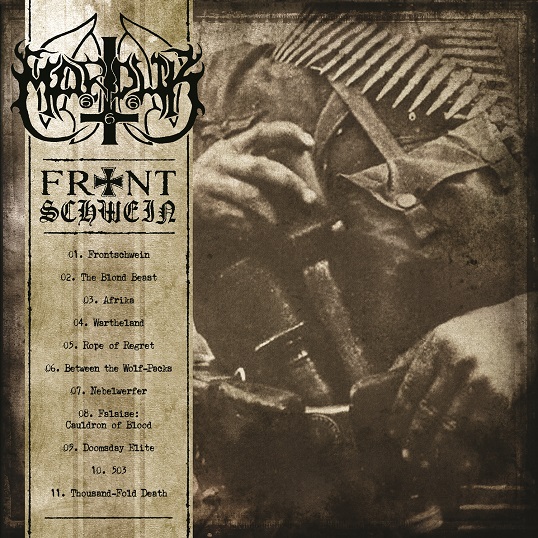
That sort of entertainment value can’t hold out forever, and it was ultimately Marduk’s shift towards martial themes that kept me attentive. They did it on Panzer Division Marduk in 1999, and they’ve turned to it again with the Iron Dawn EP in 2011 and now Frontschwein. If there is any one thing that this style of music captures effectively, it is 20th century warfare.
song: Frontschwein
Marduk capture the violent chaos of war on a level I have only heard rivaled by Germany’s Endstille, and while modern themes do not permeate all of their albums, they stand at the center on Frontschwein. The album recounts events in World War II from the perspective of Germany as a bloodthirsty machine reveling in cold destruction behind its thin veil of justifications. The connection is not merely lyrical, though Mortuus’ vocals are surprisingly discernible, allowing bits and pieces of war imagery to seep into your head unaided by a lyrics sheet; you can hear to conflict in the music: sliding guitars as falling bombs, blast beats as bullets. It’s methodical, rhythmic, and relentless, in contrast to the more eclectic approach the band has taken on Satanic-themed albums like Serpent Sermon. It is Marduk as I like them best.
That being said, it does feel repetitive at times. This style always does, to me at least, and I feel like Marduk relegated their less interesting songs to the middle, bookending the best of them. “Frontschwein” is followed by the incredibly catchy headbanging march of “The Blond Beast”, and Mortuus’ constant screaming of “Afrika” in the song of the same name forces your mind to picture a bloody desert battle between Rommel and Patton’s grunts. “Wartheland”‘s slow pummel with distinct lyrics like “succumb to domination” feels like an endless wave of Nazi forces marching in to conquest and occupation. The track titles in general go a long way towards steering the music towards its intended imagery. (I absolutely love the album title. I don’t know if it’s a common word or one of the band’s own crafting, but it certainly projects the overarching subject matter: humans as bloody fodder in an unstoppable military machine.)
But by “Rope of Regret”, my ears grow a bit numb to the pummeling. I enjoy the song when I listen to it in isolation, but I rarely can remain attentive long enough to reach it if I’m listening to the album as a whole. The next four tracks, all fairly typical in style, fade together for me whatever their individual worth. “503” is ultimately the song that draws me back in. A song of conquest, it drastically slows down the pace, listing in a dominant voice the conquests of the 503rd Heavy Panzer Battalion. It makes me snap back from my zoned-out state and again picture the album as a vision of German brutality in World War II rather than a jumble of noise. The song is well-placed, because it leads the way into “Thousand-Fold Death”.
song: Thousand-Fold Death
And “Thousand-Fold Death”… holy shit, this song alone is worth buying Frontschwein for. It’s got the best guitar licks on the album, but this song is all about Mortuus. He does things with his voice on this track that will give you motion sickness. It’s not just the sheer quantity of words per second he manages to belt out–his clarity while doing it is unbelievable. If I ever doubted that Mortuus was an incredible vocalist before this song, I certainly don’t now. The album ends with “Warschau III Necropolis”, an eerie, ambient mix of samples from militant speeches and battles, brass, and bizarrely distorted spoken words that manages to capture the grim nature of the album through a totally different means.
There is a reason why I have listened to Marduk more than any other band that plays that brutality-driven Swedish varient of black metal, and Frontschwein captures what I like about them best. I am a bit hesitant to say that I like it more than Endstille’s Infektion 1813, but those two albums definitely stand leagues above anything else I have heard in a genre of metal that, I’ll admit, I seldom find to be very creative or inspiring.
Korpiklaani have been pretty heavily criticized over the years for what has been perceived as a highly “gimmicky” sound. That view has a faint shred of legitimacy, but it gets blown way out of proportion. With bands like Alestorm and Nekrogoblikon managing to pump out really impressive albums without the slightest hint that they take any of their music seriously, it is easy to falsely impose on the genre a spectrum ranging from hoax to serious. You’re either writing brutal pagan metal homages to Odin or you’re dressing up as a mutant snork and dancing a jig, right?
It doesn’t really work like that. Bands like Kalevala (Калевала) and Troll Bends Fir (Тролль Гнёт Ель) can come off as fun-loving boozers, but you can’t escape the impression that they have a deep respect for their cultural heritage. Finntroll sing about dim-witted fantasy monsters eating people, and they’re heavy as hell. Being light-hearted and fun certainly does not make a folk metal band “gimmicky”, as if all folk traditions are inherently morbid. Doing it for nine albums without showing much inclination towards anything but fun and relegating your only English language songs to tantrums about not having enough beer–well, that can tarnish an image. I do understand why people might see Korpiklaani as a having a one-track mind.
But it really shouldn’t, and they really don’t. Not if sounding the same means maintaining the quality that turned people to them in the first place while honing their musical talents along the way. Not when for every track devoid of lyrical content the listener writes off eight others as the same because they don’t speak Finnish. Korpiklaani were very well received when they first appeared with Spirit of the Forest back in 2003. Folk metal was still fairly new then, and Jonne Järvelä was a frontrunner, not a bandwagoner. He had contributed to Finntroll’s Jaktens Tid in 2001, and prior to changing his band’s name to Korpiklaani he had released folk metal under the monicker “Shaman” beginning in 1999. He was recording non-metal Finnish folk music earlier than that. As folk metal picked up steam, Korpiklaani’s pop-centric, lighter brand–characterized by very simplistic metal riffs underscoring catchy yolk vocals, accordion, violin, and an occasional whistle–came under fire. Why?
That’s an open question. I really don’t get it. My best guess is that people experienced Spirit of the Forest and Voice of Wilderness when folk metal was still a novelty. They didn’t really love the band; they just loved the direction that metal was heading in, and Korpiklaani were a prominent example of that. As the scene broadened and more variety became available, some people were quick to throw Korpiklaani under the bus because the band’s pop tendencies made them feel a little insecure in their metal manliness. Korven Kuningas (2008), Karkelo (2009), and Ukon Wacka (2011) got a lot of negative reviews. But to me, the band just kept getting better. Spirit of the Forest gave us “Pellonpeikko”, and “Wooden Pints” is certainly nostalgic, but the album had a lot of half-formed filler tracks too. It has all the feel of an early, less developed work in a band’s discography. They really started to nail the folk on Voice of Wilderness in 2005, and Jonne Järvelä’s distinctive yolk-style vocals–the band’s most unique traditional feature–really didn’t fully mature until Tales Along This Road (2006) and Tervaskanto (2007). Their next three albums took all the heat, but they were only guilty of not offering further development. They didn’t really need to. The band was in their prime.
Manala (2012) was the first and only Korpiklaani album that I had misgivings about. It was distinctly heavier, with folk instrumentation feeling subservient to metal guitar riffs rather than the other way around. For that, it actually got some positive feedback. Korpiklaani were abandoning that “folk gimmick” and getting back to their “metal roots”, or some nonsense like that, as if the band even had metal roots. My speculation was, I think, a bit more realistic: Long-tenured violinist Jaakko “Hittavainen” Lemmetty retired after Ukon Wacka. Short of digging the jewel case out from my basement, I can’t even find a clear answer as to who played violin when Manala was recorded in 2011. Teemu Eerola replaced Hittavainen on tour that year, and Tuomas Rounakari stepped in as the band’s permanent violinist shortly after. I have to believe that there is a direct correlation between Manala‘s lack of a strong folk component and the transitional state of the band’s lineup at the time.
Korpiklaani did not record another album for three years. That’s a long stretch by their standards, and in the meantime Juho Kauppinen, their accordionist since Tales Along This Road, left as well. Was the band doomed to drift ever further from their unique poppy folk sound into the cesspool of generic derivative heavy metal?
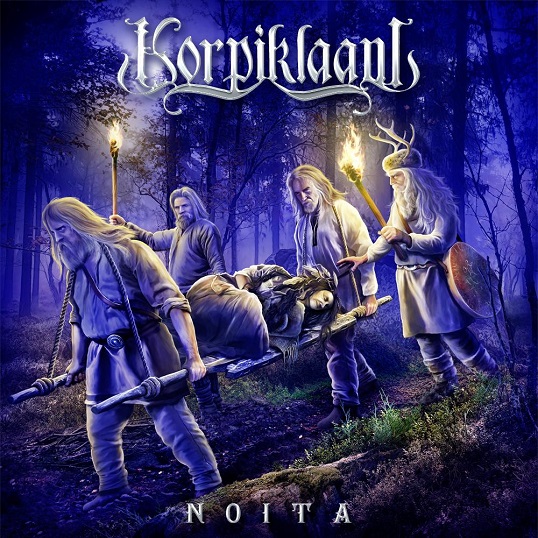
Not at all, as it turns out. Noita sounds strikingly successive, but in a way that works wonderfully. It takes Manala and drives it back into where the folk left off on Ukon Wacka. The first track, “Viinamäen Mies”, opens powerfully with a driving violin and a nice accordion accompaniment. Where the folk drifts out, the passages are brief enough to feel like a showcase of Jonne Järvelä’s vocals rather than a void in the content. The song is a total return to Korpiklaani’s poppy folk roots, and that feeling persists through the first two tracks.
Track: Lempo
The third song, “Lempo”, slows down the pace and stretches things out in a turn that is, for them at least, a bit on the heavy side. Unlike Manala though, the guitar is hardly alone in giving it an edge. The vocals are great, as always, and the folk instrumentation blends in and out of playing harmony to the plodding verses and busting out solos in really fluid form.
The rest of the album is a mix of these two approaches, and it is surprisingly the latter that comes out strongest. “Sahti” and “Luontoni” give us two more upbeat, fun songs that don’t feel remotely contrived, and then the album slows back down for the long haul. The violin on “Minä Näin Vedessä Neidon” is about as heavy metal as that instrument gets, and I was especially impressed on the closing track–“Sen Verran Minäkin Noita”–by how Tuomas Rounakari and Sami Perttula seem to have mastered improvisation over long, drawn out metal chords. Moreover, the rhythms on that song are way more diverse than we’re used to from Korpiklaani, tipping a hat to prog and viking metal. It’s one of the few songs in their catalog that don’t follow a standard verse-chorus-verse pattern. I can’t help but think “this is way too awesome to be Korpiklaani” when I listen to it. And I’m one of the people that never lost faith in the band.
It’s hard to imagine, listening to Noita, that Sami Perttula and Tuomas Rounakari were new to this band. Perttula totally gets their sound, and he brings a fiery spirit that wants to imbue anything and everything with rambling accordion harmonies. Rounakari offers much the same on violin, and also a great deal of thoughtfulness. In an English-language interview released by Nuclear Blast to promote the album, he explains each song quite articulately. He even points out cultural relevance in “Sahti”, a song that turns out to be about (surprise!) drinking. (It’s kind of funny, because Järvelä and Perttula’s bad English cater to every negative stereotype surrounding them. I write this song because I like get drunk!) If you didn’t know any better, you would think Korpiklaani had been Rounakari’s baby all along. Hittavainen was a hard man to replace, but I’m not complaining about who they found.
The album does have one very unfortunate, glaring flaw, and it’s called “Jouni Jouni”. “Jouni Jouni” is a cover of Billy Idol’s cover of Tommy James and the Shondells’ mind-numbingly stupid hit classic “Mony Mony”, and it appears right smack in the middle of the damn album. You know what makes even less sense? Noita has a “hidden” bonus track, “Antaja”, and that song sounds totally normal. Instead of putting “Antaja” in the main mix and relegating “Jouni Jouni” to the end of the line after a few minutes silence (or better yet, deleting all record of its existence), they cram it smack in the middle between “Minä Näin Vedessä Neidon” and “Kylästä Keväinen Kehto”. Bad Korpiklaani! Bad!
(Nuclear Blast is being a bit douchey about youtube samples, but if you want to check out some of the better tracks before you buy and can find them, I recommend “Kylästä Keväinen Kehto” and “Sen Verran Minäkin Noita”.)
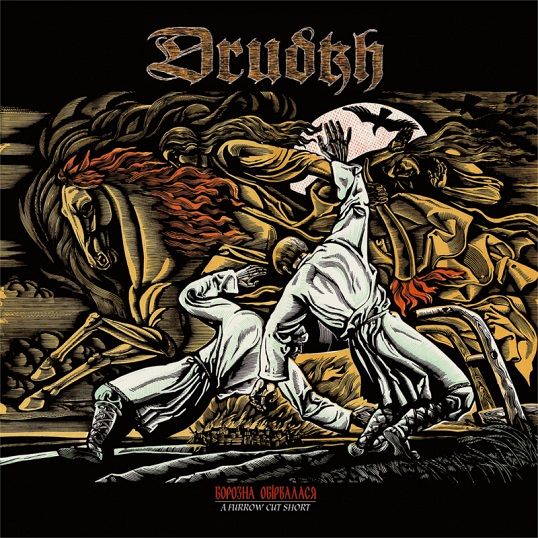
When I fired up Drudkh’s tenth studio album yesterday, A Furrow Cut Short, I was holding my breath in the dim hope that something awesome would slam into my brain from the get-go. After all, this is Drudkh. Not all of their releases have been met with equal acclaim, but they always seem to carry hype on their side.
The album began interestingly enough, with some bending tremolo guitar that kind of brought to mind Blut Aus Nord, and then I waited a bit and moved the play bar ahead. A pretty cool groove picked up around 1:50, and I rode it for a while. The song began to repeat an earlier passage with vocals tossed into the mix, and I moved the play bar ahead. There was that groove from 1:50 again. I rode it. I moved the bar ahead…
Greatness did not grace my ears in a neatly wrapped box, and that was fine. It was just a distant hope. At that point, my immediate instinct was to browse through the sixty minutes of content for all of the gripping moments that would surely rise out of the long black metal grind to knock my head around. A few came. Should I count them? Was that how best to measure this album’s worth? I started to feel a bit silly. This sort of fast-forward treasure hunt has been my subconscious approach to Drudkh for some time now. Here was a band that used to keep me wide-eyed through ten minute tracks as I waited for the peaks to overwhelm me, and over the course of ten albums the appeal had been reduced to skimming. What changed?
The production changed. That’s for certain. Since Microcosmos, Drudkh have been presenting a more deep and refined sound, and I don’t think it did them any favors. It was a technical improvement at the expense of the unique aesthetic appeal of their sound. They also largely left the world of folk music behind. On Songs of Grief and Solitude (2006), Drudkh reworked a variety of earlier melodies from their metal albums into a collection of instrumental folk tracks. It worked really well, and it’s something they would never be able to do with the tunes of Eternal Turn of the Wheel or A Furrow Cut Short.
Song: Cursed Sons I
<@Shad> One day
<@Shad> I will tell my children
<@Shad> That I started the Drudkh wikipedia page.
And there has been one other change. It’s something far beyond the band’s control, but it is significant: historical context. This first dawned on me when I was glancing over the reviews of A Furrow Cut Short already popping up on Encyclopaedia Metallum. One guy started off by writing “Ukraine is not a country where heavy metal thrives like in the UK or Scandinavia”. I stumbled over the words. I suppose fifteen years is a long time when you’re talking music. There are high school kids enjoying A Furrow Cut Short who weren’t born yet when Kharkiv was carving out its claim on the map of metal. That’s a little… weird for me, but it probably has a real impact on how I perceive this music too.
I will never really appreciate thrash metal, because I was never there. I encountered the genre as a prim and proper, cookie-cutter devolution of its original glory. I lacked the contextual sense that something new and monumental was overriding the standards of metal as I’d formerly known them. To me, thrash is just that sound Metallica pioneered, and I have no doubt that this perspective is woefully misguided. This same sort of historical misconception might be taking root on Ukrainian black metal. The reviewer I quoted… his statement would have been a reasonable introduction to Lunar Poetry or Goat Horns in the mid-90s, but by the time Drudkh started to gain attention, Kharkiv was no heavy metal backwater. It was a placename that you gobbled up. “Ukrainian” meant there was no need to sample an album first. You knew you wanted to hear it.
Nokturnal Mortum put Kharkiv on the map, and Knjaz Varggoth’s brainchild still stands leagues above anything else east of Prussia in my book. But Knjaz is also a racist piece of shit, and I can’t say I feel bad that the history books have been rewritten to regard Drudkh as the mother of all Ukrainian black metal. Still, we can’t forget the pre-existing spirit in which this band emerged. Standardized black metal was all about LaVeyan Satanism back then, its music a sort of declaration against society’s disposition to enforce religious values. “Satan” was a shallow facade, and once the point was made, the scene stagnated. Nokturnal Mortum ignited something novel by merging second-wave black metal’s counter-cultural rage with a sort of Bathory-esque true reverence for the old gods. Their music was as hateful as anything Mayhem or Emperor had produced, but it was also rabidly pagan. NeChrist slaughtered the tenets of modern society, smeared their blood across its chest, and danced naked on the pyre.
And that, to me at least, was the spirit of Ukrainian black metal entering the 21st century. It was not merely violent and destructive, but also highly contemplative. The means varied from band to band, but the idea was to bring a bygone spirituality to life. Musically, the tremolo and blast beats found themselves in the company of massive, sweeping auras of sound that might at any minute break into traditional melodies more savage and tribal than anything the co-emerging folk metal scene had to offer. Astrofaes and Hate Forest were two of the earliest bands to emerge from Kharkiv in this new tradition. Astrofaes, headed by Thurios, was the more melodic of the two, with forlorn chord progressions and folk allusions comparable to early Drudkh. Hate Forest, on the other hand, remains one of the most brutal bands I’ve ever heard. It was Thurios’ original collaboration with Roman Saenko, and it was so uncompromisingly violent and minimalistic that it made the most hellish Norwegian offerings feel tame. Yet it was entirely meditative. If Varg Vikernes popularized the notion of black metal as a trance-inducing journey, Hate Forest went leaps and bounds towards perfecting it.
When Thurios and Saenko went on to form Drudkh, the product was more tame than either of their parent projects. Thurios brought the folk and raw melody-crafting via Astrofaes, while Saenko added the trance state and fine touch for aesthetics. At least, that’s how I’ve interpreted it. I certainly can’t offer any informed view into their song-writing process. In any case, what they crafted, not so much on Forgotten Legends but definitely on Autumn Aurora, The Swan Road, and Blood in Our Wells, was totally unique and beautiful. But it did not feel unique to perhaps the extent that it really was. It felt like a brilliant addition to a scene that entailed so much more. (In more than one sense, and not all positive. I am sure the reviewer I mentioned must find it bizarre that almost every summary of Drudkh begins with a preface that they disavow all ties to racism/extremist ideologies.)
Song: To the Epoch of Unbowed Poets
I take two things from this. One is that Drudkh’s earlier sounds float on a cloud of nostalgia. An album that sounded a hell of a lot like Autumn Aurora would really excite me even if it was not half as good, because it would transport me back to a special place and time. The other is that a once unprecedented sound has become pretty common fair. Atmospheric black metal was not invented in Ukraine, but its modern roots run deep there. A lot of bands around the world have since come along and done more with it. They’ve taken it other places–incorporated it into other, equally novel sounds. Saor is a good recent example. In heaping praise on Andy Marshall’s solo project last year, I passively mentioned that it accomplishes its goal “without ever really breaching any new territory beyond the tried and true boundaries of pagan metal”. Well, Drudkh and the Ukrainian scene in general established a lot of those boundaries. And other bands took it further still, to the point where I could speak of an album like Aura without ever thinking “wow, this is original”.
A Furrow Cut Short has some really stand-out tracks. The two I sampled here especially struck me. But it is also lost in time. Changes to production and an abandonment of folk render the modern Drudkh incapable of reaching to the same plain of aesthetics that they once knew. I don’t think it incorporates anything new, either, that might allow me to hear it as a great example of where metal stands today. This album must stand or fall exclusively on its in-born aesthetic value, while competing with the vibe that it is a watered down version of what the band used to be.
That value is, well, average. You can get into the album if you try, but it will not sweep you off your feet. I am not one of these people who cling to the past and expect a band or style to sound exactly like it used to. I am always willing to humor “where are they headed now”, and I have a good deal of respect for what Drudkh did on Handful of Stars even if it didn’t much move me (or seemingly anybody else). At least they were trying to do something. Even Eternal Turn of the Wheel showed motion. A shying away from change, but motion at least, and I modestly enjoyed it for that. A Furrow Cut Short goes nowhere, and that fact drives home the feeling that this band’s sound has grown really stale.
I am a bit torn about A Furrow Cut Short. A part of me thinks “why did they bother?”, but a wiser side enjoys tracks like “Cursed Sons I” and “To the Epoch of Unbowed Poets” way too much to pretend I’d be better off without them. Still, I’m probably never going to listen to this album again. Maybe a quick revisit at the end of the year. There are just too many other bands doing something more original. And too many classics I’d rather rehash, for that matter. It’s strange, because Thurios, Saenko, and the rest of the crew haven’t lost their touch at all. They are doing great things with Blood of Kingu, and Dark Star on the Right Horn of the Crescent Moon would have definitely made my top albums list for 2014 if I had caught it in time. But considering every single member of Drudkh is in that band, I don’t get why Drudkh continue to sound so… redundant.
I tend to avoid split albums. A lot of times, it seems to me, you just end up with two bands’ b-sides that they couldn’t justify releasing independently. But after my first glorious encounter last year with Spectral Lore–Greece’s one-man circus of musical awesome complements of Ayloss–I am ready to lick up any and every track he’ll throw at me. Germany’s Nachtreich, on the other hand, are not a band I would probably ever stumble upon without this release. I gather that they aren’t really metal. They have metal tendencies on this album to be sure, but from what I’ve read they fall more into the neoclassical sphere. But even if I wanted to skip over their tracks–and I don’t–you can’t really do that on this album. It is not a product of two bands throwing whatever they feel like into the mix, but rather a pretty well-planned collaboration.
Track: Spectral Lore – Quivering
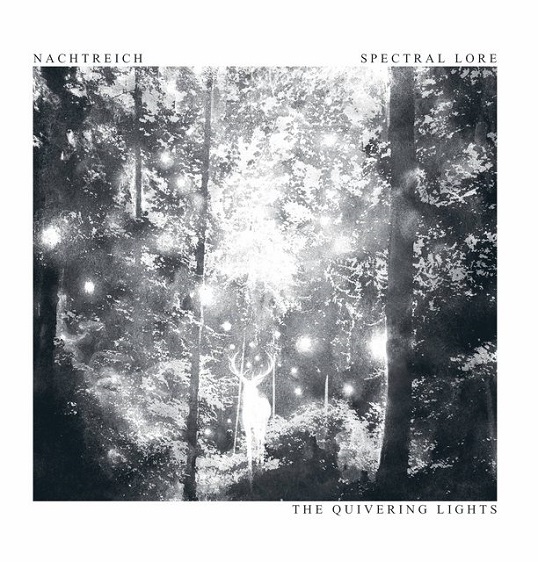
At 46 minutes, The Quivering Lights certainly carries the content of a full length album. The track order, moreover, intermixes the two artists’ contributions to create a single picture rather than two shorter sides to a story. The album kicks off with Nachtreich performing a pretty piano and string piece that would not feel out of place in a movie soundtrack. The first four minutes of “Lights” invite the listener into a warm, subtle scene appropriate for the album’s cover art, and then a lot of things change. We suddenly find ourselves beneath a wall of heavy distortion and arpeggiated piano, as the violin carries on the opening lament to a slow drum plod. It’s a bit jarring–not necessarily in a good or intended way–and it ends as abruptly as it arrived. A calmer piano carries out into the first Spectral Lore track.
On “Quivering”, the track sampled above, Spectral Lore prove more than adequate to answer Nachtreich’s proficiency at writing soft, moody music for piano and string. This song too moves on into metal, but here you have a much greater sense of what’s coming. Spectral Lore, moreover, kick off the black metal in the same grand form that III had brought to my attention last year. Ayloss’s ability to flow in and out of tremolo and double bass is spectacular. The guitar melody is goddamn beautiful, and the drumming restrains itself to maintain a mood devoid of aggression. The fuzzy, expansive vocal noise Ayloss generates feels totally at one with the atmosphere, fading back into an endless horizon. There is no sense of departure from the original landscape set by “Lights”, but rather a sort of heightened state of awareness in which you see all of the shapes and colors in exquisite detail.
Track: Nachtreich – Ghost Lights
The only downside to “Quivering” is that it so overshadows the metal side of Nachtreich that it makes the latter feel almost laughably simplistic. This effect is forgotten soon enough, as Nachtreich’s second contribution, “Greyness”, gives us a beautiful viola and violin duet without any hint of metal (or piano for that matter). On “Ghost Lights”, Nachtreich return to heavy sounds in more measured steps. Growled vocals appear first, creeping up from beneath a shroud of string and piano. It seemed out of place at first, but the more I listen the more I like it. As with Spectral Lore, Nachtreich’s vocals don’t carry the slightest sense of aggression. But here there is no harmony, either. The feeling is of some fetid taint beneath the surface, darkening the landscape. When “Ghost Lights” finally dawns its distortion, the transition is far more natural and compelling.
“Vanishing”, the next Spectral Lore track, picks up right where “Ghost Lights” ends, continuing the same melody on guitar, but it soon proves to be the longest (mostly) continuous chunk of metal on the album. A good bit darker and more chaotic than “Quivering”, its quality is not as forthcoming, but considering how long III took to grow on me, I am not about to write it off. The final song on the album, “Reflection”, is six minutes of brooding acoustic guitar. It feels to me like a song that ought to lead somewhere, and I was a bit startling to realize the album was over.
All in all, The Quivering Light is definitely worth checking out if you’re a fan of Spectral Lore. Don’t let the fact that it is a split turn you away, and don’t blow off the Nachtreich songs either. But if you are new to the band, III is still the place to start. I wouldn’t say Nachtreich impressed me enough to seek them out, but another day and another mood I might yet have a go at them. Their 2009 album Sturmgang got pretty positive reviews. The two bands adapt to each other nicely, and if I sometimes get a suspicion in the back of my mind that Spectral Lore vastly outclass Nachtreich, well, the key word is sometimes. The feeling certainly does not permeate the album, and it easily could have given the way these bands aimed to create a single cohesive work. The Quivering Light feels less disjointed than a lot of albums by one band let alone two. I think the opening track, “Lights”, is the weakest link, and the album is a fairly solid ride through to the end once you get over than hump.
Bosse-de-Nage (pronounced something like “Boss De Nazh”) are a four-piece band from San Francisco. They pumped out their first three albums in a span of three years, between 2010 and 2012, and then took their time getting this one together while cultivating a friendship with Deafheaven that lead to a split 12″ and some enhanced name recognition. All Fours was just released via Profound Lore Records last week, and any serious student of extreme music owes it to themselves to check it out. Just when I thought nothing in 2015 could be more stylistically unorthodox than Liturgy’s The Ark Work (ok, that claim probably still stands), Bosse-de-Nage turn up with an album that’s going to leave me scratching my head for a long time to come. What’s so interesting about All Fours is that you can walk away with a totally different impression of what the band is doing depending on your personal musical background.
Track: At Night
The album kicks off in post-metal mode, ebbing and flowing through a brooding, pessimistic mire beneath Bryan Manning’s desperate screams. Two minutes and change in, the song transitions to the sort of pounding fuzz that might call to mind Converge’s “Jane Doe”. As things continue to change, you get the feeling that it’s progressing towards an ever more desperate state. Black metal seems to play a major role in that intensification, with earlier passages reappearing in a more tightly packed onslaught of notes. The ending, for instance, revisits that Jane Doe sound, but the once cymbal-centric drumming is now competing with blast beats. “At Night” is a song in constant flux, and it could have been an erratic mess, but instead it’s strikingly fluid. Bosse-de-Nage manage to keep a thread of accelerating emotions taut throughout the long chain of ideas and influences that comprise it.
The next song, “The Industry of Distance”, sends a similar message. A simple, clean guitar lick repeats over bassy feedback for the better part of two minutes. Drums sneak up into a slow roll to cue distorted drawling guitar chords, and soon the song explodes in one of those beautiful melancholy post-black metal anthems we’ve been growing accustomed to. Instead of lightning quick tremolo and blast beats though, the drum and guitar initially seem to execute at half the frequency while Manning screams in his uniquely heartbroken style. It creates a sort of oscillating effect for an ear expecting black metal, every other note appearing to be missing. This eventually fills out into full speed tremolo and blast beats to complete another build-up through higher stages of emotional breakdown.
That’s my general metal take on All Fours. While a lot of what we’re calling post-black metal today diverges melodically from the genre’s origin, Bosse-de-Nage go further in exploring the techniques that characterize it. The drumming especially diversifies the package. Tremolo guitar and blast beats signify climaxes in a post-metal progression rather than perpetual constants, and a lot of care is given to make the development taking us there feel natural and captivating. Instead of the instant gratification of say, Liturgy or Krallice, Bosse-de-Nage effectively tap that post-rock tradition of “building up” to it.
Track: Washerwoman
That is probably a more accurate approach to understanding this album, because the band is firmly rooted in black metal. Manning at least has stated that he’s never heard of a lot of the other bands Bosse-de-Nage has been compared to lately. But the more this band diverges in technique from black metal, the more they find themselves labeled screamo and post-hardcore. If you’re familiar with that world of music, it’s a pretty fascinating truth. When bands play with the framework of a classic style, the boundaries of genre dissolve. Yes, “Washerwoman” could easily pass as a post-metal/black metal hybrid. Around the two minute mark it begins to sound strikingly similar to Isis. When the song breaks at four, they could be toying with black metal guitar by letting some of the notes ring out–a precursor to the proper bm onslaught that comes at five. But is that what you hear? Or do you hear a song straight off A Dead Sinking Story by Envy, peppered with spoken lines a la Indian Summer? It depends on where you’re coming from.
Envy-worship is actually how my brain interpreted “Washerwoman” on first listen, and I made immediate associations with other screamo acts throughout the album. I am not alone here. In the early reviews I’ve found so far, this album has been compared to Orchid, City of Caterpillar, Heroin, Moss Icon… Almost every track on All Fours feels extremely influenced by screamo. But it is not. It’s the same sort of thing that happened with Neige on Le Secret and Souvenirs d’un autre monde, when the pioneer of “shoegaze black metal” came out that he didn’t have a damn clue what “shoegaze” was.
I first mentioned screamo and black metal in the same sentence when Drudkh released Microcosmos (2009). “Ars Poetica”‘s climax screamed Orchid and The Kodan Armada and a half dozen other names to me as it slid up and down the neck with drum accents to punch it home, introduced by that classic clean guitar over tense, snare-centric drumming. Deafheaven’s Roads to Judah (2011) resurrected the idea, and Portals to a Better, Dead World (2013) by Cara Neir ultimately sealed it, making black metal screamo crossovers a certain reality. But was there any actual direct influence in any of these cases?
I used to think there was, and I know that Liturgy at least has a post-hardcore background, but any of these bands might have landed on their sounds totally independently. All Fours really sends that message home to me. It’s a window into natural affinities between genres. When Bosse-de-Nage break down the components of black metal into longer, more ringing tones while maintaining that post-bm sense of desperation, they are essentially playing screamo, and the way they seamlessly fuse it back into black metal instrumentation uniquely highlights the similarity. They’re playing post-black metal by definition, but in their approach the two styles are totally indistinguishable save through the cultures surrounding them. When a band can give me a new perspective on an entire genre of music, hey, that’s pretty cool.
Track: The Most Modern Staircase
Of All Four‘s seven proper songs, I am sold on all but “In a Yard Somewhere”. Each builds its way through catchy melodies and interesting stylistic digressions to a convincing emotional climax, and they do it differently from what I have heard before. That it is unique is obvious by the fact that so many people are tossing around band names from way outside of the box in an effort to define it. But there is one other hidden gem in Bosse-de-Nage that stands them apart from the crowd: the lyrics. Bryan Manning has an impeccable flare for the grotesque. From facepalm punchlines about poop and hookers, to really disturbing tales of insanity, to poems that make no discernible sense whatsoever yet pretend to hide some esoteric truth, nearly everything he writes is a ride in itself, independent from the music. Their previous album, III, defies any attempt I could make to describe it, and you should really just go read it all right now. Whether he’s meditatively contemplating a contortionist entering a box or explaining why turning yourself into a human tree was a bad idea, the wording is totally surreal.
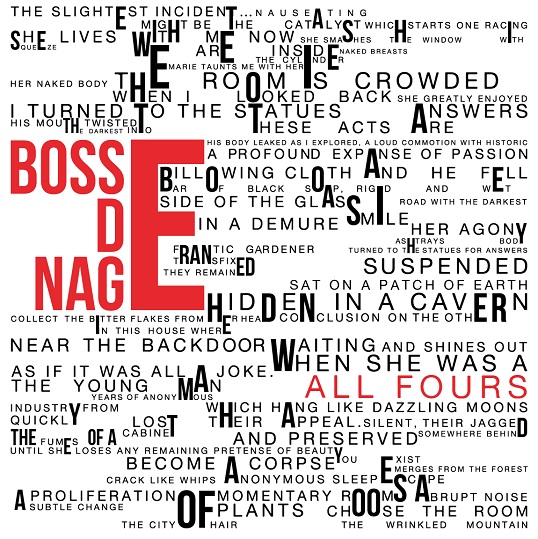
The lyrics on All Fours are a little more difficult to decipher, because the stylized sleeve included with the album, for all its artistic appeal, is kind of hard to read. You lose focus trying to dig through it. But The Most Modern Staircase struck me most when I first skimmed over them, and knowing what he’s screaming (not the sort of emo laments his tone of voice might suggest) really enhances the music for me:
I traveled to the province of staircases. The great variety of balusters, railings, finials, and steps filled me with awe. Many looked welcoming, while others were intentionally obscured or blocked up, and some were decorated with vibrant warnings to anyone who might ascend. I found the most modern-looking staircase and climbed. After a while, I stopped on a landing to rest. This extraordinary landing was home to dozens of living statues–obsequious stone gods begging for spare hands. As I explored, a loud commotion with historic consequences occurred somewhere behind me. When I looked back, there was a curtain drawn around the event. I turned to the statues for answers, but they remained inert and silent, their jagged stumps eager for relief.
All Fours: another formidable stalwart in a year that’s been crammed with way more stellar releases than normal. Pick up a copy on Profound Lore Records.
The funny thing about Isis is that their legendary status among metal bands has only escalated since the break-up in 2010. Mainstream rock artists sport their t-shirts, Wikipedia editors irrationally credit them as the founders of post-metal, and pessimists grasp at straws to sling negative criticism. They went out at the top of their game, and the fact is you will never hear a mediocre Isis album. They quit before that could become a possibility. The downside is that everything frontman Aaron Turner has contributed to since unfairly finds itself treated by the media as a sort of side project.
Maybe Old Man Gloom avoided that fate. The success in 2014 of The Ape of God (and its sister album, The Ape of God) finally got people to start talking about them as a proper band, not just another project involving “that Isis guy”. Sumac will have a harder time escaping the persona, because it is essentially a two man project between Turner and Baptists drummer Nick Yacyshyn. (Brian Cook of Russian Circles and These Arms are Snakes provides the bass as a “session member” and probably did not contribute to the actual song writing.) But regarding Old Man Gloom or Sumac as secondary projects implies a primary one. Isis is dead, and Aaron Turner most certainly isn’t. Sumac deserves to be taken seriously.
Besides, if The Deal is any indication, Turner is still well within his prime. This album is, for me at least, the best thing I’ve heard him contribute to since Wavering Radiant, and his style merges perfectly with Yacyshyn’s highly acclaimed drumming. I want more. I want The Deal to be the first entry in a long and productive discography that puts Sumac on the map permanently as an outstanding musical collaboration.
song: Thorn in the Lion’s Paw
The biggest negative comment I’ve heard about The Deal is that it sounds bland on first listen. While I never personally felt that way, it might be worth asking “what Isis album didn’t?” Old Man Gloom have written some pretty explosive material, but if you’re familiar with Turner at all you should be prepared to dedicate multiple listens for the album to grow on you. My initial impression of The Deal was of something blissfully even-keel. It generated that feeling of perpetual flowing motion that I always got off Isis albums, and for that it amassed way more plays than The Ape of God ever managed before I even got around to giving it close attention.
The “if Isis were really heavy” interpretation of Sumac definitely holds up over time, but what grows on me most is Nick Yacyshyn. If you take, for instance, the passage from 4:00 to 6:00 in “Thorn in the Lion’s Paw”, Turner’s sequence of brief repeated phrases could definitely border on bland were they the complete picture. They were never meant to be; he found a drummer in Yacyshyn who could plug the void with a really imaginative progression. In managing to somehow feel modest even when erupting into blast beats at the end, Yacyshyn lets you enjoy the build-up without being swept away by the intensity. It’s a tall order for music this extreme. It’s easy to forget how mellow Isis was in comparison until you go back and listen. The next track, “Hollow King”, focuses on Yacyshyn throughout, centered around a 3 minute drum solo over drone guitar that goes wild on the toms in a manner reminiscent of Atsuo Mizuno from Boris (speaking of post-metal legends).
song: The Deal
“Blight’s End Angel” has garnered the most attention, with its rewarding 10-minute progression that feels perhaps the most classically “post-metal” of any track on the album, but it’s the title track that stands out to me most, for better or worse. Throughout The Deal we hear Turner playing around with some mathy licks, enough to make me wonder if he’s been listening to a lot of Converge lately. “The Deal” brings this out more than most, along with maybe a touch of Mastodon and a pretty groovy if short-lived stoner metal beat down at 3:30. Nearly 14 minutes long, the song never really develops so much as it devolves, ending with an even slower tempo than its initial stretched-out plod. But its lack of speed, coupled with intermittent breaks into undistorted, mostly drumless transition passages, all serve to emphasize the real crunch and intensity of Turner’s guitar tones on this album. Compartmentalized into distinct movements rather than smoothly progressing, it really lacks the rest of the album’s flow. That does not really help its case, yet I do really like Turner’s math/prog tendencies in small doses, and the track makes sense in context. The break from the album’s smooth sailing isn’t an accident; it’s an end. The only remaining song, “The Radiance of Being”, is a rather pretty, minimalistic outro.
Over all, The Deal is pretty solid. The first 35 minutes drift along with a surprisingly pleasant vibe, given the levels of distortion and intensity. The title track is a bit harder to swallow, but its seeming lack of cohesion took a while to actually rub me wrong; it sounded just as good at first, but wore out faster than the songs before it. That’s easy to forgive. Of the post-Isis Aaron Turner projects I’ve heard, Sumac is easily the most appealing to my personal tastes. He and Yacyshyn make an outstanding team, and I would love to see them commit to a long-term partnership that builds off this album.


 Through the Shattered Lens