The Eric Roberts Horror Collection: Black Wake (dir by Jeremiah Kipp)


In this film from 2018 (which is largely made up of “found footage”), authorities are confused by a series of mysterious, beachside deaths.  The dead seem to have little to no connection with each other, besides having died near the Atlantic Ocean.  Some think that the murders are the result of a cult.  However, Dr. Luiza Moreira (Nana Gouvea) is convinced that the death are being caused by some sort of parasite that is transferred from host to host.  Her boss (Eric Roberts) doesn’t buy it and he thinks that Dr. Moreira is becoming unhinged in her obsession with her theory.  But soon, the streets are full of zombiefied killers, all of whom seem to be determined to reach the ocean.

As for Dr. Moreira, her boss may actually have a point about her behavior.  Much of the film is made up footage of Dr. Moreira speaking straight to the camera, explaining her theory and also discussing how everyone that she works with is either too foolish or too in denial to understand that its right.  Soon, she almost seems to be taking a bit of joy in just how out-of-control the situation has become.  Meanwhile, she finds herself suffering from terrible headaches and occasional hallucinations.  Two government agents follow her and watch her every move, ominously talking about how she doesn’t realize what is really happening.  When she tries to go to her family to warn them about what is happening, she discovers that the situation is even more extreme than she originally thought.

Black Wake is a low-budget slice of Cthulhu-style horror, one that works because it embraces its low budget and basically tosses in every weird twist and situation that it can come up with.  It’s an enjoyably weird movie and, if nothing else, it captures the extent to which some people will go to pretend that there’s nothing strange happening around them.  My favorites were the dumbass frat guys who just had to pick up a hitchhiker, despite the fact that she was obviously homicidal and disturbed.  One of the frat guys points out that it might not be a good idea to pick up a stranger while there’s a wave of mass murders occurring at the beach, one of his friends rationalizes the decision by saying, “She’s a chick.”  Drunk frat boys so desperate to get laid that they’ll risk being murdered?  That’s probably the most realistic moment in the entire film.

Eric Roberts appears in three scenes, playing an unsympathetic bureaucrat.  (Is there any other type?)  He’s not the only actor making a cameo here.  Chuck Zito plays a sheriff.  Vincent Pastore plays a doctor who memorably says, “Fuck this!” when confronted with the walking dead.  And Tom Sizemore has two effective scenes as an unstable homicide detective.

Previous Eric Roberts Films That We Have Reviewed:

  1. Star 80 (1983)
  2. Blood Red (1989)
  3. The Ambulance (1990)
  4. The Lost Capone (1990)
  5. Love, Cheat, & Steal (1993)
  6. Love Is A Gun (1994)
  7. Sensation (1994)
  8. Dark Angel (1996)
  9. Doctor Who (1996)
  10. Most Wanted (1997)
  11. Mr. Brightside (2004)
  12. Six: The Mark Unleased (2004)
  13. Hey You (2006)
  14. In The Blink of an Eye (2009)
  15. Enemies Among Us (2010)
  16. The Expendables (2010) 
  17. Sharktopus (2010)
  18. The Dead Want Women (2012)
  19. Deadline (2012)
  20. Miss Atomic Bomb (2012)
  21. Lovelace (2013)
  22. Self-Storage (2013)
  23. This Is Our Time (2013)
  24. Inherent Vice (2014)
  25. Road to the Open (2014)
  26. Rumors of War (2014)
  27. Amityville Death House (2015)
  28. A Fatal Obsession (2015)
  29. Stalked By My Doctor (2015)
  30. Joker’s Poltergeist (2016)
  31. Prayer Never Fails (2016)
  32. Stalked By My Doctor: The Return (2016)
  33. The Wrong Roommate (2016)
  34. Dark Image (2017)
  35. Stalked By My Doctor: Patient’s Revenge (2018)
  36. Clinton Island (2019)
  37. Monster Island (2019)
  38. Seven Deadly Sins (2019)
  39. Stalked By My Doctor: A Sleepwalker’s Nightmare (2019)
  40. The Wrong Mommy (2019)
  41. Exodus of a Prodigal Son (2020)
  42. Free Lunch Express (2020)
  43. Her Deadly Groom (2020)
  44. Top Gunner (2020)
  45. Deadly Nightshade (2021)
  46. Just What The Doctor Ordered (2021)
  47. Killer Advice (2021)
  48. The Poltergeist Diaries (2021)
  49. A Town Called Parable (2021)
  50. My Dinner With Eric (2022)

Horror Film Review: Old (dir by M. Night Shyamalan)


An odd film, Old.

Seriously, 2019’s Old is so odd that I feel the need to point out repeatedly just how strange it is.  As I watched the film, I respected it’s dedication to being odd but, at the same time, I was a bit surprised that it was directed by M. Night Shyamalan.  For all of the fame that he’s gained for his twist endings and his suspenseful films, Shyamalan has always aspired to being a member of the Hollywood mainstream.  As such, his films are usually twisty without being transgressive.  He’s usually careful about alienating the audience.

But then, he makes something like Old, which features a group of people going to the beach and aging a year every 30 minutes.  This group includes middle-aged people (and wow, are they ever in trouble) but it also includes young children who quickly become teenager and then quickly become adults and, by the end of the film, are middle-aged and walking around in ill-fitting swim suits.  Along the way, there’s a 10-minute pregnancy, a baby that only lives for a few seconds because it’s aging too quickly, and a blood infection that kills within seconds.  Eyesight and hearing fades.  Bones snap.  Bodies quickly decay.  Aging sucks.

It’s not a happy film at all.  Yes, the movie does end with a minor victory but it still leaves the remaining characters in a sort of mental and emotional limbo, the type that you know they’re never going to escape.  The majority of the characters die and often, they die graphically and painfully.  Under normal circumstances, they would have died over the course of several years and, at the very least, people would have time to grieve in between.  On the cursed beach of Old, people die one after the other and there’s no time to grieve.  Two character do manage to make some sort of peace with themselves before they age to death but the majority of the characters go out railing against that dark night.  One of the most disturbing things about the film is that the characters have no control over what is happening to them.  Even when they try to leave the beach, they pass out and reawaken on the sand, a few years older.  I guess it’s like life.  There is no escape and there’s no way to prevent getting older.  Some will age well and live a full life.  Others will randomly get sick and die and, in the end, there’s no way to control which will be which.

Seriously, that’s depressing!  I’m not used to M. Night Shyamalan being that depressing!  But then I discovered that this movie was based on a French-language graphic novel and it all made sense.

The people on the beach are played by a talented group of actors, with several different performers playing the rapidly aging children over the course of the film.  Rufus Sewell gives a good performance as a surgeon who cracks under the pressure.  I was happy to see one of my favorite actors, Ken Leung, on the beach but I wasn’t particularly happy with what happened to his character.

It’s a strange film.  Say what you will about Shyamalan and his career has definitely been uneven, he can still deliver when he has the right material.

Horror Film Review: The Raven (dir by Roger Corman)


“Shall I ever see the rare and radiant Lenore again?” — Dr. Erasmus Craven (Vincent Prince)

“How they Hell should I know?” — Dr. Adolphus Bedlo (Peter Lorre)

This exchange comes from Roger Corman’s 1963 film, The Raven, and it pretty much epitomizes the film.  Very loosely based on the poem by Edgar Allan Poe, The Raven was one of the many Poe adaptations that Corman did with Vincent Price.  As opposed to the other films in Corman’s Poe cycle, The Raven was a flat-out comedy, one that parodied the other films in the cycle.  Reportedly, Peter Lorre improvised his response to Vincent Price’s question about Lenore.  In fact, Lorre improvised a good deal of his performance and his jokes sometimes even took Corman by surprise.  As a result and despite the fact that Richard Matheson did write a script for the film, The Raven is one of those films that feels like it was made up while the camera was rolling.

The Raven is a film about three sorcerers who are always fighting and arguing with each other.  Dr. Erasmus Craven (Vincent Price) spends his time mourning the late Lenore.  The evil Dr. Scarabus (a frail-looking Boris Karloff) has his own castle where he lives with the ghost of the late Lenore (Hazel Court).  Dr. Adolphus Bedlo (Peter Lorre) is a sarcastic ne’er-do-well who saw Lenore in Scarabus’s castle and was transformed into a talking raven as a result.

In raven form, Dr. Bedlo flies over to Craven’s castle and convinces Craven to transform him back into human form.  After informing Craven that Scarabus has Lenore’s ghost in his castle, the heart-broken Craven decides to head over to Scarabus’s castle and get some answers.  Accompanying the group is Craven’s daughter, Estelle (Olive Sturgess) and Bedlo’s son, Rexford (Jack Nicholson, looking somewhat lost in the role of a boring young man).

At the castle, Scarabus puts on an act of being a friendly and gracious host but the opposite soon turns out to be true.  In fact, the entire castle is full of secrets and it quickly turns out that hardly anyone — with the exception of Estelle and Rexford — are who they actually claim to be.  It leads to a battle in magic between Craven and Scarabus.  I nearly described their battle as being “epic” but that’s probably not the right world.  It’s epic by the standards of Roger Corman but actually, the big battle is just as jokey as the rest of the film.

The Raven is definitely not a film that’s meant to be taken seriously.  One gets the feeling that Corman knew that the presence of Price, Karloff, and Lorre would make the film a success no matter what the film was like so he decided to have some fun with it.  (Price and definitely Lorre appear to have been in on the joke while Karloff was perhaps a bit less so.)  To be honest, the film’s only earnest moments come courtesy of Oliva Sturgess and Jack Nicholson but, because Nicholson is Nicholson, you watch those earnest moments waiting for Rexford to arch an eyebrow or flash that devilish grin.  Unfortunately, he doesn’t.  Jack is pretty boring here.

The Raven, if we’re going to be honest, is probably too jokey for its own good but it’s still hard to resist the charm of Price, Lorre, and Karloff.  The film is a chance to see three horror icons acting opposite each other and, as a result, it’s a fun film for horror fans.  Vincent Price breaks the fourth wall at the end of the film and it’s hard not to love it.

Live Tweet Alert: Join #FridayNightFlix For Bubba Ho-Tep!


As some of our regular readers undoubtedly know, I am involved in a few weekly live tweets on Twitter and Mastodon.  I host #FridayNightFlix every Friday, I co-host #ScarySocial on Saturday, and I am one of the five hosts of #MondayActionMovie!  Every week, we get together.  We watch a movie.  We tweet our way through it.

Tonight, at 10 pm et, #FridayNightFlix has got 2002’s Bubba Ho-Tep, starring Bruce Campbell and Ossie Davis!

If you want to join us this Friday, just hop onto twitter, start the movie at 10 pm et, and use the #FridayNightFlix hashtag!  It’s a friendly group and welcoming of newcomers so don’t be shy.

Bubba Ho-Tep is available on Prime!  See you there!

Bubba Ho-Tep (2002, dir by Don Coscarelli)

Horror On The Lens: Messiah of Evil (dir by Willard Huyck)


MOE Mariana HillWith only five days left until Halloween, I wanted to make sure that I continued an important tradition here at the Shattered Lens by sharing this film with our faithful and wonderful readers.  Messiah of Evil was first released in 1973 and, since it’s in the public domain, it has since been included in a countless number of bargain box sets from Mill Creek.

I can still remember the first time that I saw Messiah of Evil.  It was on a Monday night, many years ago.  I had recently picked up a 10-movie DVD box set called Tales of Terror and I was using the movies inside to try to deal with a bout of insomnia.  I had already watched The Hatchet Murders (a.k,a. Deep Red) and The House At The Edge of the Park and, at two in the morning, I was faced with a decision.  Should I try to sleep or should I watch one more movie?

Naturally, I chose to watch one more movie and the movie I chose was Messiah of Evil.  So, there I was at two in the morning, sitting at the edge of my bed in my underwear and watching an obscure horror movie while rain fell outside.

And, seriously — this movie totally FREAKED me out!

Messiah of Evil tells the story of Arletty (Marianna Hill), a neurotic woman who drives to an isolated California town in order to visit her father.  Her father is an artist who specializes in painting eerie pictures of large groups of black-clad people.  However, once she arrives at his home, Arletty discovers that her father has vanished and left behind a diary where he claims that a darkness has overtaken the town.

Meanwhile, a mysterious man named Thom (Michael Greer) is wandering about town with two groupies (played by Anita Ford and Joy Bang) and interviewing random townspeople.  One crazed man (Elisha Cook, Jr.) explains that “the dark stranger” is returning.  After meeting Arletty, they all end up moving into her father’s house.

But that’s not all.   There’s also an odd albino man who shows up driving truck and who eats mice….

Messiah of Evil is literally one of the strangest films that I’ve ever seen.  It’s shot in a dream-like fashion and the much of the film is left open to the viewer’s interpretation.  There are two classic scenes — one that takes place in a super market and one that takes place in a movie theater and the movie’s worth watching for these two scenes alone.

Messiah of Evil is a film that will be appreciated by all lovers of surrealism and intelligent horror and I’m happy to share it with you today.

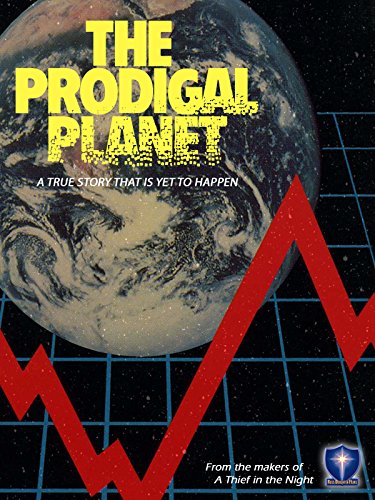
October Positivity: The Prodigal Planet (dir by Donald W. Thompson)


The last film in the Thief In the Night series, 1983’s The Prodigal Planet picks up where Image of the Beast left off.  Computer technician and post-Rapture Christian David Michaels (William Wellman, Jr.) is on the verge of being sent to the guillotine when he’s rescued by Connie (Terri Lynn Hall).  Connie may be wearing the uniform of UNITE and she may have the mark of the beast but she insists to David that she is actually on his side.  Not having much choice but to believe her, David joins Connie in a military grade RV.  They drive away from Des Moines just as a nuclear explosion takes out the whole city.

After seven years of being ruled over by Brother Christopher and the UN, the world is on the verge of ending.  (As the film’s narrators informs us, “Plane Earth is dying and the disease is sin.”)  Nuclear war has broken out, destroying cities and killing the majority of the citizens.  David is determined to get to Albuquerque, where he and a group of Christians plan to wait for the final judgment.  Government agent Jerry (Thom Rachford), who is one of only two characters to have appeared in every Thief In The Night film, is close behind but both he and his men are starting to show the signs of radiation sickness.

(Russell Daughten also returns as the Rev. Matthew Turner, with his apocalypse chart that explains each step of the end of the world.  Daughten’s role is small in this one, which is a shame as his grim Santa Claus screen presence was one of the best things about Image of the Beast.)

Along with the remnants of UNITE and a few survivors who have yet to take the mark, the world is also populated by “mutants,” humans whose faces are permanently scarred by the radiation.  They dress like monks and stalk empty and deserted city streets.  Their goal is to destroy anyone who they believe is responsible for the end of the world.  David and Connie rescue a scientist named Linda (Lynda Beatie) and her teenage daughter, Jodi (Cathy Wellman), from a group of mutants.  Linda is wracked with guilt because she previously put all her faith in science.  Jodi is bitter over how the world has turned out and, initially, she’s upset when David allows a mutant named Jimmy (Robert Chestnut) to join them in their journey.

With The Prodigal Planet, it’s obvious that director Donald W. Thompson had hopes of setting up an epic conclusion for the Thief in the Night films.  Not only does the film move the action out of Iowa and into other parts of the country but the film also runs for 127 minutes.  (By comparison, A Thief In The Night barely last over an hour.)  Unfortunately, most of that running time is taken up with David talking and trying to convert everyone that he meets.  On the one hand, considering what’s going on in the film’s world, it makes sense that David would do that.  On the other hand, it doesn’t exactly make for exciting viewing.  A film that features nuclear explosions and mutants should never be this slow or boring.  If the previous Thief In The Night films achieved a dream-like intensity, The Prodigal Planet dutifully plods along.  For every scene that works (like an extended sequence in which Linda and Jodi explore a city that isn’t as deserted as it first appears), there are other dramatically inert scenes that encourage the viewer to just about anything other than pay attention to what is happening on the screen.

(It doesn’t help that William Wellman, Jr. — despite appearing to be the only professional actor in this film — displays a bit of a blah screen presence in the role of David.  The scene where he tells Jodi that she’s spoiled because she’s pretty fails not because he’s necessarily wrong about Jodi as much as because Wellman can’t make David’s “tough love” approach compelling.  He just comes across as being a jerk.  The series was better off when the less polished but far more sincere Patty Dunning was the lead character.  As for Wellman, he was far more interesting as the morally conflicted national guardsman in The Trial of Billy Jack than he is here.)

Donald W. Thompson hoped to make a fifth Thief In the Night film, one that would feature The War in Heaven and bring the story to its prophesized conclusion.  Unfortunately (or not), he was never able to raise the money to do so.  And, as such, the saga of UNITE, Brother Christopher, and David Michaels came to a close with The Prodigal Planet.

Horror Scenes That I Love: Donald Pleasence in Halloween 4


Donald Pleasence was born in the UK in 1919, the son of a railway station manager.  Pleasence briefly tried to follow in his father’s footsteps before, at the age of 20, realizing that he would much rather be a professional actor.  With his intense demeanor, Pleasence soon became an in-demand character actor and remained one for the rest of his life, only taking a break from acting when he served in World War II.  (A devout Methodist, Pleasence originally registered as a conscientious objector but changed his stance once the Blitz began.)   When he was taken prisoners by the Germans and sent to a POW camp, he organized plays among his fellow prisoners as a way to keep everyone’s spirits up as they waited for the war to end.

Pleasence’s experience as a POW led to him being cast in The Great Escape.  His ability to play villains led to him being cast as the original Blofeld in You Only Live Twice.  He appeared in classic horror films like Death Line and Wake In Fright.  In 1978, he was offered the role of Dr. Loomis in Halloween, after it had been turned down by both Christopher Lee and Peter Cushing.  Pleasence played Loomis with a righteous intensity that seemed to grow a bit more unhinged with each subsequent sequel.  Though he was, by his own admission, not a huge fan of the genre, Pleasence became a horror icon to a whole new generation of film goers.

1998’s Halloween 4 does not have a great reputation but it does have one of my favorite Loomis scenes.  In this scene, a hitchhiking Dr. Loomis is picked up by an old man (Carmen Filipi) who is on a mission of his own.  It’s hard not to regret that these two didn’t get their own spin-off.

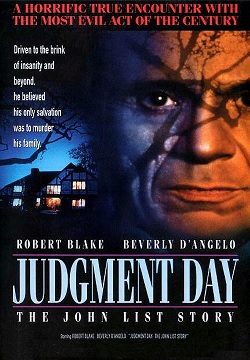
October True Crime: Judgment Day: The John List Story (dir by Bobby Roth)


In 1971, a 46 year-old account named John List committed a shocking crime.

To the outside world, John List was a normal suburbanite.  He was perhaps a little bit strict but then again, it was 1971 and all of the traditional morals that John List had grown up with were being challenged in the streets and in the movies.  Neither he nor his family were particularly sociable but again, it was assumed that they just liked the privacy that was afford to them by the mansion in which they lived.  List was married to Helen.  They lived with their three teenage children and List’s 84 year-old mother.  John List was a hard worker, he taught Sunday School, and, again, he was seen as being perfectly normal.

On November 9th, 1971, John List methodically murdered his wife, his children, and his mother.  He left his mother in her upstairs apartment while the rest of his family was laid out, in sleeping bags, in the ballroom.  (Detectives later surmised that List stopped in the middle of his murder spree to have lunch and then attended his son’s soccer game before taking him home and killing him.)  List left behind several notes, explaining that he was in a bad financial situation and that he feared that his family was heading down an immoral path that would have condemned their souls to Hell if he hadn’t killed them first.  And then, John List vanished.

For the rest of the 70s and the 80s, John List was phantom.  Some speculated that he had committed suicide while others thought that he had changed his identity and had probably remarried.  In 1987, the classic thriller The Stepfather was released in theaters.  Inspired by List’s crimes, The Stepfather starred Terry O’Quinn as Jerry Blake, a real estate agent who was obsessed with creating the perfect family.  The Stepfather imagined its killer as a friendly but rigid man who snapped whenever his illusion of perfection was threatened.  It also imagine him as someone who moved from town to town, searching for a new family that wouldn’t let him down.

As for the real John List, it turned out that those who suspected him of having changed his identity were correct.  And, just as The Stepfather suggested, he had remarried and was actually now a real stepfather.  List remained free until his story was included in a 1989 episode of America’s Most Wanted.  A forensic scientist included a bust of what John List might have looked like in 1989 and a viewer realized that the bust looked a lot like an accountant named Bob Clark.  “Bob Clark” was arrested and eventually, he confessed that he was actually John List.  Despite his attorney’s attempt to argue that he was not guilty by reason of insanity, John List was eventually convicted of five counts of murder.  He spent the rest of this life in prison, dying of natural causes in 2008.

The 1993 film Judgement Day: The Story of John List tells the story of List’s crimes and his subsequent attempt to build a new life for himself.  John List is played by Robert Blake, which turns out to be a bit of a problem as Blake gives such a twitchy and obviously unstable performance that it’s hard to believe that he could have successfully gone into hiding for 18 years.  Carroll Baker and Beverly D’Angelo are not given much to do as, respectively, List’s mother and List’s first wife while David Caruso appears as the detective who is determined to catch List.  Though this film was made long before CSI: Miami, I still found myself expecting Caruso to say something quippy and put on his sunglasses.

Judgment Day doesn’t add much to the story of John List.  It certainly doesn’t offer up any new insight into what led to List becoming a murderer, beyond the fact that List himself was just kind of a jerk.  It’s pretty much a by-the-numbers production that’s only interesting today because of Blake’s subsequent legal problems.  (For the record, I’ve always felt Robert Blake was innocent.)  When it comes to John List films, stick with The Stepfather.

4 Shots From 4 Horror Films: Special George Romero Edition


4 Shots From 4 Films is just what it says it is, 4 shots from 4 of our favorite films. As opposed to the reviews and recaps that we usually post, 4 Shots From 4 Films is all about letting the visuals do the talking.

This October, I am going to be using our 4 Shots From 4 Films feature to pay tribute to some of my favorite horror directors, in alphabetical order!  That’s right, we’re going from Argento to Zombie in one month!

Today’s director is one of the most important names in the history of American horror cinema, George Romero!

4 Shots From 4 George Romero Films

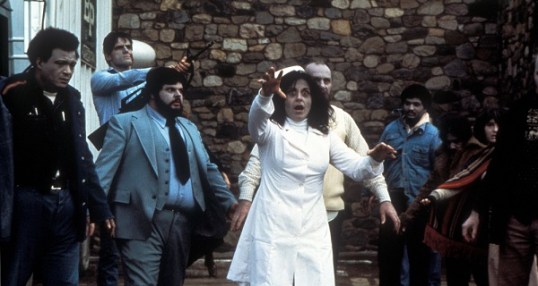
Night of the Living Dead (1968, dir by George Romero)

Dawn of the Dead (1978, dir by George Romero, DP: Michael Gornick)

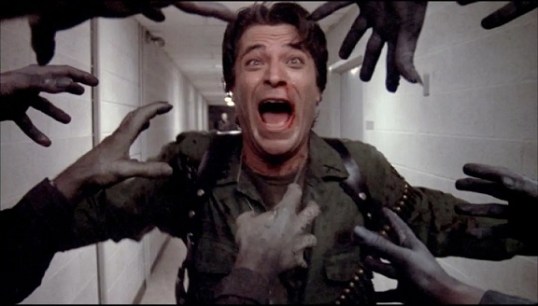
Day of the Dead (1985, dir by George Romero, DP: Michael Gornick)

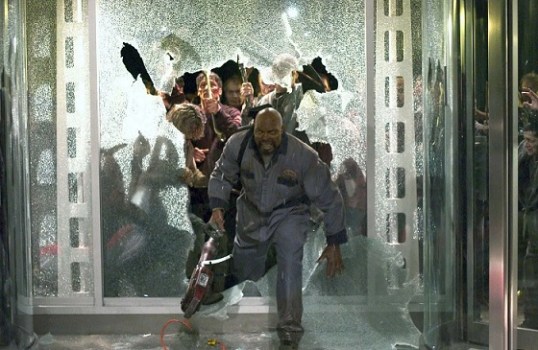
Land of the Dead (2005, dir by George Romero, DP: Miroslaw Baszak)

Horror Film Review: Empire of the Ants (dir by Bert I. Gordon)


Ants are interesting creatures.  On the one hand, they work hard and they can design and build a complex home in just a matter of hours.  They’re loyal to the other members of their tribe and they all happily do whatever needs to be done to keep their community healthy and moving forward.  They’re family-orientated.  They take care of their children.  They eat earth worms.  They fight other ants.  They can carry several pounds over their own weight.  They like to move in a single-file line.  These are all things that people, in general, admire.  If you had to hire someone to do some yardwork, you would want someone who had the attitude of an ant.

At the same time, ants also have no respect for privacy, they tend to get everywhere, and they bite you and leave behind those ugly red marks that take forever to go away and that can itch like heck.  I was once outside barefoot, helping someone wash his car, when I suddenly felt a really intense pain in my foot.  I looked down and saw that I had stepped straight into an ant hill.  It was not only an ant hill but it was a FIRE ANT HILL!  I grabbed a hose and I washed all of the ants off my foot but it was still one of the most painful experiences of my life.  Ants are hard-working and industrious but they’re also kind of mean and they really don’t like humans.  (Maybe they would like us more if people stopped kicking ant hills and using magnifying glasses to set them on fire.)  Ants will break into your house and then bite you when you tell them to go away.  My point is that you might like ants but ants do not like you and you better remember that!

The 1977 film, Empire of the Ants, is all about humanity’s mixed feelings towards ants.  Joan Collins plays a shady real estate agent who leads a group of potential home buyers into the bayou because she wants to trick them into buying some worthless property on a nearby island.   What Collins and her clients don’t know is that a barrel of radioactive waste was recently dumped off of a nearby boat and when the waste washed on shore, a bunch of ants got into it and it caused them to become giant ants!  The giant ants are industriously creating their own sugar-based society but they’re also attacking and brainwashing humans!

Needless to say, this is a Bert I. Gordon film.  Gordon took his “Mr. Big” nickname quite literally and, as a result, he spent almost his entire career making movies about animals and occasionally humans who were turned into giants by radiation.  Apparently, radiation can do anything!  Empire of the Ants is a typical Gordon film, in that the special effects are just bad enough to be kind of charming.  The ants are either awkwardly super-imposed into the scene or they are clearly made out of plastic.  There’s a scene where an ant grabs a man by his neck and it would be really terrifying if not for the fact that the ant’s head appears to have been made from Styrofoam.  Unfortunately, even though the special effects are bad in an amusing way, Empire of the Ants is still a pretty boring film.  Gordon devotes way too much time to the people heading out to look at Joan Collins’s beachfront property.  No one is watching a film like this for human drama.

This movie is based on a short story by H.G. Wells.  Wells, reportedly, considered it to be the worst thing he had ever written.