6 Trailers From Out of the Past


From out of the shadows of our shared exploitive past comes 6 more of Lisa Marie’s Favorite Grindhouse and Exploitation Trailers.

1) Dirty Mary, Crazy Larry (1974)

This is a fun trailer.  It comes with its own theme song.  There’s no type of love Dirty Mary won’t make.

2) The Night Evelyn Came Out Of The Grave (1971)

This is one of those public domain films that seems to show up in every other Mill Creek Box Set.  It’s a guilty pleasure of mine and the trailer is all tacky goodness.  Plus, Erika Blanc’s in it.  (And the title has allowed me to have a lot of fun at my friend Evelyn’s expense.)

3) Four of the Apocalypse (1975)

Before he was hired to direct Zombi 2,  Lucio Fulci directed this spaghetti western.  Not surprisingly, it’s one of the darkest, most cynical westerns ever made.

4) Massacre Time (1966)

Nine years before Four of the Apocalypse, Fulci directed another western, this one with Franco Nero.  Have I mentioned the things I would let Franco Nero do to me if I could get my hands on a time machine?  Mmmmm….Franco Nero.

5) 99 Women (1969)

From director Jesus Franco comes “99 women  … without men.” 

6) Ilsa, Harem Keeper of the Oil Shieks (1976)

Don’t watch this trailer if you’re a toadsucker.  Or easily offended.

6 Quickies In A Row: American, Buck, Exporting Raymond, The Greatest Movie Ever Sold, Resurrect Dead, and Senna


As part of my continuing effort to get caught up on reviewing all of the movies that I’ve seen so far this year, allow me to offer up 6 very quick reviews of 6 very different documentaries that I’ve recently seen.  Two of these documentaries — Buck and Senna — are still playing in theaters.  The other four — American, Exporting Raymond, The Greatest Movie Ever Sold, Resurrect Dead— are all available On Demand and on DVD and Blu-ray.
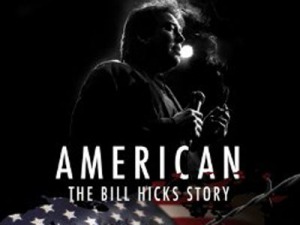
1) American: The Bill Hicks Story(dir. by Matt Harlock and Paul Thomas)

This heartfelt documentary about the life of the late comedian Bill Hick and it shows why his defiantly anarchistic humor is even more relevent today as it was during his heyday.  Here, his story is told through the use of cut-and-paste animation and it’s surprisingly poignant.  I didn’t know a thing about Bill Hicks before I saw this film but I was crying by the end of it.

2) Buck (dir. by Cindy Meehl)

Buck is a portrait of both the real-life horse whisperer Buck Brannaman and the various ranchers and horse owners who come to his various “clinics.”  The documentary covers Brannaman’s own abusive childhood and shows how he managed to turn the worst circumstances into something good.  The film works best when it just allows the charismatic Buck to talk about his life and his beliefs.  It’s less succesful when Hollywood phony Robert Redford pops up to talk about his feelings towards Buck.

3) Exporting Raymond (dir. by Phillip Rosenthal)

This is an interesting documentary in that it manages to be both entertaining and annoying at the same time.  Phillip Rosenthal was the creator of one of the most oddly durable sitcoms of all time, Everybody Loves Raymond.  In this documentary, which was directed by Rosenthal, we watch as he goes to Russia and deals with the resulting culture clash as he tries to adapt Raymond for Russian television. If you’re like me and you’re fascinated by all the behind-the-scenes production aspects of television and film,  then you’ll find a lot to enjoy in this documentary.  Unfortunately, Rosenthal himself is a bit too self-satisfied and, often times, he comes across like an almost stereotypical “ugly American.”  There’s something annoying about watching a wealthy, American television producer going over to a country that’s perpetually on the verge of self-destruction and then bitching about how ugly all the buildings look.

4) The Greatest Movie Ever Sold (dir. by Morgan Spurlock)

In The Greatest Move Ever Sold, Morgan Spurlock sets out to make the “Iron Man of documentaries,” a documentary that is completely and totally funded by product placement.  The documentary itself becomes about Spurlock’s attempts to find the corporate sponsors needed to make his documentary and the results are often hilarious and the film does succeed in getting you to think about how we are constantly bombarded with advertisements.  At the same time, this is also a good example of a “Who cares?” documentary.  Spurlock shows us how advertising works but he never really convinces us that it’s as big a problem as old toadsuckers like Ralph Nader and Noam Chomsky seem to think.  In many ways, Morgan Spurlock is a more likable version of Michael Moore in that he primarily makes documentaries for people who already agree with him. 

5) Resurrect Dead: The Mystery of the Toynbee Tiles (dir by John Foy)

This is a fascinating documentary about the mysterious Toynbee Tiles.  The Toynbee Tiles are, to quote Wikipedia, “messages of mysterious origin found embedded in asphalt of streets in about two dozen major cities in the United States and four South American capitals.”  That message is:

TOYNBEE IDEA
IN Kubrick’s 2001
RESURRECT DEAD
ON PLANET JUPITER.

These tiles first appeared in the 1990s and they’ve remained a perplexing unsolved mystery.  Nobody’s sure what the mysterious message means, who wrote the message, or even how the tiles were embedded into the asphalt.  This documentary is about not only the mysterious tiles but also the men who have, over the years, become obsessed with them and how that obsession has gone on to effect their own perception of reality.  The movie even offers up a plausible theory of who is responsible for the tiles.  Seriously, this is one of the most fascinating documentaries that I’ve ever seen.

6) Senna (dir. by Asif Kapadia)

Senna tells the life story of Ayrton Senna, a Brazilian formula one racer who was the world champion for three years before his own tragic death during a race.  I have to admit that I don’t know much about Formula One racing and, as a result, I had some trouble following Senna.  But Senna, seen in archival footage, is a charismatic and sometimes enigmatic figure and the racing footage is both exciting and, occasionally, frightening.

Lisa Marie Reflects on Soul Surfer (dir. by Sean McNamara)


As I was writing up my review of Shark Night 3D, I found myself thinking about Soul Surfer, another film that came out earlier this year and also featured a character losing an arm to a shark.  Oddly enough, both Shark Night and Soul Surfer feature supporting performances from former American Idol contestants.  (Carrie Underwood has a small supporting role in Soul Surfer.)  Beyond that, however, the two films couldn’t be any more different.

Soul Surfer is based on the true story of Bethany Hamilton, a surfer who, back in 2003, lost her arm to a shark.  I can still remember when this happened because, despite the fact that I live in one of the most land-locked parts of the country, it really, really freaked me out.  I have a morbid fear of somehow losing a limb whether by shark attack, car accident, or Jigsaw Killer.  (I guess, in my case, car accident would be the most likely possibility.)  I couldn’t help but look at the endless footage of a seemingly cheerful Hamilton being interviewed without wondering how I would react if the same thing happened to me.  Would I be able to stay as positive as Hamilton? I hope I could but, to be honest, I probably wouldn’t.

That’s one reason why I avoided seeing Soul Surfer when it was first released to theaters and instead only saw it once it showed up On Demand and I was looking for a movie to watch before bedtime.  Once I actually saw it, I was surprised to discover that Soul Surfer is an effective (if predictable) film that is occasionally even touching.

The film opens with some truly beautiful scenes set in Hawaii and rather quickly establishes Bethany Hamilton (played here by AnnaSophia Robb) as a normal teenage girl who just happens to be a very talented surfer.  Hamilton loses her arm about thirty minutes in and the rest of the film is devoted to her struggle to come to terms with both the loss of her arm and her newfound fame.  The film ends with Hamilton’s triumphant return to competetive surfing and, in its undeniably sincere and old-fashioned way, it makes for an undeniably touching moment.  Robb is likable as Hamilton though the film’s true heart and soul is provided by Dennis Quaid and Helen Hunt.  They play Hamilton’s parents and both of them prove they are capable of making even the most mawkish of lines effective.

Soul Surfer was popular with audiences but got slammed by critics who complained that the film was 1) predictable and 2) far too manipulative.  I would say that these critics are missing the point and their criticism has more to do with their own need to show off their cynical credentials than anything they may have actually seen on-screen. 

Yes, Soul Surfer is emotionally manipulative and yes, the film is predictable but so what?  

The important thing is that the film works.  

That’s a lot more than you can say for the much more cynical Shark Night 3D.

Film Review: Shark Night 3D (dir. by David Ellis)


If nothing else, the new film Shark Night 3D has an appropriate title.  The movie takes place over the course of one night, there are a few sharks, and it’s all presented in 3D.  If only the rest of the film worked as well.

Basically, the film is about this college student named Sara (played by Sara Paxton) who invites all of her college friends to Louisiana for the weekend and basically gets them all killed.  Among Sara’s friends are geeky-but-cute Nick (Dustin Milligan), geeky-but-not-so-cute Gordon (Joel David Moore, who was also in Avatar), token black guy Malik (Sinqua Walls), Malik’s girlfriend Maya (Alyssa Diaz), Beth (American Idol runner-up Katherine McPhee) who we know is doomed because she has both tattoos and big boobs, and Blake (Chris Zylka), who possesses no personality but he does have a really nice ass.  Seriously.  Unfortunately, Sara forgets to tell them that her psycho ex-boyfriend Dennis (Chris Carmack) is waiting for her, along with his redneck buddy Red (Josh Leonard). 

There’s also a lot of sharks swimming around this lake and, since this is a 3D movie, these sharks are capable of jumping out of the water like dolphins and snatching people out of boats and off of docks.  Seriously, these are some talented sharks.  Malik gets his arm bitten off and it’s pretty much all downhill from there.  Malik is talented too because, even after he gets his arm bitten off, he’s still capable of grabbing a harpoon and standing out in the middle of the lake, bleeding as he taunts the sharks.  Now, as ludicrous as this sounds, it’s probably the film’s best moment.  It’s certainly one of the only truly grindhouse moments in this film.  At the very least, it suggests a self-awareness that is lacking from the rest of the film. 

Shark Night 3D sucks.  There, I said it.  I feel a little bad about saying that because, obviously, you can’t judge Shark Night 3D by the same standard that you would judge a film like 8 1/2 or The Rules of the Game.  As I watched the end credits roll, I wondered if maybe I was being too hard on this film.  After all, a lot of the dialogue was so bad that the intention behind it had to have been satiric?  Right?  Was I just being unfair?  So, mentally, I compared Shark Night 3D to last year’s Piranha 3D and I quickly realized that I wasn’t being unfair.  Shark Night 3D sucks. 

The cast is uniformly bland, the plot is silly without ever being enjoyable, and — worst of all — the sharks are boring.  Remember how the killer fish in Piranha 3D managed to be both ludicrous and scary?  Remember how they each seemed to have their own little diabolic personality?  It made you root for the piranhas and, as a result, you didn’t mind the fact that they were eating cardboard characters.  However, the sharks in Shark Night just look like CGI sharks.  Remember how the piranhas were literally everywhere in Piranha 3D?  In Shark Night, the sharks just pop up randomly whenever the film’s engine starts to run out of gas. 

I think the ultimate verdict I can pass on Shark Night is this: I am usually a total aquaphobe.  Seriously, I can’t swim.  I don’t do boats.  I don’t do water parks.  When my family went to Hawaii, I spent a lot of time walking on the beach in my bikini but you better believe I ran like the wind whenever I saw the tide coming for me.  Over Labor Day weekend, I spent a while wading in the shallow end of my uncle’s pool and my family was literally amazed that I didn’t freak out.  So was I, for that matter.  (Yay me!)

And yet, as I watched Shark Night — which was all about people going into the water and dying terrible deaths — not once did I cover my eyes.

Not once.

Lisa Marie Invites You On A Trip To The Moon (dir. by Georges Melies)


As we wait for me to find the strength to actually review some of the movies I’ve seen recently, why not pass the time with a classic film that came out 109 years ago?

Directed and written by Georges Melies, A Trip to The Moon is often cited as the first sci-fi film and the image of the capsule crashing into the eye of the man in the moon is one of the most iconic in film history.  Seen today, the film seems both charmingly innocent and remarkably ahead of its time. 

For me, it always takes a minute or two to adjust to the aesthetic of early films.  We’ve grown so used to all the editing tricks that modern filmmakers use to tell their stories that these old silent films, with their lack of dramatic camera movement and obvious theatrical origins, often take some effort to get used to.  Still, the effort is often worth it.

Here then is Georges Melies 1902 science fiction epic, A Trip To The Moon.

Song of the Day: Main Theme from Zombi 2 (composed by Fabio Frizzi)


Happy Labor Day!  In honor of this holiday, I’d like to take a moment to acknowledge a unique genre of film that truly sparked my love affair with cinema.  That genre, as you may have already guessed, was Italian horror. 

Today’s song of the day comes from one of the greatest of the Italian horror films, Lucio Fulci’s Zombi 2.  While the film’s very true artistry is often overshadowed by its infamous reputation and the score itself is clearly a product of its time (the late 70s), I think that Zombi 2 was a cinematic high point in general and a masterpiece of horror in specific.   And a large part of that was due to Fabio Frizzi’s operatic yet foreboding score.

Here then is today’s song of the day, Fabio Frizzi’s Main Theme from Zombi 2.

What Lisa Watched Tonight: The Killing Jar (directed by Mark Young)


Earlier tonight, I happened to catch, on Chiller, the 2011 film The Killing Jar.

Why Was I Watching It?

I was hoping that, at some point, the classic Siouxsie and the Banshees song would show up on the soundtrack.  It didn’t.

What’s It About?

I’m trying to work up the strength necessary to go into it all but basically, there’s this diner down south and one night, right around closing time, a news story comes over the radio about a brutal murder that was committed at a nearby farm.  There’s only a few people left in the diner — a depressed waitress (Tara from Buffy, a.k.a. Amber Benson), a tough trucker (Kevin Gage), a wimpy deputy (Lew Temple), a mysterious stranger (Harold Perrineau), two teenagers who don’t matter, and the Danny Trejo-look alike who apparently owns the place (Danny Trejo).  Anyway, all these people are so upset to hear about the murders that they blame them on the first surly stranger who happens to step into the diner.  Unfortunately, that stranger is played by Michael Madsen and he responds by shooting up the place (Danny Trejo’s head explodes in close-up) and holding the survivors hostage.  Things get a little bit more complicated when Mr. Greene (Jake Busey) shows up and reveals that someone at the diner happens to be a contract killer known as Mr. Smith.  Guess what?  It’s not Michael Madsen.

After typing all that, I feel I have a responsibility to add that this all sounds a lot more interesting than it actually is.

What Works

Well, the big “twist” is kinda obvious and you probably figured out just from reading the previous paragraph.  However, it’s still kinda fun, kinda being the word to remember.  Benson and Gage both give pretty good performances and Busey seems to be having a lot of fun.  Madsen, to be honest, seems to be on the verge of falling asleep in a few scenes but still, he can say more with an annoyed eye squint than most actors can with a 10-page monologue.  However, the film really belongs to the always underappreciated Harold Perrineau and his combative, confrontational scene with Madsen is one of the few instances when the film really comes to life.

Danny Trejo’s head explodes with style.

What Doesn’t Work

Oh.  My.  God.  Where to begin?

I can count the number of succesful “hostage” films on one hand and let’s just say that The Killing Jar is no Dog Day Afternoon.  Taking place entirely in one location and with a small cast mouthing melodramatic dialogue, The Killing Jar unfolds like one of those really bad plays that an ex-boyfriend of mine used to write in high school.  They always ended with everyone dead and always seemed to feature at least one evil redhead who ended up crying over the dead body of her ex-boyfriend.

Director Young does not help matters by confusing tension with meaningless pauses.  There’s a lot of scenes of people glaring at each other but since nobody really comes across like a human being, the glares don’t mean anything.

HOWEVER, what really didn’t work about this film was the fact that the first 20 minutes of the film was taken up with Amber Benson asking people if they wanted a slice of “Pecan Pie,” that she claimed was “the best this side of the Mason-Dixon.”  The problem here is that the film was clearly meant to be set in my part of the world.  And in my part of the world, we pronounce it “PEH-cahn.”  However, Benson repeatedly pronounced it “PEE-can.”  Seriously, this annoyed me more than words can express.  Listen up all you aspiring filmmakers — if you’re going to insist on setting your crappy films in my part of the world, at least try to get the pronunciation right.  Speaking for myself, I don’t have the slightest idea what a PEE-can is supposed to be but it sounds kinda nasty.  I’ll take a PEH-cahn over a PEE-can any day.

PEH-cahn Pie.  Good Lord, people, it’s not that difficult.

“Oh My God!  Just Like Me!” Moments:

None.

Lessons Learned:

I have no desire to ever eat another pecan pie.


Poll: Which Films Are You Most Looking Forward To Seeing In October?


Last month, at this time, we asked you which films you were most looking forward to seeing in September.  The results are in and it would appear that September is going to be all about Drive, Contagion, Moneyball, and Warrior for most of our readers.   Thank you to everyone who voted.

Below, you’ll find the poll for October. Let us know which October films you’re most looking forward to seeing.  As always, please feel free to vote for up to four films.

(As for me, I voted for The Rum Diary, Footloose, In Time, and The Skin I Live In.)

Film Review: Don’t Be Afraid of the Dark (dir. by Troy Nixey)


Since late last year, one trailer has managed to consistently scare me.  That trailer was advertising a horror film called Don’t Be Afraid of the Dark.  Well, after a few delays, Don’t Be Afraid of The Dark has finally been released and I’ve finally seen it.  Unfortunately, the trailer is the only thing scariest thing about Don’t Be Afraid of the Dark.

The film starts out as a classic haunted house story.  Sally (well-played by Bailee Madison) is a young girl who is sent, by her neglectful mother, to live with her father.  Sally’s father (Guy Pearce, who seems to be bored by the whole movie) is restoring an old mansion in Rhode Island with his girlfriend (Katie Holmes).  In a plot development that will be familiar to anyone who has seen Lucio Fulci’s The Beyond, It turns out that the mansion was previously owned by a crazy painter who disappeared over a 100 years ago.  Anyway, Sally isn’t all that happy with the situation to begin with and, once she starts to hear malevolent voices whispering threats at her, she’s even less happy with it.  However, her father refuses to take Sally’s fears seriously.  Why?  Because, simply based on his actions in this film, Sally’s dad is an idiot as well as being the worst father ever!  Seriously.

The main problem with Don’t Be Afraid of the Dark is that it’s simply not scary.  Director Nixey, making his film debut here, borrows a few effective images from other, better horror films but otherwise, he creates no sense of pace and no sense of tension.  The owners of the voices are revealed fairly early on in the film and as soon as they show up, the film pretty much loses whatever atmosphere of dread that it may have built up.  It’s as if nobody told Nixey that the unknown is always far scarier than obvious CGI. 

It really doesn’t bother me that all of the characters continually do stupid things.  We expect that.  That’s just part of the horror genre.  If the characters in a horror movie acted sensibly and just left the haunted house or didn’t wander off by themselves then there wouldn’t be any horror.  What does bother me in this film is that there’s no consistency in the way the characters act or any sort of continuity for scene to scene.  Sometimes, everybody in the house can hear Sally scream regardless of where they’re located and then other times, it appears that Sally could scream for hours without anyone noticing.  Sometimes, Katie Holmes seems determined to save Sally from the house’s evil forces and then other times, she seems fairly indifferent to whether she survives or not.  Horror films don’t require that characters act with any sort of logic but it does help if there’s at least a little consistency.

I mentioned Lucio Fulci earlier and I did that on purpose because, in many ways, Don’t Be Afraid of the Dark reminded me of one of Fulci’s later, post-New York Ripper films.  Like most of Fulci’s later films, Don’t Be Afraid of the Dark is ultimately a disappointment but occasionally, a little glimmer of talent shines through and manages to keep the film from being a total loss.  In the case of Don’t Be Afraid of the Dark, most of those glimmers belong to Bailee Madison who is well-cast as Sally and who bring some much needed conviction to the film.  Also, towards the end of the film, there’s a lengthy dinner party sequence in which Sally attempts to ward off the evil creatures while her unaware father attempts to schmooze with his guests (one of whom was played by Alan Dale, the same actor who played Charles Widmore on Lost).  The dinner party sequence actually generates some tension (as well as some intentional laughs) and it hints at what the film could have been.

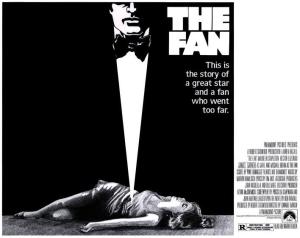
What Lisa Watched Last Night: The Fan (dir. by Edward Bianchi)


Last night, I watched the 1981 slasher-musical hybrid, The Fan.

Why Was I Watching it?

I had read about The Fan on a few slasher-related film sites and, despite the fact that the reviews were always universally negative, the former aspiring prima ballerina was intrigued by the idea of a slasher movie where the mayhem was occasionally put on hold for a dance number.  When I saw it listed as being on AMC last night, I set the DVR to record it.  Later, around 4 in the morning, I was battling insomnia and I didn’t really feel like watching infomercials or hurricane coverage.  So, I watched The Fan.

What Was It About?

Lauren Bacall is Sally Ross, an aging actress who smokes and smokes and smokes.  A very young and handsome Michael Biehn is Douglas, The Fan.  He’s obsessed with Sally and writes her hundreds of adoring letters.  “Believe me, I have the equipment to make you very, very happy,” the 20ish Douglas tells the 60ish Sally.  Sally’s secretary (Maureen Stapleton) writes back to Douglas and tells him that it’s illegal to “send pornography through the mail.”  Douglas responds by doing the whole slashing-up-the-world-with-a-straight-razor thing.  Meanwhile, Sally is in rehearsals for her Broadway musical debut and wow, it’s the worst musical since Nine.  Will Douglas be stopped?  Will Sally getting a standing ovation?  And how many cigarettes will be left by the end of the movie?

What Worked?

Michael Biehn is actually fairly good as the killer and the opening credits — where the musical score is nicely integrated with the sound of Biehn typing and reading his obsessive prose — are nicely done.  And technically, the film looks good.  The cinematography is credited to someone named Dick Bush and that’s all I’ll say about that.

But, let’s be honest, I wasn’t watching this film for quality.  I was watching for the Broadway dance sequences.  Films are always at their campiest when they try to portray a “Broadway” hit and that’s especially true if the film was made in 1981 (like this one).  And, on this, The Fan did not disappoint.  Seriously, the “show-within-the-show” here appears to be one of the greatest debacles in the history of imaginary Broadway.  Lauren Bacall rasps out her songs while chain-smoking while the chorus line spins across the stage in a blur of sequins and glitter.  On top of that, the show is named Never Say Never which has to be one of the most boring titles ever, as far as imaginary Broadway is concerned.  Yet, when it’s all over, the audience gives Never Say Never a standing ovation.  It’s a hit!  There’s no accounting for taste as far as fake Broadway is concerned.

Here’s a show-stopper from Never Say Never, starring Sally Ross:

Plus, about 40 minutes into the film, Bacall and Stapleton have themselves a good, old-fashioned bitch-off which just has to be seen.  There’s nothing like watching two divas compete to see who can devour the most scenery.

What Does Not Work:

Well, to be honest, the entire film doesn’t work.  The pacing is terrible, the scenes with Biehn kills his victims somehow manage to be both bloodless and overly sadistic at the same time, and Bacall seems to be not only ticked off at having to appear in the film but angry with you for watching it as well.  Add to that, there’s a bizarre homophobic subtext to this film that, while typical of a film released in the 80s, still seems odd for a movie that’s so obsessed with Broadway show tunes.

“OMG! JUST LIKE ME!” Moments:

I related to the dancers who show up on-screen whenever Sally is in rehearsals for her show.  Being trapped on the chorus line of a terrible show?  Been there, done that.  It’s actually a lot of fun because you’re freed from having to worry about how terrible the show is.  Instead of rehearsals being a death march, they’re an exuberant, doom-themed Mardi Gras.

Lessons Learned:

Don’t allow anyone else to answer your fan mail.